A Transmedia Plan

by Clare Langley-Hawthorne

Last weekend I attended the Willamette Writers Conference in Portland, Oregon and there were some great speakers who really helped open my eyes regarding the nature of the media and publishing industry today. 

One such speaker (Luke Ryan) gave a terrific presentation on what he termed  ‘transmedia’ and the need for writers to think beyond their ‘box’ (be it novel writing or screenwriting). He defined the term ‘transmedia’ as (and I paraphrase) ‘a narrative built across multiple platforms that grows exponentially with little repetition of content’. In other words, as writers, we need to be aware of all the different forms of media that could carry pieces of our narrative/story and which engage audiences in their own unique ways. We are in essence world builders and, as such, given the current state of the media and publishing industries, we need to think ‘outside the box’ if we are to grow our brand/story and readership. 

Makes sense, right? It’s also pretty daunting when you think of all the media platforms available. For writers like us some of the key media platforms might include things like:

  • Film
  • TV
  • Graphic Novels
  • E-books
  • E-book ‘shorts’/or serialization (see Jim’s post yesterday)
  • Graphic Novels
  • Apps
  • Social Media
  • Audio books

That’s a vast array of options for a writer but the key message I took away from Luke’s presentation is that we need to consider our work across these forms of media and identify ways in which these other elements might factor into building the ‘world’ we have created in our novels. 

The other key message I took from Luke’s presentation is that this does not mean merely reproducing or repeating content across various forms of media – because readers are hungry for fresh, unique content. An author should therefore look at their work across a continuum of media opportunities. You might have written a thriller but then produce a series of unique e-book shorts that focus on a minor (yet intriguing) character within that book. You might also work with a graphic artist to produce a series of graphic novels that involve stories from the main protagonist’s past. In each of these different mediums you are producing new content which nonetheless feeds into the core story (your thriller).

After listening to Luke’s presentation I was both excited by the myriad of possibilities for my own work and also (I admit) overwhelmed by them. However, I learned that, as writers, we must always be thinking about unique opportunities to bring readers to our stories, to rise above the ‘noise’, and to provide great, unique content that supplements the main stories we write. So I wanted to ask all you TKZers, how do you envisage tackling a ‘transmedia’ platform for your own work? Too overwhelming or are you already ahead of the curve and have a ‘transmedia’ plan of attack?


The Wow Factor

by Clare Langley-Hawthorne

Jim provided a great post yesterday on the reasons people abandon reading a book (mainly because, no surprise, it’s slow and boring!) and ways in which an author can make their own work ‘unputdownable’. Today I want to discuss what propels a book to the next level – what I call the ‘wow’ factor – those elements that take a book to a level where not only can you not put it down but you also can’t help but tell everyone about it. 

This is the essence of ‘word of mouth’ marketing, which can turn a book into an instant bestseller. Think about a book like Fifty Shades of Grey. Although I confess I haven’t actually read it, and no matter what you think about its subject matter or literary merit, there’s no disputing it created a buzz which encouraged millions of people to buy it. For me, the Harry Potter and The Hunger Games series have it. But how to define that ‘wow’ factor? Surely if if was that easy, we’d all be bestsellers…but it’s not and yet, it’s the elusive element that every publishing house and indie author longs to create.

For what it’s worth, I think the ‘wow’ factor probably involves a combination of the following:

  • A startling, controversial or shocking take on a conventional topic or genre.  This is what made Fifty Shades of Grey the talk of the town when it was first release. I remember being in a boot camp class and being amazed at how many women were reading it, simply because it was so illicit and controversial (which was really why I didn’t feel in the least compelled to read it!). I think the same can be said for classics such as Lolita and Lady Chatterly’s Lover. If you get people talking about a book because it raises the hackles, insults somebody’s ethics or challenges their notions of propriety it’s probably going to generate buzz (both negative as well as positive). But that is hardly enough (I’m sure there have been thousands of books about controversial topics that have bombed…)
  • An uber-intense relationship between characters that appeals to the inner romantic in us all. Think The Bridges of Madison County or the Twilight series. Despite the writing style (or lack thereof) these books pulled at the heart strings. They managed to capture the yearning for true love and, as anyone whose ever watched The Princess Bride knows, true love conquers all. It’s hard to quantify exactly why these books manage to generate such an overwhelming ‘buzz’ but I think the ‘I will love you forever’  over-the-top romance was addictive.
  • A story that touches our humanity. We’ve all read great satisfying books and recommended them to others but rarely do we rave about a book to strangers, family members and friends unless it something indefinable that captures our heart as well as our attention.  I think if a novel makes people feel good about themselves, or raises our consciousness and humanity we feel compelled to tell others about it. This is certainly what happened to me after I read Schindler’s List and The Alchemist.
  • And finally, a story that totally transcends the ordinary… Which goes to demonstrate how important it is to raise the stakes, take risks and strive to transcend the genre in any book you write.  Think of a book like Life of Pi and you’ll know what I mean.


So what do you think helps create the ‘wow’ factor? What was the last book you couldn’t help talking about with everyone you know? 

Truth is way Better than Fiction

bu Clare Langley-Hawthorne

The recent Edward Snowden affair reaffirms my belief that a) nothing in fiction is any where near as strange as reality and b) a good spy/traitor (is he/isn’t he) story is even more compelling in real life as it is in a story. As a mystery writer I love contemplating ‘what if’ scenarios and recent events such as these always make me look back at history and consider how I would craft a story based on some of the key events and people involved in ‘exposing’ state secrets or engaging in various levels of subterfuge or espionage. 

No matter what you might think of the current Edward Snowden affair, it’s hard not to argue that it doesn’t have thriller appeal. It has a potentially unreliable narrator, the disclosure of secret and classified material, a desperate flight to an old cold war enemy, and the likely involvement along the way of various secret service agencies. It reads just like a thriller – no?

And with all this going on, I got to thinking about some of the more notorious spies and potential traitors in history and how it would be interesting to explore their stories. Indeed the inspiration for my third Ursula Marlow novel, Unlikely Traitors (due out in late fall – more on that later in the summer!), was Roger Casement, who was hanged as a traitor in 1916 for inciting rebellion in Ireland (and involving a possible collusion with Germany). I would also love to explore the story of another spy of the same era, Sidney Reilly, the so called “Ace of Spies”, because the ‘truth’ behind both these stories are so elusive. 

So for all you thriller writers, which spy (or alleged spy) would you most like to write about and why? What era/personalities intrigue you the most? Is there any real life story that you are itching to tell because, as with Edward Snowden, the truth is even more bizarre than fiction?

Write Who You Know (?)

By Clare Langley-Hawthorne

I’ve often been asked whether I have any characters in my novels based on real-life people It used to seem strange to me that many would-be writers seemed so concerned about real people suing them over characters in their novels. This is probably because I’ve never overtly based a character on anyone I actually know. Until now…

To be honest I’m still pretty nonchalant about the whole issue. It’s not like I’m incorporating anybody famous or likely to sue for defamation. From what I’ve heard from many writers, even when they did write a character based on someone they knew, that person didn’t recognize it was them anyway! All too often people who know you either erroneously assume they are one of your characters or fail to see the glaring resemblances to those who you do include:)

In my latest WIP I do have a character drawn from a person I actually know  (someone who basically would have made a good Nazi…) but I am creating a fictional composite nonetheless. Although there are some core (evil) traits which have caught my eye, I am conscious that I am writing a novel not a memoir and so the real life person really provides only a jumping off point for my character to develop. (Nonetheless I am looking forward to this character coming to a ‘sticky end’ in the book – call it a kind of karmic catharsis that cannot be achieved in real life!).

I think when including characters based on actual people, writers should probably be aware/think of the following:

  • Be mindful that you may run afoul of defamation laws if what you have done is so obvious that most readers would recognize the person and think less of them in real life (there are of course a myriad of laws/cases and exceptions and a discussion of the complexities of the law is beyond what this post requires:). Usually the person would have to be pretty well known and have a reputation that could be compromised by what you write (and I’m guessing that most people’s Aunt Maud or Cousin Loopy wouldn’t fit this bill).
  • Consider the consequences of including any characterization that is instantly recognizable as someone you know (be it friend, family member, colleague) carefully. You need to understand you could cause offence and/or alienate people as a result.
  • Understand too that many people close to you will assume (correctly or incorrectly) that they must be a character in your book and will scour the pages trying to identify who they might be. You should plan on how to respond  because 99.9% of the time they will be totally wrong. 
  • Other than that, recognize that everyone creates characters based on their own experiences, memories and the people they have known. It is therefore inevitable that some aspects of people’s lives or characters will pop up and inhabit a writer’s imaginary world.  

So have you ever consciously included a character in one of your books based on someone you know? Were they ever the victim or perpetrator? Did anyone ever recognize themselves as a character in your book and if so, were they right? 

Honoring the Backstory

by Clare Langley-Hawthorne

Our first page reviews often bring up the issue of backstory and how to incorporate it successfully (and judiciously) into a novel.  

In mysteries and thrillers we often have protagonists with a military or law enforcement background and, given that many of our readers will have similar backgrounds, we need to get the details right. As writers we have an obligation to do our research and try and paint as accurate a picture as possible. This can be a challenge for someone like me who has never been in the armed forces, trained in law enforcement, or (thankfully) had any exposure to war or its aftermath. I have to rely solely on research and my imagination. 

So far in my novels, I’ve focused primarily on the years prior to and during the First World War and  have the advantage of being able to access a huge array of first hand accounts, books, film footage and audio recordings dealing with the horrors associated with trench warfare. There are, however, only a minute number of veterans still alive from this war which means I cannot directly speak to them about their experiences as part of my research. In some ways though, this also makes my job a little easier, as there aren’t going to be many World War One veterans alive to challenge the experiences as I present them. 

For more recent theatres of conflict, authors need to be ever vigilant regarding their research as there are many more veterans alive who will demand we get the details correct (and who will complain if we fail to do them justice). When it comes to developing a character with a recent military backstory, authors need to also be aware of the sensitivities involved – whether you’re dealing with a character who served in Afghanistan, a character involved in one side or the other during the Northern Ireland Troubles, or, perhaps, a CIA operative who had exposure to the Israeli-Palestinian conflict…whatever the backstory is you have to get it right. 

As we’ve also discussed in our first page reviews, when presenting a character’s  backstory you also have to be careful not to slow down the narrative pace of the book. All the details you have researched cannot be presented in huge, long-winded chunks, or your readers’ eyes will glaze over. 

Here are a few tips when it comes to developing and presenting a compelling backstory:

When developing the backstory (particularly a military or law enforcement one):

  • Do your research thoroughly. I cannot emphasize this too much. Read books. Talk to people currently in the field or veterans who have experienced the same conflict/trauma that your character has experienced. 
  • Make sure you understand the impact their training and experiences have had on their characters. 
  • Know how they would react in a certain situation (it would, for instance be unlikely that an ex-Marine would turn tail and run when confronted with a mugger – not unless you have created an appropriate backstory that would make this behavior entirely believable).

When presenting the details of your protagonist’s backstory, remember:

  • Show only the tip of the iceberg at the start (even though you know everything, don’t foist it all on the reader at once)
  • Use key, tantalizing, references at first to get the reader intrigued (e.g. rather than providing a long-winded paragraph listing all the protagonist’s experiences during the civil war in Bosnia and Herzegovina, you could just say: “After what happened in Bosnia, he wasn’t sure who to trust any more”…that way the reader wants to know what happened as it impacts the story).
  • Make sure the backstory is relevant to the main story you are telling. There’s no point having an elaborate backstory if none of the elements come into play in the main story. The backstory needs to have a direct impact on how your character thinks, feels and acts (and in a way that rings true and is compelling to the reader).
  • Use action and dialogue to draw out the backstory rather than narrative exposition. This will keep the pace and tension going. 


So do you tend to have protagonists with a military or law enforcement background in your stories? If so, how do you go about researching this and what pitfalls do you try to avoid when presenting your character’s backstory?

What’s in a name?

by Clare Langley-Hawthorne

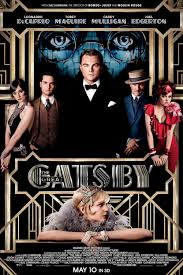
This weekend I saw Baz Luhrmann’s sumptuous, over the top, movie adaptation of The Great Gatsby and was reminded, yet again, of the power certain fictional names have on the psyche. Gatsby. Not a name one easily forgets. Neither is Heathcliff or Mr. Rochester or those great detective names: Sam Spade, Nero Wolfe, Sherlock Holmes and Hercule Poirot. Even the most mundane sounding names can achieve prominence, simply because of their ordinariness (take Harry Potter for example). But naming a character is by no means an easy task. You have to balance the unusual with the commonplace and try to run the gauntlet between a cool, distinguished name and one that verges on being a soap-opera/porn name that you’d expect to see on somewhere like m porn xxx instead of a blockbuster Hollywood picture. So how do you come up with a memorable character name?

First and foremost it must reflect your character.  I find this is a critical first step – finding a character name that reflects the character’s voice on the page. I’ve recently been revisiting an old WIP (finally having worked out the answer to a plot conundrum) and found myself weighing up two versions of the main protagonist’s name, trying them on to see which fit best. It’s a tricky process and one that has a cascading effect on other character names as well (as I can’t exactly have a cast of characters all with names starting with ‘M’!). But what other issues do authors need to pay attention to in naming characters? Here are a few:

  • Make sure the name is appropriate for the time and place of the story. For example, a story set in Victorian England is unlikely to have a female called Morgan Star. Equally well, it’s hard to imagine a contemporary character in their 20s called Edna or Constance (unless there’s a good back story or some degree of irony/humour going on!).
  • Check meanings/origins of names so you don’t inadvertently use an offensive or inappropriate foreign word or name.  Also, sometimes the name can provide the reader with a hidden clue based on the origin or meaning of their name.
  • Make sure the name looks great on the page as well as when spoken aloud. On occasion, I have come up with a great name on paper but the pronunciation of it has caused a few tongue twisters (which is a bit embarrassing at book readings!). 
  • Don’t try to be too clever, too cute or too obscure. The character’s name should enhance, not detract from the story so don’t make a reader work too hard to decipher  a name. Use the most common spellings unless there is a real reason (a reader will be taken out of a story by a name that they have to struggle to work out).
  • Finally avoid names which end in an ‘s’. I learned this the hard way…

So what about you all – what advice would you give fellow writers about coming up with terrific character names? What are are your favorite characters names? What about character names that set you teeth on edge?

Rituals and Superstititions

by Clare Langley-Hawthorne

I remember hearing a talk given by a historical writer who went into great detail about how she got herself prepared to write each day. Her rituals included mood lightning, music, incense, and a few historically appropriate artifacts to get her into the mood, and I remember thinking “what?! I don’t have the luxury of time for all of that, I just have to sit down and write!”. But in many ways that’s not strictly speaking true. I was thinking about it this morning and realized that, like many writers, I do have my own set of rituals and superstitions that form part of the creative process that leads to sitting down, facing the empty page, and writing.

First of all, I have to mentally prepare myself – that means from the moment I get up the words are already forming. In the shower I’m formulating sentences and by the time I’m in the car on the way back from school I feel the ghosts of my characters coming to take their seats. I’m mentally rehearsing for when I finally sit down and write…and when I do I have  a separate notebook for each new novel. I have a scrapbook too – in which I jot down historical notes and cut and paste maps or photographs. When I write in long hand, which I sometimes do rather than type, it has to always be done in a rolling-ball or  fountain pen as I hate ballpoint pens (I used to only write in ink using a fountain pen until my dog Hamish chewed it to bits…) I always write at home, never in cafes, and always in total silence.

Okay, so I admit it’s a pretty lame ritual. I’m not up at the crack of dawn like some writers who get their best work done at 4am, and if I had my choice I wouldn’t be up at 2am either (although I often end up writing this late out of necessity).  I don’t write in a shed like Roald Dahl or use ballpoint pen on A4 paper with only two punch holes (not four) like Philip Pullman. I don’t have an antique hour glass like Dan Brown that I use to mark the time (nor do I do a session of push ups or sit ups either!). I also usually write fully clothed (unlike John Cheever  who apparently wrote in his underwear). So I guess I fall on the rather dull end of the writing ritual scale.

But how about you? Do you have any  specific writing rituals? Are you superstitious (or OCD…) and insist on anything specific when you write? 

How Self-Publishing Has Changed the Industry

by Clare Langley-Hawthorne

I read a recent blog post on The Guardian book blog about the 10 ways self-publishing has changed the book world and, after Jim’s post yesterday, it got me thinking about how I would explain the current state of the book world to friends and family who are neither authors, nor wanna-be writers, but who, as book readers, are nonetheless intrigued by all the changes going on in publishing. 

I’ve summarized the Guardian’s top 10 list below and am interested in whether or not you agree (though I do think most of them are pretty self-evident):

  1. There is now a wider understanding and increased visibility about what publishing is (and acceptance that it’s more difficult than it looks). Self-publishing has enabled people to learn the process and understand what is involved which has led to a wider awareness and diversity in the publishing process.
  2. We are no longer confident that publishers and agents know what everyone wants or should read. 
  3. The copy-editor is now in strong demand as writers realize the limitations of self-editing. Freelance copy-editors are now in high demand by both self-publishing authors and traditional publishing houses.
  4. The book as a ‘precious’ object is re-emerging as publishers produce limited, luxury editions.
  5. Authors are being empowered to do their own marketing and are no longer reliant on publishers to mediate the relationship between authors and their readers. Looking ahead, authors are likely to be less compliant with what their publishers demand of them.
  6. The role of the agent is also changing. With self-publishing, agents need to find new ways to make their work pay.
  7. New business models and opportunities are springing up offering ‘publishing services’ from manuscript and plot development to editorial and marketing assistance. Publishing is thus emerging as a process – accessible as a variety of different services – rather than an ‘industry’ as such.
  8. It’s not all about making money. Self-publishing means recognizing and preserving content that has value for someone but that doesn’t mean the process has to yield an income to be worthwhile.
  9. The end of the ‘vanity press’ put down. Self-publishing is now seen as the ‘homing ground of the instinctively proactive’ – those who can identify the market, meet its needs and deliver directly. 
  10. Self-publishing brings satisfaction and happiness in and of itself as each writer meets their own needs (which may only require a finished product or small sales to a niche market).

The most important element I take from this list is the notion that publishing is emerging as a range of processes, accessible to all, rather than an industry that so many viewed as an impenetrable fortress. I am also intrigued by the comment that authors will probably become less ‘compliant’ with the demands the publishers place on them, as they are empowered to understand their own market and reader needs (especially as authors now have many of  the tools [such as social media] to meet these needs directly).

Here at TKZ we have had a number of blog posts regarding the question of self-publishing, its challenges as well as its rewards. So what would you say is the number one way self-publishing has changed the book world?

Walking Gore

by Clare Langley-Hawthorne

I’ve been up to my eyeballs in boxes over the last two weeks as we unpack and settle into our new house in Colorado. In the weeks before the move, however, I confess to becoming a reluctant fan of The Walking Dead. Reluctant because at first I couldn’t watch beyond about ten minutes before I had to switch off. Gore, you see, isn’t my thing. And The Walking Dead is full of gore…

But then I tried again (fast forwarding through the truly stomach churning bits) and I became hooked. Despite the copious amounts of blood, guts and brains, I found myself invested in the characters and the story and, though I still couldn’t stomach the amount of gore, I had to keep watching. Story had triumphed over queasy stomach. 

When it comes to thrillers and mysteries, I usually draw the line at unnecessary violence and gore. I’ve never been one to go to horror movies and I don’t enjoy flinching at detailed, bloodied, descriptions of death or mutilation. But the key for me is the term ‘unnecessary’. Sometimes the story requires a degree of explicitness for it to remain authentic – and in this case, sometimes (only sometimes) I will forgo my usual sensibilities and keep reading. 

For me there are three critical elements needed for me to suspend my natural gag reflex and read on:

  • Firstly I must totally trust the writer – I need to feel assured that the violence/gore is both necessary and sufficient and that my trust in the writer won’t be destroyed. I don’t want to suddenly face a completely gratuitous scene which makes me doubt the authenticity of the experience the writer has provided.
  • Secondly, the context of the story must demand the level of explicitness/violence/horror or gore provided. I don’t pick up a cozy mystery expecting to find a hacked corpse oozing bodily fluids and explicit description on page 100…
  • Thirdly, the explicit descriptions must be compelling and accurate. I don’t want to find my stomach churning with a mishmash of innards only to suddenly think ‘whoa, that doesn’t sound right’. I’m no forensic pathologist or anatomy expert but sometimes explicit descriptions can easily veer into the realm of farce.  A good rule of thumb is probably not to involve too many body parts…

Still, there are lines that I am reluctant to cross. These include scenes involving children and animals. The story had better be the most compelling, viscerally affecting, and most brilliantly written piece of all time for me to cross over those lines.

So what about you? Any Walking Dead fans out there? How do you feel about gore in thrillers and mysteries? Are there lines you won’t cross (as either a writer or a reader?)

Digging up the Past

by Clare Langley-Hawthorne

Being a wee bit of a history nerd, I greeted the news confirming that Richard III’s bones had been dug up in a parking lot in Leicester with great excitement. I mean how often do we get to rehabilitate one of history’s greatest (and many argue much maligned) villains? No doubt we will soon see a rash of new books, both fiction and non-fiction, on dear old Richard and there’s even talk (no surprise) of a movie. 

What I love most about the ‘mythology’ surrounding Richard III is the passion it raises. For me that’s what makes history come to life – real people and real questions over what they did or did not do (always more interesting when allegations of murder are thrown into the pot as well!). From Josephine Tey’s Daughter of Time to Sharon Penman’s Sunne in Splendour and Anne Easter Smith’s A Rose for the Crown, I’ve always loved reading interpretations of Richard III’s life. 

Who knows what other new evidence will come to light now we literally have his bones to study (for instance, they have already put together a facial reconstruction of what he would have looked like and confirmed Richard did indeed have curvature of the spine). The next logical step in the possible ‘rehabilitation’ of Richard III would be to locate the bones of the princes he supposedly had murdered (rumoured to lie beneath Westminster Abbey).

I just love this kind of stuff! 

So what would you like to see as the next ‘coolest grave’ to be discovered? How about Genghis Khan as some have suggested? Rumor has it British archaeologists have their sights of uncovering the remains of both Alfred the Great and Henry I but I’m not sure how much public excitement either of these ‘finds’ would generate. 

What famous bones would you like to see unearthed?