About Reavis Wortham

NYT Bestselling Author and two-time Spur Award winner Reavis Z. Wortham pens the Texas Red River historical mystery series, and the high-octane Sonny Hawke contemporary western thrillers. His new Tucker Snow series begins in 2022. The Red River books are set in rural Northeast Texas in the 1960s. Kirkus Reviews listed his first novel in a Starred Review, The Rock Hole, as one of the “Top 12 Mysteries of 2011.” His Sonny Hawke series from Kensington Publishing features Texas Ranger Sonny Hawke and debuted in 2018 with Hawke’s Prey. Hawke’s War, the second in this series won the Spur Award from the Western Writers Association of America as the Best Mass Market Paperback of 2019. He also garnered a second Spur for Hawke’s Target in 2020. A frequent speaker at literary events across the country. Reavis also teaches seminars on mystery and thriller writing techniques at a wide variety of venues, from local libraries to writing conventions, to the Pat Conroy Literary Center in Beaufort, SC. He frequently speaks to smaller groups, encouraging future authors, and offers dozens of tips for them to avoid the writing pitfalls and hazards he has survived. His most popular talk is entitled, My Road to Publication, and Other Great Disasters. He has been a newspaper columnist and magazine writer since 1988, penning over 2,000 columns and articles, and has been the Humor Editor for Texas Fish and Game Magazine for the past 25 years. He and his wife, Shana, live in Northeast Texas. All his works are available at your favorite online bookstore or outlet, in all formats. Check out his website at www.reaviszwortham.com. “Burrows, Wortham’s outstanding sequel to The Rock Hole combines the gonzo sensibility of Joe R. Lansdale and the elegiac mood of To Kill a Mockingbird to strike just the right balance between childhood innocence and adult horror.” —Publishers Weekly (starred review) “The cinematic characters have substance and a pulse. They walk off the page and talk Texas.” —The Dallas Morning News On his most recent Red River novel, Laying Bones: “Captivating. Wortham adroitly balances richly nuanced human drama with two-fisted action, and displays a knack for the striking phrase (‘R.B. was the best drunk driver in the county, and I don’t believe he run off in here on his own’). This entry is sure to win the author new fans.” —Publishers Weekly “Well-drawn characters and clever blending of light and dark kept this reader thinking of Ray Bradbury’s Something Wicked This Way Comes, and Harper Lee’s To Kill a Mockingbird.” —Mystery Scene Magazine

Never. Give. Up.

I was torn for the past couple of days, trying to come up with a topic for today’s blog. I started to pick up with my last post from a couple of weeks ago about book covers and their impact on buyers. One of the covers was Florida Roadkill, by Tim Dorsey, who passed a few days after that blog posted, at age 62.

Tim wrote to make us laugh, and to share the weirdness of Florida with the rest of the country. He was an outstanding storyteller who brought a unique character to the page, and frankly, the man entertained us.

That’s the business we’re in, but no matter what blog idea came to mind for today, it didn’t work. Maybe it’s because I just turned in a manuscript and needed a break, but no, that wasn’t it. I’m 5,000 words into a new novel since December 1, editing a short story, writing newspaper columns, and generally rolling just fine.

So what to discuss. Y’all get volumes of advice from this blog and the esteemed writers who support it. We’ve examined writing from a number of angles and perspectives, and listed hundreds of tips, which will only help if someone is truly wanting to get published. I say that because untold numbers of would-be authors are out there, attending Christmas parties and talking about how they’ll write some day when they get time.

I guess that’s the point of today’s post. 2024 is just around the corner. Some see the beginning of the new year as a fresh start, and it can be, but gyms around the country can testify how that burst of enthusiasm tends to wane a few weeks in. Oh, we set goals all right, and the spirit is willing for a short period of time, but then we slip back into our usual routines.

Here’s what I suggest, but it isn’t predicated on the new year. Just write, and do it now.

That’s it. Of course you have to show up for work, which means put your rear in a seat for at least a little while and type words. The words, then sentences, don’t have to be perfect at first. That was a problem I had in the beginning. I wanted everything to read smooth and absorbing like Stephen King wrote it.

It don’t work that way.

Get the words in your head down first and follow them to the next paragraph, the next chapter, and eventually to The End. There. You have a rough draft. Then you read it and gasp.

Holy crap! This is awful. Look at all the time I’ve wasted these past months. I’m done. I’m gonna buy some traps and go eliminate the gopher population around the house, at least that’s something productive.

Nope. Re-read and edit. Put that project down and start another manuscript and come back to it in a few weeks. Wait, it sounds a little better. That’s because you’re in a routine and your words are flowing better, and you eye sees that.

Work on it some more and get that old polish rag out. Y’all remember how we used to shine up our old cars. Mine was a 1969 Ford Galaxie with a 390-engine fed by a four-barrel Holley that sucked gas like Niagra Falls. It took a long time to wash the car, apply the wax, and then rub for hours until all that white glaze was gone, but it shone like a diamond when I was finished.

Don’t do what a friend did, though. Back in 1972, he and his girlfriend applied an entire can of paste wax on her dad’s Buick Wildcat and let it bake in the Texas sun for an hour or two. Oh, that’s not the worst part. They were hot and drove the swirl-glazed car to the Dairy Queen in it for ice cream. The combination of July heat, engine heat from below, and old Sol above turned the wax into concrete. Her dad was due back home at six that evening, and even with the liberal use of elbow grease, and finally an electric buffer, that football-field size hood was never the same.

But you just saw that car in your mind, if you’re familiar with those old boats, felt the heat, and the dread that washed over a couple of kids that hot summer day. That’s what writing does. It puts us in that place. The more you write, the better you’ll get at bringing those words to life.

Now that you have the manuscript finished, it probably won’t read like old Steve wrote it, but don’t give up. Apply some more wax and polish away. When you have it ready, find yourself an agent. That’ll take a while, but don’t give up.

Own those rejection notices. Hell, put ‘em on you wall and keep trying, but work on that next project.

You can do it.  There’s no reason to wait for a magical date that means nothing. It doesn’t take a new year, it takes determination. Get started now. One page a day. Half that if it’s too much, but write, then read someone else, then write some more.

Write.

Read.

Write.

Submit…until someone says yes.

Never. Give Up. That’s your present from me this year.

Merry Christmas and Happy New Year.


That Thing

I was signing with Don Bently (bestselling author of the tom Clancy, Jack Ryan Jr, the Vince Flynn Mitch Rapp series, as well as his Matt Drake novels) in Alpine, Texas the weekend before Thanksgiving. During a lull, we settled back at our tables and visited with the owners of Front Street Books about all things writing.

We decided that next year we needed to add a couple of other authors to the mix and expand the signing into a mini-conference held during their art walk, complete with a panel. Names came up, and a plan began to gel. The conversation then turned to what we were reading, and someone handed me a new novel by an author I’ve never read.

The cover immediately caught my attention, and that skewed our topics to That Thing that causes authors to gnash their teeth.

The Cover.

Yep, That Thing which should attract buyers’ attention, but it often lost in interpretation. We all have “cover stories” to share. Many are filled with frustration, angst, and downright anger. As Don and I traded war stories, patrons collected around us and the discussion widened. We all agreed a cover should reach out and grab readers by the shirt, yanking them close to the shelves so they can pick up what authors worked so hard to produce.

“I often buy books by the covers,” one lady commented.

“That’s how my Bride sometimes buys wine,” I added.

Someone shouted huzzah, and a glass of wine appeared in my hand. The signing was definitely on the upswing and we settled in to swap ideas and our favorite book jackets.

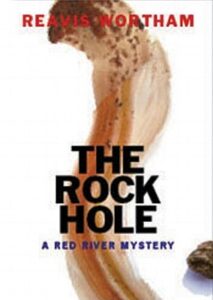
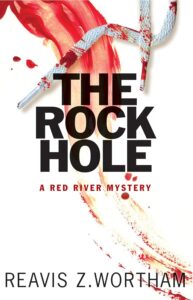
As a new author well over a decade ago, I didn’t realize there would be so much to argue about, and that I’d have so little input. The original cover for The Rock Hole is still out there for some reason, because as you all know, nothing ever vanishes from the internet. They floated this one out there and I found unspeakably odd.

Standing up on my hind legs and argued with them. “I don’t know what that is.”

“It’s your cover.”

“It looks like someone skinned a flamingo’s head and neck. I don’t remember including flamingos in my novel.”

“It’s a blood smear.”

“From a flamingo?”

“No, from…something.”

“No.”

“Well, first time authors don’t usually have a lot of say in what our artists produce.”

“Then I won’t say a lot. Different art would be nice.”

We volleyed for quite a while until they came up with something more suitable and I kinda liked the bloody shoelaces.

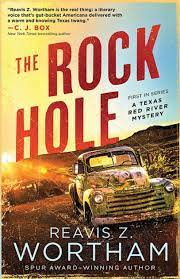
Other covers came and went for that series, though none of them excited me. It wasn’t until Laying Bones came out that I thought they understood what I was doing. They finally got it right on the re-release for The Rock Hole.

I’ve heard authors say the covers of their books had nothing to do with the contents, and they had to push back also. And I should have known the importance and argued even more in those earlyyears, because my first job was shelving books in a public library and I knew what caught my attention even back then. They called us pages, funny on several different levels, but I always noticed covers as they came through and still recall several novels I read, because the art was so good.

Then there were those earlier years, when I bought books off the spinning rack in the drugstore, or at a tiny independent bookstore near my house for sixty cents. It was always the cover that caught my attention, then I’d read the back.

It’s the same today, and due to reduced shelf space, many times only the spine is exposed. Whenever a book is placed outward, the dust jacket will either catch someone’s attention, or fade into the background.

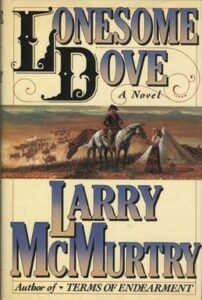
I didn’t buy the first edition of Lonesome Dove, by Larry McMurtry, when it released in 1985, because I didn’t like the jacket. People told me how great that novel was, and I finally bought it, despite my original revulsion at the depiction of a cattle drive.

When Florida Roadkill, by Tim Dorsey, released in 1999, I snatched it off the shelf and have been a fan of his work ever since.

Which leads me to another important part of marketing. The title. There’s always a lively discussion at my house whenever I’m coming up with what to call the latest work in progress. With the help of my Bride, we hit upon something that works for us, but doesn’t always tap the button at the publishing house.
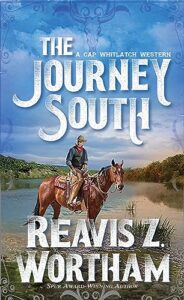
More discussions ensue. For example, my first traditional western will release on April 23, 2024 under the title of The Journey South. The working title was Hostile Territory, which I loved. However, my editor called to say they’d already assigned that one to another author.

“Blankety Blank already has that title.”

“But I like it. My book takes place in the Indian territories. It’s perfect.”

“You’re right. It was perfect, for Blank’s book.”“

But I want it.”

“Your character’s taking a prisoner south from the territories to Texas.”

Going South?”

“A movie that starred Jack Nicholson.”

“Dammit!”

We cussed and discussed ideas until settling on the new one. Then they sent their concept and I agreed.

The Only Saloon in Town is in the can and I’m waiting on the cover art. It’s kinda nail biting, because I already have an image in my head that won’t be anything like their art department comes up with,but that’s half the fun of this job.

I wouldn’t have it any other way.


The Evolution of Us

I was one of the first people in the early 1980s to switch from analog to solid state receivers to increase my musical enjoyment. Not long afterward, I jumped on the CD bandwagon, a victim of commercial hype that promised clean recordings without the cracks and pops of vinyl albums and the portability of those classic silver disks. It didn’t matter I was that guy who bought a brand spankin’ new record, played it once to make a cassette recording, and then re-sleeved it.

Back then, the speakers in my living room were waist high, and had enough bass response to rattle the windows if I wanted rock and roll, and sometimes, I did.

Then came iPhones, and the world now listens to Bluetooth, playing it through ear buds or automotive sound systems that cost more than my first entire car. It sounds great! However, I seem to be the victim of friends and family who want me to hear a new song on that infernal device that absorbs our lives and insist on playing it through a tinny micro-speaker the size of a pin head.

Sigh.

Then not too long ago, I went back to my younger roots, buying a 1970s Marantz receiver. A business half an hour from my house specializes in getting them back up and running, and after a four month wait, it came back looking and sounding brand new. My brother found me a vintage turntable and an old-school 8-track player. I located a like-new cassette player. The Bride and I are back to music full of warm life.

She and I seldom throw anything away. We keep things, though they might be misplaced for a year or two. We have albums, 45s, cassette tapes, and 8-tracks from our larval years. The only thing missing is half my original album collection I left with my starter-wife, who threw them out.

But the Bride and I wanted to play tapes made decades earlier, and after three moves, I couldn’t find them. We searched high and low for a black case full of cassettes and wondered where they’d gone. Determined to find them, I resigned myself to an archeological dig through boxes in closets, under cabinets, and in the attic.

Huzzah!

They were no longer in the aforementioned case, but stored in a couple of old boot boxes. Now we’re listening to vintage music that takes us back to a different time, and to my point.

I tell you all that, to bring this forward. I’ve also switched computers a number of times, and though I know most of my material written since 1996 is somewhere in this electronic netherworld, I have trouble finding those files.

See, I used the phrase ‘those files.’ Not stories. Not manuscripts. Not notes. Files. New technology.

We pause here while I go put on a pristine John Denver album I bought 50 years ago. Ah, it sounds just like it did back in 1973.

I continue. The organizers at the Dallas Noir at the Bar asked me to participate, and I needed something special. I seldom write short stories, and didn’t want to read from any of my published books, or a manuscript under construction.

Then I remembered a short period of time ten years ago when I was beset by abbreviated creativity. I vaguely recalled hammering out a couple of stories that might work, so I went in search of them.

I’d run across one of the “files” while working on my latest novel, Hard Country. It was in a sub-file (don’t ask me how or why) along with a shelved manuscript that hadn’t seen the light of day in over 25 years. I virtually dusted off those 350 pages and found a chapter that would fill a hole in this first Tucker Snow novel.

Of course it needed work. I’d polished my style since then, so I got that old soft diaper out and went to work on the vintage/seasoned/almost forgotten story that became an integral part of the novel.

Huzzah, again!

Now I needed that short eight-to-ten-minute story to read at the Wild Detectives in Dallas. I finally found The Safe, 1950s noir about a guy who meets the girl, steals his boss’ safe, and sweeps her away along old Route 66 to a small town West Texas motorcourt.

The piece was too long because some other bad guys ‘peel’ the safe while my protagonists are at the movies, and because I’m a procrastinator, there wasn’t enough time to tighten it up. I dug deeper.

Oh, wait, there’s a novella I’d written back in 1982. Nope, too rough, too many character attributions, and a ton of adverbs. I liked it though, and sent a quick note to a magazine editor I met a couple of weeks ago.

“Dear Bob. You need to publish this western. Sincerely, Rev.”

Bob said yes about ten minutes later. Now I need to get out that old polish rag again and go to work. I pasted that one on my desktop so I could find it again, but I still needed a story for the noir.

The Professional? Did I write that? I gave it a quick read and recalled creating Nick, who’s waiting on a mysterious contact in a local park. Not bad. Needs a little work. Tighten up here, suture there, excise that, blow up the font. It read pretty dang good.

Hang on, y’all, while I stuff an 8-track into the player and listen to The Gatlin Brothers performing Sweet Becky Walker. Gads, that background hiss reminds me of those days in the early 1980s when I was hitting the honky tonks and listening to good country music. For some reason, I smell beer and cigarettes…

…so back to the noir, I printed the story off and headed for the event. Seven other authors and poets were there, and the fun began. I was next to last, and that gave me the opportunity to have a drink and listen to the creativity of others.

Then it was my turn. I slid The Professional from the envelope, took the stage, and read. All went smoothly until the last page. The climax! The cherry in an old fashioned, the candle on top of the cake, burning brightly and ready to blow out. People were on the edge of their seats to see how I wrapped up this story of murder, justice, and criminal professionalism.

Except that last page hadn’t printed. I stopped at the wrap, where it all came together, and guffawed, admitting what had happened and that I’d unintentionally presented a cliffhanger.

Some would be embarrassed, some frustrated, some disappointed, and some mad that they’d made a mistake in front of their peers and strangers. I was none of those. Taking a moment to make some off-the-cuff fun comments, I figuratively swept my hat, bowed, and took my seat to applause.

Like those pops, crackles, and skips on an old record, it’s all just a collection of motes, memories, and scratches that make up life. It’s fun, and entertaining. My unprofessional readus interruptus, or in true Latin, interrumpitur lectio, (dang, Spellcheck hates those four words) made that presentation so memorable it was all anyone could talk about as we gathered ourselves and left.

Embrace the old, life, music, technology, the mistakes you’re bound to make, and blow off some of your old work that’s gathering dust somewhere. It might all just work for you in the end in more ways than you anticipate.


Somebody’s Watching Me

When I wrote my first Sonny Hawke novel, Hawke’s Prey, I structured the plot around a 100-year-snowstorm in the Big Bend region of West Texas. This arid desert sees more rain than most would believe, but the inclusion of deep snow was a surprise to most people.

To be sure I wasn’t getting into that weird world of reader volatility about reality––

“Cars always blow up when you shoot them! Don’t you watch movies?”

“You dumb writer. There’s no thumb safety on a Glock!”

“Can’t you read a map? Elm Street in downtown Dallas is one way going west!!!”

 –––I contacted local Channel 5 weatherman David Finfrock to see if he could explain how such a storm could arrive in that part of the Lone Star State. He graciously invited me to his home and we sat down with paper maps so he could show me how the elements of such a storm could come together.

I outlined the snow storm exactly that way in the book and caught grief from a number of readers who swore there had never been a two-foot snow in Alpine or Marfa, the two towns I combined into Ballard for the novel. The record was 19” back in 1946.

In 2021 and again in 2023, snow fell to startling depths that drifted more than two feet in many places, shutting down that entire part of the country. I was vindicated.

My most recent novel, Hard Country, is a contemporary western featuring Brand Inspector Tucker Snow and his brother, Harley. They work together to take down a meth dealer in rural Northeast Texas, and in the course of the story, Tucker’s late-model Dodge dually is stolen.

They get it back, and Tuck drives it to retired friend west of Fort Worth to see if he can download any data from the pick-up’s computer. The wizard of a mechanic plugs a device into the Dodge and downloads tons of data. They find that the thief linked his iPhone to the vehicle’s blue-tooth, wanting to hear some bad-boy music while he drove. That personal info helped unravel the meth dealer’s world.

This is an excerpt from the novel:

Don pointed at the computer screen. “Everything about Tuck that he didn’t know was downloaded on the truck’s computer. Look here. There are two levels to what I’m looking for. These are places you’ve been. The GPS keeps track of everywhere you drove.”

I didn’t like that one bit. “You’re kidding.”

“Nope. The black box in there’s been tracking you since the day you drove off the lot. Here are the speeds you ran from Point A to Point B. They say it only records and holds the info for a short while, but it’s a lie.”

Harley chewed his bottom lip. “How long has this been going on?”

“Since 1994. It started out innocent enough, like everything else the government does, but then they started adding stuff on. The data was used to track how cars performed in crashes, but then they went off the rails with it. They’ll tell you it doesn’t track where you’re going, or record audio and video, but they’re lying through their teeth.

“Now they’re into data mining. Right now there are over seventy-eight million cars on the road with these recording devices. I ’magine ninety-eight percent of the cars sold will be tracking their owners within the next ten years, and probably doing more than that.

“That’s where the technology gets out of hand. More recent vehicles record your habits, where you go, and when. Here’s one I don’t like.” He paused the scrolling screen and pointed with the cursor. “Cameras in cars now track your eyes when you’re driving to see whether you’re watching the road, and not your phone or any other distractions. They do it in the name of safety, but I don’t believe that for one minute.

“What I’m looking for is even deeper, and more disturbing. They’re downloading your taste in music, or your voice commands. They search your history, looking at apps such as Waze, Apple CarPlay, Pandora, or Music Box…which is where I am now. You like big band music, huh?”

I felt the hair on the back of my neck prickle. I do like big band music and only listen to it when I’m in the truck by myself, but the idea of the car recording my listening habits was uncomfortable, to say the least.

“Folks are driving giant smartphones these days. The minute you pair your cell phone with the truck, either by Bluetooth or through a USB port, they tap into everything with personal data, anticipate your needs, and even log into apps that have credit card information and who has access to all that info that shouldn’t be out there.”

He poised and glanced over his shoulder at me. “I can find your credit card numbers if you want, ’cause I bet you’ve ordered stuff through your phone. Boys, you’re watched twenty-four seven. Big Brother is here and people feed him info every day without a shrug or a raised eyebrow. Give me an old ’56 Dodge truck any time.”

There’s more, but you get the picture. People said I was making all this up, but I first heard about it on the Ed Wallace radio show in Dallas. From there I did some digging, and uncovered the actual information above, and then some.

I was once again vindicated by a recent CBS 12 News Now report that featured Jen Caltrider, Director of Mozilla’s “Privacy not Included, who said, “Data is money these days and cars have the ability to collect so much of it, maybe more than any other device including phones.”

This data that is sold to third parties with deep pockets and is also shared with the U.S. Government. The personal information comes from devices within late model cars they investigated (such as Mercedes, Nissan and Ford), utilizing cameras, microphones, and censors. Some of the shared or sold data they reported in the news story includes medical information, buying info, and get this, your sex life.

Hummm…

According to this report, cars collect more of your data than even your phone, and I suspect that includes your Alexa, Dot or whatever smart device is listening in your home. I know that’s true, because one day in the living room a couple of years ago the Bride and I were talking about old school paint by number sets and one I did with my mom back in the early 1960s. That afternoon, an ad popped up on one of my social media platforms for…wait for it…paint by number sets.

Can you imagine the incredible odds of that being a coincidence?

Think of the line in the 1984 hit by Rockwell, “I always feel like somebody’s watching me.”

So do your research, suffer the slings and arrows of disbelievers, and don’t believe there’s anything left to make up. Now, get back to writing.

Hard Country. “An action fan’s dream. Non-stop excitement. Wonderful characters. A terrific locale. And a startling bulletin about how your car is watching you.”—David Morrell, New York Times bestselling author of First Blood


Distilled Thoughts

I’m one of those people who has written just about anything. Novels, short stories, screenplays, magazine articles, newspaper columns, pyramid style newspaper articles, news releases, and so on.

The one thing I can’t write is a song.

It won’t come. I can’t do it. I sit down with an idea and nothing works. I’m sure it’s partially because I’m trying to include too much information. Good songs are tight, brief, and have an impact.

Before I continue, let’s be clear I’m not talking about bubble gum pop rock lyrics, (baby oh baby hey baby baby humm), or this new so-called country music that’s simply repetition and tailgates, trucks, and partying in a field.

I’m talking about songs that tell a story. That’s what we do, right? Writers want to tell a story, whether it’s a novel, or shorter as a novella, or the traditional short story. This morning I woke up to a new, rain-washed world of clean, cool air and for some reason The Wabash Cannonball came into my head.

This narrative was originally written sometime in the 1880s and is sweeping in scope.

From the great Atlantic ocean
To the wide Pacific shore
To the queen of flowing mountains
For the hills and by the shore
She’s mighty tall and handsome
And she’s known quite well by all
She came down from Birmingham o
n the Wabash Cannonball

Well now listen to the jingle
To the rumble and the roar
As she glides along the woodland
Through the hills and by the shore
Hear the mighty rush of the engine
And the lonesome hoboes call
No changes can be taken
On the Wabash Cannonball.

Now here’s to daddy Claxton
May his name forever stand
He’ll always be remembered
In the ports throughout the land
His earthly race is over
And the curtain round him falls
We’ll carry him home to Glory
On the Wabash Cannonball  
                        Copyright A.P. Carter

Here’s a link to the Roy Acuff version written long ago. The quality has issues, but the story is there.

https://www.youtube.com/watch?v=i435ovKX9aE

This song (I didn’t include the two reprises at the end) tells a story about Daddy Claxton, an engineer, but it’s also filled with descriptions that put the reader in that place, something we all seek do in our writing. Sight, sound, and though the original writer A.P. Carter never mentions the sense of smell, the writing brings smoke, clear mountain air, and the humid odor of any coast in this land.

Another song I use when I’m teaching comes from the late, great Charlie Robison, who recorded The Lights of Loving County, a condensed novel. It’s the age-old story of betrayal, and ultimate justice. I wish I’d written this perfect story complete with a riveting plot, descriptions of our desolate West Texas, and an excellent twist. Loving County is the most sparsely populated county in the country.

Well, I loved a girl
She lived out in Pecos, and pretty as she could be.
And I worked the rigs on out in Odessa
To give her whatever she needs.

But that girl, she run with an oil company bum
‘Cause the diamond was not on her hand.
And he left her soon ‘neath the big loving moon
To go out and X-ray the land.

Now I sit in my car at the New Rainbow Bar downtown,
And the frost on the windshield shines toward the sky
Like a thousand tiny diamonds in the lights of loving county.

Well, l walked in that bar and I drank myself crazy
Thinking about her and that man.
When in walked a woman, looking richer than sin
With ten years worth of work on her hand.

Well, I followed her home and when she was alone
Well, I put my gun to her head,
And I don’t recall what happened next at all
But now that rich woman, she is dead.

Now I drive down the highway
Ten miles from my sweet baby’s arms.
And the moon is so bright it don’t look like night
And the diamond how it sparkles in the lights of Loving County.

But she opened that door and I knelt on the floor
And I put that ring in her hand.
Then she said, “I do” and she’d leave with me soon
To the rigs out in South Alabam’.

Well, I told her to hide that ring there inside
And wait ’til the timing was good,
And I drove back home and I was alone
‘Cause I thought that she understood.

The next night an old friend just called me to wish us both well,
He said, he’d seen her downtown, sashaying around
And her diamond how it sparkled in the lights of Loving County.

Well that sheriff, he found me out wandering
All around El Paso the very next day.
You see, I’d lost my mind on that broken white line
Before I even reached Balmorhea.

Well, now she’s in Fort Worth and she’s just giving birth
To the son of that oil company man.
And they buried that poor old sheriff’s dead wife
With the ring that I stole on her hand.

And sometimes they let me look up at that East Texas sky.
And the rain on the pines, oh Lord, how it shines,
Like my darling’s little diamond in the lights of Loving County.

Copyright, Charlie Robison

https://www.youtube.com/watch?v=uewrSagO-r4

Studying the lyrics of songs is an excellent exercise in creative writing. These artists have distilled the essence of a story into wonderfully crafted bites. Last night the Bride and I fired up our new old-school Marantz stereo and Craig turntable. We’ve returned to our analog roots and listened to old vinyl for hours and absorbed a heartfelt world of music about life, survival, hearbreak, and real country.

The following lines and brief verses are wonderful, descriptive images for the listener.

You don’t know lonely ’til it’s chiseled in stone. Vern Gosden, Chiseled in Stone

She wore red dresses with her black shining hair,
Oh, she had my baby, and caused me to care.
Then coldly she left me to suffer and cry.
She wore red dresses and told such sweet lies.
Dwight Yoakum, She Wore Red Dresses

There’s a burning question afire in my mind, you always had the answers to the ones I couldn’t find.  Clint Black and Hayden Nicholas, Where Are You Now

Seeking relief from your memories, I’ve almost Jack Daniels drowned.  Ronnie Reynolds and Linda Craig. Recorded by John Anderson, Almost Jack Daniels Drowned.

As I write today, I hope such sentences come to mind, because these are the things that stick with readers.

It’s frustrating that I can’t write songs, but I’m eternally grateful others can.

Inappropriate Proposals

A gentleman I’ve known for years came up to me at an event a few days ago. “I hear you have a new book out.”

“I do. It released last month.”

“I hope it does well.”

“You and me both, brother.”

“You need to write a book about my Uncle Fred. I told you about him the last time I saw you.” (He did, and to excess). “He’s a character. There’s a whole book in that guy.”

No, there’s not!

My eyes glazed over as he related an event in which his uncle cracked a funny decades ago. When he finished about six hours later and cackled like a loon at the recollection, I managed a friendly grin. “Why don’t you write it?”

“I’m no author. I can sure tell you some great stories about him, though. It’d be a great book.”

No, it won’t.

“A good book needs a lot of things besides a character, like a plot for instance. That’d be a good start, but jot a few things down and maybe it’ll turn into the start of a novel for you.”

He slapped me on the arm. “You bring your pad and a pen the next time and I’ll tell you all the crazy things he’s done.”

I had to speak around a frozen grin. “I bet he’s still doing them.”

“You bet he is! You meet this guy, and you’ll want to write about him!”

Nope.

*

An elderly relative sat down beside me at a family gathering. “I’ve written a book about my life.”

“Good for you!”

“It needs work, though.”

“All first drafts need work. How many words is it?”

“I don’t know. It’s sixty pages, though.”

I forced my eyes not to glaze as the elderly woman told me about how her husband had “gone crazy” and eventually joined a cult. “He tried to kill me several times.”

I’m considering it myself!!!

Instead, I continued to listen as she dug around in the images on her phone. “Here’s a picture of one of the pages. You want to read this?”

You shot photos of your work!!!???

“I’d like you to read my book and help me make it interesting. There’s lot of folks from this town in it, too. It’s the kind of book that’ll help others.”

Good lord! That entire page is one long paragraph and my brain’ll leak out my ears if I try to…

“I’d be careful about naming names.”

“Well, it’s a biography. I can tell the truth. Tell your agent to call me.”

“No, but good luck.”

*

“Let me tell you some stories about my family and you write it down and we’ll split the money.”

“No thanks.”

*

“My whole life has been full of ups and downs. Would you write it for me?”

“No.”

*

“Would you read my manuscript and…”

“No.”

“You’re mean.”

“I’m the boogyman all right.”

*

I’m sure every author has endured similar conversations and requests, or been approached with similar propositions, or someone did their best to get them to write their life story. The truth is, these stories might be interesting because they know the people, or have lived the story, but they don’t have what it takes to become a novel that will interest an agent, editor, or readers.

It’s not right. It’s not wrong. It just is.

*

I bet I’m not the only one who’s been approached like this, but that’s okay. It’s an honor that folks like my writing and want me to tell their stories, except I can’t.

How ‘bout y’all?

The Time it Takes

During a recent book talk, a lady raised her hand. “How long does it take to write a novel?”

Oh boy! I got to use my high school freshman teacher’s taunting question right back at her. “How long is a piece of string?”

She frowned, as did almost everyone in the audience. And like Miss Adams, I had to explain. “My piece of string isn’t the same as yours, or hers, or his. They’re all different.”

“What does that have to do with my question?”

“My first novel took years. I wrote it whenever I had a few minutes, and I’d be willing to bet that most authors will have a similar story. Few of us were able to sit down and hammer out our first book out without stopping.

“Then I finished the novel and lost it in an electronic hiccup. Starting over, it only took three or four years after that to write it from memory. Then I carried it around, polishing here, tweaking there, telling everyone I’d written a novel and basking in the glory of having finished it.

“The truth is, I was still tweaking it even after finding an agent. While she shopped it around, I polished it some more, because I’d read that you have to make the stinkin’ thing shine.”

Nods all around.

“So if you’re asking how long that particular manuscript was under construction, I’ll have to say about ten years.”

Her eyes widened and I nodded knowingly, because I came through the other side.

But here’s the fun part for the rest of you to ponder. After it was accepted for publication, I kinda lounged around, being an author in my mind. About ten days after it hit the shelves, my editor reached out. “You got great reviews! When do I get to see pages for the next one?”

“Huh?”

“Your next book comes out in about a year. We already have it on the schedule.”

Wait, what? They have another book scheduled and I haven’t even started it yet? What the hell!!!???

I didn’t have a ghost of an idea for another book and my publisher wanted a finished manuscript to follow the first novel. Stunned, we hung up and I sat at my desk and looked around. What am I gonna do? I’m already a failure.

Then I remembered a novella I’d worked on through the years. Would that work?

I dug the pages from our file cabinet and read them. Yep, I could change the name here, add a character here, throw in the two now-eleven-year-old kids Top and Pepper. Cool! I have a jump on the next book! I can change the location and set the whole thing in my fictional town of Chisum, which I’d modeled on Paris, Texas.

I looked at the word count. I looked at the calendar. I looked out the window and examined my fingernails. Then I went to work.

Burrows, that piece of string, came in at 90,000 words and was finished in six months.

The woman at the book signing was giving me the Hairy Eyeball as I rambled on. “In my case, once I finished the second, I got into a rhythm. I shot for five pages a day, which seems like a lot, but by then I’d retired from a long career in education and was dedicating all my time to writing.

“Some folks’ piece of string is only a page a day. Others might be a thousand words, and I’ve heard of authors who hit their personally established word count and stop in mid-sentence so as not to burn their candle too fast.”

I learned, and now with several different series in the queue, I’ve gotten faster.

One novel birthed in a dream wrapped in six weeks.

I just finished a traditional western that took three months.

I’m working on another traditional western that I believe will wrap in eight weeks. I’ve been averaging four to five thousand words a day on that WIP, on these days I can invest the time. Other days come in at two thousand words. I’ve cracked 30,000 words on that one, and in my mind, I’m almost on the downhill side.

So how long does it take to write a novel?

I don’t know.

Looking online at “master” classes, or dozens of articles, you’ll see different lengths of string. One self-publishing site states with authority that you need eight months to write 80,000 words.

Another says your first draft should only take three months.

The truth is, your piece of string is different. Screw what everyone else says. It’s your work, and your own pace.

J.K. Rowling took six years to write the first Harry Potter.

It took Stephen King “several years” to finish Carrie, and then he worked on The Stand for two years.

Don’t let arbitrary deadlines or timelines to drive your work. Write when you can, as much as is comfortable and still keep the juices flowing. But make no mistake, speed, or the lack thereof, isn’t important. It’s the quality of work that makes a novel readable, and successful.

Write on!


The Weight

It’s signing season again for me with the release of Hard Country, my first novel in the Tucker Snow series. For an author, this is the time to emerge from the writing cave and look real people in the eye. For some, it’s frightening. For an old classroom teacher and public speaker like me, it’s an opportunity to interact with fans, and I love it.

At my last signing in Northeast Texas, I was approached by a woman somewhere in (I estimate) in her thirties. Her brown hair was cut short, and she had a studious look about her. “Can I talk to you when you’re finished?”

“Sure.” I scribbled my signature on her book and she took a nearby seat to watch as a long line of fans worked their way down the table. A friend who is a retired librarian helped with the books, opening them to the proper page and making sure folks wrote their name on a note so I wouldn’t misspell them.

My events are relaxed, and I spend a lot of time with those who want to talk as I’m signing, so that patient lady sat there for half an hour. Finally it was just her, Librarian, and myself. The room quieted and she pulled her chair closer.

Putting the cap on my pen, I didn’t ask her name, and she didn’t offer it. I leaned back, expecting to hear about her novel under construction. “I bet you’re a writer.”

She looked sheepish and adjusted the dark-rimmed glasses on her nose. “Trying. I’m not published, but I’m in a writing group and I read a lot.” She held up my book. “I’ve been looking forward to your new series. I love world building.”

“How far are you in your manuscript?”

“About thirty thousand words.” She grinned. “Good words, too, all lined up in the right order and everything, but I’ve hit a roadblock.”

“What is it?” I hoped she wouldn’t say she had writers block.

“Well, I’m in a writing group which has helped me a lot. We meet once a month and share what we’ve written. They’ve made some good points and I’ve listened to their suggestions, but I have re-written pages for so long that I’m kind of lost.”

“Write your book.”

She looked startled. “I am.”

“No.” This is where I’ll make some folks upset, but it’s something, I’ve seen over and over. “You’re in a loop, and listening to others instead of plowing ahead with your manuscript. I get that writers groups are beneficial. It’s a great support system. It’s great to talk with others who understand, too, and to get feedback for a while. Keep going every month and maintain that interest that keeps the fires burning, but get your book written and don’t stop until you type, The End.”

“But they’ve had good ideas.”

“I’m sure they have. How many are published?”

“None. They’re good writers.”

“I’m sure they are. Write your book.”

Librarian gave me the eye and I backed off.

The lady leaned forward. “There’s another thing. It’s the big block I was talking about and I’m really worried.”

“What’s that? Writer’s block?”

“No,” She looked uncomfortable. “It’s come up…”

“In your writers group.”

“Yes.” She tilted her head and looked at me like a puppy trying to make sense of the English language. “See, my book is set in the southern Oklahoma territories over a hundred years ago and my protagonist is someone related to me that I heard about when I was little. She was Choctaw. I have other characters that are like me.”

I knew where she was going, but made her say it. “And that is?”

“My group says I’ll get in trouble for cultural appropriation, but it’s historical fiction based on what my grandmother told me, and the research I’ve done.”

“Was she Indian?”

“Cherokee.”

“Is it about your grandmother and what she told your? Someone you knew?”

“Partially.”

“Write your book.”

“But I might get in trouble, writing characters who don’t look like me.”

“You won’t until you write your book.”

“But…”

“I assume you have a large cast of characters, so write about them all. This is a diverse world, and use that to be accurate. Tell a story that’s faithful to the time and write the truth. Use all the honesty you can and don’t worry about what others might say. Concern yourself with what you’re saying in this world you’re building.”

She looked so relieved I thought she was going to cry. “So it’s okay to have characters that aren’t like me.”

“In my opinion, yes. Do your research. You’re using different historical characters who were there, and you’re including them to heighten the richness of the story, so just write your book.”

“You keep saying that. So don’t be afraid.”

“Write the truth.”

“I think I can get back to work now.”

“Go put words on paper and don’t worry about what others might say. We’re artists and our fiction comes from all those around us. Concentrate on what you’re saying and you’ll be just fine. Carry the weight of writing, not the burden of what a very few others might say against your dream.”

She used both hands to shake mine. “Thank you.”

I wasn’t through. “If you have something to say, say it.”

She nodded, and left.

The Librarian gave me a funny look when the lady was gone. “You were kinda harsh there, bud.”

“The truth is sometimes harsh, but she’ll never get it written until she gets back to work.”

That goes for everyone else, too.


The Classics

I was a voracious reader as a kid, and read well beyond my grade level. When other kids were reading the Bobbsey Twins, Nancy Drew, Half-Magic, and Pirates Promise, I picked up To Kill a Mockingbird, Tom Sawyer, and believe it or not, The Dirty Dozen.

Because of my reading habits, I’d already blasted through such novels as The Adventures of Huckleberry Finn, Lord of the Flies, Farenheit 451, and Death of a Salesman well before some of those were assigned in English class. One I couldn’t stand was The Great Gatsby, and still didn’t like it upon re-reading the novel last year.

Not too long ago I started thinking of those classics I’d read as a kid and decided it was time to revisit those novels. Now that I’m pushing 70, I wanted to see how those novels apply these days after a lifetime of experiences, and it was fascinating.

I started with Steinbeck, and the first novel I ever read by this Nobel Prize winning author was Travels With Charley, and that was somewhere around age fourteen. It sparked an interest in U.S. travel that has continued to this day. Then I went back and read Of Mice and Men and by the time I was in high school, The Grapes of Wrath, all before my senior year.

The Bride and I were in Palm Springs a couple of months ago and I ran across that title in an antique store. See, there’s that travel thing and I coughed up five dollars for the well-thumbed paperback reprint circa 1969. Book deadlines left it in my travel bag until last week.

I just finished it yesterday, and was surprised how well it held up. Those who know me understand my fascination with the Dust Bowl, so much that my novel last year entitled The Texas Job was set in the Great Depression. Maybe it’s because of the stories I heard from my family members who survived on scratch farms during that time.

To me, Grapes of Wrath is haunting and somewhat of a minor horror novel, based on what the Joad family endured on their way out to the promised land that proved to be something entirely different. I’d forgotten Steinbeck’s writing style that I feel might have sparked my own, though I don’t always write in third person. He switches back from third, to social commentary in alternating chapters that is unique to this author.

He wrote of the people I grew up with, and his dialogue and descriptions are as comfortable as an old shoe. He used words like “strowed,” and “pone,” and “flour and lard,” and phrases like, “the men squatted on their hams,” and “we got to make miles,” and “she looked down at her hands tight-locked in her lap.” It felt like I was hearing the old folks talking again.

I’d also forgotten that his book was banned after its release back in 1939, because critics said it promoted organized labor, extramarital sex, and violence. Still, to this day, it continues to be a source of controversy for some of those reasons listed above. Reading it today, this novel about as harsh as watching an episode of Law and Order.

Next in line for me is Of Mice and Men, then on to either On The Road, or Lord of the Flies, all read over fifty years ago.

Which classics do you need to re-read, and which ones impacted you?


Farewell, and Amen

Sometimes we don’t have to use all the words we know. You can convey entire stories full of feeling with just a few sentences. Today’s blog post:

Our little Shih Tzu, Willie, now sleeps in the garden. As I work, the house is silent, save for the ticking of the clock.