About Reavis Wortham

NYT Bestselling Author and two-time Spur Award winner Reavis Z. Wortham pens the Texas Red River historical mystery series, and the high-octane Sonny Hawke contemporary western thrillers. His new Tucker Snow series begins in 2022. The Red River books are set in rural Northeast Texas in the 1960s. Kirkus Reviews listed his first novel in a Starred Review, The Rock Hole, as one of the “Top 12 Mysteries of 2011.” His Sonny Hawke series from Kensington Publishing features Texas Ranger Sonny Hawke and debuted in 2018 with Hawke’s Prey. Hawke’s War, the second in this series won the Spur Award from the Western Writers Association of America as the Best Mass Market Paperback of 2019. He also garnered a second Spur for Hawke’s Target in 2020. A frequent speaker at literary events across the country. Reavis also teaches seminars on mystery and thriller writing techniques at a wide variety of venues, from local libraries to writing conventions, to the Pat Conroy Literary Center in Beaufort, SC. He frequently speaks to smaller groups, encouraging future authors, and offers dozens of tips for them to avoid the writing pitfalls and hazards he has survived. His most popular talk is entitled, My Road to Publication, and Other Great Disasters. He has been a newspaper columnist and magazine writer since 1988, penning over 2,000 columns and articles, and has been the Humor Editor for Texas Fish and Game Magazine for the past 25 years. He and his wife, Shana, live in Northeast Texas. All his works are available at your favorite online bookstore or outlet, in all formats. Check out his website at www.reaviszwortham.com. “Burrows, Wortham’s outstanding sequel to The Rock Hole combines the gonzo sensibility of Joe R. Lansdale and the elegiac mood of To Kill a Mockingbird to strike just the right balance between childhood innocence and adult horror.” —Publishers Weekly (starred review) “The cinematic characters have substance and a pulse. They walk off the page and talk Texas.” —The Dallas Morning News On his most recent Red River novel, Laying Bones: “Captivating. Wortham adroitly balances richly nuanced human drama with two-fisted action, and displays a knack for the striking phrase (‘R.B. was the best drunk driver in the county, and I don’t believe he run off in here on his own’). This entry is sure to win the author new fans.” —Publishers Weekly “Well-drawn characters and clever blending of light and dark kept this reader thinking of Ray Bradbury’s Something Wicked This Way Comes, and Harper Lee’s To Kill a Mockingbird.” —Mystery Scene Magazine

In The Country

I’m up against a looming deadline and am living on coffee and burritos, so today’s post is a cheat because it originally appeared on the online version of Stand Magazine in a different form.

My works are always set in small-town Texas. Though I live near the DFW metroplex, I’m no fan of cities, and only a couple of chapters in a twelve-year career as a novelist have occurred in those canyons of concrete and steel.

Maybe that’s because my roots run deep in rural Northeast Texas, and it all stems from deep ancestral family anchors and my maternal grandfather who was a farmer and constable in Lamar County from the 1940s through the mid-1980s. I mine these stories and memories from long ago, because he made a statement when I was ten that I’ve never forgotten.

We were in his old farm truck, heading toward one of the two general stores in Chicota to pick up a loaf of Ideal bread, and Dr Peppers. In warm weather, he drove with his left elbow hanging out the open window. Always in faded blue overalls, light blue shirt washed so often it was soft as a baby’s bottom, and wearing his ever-present LBJ hat, he threw a glance at an unpainted farmhouse sagging under the weight of past years.

“Another one of my old uncles lived there when I was a kid. It won’t be standing much longer. He was in the pen once, but got out and married and then that ol’ gal up and run off on him and he just withered away.”

He considered his statement for a moment. “You know, son, small towns are like ponds. Up on the surface there’s not much to see, but underneath, there’s a world of life and death going on.”

Those two sentences stuck, and have been the basis for much of my mystery and thriller writing career.

Back in the 1960s where my Red River series is set, there were few secrets in our community. Throw in the fact that we were all related in some way, news traveled fast over party lines. It just occurred to me that I had nearly a hundred relatives living close to both sets of grandparents in a two-mile square, including third and fourth cousins with a couple of double-cousins thrown in for good measure.

In the country there’s always someone watching out the window, and despite today’s social media platforms, the ol’ grapevine still exists and the uninformed are surprised to find that folks living in rural areas have very little privacy in a general sense.

Small town folks know all about each other, and what they’ve done, good or bad, just as my running buddy John Gilstrap postulated in a post earlier this month.

For example, when I was a kid here was one instance when a strange Cadillac pulled up to a relative’s farmhouse looking for directions (decades before GPS) and soon the community buzzed that “someone” was visiting the Widow Davis.

It took a while for that bit of excitement to run its course, and Widow Davis in her late eighties was tickled pink to find out people were talking about her interest in something other than watching the daily stories (soap operas) on the one channel she received on her portable black and white television.

I guess the main reason I still visit these small towns in print, or in person, is because it reminds me of a simpler time. In fact, I based a novel on a 1960s mafia hitman from Las Vegas who wanted to escape his criminal life and start anew with his new girlfriend in the fictional Northeast Texas community of Center Springs.

But you can’t hide in a small town, and especially a smaller rural community. People know the minute you get there, and the ensuing plot of that novel rests firmly upon that misconception.

After another novel came out, one of my oldest aunts called me from her assisted living quarters, mad as an old wet hen. She launched into me the moment I answered. “Reavis Zane, I have a crow to pick with you!”

Where I come from, you’re in serious trouble when an older female relative begins a conversation with your first and middle names. I immediately felt like an adolescent boy again. “Aunt Irene, I’m sorry I haven’t called you in a while…”

“It’s not that. I’m talking about that new book of yours that I just read. Young man, you shouldn’t be telling family secrets!”

“I haven’t…”

“You did! You wrote about Leroy and Lizzie running off together and leaving their husband and wife.”

“No, I made that whole thing up. Those are fictional characters and… wait, what? I didn’t know that. Uncle Leroy and Aunt Lizzie were married to someone else before? Who were they married to?”

She grew quiet on the other end of the line and then snapped at me. “Well, those are family secrets and I’m not gonna talk about that!”

And she hung up on me.

Thinking back, a large number of successful authors set their plots in small towns and pastoral communities. Maybe that’s what I look for, a sense of quiet desperation, limited numbers of characters, and the skeletons that seem to accumulate in all our closets.

So if you move to a small town to escape the busy city and some crime real or imagined, visualize a pool, which is where livestock gets water in Northeast Texas, (it’s a pond in East Texas, and a tank in central and west parts of the Lone Star State). Whatever you call it, remember the surface is peaceful and calm as dragonflies circle and birds flit over.

But underneath, where you can’t see, there’s a world of life and death going on, and you’ll likely be shocked at what you find under there.

That Love/Hate Relationship

I have a love/hate relationship with copy editors. They don’t know that.

We need them. Lordy how I need them, because no matter how many times the Bride and I read a manuscript, we miss something, and this current work in progress is no different. I thought I’d turned in clean pages, and once again a detail-oriented individual found errors that I’d missed.

One thing I hated as a high school student was to see all those red marks on an assignment. I’d worked so hard to provide what my English teachers required, remembering all the rules of grammar, and the vocabulary necessary to tell a good story.

But when they were returned, passed back down over disinterested shoulders to my seat against the wall, those corrections and questions sent a flush of anger through my body and it was all I could do not to rush up to her desk and point out everything she’d highlighted that was wrong…

…in my opinion.

Today I still feel that same flush at the notes on the right hand side of the screen, but choke it down because they’re usually right.

Usually, I said.

A few years ago a side note in the page proofs raised my ire. The editor questioned the spelling of a pistol carried by one of my characters. The note read, There is no hyphen in a Taurus Ultra-Lite.

In my mind, I called up this individual. “But you’re wrong! There is a hyphen.”

“No there isn’t. I looked it up online.”

“Well, you looked it up wrong, because the pistol I have here in my hand has a Taurus Ultra-Lite stamped into the frame.”

“You have a pistol!!!???”

It really didn’t go down exactly that way, but I do own a Taurus Ultra-Lite (a terrible revolver in my opinion and I wish I hadn’t bought it), and those words and that hyphen really are stamped into the frame, justifying my use of that weapon.

Another copy editor once pointed out to me that my use of “booger-bear” was wrong in a Red River manuscript. Now, I grew up in fear of booger-bears in the night, and often pictured them as a child-chomping monster resembling the Creature From the Black Lagoon, but with longer teeth and claws and red eyes that glowed in the darkness.

Brrrr.

When I read that side note, I laughed out loud.

“According to the Urban Dictionary, a booger-bear is a woman of loose morals.”

A river of comments rushed through my brain, but I resisted. However, I wanted to write back, “Never use the Urban Dictionary to confirm anything I include about rural America.”

These days I include a note to the copy editor which reads:

“Please do not edit the spelling or use of words in my dialogue, nor should you edit for proper grammar inside quotation marks. This dialogue is regional, and therefore written the way us Texans use those words and phrases.”

Booger-bear.

I also do not care about the current grammatical rules that insist on creating these odd-looking names such as Cross’s, Williams’s, or any other possessive. I’m old, and the AP Press Style book says the correct way to write the possessive case of Reavis is Reavis’, not Reavis’s. Reavis’ work will always read as such.

Please do not attempt to correct guns or calibers. If you don’t know that a .410 shotgun is a caliber, then stay out of this discussion.

That really isn’t one of my notes, but I’d like it to be, along with the following:

No, there is not town in Texas called Nashville. I know it’s in Tennessee, and I’ve been there in a fruitless search for real country music. I made it up because I write fiction. If I intend to use a real name, all I have to do is grab one out of the air, because I can’t seem to make up a town name that hasn’t already been used. I wanted to use Hogansville as an example, but when I checked, there really is a Hogansville, TX.

But I don’t hammer them, because these fine editors are simply doing their job to keep me honest, and to ensure that when my book hits the shelves it will contain as few mistakes as possible. Copy editors are essential and they give that final polish to a book.

Don’t be too hard on them.

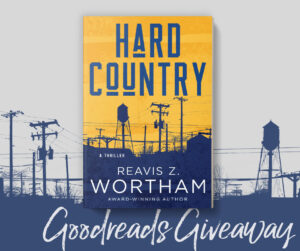
On another note: Sourcebooks and Goodreads are giving away 25 copies of Hard Country, my first novel in the contemporary Tucker Snow series that will release August 1, 2023. The contest runs from July 8-27th. Follow the link below to enter, and good luck!

Oh, and feel free to pre-order your copy from your favorite online dealer.

https://srcbks.com/44dWkQ0

Just One Book

Back in the early 1980s, I taught school under my good friend Curtis, who was then an Assistant Principal. Like me, he absorbed books by the dozens, and we spent hours discussing authors, books, and writing.

He knew I had dreams of getting published some day, and often encouraged me to finish a manuscript. Just one manuscript. “Finish the stinkin’ thing!”

We all know how that goes, but I started and abandoned a dozen ideas hammered out on an IBM Selectric typewriter. One manuscript even grew to seventy-five pages, and when I look back at it today (it’s still in the bottom drawer of my desk), I know why it died.

Years passed, and one day I got a newspaper column published and eventually self-syndicated those writings while his own career advanced.

He took a position as high school principal in one district, then assistant superintendent in another, and finally became superintendent of a small East Texas town before eventually coming back to Garland, Texas, the tenth largest district in the state.

I remained in Garland and had moved up as the assistant director of Communications and Public Relations. I was the guy on the front lines when things went wrong, and was the spokesperson for the district.

After I found myself again working under Curtis, we picked up where we left off and continued our talks about books and writing.

More than one lunch flew by as those conversations became more intense and in my case, somehow desperate. “I just want to get a book published. Just one.”

“You will.”

“It hasn’t happened yet. Look at us, were getting older by the minute and you’re getting gray headed.”

“Have you looked in a mirror lately?”

“Once, but there was some old guy there. Look, I think I’m missing out. Some day you and I’ll be in rocking chairs on the front porch, still talking about the works of other people. Then we’ll be gone and those books will still be on the shelves, maybe for generations. That’s what I want. A book on a shelf to tell a story, and to let people know I was here.”

“Don’t give up, then.”

“I never said I was giving up.”

“Sounds like it.”

“Shut up and pay the bill, boss.”

“You shut up and write.”

So I did. In 2011, my first novel was published, and in the ensuing years, there are more than a dozen on those shelves, with many more already written (waiting their turn to hit the shelves in the coming months and years), and right this minute, others contracted by two different publishers.

We’re both retired now and get together every couple of months. Curtis and I met for breakfast the other day and he grinned across the table, holding my book bearing the newest title which I signed to him. “Just one book, huh?”

“Yeah, and I made it.”

He sipped his coffee amid the smells of frying bacon and onions. He eyed me. “Now what?”

“What?”

“I know that look.”

I took a swallow from my mug. “I’ve been offered to ghost write a couple of novels.”

His eyebrow arched and he pushed his empty plate to the side. “You want to publish under another guy’s name?”

“No. I want the money that comes from publishing under another guy’s name.”

I outlined the deal and an unusual offer that would bring in even more than simple contract work.

He shook his head. “But your name wouldn’t be anywhere in those pages.”

“No.”

“You have a distinctive writing style. People will figure it out.”

“Maybe, but that’s not the point.”

“Aren’t you already writing under your real name for them?”

“Sure, but this is extra and those kinds of books just roll off without taking up too much time. I can write them, and still produce my Red River series, along with the new Cap Whitlatch westerns.”

“How many books a year is that?”

I sighed. “Three. Maybe four.”

“And how many standalone novels are you hammering out.”

“Two.”

“You can’t do it. You don’t have the time.”

“We’ll find out.”

He grinned down into his coffee. “And I remember when your dream was a single book on a shelf. Now you have a second career. I guess you need to get after that keyboard.”

So I’ve agreed to ghost write. I know half a dozen authors who’ve done the same thing. One is so prolific I was stunned by the number, and laughed aloud when he told me the names he wrote under. It’s been a great living for him, and he doesn’t care that his name is on just a few of them.

I look at the shelf to my left and my books under Reavis Z. Wortham take up most of the space. I have my wish, with many more to come.

But there’s the carrot out there that will swell my bank account.

Is that why we write?

Money?

Or is something else?


That Character Who Took Over

Imagination. That’s what writers possess, something invisible and hard to explain to those who don’t have such a gift. Authors have an ability to create worlds, settings, conversation, and even feelings that others can share. Readers find a way to bond with those “people” we’ve created and look forward to the next book, and the next.

I find it interesting that authors can create strong fictional entities who can carry the story, but can be quickly supplanted by a minor character intended to perform some short purpose to push the plot forward, and then depart.

But sometimes this minor supporting character starts to swell up and threaten to take over a book, or series.

Now as I continue with this thought, I suspect I might have written something similar for KillZone, but I’m on a damn tight deadline here (because I got my dates mixed up again and this thing is pouring out) at eleven in the evening, and I don’t have time to look older posts. Bear with me though, because there’s a different thrust this time and it came to mind while the Bride and I were on the road this afternoon.

By my third novel, The Right Side of Wrong, I’d built a small rural world in Northeast Texas back in 1966. The Parker family took center stage with Ned and Becky Parker who are in their golden years, Cody Parker and his (then) girlfriend Norma Faye, who represented the twenty-something crowd, and the near twin twelve-year-old cousins Top (the innocent young boy) and Pepper (a young lady who cusses like a sailor and instigates a number of issues throughout the series).

They were all well received, and reviewers were positive about the characters and series.

Somewhere in the early stages of The Right Side of Wrong (and remember I don’t outline), an old man named Tom Bell showed up out of nowhere. I wondered who he was as my fingers raced across the keyboard. My subconscious had already inserted him into the plot somehow and I was following a dim trail of discovery.

As the story progressed, Tom Bell bought a small house in need of repair, and set about rebuilding it not far from where Top lived with his constable grandfather Ned, and Miss Becky. I allowed my imagination to soar and soon Top spent more and more time with Tom Bell, who showed interest in the youngster and they became friends.

We soon learned that Tom Bell was a retired Texas Ranger seeking peace and solitude after a lifetime of fighting crime. When the plot finally reached the third act, the world around the Parker family went to hell and Tom Bell stepped in to help arrest a few bad guys, and ultimately follow Ned and Sheriff’s Deputy John Washington down across the Rio Grande to rescue Cody Parker from a Mexican prison.

Spoiler alert!

They got Cody out all right, but in the ensuing fight, Tom Bell is shot to pieces as he provides cover for the others to get back into Texas. After an over-the-top ending, the remainder of my ensemble cast lived happily ever after, at least until the next book came out.

There. I was finished with Tom, and had enjoyed this character who came from nowhere and performed his duties with honor and a strong sense of purpose.

Then came signings, and a barrage of questions from readers and hosts alike about why he’d been killed off. I explained those reasons, and for the next couple of years, the verbal assaults continued.

One lady at a signing took me to task over Tom Bell, and said she looked forward to the day that I drowned young Pepper in the Red River, but to bring the old Ranger back!

“All right! I will.”

I checked back and realized I hadn’t killed him off at the end of the novel, but left him for dead, so three years later he returned with a flourish in Gold Dust and the response was overwhelming. Tom grew in successive books, and last year I liked him so much I wrote a prequel to the Red River series entitled The Texas Job, with Tom Bell as the main character.

Set in the early 1930s, we saw him as a young man, and learned what made this guy such a good Texas Ranger. All the ingredients that created this fictional character gave readers insight into his past, and the person they wanted to read about.

I’m getting more requests right now to write the second book in a new series featuring this mythical Ranger. In fact, the novel was so well-received that The Texas Job is a finalist for the Will Rogers Medallion Award and I’ve received a slew of comments and emails about that book, the period in time we fondly call The Great Depression, and Mr. Bell.

So here’s my question to you all out there in BookLand. What is that makes some well-written and strong protagonists take a back seat to one who suddenly steps into the open and beams light? How did we do that?

Is it description?

Action?

Dialogue?

Do they do the things we wish we could?

Did we somehow create our own super hero? And why is he or she more interesting that those characters we started with?

Side note, my daughters say that I’ve written Tom Bell as myself, ten years in the future.

I just wish I was that tough and charismatic.

So whadda ya think? I sure don’t know, but I’d like to hear your thoughts.

Them Flies

“A metaphor is a figure of speech that, for rhetorical effect, directly refers to one thing by mentioning another. It may provide clarity or identify hidden similarities between two different ideas.”

Way back in college, I had to take a speech class. Never figuring I’d need it since I was pursuing a degree in architecture, I staggered in and out of each class without much caring what my grade would be. In fact, I took a D and was glad to get it, but one interesting assignment was to write and present a persuasive speech.

As I recall, the idea caused much consternation among some of the other students, but I didn’t care, because all I wanted to do was complete the assignment and get out of there.

One of my fellow students wrote a gut-wrenching plea to end war, because he’d just lost his brother in Viet Nam. But he didn’t write about war, he wrote a metaphor about something entirely different that we absorbed in wonder. We knew what he was talking about, but the idea hit us from a different angle.

My professor ended the day by saying, “When writing, there are times we need to make people think, instead of slamming them with the facts as we, the author, see them. A writer or speaker is charged with making people think, and to elicit an emotional response.”

Way back when I was first published, I’d use what my old man called “three-dollar-words,” designed to force readers to a thesaurus. What a stupid idea. It wasn’t my job to expand my reader’s vocabulary. It was to inform, but mostly to entertain.

However, there were times I couldn’t write what I wanted, so I found an alternate way to make a point through the use of a metaphor…

There’s a wonderful children’s book titled, A Fly Went By, by Michael McClintock and edited by the one and only Dr. Seuss. I read the story to both of my girls when they were very young. Now my grandchildren love the rhyming story that focuses on misplaced perception and unknown fears that continues to build throughout the story until the source of all that fear is rooted out.

In a nutshell, a small boy is relaxing in a rowboat one find day, loving the outdoors and watching clouds pass overhead when a fearful fly buzzes past. It’s being chased by a frog, who is in turn being chased by a cat, who is chased by a dog, who is followed by a pig. By the end of the little book, an entire frightened menagerie passes, all trailed by a man who is frightened by a sheep who starts the whole thing by getting its hoof tangled in a bucket.

This cumulative tale is great for a variety of reasons, one of which is that we too often get caught up in whatever the Fear of the Day might be. In this book, the kids learn that instead of taking other people’s word for how bad something is, they should investigate and make informed decisions before the Boogy Man turns out to be their own fears.

It’s odd that I like the story, because it starts with a fly and I hate flies with an absurd passion. I have flyswatters in every room of the house, just in case one sneaks in and threatens my peaceful world. In the pantry, three more swatters wait for a killing.

A Bug-A-Salt gun on a shelf in the pantry. It’s a bright yellow plastic pump-action shotgun that blasts flies with table salt. We’ve salted a number of them, and plan to buy even more to eliminate the pests.

We do our best to keep the filthy insects out, with closed doors and screens, but as in many things in life, it isn’t if one gets in, but when.

For some reason they’re attracted to a great glass brick wall in our shower, and to keep from being defenseless there, I have a slightly rusted swatter within reach.

Sometimes you can’t enjoy the outdoors because of invasive flies. The first time we had a cookout here at the new house was on a late spring day, one perfect for eating out. We cooked burgers on the grill, and I noticed more than a few flies around the patties protected by plastic wrap.

There are always flies around, and we should be attentive at all times lest they contaminate our food with their filthy feet and repulsive mouthparts called the labellum and pseudotrachea.

Urk!

As our delicious burgers patties sizzled, those nasty insects brought their kinfolk, until by the time we gathered the family and settled around the patio table to enjoy lunch, we were engulfed in a swam. Hundreds landed on everything so fast the kids couldn’t eat.

Waving them off was impossible, and with shrieks, gesticulations, and lots of adult curses (properly curbed for little ears), we gathered everything and retreated to the kitchen, only to be followed by bombing patrols that continued inside until we armed ourselves and launched a counter attack.

One flew into the Redhead’s mouth, (my oldest daughter) and a string of words that would have impressed a merchant seaman emerged. She spat it out and stomped the soft, tiny corpse until it was nothing but a stain.

As we all know, flies are sourced from some of the most revolting environments we can imagine. They come from the filth that attracts and breeds them, and bring their contamination to the rest of us who do everything we can to protect ourselves, and enjoy a maintained, well-ordered existance.

I’m convinced our neighbors who have seven big dogs were a significant source of the infestation, and I wondered if those good, well-intentioned folks ever cleaned up their own back yard. You shouldn’t foul your own nest, and that goes for letting feces remain in your yard for long periods of time, even though a soaking rain can melt it into the ground where it allegedly becomes beneficial fertilizer.

We keep our yard clean, despite deposits from Willie the Wonder-dog (read Shih Tzu here), and I patrol the yard with whatever utensils are necessary to keep our property clean and safe in all way.

We’re required to protect our houses from pests, and prevention works when done properly, but there are times we have to stop them before they get in. I have a pest control man who comes by a couple of times a year. His theory is, “keep them out of the house, before you have to kill ‘em inside.”

Some sympathetic individuals surely like flies and feel sorry for them in some bizarre way, but that’s not how my mind works.

I despise flies, but love A Fly Went By, and I bet you will, too. Read it to your little ones and enjoy this metaphor.

Show, Don’t Tell

There’s a Deadline Beast lurking in the near future, so this post will be brief, for me.

You’ve heard or read this before, but even writing today’s post revealed some laziness on my part and I cleaned up several pages of my work in progress.

“Don’t tell me the moon is shining; show me the glint of light on broken glass.” Anton Chekhov

“In writing. Don’t use adjectives which merely tell us how you want us to feel about the thing you are describing. I mean, instead of telling us a thing was “terrible,” describe it so that we’ll be terrified. Don’t say it was “delightful”; make us say “delightful” when we’ve read the description. You see, all those words (horrifying, wonderful, hideous, exquisite) are only like saying to your readers, “Please will you do my job for me.  C.S. Lewis

The late E. L. Doctorow, author of twelve historical fiction novels said, “Good writing is supposed to evoke sensation in the reader – not the fact that it is raining, but the feeling of being rained upon.”

And then there’s King Stephen who is always delicate as a chainsaw. “Your readers, without even realizing it, will love you for it, because it engages them, it draws them into the story. If you show, you don’t need to tell. If she kicks him in the balls, the reader gets that she’s angry. You don’t need to say it.”

In my personal writing experience, this is one of the hardest things to learn, second only to finding your writing “voice.”

The following is from my newest work in progress, a traditional western.

One of the newer glassy-eyed inmates with a wispy mustache passed us at the same time his stomach growled, looking for a place out of the searing sun and somewhere safe to eat. Swift attacks to steal our twice-a-day allotment usually spilled more than they gained. Escobedo had only been in Purgatorio for a week, and in those few days the slender man lost half of his rations.

He sat only a dozen feet from us norte americanos and wolfed down his meal. The two fresh cuts over one eyebrow and the opposite cheekbone was proof of another hard night.

Andelacio Morales rose from where he squatted with a clot of other prisoners near the long row of outside cells and swaggered across the bare yard. Even me and the boys steered clear of him when we could, but from the look in Morales’ eye, that was about to change.

Morales’ worn-out shoes crunched on the yard’s gravel and sand packed hard by decades of footsteps. The prisoner in for life towered over Escobedo who kept his eyes lowered to the tin plate between his knees. The young man’s head ducked and what little spirit was left in the newest inmate evaporated.

As I said, this piece isn’t yet finished, but this example avoids weak telling words and phrases like “I heard,” (Morale’s crunching footsteps) “He felt,” and “was afraid” (Escobedo’s fear demonstrated in the last sentence). Telling words, and phrases pushes the reader out of the story. Don’t tell us that your characters are happy, sad, scared, giddy (I especially hate that word), hot, hungry, or mad.

You want readers to be in the scene, and not on the outside looking in. Your writing should pull readers into the world you’ve created so they can use their senses based on their own memories and experiences.

Examples:

Tell: The sound of gunfire reached his ears.

Show: The hard, flat reports of gunfire came as almost physical blows.


Tell: The wildflowers were pretty.

Show: The prairie was a carpet of color, nodding and swaying in the wind.


Tell: He smelled bacon when he walked into the café.

Show: The aroma of frying bacon wrapped him in comfortable memories of vacations and café breakfasts.


Tell: She heard the sound of birds in the trees.

Show: Birds flittered in the branches, and a mockingbird went through her repertoire of songs.


Tell: Bill was divorced.

Show: Bill’s fingers absently went to the pale skin on the fourth ring of his left hand, feeling was as strange as his empty bed.


“You don’t write about the horrors of war. No. You write about a kid’s burnt socks lying in the road.” —Richard Price

Show, don’t tell, allows the reader to experience the story through actions, words, subtext, thoughts, senses, and feelings rather than through your explanations and descriptions. If your character is afraid, let them feel his pounding heart, or the sharp pain in her stomach. A shortness of breath is terror, and the urge to flee is natural.

Pick out a couple of pages in your own WIP and clean them up as I get out of here. Don’t tell readers something is terrifying, like an impending deadline. Show them.

In The Air Around Us

When I finished my talk to a large civic group last month and took questions, a lady’s hand shot up. “Where do you get your ideas?”

I shrugged. “They’re everywhere. Willie Nelson once said that songs are just floating in the air and all we have to do was reach up and grab them. It’s the same for me when I’m writing. They come from nowhere, and everywhere.”

I’d been discussing my most recent upcoming release and a gentleman on the front row spoke up. “So did your idea for Hard Country come from the news or is it totally from your imagination?”

The question was one of those softballs I love. “It’s real, in a sense. A few years ago, we had a ranch in Oklahoma that should have been heaven, and it was in most cases, but our house was across a gravel road, three hundred yards from a ‘buy house’. Cars ran the roads at all hours of the day and night, coming and going to buy drugs.

“during the same period of time, meth-heads broke into our place more than once, kicking in the door and ransacking the house. I got pretty good at repairing door frames and locks, that did little good. Then they stole my brother-in-law’s truck and we learned that the first place the thieves drove it to that night was buy house to trade some of our stolen items for drugs. The law was little help, because more than one member of that small-town sheriff’s department were related to the dealers, so they tended to look the other way.

“It took an unconnected DPS officer to arrest one of the criminals before they launched an investigation. It did little good, and as far as I know, they were still selling drugs out of the old trailer house today. That idea eventually became the basis for the first Tucker Snow novel that will release August 1, 2023.”

Another hand. “So do you have any ideas for another book?”

“I have dozens, and some of them will never be written by me.”

“Name one.”

“Are you a writer looking for ideas?”

The audience laughed and the lady answered. “No, I just like to hear what writers are thinking.”

“When you’re talking to a thriller or mystery writer, they’re most likely thinking of interesting ways to kill you.” I paused for effect and she gave a nervous laugh that the others enjoyed. “But here’s one you might be interested in, because I believe my grandson has a paranormal connection some people won’t believe…”

And that gave me the idea for today’s post. Consider this proposal for your consideration.

My two-year-old grandson, Caden, piqued my interest in a possible book when he could barely talk. Sunday afternoons are usually pure chaos at our house as both daughters and their families come over to what we call here in Texas, supper. All five kids always want to get in the pool, and that’s where our story starts.

That weekend the Bride bought floats and several water toys, including a package of old-fashioned water guns. The older kids immediately filled them from the pool and commenced to spirting each other and any unwary adult who might wander past. I was one of the first victims, and in response, I took up arms and looked for a target, immediately ruling out the Bride.

Caden saw me and that’s when things got weird. This kid who only watched Bubble Guppies and Paw Patrol grabbed one of the water pistols and squeezed the trigger. His eyes lit up when the stream of water shot out, and the next thing I knew he held the plastic gun at High Ready, looking for a target.

He saw me and I swear this is true, advanced using sophisticated footwork, as if trained by a SWAT team. His form was perfect, and if you want to see an example, find any video of a trained soldier or law enforcement officer moving up in a dangerous situation. He was letter perfect and he shot me several times before ducking out of sight with his back against a wide support pillar under our huge patio cover.

The Bride saw him holding the pistol against his chest, still at High Ready, as I proceeded to find an angle on him. That twenty-four-month-old moved with me, keeping the column between us, then turned the corner to fire again before procceding, again, looking like he’d spent years in the military, or as a law enforcement officer.

Let me make this clear, this kid performed as a trained, seasoned warrior and at that age, had never seen anything like it on TV. Neither of his parents watched movies when the kids were up, because his dad works most nights and is interested in nothing but sports. Good or bad, that son-in-law who only had a vague notion of who John Wayne was, cared nothing for war or cop movies or series.

That wasn’t all. When we wrestled, Caden had moves. He never retreats, but attacks. If one of us played chase with him, he used one hand to slap things in our path to slow us down. If you’ve ever read Lee Child’s Jack Reacher series, Lee describes his protagonist when he was a child. He could have been describing Caden.

When he was threer, he loved to play policeman, and wanted to put us in cuffs.

The Bride’s “office” became a jail.

That made us think he’d been on this earth before. I started thinking about reincarnation and remembered two well-researched events involving a boy and girl who are prime examples of this phenomenon.

James Leninger began to experience nightmares at the age of two. When his parents woke him up, they report he kept saying repeating the same story. “He developed a habit of saying “airplane crash on fire,” and slamming his toy planes nose first into the family’s coffee table. When they woke him from those bad dreams, he often shouted, “Little man can’t get out!” (Jim B. Tucker, M.D. University of Virginia.)

He repeated this behavior over and over, producing dozens of scratches and dents on the table and began to describe being an American pilot in WWII who was killed when his plane was shot down by the Japanese during the battle of Iwo Jima. He gave details that included the name of an American aircraft carrier, the Natoma, the first and last name of a friend who was on the ship with him, and a location and other specifics about the fatal crash, Somewhere around three years of age, he described how a Corsair plane reacted upon takeoff, always pulling to the left, and that particular war plane’s tires and tendencies for them wear out.

His parents eventually discovered a close correspondence between James’ statements and the death of a World War II pilot named Jack Larson. They eventually tracked Jack down and the veteran remembered Huston who was a pilot and friend. He described how Huston’s plane hit by Japanese gunfire and he saw the explosion when on the plane’s nose. Jack confirmed they both took off from the aircraft carrier Natoma, and saw Huston’s plane crash in the ocean, reporting that the nose was on fire.

Little James told his parents his last images from that past life was the sky covered by water, and his feet trying to kick the plane’s clear canopy open, and then nothing.

It gives me chills.

They released a book titled, Soul Survivor: The Reincarnation Of A World War II Fighter Pilot.

Here’s one of many interesting studies of their fascinating story: https://med.virginia.edu/perceptual-studies/wp-content/uploads/sites/360/2017/04/REI42-Tucker-James-LeiningerPIIS1550830716000331.pdf

And a detailed, well-researched article: https://www.dailymail.co.uk/femail/article-1209795/Reincarnated-Our-son-World-War-II-pilot-come-life.html

The more I researched that youngster who is now an adult, it reminded me of another account I read way back when I was in college. It revolved around an Indian girl, Shanti Devi, who was born in 1926.

Not long after she learned to speak, Shanti told her parents about a past life in a town neither she nor her parents had ever been to. Small events reminded her of former memories in India, such as foods she enjoyed, or the clothes she used to wear.

As the years passed, Shanti remembered her name in a past life was Lugdi, and she died shortly after delivering a son in 1925. She even added details about labor pains and surgical procedures she endured. She described in detail the shops and streets in town, and though she refused to reveal her husband’s name, the youngster described a man with fair skin, a wart on his left cheek, and wore reading glasses.

At around age ten, an uncle decided to investigate her continuing and detailed claims about a past life in Mathura,75 miles away. Her story panned out, and the man she insisted was her husband existed. They took Shanti there, hiring a driver to follow her directions without question.

She led them directly to her former house. Devi’s father went in first, and in an effort to trip her up, had the man’s relative come forward, telling her it was her former husband. She said no, it was his her “husband’s” brother, but when Pandit Kedarnath Chaube came to the door, she threw her arms around him and wept, shocking everyone. She said he was her husband, and even identified others by name, including children and the child she says she delivered, and other familial relationships. Shani eventually became part of their family and died in 1987.

There are dozens of websites that discuss this story. Here’s one: https://allthatsinteresting.com/shanti-devi

Whether or not you believe these stories or not, or believe in reincarnation, the fact is they are great concepts that can lead to interesting books in hundreds of different ways.

Feel free to steal these ideas because I don’t need ‘em. They are flying in the air all around us.


The Big (or Little) Screen

Based on my experience, when a collection of writers gather around drinks or the figurative campfire talking about books, current projects, and other authors, the conversation eventually gets around to movies.

Last August, I briefly touched on movie deals in my discussion titled, Those Little (and Big) Disappointments. When I was a green as grass author, my first novel attracted enough attention for a producer to reach out and offer a movie deal. The production company wrapped up filming Winter’s Bone liked The Rock Hole, and called me direct to offer a movie deal. However, my starter agent (which I fired not long after that offer) started playing games with the company and they quickly threw up their hands and backed away from the project.

At that time, I didn’t realize how lucky I was for movie people to consider my work, and for that, I’m honored. Other writer friends have movie deals, have seen their works turned into movies, and even have television series. Like books, film is another form of entertainment and all of us who write would like to see our projects on the big, or little, screen. Some are lucky and occasionally, lightning strikes twice and they get both.

Good for them!

Other friends receive option money each year, and it’s significant in most cases. These books are in the chrylaslis process of evolving into screenplays, or are under discussion. As I watch these colleagues twist on the hook I’ve come to understand this part is tedious and frustrating to most of those involved.

As my old man said a thousand times, “Almost, but not quite.” He also said, “Well, dog my cats,” when he was perplexed or frustration, which I’ve used on occasion to my daughters’ consternation.

A few years ago I wrote the screenplay for The Rock Hole, and that was one of the hardest things I’ve ever done. Distilling 90,000 to 100,000 words down into 120 formatted pages that are mostly dialogue almost made my head explode as I worked to preserve the tension, character arcs, sense of place, and relevant dialogue that made the book successful.

I read William Goldman’s Adventures in the Screen Trade and it was fascinating. Full of advice and anecdotes, it helped me get over the hump of finishing my own project because it has the complete screenplay of Butch Cassidy and the Sundance Kid. In addition, a friend gave me a copy of the Lonesome Dove script back in 1990, and I spent a considerable amount of time comparing what was included, and excluded, from the novel.

With those guides in place, I hammered out the screenplay, and finished with the understanding that if it ever reaches filming, it’ll likely have someone else’s name on it, but at least I can see the characters I created moving and talking (hopefully) as I see in my mind.

At this writing, The Rock Hole is under consideration of an indie producer and we’ve spent quite a bit of time talking about the mechanics and funding for this future project. Am I excited. Nope. I don’t waste time on what if, but I continue to hope something will happen. Will it ever happen? I’m not holding my breath.

I ‘magine all authors would love to see their books on the screen. It would expand their exposure a thousand-fold and sell more books. But we can’t spend too much time on that possibility. We need to write instead and dream at night. It’s today’s project that requires the majority of our attention, not those finished titles on the shelf.

But good lord, be proud of them!

But back to writers’ conversations, we always express frustration that so many good books out there that could make excellent movies, yet Hollywood (an all inclusive term for movies filmed everywhere) continues to concentrate for the most part on superheroes.

Maybe it’s my bias against movies in which these characters just fight all the time, destroying cities and buildings, but not harming each other in any appreciable way. I’d like to see a bloody nose from time to time, at least, but I am of a certain age and grew up loving movies full of well-developed characters and believable plots. I doubt in my lifetime I’ll ever meet someone impervious to bullets, or can fly, or swing from spider webs, or ride on surfboards…

I don’t get it, but don’t get me wrong. I cut my teeth on comics and superheroes, and a few movies in that vein, but I’d dearly love to see original ideas.

I want great characters, interesting plots, and sweeping camerawork with inspiring music written specifically for the movie. Maybe like Last of the Mohicans, A River Runs Through It, Legends of the Fall, all based on books or novellas. Good lord, even thrillers like the original Indiana Jones movie, Alien (Aliens), Star Wars, or any others too numerous to list make me want to watch them over and over again.

But others pull me in again and again. Grosse Point Blank, because I just love that one. Tombstone, which might be an all-time favorite because it was one of the first movies the Bride and I ever saw on a postage-stamp-size screen in Arkansas, or Junior Bonner, which changed my life. They have something that hooks me every time, and this is the crux of our discussion over drinks. What is it that strikes a chord with us.

On the opposite side of the coin, Hollywood Reporter has an article I’ve pasted below that outlines the dangers of original content. Am I missing something here? When you’re hitching onto the train, maybe trying to recreate a series like Lord of the Rings (which of course was a novel) with another title including Rings, then you’re simply not getting it. Maybe if we had executives and producers who aren’t twelve-years-old, we might find adventurous souls who would like to branch out and produce movies with finite beginnings and endings, we might find something new.

Like 30 Days of Night. A vampire movie with an excellent twist.

https://www.hollywoodreporter.com/business/business-news/inside-amazon-studios-jen-salke-vision-shows-1235364913/amp/

What about you?

Why do you think authors are so interested in discussions as these when we get together?

Is it for the love of entertainment, or something else?

Or maybe we simply like quality movies and that’s all. Let’s talk about it at Bouchercon in San Diego. You’ll find me in the bar…


Marketing

Nobody ever told me when I got into this writing business that I’d have to peel off time for social media. Honestly, back in 2011, I barely knew what that was.

Buy my book.

I recall one conversation with the guys I work with not long before my first novel came out. I made one of those declarations that came back to bite me. “I’ll never have one of those MyFace pages. I don’t intend to waste my time on it. And I don’t understand this tweeting thing. It makes no sense.”

Lesson learned. Never say never.

Social media still doesn’t make sense in many ways. It’s a time-suck that takes that wastes hours, and pulls us away from real life and what we should be doing. Like writing.

Buy my book.

But when I got my first contract, there was a paragraph insisting on a social media presence. So I got myself a Facebook personal page (I soon learned that My Space and Face  book were two different things) and an author page, and a Twitter profile.

I knew nothing about those platforms, and didn’t want to do it in the first place. (Buy my book) I’m still not sure what to do with social media, but I’m working on it. Years ago John Gilstrap and I attended a panel on using Twitter at some conference and picked up a few things. We downloaded an app and soon had about 20,000 “followers” each.

I’ve since learned about half were bots (which I still don’t understand), and suddenly found myself following people I didn’t know or care about.

The problem is that I’m an old guy playing with new technology. Young people are natives in this world of electronic relationships and I’m an immigrant lost in a mysterious world I don’t understand. It’s a wonder I haven’t triggered some nuclear device and melted down the entire internet, if not the world.

I wrote a book. Buy it.

Then one day I noticed that when I posted on Facebook with an accompanying photo, more people were interested. Hummm…so I made it a point to include some kind of image or art. That gained a few more followers, but nothing to write home about.

I still needed interaction. I talked to a few successful authors with substantial herds of “fans” hanging on their every posted idea and asked what they did to interest people.

Most shrugged. “I don’t know. I was interviewed on this blog and people started finding my page.”

“I post pictures of my dog (puppies, kittens, cat, fish, squirrel, monkey) and people got interested.”

“I tell people I wrote a book and to buy it, but I’m not getting far with it.”

“A writer friend suggested on their page that people should take a look at my page.”

“Beats me. Stephen King mentioned one of my books and now I have about a bazillion followers. You think that’s a coincidence?”

All this is as mind numbing as the first suggestion I ever heard from an editor on a panel at my first writers conference in 2011. “We’re through with vampires and the living dead. Those books as passe. Don’t send us anything else like that.”

I’m not sure any of us know what works in this writing world, only what works for us. It’s the same in utilizing social media.

In my case, it was my youngest daughter who helped me gain Facebook followers. I told her one day in the truck that the Bride nearly had a rigor when she saw a snake in the back yard, and young Meg frowned. “What does that mean?”

I had to explain that old-timey saying. “It’s a running fit.”

“What’s that?”

We disappeared down a rabbit hole, and I had to explain how the “old folks” talked when I was growing up. The old folks who were then younger than my current age.

I talked while my then-thirteen year old daughter pretended not to listen. “For example, when we say someone let the gate down, it means that traffic is heavy and it’s hard to get on the road. That comes from the old days when let the gate down on a pasture or a corral, and the cows ran out. It referred to those old floppy wire gates we had to drag out of the way and lay on the ground.”

She looked out the truck’s window as if I was driving Miss Daisy. Used to such adolescent behavior from my years as a teacher and dad, I continued to inform and annoy. “Or if someone had a “falling out,” it was a disagreement that usually resulted in the silent treatment at the worst, or little or no communication for a long period of time.

“Then there are words few people use these days. Like ‘hob’ which is a flat metal circle on top of an old wood burning stove. It’s where people would put the pans to cook and eventually became burners on gas and electric stoves. Then there’s the word ‘tote’ to carry something, or ‘dykes’ for wire cutters…”

She finally looked at me from the corners of her eyes to see if I was telling the truth, then went back to her examination of the passing landscape, or maybe silently asking the Lord why she was saddled with a daddy who droned on and on about nothing.

“Or ‘sashay’ or ‘mosey’ or phrases, like ‘well, dog my cats’ or ‘tuckered out.’”

“You’re still talking, aren’t you. And you’re breathing my air to do it.”

“Just explaining what I grew up with.”

“Why don’t you put those on your Facebook pages? I bet older people might be interested. It’s better than talking about your books all the time and asking people to buy them.”

With that backhanded slap and suggestion, I started posting Old Timey Words and Old Timey Phrases, which are likely the most popular posts I make.

As I said, I am no expert at this, but I can tell you one thing, if authors using any social platform post nothing but reviews and information about their books…

…Buy my books! Buy my book! I have a new book coming out. It’s a doozy. Buy my book! Here’s a link where you can buy my book…

…they’ll drive followers away in droves. Folks today want to be entertained (hence the photos that accompany my posts), and require fairly short posts so they can read them quickly and move on to the next and the next and the next.

Followers love to hear about your writing life, what you’re doing, or how you’re doing it. They seek advice on how to get published, but don’t want pages of info. Think sound bites. But they don’t want you to post every day about buying your books.

I also get a lot of comments on photos and discussions about my grand-critters. Followers love it when I share my oldest daughters’ life with her seven and nine-year-olds in Conversations on the Couch.

Daugther, addressing seven-year-old Parker: Did I hear you say you want to go to Ohio? Why?

Parker: Reasons

Or Conversations in the Car.

Daughter: What was Captain Hook’s name before Hook?

Nine-year-old Riley: Captain Hand.

Readers want to know about how you write, what makes you tick, your favorite movie/book/television program/author/actor or Life its ownself. You can mention your writing space, what you’re working on, what you’re reading, and on occasion, announce the release of your upcoming book, or reviews, or blurbs for said novel. Fans like to see covers, and read flap copy.

I heard a speaker estimate posts about life vs. books at 20 to 1. Personally, I think over 90% of my posts are things other than selling books.

Being on social platforms is like making soup. Throw in all the ingredients that personalize your own delicious creation, but don’t add too much of any one spice or ingredient. And don’t tell folks about it every time you boil up a pot (buy my book), because they’ll soon tire of it and drift on to other pages and platforms.

Post away!


To Speak Or Not To Speak

The title of my most popular talk is “My Road to Publication, and Other Great Disasters.” It’s as long or as short as I need it to be, depending on how much time they allow me to speak, but the framework is the same throughout.

I do a lot of public speaking, and travel across the Lone Star State to discuss books and writing. Listeners hear about my disastrous starter agent, issues with my first novel, and the loss of a movie deal.

The presentation begins when I’m ten years old, touches on adventures and misfortune in elementary school, high school, and jumps to the first time I was published in a newspaper and finally my first novel.

Sounds dull and lifeless here, but, and I hope this doesn’t come across as conceited, it’s fun, entertaining, and informative all the way through.

When I first started this writing thing, no one ever told me I’d have to stand in front of crowds ranging from twenty people to several hundred and entertain them. I thought we were supposed to just write a novel, get it out there on the shelves, maybe do a couple of signings, and lean back to rest until it was time to write another one.

But signings, panels, and book clubs, are required for high visibility. It’s part of the job.

It comes natural to me. Maybe because I taught school for ten years and then became the spokesperson for the (then) tenth largest school district in Texas. Every time I turned around I was on the television, radio, or being interviewed by usually suspicious newspaper reporters.

Talking to folks is a barrel of fun, and almost every time I finish a presentation, at least one person comes up to tell me they enjoyed what I had to say, and that I’m “one of the best speakers they’ve ever had.”

Yeah, it sounds pompous, I don’t mean it like that.

Maybe that comes from that abovementioned 35-year career in public education, where I endured hundreds of dry, boring speakers who left me wanting to stick a log in my eye for relief. Staff once hired guy to speak for three hours in the morning and another three in the afternoon.

By ten o’clock, my boss was cleaning out her purse on the front row. She fired him by eleven that morning and we improvised for the rest of the day.

The worst presenter is the individual who stands in front of a crowd and reads to the assemblage in a long, droning voice. But, here’s that oddity in nature, it worked for one of my college professors who walked into the classroom, opened a three-ring notebook full of pages in plastic sleeves, and read some of the most fascinating American history anecdotes, facts, and information I’ve ever heard. His mix of styles kept us fascinated all the way through, and it was one of the few classes I truly enjoyed.

That may be where I learned public speaking, because it sure wasn’t in another college course where I drew a D in Speech and was glad to get it. I’ve been told I’m a natural storyteller, and it might have come in part from the old men I listened to up at our country store, but also from a high school history teacher (history again, hummmm), who again blended fact and stories.

So when it’s time to step in front of a crowd, I want to entertain first, and then bring the information they’ve requested. Audiences hear personal experiences that relate to them and I usually manage to do that with humorous stories from my childhood that tie into their memories or experiences. That mix of old recollections usually makes them smile, and I have ‘em.

More than once I’ve heard, “Your story reminded me of something that happened when I was a kid. I’d forgotten until you said something. Thanks for reminding me of those/that wonderful time(s).”

Here are a few things I’ve learned through the years, and they might be useful to those of you who are just starting out, or who don’t really like to speak in public in the first place.

  • People want to laugh, but don’t try to be funny by telling jokes. Only do that if you’re really, really good at it. Wait, never mind. Don’t tell jokes, period.
  • Don’t talk at your audience. Don’t preach. A conversational approach to storytelling and teaching is the best. Again, draw on your own experiences to make it more personal to the audience.
  • Make eye contact. Don’t forget to look front, left and right. Find that person who’s engaged and talk to him or her, then find someone who out there with a blank look on their face and speak to them, no matter how uncomfortable you feel. (Lordy, I remember a guy on one Bouchercon panel who leaned back in his chair to expound one some subject, tilted his head back, closed his eyes, and talked for a good five minutes to the ceiling. Gilstrap and I wanted to flee the scene and find a bar, and would have if I hadn’t been on that panel and sitting right beside the guy. Gilstrap got the giggles while I had to maintain at least a little composure.)
  • Which brings me to speaking on panels. Years ago I was on another five-person panel seated on chairs above a crowd of about two hundred. Our discussion went well until the moderator asked the gentlemen on my left to talk himself and thrillers. He rose and stepped to the edge of the stage leaving an empty seat between myself and Texas author David Wilkinson, cleared his throat, opened the book he was hawking, and read to excess. I mean it. He read for days. And as usual, the mischievous kid in me awoke after a while and I leaned across the empty seat and introduced myself to David. We shook as if we were sitting at a livestock auction, and talked among ourselves and to the other panelists while the author droned on to what felt like the end of his novel.
  • Be energetic. For the love of God, be energetic!
  • But don’t talk too fast. I was watching one of my favorite movies the other day, A River Runs Through It, and listened carefully to Robert Redford’s cadence. It was slow, but not plodding, and his inflections kept my attention, making it feel like he was talking to me.
  • Don’t dump volumes of information on your audience. They’ll retain little of it unless they’re born note takers. I usually get them to laughing, throw in a bit of important writing info, and then slide into another story or something they can relate to, and then back to technique before another story that usually occurs to me on the spot.
  • If you’re inexperienced, start out talking to book clubs. They’ll be forgiving, then polish your “act” in front of local civic organizations and clubs who are always looking for speakers. But remember, small groups are sometimes hard to engage. I’ve found that the larger the group, the more fun we all have.
  • I avoid power points. I don’t use technology. It defeats me. Simply visiting with the audience as if we’re sitting in a living room makes it easier and I don’t have to lug around a heavy thumb drive, hoping someone has the equipment to project the image from a laptop.

There are thousands of pages of information out there on public speaking. You can join Toastmasters or some such club or organization that teaches the steps and techniques to stand before a crowd, but it might not be for you.

If not, outline your program, then practice in front of a mirror until it comes smooth and effortless.

Sounds simple, don’t it?

Practice, practice, then practice some more. It’ll pay off in the long run.

For example, last month in front of large group of Dallas writers, I realized I’d spoken to them before. Something different was necessary to avoid picks and torches as they stormed the lectern, so I tried something different. I began my presentation near the end, but realized the whole structure was built on earlier parts that were linear in construction, so the next thing I knew, I found myself doing the entire presentation backwards, and it worked!

They all remembered I’d been there eight years earlier, but more than one attendee said they loved the presentation because it was chock full of writing advice…and I was best speaker they’ve had in years.

But it was the same talk, and I wondered as I left, if I’d just competed with myself.

Who knows, but at least they were entertained, and learned something about writing, and that’s why I was there.

Gads, how pretentious this all sounds, but it’s the only way I know to get this point across. I apologize for my perceived arrogance and hope this helps you in front of a room full of strangers who want to learn and be entertained at the same time.