About Joe Moore

#1 Amazon and international bestselling author. Co-president emeritus, International Thriller Writers.

See Me, Touch Me, Feel Me


Sometimes I sits and thinks and sometimes I just sits. I was doing the former on the Thursday last, wondering how I was going to fill my Saturday space, when my UPS delivery man (one of God’s truly good people) provided me with the answer. It came in an over-sized black padded envelope, and didn’t feel quite like a book, even though it bore a return address from the fine folks at HarperCollins. I was able to open it after a bit of struggle and the deployment of a knife, scissors, and a flamethrower (in that order). Demonspawn, our family cat, immediately appropriated the envelope, and was last seen attempting to contact his darkworld masters through the closed end; I took possession of the contents. These consisted of an oversized milk carton and a mass market paperback titled “and she was” by Alison Gaylin. The milk carton is a four-sided advertisement for the book.  My initial reaction was, “What the fu-heck is this?” My second was, “This is pretty cool.” I have been described as easily amused, and hard to impress. This little bit of advertising slight-of-hand, worthy of Donald Draper, managed to do both.
The conventional wisdom is that you’ve got to get out on social networks, groom and cultivate your website,  and make friends with a fourteen year old to show you how to use Twitter if you want your book to have a chance of getting noticed, let alone of selling copies.  And it’s probably true. But this milk carton as marketing tool is retro thinking out of the box. “and she was” concerns a missing child, and indeed, there is a picture of the child on one side of the carton. The other sides contain blurbs from Harlan Coben, Laura Lippman, Lee Child, and Lisa Gardner; an essay from Ms. Gaylin about Hyperthymestic Syndrome, an element which figures prominently in the book; and some bullet-point marketing information with a photo of the book cover.  
Expensive marketing? Sure. But. The milk carton is our new kitchen table centerpiece. Unlike Facebook and websites and Twitter and the like one can pick it up and touch it and be reminded of the fact that the book is out there and for sale and there’s a copy of it sitting nearby, waiting to be read.  No one has asked me to review the book, but of course this is what the whole package is all about. And the premise certainly looks intriguing. Hyperthymestic Syndrome involves the ability of a person so afflicted to remember, in full, any given day of their life, with all five senses. If I had learned of the book via e-mail there is a 50-50 chance I would have read it. Send me a milk carton, and I’m your loving baby boy.  I’m going to read “and she was” and I’m going to review it.
Am I old-fashioned? Or is there a marketing genius at HarperCollins who is taking us back to the future? If we all are using Facebook and Twitter and e-mail blasts to hawk our wares, are we making their particular needles stand out? Or are we all busily building a brand new huge haystack in cyberspace? And does it mean that to really, really make your book stand out, it is going to take more money than ever  to do so?
See Me, Touch Me, Feel Me


Sometimes I sits and thinks and sometimes I just sits. I was doing the former on the Thursday last, wondering how I was going to fill my Saturday space, when my UPS delivery man (one of God’s truly good people) provided me with the answer. It came in an over-sized black padded envelope, and didn’t feel quite like a book, even though it bore a return address from the fine folks at HarperCollins. I was able to open it after a bit of struggle and the deployment of a knife, scissors, and a flamethrower (in that order). Demonspawn, our family cat, immediately appropriated the envelope, and was last seen attempting to contact his darkworld masters through the closed end; I took possession of the contents. These consisted of an oversized milk carton and a mass market paperback titled “and she was” by Alison Gaylin. The milk carton is a four-sided advertisement for the book.  My initial reaction was, “What the fu-heck is this?” My second was, “This is pretty cool.” I have been described as easily amused, and hard to impress. This little bit of advertising slight-of-hand, worthy of Donald Draper, managed to do both.
The conventional wisdom is that you’ve got to get out on social networks, groom and cultivate your website,  and make friends with a fourteen year old to show you how to use Twitter if you want your book to have a chance of getting noticed, let alone of selling copies.  And it’s probably true. But this milk carton as marketing tool is retro thinking out of the box. “and she was” concerns a missing child, and indeed, there is a picture of the child on one side of the carton. The other sides contain blurbs from Harlan Coben, Laura Lippman, Lee Child, and Lisa Gardner; an essay from Ms. Gaylin about Hyperthymestic Syndrome, an element which figures prominently in the book; and some bullet-point marketing information with a photo of the book cover.  
Expensive marketing? Sure. But. The milk carton is our new kitchen table centerpiece. Unlike Facebook and websites and Twitter and the like one can pick it up and touch it and be reminded of the fact that the book is out there and for sale and there’s a copy of it sitting nearby, waiting to be read.  No one has asked me to review the book, but of course this is what the whole package is all about. And the premise certainly looks intriguing. Hyperthymestic Syndrome involves the ability of a person so afflicted to remember, in full, any given day of their life, with all five senses. If I had learned of the book via e-mail there is a 50-50 chance I would have read it. Send me a milk carton, and I’m your loving baby boy.  I’m going to read “and she was” and I’m going to review it.
Am I old-fashioned? Or is there a marketing genius at HarperCollins who is taking us back to the future? If we all are using Facebook and Twitter and e-mail blasts to hawk our wares, are we making their particular needles stand out? Or are we all busily building a brand new huge haystack in cyberspace? And does it mean that to really, really make your book stand out, it is going to take more money than ever  to do so?

There Is No Woo-Woo in Writing

By John Gilstrap

John Miller’s excellent post last Saturday got me to thinking about the process of writing; specifically, how little of it I truly understand. Like John, I’ve seen some reasonable success over the years, but I’ll be damned if I understand anything about the process.

Case in point: My next book, Damage Control (June, 2012) was written under impossible circumstances, under a ridiculous deadline that had me writing madly for two solid months. I actually submitted it to my publisher without going through half of the quality control steps that I normally do. I was so worried about it that I sent the manuscript to beta readers for the first time in my career. The resounding chorus from those readers was that this is the best book I’d ever written.

Having just finished with the copy edits, I confess that I’m a hell of a lot happier with it than I thought I would be when I was writing it. I broke every rule I had ever set for myself. I wandered from my outline (actually, it was the outline that got me into trouble in the first place), I didn’t listen to the music that I normally do (that was a luxury that I couldn’t afford), and I didn’t obsessively proof read as I went along. Yet somehow, I was able to churn out over three hundred pages of material in just a little over two months.

I don’t get it. I don’t get any of this stuff.

We talk a lot here in the Killzone about the woo-woo of writing, that romantic crap about muses and attitude and characters talking to us and taking over the story. In my experience, all of that is bullshit. Writing is about tying your butt in a chair and letting fly with the story that’s screaming to come out. Motivation doesn’t matter, and neither does background music. If you’re a professional, you produce solid work to the deadlines that are assigned. The rest doesn’t matter.

I teach a few writing courses every year to reasonable acclaim, but I start every one of those courses with a PowerPoint slide that reads, “No one can teach you to write.” I put that up so as not to be a fraud. One learns the principles of writing the same way one learns the principles of reading or golf: You practice. As you read material that you love, you become a better reader, and if you’re wired to be a writer, you instinctively try to decode what the writer did to get into your head.

Can a pro help? Absolutely. Where there’s basic skill and a desire to learn, a teacher can help you hone. A teacher can coax you from the 80th percentile that you earned on your own, and maybe bring you to the 90th percentile. But from there, you’re on your own again. The last ten percent is about storytelling skill and voice and pacing and all that stuff that I believe you either get by birth or through osmosis or you don’t ever get it at all.

A frequent contributor here at TKZ attended one of my classes, and I could tell from the material that she submitted for review that she had talent, but that she was getting in her own way with details that no one cared about. I believe I helped her a lot by showing that the terrorists in the mall were way more interesting than the outfit the protagonist was wearing. I think I saw a lightbulb come on in her, and that was one of the magic moments of writing workshops. In that case, though, I still didn’t teach her to write. Instead, I showed her a way to improve her talent and craft.

I think that every successful writer has a handful of those moments in their past, those lightbulb conversations where someone encapsulates in a few words what you’ve been wrestling with on your own but have been unable to nail down. A dear friend named Brie Combs did that for me. She was the one who told me how my writing voice was so close, but that I loved the passive tense too much. Bingo. I got it. Nathan’s Run followed about six months later.

There’s a famous screenwriting teacher who blathers in his classes about how the secret to a successful screenplay is to have the first turning point occur before page X, and for the turning point for the second act to happen by page Y. With all respect, I think this is madness. But students eat it up with spoons the size of shovels.

Do you really think that Ernest Hemingway or John Grisham or Tom Clancy or Stephen King or Danielle Steel or god knows how many other wildly successful writers gave a rat’s patootie about someone else’s formula? I suspect that they started out to tell good stories well, and in the process created formulas for others to follow.

So here I am, on the brink of another book. It’s under contract and it’s therefore going to happen. I think I know where it’s going, but I’ll never know for sure until I’m on the other side of it.

At the end of the day, here are my words of advice for those of you in Killzoneland whose woo-woos keep evading you: Quit waiting for the muses or your characters to lead you. They’re all imaginary, and they reside exclusively in your head. They’re lazy and they’re recalcitrant, and they won’t do a damn thing to help you if you don’t grab them by the nose and tell them what to do.

As for motivation, think like a professional: Show up for work and make it happen.

There Is No Woo-Woo in Writing

By John Gilstrap

John Miller’s excellent post last Saturday got me to thinking about the process of writing; specifically, how little of it I truly understand. Like John, I’ve seen some reasonable success over the years, but I’ll be damned if I understand anything about the process.

Case in point: My next book, Damage Control (June, 2012) was written under impossible circumstances, under a ridiculous deadline that had me writing madly for two solid months. I actually submitted it to my publisher without going through half of the quality control steps that I normally do. I was so worried about it that I sent the manuscript to beta readers for the first time in my career. The resounding chorus from those readers was that this is the best book I’d ever written.

Having just finished with the copy edits, I confess that I’m a hell of a lot happier with it than I thought I would be when I was writing it. I broke every rule I had ever set for myself. I wandered from my outline (actually, it was the outline that got me into trouble in the first place), I didn’t listen to the music that I normally do (that was a luxury that I couldn’t afford), and I didn’t obsessively proof read as I went along. Yet somehow, I was able to churn out over three hundred pages of material in just a little over two months.

I don’t get it. I don’t get any of this stuff.

We talk a lot here in the Killzone about the woo-woo of writing, that romantic crap about muses and attitude and characters talking to us and taking over the story. In my experience, all of that is bullshit. Writing is about tying your butt in a chair and letting fly with the story that’s screaming to come out. Motivation doesn’t matter, and neither does background music. If you’re a professional, you produce solid work to the deadlines that are assigned. The rest doesn’t matter.

I teach a few writing courses every year to reasonable acclaim, but I start every one of those courses with a PowerPoint slide that reads, “No one can teach you to write.” I put that up so as not to be a fraud. One learns the principles of writing the same way one learns the principles of reading or golf: You practice. As you read material that you love, you become a better reader, and if you’re wired to be a writer, you instinctively try to decode what the writer did to get into your head.

Can a pro help? Absolutely. Where there’s basic skill and a desire to learn, a teacher can help you hone. A teacher can coax you from the 80th percentile that you earned on your own, and maybe bring you to the 90th percentile. But from there, you’re on your own again. The last ten percent is about storytelling skill and voice and pacing and all that stuff that I believe you either get by birth or through osmosis or you don’t ever get it at all.

A frequent contributor here at TKZ attended one of my classes, and I could tell from the material that she submitted for review that she had talent, but that she was getting in her own way with details that no one cared about. I believe I helped her a lot by showing that the terrorists in the mall were way more interesting than the outfit the protagonist was wearing. I think I saw a lightbulb come on in her, and that was one of the magic moments of writing workshops. In that case, though, I still didn’t teach her to write. Instead, I showed her a way to improve her talent and craft.

I think that every successful writer has a handful of those moments in their past, those lightbulb conversations where someone encapsulates in a few words what you’ve been wrestling with on your own but have been unable to nail down. A dear friend named Brie Combs did that for me. She was the one who told me how my writing voice was so close, but that I loved the passive tense too much. Bingo. I got it. Nathan’s Run followed about six months later.

There’s a famous screenwriting teacher who blathers in his classes about how the secret to a successful screenplay is to have the first turning point occur before page X, and for the turning point for the second act to happen by page Y. With all respect, I think this is madness. But students eat it up with spoons the size of shovels.

Do you really think that Ernest Hemingway or John Grisham or Tom Clancy or Stephen King or Danielle Steel or god knows how many other wildly successful writers gave a rat’s patootie about someone else’s formula? I suspect that they started out to tell good stories well, and in the process created formulas for others to follow.

So here I am, on the brink of another book. It’s under contract and it’s therefore going to happen. I think I know where it’s going, but I’ll never know for sure until I’m on the other side of it.

At the end of the day, here are my words of advice for those of you in Killzoneland whose woo-woos keep evading you: Quit waiting for the muses or your characters to lead you. They’re all imaginary, and they reside exclusively in your head. They’re lazy and they’re recalcitrant, and they won’t do a damn thing to help you if you don’t grab them by the nose and tell them what to do.

As for motivation, think like a professional: Show up for work and make it happen.

Writing Exercise: Six Word Memoir

by Michelle Gagnon

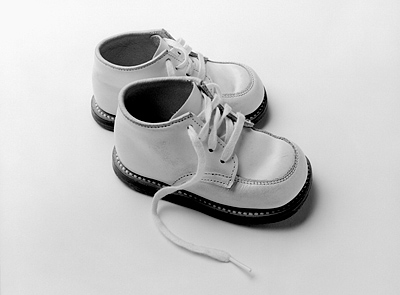
Hemingway was once famously challenged to write a short story in six words or less, and he came up with, “For sale: baby shoes, never worn.”

Kind of the perfect story- so much there, yet so much left unsaid. It leaves you wondering and wanting more.

Smith Magazine launched a six word memoir contest awhile back, inviting people to submit the story of their life with extreme brevity. It was so successful that they produced a book with submissions from a wide variety of authors both famous and obscure, including Amy Sedaris (Mushrooms. Clowns. Wands. Five. Wig. Thatched), Sebastian Junger (I asked. They answered. I wrote), and Po Bronson (Stole wife. Lost friends. Now happy).

Today, I challenge you to do the same. Here are some of my favorites, culled from their ongoing blog:

  • “More fun since moral compass broke.”
  • “Write about sex, learn about love.”
  • “I thought that I’d be taller.”
  • “Committed voluntarily, until tried to leave.”
  • “Asked to quiet down. Spoke louder.”

And here’s mine, always a work in progress:

“Loved and lost and loved again.”

So what’s your life been like, in a sextuplet?

Writing Exercise: Six Word Memoir

by Michelle Gagnon

Hemingway was once famously challenged to write a short story in six words or less, and he came up with, “For sale: baby shoes, never worn.”

Kind of the perfect story- so much there, yet so much left unsaid. It leaves you wondering and wanting more.

Smith Magazine launched a six word memoir contest awhile back, inviting people to submit the story of their life with extreme brevity. It was so successful that they produced a book with submissions from a wide variety of authors both famous and obscure, including Amy Sedaris (Mushrooms. Clowns. Wands. Five. Wig. Thatched), Sebastian Junger (I asked. They answered. I wrote), and Po Bronson (Stole wife. Lost friends. Now happy).

Today, I challenge you to do the same. Here are some of my favorites, culled from their ongoing blog:

  • “More fun since moral compass broke.”
  • “Write about sex, learn about love.”
  • “I thought that I’d be taller.”
  • “Committed voluntarily, until tried to leave.”
  • “Asked to quiet down. Spoke louder.”

And here’s mine, always a work in progress:

“Loved and lost and loved again.”

So what’s your life been like, in a sextuplet?

Opening Chapters

Throughout my years as a published author, I’ve participated in various mentoring programs. This past weekend at the Space Coast Writers Guild Conference. I was assigned to mentor three writers for a total of six hours. This being my first such experience at a conference, I wasn’t sure what to do. Guidelines would have been helpful, but I was out there on my own. So I started by asking my subjects how far along they were in the writing process and what they wanted to learn.

The eager writers were nearly done with their manuscripts and wanted to hear writing tips and how to submit their work, where to find agents, what to do in terms of author branding. So we talked about all of those topics. Then they gave me about 30 pages each of their work to read. It would have been helpful to have had those pages emailed to me before the conference, because after going all day from around 9 to 7 or so, I wanted to relax. But I diligently read through and critiqued their manuscripts that evening.

Sunrise (800x600)
SUNRISE ON THE BEACH
Lois Winston (800x600)
LOIS WINSTON AND NANCY COHEN

Each person wrote fantasy or science fiction so we had those elements in common. That was up my alley since I write sci fi and fantasy romance in addition to cozy mysteries. As for the basics of fiction writing, it doesn’t matter what genre you favor. The principles are the same.

When I read their work, I found the world building blocks to be solid. The problems they shared involved pacing in the first chapter.

Either I found too much backstory repetitively entwined through the current action, with snippets of dialogue from prior conversations running through the protagonist’s head in the middle of a fight scene, or prolonged chit chat between characters that could be shortened. In a couple of cases, I suggested moving up the beginning to the point where my interest really kicked in.

These are not uncommon problems. I’ve revised my own openings endless times, haven’t you? And nowadays, when on Amazon potential readers can sample your first chapter and determine on that basis if they’ll buy your book, these first few pages are critically important. This experience also shows why it’s good to work with critique partners who can view your opening from an objective perspective and tell you if it works or not. So here are the basic points I’d like to reiterate about first chapters:

  • Start with action or dialogue. If you absolutely must begin with a description, make sure it is emotionally evocative from the main character’s viewpoint.
  • Leave backstory for later or weave it in with dialogue. Or drop it in a line or two at a time in the character’s head if it relates to the action.
  • Make sure all conversations serve a purpose.
  • Remember to include emotional reactions during dialogue between characters.
  • Make sure your characters are not talking about something they already know just so the reader can learn about it.
  • Keep the story moving forward.

Are there any other points that you would add?

Opening Chapters

Throughout my years as a published author, I’ve participated in various mentoring programs. This past weekend at the Space Coast Writers Guild Conference. I was assigned to mentor three writers for a total of six hours. This being my first such experience at a conference, I wasn’t sure what to do. Guidelines would have been helpful, but I was out there on my own. So I started by asking my subjects how far along they were in the writing process and what they wanted to learn.

The eager writers were nearly done with their manuscripts and wanted to hear writing tips and how to submit their work, where to find agents, what to do in terms of author branding. So we talked about all of those topics. Then they gave me about 30 pages each of their work to read. It would have been helpful to have had those pages emailed to me before the conference, because after going all day from around 9 to 7 or so, I wanted to relax. But I diligently read through and critiqued their manuscripts that evening.

Sunrise (800x600)
SUNRISE ON THE BEACH
Lois Winston (800x600)
LOIS WINSTON AND NANCY COHEN

Each person wrote fantasy or science fiction so we had those elements in common. That was up my alley since I write sci fi and fantasy romance in addition to cozy mysteries. As for the basics of fiction writing, it doesn’t matter what genre you favor. The principles are the same.

When I read their work, I found the world building blocks to be solid. The problems they shared involved pacing in the first chapter.

Either I found too much backstory repetitively entwined through the current action, with snippets of dialogue from prior conversations running through the protagonist’s head in the middle of a fight scene, or prolonged chit chat between characters that could be shortened. In a couple of cases, I suggested moving up the beginning to the point where my interest really kicked in.

These are not uncommon problems. I’ve revised my own openings endless times, haven’t you? And nowadays, when on Amazon potential readers can sample your first chapter and determine on that basis if they’ll buy your book, these first few pages are critically important. This experience also shows why it’s good to work with critique partners who can view your opening from an objective perspective and tell you if it works or not. So here are the basic points I’d like to reiterate about first chapters:

  • Start with action or dialogue. If you absolutely must begin with a description, make sure it is emotionally evocative from the main character’s viewpoint.
  • Leave backstory for later or weave it in with dialogue. Or drop it in a line or two at a time in the character’s head if it relates to the action.
  • Make sure all conversations serve a purpose.
  • Remember to include emotional reactions during dialogue between characters.
  • Make sure your characters are not talking about something they already know just so the reader can learn about it.
  • Keep the story moving forward.

Are there any other points that you would add?

Creativity: Invoking the Gods or Madness


Looks like the source of Creativity has been an ongoing discussion for ages. Poets in ancient Greek and Roman times invoked gods to assist in their writing. (Can’t say much has changed there.) What I found fascinating is that many believe psychotic-ism causes creativity. Even Aristotle claimed that there was never a genius without a tincture of madness. And, that’s a direct quote.


Makes me feel rather distinguished as a creative being–though I am not crazy enough to consider myself genius.

There has been active debate on whether creative genius is dependent on mental illness or insanity. This debate continues further by stating that madness alone cannot suffice as Source for creativity. Nay, nay. An openness to experience, intelligence and wisdom complete the mysterious formula. They are actually writing papers on the subject. The bottom line: Creative people make creativity a way of life.

We can all name artists, musicians, writers, scientists, etc. who inspire us with their fascinating and divergent thinking. (Look at our own Basil Sands, for goodness sake.) The argument for creative personalities presented by Hal Lancaster during the late 90’s in The Wall Street Journal stated six basic qualities exist:

1. Keen powers of observation.
2. Restless curiosity.
3. An ability to recognize issues that others miss.
4. An ability to generate numerous ideas.
5. Persistently questioning the norm.
6. A talent for seeing established structures in new ways.

Do you see yourself in any or all of the above? I do, which is fun. But, what really appeals to me is the recurring theme of madness in creative beings. After all, if you’re considered a little crazy you need no excuses for your behavior. I like that.

So, I am trying out my creative juices in a new location for awhile. I am writing to you from Santiago, Chile today. My Muse is having a field day. We’re eating foreign foods, seeing exotic places and conversing in my pitiful Spanish as much as possible. I’m getting funny looks and lots of laughs. So, I’m pretty sure I am doing something right!

Once again, which of the 6 traits above is your strongest? You’re favorite? Inquiring minds want to know!

Cao for now!


Creativity: Invoking the Gods or Madness


Looks like the source of Creativity has been an ongoing discussion for ages. Poets in ancient Greek and Roman times invoked gods to assist in their writing. (Can’t say much has changed there.) What I found fascinating is that many believe psychotic-ism causes creativity. Even Aristotle claimed that there was never a genius without a tincture of madness. And, that’s a direct quote.


Makes me feel rather distinguished as a creative being–though I am not crazy enough to consider myself genius.

There has been active debate on whether creative genius is dependent on mental illness or insanity. This debate continues further by stating that madness alone cannot suffice as Source for creativity. Nay, nay. An openness to experience, intelligence and wisdom complete the mysterious formula. They are actually writing papers on the subject. The bottom line: Creative people make creativity a way of life.

We can all name artists, musicians, writers, scientists, etc. who inspire us with their fascinating and divergent thinking. (Look at our own Basil Sands, for goodness sake.) The argument for creative personalities presented by Hal Lancaster during the late 90’s in The Wall Street Journal stated six basic qualities exist:

1. Keen powers of observation.
2. Restless curiosity.
3. An ability to recognize issues that others miss.
4. An ability to generate numerous ideas.
5. Persistently questioning the norm.
6. A talent for seeing established structures in new ways.

Do you see yourself in any or all of the above? I do, which is fun. But, what really appeals to me is the recurring theme of madness in creative beings. After all, if you’re considered a little crazy you need no excuses for your behavior. I like that.

So, I am trying out my creative juices in a new location for awhile. I am writing to you from Santiago, Chile today. My Muse is having a field day. We’re eating foreign foods, seeing exotic places and conversing in my pitiful Spanish as much as possible. I’m getting funny looks and lots of laughs. So, I’m pretty sure I am doing something right!

Once again, which of the 6 traits above is your strongest? You’re favorite? Inquiring minds want to know!

Cao for now!