
by Debbie Burke
After college, I swore off writing outlines. No more nonsense with Roman numeral I, capital A, Arabic numeral 2, lower-case b, etc.
For years, I’ve been a proud, unapologetic pantser. My system is flawed and not terribly efficient, but it’s worked for nine books.
Well, I must confess, on my novel in process, my pants fell down.
Proof of Life (working title) is the 10th book in the Tawny Lindholm Thriller series. I know the characters well but not so well that they can’t still surprise me when they get into trouble.
The leads are investigator Tawny Lindholm and defense attorney Tillman Rosenbaum, a recently married couple in their 50s who work together in Montana. Both have adult children from previous marriages.
The inciting incident: Arielle, Tillman’s 22-year-old daughter, has been living in Israel for two years researching family history. She unexpectedly arrives back home in Montana, bedraggled and exhausted with a newborn baby girl. She’s clearly been on the run but refuses to answer questions. Even Tawny, whose superpower is to convince anyone to spill their secrets, can’t persuade Arielle to open up.
Because my books are thrillers, I also write scenes from the villain’s point of view. He’s a high-ranking Israeli cop who’s married, but not to Arielle. The baby is his, and he wants her back. His investigative methods are brutal but effective. If he finds Arielle, she’s in dire peril.
When starting a new book, generally I begin with Jim Bell’s minimal signposts then take E.L Doctorow’s route:
“Writing is like driving at night in the fog. You can only see as far as your headlights, but you can make the whole trip that way.”
Even before I started writing, I worried that the research needed about international laws was too complicated. But I pushed forward with the story, figuring I could fill in the blanks on rewrite.
Tawny and Tillman suspect Arielle has broken laws. They want to help her but she’s holding back critical information. They don’t yet know about the villain who’s hunting her.
Pretty soon, for the plot to make sense, I had to dig into the Hague Convention treaty regarding international child abduction. Who has jurisdiction? Who takes the lead during an arrest? FBI, State Department, Israeli consulate?
Laws on the books rarely translate into how they’re applied in real life (or realistic fiction). How could I find insights into actual practices? How are suspects treated? Do they go to jail pending hearings? What happens to the abducted child? Who takes care of her until custody is determined?.
For almost 200 pages, I wrote scenes out of chronological order as ideas occurred to me. The draft was full of notes saying, “needs further explanation”, “do more research”, “maybe cut?”, and “move this section?”.
No surprise that I started getting confused.
The excerpts I submitted to my critique group were discrete, self-contained scenes that they generally liked. But over several months, one member kept raising valid questions. I gave excuses but couldn’t come up with definitive answers.
More confusion.
In the past, I’ve used calendars to keep track of story timelines. That was especially important for Dead Man’s Bluff which was set against the backdrop of an actual hurricane. The calendar matched real day by day events like flooding, when roads were reopened, the staggered restoration of power over five days, etc. since those events impacted the plot.
Using a calendar also charts the cause and effect of each scene in relation to those before and after it. For this current manuscript, I didn’t use a calendar.
Bad choice.
Inside my head, arguments raged.
Wait a second, for the timeline to make sense, that scene can’t happen until much later. Oh no, that revelation is too soon because Tawny doesn’t know about XYZ yet. Oops, that confrontation between Tillman and the officials needs more build up. Should there even be a confrontation?
When I tried to cobble scenes together, they resembled Franken-novel.
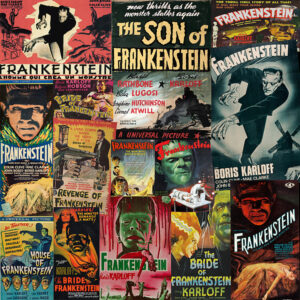
photo credit: Andrew Fare
Pretty soon, I was in deeper trouble than poor Arielle.
For several weeks, I let my normally trusty subconscious work on the problems. But this time, even she was stumped.
So much for pantsing.
I admitted defeat and placed a 9-1-1 call to my brilliant brainstorming buddy Phyllis Quatman. She’s an attorney, author, and fantastic sounding board. Sitting at her dining table, we tore the plot apart.
Finally, Phyllis said, “Deb, you’re making this much too complicated. Why don’t you simply…” and she distilled the story down to its most basic elements. Get rid of this. Move that. Don’t go off on this tangent. Give the villain-cop a secret past that prevents him from using his official channels to find Arielle and the baby. Force him to go to ground and stay under the radar as she had to do.
Turns out my subconscious had already planted a breadcrumb about the villain’s secret past. That past simply needed to grow bigger and more sinister.
Three hours later, with brain buzzing and full of gratitude for Phyllis’s help, I drove home and started writing an outline.
Gasp! Me? The confirmed, unrepentant pantser?
This outline contains no Roman numerals, no capital and lower-case letters. It’s not scene by scene, chapter by chapter. Maybe it’s not even technically an outline.
However, it contains the complicated backstory of the events leading up to Arielle’s surprise arrival in Montana with the baby. Arielle’s secrets. Other characters’ secrets.
Most important are the villain’s secrets—there are humiliations and past crimes he never wants to come to light. Those are his motivations. What is his deep desire? He genuinely loves the baby and wants her back. What must he do to accomplish that goal? Find and kill Arielle.
Backstory isn’t simply backstory. It causes the present story.
One by one, secrets will be revealed. Each changes the course of the plot and builds toward the climax.
I pounded a signpost in the ground for the climactic showdown. Not many details yet but it’s a destination to head toward.
The outline clocked in at 1300 words.
Can any scenes from the original 200 pages be salvaged? Some, yes. Others may undergo severe rewriting.
Others go in the trash. Actually, it’s more like putting them in purgatory. When I cut scenes, I store them at the end of the Word doc as “outtakes” in case there are a few useable sentences or paragraphs. In practice, though, when manuscripts have been finalized, those scenes were not needed.
I’d already successfully pantsed my way through nine previous novels. I thought the same method would work for the tenth. It didn’t.
I had to change, adapt, and rethink the process.
Did I waste months drafting a story that couldn’t work? Would I have been more efficient and productive if I’d planned the plot in advance instead of pantsing it? Probably.
Will my quasi-outline solve the problem? I don’t know yet.
A whole lot of new scenes have to be written. This time around, I’ll write in chronological order with a calendar.
Lessons learned:
-
Just because a method worked in the past, it may not work now.
-
Doctorow’s headlights didn’t show the cliff soon enough to avoid this story dropping over it.
-
Listen to warning bells from my critique group.
-
Get over my childish prejudice against outlines.
One lesson I learned long ago was to ask for help from a good friend who’s objective, rational, and logical. Phyllis came through in a big way, as she’s done many times in the past. I’m filled with gratitude and appreciation for her.
Will I remain a pantser? Probably, but I’m no longer as confirmed and unrepentant. Maybe now my pants will stay up.
~~~
TKZers: Are you a plotter, pantser, or a combination of both (plantser)? Have you run into trouble with your system? How did you solve the problem? Or are you still working on it?
Cover by Brian Hoffman
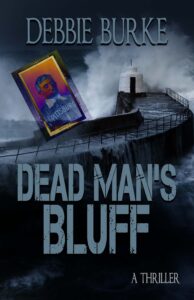
Please check out Dead Man’s Bluff to see how using a calendar helped fiction mesh with real-life events.
When I cut sections, I store them in a separate LibreOffice Writer doc as “deletes” in case there are useable pieces.
I tend to use timelines, rather than outlines. I avoid flashbacks.
We are pantsers. There’s me and there’s my inner writer, resident in my brain somewhere in and around the limbic region. He’s the one gets me up at 3 a.m. and leaves stories for me to find on another night. He sneaks little details into the m/s that turn out to be crucial to the story. A sample, describing the great uncle of Olivia, the narratrix:
“Jed rarely attended church, for which fact I’m sure the pastor and his flock were grateful. I know my family surely were. Jedediah’s ability to carry a tune had apparently been shot off at Fort Henry or perhaps Shiloh. He still had the stentorian voice of a young and hearty man, but seldom knew the lyrics beyond the first verse. After that, his voice loud as ever, he’d improvise with words and notes of his own invention. For example, the rest of the congregation singing Amazing Grace were always startled to hear after the first verse that “. . . ‘Twas grapes that taught my heart to fear, and grapes my fears relieved.’” Many a censorious glance was directed at us upon those occasions, much to my embarrassment. Jedediah was indeed no stranger to grapes, but seemed more afraid of my mother’s ire than the fermented fruit that evoked it.”
J, I laughed at your character who makes up lyrics. I do that also when I can’t understand what the singer is saying. “Grapes” sounds right to me.
The helpful subconscious never ceases to amaze me when I find little hints I don’t even remember writing but they are keys to unlock the story question.
Thanks for stopping by.
Olivia’s story ends:
“Years later, I showed my mementos of Uncle Jed to Dad. He took one of the metal balls, hefted it, then said, “Grapeshot. They used to put a bag full of these into a cannon and fire it at the enemy lines, just like a big shotgun. The grapes tore men up something fierce.” He paused, staring at the shot, then looked at me and said, “. . . ‘Twas grapes that taught my heart to fear’ . . .”
“. . . ‘And grapes my fears relieved,’” I concluded, forgiving forever all of Uncle Jed’s faults.
My method is more chaos, unfortunately. When I started out writing, I was more of an outliner, but didn’t find it to be a smooth process and of course, pantsing has the same problems. But I have even more difficulty when writing mystery than when writing historical fiction. Writing mystery is a very humbling experience. I used to think I was so logical and thought mystery would come naturally. NOT.
And I complicate things for myself because my brain can’t seem to think in terms of stand-alone stories, always series, so you’re not only thinking about the threads and key points of the current story, you’re thinking about how crucial elements of those threads will play out in subsequent books. And as you mention, there’s also the research that plays into your process of laying out the story.
I’ll be curious to see what my approach to laying out a story will be in subsequent books. But for now, I just want to finish the current one. LOL!
Brenda, mysteries are the hardest genre to write IMO. It’s a big challenge to keep the villain hidden yet drop enough clues that the reader has a fair chance to solve it.
A series poses the problems you mention. For my books, each stands alone with overarching character arcs that run through all the books. I suggest you don’t worry too much about threads to future stories and simply concentrate on finishing the current book. You can always go back and plant the seeds for the future. As long as you’re aware of it, your subconscious may slip in needed opportunities..
Good writing!
I consider myself a “planster.” I have ideas for important things that are going to happen, but I’ve found if I have too many details in mind, I tend to hurry from one to the next. The time I need to stop and “outline/plot” is when I’m closing in on the end and need to make sure I’ve dealt with any dangling threads. I use a spreadsheet to summarize where I’ve been, but not so much where I’m going.
Terry, a spreadsheet is a great tool. That’s similar to my calendar. Your plantsing method clearly works with more than 30 books under your belt.
👏😁
You rightly note the cruciality of the “villain’s secrets.” This is perhaps the most important part of my planning, because once I nail it I can write all sorts of things happening in the plot that create mystery and suspense, knowing how they will pay off.
Happy driving!
Thanks, Jim! Yup, that villain drives the story. Without a villain throwing sand in the gears, the hero has nothing to do.
In fact, I think there’s a book about that very subject. 😉 Thanks again for your help with The Villain’s Journey!
Still a pantser. Somehow my subconscious figures it out as I go. I’ve never had your experience, though. Never say never!
Kelly, my subconscious has never let me down before. That’s why I was surprised. This time she must have been on vacation.
Very interesting journey you’ve had, Debbie! I enjoyed reading it.
I’m a plantser. I may outline to a point, but eventually write scenes that I think will be useful in the story. I still use my post-it notes as a storyboard, although I lost my three-door closet when we moved. I find that method very helpful to keep things in some kind of coherent order.
Good luck with the book!
For some reason, I’m not able to respond to your comment using the “reply” button. Keeps saying the host has timed out???
Anyway, thanks, Kay! I’ve always admired your sticky-notes-on-closet-doors system. Wish I had space to do that.
But you reminded me of the old school index card system. One card for each scene laid out on the living room floor. The visual physical storyboard works better for me than a digital corkboard like Scrivener has.
I forgot the calendar! Thanks for clarifying your process. I’m outlining Book 2 before school starts here in a minute. Books 3-8 in the series will start with the calendar! Appreciate all you do!
Thanks, Carla, great to see you in the Zone.
The calendar helps cement the sequence of events so they flow logically. Cause leads to effect, action leads to reaction.
As a panster I feel your pain. I totally panst this last book and now I’m editing, no rewriting. But that’s what writing is. 😉
Pat, how right you are. We don’t write, we re-write. Good luck with your new book.
Debbie, I feel your pain. I started out as a pantser, and pantsed my first three novels, none of which worked. I did a very basic outline with my fourth, which still didn’t fly. With my fifth, I took a two-week intensive novel outlining workshop I’ve talked about before with Kij Johnson, but the weird western ultimately didn’t work.
My sixth novel I’d worked on in various forms for a while, as a YA, then as a serial, writing 40K. After giving up on the weird western in revision, I hired my friend and mentor Mary to developmentally edit it and she gave me feedback on the outline. By that time I’d read and absorbed several books on plotting, including JSB’s Plot & Structure, Libbie Hawker’s “Take Off Your Pants” and Synder’s “Save the Cat” which really helped me “beat out” the novel. Beat outlines became my go-to for quite a while.
I intensified my outlining with my mysteries, outlining and reoutlining them. Timelines became essential as well.
However, there’s a limit for me. Knowing the murderer’s “shadow story”, the victim’s as well, and having a decent sense of the arc of suspicion and the arc of the investigation are enough. Even though I’m an outliner, of course I discover things in the course of the draft. It’s like a battle plan, it changes once the fighting (conflicting) begins. Increasingly I’m starting to think I may be more of a plantser, like Kay wrote above. We’ll see with the next book 🙂
When I’m stuck, my go-to is to get to a high level. Bringing in a writer friend like you did can be a huge help. I’m glad to hear you did.
I’ve also discovered, like you did, that a particular writing process works until it doesn’t. Moreover, it may vary depending upon the book.
The other lesson I’ve relearned is to not hold the reins too tightly, both before, during and after drafting. My subconscious is mute, gesturing behind a glass wall at me, trying to get me to figure out what it’s suggesting. I need to be receptive to that, and a big part of receptivity is not being controlling.
Dale, thanks for sharing your process. Interesting how different writers work. Bringing in the big guns is always helpful and you’ve studied with some masters. Our education never ends.
“…a big part of receptivity is not being controlling.” Yes!!! The subconscious throws out ideas in a random, haphazard way that’s often difficult to make sense of. But if you trust it, eventually you find places for that seemingly irrelevant output.
Thanks for the kind praise, Debbie Burke! As a criminal law practitioner for 35+ years, I have written scads of legal docs and investigated a thousand crimes. But when it comes to writing a novel, my hat’s off to you brilliant authors. My three books are based on real cases, so I just needed to put the icing on the plot cake and try to tell the tales like stories instead of reading like police reports. But pantsing makes me shiver. I have to know where I’m headed (closing argument) and what facts/details I need to prove to get there and prevail at trial. Linear thinking, yes, but with critical backstory for each witness/character and knowledge where they’re headed. Write on!
Phyllis, your linear thinking lassoed my wildly bucking story and brought it under control. Can’t express my gratitude enough for your help, dear friend!!!
I saw this happen painfully in two different industries. I was at Activision during the glory days of the Pitfall and River Raid, and as the video games became more complicated, the designers could no longer keep their games in their heads. Doubling the size of the game made it take unpredictably more than twice as long to complete. Every time you turned around, you knocked something over without noticing.
The designers with formal software training did best because they knew about structuring larger programs. The ones who came into the biz through a different door, such as hardware design, did not. Many blamed themselves for this simple gap in their training!
Then I worked at WEITEK, a boutique semiconductor company. We had a designer who could create the most amazing chip designs in six weeks. He did it over and over, but if it took him longer than six weeks, it might take him forever. He became lost. The only symptom was that things he wasn’t focusing on at the moment kept breaking as side effects of what he was.
I think this happens to writers in general (and to you in particular). Insidious, isn’t it?
For my own part, I deliberately limit the scope of my novels to avoid having to switch to large-project methods, especially by using a smallish cast and a timeframe of less than two weeks for the main action.
I also use a different “fog” metaphor: the next as-yet undiscovered major plot turning is a dimly perceived beacon in the distance, drawing me weakly but inexorably on. Everything behind me is clear (I write my scenes strictly in order and clean up my messes before moving on) and what’s immediately in front of me is getting that way.
Robert, insidious indeed!
“Every time you turned around, you knocked something over without noticing.” Yes, those unintended consequences can be murder.
Thanks for your fascinating explanation of gaming. Definitely relevant to the writing process as well.
I also like your “beacon in the distance.” Similar to Jim’s “sigh posts.” You know what you’re heading for but not sure of the best way to get there.
Enjoyed reading about your process. I’m a hybrid pantser-planner. I start with a rough outline. I know the characters, the killer, and the general direction. But if I get lost in the fog, I have a brilliant friend I can discuss the direction with.
Elaine, those brilliant friends are worth their weight in gold, aren’t they?
TKZers: Are you a plotter, pantser, or a combination of both (plantser)? Have you run into trouble with your system? How did you solve the problem? Or are you still working on it?
Extreme plotter here, in that every scene in the trilogy has had a list of what has to be in it. Maybe pantser IN each scene, because, as long as most of what is in my ‘scene kit’ ends up in the scene, I don’t force the HOW, and like to take liberties with the order, the writing, the extra bits and pieces.
I’ve known since the beginning, in 2000, where the story would go – then realized it was going to be as long as GWTW by the time I finished the trilogy.
With the extreme plotting, and completing scenes linearly and without looking back, I can work in chunks of a scene or a piece of a scene, and know it will fit into its planned ‘hole’ in the whole – because the overall part is a solid plot that has never changed.
I couldn’t keep any of this in my head – there are calendars, lists, an execrable first draft which I don’t even consult most of the time any more, and every organizational tool Scrivener offers me.
Me, I just write. A little chunk at a time. And so far, so good: the first two novels are published – Pride’s Children: PURGATORY and Pride’s Children: NETHERWORLD – and LIMBO is coming along nicely.
Hope I get to finish – I love how it ends.
Alicia, good to hear from an extreme plotter. Everyone’s brains are wired differently. You found the best method that works for you. I have faith you will finish your trilogy.
Thanks for your confidence in me, Debbie.
I will – if it’s up to me.
I still work on it every day, moving on a scene at a time.
I’m a plotter. I tried to pants my way through a novel and created a balled up mess that took months to sort out. After that, I went back to what I know (recovering planner/scheduler/analyst) and did the outline/Gantt chart I should have done at the front end.
Bill, another plotter chimes in. Enjoying this discussion of how different each writer’s method is.
In my career, I had to be the planner/scheduler/coordination. So when I started writing creatively, the pantser finally got to come out and play.
Debbie, what a great post…and the comments, too!
I’m about 90% pantser and 10% plotter. Meaning, I know how the story will start and I know how it will end, but everything in between remains a mystery until it’s written.
Kinda like life on earth, yes?
Have a great day, all!
Thanks, Deb. I too am enjoying everyone’s unique take. Yup, definitely like life.
I’m a planner, but I tried to pants my memoir. Like you, I had to stop and rethink that idea. To cover a thirty-year timeline, I couldn’t write the story chronologically. Readers would tire easily. Instead, I needed a solid plan, one that included skipping the boring parts. No one’s life is interesting enough to memorialize it all.
Theme is crucial in memoir. Though my story hits several newsworthy themes (loss, domestic violence, a hired killer), I want the main focus to send a positive, inspirational message. Secondary themes can’t be avoided, but they also don’t need to be explored in depth. Just enough to support the main storyline. Without a detailed, chapter by chapter outline, I’d never pull off such a long timeframe.
Sue, you’re brave to tackle that daunting project! Since memoir is nonfiction, it does need to be planned out with a clear through-line. You’re wise not to fall into the strict chronology trap.
Eager to read this! I expect it will be as thrilling as your fiction and true crime stories. Keep us posted on your progress.
I’m a pantser, but I wish I could be a plotter. I wrote a nonfiction book from an outline, and it went so smoothly. Unfortunately, outlining hasn’t worked for my fiction. Like Terry, I do create a spreadsheet (what I call a reverse outline) once I get about 30k words in. It helps me keep track of the timeline and is useful for revisions, as I can see at a glance when certain characters were introduced, what happened in each chapter, etc.
I share chapters with my critique groups as I write the first draft. They save me from going down some rabbit holes and help me brainstorm where the plot is going.
Sharon, I agree it’s easier to outline nonfiction. Fiction is not straightforward b/c it’s tapping more into emotions which can be all over the map.
Critique groups are wonderful for keeping us on track when we’re dying to explore that fascinating rabbit hole.