
Squirrels, Rabbit Holes, and Other Writing Obstacles
Terry Odell
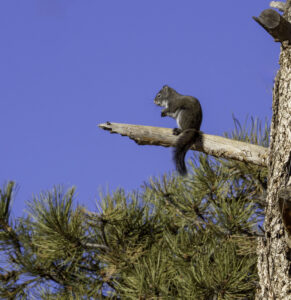
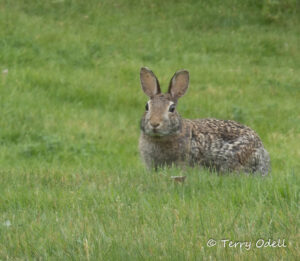 There are always interruptions to the writing process, even when you’re diligently writing.
In my never-ending challenge of naming characters, unless “Mr.” is an acceptable first name, I’ve managed to go over 55K without mentioning my protagonist’s boss’s first name. Now, the story demands he have one. In perusing my character naming spreadsheet, I look for initials that haven’t been used, or have been used only for secondary or tertiary characters. “G” seems to be a reasonable choice. Glenn, perhaps.
Does it matter that in another book, a character has this name? The current wip is a stand alone (so far), so it’s unlikely there would be confusion. In fact, the character who already has this name goes by a nickname almost all the time.
I could use an alternate spelling on the rare chance someone who’s read the other book even remembers that character’s first name. Or spend more time looking for other “G” names.
Normally, rather than spend time going down rabbit holes or chasing squirrels, I’ll simple use my standby placeholder, [name].
Okay, that’s tabled for later. Back to the “real” writing.
Something I learned at a RWA chapter workshop came from an author who was talking about kinds of scenes. They should carry over to any genre, not only romance.
- Prologue – not required. In fact, unless there’s a huge time gap between this and the opening, it should probably be Chapter One. There’s also a difference of opinion as to whether agents want to see prologues when you’re submitting.
- Opening – should draw the reader in.
- Set-up — foreshadows something to come
- Validation – shows the character at work
- Conflict
- Push – moves characters apart
- Pull – moves characters closer together
- Reaction – also referred to as “sequel” (or shower scene, where the character would reflect on what just happened). These can slow the pace, so they’re falling out of favor. If you need one, make sure it’s important, and don’t linger too long.
- Flashback – use sparingly – they’re often found in reaction scenes
- Flash forward—rarely used in romance; author intrusion. Tends to be omniscient POV, which can intrude as well.
- Reversal/Black moment – everything goes wrong
- Climax – characters must make choices
- Conclusions – wrap up those dangling threads
I’ve been dealing with “validation” scenes. If your characters have a profession, eventually you’re going to have to show them at work. My female protagonist—Evvie—is a photographer. I’m far from a professional, but I can fake my way through scenes of her at work, and if I have questions, my son is a professional photographer, and (since I’m the Mom), he feels obligated to answer me. Most of this is handled via email or phone calls, so I don’t have to deal with the eye rolls.
Evvie’s male counterpart—Colton—is an insurance claims adjuster. Don’t ask me where I came up with that one, other than it seemed to have potential for conflict, but at this point, I’m stuck with it. I can’t fake my way through his validation scenes, so it’s research time.
I’ve found that using an AI helper can speed up the research process by summarizing things that would require going to numerous websites and separating the wheat from the chaff. Of course, you can’t take everything your helper says for granted, so there’s some checking to make sure it hasn’t made stuff up. I had a vague idea of what conflict I could throw Colton’s way, but had to validate what would happen.
You need details to bring characters to life. They didn’t spring into being on page one. Then, because Only Trouble is Interesting, snips of tension have to show up. Evvie calls Colton “Colt” and she knows he doesn’t like it, so using the nickname says something about their relationship at that point in the story, which is in Chapter 2.
In Chapter 17, Evvie asks Colton about his past. He says he grew up in on a ranch in Wyoming where they raise cattle but also have horses, and now it clicks that he doesn’t like being called Colt because it reminds him of his childhood. Did I know that in Chapter 2? Nope. But it made sense in Chapter 17.
Then, in Chapter 31, circumstances have him returning to the ranch, and he invites Evvie to come with him. I’d already set the book in Colorado, an area I’m familiar with. I’ve never been to Wyoming. A placeholder saying [research ranching in Wyoming] wasn’t going to cut it. This was more—a lot more—than waiting to decide on a character’s name.
First research tip: Whenever possible, narrow the search. Instead of asking about cattle ranching in Wyoming, I asked what would be happening during the timeframe of the story. I’d arbitrarily set the time of year to mid-April when the book started, but when I asked what was happening on a Wyoming cattle ranch in April, I was “informed” it would be the tail end of calving season. I also learned that calving season was a very busy and high-pressure time in the ranching business. Perfect for adding trouble. Coming in at the tail end would make things too easy—so after checking to how many April references I’d included in the book—only one—I shifted the date to March. Easy-peasy. But the weather’s different, so I need to watch what my characters have been wearing.
While I wasn’t going to stick with my character round the clock, I still needed to know what the ranchers would be doing during calving so I could include that validation scene, showing my character at work. More squirrels and rabbit holes.
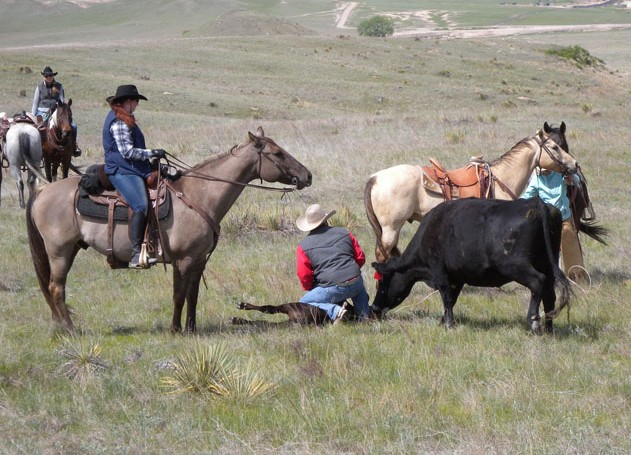
One question led to another, and I ended up with pages of information. I had the perfect opportunity to get this information on the page because Colton had been away from the ranch for a number of years, and things would have changed. But should it be there? If so, how much?
 That’s always a problem with research. You pick up fascinating tidbits like the Sandhills Calving System and include it in a family discussion. But will it move the story forward enough to justify those 135 words? Nope. It’s in my “snips” file in case it turns out to be needed, but research should follow the iceberg rule. Most of it’s under water, and shouldn’t show on the page.
These are some of the topics I’ve researched so far for this book.
- Broken ribs
- Punctured lungs
- ICU
- Website Contact Form tracing
- Email tracking
- Deep fakes
- Insurance procedures
- Insurance fraud
- Ranching (with lots of rabbit holes to get lost in)
- Slow detonation for explosives
- Children testifying in court
Somewhere along the line, I have to crawl out of the rabbit warren and get back to writing. Our dog brought me a squirrel the other day, something she hasn’t bothered with in years, so maybe she thinks she’s being helpful.
So, TKZers. What’s your approach to research? How do you avoid spending too much time with those squirrels and rabbit holes?
Find me at Substack with Writings and Wanderings
Deadly Ambitions
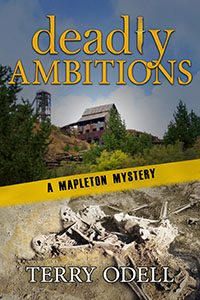 Peace in Mapleton doesn’t last. Police Chief Gordon Hepler is already juggling a bitter ex-mayoral candidate who refuses to accept election results and a new council member determined to cut police department’s funding.
Meanwhile, Angie’s long-delayed diner remodel uncovers an old journal, sparking her curiosity about the girl who wrote it. But as she digs for answers, is she uncovering more than she bargained for?
Now, Gordon must untangle political maneuvering, personal grudges, and hidden agendas before danger closes in on the people he loves most.
Deadly Ambitions delivers small-town intrigue, political tension, and page-turning suspense rooted in both history and today’s ambitions.
 Terry Odell is an award-winning author of Mystery and Romantic Suspense, although she prefers to think of them all as “Mysteries with Relationships.”
Coming up with names for characters is one of my least favorite aspects of writing. Sometimes I instinctively know what name I’m going to use (generally for a more prominent character) but for those secondaries and walk-ons, it can get tedious. As you described, you have to try & select names with different letters, etc, so they don’t sound too similar or confuse the reader.
As to research, I’m afraid I haven’t mastered it yet. Generally I write in terms of series books, so there’s a lot of initial research as you think about that series. But in my experience that still leaves much research to do as you write each book (rabbit holes were made for me). Where possible I just try to insert a note, i.e. (look up XYZ methods in 1917), but sometimes you can’t continue your writing in a meaningful way unless you stop & do the research.
I’m probably never going to find a perfect system. The escape of writing is fun. But for me, the escape of research is also fun (well, most topics, especially when about history), regardless what it does to my production timeline. And since I go the self-pub route, the production timeline is up to me.
I agree that there’s no perfect system. For this one, I had no idea how much I didn’t know once the story (not a plotter) got going. Like you, I’m an indie publisher, so I don’t have deadline pressures, although I do have a September or October pub date in mind.
Terry, I woke up this am thinking about the research needed for my WIP so your timing was great.
To the extent I can, I start writing/pantsing then fill in the research as needed. If I research too much beforehand, I’ll never get the story started.
Tight now there’s a scene set at a hot springs resort I haven’t been to. I’ve been to other hot springs and know general info but not the specifics for this place. Do I drive several hours to visit or do I fictionalize a setting that doesn’t exist but could?
I’ll probably drive just cuz I might spot a location I’ll need later in the story where a hostage is hidden.
I suggested a trip to Wyoming, but the Hubster nixed it, so Google Earth and other digging to make sure I put things in the right part of the state, and how many hours to drive from Colorado Springs and, and, and … the list goes on.
If it’s research where it’s not going to impact the plot much, only descriptions, etc., a placeholder works. But when the story could get derailed, then it’s “stop and look it up” time.
A friend and I co-wrote an SF Novella (later published in Analog Science Fiction and Fact). Rather than trying to keep character names straight, we used relationship acronyms as placeholders. For example, the main character’s girlfriend was GF, and her ex-boyfriend was XB. When the writing was done, we came up with character names that fit the acronyms. XB was a toughie, but we used a combination of French names. Several years after the story was published, I was contacted by a Frenchman who had exactly the name we’d made up. He wanted to know where we’d found his name and had a good laugh when I explained our methodology. The crazy acronyms helped us get quickly into the writing and helped us remember who was who as we passed the story back and forth.
Placeholders for names are always a good idea. I’ve used things like [cop#1] or [receptionist] for secondary characters, but I like seeing my main characters’ names on the page. The current wip is a stand alone, so almost all the characters are new.
Right now, I’m regretting giving my protagonist 4 siblings, with spouses and kids. The dogs are bad enough!
I found AI very useful in producing potential Arabic and Israeli character names. After I found one that sounded good, I could ask for meanings that fit my characters.
AI does have its uses. Heck, even using Google gives you AI results first these days. For names, I use Google with a “Male Names G” as my basic search, and take it from there. If there’s an ethnicity involved, I’ll add that to the search.
This was great, Terry! The part about asking your son for details made me laugh. My son is also a professional photographer and a computer/tech whiz who patiently (I think) answers all my questions. My daughter has many other skills (she’s a SCUBA instructor, for example) and is always willing to help me get the story right. I’ve been to all 50 states (lived in eight), all the lower Canadian provinces, Mexico and Central America, Caribbean islands, all over Western Europe, and three countries in Africa, so I use those experiences. Sometimes I need to look something up or refer to photos I took, unless it’s a completely fictional location.
I’m not a plotter, and for 38 stories the names have just come with the characters, but I have one now that’s giving me trouble. She was the first character and the story was about her, but I’ve changed her name five times using an extensive baby names book, and it still doesn’t sit right with me. One of these days she’ll tell me. 😉
Sounds like you have a lot of life experiences to include. I’ve found that some of my international travels don’t lend themselves to the books I write, because it’s a tough sell for a US cop to have any jurisdiction in another country.
I had a character refuse to answer to the name I gave her. I figured she knew best, so I went with her preference.
I do research before writing the book, keeping it focused but also open to serendipity. I might pick a book or three, read some magazine articles in a library database or online. During drafting, if I discover something needing research, I’ll usually mark it with [RESEARCH NEEDED] in the body of the manuscript and get back to the drafting. Otherwise, I’ll be done the rabbit hole.
I don’t know enough about where the book is going to do much research before I start writing. Sometimes doing early research sends the book in an entirely different direction, such as when I needed a location for my opening gambit in Dangerous Connections. I discovered the cartels were kidnapping American engineers to build them telephone (cell, probably) networks, so that became the overall premise for the book.
But those instances are rare. Usually, it’s research as things come up.
I do research as needed and give it a time limit or I’ll be “researching” for hours. As to names, I figure out the age of the person, go to the year they were born and look at the top 100 names from that year and pick one out. If they are from another country, I’ll ask for the popular names from there from the year they were born. It has worked fairly well so for and sort of indicates their age. For Sci-fi, fantasy–I have name generators that help with that.
I do the same for names looking at the year they were born, but I don’t always go with the most popular. Plus unless it’s early on, I have an idea of what initial I’ll need so I don’t repeat.
I’m torn on ethnicity. On the one hand, it can let the reader know right off the bat which can help with description, but we’re such a melting pot that you can’t always tell from a name what that person’s ethnicity as far as what they might look like. When my daughter was in jr high, she wanted to invite Keisha over, which was fine with me. What I didn’t expect was a blue-eyed blonde.