

“My best friend is a person who will give me a book I have not read.” —Abraham Lincoln
* * *
Thursday, April 23, 2026 is World Book Day. According to Wikipedia,
World Book Day, also known as World Book and Copyright Day or International Day of the Book, is an annual event organized by UNESCO (United Nations Educational, Scientific and Cultural Organization) to promote reading, publishing, and copyright. The first World Book Day was celebrated on 23 April in 1995, and continues to be recognized on that day.
Clearly, all authors should be celebrating World Book Day, but I have to admit I never heard of this special day until my husband and I were invited to give a presentation on the subject. As a result of that invitation, I did a little research and found it to be such a fascinating story, I figured TKZ folks would be interested.
Much of the information below outlining the major milestones in the history of books came from tckpublishing.com.
* * *
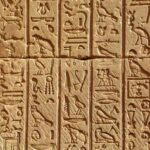 Mesopotamia, 3500 BC – Clay Tablets
The Mesopotamians used wet clay and wrote on it with a reed stylus. The tablets were then dried or baked to preserve the writing. Much of the content recorded inventories, sales information, contracts and legal agreements.
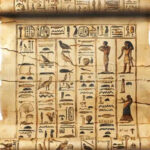 Egypt, 3000 BC – Papyrus
The Egyptians used marrow from the papyrus reed to produce sheets which were glued together to create scrolls. Some of the scrolls were very long—one measured more than 40 meters!
 Greece, 500 BC – Goat skins
A shortage of papyrus gave the Greeks incentive to go in another direction, and they used sheep and goat skins to make parchment. It was a good solution, but not as good as leather.
China, 100 BC – Paper!
The Chinese are credited with inventing paper made from rolls of bamboo that were bound together.
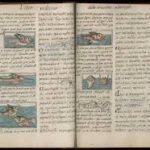
Rome, 100 BC – Codex
Romans made a giant leap forward with the invention of the codex, a way to bind pages together to form what we would recognize as a book.
It took 3500 years to get to books in the format we’re used to seeing, but printing books in mass was still to come.
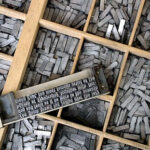 Movable type – 1000 – 1400
The Koreans invented the first metal movable type in 1200 AD and produced the first book with that type in 1377AD.
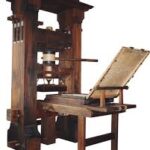 Gutenberg’s printing press – 1439
Gutenberg’s brilliant invention provided for the mass production of books. The first mass-produced book was the Gutenberg Bible, printed in 1455.
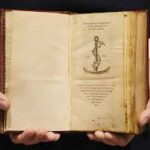 Pocketbooks – 1500
Aldus Manutius is credited with inventing this precursor to the modern paperback.
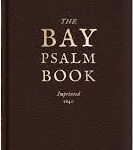 Printing comes to America – 1640
The Puritans brought over a printing press and printed The Bay Psalm, the first book printed in the new world. It contains the Book of Psalms from the Bible. A few copies of the original printing are still in existence.
 Project Gutenberg – 1970s
Michael S. Hart founded Project Gutenberg in 1971 as a way to digitize and preserve important books. As of March 2026, this volunteer effort has made over 75,000 free works available to the public.
 Amazon Kindle – 2007
Amazon’s Kindle was introduced in 2007 to light a fire in the reading public. Over 80,000 titles were available for purchase on the first release. There are currently over 44 million book titles on Amazon.
According to medium.com, around 2.2 million books are published each year, and there are around 155 million books (unique titles) in the world today!
* * *
So TKZers: What are your thoughts on the history of books? What’s your favorite book? How many books have you published? Do you write in one genre or several?
* * *
THE WATCH MYSTERIES
Half-sisters Kathryn and Cece never meant to become sleuths, but trouble has a way of finding them. With Kathryn’s problem-solving skills and Cece’s theatrical talent, these reluctant detectives prove the search for truth is worth the effort.
Three complete novels on sale this week for 99¢ on Amazon, Barnes & Noble, Apple Books, Kobo, and Google Play.
What an interesting overview, Kay! Fascinating to see the progression of materials and the time it took to reach our current model of books.
Have you read Michael Castleman’s The Untold Story of Books? He digs deep into the history of printing, books, and the publishing industry which was actually founded on piracy! He writes from an author’s point of view focusing on how the evolution affects writers. https://www.unnamedpress.com/all-books/p/untold-story
Asking what’s my favorite book is like asking which is my favorite child 😉
I have 10 published books (and scads of unpublished mss)—nine thrillers and one nonfiction writing guide The Villain’s Journey. The 11th thriller is in the works. When I get bogged down, I’ll remember I could be drafting on clay tablets instead of a laptop.
Good morning, Debbie.
I haven’t read Castleman’s work on books, but I’d love to take a look at it now.
What a great time we live in to be able to create books electronically and publish them! I don’t think I’d do well with clay tablets.
Looking forward to that next thriller.
I’m with Debbie about favorite books. According to my “books” page on my website, I have 47 publications. I’m never sure whether to count individual books in my bundles and not the bundle, or the bundle and not the individual books, or if novellas count, so for your question today, I counted everything.338172
47 publications! I’m in awe, Terry. Best wishes for many more.
A great way to start the week. A software company named themselves after Aldus Manutius. Their software is used to lay out books. They sold their main title to Adobe. Aldus called it Page Maker. Adobe now calls it InDesign.
I visited the Dome of the Book in Jerusalem. The museum of the Dead Sea Scrolls. I read an English translation of the scrolls a million years ago. Very nerdy.
Abebooks has a list of the most expensive books they have sold each quarter. A fascinating listing if you like signed manuscripts and such. My favorite is a copy of Fahrenheit 451 – with an asbestos cover.
Hi Alan.
I didn’t know there had been a software company named after Manutius. Wish they had kept the name.
We also visited the Museum of the Dead Sea Scrolls when we were in Jerusalem. There was a real sense of awe in seeing the actual scrolls.
Thanks for the info. The copy of Fahrenheit 451 with an asbestos cover is hilarious!
I’d like to add the Armed Services Edition Book series to your history. In 1943, the US War Department studied the uniforms of its service members and designed a small, portable but readable book for them. These books entertained millions in uniform and paved the way for the paperback industry in the 50s and 60s.
Good morning, Mike, and thanks for the info on the Armed Services books. Now that you mention it, I remember reading about the small books that were given to service members so they could keep them in their uniforms.
I’m going to add this bit of history to our presentation that we give on Thursday.
I love this! Thanks for sharing. When people start talking about books going away or ebooks heralding the end of print books, and other nonsense, it’s good to have some perspective on how people have persevered in writing and reading books for so long. I’ve published 30-plus books and a dozen novellas in romantic suspense, women’s fiction, and romance genres. Plus written many more that will never see “the light of day.” I get such joy from reading and writing, I’m thankful for those who came before us to make sure we never run out of reading materials and stories.
“I get such joy from reading and writing, I’m thankful for those who came before us to make sure we never run out of reading materials and stories.” Well said, Kelly. I join you in gratitude toward all the people who have made this writing and publishing journey possible.
30 books? Good for you. Hope you have 100 more.
love this soooo much!!! thank you!
So glad you liked it, Jennifer! Have a great reading/writing week. (No clay tablets, though. 🙂 )
Wonderful post, Kay! Books are my favorite non-living thing 🙂
I’m also with Debbie, I can’t choice one as a favorite.
I’ve published 11 books—nine novels, one novella, and one story collection.
Bravo for 11 books published, Dale! Congratulations on a significant accomplishment.
My favorite book is the Bible and the only one I’ve read multiple times. Nineteen of my books have been published—17 by Revell and two by Harlequin, and I’m working on book 20. Add 5 novellas and that’s my total. Although there are 2 manuscripts that I shredded.
You and I share that love of scripture, Pat.
I like that you shredded two manuscripts! Destroy the evidence.✂️
No matter if it’s kids, grandkids, great grandkids or books, my favorite on is always the one I’m looking at.
Love that response, Marshall!
I LOVE print books but as I age I have to say I’m so extremely grateful for ebooks — being able to make the print bigger keeps my options to read open. And I’m glad writing important words down was deemed important long, long ago. Every day I look at my large collection of print books and think “child, you need to get these shelves organized and get some more bookcases!” LOL!
By far my favorite genre to write is historical fiction–I have so many book ideas for fiction set in the American West. And in the last 2 years I and a writing buddy took a dive into historical mystery. We’re working on #2 now. I’m not terribly interested in a wide variety of fiction genres.
The only exception to writing any other fiction genres would be if I came up with a concept for Star Trek TOS featuring my favorite triumvirate of Kirk, Spock & McCoy, then I would do sci-fi. The problem there is that so many great novels have already been written. Nothing unique has hit me yet that hasn’t been done.
I’ve always wanted to write some nonfic too. I’d love to write some historical reference books on a couple areas that I’ve always had difficulty researching, but realistically that probably won’t happen due to lack of time. Would also like to write a couple bible studies on a few different topics. And once my writing partner and I gain enough experience, I’d like to see us write a writing reference book on the ins and outs & how-to’s of co-authoring fiction. There is **some** coverage of this topic out there in the writing world, but I think it is a topic that isn’t covered enough.
I love your comment, Brenda! So many books to write.
Good luck to you and your writing buddy. Hope you write that reference book on co-authoring fiction. I’ll buy a copy!
And can I just take a moment to congratulate all the published books represented by all the TKZers here? That’s no small thing. You all inspire me daily. KUDOS!
Thanks, Brenda. I join you in honoring all the contributors and commenters here who continue to make TKZ a light to the writing world.
Fascinating post, Kay! Late to the party, but I’m glad I came.
I’ve published 6 books + 2 short stories in Guideposts & Chicken Soup for the Soul. I’m so gratified to be part of TKZ and all of the encouragement to be found here.
“Fahrenheit 451 with an asbestos cover…” Ha!
Have a great week!
Never late – the party is ongoing at TKZ!
Have a great week.
Fascinating, Kay. Glad I had a chance to go back and read.
Thanks, Sue.