
by Debbie Burke
Recently I read an outstanding article by Pitchmaster Lindsey Hughes about the importance of cause and effect in story momentum. Her words really hit home so I invited her to share her wisdom with Kill Zone readers.

Lindsey Hughes, Pitchmaster
Welcome to The Zone, Lindsey!
Cause and Effect: The Story Chain ReactionA story is not just a string of things that happen. A story is a chain reaction. This happens, therefore that happens.
That is cause and effect. And when it is working, your story feels inevitable. It pulls the reader or viewer forward because every scene creates the next one. The audience does not have to be dragged through the story. They lean in because they feel the momentum. When cause and effect is weak, the opposite happens. Your story starts to feel episodic. Random. Wobbly. Things happen because you, the writer, need them to happen, not because the characters, stakes, and previous events naturally created them. The audience may not always be able to name the problem, but they feel it. Story Momentum = Cause and EffectCause and effect is the principle that each important event in your story should grow out of something that came before it. Not: And then this happened. And then this happened. And then this happened. Because: this happened, the character did this. Because they did this, things got worse. Because things got worse, they made a bigger choice. That is story momentum. A strong story does not just have events. It has connected events. Consequences Readers and viewers keep going because they want to know what happens next. If your hero sends the reckless email, kisses the wrong person, and opens the forbidden door, we want the fireworks. Cause creates effect. Now your story has rhythm, ratcheting tension, and building suspense. Think dominoes, not beads on a stringA weak plot is often a bead necklace. Pretty scenes, one after another, threaded together because they all belong to the same story. A strong plot is a domino line. Each piece knocks into the next. That does not mean every scene must be loud, explosive, or full of car chases. Quiet stories need cause and effect just as much as thrillers do. In a romance, one honest conversation may trigger a breakup, which triggers distance, which triggers longing, which triggers a reckless declaration in the rain. In a mystery, one missed clue can lead to a false accusation, which drives away an ally, which gives the villain more room to operate. The genre changes. The principle does not. How Writers Lose Cause and EffectCause and effect is one of those craft elements that sounds obvious until you are 175 pages into a draft, three cups of coffee deep, and your heroine has somehow ended up in Prague with a knife and a new boyfriend. A few common problems: 1. You are thinking in scenes, not in consequences. 2. Your character is not driving the action. 3. You are using information as a shortcut. At the end of each major scene, ask: What changed because of this? If the answer is not much, the scene may be static. Then ask: What does this scene cause? If the answer is nothing in particular, you may not have cause and effect. You may just have a sequence. A sequence is not enough. A murder happens. Then the detective visits the widow. Then he talks to the neighbor. Then he gets coffee. Then he finds a clue. That is a sequence. Instead, a murder happens. Because the detective suspects the widow, he pushes too hard. Because he pushes too hard, she shuts down and lies. Because she lies, he follows the wrong lead. Because he follows the wrong lead, the killer gets more time. The Secret Ingredient: Character ChoiceThe strongest cause-and-effect chains usually grow out of character decisions, not random external events. Yes, storms, accidents, and betrayals can launch or complicate a story. But what makes a plot feel rich is when the protagonist’s own choices create the mess. That is where drama lives.
Those choices cause consequences. Those consequences force new choices. That is not just plot. That is plot married to character, which is where the sparks really fly. Cause and effect not only holds your structure together. It is revealing who these people are under pressure. Check Your Scenes for Cause and EffectTake your scenes and connect them using one of these phrases:
Your heroine misses the meeting. See how quickly that creates movement? It also exposes weak links. If you cannot connect one scene to the next with a believable because of that or therefore, you may have found a structural soft spot. When a draft feels flat, random, or slow, ask:
Remember, story is not about events lined up politely in a row. Story is about pressure, choice, and fallout. Cause and Effect. ~~~ Many thanks, Lindsey, for visiting the Zone! Comments are welcome below. |
 Escalation
  Lindsey Hughes loves helping people discover their superpower, create compelling content, and feel excited about pitching and networking. She teaches how to pitch like a boss, network like a VIP, and write like an Oscar winner.
In her wide-ranging career as a Hollywood development executive, Lindsey has worked in everything from feature films, television movies, and TV series, to animation and live action. She began her career reading scripts for Robert Zemeckis and Kathryn Bigelow, worked under Michael Eisner at Walt Disney Feature Animation, and developed projects for John H. Williams, producer of the billion dollar Shrek franchise.
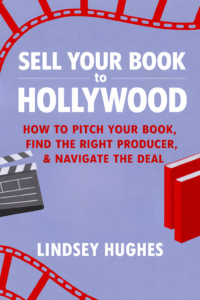
She is the author of two books, the upcoming Sell Your Book to Hollywood: How to Pitch Your Book, Find the Right Producer, and Navigate the Deal and How to Turn Your Screenplay Into a Novel.
For help with storytelling and networking you can reach her at thepitchmaster.com. To be notified when How to Pitch Your Book to Hollywood is published, sign up at booktohollywood.com. Subscribe to her free weekly newsletter for actionable creativity and career tips at thepitchmaster.com/newsletter.
|
|
Glad to have you as a guest at TKZ, Lindsey!
Falling dominoes are a wonderful analogy. As a visual learner, that image is easier for me to grasp than two-dimensional graphs that outline the steps of story structure and plot.
Thanks for sharing your insights!
Thank you so much for having me!
Excellent timing on this post, as I’ve been spending too much time on the mundane because it’s interesting to me, not because it moves the story forward.
Terry, I also get stuck in mundane, go-nowhere scenes b/c I don’t want to waste valuable research. I have to discipline myself to throw out details that don’t advance the story, no matter how fascinating they are.
Thank you for this awesome post! I’m in the middle of a first draft and your post is a great reminder to make sure I’m not stringing scenes on a bead but using cause and effect–it’s so easy to go off the rails sometimes.
Pat, Lindsey’s observations spoke to me as well. Good reminders.
I am so glad you found it helpful!
Welcome to The Zone, Lindsay! I drill home the importance of MRUs (Swain’s motivation-reaction units) all the time. Same principle as cause and effect. It’s a game-changer for new writers.
Sue, hearing a similar concept from several different POVs always helps b/c one in particular rings the bell.
Welcome, Lindsey, and thanks for the excellent post.
“Think dominoes, not beads on a string.” Fabulous summary. This is going to go on my desktop whiteboard. I’m in the middle of the first draft of a murder mystery. I have a handful of suspects, and I need to figure out how to move the story along without making it a series of interviews.
Thanks, Debbie, for introducing us to Lindsey.
Kay, the series of interviews is often necessary for mysteries even tho most lead to dead ends. Lindsey’s tips definitely help liven that up.
I’m so glad you found it helpful! I find visual metaphors and catchphrases work for remembering things, and a whiteboard is a fabulous tool!
Welcome Lindsey!
Excellent post, nicely explained. I love me my metaphors so your dominos vs beads one is perfect. And something valuable to pass along to beginning writers who tend to just string events along, blindly hoping for logic and coherency.
What’s more, if your plot does follow this consistency, it makes a twist or surprise (well planned, of course) all that more effective. Reader: Man, I didn’t see that one coming!
Metaphors work for me too, Kris.
Welcome, Lindsay. Dominos vs beads is a perfect explanation. Thanks!
Thanks for stopping by, Elaine.