
By Elaine Viets

Like most writers, I love words. I like to read about them, learn new ones, find old ones. I enjoy puns and wordplay. Naturally, I depend on my dictionaries. But did you know these websites are crammed with extra information?
These days, dictionaries are much more than spelling and definitions.
Here are two of my favorite online sites.
Merriam-Webster dictionary. https://www.merriam-webster.com/
This site usually has a topical essay about words.
After the untimely death of Catherine O’Hara, who left her mark on movies such as Home Alone and TV’s Schitt’s Creek, Merriam-Webster had an essay on 16 words from Schitt’s Creek. The Canadian sitcom is about “the Roses, a rich family that loses its wealth and must temporarily move into a motel in a small town with the cheeky name of Schitt’s Creek,” Webster said. “By metrics of awards and international viewership, Schitt’s Creek became Canada’s most successful television series. Among the series’ memorable characters is Moira Rose, played by the late Catherine O’Hara, whose diction is, shall we say, a bit eccentric.”
One of the best words Moira used is bombilate, which means, “to buzz or drone.”
“The room is suddenly bombilating with anticipation,” Moira said.
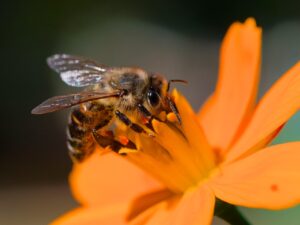
Too bad her wonky usage of bombilate isn’t popular enough to make Webster’s. Other Moira words include Balaton, confabulate and dangersome.
I have problems sorting out affect and effect. I can’t keep those words straight. Or is it strait? Webster has this helpful article: “Affect vs. Effect and how to pick the right one.”
“The basic difference is this: affect is usually a verb, and effect is usually a noun,” Webster said. Much more useful than what my teachers told me: “An affect has an effect.” Huh?
Webster delves into the proper use of em-dashes, en-dashes and hyphens and has a list of top word look-ups. Here’s one: Chargoggagoggmanchauggagoggchaubunagungamaugg. That’s a lake, and it’s in the US, not Wales. The lake has the longest place name in our country. There are various stories about the name’s origin, but one says the name is Native American and commemorates an 18th-century fishing treaty. It’s jokingly translated as: “You fish on your side, I fish on my side, and nobody fishes in the middle.” The lake is in Webster, Mass., and many just call it Lake Webster.
Webster (the dictionary) has a helpful section on slang and trending words.

Know what a fridge cigarette is? “A cold, refreshing and addictive soft drink.” Gruzz is an older person. (I hope that one doesn’t catch on.) An almond mom is “a mother who pushes her daughter to be skinny, through diet.” Note that the term refers to daughters, not sons, enforcing expectations that women have to be thin. Bed rotting mean staying in bed all day. Zaddy is an attractive older man. There are more, lots more slang words Webster is watching. They’re fun to explore.
Webster also features words with tricky pronunciations, including ragout. Don’t embarrass yourself by calling that meaty stew rag-out. It’s ra-GOO.
Oxford English Dictionary. Oxford English Dictionary
 My publisher, Severn House in London, uses the Oxford English Dictionary, or OED. It’s a little more staid that its American cousin, Merriam-Webster, but I love the research for its Word Stories.
Here’s part of the story of glamor. Excuse me, glamour.

“The schoolroom, verb tables, and Latin class seem about as far removed from our current notion of glamour as it’s possible to get,” the OED said. But grammar and glamour “were originally the same word.”
Dull, dusty grammar “first came into English from French with the meaning ‘learning or scholarship concerning a language’, and particularly, ‘a book which contains this knowledge’. The word soon extended to the principles of any kind of learning, and to books setting out such principles.”
Grammar took a turn into the occult, and words related to grammar began to refer to “knowledge of or expertise in magic and astrology, or to manuals for invoking demons and performing general sorcery.” These words included “gramarye and grimoire . . . and, finally, glamour.”
“Since glamour entered the language it’s taken on quite the life of its own.” It’s given us “glamour puss, (a glamorous or attractive person), glamazon, (a tall, glamorous, and powerful woman), and glampsite, (a campsite for glamping – the more luxurious way to camp).”
You can subscribe to the OED, but if you can’t afford a hundred bucks, you can still look up words for free, and enjoy word lists, world English, and the history of English.
Wordsmith Tom Stoppard wrote, “I don’t think writers are sacred, but words are. They deserve respect. If you get the right ones in the right order, you might nudge the world a little or make a poem that children will speak for you when you are dead.”
International sale: Two Dead-End Job mysteries, “Dying to Call You” and “Pumped for Murder” are $1.99 today at bookshop.org, Barnes & Noble, Google, Kobo, Apple and Amazon in the US and Great Britain.
Decades ago I used to buy the Merriam-Webster Word-a-Day calendars, the square pads of sheets that one tore off each morning to reveal a word to be used as often as possible for the rest of the day, by which time it was supposed to be ingrained in the brain. As soon as the online version came out, I subscribed and have enjoyed it for years.
One day, the word was ‘pedantic’ and I sent it to my children with an apology. Knowing all those words had made me a tiresome corrector. My son wrote, “How long I’ve searched for the right word… Dear Diary,
Or maybe it’s Dear Psychiatrist,
From your children who survived’ish…”
Love that story, Becky. Your children’s sense of humor certainly survived.
A bit off-topic, but I grew up in the vicinity of Lake Chargoggagoggmanchauggagoggchaubunagungamaugg, so I don’t find it odd, and it rolls off the tongue easier than Llanfairpwllgwyngyllgogerychwyrndrobwllllantysiliogogogoch (The church of St. Mary in the hollow of the white hazel near a rapid whirlpool and the church of St. Tysilio near the red cave) which is in my new home, though not as near as Lake C.
I post the Dictionary.com word of the day on my Facebook Page and tell my followers to make up their own definitions. They come up with some good ones.
Fun words, Elaine. I’d heard the one about fishing on the lake but am still waiting to hear someone actually pronounce it.
A relative’s grandfather came from a town in Wales whose name is 14 syllables long and sounds like someone trying to talk after 14 drinks.
Debbie, poster Michael Harling can pronounce it. Either that, or we should make a field trip to Webster, Mass. The dictionary bravely shows how to pronounce the lake, but I got lost halfway through.
I love wordplay. One of the characters in my current series of mystery novels uses quirky phrases like – I can’t rememory the name of that restaurant…or…How many temperatures is it outside?…or he’ll wag his head back-and-forth while saying “Yes”. Most people chuckle when they read these things, but a few are rather pedantic and offer the ‘proper’ method of making those statements.
Sounds like you have the ghost of Yogi Berra on your pages.
Ouch, Alan.
Malapropisms are always fun, Henry.
We had a friend who could do wonders with the English language in the style of Mrs. Malaprop. Every conversation would have a word that would bring about a pause while I tried to figure out what she was saying.
We were talking one day and she told me she had an appointment for a milligram.
–long pause —
“A milligram?” I said. “What’s that?”
“You know,” she said. “It’s a test for breast cancer.”
I never knew if she was sincerely making those mistakes or if she was a literary genius having a little fun.
Good one, Kay. Can you sneak her into a book?
My favorite dictionary is the American Heritage dictionary. It was banned by the St. Charles (MO) school district. It lists the correct spelling and usage of George Carlin’s favorite seven words even though most of them only have four letters. Jokes is on them. If you look up FCC v Pacifica you will find the SCOTUS listed the words with explanations quite nicely.
I am sure that if I looked I would find a mystery where a copy of the OED was the murder weapon. It is not “light” reading.
The OED as a murder weapon. I like it!
But don’t use the online version, Kay.
Groan.