
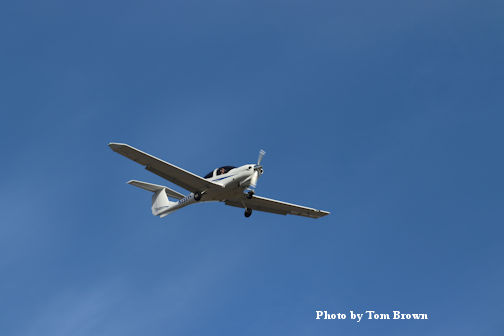
Never wait for trouble. —Chuck Yeager
* * *
“Aviate. Navigate. Communicate.”
When I was taking private pilot lessons, my instructor drilled this three-word phrase into me in every lesson as essential to successful flying. Although you need to keep all three of these skills in mind and not fixate on any one of them, there is a priority order.
Aviate. Fly the plane. This is always first. The pilot must maintain the altitude, airspeed, and position in the air (attitude). Things can get busy in the cockpit, and a mechanical failure or some other unanticipated issue can divert a pilot’s attention from simply flying the plane. The Society of Aviation and Flight Educators notes:
A famous example of failure to follow the established aviation priorities is the crash of Eastern Airlines Flight 401. In December 1972, the crew of a Lockheed L-1011 TriStar became focused on the malfunction of a landing gear position indicator light for the nose gear. The plane subsequently descended into the Everglades northwest of Miami, killing 101 of the 176 people on board (two people died more than seven days after the accident).
Navigate. When you’re flying an aircraft, you need to know where you are and where you’re going. Whether the pilot is navigating or there’s a separate navigator onboard, their job is to monitor the flight and make adjustments as needed to get the plane to its destination. Mistakes in navigation can lead to loss of situational awareness and accidents.
Communicate. Air Traffic Control is the pilot’s friend. They direct flights to keep safe distances between planes and provide instructions for safe takeoffs and landings. Pilots communicate with ATC using protocols that must be followed or the communication fails. For example, the English language is the standard established by the International Civil Aviation Organization (ICAO) to ensure safety and clear communication. On initial contact with ATC, the pilot uses the “4 W’s” (who you’re calling, who you are, where you are, what you want).
* * *
From Cockpit to Keyboard
It seems like everything I do relates back to writing these days. Fortunately, a failure in the writing process isn’t as dangerous as in flying, but we might be able to map Aviate, Navigate, Communicate onto the writer’s job. Here’s a simplified look at the process:
Aviate: Write the book. Keep it moving forward. Don’t decide to clean out that closet once again because you’re looking for an excuse to avoid writing. And don’t rewrite Chapter One for the fortieth time to get it just right. TKZers: How do you keep moving forward? Do you allocate a certain number of words or hours per day to your work? How long does it take you to write a novel?
Navigate: While you’re writing, keep an eye on where you’re going. Does each scene move the story forward, or are you getting bogged down in unnecessary subplots or long, boring backstory? TKZers: How do you avoid getting off course when writing?
Communicate: Editors, critique partners, and beta readers are the author’s friends. Use their input to revise and polish the story. Clear communication will enable the author to make the necessary changes. TKZers: What types of communication do you use to improve the final product?
* * *
So TKZers: Do you use a method like “Aviate, Navigate, Communicate” to complete your novels? Tell us about it.
* * *

Knights in Manhattan begins on a flight that has encountered rough air. But there may be more turbulence inside the cabin than outside the airplane.
Click the image to go to the Amazon book page.
Constantly re-writing chapter 1 – definitely a trap I’ve fallen into. Though thankfully I’ve finally learned to go through and finish drafting the manuscript and then come back & revise.
Morning Brenda!
I also fall into that trap of rewriting chapter one over and over again. Good for you that you’ve gotten past that.
Have a great week.
As one who is seriously thinking about learning to fly…or at least how to land a plane…this is great.
Depending on the book, I’m a plotter or panster–never know which until I start the thing. But I do write to a word count provided by Scrivener, and I have JSB’s Signposts and K. M. Weiland’s percentages internalized and somehow arrive at each signpost right on time.
Good morning, Patricia!
There’s a saying: “Flying is easy. Landing is hard.” Very true. I hope you take those flying lessons. Being at the controls of an airplane as it lifts off from the earth is a unique and thrilling experience.
Writing to a word count is a great way to control the flight to publication.
Have a good week.
Great analogy, Kay!
Aviate: I write every morning for three to four hours.
Navigate: As a pantser, I often don’t have a set flight plan except to make sure each scene leads to more trouble and complications for the characters. Fortunately when I crash, the distance is only between the chair and the floor.
Communicate: Critique groups and beta readers are my air traffic controllers. They not only tell me when the story’s going in the wrong direction, they’ve pulled me out of many crashes, doubling as first responders.
Lately, we’ve been listening to Capt. Steve on YouTube, a retired airline pilot who deconstructs near misses and crashes. He plays real-life recordings from cockpits and ATC, and explains line by line what happened, exactly where miscommunication or errors occurred, and the consequences those errors led to. Really interesting (and worrisome) esp. in light of recent disasters.
Morning Debbie!
Love this: “They not only tell me when the story’s going in the wrong direction, they’ve pulled me out of many crashes, doubling as first responders.” Another great analogy.
Thanks for the info about Capt. Steve. I need to listen in. (Like I need more stress in my life. 🙂
When I’m working on a book, I set a word count goal, but I don’t fret if I don’t meet it. There’s always the next day to catch up.
“Does it Advance the Plot?” is a question I ask myself, but usually not until I’m done. I never know if my subconscious has dictated the scene as a foreshadowing of things to come.
I have my two writing buddies who see each chapter and keep me on track. And an editor once it’s done and as clean as I can get it. I use SmartEdit and Word’s Read Aloud for the last passes.
Morning, Terry.
Sounds like you have the flight under control. That’s an interesting point about foreshadowing. Sometimes the boys in the basement are way ahead of me.
Have a good week.
Trying to get motivated to put my pizza life on a page.
But I am a licensed pilot and my college degree is in Aeronautics. The “rules” I learned in school have served me well. Here is the longer list.
No matter what happens, fly the airplane.
Aviate, Navigate, Communicate.
When in doubt, hold your altitude. Nobody ever collided with the sky.
Truly superior pilots are those who use their superior judgment to avoid those situations where they might have to use their superior skills.
Fuel is liquid altitude. The only time you have too much is when you’re on fi re.
Flying, like life, is full of possibilities: can’t do…won’t do…shouldn’t do…
It’s better to be on the ground wishing you were the air, than in the air wishing you were on the ground.
Never let an airplane take you somewhere your mind didn’t get to five minutes earlier.
Emergency landings are done to save lives, not airplanes.
The three most useless things in aviation are runway behind you, altitude above you, and fuel not in your tanks.
There are old pilots and bold pilots, but no old, bold pilots.
The takeoff is optional but the landing is mandatory
It is identify then verify. Bizarrely I needed this in an algebra class one day.
Weather or not, not.
The pilot in command is the final authority to the safe operation of the aircraft. This was on my dashboard for many years.
Some pilots have 250 hours. Some have one hour 250 times.
As we were training to be commercial pilots one thing we learned was keeping your head about you in an emergency. One night in pizzaland I took over for the Assistant Manager who was cutting pizzas. The oven has conveyor belts. A pizza is either cut or falls on the floor. Calm and direct, I took care of business. When things calmed down, the Assistant Manager was in a ball on the floor.
“How did you do that?”
“A college class taught me to stay calm in emergencies. This is easy. The store isn’t moving at 175 mph.”
Morning, Alan.
I thought you might have some good input on this topic. Your list of aeronautical wisdom is great. I’d heard of most, but not all of them.
Your story about handling the conveyor belt is a good example of the value of flight training. I’m looking forward to more about pizzaland!
Great sayings, Alan!
sounds like you did a lot better than Lucy and Ethel in the chocolate factory.
I love this analogy, Kay. When I succeed at writing a novel it’s because it keep it flying, moving forward, and don’t circle back. I navigate, keeping the story foremost, and when needed, climb to the 30K foot view to see the entirety of the plot, the big picture, and adjust as needed at that point. Finally, communicating is essential—beta reader and editorial feedback helps the novel be sound.
Yes! Climb to 30K to see the entirety of the story! Great observation.