WORK THOSE L’IL DOGGIES

by Simon Wood

Today TKZ is thrilled to welcome Simon Wood, a darn good writer who I was fortunate enough to tour with last summer (I can still recite his “one time I literally ran into an assassin” story by heart). He shares a unique take on what we’ve been discussing quite a bit lately, creative ways for authors to earn a living in the digital age.

The writing world is an odd industry, but no different from any other. I think writers sometimes forget that our stories are commodities. A writer’s body of work doesn’t lose its value. Therefore, stories should be worked for all they’re worth.

I didn’t look at my work this way until I heard science fiction and fantasy legend Gene Wolfe speak at a convention a few years ago where he was the guest of honor. He was talking about how he’s always made his stories work for him. A good story doesn’t have to end its life at its first printing. Like Halley’s Comet, it can keep coming back again and again for the enjoyment of a new audience. He’d calculated how much some of his stories had earned for him. A number of his stories had earned several dollars per word. Admittedly, it had taken a couple of decades to do that. Nevertheless, that was pretty amazing.

This was quite a revelation to me. I took to heart what Gene had said. I’d had a handful of stories published so far, most earning a couple of cents per word on average. I looked at my body of work and found ways of getting my stories published and re-published. Stories I sold to print markets I resold to webzines. I looked to foreign language markets where the story would be fresh. Within a couple of years, I’d resold some of my stories three times over.

While I still have a couple of stories reprinted every year, with print markets shrinking and most other markets looking for unpublished fiction, I turned to the internet. A few years ago, I discovered Fictionwise.com. They were only interested in previously published fiction. They operate on a similar platform as iTunes where users downloaded stories like people do with songs. It’s worked out very nicely. My stories are still available and their popularity is determined by the readers.

I’m now taking this approach with my books that are going out of print. I like to think there’s a demand for these books. Maybe not enough for a re-issue, but there’s certainly more than enough for e-publishing. The likes of Amazon’s Kindle and Smashwords.com have made it easy for me to keep my books out there and meet a demand. I’ve recently e-published DRAGGED INTO DARKNESS and WORKING STIFFS, two books of mine that I believe contain good work.

This is where a little discretion comes in too. I’m only republishing things that people ask about or that I can hand-on-heart say represent my best writing. There’s no point in me putting out things that are subpar. And I’ll be honest. There’s stories of mine that got published, especially in the early years, which I look upon as amateurish now and while I’m not ashamed of those stories I don’t feel they represent what I write now. I could be a total reprint slut and toss everything I’ve ever written at the eBook reader but it’s not worth it. There’s a massive pinball effect with a writer’s work. Someone reads a story and like it, so they check out something else I’ve written. That only works if what is out there is good. If it’s bad, it has the converse effect and they’re unlikely to seek out other works.

I view eBooks as another weapon in my publishing arsenal and not a threat to it. That’s why I’m also going to explore the e-publishing route for some stories that I’ve been sitting on that don’t fall into traditional print publishing options such as novellas and novelettes. There’s certainly an opportunity for me to experiment.

So how has working my stories hard fared for me? Not as well as it has for Gene Wolfe, but I’m getting there. Several of my stories have been picked up for different anthologies and have earned me two and three times what I was originally paid for the piece. One story, TRAFFIC SCHOOL, was published three times, each time earning pro-rates, before I put it on Fictionwise and there, it has found a following. It’s by far my bestselling story by a factor of at least two to one. I think this creepy little short about bad driving habits will be my little goldmine. My work for Writer’s Digest has done well too. A couple of the pieces have been reused two and three times and have earned four-digit paydays. I’ve now placed them on Smashwords.com and I’ll see how they work out there.

At the end of the day, as long as there are readers, stories are commodities that don’t diminish with age or time and the electronic option is helping there. And that’s all good as far as I’m concerned.

Learn more about Simon at www.simonwood.net and his work at:

Kindle Store
Smashwords.com
Fictionwise.com

Conjugating Verbs

By Joe Moore

Each week, all the Kill Zone authors fly to a Denny’s in Wichita (chosen because of its central location) for a breakfast meeting to plan our upcoming blog posts. Some of us lean toward topics about life and how we equate it to our stories while others gravitate toward the mechanics of writing. There’s usually a smattering of rants, and of course we can count on Miller to have some great tales about his free-range chickens. It gives us an opportunity to chat while enjoying a tasty Grand Slam breakfast that’s always fresh and fruity.

gs At last week’s meeting, we realized that not only were we running out of 2009, we were also running out of new ideas to blog about. We agreed that we needed a break to recharge the portion of our brains devoted to posting at TKZ. We made the executive decision to repeat what we did last year and take two weeks off for Winter Break. So from Monday, December 21 until Sunday, January 3, the Kill Zone blog will be closed for the Holidays. That doesn’t mean we won’t be hard at work thinking up new and exciting topics for 2010. As a matter of fact, next year we will be announcing two really brilliant ideas in which all of you can participate. One involves the combined creative efforts of your seven Kill Zone bloggers and the other will involve all you writers out there. The end result of both should be very cool. So stay tuned to TKZ for two unique and (as far as I know) original ideas.

At this point, I bet you’re wondering why this post is called Conjugating Verbs? Well, just as the waitress was bringing my second helping of Silver Dollar pancakes, which I like with the strawberry flavored syrup, I declared to my fellow bloggers that I was so out of ideas, my next post would be about conjugating verbs. So here goes. This is my most cherished and only memory from four years of high school Latin: Amo, Amas, Amat.

Five gifts you don’t want to unwrap this holiday season

We’re coming off a pretty depressing month of November, so I thought I’d kick-start the holiday season with a few early reflections about gifts: Gifts given, gifts received. The Good, the Bad, and the Butt-ugly.

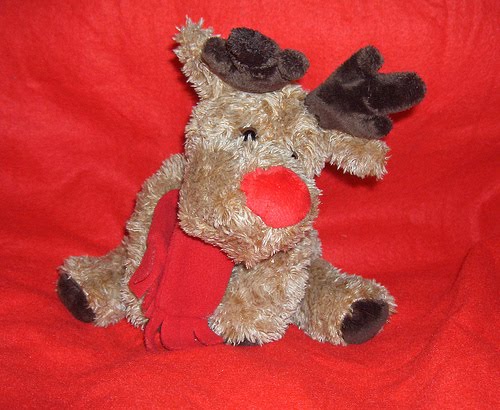
When it comes to worst-ever gifts, it’s not the gift per se that counts. If you get a hideous Rudolf the Reindeer sweater from your Aunt Minnie, at least you know she meant well. (Unless she’s like some of the Minnie-hahas around my tree).

The worst gifts are ones you know were chosen with malice aforethought; they reflect–badly–on you, or on the relationship between giver and givee.

Here, in no particular order, is my own Top 5 list of worst-ever gifts:

  • A set of Franklin Mint quarters, given to me by a buddy who kept borrowing money.
  • A refrigerator alarm that oinked, the year I put on a few holiday pounds.
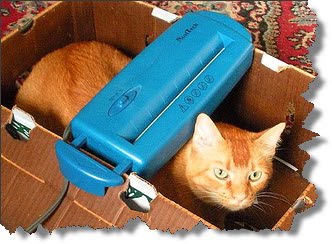
  • A paper shredder, right after I announced my plan to become a professional writer. (I already had an organic paper shredder–my cat).
  • A set of candles that was regifted to me, from the person I’d given it to the previous year.
  • Any of the “For Dummies” books I’ve ever received. (And I hate to admit, there’ve been more than a few.)

To be fair, here are a few clunkers I’ve given over the years that didn’t go over so well:

  • A Christmas card I regifted in the first grade. It had the original recipient’s name erased, but still clearly legible.(I was only six, okay?)
  • An Epilady hair remover, for a hirsute friend.
  • A jumbo box of See’s Candy, for someone who was on a diet.
  • A set of carving knives, for a soon-to-be ex.


Looking over that list, I’m…I’m ashamed. And I solemnly vow not to leave any passive-aggressive lumps of coal in any one’s stocking this year.

So what are some of your worst-ever gifts given? Received?

Thanksgiving Day Bravery

by Clare Langley-Hawthorne

Having just spent a great Thanksgiving in LA (despite the horrible traffic) I have returned re-motivated. Why? Because my friend Charysse gave me a much needed boost. In a recent work evaluation she had to list the ten people she would most want to have at a dinner party and I was one of the chosen. While this was nice and all – it was her reason for choosing me that caused a lump to form in my throat. She said she had told her boss it was because I was one of the bravest people she knew. Now I’m no courageous Clare that’s for sure – I’m terrified of heights, wimpy about woods (there’s bears out there you know) and squeamish about virtually everything – but I was, in my friend’s estimation, brave because I chose to ‘lay it all out there’ – abandoning my successful career in pursuit of a dream and risking all in the process. Her support brought tears to our eyes and it made me realize (as it was Thanksgiving after all) how thankful I am for so many things…Yes, here’s where it gets soppy (and I have to admonish my fellow Killzoners – where was the obligatory ‘what are we thankful for’ post last week?! Hey, I adopted this country for these kinds of celebrations!)

So here’s my top 5 things that I’m thankful for:

  1. My family (obviously) – you gotta love two five year old boys who manage to make it in the car to LA (and the three hour traffic jam we encountered Wednesday when we arrived) without watching even one DVD…
  2. That I still have an agent (he hasn’t abandoned me yet, at least I don’t think so…)
  3. That I still LOVE to write (despite the publishing industry’s best efforts…)
  4. That I get such great support from friends, family, fellow writers and fans so that even in the bleakest of November moods I can see a glimmer of hope.
  5. That I finally had my hair cut.

Okay, the last one may seem trivial but believe me I needed it! I’ve been growing my hair all year (see New Year’s resolution post) only to discover that (surprise, surprise) I hated it. Not only did my husband think it made me look older (yes, it’s a miracle sometimes that we’re still married) but I also never had the time to style it into any pseudo-Edwardian glory. I have to admit, as much as I might want to channel Ursula in my life, I need a maid to be able to do so…otherwise I’m just another boring old mum with her hair in a pony tail. Now, of course, post-hair cut, I’m the chic, youthful, cool mum with the gorgeous 1920’s bob:)

But enough about me…what are you thankful for?

PS: In the spirit of Thanksgiving, I’d also like to invite all killzoners to help out Basil Sands in his quest to name his blog radio show. He’s offering $25 if you suggest the name he ends up using, and for those of you who regularly read the comments you know he is hilarious (so his show is bound to be great!). You can visit his website: http://www.basilsands.com/ for more details.

Bleak November

by James Scott Bell

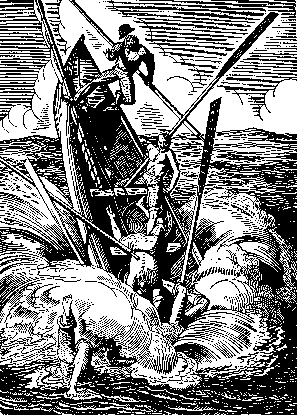
Whenever I find myself growing grim about the mouth; whenever it is a damp, drizzly November in my soul; whenever I find myself involuntarily pausing before coffin warehouses, and bringing up the rear of every funeral I meet; and especially whenever my hypos get such an upper hand of me, that it requires a strong moral principle to prevent me from deliberately stepping into the street, and methodically knocking people’s hats off–then, I account it high time to get to sea as soon as I can. This is my substitute for pistol and ball. – Moby-Dick (Rockwell Kent, Illustrator)

Why does November feel like the month the Earth stood still? Or imploded? Or got hit by that tsunami in the movie 2012?

It seems like this month all the upheavals in the publishing industry started to coalesce into one big flaming mess on the order of the Hindenburg. At least, that’s how it sounded on various blogs and comment sections, where rhetoric sometimes reached conflagration levels.

All the anxiety over eBooks and eReaders, the move of some big publishers into the self-publishing market, the revelation of paltry incomes associated even with a New York Times bestselling book, and the apprehension of authors and agents over just how anybody is going make any kind of a buck as a novelist anymore – it all seemed to come to a head this month.

Why should this be so?

First, the very pace of change in our world is now such that major developments happen almost as fast as chair throwing incidents on Jerry Springer. And humans naturally feel anxious about change until we can catch up and figure out what’s going on. But we always seem to feel a few steps behind these days.

How fast are things moving? Already there’s talk that the Kindle is on the way out. Authors and publishers are even now embedding links to websites and YouTube for added content in digital novels, links which can be accessed on, say, an iPhone but not a Kindle. There’s even a name for such digi-novels: Vooks.

Which leads to the technological changes that seem poised to alter the paradigms we’ve lived with for centuries, such as books on paper being paid for by readers. No one knows what a paradigm shift feels like until they’ve actually been through it, and we haven’t been through it yet. We’re inside it.

So as all this is happening, hands are being wrung throughout cyberspace. The only thing we know for certain is nothing is certain, and the landscape we see today will be very different tomorrow.

I have but two predictions:

1. People are still going to want good stories to read.

2. They’re not going to pay as much money to get them.

As to #1, writers need to do what they’ve always done: write and write well. Over and over. That calls for commitment to the craft and resistance to the “easy way” of self-publishing.

Let’s be blunt. We all know the overwhelming majority of self-published books aren’t good enough to be published the traditional way. That doesn’t mean there aren’t exceptions. There are. But they are as rare as Susan Boyle.

Yes, I do believe authors will do more direct selling in the future. They will make their stuff available in digital form directly. But they still have to prove themselves to be good writers, or people won’t buy.

Which leads to #2. Consumers are being trained to pay $10 or less for books. This means hardcovers are probably a dinosaur. The mastodons are in the tar pits.

But there will still be a market for books, because of #1. You know what it feels like? The mass market paperback boom post-World War II. Low price point, ease of use. The eBook revolution may be recreating this type of market. (According to Kelly Gallagher, VP of Publishing Services at RR Bowker, eBook consumption favors fiction over nonfiction at a rate disproportionate to print).

The cream will rise to the top. Those novelists who can deliver, book after book, are going to gain a following and have the chance to make some coin.

EBooks still represent only a small portion of the book market, by the way. I mean, let’s not be hasty. The “early adopters” drove sales of eReaders over the last year. The curve is going to flatten in 2010 or 2011. It’s not going to be like the personal computer boom. We’re talking about a convenience rather than a necessity. (That may change somewhat as businesses find ways to use the ever improving devices. But will they become “little laptops”? I don’t think so because we already have something called . . . a laptop).

How far eReaders will eventually reach is still a tough call. I know there are purveyors of pervasiveness out there, but hold the iPhone. I’ve pointedly spoken to several twenty-something readers over the past few weeks, and was gobsmacked when none of them liked eReaders. They were paper people! Astonishing.

So whenever I get to feeling like old Ishmael, with a “damp, drizzly November of the soul,” and when I, too, want to go outside and knock some hats off, I remember that fiction writers will always be around. The world needs us.

Maybe now more than ever.

Has Superficiality Reached It’s Zenith Yet?

John Ramsey Miller

During my first six decades of life, I have learned know a lot about self-indulgence, image, illusion and self-delusion, and I’ve been trying to live a more honest, simpler, and more meaningful existence. I don’t mind telling you I am stunned and amazed by what I see on television. In the name of research I have been watching a few “reality” shows instead of my usual list of educational- purposes-only television shows: the CSIs, Law & Order, and its numerous spinoffs, Two and A Half Men, Big Bang Theory, and I started watching The Housewives of Orange County, New York City, and Atlanta, Bridezillas, Million-Dollar Deal, Flipping Out, and a couple whose names I can’t even recall. Anderson Cooper said he never misses Bridezillas, and I suspect a lot of otherwise serious people watch at least some of these reality shows. I have never watched So You Think You Can Be a Star, You Can Dance With the Stars, The Great Race for a Survivor, and Watch Ozzie Toddle and Drool. I think there may be substance to others, but I couldn’t say for sure. I only watch American Idol as long as they have the “unfortunate” talent performing. In fact I would watch “American Idol, The Painful Miserable Fail Tapes.”

A populace’s preoccupation with the superficial is a sure sign of a civilization in decline, (like we need another warning sign) and it appears that ours is on a super-slide toward an apocalyptical Mad Max existence. At that point the reality shows will take on a more life-and-death tone. Shooting Guns To Make The Stars Dance, Cooking Road Kill, and Beevis & Butthead re-runs. We’d still have Bridezillas, but each segment will end with the offensive and self-absorbed brides being bitch-slapped by show fans. If the delusional, hissy-fit-throwing brides I saw on that TV show had actual political power to go with an over-inflated self-importance they’d be what we call elected representatives.

What gets me is how superficial the lives of the people on these shows can be, and that watching it is funny, but it is also terribly sad. Who exactly are the producers catering to? The idea that there is such a demand for this kind of reality programming that targets unhappy, cloying, unbalanced, and emotionally cripple people is frightening. Yes, I laugh at the Housewives who spend their days sipping wine, attending daily parties and luncheons, building a delusional wall, purchasing clothes and accessories, gossiping, and biting each other’s backs. Lord, it’s a hell of a mess. And, I say this guiltily; it’s utterly fascinating. I think that watching other people behaving badly helps us feel better about ourselves, and superior to those who are mistreating their maids of honor, or buying twenty thousand dollar watches to toss in a drawer after they’ve worn them once or twice. I have to admit I feel dirty after watching most of these shows, but I’m giggling while I shower.

It makes you wonder what the American dream has become, what these people imagine it to be, or are the producers merely capturing the worst moments, perhaps egging the participants on to cater to the worst in each of us? And why we are more fascinated with the false reality shows on TV than what is happening in the actual world. Do we want to be treated like children after we’re grown, or do we want to be grownups and act like mature individuals and take responsibility for our actions? The worst is the thought that my own reality show would be so boring that nobody could watch it.

Branding My Bad Self

By John Gilstrap
A few weeks ago, we enjoyed an interesting discussion here in The Killzone about branding. The consensus seemed to be that because books are products, they need to be marketed accordingly. That means a unified message across all avenues of communication. We said that the author’s website should invoke the cover. Ditto business cards, post cards, etc. As I recall, I was one hundred percent on board with the consensus.

At least in principle. Last week, reality invaded my theoretical agreement.

My editor sent me an email telling me that I should consider a new author photograph—one that more appropriately invokes the aura of a thriller. Specifically, she thought that I should get a photo that makes me look like more of a—and this is her word—badass.

Do me a favor and scroll over to the right, to the Killzone mug shots. The one of me is my current author photo. Now go to the dictionary and look up “white bread nice guy”. My picture is there, too.

Folks, there is not a single cell of badass blood in my body. According to my wife, I barely have an ass at all; but I think she’ll agree that what’s there is definitely not bad—at least not in this context.

Having talked the talk, though, it’s time for me to walk the walk. I’ve scheduled the photo shoot for Monday, November 30. The photographer seems to have confidence that she can pull off this remarkable transformation, but can she do it in a way that will not trigger gales of laughter from people who know me? Lord, I hope so. I hang with a pretty unforgiving, ballbusting crowd.

Here’s my question for you folks: Does the author photo in any way enter into your purchase decision for a book? I think it’s clear that the front cover is an important part of the shopping experience, but what about the back cover?

If you go to an author event expecting to find a guy whose photo makes him look to be from the same mold as his badass character, and instead find Mr. Suburban America, will the surprise disappoint you? Anger you, maybe?

Or does everybody know that this is just the way the game is played?

The Real Losers in the Harlequin Horizons Debate

by Michelle Gagnon

So for those of you who don’t know, last week Harlequin announced that they were linking up with a vanity publisher (although they called it “self-publishing.” More on that in a bit).

The initial announcement promised that for $600, an aspiring author could publish their book with the “Harlequin Horizons” logo on it (although after weathering a week of criticism for including the Harlequin name in the new imprint, it was renamed “DellArte Press”). For another $342, that book would receive an “editorial review,” (which actually will only cover the first chapter, or roughly 1700 words). The packages spiral upwards in cost to the whole enchilada, including email blasts which come in at just under $12,000 (just for the email blast, mind you–that doesn’t include any of the other costs).

Whoa. That’s a lot of money. And should your manuscript actually sell a million copies, despite the fact that you paid for the publishing, marketing, and editing, you’ll still share profits with Harlequin—to the tune of 50% of the net (and there’s an excellent, and very funny, post about that on Jackie Kessler’s blog).

Which brings us to the difference between self-publishing and vanity-publishing. With self-publishing, an author keeps any and all profits made from sales of their book. With vanity publishing, those profits are split with the publisher–you pay them to print the book, then they take a cut of the earnings.
Hence, the new Harlequin venture is undoubtedly vanity publishing. As the MWA said:

“It is common for disreputable publishers to try to profit from aspiring writers by steering them to their own for-pay editorial, marketing, and publishing services. The implication is that by paying for those services, the writer is more likely to sell his manuscript to the publisher. Harlequin recommends the “eHarlequin Manuscript Critique Service” in the text of its manuscript submission guidelines for all of its imprints and include a link to “Harlequin Horizons,” its new self-publishing arm, without any indication that these are advertisements. That, coupled with the fact that these businesses share the Harlequin name, may mislead writers into believing they can enhance their chances of being published by Harlequin by paying for these services.”

I’m guessing the executives didn’t anticipate the firestorm this would incite. Almost immediately, the RWA responded by saying that in the future, Harlequin would be treated as a vanity press, and would no longer be eligible for certain amenities at the annual conference that they’ve received in the past. They were shortly joined by the Mystery Writers of America and Science Fiction & Fantasy Writers of America, who also officially demoted Harlequin’s standing to a vanity press.
Mind you, this is across the board, not just for authors published under the new imprint.

Harlequin was “surprised and dismayed” by the reaction (their words, not mine) and so they backtracked–a little. In the next announcement, they said, “we are changing the name of the self-publishing company from Harlequin Horizons to a designation that will not refer to Harlequin in any way.” (hence, DellArte Press). No word yet on whether or not this compromise will change anything in terms of their standing with the various author associations.

One thing that’s been lost in all this is the impact on authors who were already under contract with a Hq imprint (myself included, as MIRA is their thriller imprint. So consider me biased). When I received the initial press release announcing the new line, I honestly didn’t think much of it–after all, how could this possibly affect me?

Within a matter of days, I found out. First of all, any author who publishes with Harlequin will lose their standing with nearly every organization. That means that New York Times bestselling author Heather Graham will no longer be considered a published author. Neither will Debbie Macomber. Neither they, nor anyone else who signed a deal with Harlequin (myself included), will be eligible for any future Rita Awards, Edgars, or Nebula Awards.

Crazy, right? As one commenter said in a forum, “It must feel like they (Harlequin authors) showed up to work and found out that the boss had decided to open a bordello.”

I’ll admit I’m not thrilled with the way that Harlequin has handled this from the outset.
However, I’m equally offended by the way the organizations have responded. Groups that I’ve faithfully paid membership dues to for years, whose boards I’ve served on, were just as quick to kick me and my work to the curb. The Harlequin authors are getting it on both ends. We’re being penalized for a decision made by our publisher that we had absolutely nothing to do with. And we’ve also been summarily marginalized by organizations we considered ourselves to be an intrinsic part of.

So what happens now? Perhaps renaming the imprint will satisfy the concerns of the various organizations. If not, perhaps Harlequin will make another concession—or they won’t, which will force some tough choices down the line.

And I suspect that many Harlequin authors are reconsidering their relationship with their publisher. Should some of Harlequin’s bread-and-butter authors like Graham and Macomber jump ship once their contracts are up, I doubt the profits from the new vanity line will offset the loss.

Building a better robot

By Joe Moore

Along with plot, setting, dialog, theme, and premise, your story is made up of characters. Hopefully, they’re interesting and believable. If they’re not, here are a few tips on making them so.

It’s important to think of your characters as having a life prior to the story starting, and unless you kill them off, also having a life beyond the last page. You need to know your character’s history. This doesn’t mean you have to explain every detail to the reader, but as the author, you must know it. Humans are creatures molded by our past lives. There’s no difference with your fictional characters. The more you know about them, the more you’ll know how they will react under different circumstances and levels of pressure.

robots The reader doesn’t need to know everyone’s resume and pedigree, but those things that happened to a character prior to the start of the story will help justify their actions and reactions. For instance, a child who fell down a mine shaft and remained in the darkness of that terrible place for days until rescued could, as an adult, harbor a deep fear of cramped dark places when it comes time to escape from one in your story. Why does Indiana Jones stare down into the ancient ruins and hesitate to proceed when he says, “I hate snakes.” We know because he had a frightening encounter with snakes as a youth. But the background info must be dished out to the reader in small doses in order to avoid the dreaded “info dump”. Keep the reader on a need-to-know basis.

Next, realize that your characters drive your plot. If a particular character was taken out of the story, how would the plot change? Does a character add conflict? Conflict is the fuel of the story. Without it, the fire goes out.

Also remember to allow the reader to do a lot of the heavy lifting by building the characters in their mind. Give just enough information to let them form a picture that’s consistent with your intentions. The character they build in their imagination will be much stronger that the one you tried to over-explain. Telling the reader how to think dilutes your story and its strength. Don’t explain a character’s motives or feelings. Let the reader come to their own conclusion based upon the character’s actions and reactions.

Avoid characters of convenience or messengers. By that I mean, don’t bring a character on stage purely to give out information. Make your characters earn their keep by taking part in the story, not just telling the story.

Challenge your characters. Push them just beyond their preset boundaries. Make them question their beliefs and judgment. There’s no place for warm and cozy in a compelling story. Never let them get in a comfort zone. Always keep it just out of their reach.

And finally, make your characters interesting. Place contradictions in their lives that show two sides to their personality such as a philosophy professor that loves soap operas or a minister with a secret gambling addiction. Turn them into multi-faceted human beings in whom the reader can relate. Without strong characters, a great plots fall flat.

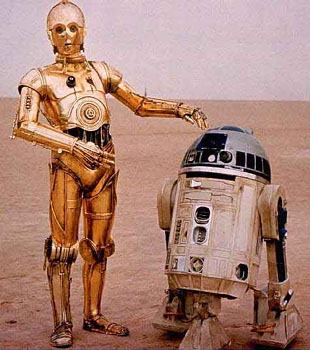
So what has this all got to do with building a better robot? Even if you write science fiction or fantasy and your characters are robots or trolls, the memorable ones are those with strong human traits. Think r2d2 and C-3PO.

Setting the Pace

by Clare Langley-Hawthorne

I’m at the point in my current WIP where I’m checking the pacing of the story so far. I often do this when I feel that something just isn’t clicking – either the story is starting to drag or I’m in danger of losing direction – and I find pacing is often at the crux of the problem. Being the anal outliner that I am, I have a number of steps which I undertake when I need, quite literally, to go through the paces. When I finished the first draft of my first novel, Consequences of Sin, my study was plastered with butcher paper graphs of the story – with different colors for all the critical aspects of the story – mystery, character development, romance etc. and with all the highs and lows (as well as lulls) represented. It was a visual way for me to gauge how well I was pacing the story (or not!).

Pacing is a tricky thing and one, I suspect, gets easier with practice (at least I bloody well hope so!) but when the pacing gets out of whack the story either dies a long, lingering death or seems to hurtle from scene to scene without stopping for air (leaving the reader a little winded and unsatisfied at the end). Somewhere between the two, the story sings.

So this is how I try and attack the pacing issue:

  • Chapter outlines – I know, I know, only an outliner would start with this anyway, but I actually redo these midway through the first draft, emphasizing what key tensions are involved, what key plot points are revealed, and how the relationships between the characters are unfolding. This type of outlining helps me visualize if there are places in the book where nothing seems to be propelling the story forward and also where they may be spots where too much seems to be happening all at once.
  • Graphing the book: Using the classic three act structure I map out the critical conflicts and plot points in the book. Being a visual person this helps me immediately see how the contours of the story are coming along: too many troughs and I know I’m in trouble; too many peaks early on and I know it’s too much like ‘Days of our Lives’…
  • Editing for pace: Midway through the first draft I often find myself in edit mode, not necessarily for the nitty-gritty writing elements but more the big picture pacing issues: How is it flowing? Does the book feel like it’s building suspense or is it already starting to deflate?…This type of editing helps me focus attention on storyline structure as well as pacing. Many writers probably wait until the end of the first draft to undertake this but I find it helps to do this about half way through – helps me avoid getting bogged down in the saggy middle.
So how do you tackle the issue of pacing in your books? As a reader, who do you think has mastered this (for it is an art to do it well I think)? Any additional tips or pointers – because, let’s face it, I could use all the help I can get at the moment!