Boyd Morrison Interview

James Scott Bell


Boyd Morrison does not know what he wants to be when he grows up. So along the way in his life’s trek he got himself a PhD in industrial engineering, worked on the Space Station Freedom project at Johnson Space Center, got some really tough duty managing an Xbox games group at Microsoft, was and still is a professional actor . . . and, oh yeah, made a little stop on TV to became a Jeopardy champion.

One other little item: he’s got a hot new novel that just came out from Simon & Schuster. It’s called The Ark.

Boyd’s journey to publication covers about 13 years, and I wanted to interview him for TKZ because I saw someone who approached this whole business wisely and systematically. In this interview, along with everything else, you’ll find Boyd’s tips about getting the most from a conference. Pure gold. Be sure to learn more about Boyd at his website, BoydMorrison.com.
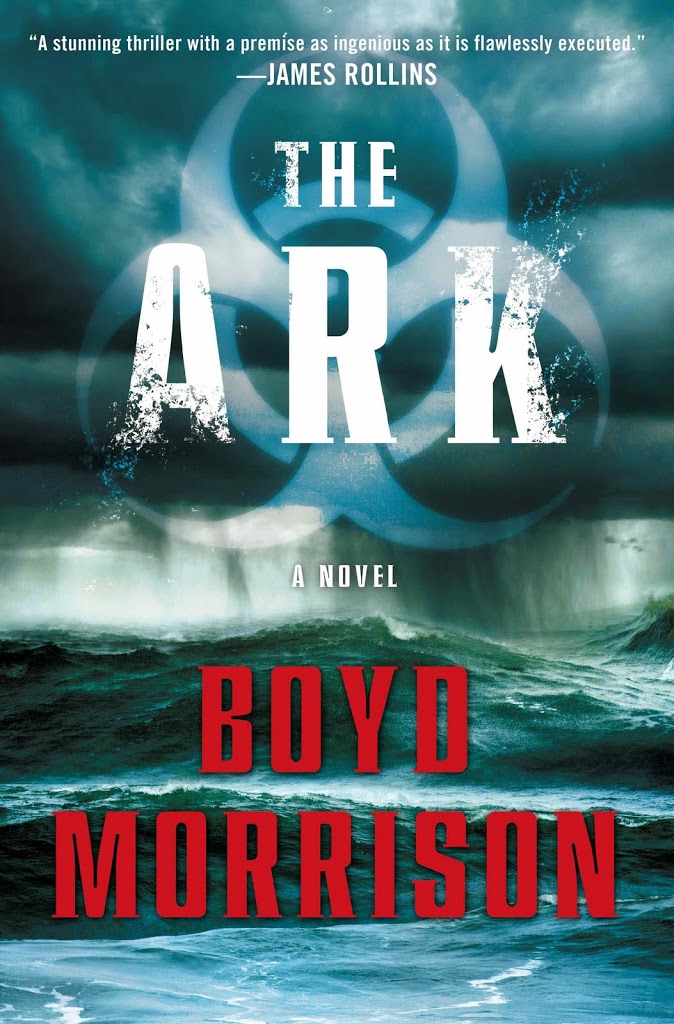
JSB: Publication of your novel, The Ark, is a success story with a unique background. How did you get the idea?

BM: Engineers usually get a raw deal in thriller fiction, which is something I pay attention to because I’m an engineer myself. When the strapping hero needs some critical piece of technology to save the world, he turns to an engineer for said object or solution and then proceeds to kick butt (think James Bond getting his gadgets from Q or Captain Kirk demanding more power from Scotty). And I got sick of that, so I decided to cut out the middleman and create an action hero named Tyler Locke who IS an engineer. Nerds rule!

While I was looking for an adventure for Tyler to swashbuckle through, I saw a documentary on the search for Noah’s Ark. I’m a skeptic by nature, so my first thought was, “Yeah right. They’re going to find a 6,000-year-old ship intact on a snowy mountaintop.” But then I got the inkling of an idea: maybe the reason we’ve never found Noah’s Ark was because we had been deceived all these years as to its true location. And maybe the Ark held such a terrible secret that it could very well mean the end of mankind if it were ever found again. Noah was the first engineer (who else but an engineer could build the Ark?), so it was the perfect object for Tyler to search for.

JSB: How did you get an agent to represent The Ark?

BM: The Ark was the third book I wrote, so I had already gone through two rounds of rejections from agents (both of those books have since been acquired by Simon & Schuster). But I had gotten pretty good at pitching my novels, and I’m a big believer in meeting agents in person. It’s so much easier to get your first three chapters read by an agent when you can put “Requested Materials” on the envelope. So I attended the very first Agentfest at the Thrillerfest conference in 2007.

Today Agentfest is done speed-dating style, but the first Agentfest was more leisurely paced, with an agent sitting at each of the tables during the luncheon session. I was late to the luncheon, so I snagged a seat at the very last table. Irene Goodman, who is a highly regarded agent, was attending because she was looking at extending her client list to include thriller authors. She asked every aspiring author at the table to give her their pitch. I had practiced mine so that I could rattle it off. It went like this:

“A relic from Noah’s Ark gives a religious fanatic and his followers a weapon that will let them recreate the effects of the biblical flood, and former combat engineer Tyler Locke has seven days to find the Ark and the secret hidden inside before it’s used to wipe out civilization again.”

I could have stopped at the words “Noah’s Ark” because once she heard them she asked to read the first three chapters. I was still working on my own revisions, so it took a couple of months before it was ready to send to her. She told me later that she started to wonder if I’d forgotten about her, but she was one of the first agents I sent it to (I sent it to my five highest agent choices as a simultaneous submission).

She got the chapters on a Monday, read them right away, and then called me when she was done. That day. I practically keeled over in my chair when I got the phone call because no agent had ever called me before. She said she loved the beginning and asked me if I would mind overnighting the rest of the manuscript (note to aspiring authors: it’s a good sign when the agent is that eager to get the manuscript). I told her I’d have to think about…oh, who am I kidding? I was already in the car on the way to the post office before she had finished her question.

Irene received the manuscript on a Tuesday, and I figured it would be at least a week before she got back to me. She called on Thursday. With an offer of representation. This time, I did keel over. But I pulled it together and told her I would have to contact the other agents who had it before I could give her an answer. After a few frantic phone calls to the other agents who had the submission, I called Irene back on Friday and said I would love for her to be my agent.

Again, all of this was in 2007. So for those of you who think getting an agent means a smooth path to publication, I’d like to remind you that it’s now 2010. The book that Irene snapped up in five days took three years to get published.

JSB: You have been very good not only about attending the top conferences, but getting the most out of them by meeting people, networking and so on. What tips can you give unpublished writers in this regard?

BM: Virtually every person I know in the writing and publishing industry I met at conferences, so I highly recommend that unpublished writers attend them. I could write twenty pages on writers conferences, but I’ll boil it down to a few key points.

Know why you’re going

Attending a conference is well worth the time and money when you know what you want to get out of it. If you want to meet agents, going to a conference like Bouchercon or Left Coast Crime will be a waste of time because few agents attend them, and then it’s usually to serve on a panel, not to search for prospective clients. But if you want to meet writers and readers, Bcon and LCC are perfect. There are plenty of conferences featuring agents looking for new clients. Check out the back of Writer’s Digest magazine for conferences near you.

Don’t be afraid

Everyone I’ve met at conferences was incredibly welcoming to me when I was unpublished. No one looks down on unpublished authors. In fact, they’re very encouraging. So go up to people and introduce yourself. You’ll probably make many friends, as I have. It doesn’t matter if they’re writers, agents, editors, or readers. Everybody there wants to meet other people. And one important tip: agents and writers hang out at the hotel bar at night; having a drink with them (or even buying a round) is a great way to hear the best industry stories.

Have your pitch ready

If you’re pitching a novel, it needs to be a completed manuscript. Nothing disappoints an agent more to hear the idea for a great novel and then find out it won’t be done for another year. Have your novel boiled down to a sentence or two that outlines the premise for the plot and the main character that the reader will be rooting for. Then you can elaborate if and when the agent asks follow-up questions. Memorize the pitch so that you can say it without thinking. If you ramble about your story for five minutes, you’re going to confuse agents and make them think your manuscript will be just as rambling.

Be nice

This last point should go without saying, but it needs to be emphasized. Be friendly and polite. Smile. You can introduce yourself to agents even if they’re not in a pitch session, but don’t follow them into a bathroom or slide your manuscript under a stall (believe or not, this happens). Don’t put writers on the spot by asking for blurbs in person. If you get to know them, follow-up later with an email asking if they have time to read your manuscript (don’t be offended or take it personally if they don’t; published writers are super busy as I’ve recently discovered first hand).

Have fun

Writing is a solitary business, so enjoy yourself in the supportive community of a conference. Every writer gets their batteries recharged by hearing from other writers who’ve been through exactly what they’re going through and made it as a published author. Those conference memories help keep you going when you’re sitting by yourself in front of that white screen.

JSB: Tell us a little about your acting self (that makes about three or four “selves” I count for you).

BM: My acting hobby is the exact opposite of my day job as a writer. Writing is rewarding and fun, but it is not interactive or, for that matter, active. Acting–well, it’s right there in the word–gets me up on my feet in a collaborative environment with a lot of other talented people. And it’s a blast–I mean, they are called “plays” after all. For some reason, I have a need to perform, usually at great peril of making an idiot of myself. I’ve done stand-up comedy, musicals, improv, stage productions, commercials, and films. I’ve even done some print ads, and I appeared on the packaging for an herbal tea while wearing a space helmet (you think I’m joking, but I’m not).

Plays are my favorite. There’s nothing better than getting that audience reaction when you make them laugh or cry or gasp in surprise. For me, comedies are the most fun. I’ve done some of the classics, including Noises Off, The Importance of Being Earnest, and Barefoot in the Park. Last year, I appeared in Leading Ladies, a Tootsie-style play featuring yours truly trying to pass himself off as a woman to get an inheritance. And I just finished a five-week run in Rumors by Neil Simon, a farce in which I played a politician who keeps putting his foot in his mouth.

JSB: Boyd, many thanks for giving us the time and benefit of your experience getting to publication.


The Future is Now

by Michelle Gagnon

I heard an interesting term the other day. A friend was discussing the book she’s reading for her book club, and she referred to it as a “pBook.”
I was initially mystified.
Turns out a “pBook,” as she explained, is a book in print form. Or, as I like to refer to it, a book.

But is this the wave of the future? As eBooks become more prevalent, will the term “pBook” enter our lexicon?

Recently Andrew Gross announced that for his latest release, RECKLESS, a full 35% of his sales were digital downloads. I noticed that he made the long list for New York Times bestsellers, and it made me wonder. Do digital sales count toward the list now? I’d love an answer if anyone knows.

Regardless, 35% is simply remarkable, considering what a leap that likely is from previous years. I know that in the past, my books averaged between 5-10%. I’m currently awaiting my most recent royalty statement, and I wonder what kind of increase I’ll see for my titles.

The Edge

Let’s do another first-page critique. This one is the prologue from a manuscript submitted anonymously called THE EDGE:

Emma is five years old in the nightmare.

She’s huddled in the V-berth of the sailboat she’s called home her whole life. She wonders what’s gone wrong. When her mommy tucked her into bed the ocean had been calm, the moon was a beacon of light. Now her little home is lurching and rolling on an angry sea. The sails crack like whips as the wind shrieks. The night is a black monster that wants to swallow her.

She hears her mommy rush up on deck and scream. She’s screaming for Emma’s daddy. “Ivan. Where are you? Ivan?” Why doesn’t he answer? The boat’s so small, there’s no place to hide. When Emma plays hide and seek, she always knows her mommy will find her. Where is daddy hiding?

Then everything in Emma’s dream goes silent, like a movie with the sound turned off. She sees huge waves crash over the cabin windows. She watches her mommy’s feet appear, first on one side of the boat, then the other. Fast. Her mommy is so fast.

Hold on tight, Mommy. Emma wants to call out but no words come. She feels sick. The boat plunges and bucks. She vomits in her bed. The smell makes her sick and she vomits again.

Emma wants her mommy to come back inside and comfort her. Her body bumps and thumps against the walls of the berth as if she’s a ragdoll. She clutches her bear and closes her eyes as the boat does a slow tumble over on its side.

This is a tough call. As we’ve discussed here before, prologues can work for you and against you. In this case, we’re starting with someone named Emma having a dream. Unfortunately, this first page tells me absolutely nothing about Emma and the book. All I know is she has bad dreams. The first question that comes to mind is: who cares?

I know it sounds crass, but it’s a legitimate question. Having read just this much, I have to ask, would the reader care? Would the agent or editor? Would anyone care enough to read on? There’s no grab or hook. Nothing happens. The dream is probably something that could be utilized later in the story since I’m sure there’s a reason for it and for the mommy-daddy-boat-on-troubled-waters thing. But as it stands, this might be a turn-off for an agent unless it was preceded by the greatest query letter and synopsis in the history of literature. My advice: ditch the prologue and get on with the story.

Download FRESH KILLS, Tales from the Kill Zone to your Kindle or PC today.

Putting things in context

In last week’s post, “Don’t confuse your reader,” we discussed some writing “do’s and don’ts” that can help us avoid losing readers. I’ll revisit a couple of those points in today’s critique. My comments follow in the bullets.
 

     Dani struggled to haul another load of class materials across the campus to where she’d had to park her pickup truck. Just a few minutes late, and she’d not been able to find a spot closer to the building where her temporary classroom was located. The renovations should have been finished weeks ago, but all the rain had shut down construction, and the ground was so saturated that every step felt like the entryway to a bottomless pit.
     A new session, actually a completely new program, would be starting soon and she was eager to get her room organized and ready to go. She stopped to set the box down for a minute and wiped her dripping face. She loved living in the southeastern part of the country, but the muggy summers were sometimes hard to take. Dani felt something hit her lightly on the back and turned to see her friend and colleague, Suzanne Feltenburg, trying to get her attention. The balled-up piece of paper that Suzi had thrown started soaking up water, and Dani bent down to pick it up, then glanced at her friend’s face. 

     “What’s wrong? What’s happened?”, she signed with one hand as she shoved the paper in her pocket. Suzi hesitated, then blurted out with rapid signs, “They’ve found another body.”
    “What?!” Dani muttered under her breath as she signed back in reply to her friend’s obviously uncomfortable gaze. “This is getting ridiculous. The science department said they’ve accounted for all the animal cadavers that were used in the biology classes this year, and the students involved in illegally burying them have already been identified, so what’s the deal?”
     Suzi signed, “That’s the problem. This one is human.”

  • I enjoyed the tone and voice of this first page very much. I do think it could use some tweaking to heighten its impact. For example, I think the use of the past perfect tense (“she’d had to park”) in the first sentence serves as a drag on the opening. I would keep the action in simple past tense for the first sentence, then provide the explanation of why the truck was parked in a problematic spot.
  • The introduction of the verb “sign” was a bit confusing to me at first. It was only after I kept reading that I figured out that she was using sign language. Whenever you introduce a verb or phrase that you think might be unfamiliar to your readers, you need to introduce it with enough context so that its meaning is clear from the start. Then you can use it freely. That said, some readers might find the constant use of “sign” as a substitute for “said” a bit distracting. If I were the writer, I’d consider establishing the signing at the beginning of every scene, and then switch to the less intrusive “said.”
  • Try to use fresh similes. “Bottomless pit” is a bit of a cliche. 
  • This is just a nit, but the names Suzi and Dani seem overly similar–two syllables, ending in “i”. I’d leave Suzanne’s name as is, or have her nickname be something else. The more you can do to differentiate your characters for the reader, the better.
  • Dani’s dialogue-explanation of the animal cadaver background is a bit long and stilted. It might be more effective to use a couple of short exchanges between your two characters to provide the same background.
  • I really liked the ending. I’d keep reading.

Other thoughts, TKZ gang?

A Cast of Thousands

by Clare Langley-Hawthorne


After Jim’s post on subplots yesterday, I started thinking about some other issues that face new authors. One issue I still grapple with is what I call the ‘cast of thousands’ problem – the decisions that have to be made regarding the number of major and minor characters that populate a novel’s landscape. When considering this I often ask myself, at what point does a book get bogged down with too many characters?


One mistake new authors often make is to introduce too many characters, leaving a reader confused and (in many instances) bogged down in subplots created to sustain the ‘cast’ the author has created. In the final edits to my first manuscript, Consequences of Sin, I discarded at least two extraneous characters and (I think) the story was the stronger for it. Still it can be difficult to decide when the ‘cast’ has become bloated… So here are a few of the considerations I try to take into account when it comes to characters.

  1. Identify the principal protagonists whose storyline provides the core of the overall story arc. I find that a weak story often has at the heart a weak main protagonist whose objectives are unclear. In my view it is critical to establish up front who the key characters really are and to constantly evaluate their role in the story. Sometimes a character I thought would be significant turns out to play only a peripheral role and I have to be strong-willed enough to let them go…which leads to the next point…
  2. Be willing to cull characters (no matter how attached to them you have become). Just because you have grown fond of a character is no reason to keep him/her. Perhaps they need to be ‘x’ed from this story and set aside for use in a later book. An author cannot just hold on to their characters for the sake of it. For me a good way to double check this issue is to outline all the characters and their goals/conflicting objectives/purpose and re-evaluate each of them to ensure I have the most effective and streamlined cast possible.
  3. Nix the cute characters that provide little more than background to the story. Minor characters can add richness and depth to a book but too many (especially with detailed back stories) can become little more than background ‘noise’.
  4. Be your character’s harshest critic. Constantly ask yourself – is this character necessary, believable and (importantly) fresh? If a character is little more than a stereotype or a cliche then, as an author, you have to question what they add to the story.

So what issues do you think are vital when it comes to the issue of deciding the number of major and minor characters you include? Is there a point that (for you) a ‘cast’ of characters becomes too bloated to be sustainable?

How Many Subplots is Too Many?

James Scott Bell


Someone on Twitter asked: How many subplots is too many?

At first, I was going to say something profound like, “That depends.” But then I started to noodle on it, and decided what we need here is a formula.

My tongue is planted only slightly in my cheek here, because the more I think about it, the more I think this formula actually works. If there’s going to be an exception, you’ll have to justify it. But if you stick to these parameters, I think you’ll be fine.

First, what is a subplot? It’s a plot line that has its own story question and arc. It usually complicates the main plot in some way. It may or may not involve the same Lead character as in the main plot.

A subplot is not merely a plot “complication.” A subplot has its own reason for being, and weaves in and out of (or back and forth with) the main plot. Or it might go along on its own until it links up with the main later in the book. But here’s the deal: because it does have its own reason for being, it’s going to take up a significant chunk of real estate in your novel.

That being so, here is my formula for the maximum number of subplots, by word count, you can have in your novel (a novel being a minimum of 60,000 words).

60k words: 1 subplot (e.g., in a category romance, you might have the female Lead plotline, and the love interest plotline, which intersect)

80k: 2-3

100k: 3-4

Over 100 k: 5

There is no 6. Six subplots is too many for any length, unless your name is Stephen King.

My thinking is that if you have more subplots than suggested above, they will either overwhelm or detract from the main plot.

Sound right? What’s your take on the care and feeding of subplots?

by John Gilstrap
http://www.johngilstrap.com/

Let’s do another first page critique. This one is entitled, “I Just Killed My Wife…Does Anyone Have Change for a Twenty?” The italicized block below is the original text (italics added by me):

It’s quiet here, although it shouldn’t be. I can hear my heart thumping in my ears. My breath is short and shallow. The beads of sweat trickling down the side of my cheek seem so pronounced. I should be hearing and feeling more than I am, but the sounds around me are muted. The girl I’m holding won’t stop crying, however, her sobs are more like faint background noise than anything I should be concerned with. The man pointing his gun at me is screaming something. I can barely hear what he’s saying. There is nothing in my foreground to take me away from the quiet I find myself suddenly enveloped in. Perhaps this is the calm one feels before they die.

The Glock I’m holding has no weight to it. It feels like a plastic toy. I’m sitting on the ground with my arm outstretched. It’s trembling as it aims at my target who is, in turn, prepared to fire himself. Suddenly we’re the living, breathing rendition of the Reservoir Dogs movie poster. The police have surrounded the building. I can see their pulsating lights penetrating the dark hallway beyond where I lie. With only a flashlight I left on in the other room and the emergency exit sign above the door, I can see the outline of the man I’m willing to kill, but can’t make out any details of his face. Parts of his weapon – the barrel and trigger guard – shine in our otherwise black surroundings. I should be home eating a TV dinner and watching Seinfeld reruns or Vampire Diaries. How did I end up here? How did I become a murderer?

There are some good bones here, I think; but as is the case in so many of the submissions to the Kill Zone, this one is way over-written for my taste. Before getting to the guts of the story, though, I have to say that I hate the title. Having said that, I have to confess that I always hate cute writing. Cute puppies and cute kids are great, but cute writing just makes me want to move on to the next choice on the shelf. If this were a published book on the shelves of my local bookstore, the title would keep me from even picking it up. But that’s just me.

Self-consciously clever or over-stylizaed writing are close cousins to cute. The more aware I am of the writing, the less engaged I am in the story, and for me, story is the most important thing. This is why I continue to believe that it is always a mistake to write in the present tense. I don’t like most present-tense books even when they are written by seasoned professionals. In less experienced hands, the distraction is overwhelming.

Now for the good stuff: Overall, I think the short sentence construction works well, even if in many cases the sentences are not quite short enough. Below, I’ve been presumptuous enough to edit the piece to demonstrate how shortening can make a piece stronger. Pay particular attention to how phrases such as “I’m sitting” and “it’s trembling” are stronger as “I sit” and “it trembles.” That -ing sentence construction is often troubling because it reads as passive.

Finally, the only major criticism I have is the throw-away reference to the Reservoir Dogs movie poster. It just didn’t work for me–largely because I have no idea what the poster looks like.

Now, here’s my shot at an edit:

“I Just Killed My Wife…Does Anyone Have Change for a Twenty?”

It’s quiet here. My heart thumps in my ears. My breath is short and shallow. The beads of sweat on my cheek seem so pronounced. I should be hearing and feeling more than I am, but the sounds are muted. The girl I hold won’t stop crying. The man pointing his gun at me screams but I can barely hear. Perhaps this is the calm before death.

My Glock has no weight. It feels like a plastic toy. My arm is outstretched. It trembles as it aims at my target who is, in turn, prepared to shoot me. Parts of his weapon – the barrel and trigger guard – shine in our otherwise black surroundings. I should be home eating a TV dinner and watching Seinfeld reruns. How did I end up here? How did I become a murderer?

Learning the Hard Way

by Reece Hirsch

A few years ago, I was fortunate to read a copy of Reece Hirsch’s thriller THE INSIDER before it found a home. Now, I usually don’t read unpublished manuscripts, because my agent warned me against it. But I knew Reece from a critique group, so I made an exception. And boy, am I glad I did. THE INSIDER is a heck of a debut, everything a good thriller should be. I recommend picking up a copy before they sell out, you won’t regret it. -Michelle

My debut legal thriller The Insider was published by Berkley Books this month as a mass-market paperback, marking the end of the first phase of my education in how to, and how not to, write a thriller. While I am but a humble newbie writer, I learned a few things in my six-year struggle to complete a novel and get it published. I make no claims to the wisdom and experience of your regular Kill Zone authors – they’ve all written many more books than I have. But here are a few lessons that I think I’ve learned, most of them the hard way.

  • The All-Important First Page. I’ve been enjoying the Kill Zone’s recent series of first-page critiques because the importance of the first page, and the first chapter, cannot be overstated. Take it from someone who sent his manuscript out to agents the first time with a less-than-gripping opening. The competition for the attention of agents and, later, publishers, is so intense that if the first chapter doesn’t grab them, they often won’t read further. I tried out several different openings for my book, in response to the urging of a couple of knowledgeable readers that it needed to be “bigger” and “grabbier.” They were right.

  • Write What You Know – Then Make Stuff Up. Despite the number of legal thrillers lining the bookstore shelves, I found that, as a practicing lawyer, there were still many aspects of the legal profession and law firm life that were relatively fresh ground for the genre. If readers recognize authoritative details drawn from life (in my case, the world of lawyers and law firms), then they’re more likely to follow you when you venture into areas where you’re working from research or sheer fabrication (in my case, the Russian mob). For example, in The Insider, I touch upon the tussles over billing credit among partners that can sometimes define a legal career. In another scene, I try to show the drama that can be found in the gamesmanship of an M&A negotiation. I also drew upon my knowledge of privacy and security law in developing one of the novel’s key plot elements involving government domestic surveillance and an actual National Security Agency program from the mid-Nineties known as the Clipper Chip. However, a little legal verisimilitude goes a long way with most readers, and I soon figured out that if I painted too accurate a picture of the life of a young corporate attorney like my protagonist Will Connelly, my book would be about as exciting as a day spent reviewing contracts in a due diligence room.

  • Embrace the Process. Many of the debut authors that I’ve met recently have a first, unpublished manuscript in the drawer, their “learner book.” Instead of scrapping my first attempt and starting over on a second book, I chose, perhaps from sheer stubbornness, to laboriously rework and rework my first book until it was publishable. Whichever route you take, there seems to be no getting around the fact that, unless you are some sort of literary prodigy, writing a publishable novel often takes years of painstaking revision and refinement. Find a reader or two that you trust and listen to their comments. If you hear a suggestion that you know will make your book better, don’t fight it – even if means discarding a chapter or character that you love or doing a page-one rewrite.

  • There Are Rules. This is a corollary to my point about revisions. There are certain rules and reader expectations that apply to thrillers. For example, your protagonist can’t be passive. And it’s always nice to kill someone early on. Read widely in your genre of choice, try to get a sense of the rules, and ignore them at your peril. If you’re violating a rule, make sure that you’re doing it knowingly and for a good reason, like subverting reader expectations.

  • BlurbQuest. One thing that surprised me was how early the success of a book is evaluated by publishers. Before a single reader has purchased your book, its fate will to a certain extent be decided by how many copies are ordered by booksellers. And how do booksellers evaluate a book by a debut author? They judge the book by its cover, the blurbs and the degree of push that the publisher is giving the book, as reflected in how highly it is placed on the list in the publisher’s catalogue.As a writer, you can’t control how good your cover art is (but I was really pleased with mine) or where a publisher slots you on their list, but you can be the master of your own fate when it comes to obtaining blurbs. And if your blurbs are really good, it may influence how your publisher views your book (and thus where you end up on their list and how much effort goes into the cover art). Start your BlurbQuest early, and don’t be afraid to approach established authors. One of the great, pleasant surprises of my debut author experience has been learning how generous fellow writers, even very successful ones, can be when it comes to reading and blurbing a new writer’s work. And Kill Zone author Michelle Gagnon takes the prize because she actually read my manuscript and blurbed me before I even had an agent!
  • Reece Hirsch is a partner in the San Francisco office of Morgan, Lewis, Bockius LLP.

Don’t confuse your readers

Confusion is a writer’s enemy. When your reader gets confused by something in your manuscript,  she has to stop to figure things out. I’m a cranky reader–if I get repeatedly confused, I stop reading.

There are many ways to confuse readers–some are sins of omission, others of commission.
Here are some of the major manuscript issues that have confused me as a reader:

  • Switching a character’s name from his full name to a nickname without providing enough context for the switch. For example, a character might be introduced as Dr. Anthony Powell, but then is referred to as Tony in the next reference. 
  • Using character names that are too similar: Terry and Tara, Brandy and Sandy, Milton and Merle.
  • Introducing an unusual word, term, or concept without enough context for it to be understood.
  • Including two characters of the same gender in a paragraph, followed by dialogue or action that is attributed to “he” or “she,” without clarifying who is speaking or acting.
  • Switching POV without a format break.
  • Allowing a character to drop from a scene for three or four pages, then suddenly reappear without reintroduction.
  • Including too many characters in a single paragraph or scene.

What have I left out? What are some of the things that confuse you as a reader, or that you avoid as a writer?

A Class Act

by Clare Langley-Hawthorne

I’ve just returned from a great weekend away at the Malice Domestic conference where Mary Higgins Clark received a richly deserved lifetime achievement award. From the first moment I met her in the elevator I was struck by both her graciousness and her humility. In all her speeches and panels she provided wonderful advice with an air of total professionalism. She was, in short, a class act.

Although almost everyone else I encountered was similarly professional I did witness, on occasion, behavior that convinced me it was time to address the delicate subject of ‘conference etiquette’ (or as I like to subtitle it ‘how not to make an ass out of yourself’). My draft rules of etiquette (and believe me, I’m hoping for your comments to add and refine these) are as follows:

  • Remember, if you happen to be a published author of any ilk, that arrogance like pride, usually comes before the fall. I couldn’t believe how some authors treated aspiring authors (or even other published authors) with barely concealed disdain – as if that somehow made their work seem superior. I know it’s a cut-throat industry but dissing others will not get you ahead.
  • Remember that marketing does not include foisting your book on a reader without their permission. I was actually at a session where I was told to ‘write my name’ on a slip of a paper only to realize (I was never told) that this meant I was now in an enforced raffle for someone’s book who was not even a participant on the panel I was attending…People need to be asked if they want your book or marketing material….
  • Remember the basic common courtesies – don’t push in, cut people off, ask rude questions (and yes, demanding to know some person’s print run may constitute a rude question if they don’t know you!) or crash other people’s parties.
  • Smile and be generous to those who are waiting on you at functions, serving you coffee, helping with the AV or volunteering. The snafu is rarely their fault…
  • When on a panel do not hog the mic, be rude to the moderator or generally act as though you are far too superior to impart your esteemed knowledge on the attendees (believe me, I actually saw all three occur!)
  • Remember the unwritten code of published and unpublished authors – we’re in this together – so never denigrate, belittle, bitch about or undermine a fellow to author to anyone else, least of all an editor or agent!

So those are some of my initial rules… What would you add or amend? What conference faux-pas/ breaches of etiquette/ acts of unbelievable rudeness have you ever witnessed?