Get The Juices Flowing . . .
By: Kathleen Pickering
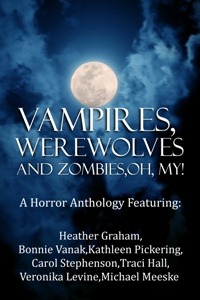
Twice now I’ve enjoyed writing workshops presented by my friend, Heather Graham, where she uses an effective, interactive writing technique employing random words to build story ideas. My first effort resulted in the horror lampoon, “A Zombie Love Story,” which became a short story included with Heather’s and other FRW authors in the Florida Romance Writers e-book anthology, Vampires, Werewolves and Zombies, Oh, My! ![]()
Heather’s great method either helps bring new story ideas to life, or move an already stalled story forward. When creating a new story, random nouns describing three people, one place and three adjectives become the cornerstone for a full page of narrative. While we haven’t experimented with moving a current story forward with this technique, I’d suggest choosing three characters from a current story, a site they’d go to, and adjectives best used in the story’s particular theme. Using the first words that come to mind for each category works best.
Let’s test the creative juices. My latest words drawn from Heather’s pool were:
People 1. Alligator Wrestler. 2. Ventriloquist 3. Girl Scout.
Place: an RV.
Adjectives: Crass, Distant, Startled
In the workshop, Heather supplied the lead sentence:
“Blood dripped from the wall . . .”
Just for kicks, take five minutes or less to try your hand at creating the first paragraph (or two) of a story using the above words and Heather’s sentence. I’d be curious to see what you build. I’ll post the paragraphs I crafted from these leads later on in the day. (Fair warning: my son’s birthday is today. I’ll most probably be distracted until evening.)
Best of all, would your results entertain you enough to consider growing them into a story? Enjoy!
ANZAC day
After a marathon effort of close to 30 hours traveling to get back to Melbourne from Tucson (delays included) I awoke to ANZAC day here in Australia. At dawn this morning in almost every country town and city across the country people gathered to remember Australia’s war dead.
Given today’s date, I thought I would dedicate today’s blog to the ANZACs and pose a few questions for American readers of TKZ on the meaning and significance of the day. Here goes…
- What does ANZAC stand for?
- Which famous battle are the ANZACs known for?
- What did the wives and daughters of the ANZACs send them (hint here, I can provide a recipe for them!)
Good luck and feel free to test my own knowledge of ANZAC day in your comments too…
What Will Book Publishing Look Like in 6 Months?
How Do You Deal With Writer’s Block?
Shameless Self-Promotion Alert
by John Gilstrap
A few times a year (but only a few times) I devote my slice of intellectual real estate here on The Killzone to shameless self-promotion. Today is one of those days.
This will be a three-book summer for me. Threat Warning, the third installment of the Jonathan Grave thriller series, will hit the stands on July 1; but before that, in hopes of whetting readers’ appetities, Kensington will rerelease my 1998 novel, At All Costs, on May 1 (next week!). The pBook rerelease will follow in 2012.
We chose At All Costs for the first rerelease (Nathan’s Run will come out again in eBook form in August) because it actually shares literary DNA with the Grave series. That’s the book where Irene Rivers–now the director of the FBI, codenamed Wolverine in the Grave books–was first introduced. In At All Costs, she’s my protagonists’ worst nightmare as she continues to pursue them for crimes that only they know they never committed.
The rerelease strategy was my editor’s suggestion–well, sort of. During a meeting at last year’s Bouchercon in San Francisco, she mentioned that she’d like to see a story about Irene’s past. When I told her that I’d already written it, but it was now out of print, Kensington re-bought the rights, and here we are.
I’ve blogged before that it’s a daunting task to edit page proofs of a previously-published book. In the end, I didn’t change much beyond a significant reduction (but not elimination) of the F-bomb. I tried hard to keep my substantive changes to a minimum, but a few were irresistable. Take the throw-away reference to the “US Air Arena,” which, at the time I wrote the original story, was the hope of the Washington Capitals hockey team and the Washington Bullets basketball team. Since then, US Air became US Airways, the Bullets ceased to exist. The facility itself was abandoned and ultimately torn down. Last time I drove through there, it was an empty lot. I changed the throw-away reference to “a stadium.” That should stay relevant for a while.
The most interesting part of the editing process was the realization that the story would have been largely different if I had written it today. A huge section takes place at a hazardous waste site. In 1996, when I was committing the story to paper, that hazmat stuff was very much a part of my life. As I was reading through the vernacular and the images, I realized that there’s a verisimilitude there that I don’t think I could have created from my now-stale memories of my moon-suit days. Forgive the immodesty, but there are passages in the book that cause me to pause and think, “Wow, that’s really good.”
Then there was the emotion of revisiting that creative space in my mind. My son–now 25–was ten years old when I wrote At All Costs, and it’s impossible to read some passages without being taken back to where I was in my life when I penned them. Those were heady days, when the publishing industry was all hope an opportunity and unbridled success for me–the days when I was first meeting so many of the then-up-and-coming writers who would soon become fast friends, and staples of your local bookstore. I’m not one to long for turning the clock back, but I’m not above bouts of nostalgia. The act of revisiting At All Costs felt like a bit like piloting a time machine on occasion.
As I write this, I fear that I’m not explaining it well, but it’s the best I can do.
I hope you have a chance to read the book. More than that, I hope you enjoy it if you do.
Daniel Hadley is Down in Somerville
This submission for critique has no title, but I think it shows promise. The central character has appeal. Catch my comments on the flip side.
Excerpt
“Daniel’s in stable condition, but he’s been shot.”
I lay in bed, propped up on one elbow, the cell phone digging into my ear. I didn’t even remember it ringing. Had I passed out drunk while talking to someone? But every light in my bedroom was off, save for the pale green LCD of the alarm clock: 1:45 AM. Then the part of my brain that makes sense of words – the part that I normally can’t shut up when I’m trying to go to sleep – kicked in. “Shit,” I said, sitting upright.
“He’s stable, like I said. They’re monitoring him at Mass General.”
“Right,” I answered. “How long?” But the phone went dead.
“Fuck,” I repeated. Then I hung up and got out of bed. I padded across to the closet to pull some jeans off a hanger and yesterday’s bra out of the hamper. A tanktop and a ratty Redskins sweatshirt completed the ensemble. Ninety seconds after getting off the phone I was out the door.
Somerville’s a dense town, so I had to walk a block to where I’d parked my car. The autumn air sobered me up enough to realize I didn’t have a plan just yet. There was one detail I could check, of course. Fishing my phone back out of my pocket, I called Daniel. “Hey, this is Daniel Hadley. I’m either on the phone or -” Damn it. Is there anything longer than a voice mail greeting when you’re trying to reach someone live?
“Daniel, hey, it’s Mara,” I began. “It’s 1:50 A.M. on, uh, Tuesday. Listen, I just got this really strange call that said you were … um. Please call me as soon as you get this, if you’re okay. If you’re not, well …”
I cut myself off there, shutting the phone and fumbling for my keys. I hadn’t fully processed the news yet (Daniel had been shot; holy hell; fatigue and shock kept shoving that detail to the back of my mind, like a rookie hockey player hitting the boards).
Comment Summary on “No-title” Story:
Generally I like the voice of this woman character. She comes across as a no nonsense person who could sustain a reader’s interest with the uniqueness of her character’s attitude and her low key fashion sense. And her attachment to alcohol could prove to be interesting as baggage. But rather than starting out with the dialogue line (as I explain my objection below), I might start out with how this woman feels getting the shock of the cell phone ringing her out of her drunken stupor. No one likes getting calls in the middle of the night. It’s a relatable moment most readers will understand. These calls are NEVER good news. And establishing this character from that moment might also help in creating her “voice” and her attitude more fully from the get go.
This is a personal preference, but I wouldn’t begin a novel with a dialogue line because it feels too much like the start of any other scene. An intro dialogue line into a scene can be effective and I’ve done it, just not for the start of a book. And whoever is speaking needs to be identified in some fashion, even if it’s just someone generic, like “dispatch.” Try to ID the person as soon as you can after the dialogue.
And speaking of identification, when you write in first person, you need to ID the speaker’s gender in some way as soon as you can. The reader will get an idea in their head—like I did that the narrator is a man—who is a cross dresser, when he reaches for yesterday’s bra from the hamper. I’ve done this before too. (The name of my character was a gender neutral name and was supposed to be a teen girl. But when my beta reader read the passage, she thought it was a teen boy who was checking out another guy’s wranglers. Not that there’s anything wrong with that, but it wasn’t my intention.) Once you write a first person POV story, you notice things to watch for. And gender at the start of a book is one of them.
I’m writing a YA book now where I have two teens speaking in first person. I identify them by using their names at the top of each scene and try to have one character per chapter where possible. It makes sense for this book and I like writing challenges.
I also wasn’t sure I understood Mara’s question – “How long?” Is this her entire question? If this was intended to be a question cut short, then add punctuation like a dash to indicate this. “How long—?” or “How long…?”
And if the line goes dead, it takes a while before anyone to notice, but in this scene, the character knows immediately. If the line goes dead, make it more realistic by her rambling until she hears dial tone and gets frustrated.
Also, if you have only one character in the scene, I would try to minimize the use of tag lines identifying her. You should ID the person on the phone, but after that, there isn’t a need to clutter the scene with unnecessary tag lines like ‘I answered, I repeated, I began.’ There are four tag lines in a short segment of a scene with only one character in it after the phone goes dead.
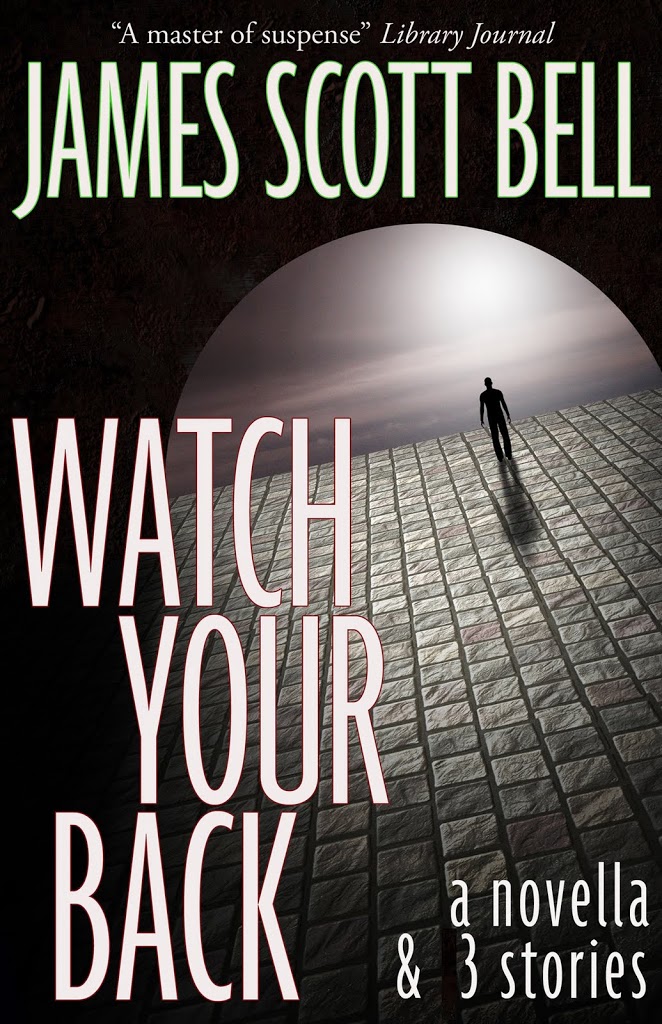
And finally the last paragraph. The punctuation seemed odd to me and pulled me from the story. I’ve never liked the use of semi-colons. Break apart the sentence into fragments if you have to, but resist the semi-colon, especially when the character has the informal attitude this one has. (What do the rest of you think about semi-colons—readers and authors? Copy editors try to put them in and I take them out, making other changes that are more my preference.) See James Scott Bell’s post on semi-colons HERE.
I also rarely use parenthesis, except in my YA books where it can be fun to use sparingly. I prefer em-dashes for emphasis, as shown below.
And the use of the metaphor on hockey—“…fatigue and shock kept shoving that detail to the back of my mind, like a rookie hockey player hitting the boards”—didn’t seem to fit when she was referring to such a serious event as someone getting shot. It makes her sound flip about something that should be more important to her. Also, she’s a Redskins fan AND a hockey fan? I’m sure this is possible, but in one short scene, it seems excessive. You may get more mileage if you made her a super fan of one sport when it comes to her metaphors, rather than spreading her enthusiasm over many.
Even though this scene could be written better, it shows promise with a compelling character voice. I would also consider starting the novel with something else that happens prior to this scene—like maybe Daniel’s shooting. If this is crime fiction, I like to start with a crime. And I’ve also found that you can always go back to write that action scene after you’ve started the book to get a feel for the story and its characters. It might help to know Daniel before you shoot him, for example. (Wow, that sounded awful.)
Any other helpful comments for this author?
First-page critique: THE MARONITE
By Joe Moore
We’re getting down to the end of critiquing our anonymous first-page submissions. This one is called THE MARONITE. Enjoy the sample. My comments follow.
A bullet whizzed past his head as he ran down the alley. Somewhere else in the city, the sound of a gunshot would have prompted someone to call to the police. Not here, and definitely not at this hour. The man looked back, his three-piece suit sprinkled with blood. They weren’t far behind.
Fuck! They’re trying to make it look like a mugging.
The thirty-something got to the street, finally reaching his car. He shoved his right hand into his trouser pocket, frantic, his usually carefully coifed hair falling into his eyes. He wiped at the blood and sweat on his forehead. Earlier, the two men had tried to knock him out and failed. Those Krav Maga classes at Chelsea Piers had saved his life, for now. Desperate, he unlocked his car, and then, as his attackers emerged from the alley at a full sprint, dove into the driver’s seat.
Anyone could have easily mistaken the would-be killers for professional football players or ex-military, trained to kill. Both had hefty athletic builds and were over six feet tall. They’d been caught off-guard by their prey’s martial abilities when they had tried to pistol whip him near the front of his building. They wouldn’t make the same mistake twice, though. Those bonuses were too big, and they wanted them too badly. The assailant on the left broke off and situated himself in the street, diagonally from the car. He trained his pistol on the driver while his partner tried to keep their victim from closing his door. But it slammed shut and locked.
They’d failed again.
The driver turned the ignition.
The car revved.
His hand tingled as he pushed the gear shift into first. He watched the tachometer flicker then looked up. It seemed like only a few milliseconds between the explosion from the pistol’s barrel and the sound of windshield glass popping. The bullet hit him in the chest. He could feel the heat as the metal sank into a lung. Blood started rushing out onto his shirt and tie. He let go of the parking brake, disengaging it.
First, the good news. This is a heck of an opening scene. It has strong visuals, a solid sense of place, and enough tension to fill any reader’s plate. The situation is dire. We don’t know who “thirty-something” is—that’s a cliché, by the way—but by the end of the page, we’re all holding our collective breath. It would be hard to imagine someone putting this one down without turning the page. I know I would keep reading to find out if he makes it or not. So overall, I consider this an excellent, attention-grabbing start to an action-packed thriller (or mystery).
Of course, I would be remiss if I didn’t point out a couple of things that bugged me about this example. It’s something we’ve discussed before, but I would refrain from dropping the F-bomb on the first page. Now, granted, if this gets published, anyone that picks up the book has already seen the cover and read the back blurb. So if the marketing department did their job well, the language might not be an issue to the potential customer. But there are a whole lot of folks out there who would see that and put the book back down. If the F-bomb was removed, would it change the story? Would it change the character?
Another thing is that there’s a good bit of telling here, and I don’t think it’s needed. Telling us that the guy is frantic and desperate is redundant to the man’s actions. This scene is so frantic and desperate, we don’t need the writer to say, “Hey, just in case you didn’t get it, let me remind you that my guy is frantic and desperate.” We get it.
Finally, I would shift the last few sentences into a more active voice and eliminate the last few words. Here’s my suggested rewrite:
He felt the hot metal sink into a lung. Blood rushed onto his shirt and tie as he released the parking brake.
Overall, I think this is a promising beginning that just needs a little editing and clean-up. Good job.
So what do you guys think? Would you keep reading?
**********
THE PHOENIX APOSTLES, coming June 8. Preorder now at Amazon or B&N.
Dreams and writing
I recently began dreaming again. For a while I was taking some medication that prevented me from dreaming at night. It wasn’t until the dreams came back that I realized how much I’d missed them. Not that any of my nocturnal conjurings are particularly noteworthy (especially not the one where I’m wandering the halls of Wellesley College on my way to a final exam, having missed the entire semester of class. I hate that one.)
No matter how stressful or mundane, dreams are important to the creative process. They may even be essential. In a 2003 study, a researcher found that people who are imaginative and prone to fantasizing are more likely to remember their dreams than non-creative people. Reportedly, Paul McCartney has said that the melody of “Yesterday” came to him during a dream.
According to another study, the REM stage of sleep (rapid eye movement) is the most conducive to making creative connections. It’s also during REM stage that we dream the most, so perhaps I was right to worry that my medication-induced dream void was also suppressing my writing creativity. Normally when I wake up I do a flash review, trying to recall any fragments of dreams before they fade away. Without my dreams, I felt “flat” upon awakening.
But now they’re back. Last night’s dream was nothing spectacular–I was forced to confess to an old boss that I’d lost track of an important project. Then I had to put it back together in time for a “mission critical” meeting. Ugh. I think it’s the workplace version of my Wellesley-exam nightmare. But no matter: Welcome back, dreams!
Do you find that dreaming is important to your creative process? Have you ever generated a writing idea from a dream?
Developing a Character Questionnaire
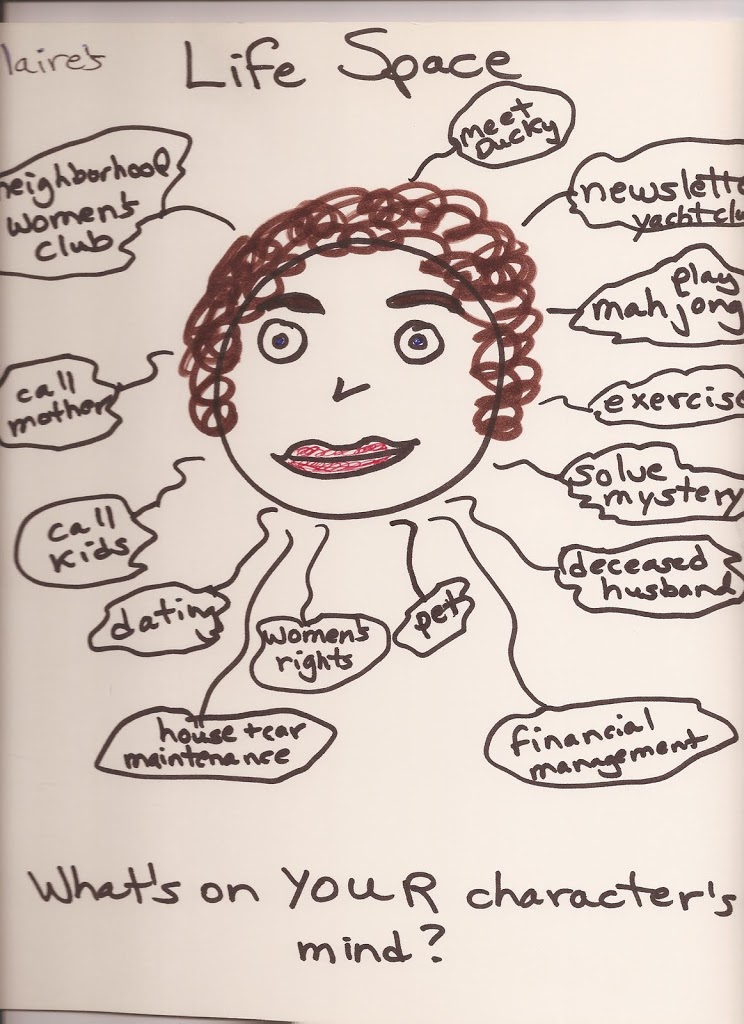
With our recent first page critiques we’ve spoken a lot about the importance of a compelling main character – one that draws readers in from the very first page and which transcends (as best you can) the stereotypes common in our genre.
One tool in developing a fully-realized character is to create a questionnaire in which your character gets to answer some key questions about their background, belief and aspirations. An example of such a questionnaire can be found at The Script Lab website, but I thought it may be fun to outline some of the key questions we at TKZ believe are important to know about your character. After all, how can your readers possibly believe in a character that you, as its creator, hardly know yourself.
So here, in no particular order, are some of the key questions I think need to be included in a character questionnaire.
What is it you fear most?
What is it you want the most?
Who are the most influential people in your life, and why?
How do you feel about your mother? Your father? Other members of your family?
What were some of the defining moments in your life?
What tragedies or disappointments have you endured thus far?
What could you not live without? What is your greatest weakness?
What are your strengths?
What do you like the most/least about your appearance?
What is your home like?
How would you describe your appearance?
Do you care about what other people think about you?
Whose opinion do you value?
How do you view authority? Religion? Politics?
Describe your ideal ‘mate’
How have your relationships progressed in the past?
What was your biggest heartbreak?
What gestures do you use?
What speech patterns do you use? Do you swear? Are you self conscious about how you speak?
What is the biggest chip on your shoulder?
So fellow TKZers, do you have any other questions to add to the list? (I’m sure I’ve forgotten something!) Do you use any software to help develop character dossiers or backgrounders? What other techniques do you use to get beneath a character’s skin?