
By John Gilstrap
Last week, our friend and frequent-poster Terri Lynn Coop posted the following comment:
“You’ve talked about becoming agented and querying. However, what happens once your novel or non-fic is sold to the publisher.
What kind of deadlines are there? How firm are those deadlines? What role does your agent play after the publishing contract is signed? What sort of public face does your agent and publisher expect you to maintain from contract to release (is there a difference between fiction and non-fiction)? When do you see your advance?”
It’s a great bunch of questions. I’m going to take a shot at some answers. The underlying assumption of my answers is that this is a first published book we’re talking about. The rules don’t change a lot after you have a chip in the game, but they do change a little. I’m also going to juggle the order of the questions a little:
What role does your agent play after the publishing contract is signed?
Understand that a lot of negotiation goes into what a publishing contract looks like. What rights will be sold? More importantly, what rights will be retained by the author? Is this a one-book contract, or a multi-book contract? What will the pay-out schedule be? If it’s a multi-book contract, will they be individually accounted or jointly accounted? (Joint accounting means that Book #1 would have to earn back its advances before you could start earning advances on Book #2. It’s by far the least preferable method, but first-timers often don’t have a lot of heft there.)
The agent is the go-between for all uncomfortable transactions. For example, in fifteen years, I have never discussed money issues with an editor, and no editor has had to tell me to my face that I wasn’t worth the money I was asking for. The agent keeps the creative relationship pure. Beyond that, if everything goes well, the agent doesn’t have a lot to do after the contract is negotiated.
But things rarely go well. What happens if your editor quits or gets fired? What happens if you really hate the cover, or if the editor is getting carried away with his editorial pen? On a more positive note, the agent will continue to pursue foreign publishing contracts, movie deals, etc.
What kind of deadlines are there? How firm are those deadlines?
Deadlines are part of the negotiation process. You’ll have to agree to respond to your editorial letter by a certain date with a corrected manuscript, and then you’ll have copyedits and page proofs, all while making your commitment to deliver the next book in the contract if it’s a multi-book deal. I consider deadlines to be inviolable. I’ve had to push the delivery date by a couple of weeks once, but I hated doing it because it inconveniences so many people, and it makes me look unprofessional. Here is another instance where a track record of performance keeps people from losing faith in the author. For first-timers, blowing a deadline can kill a career. Remember, by blowing the deadline, you technically violate the contract, which the publisher would have the authority to void.
Writers need to understand that publishing calendars are set 12 to 18 months ahead. Working backwards from those dates are the in-house deadlines for the production side of things (cover design, copyedits, publicity, ARCs, reviews, and a thousand other details). If a deadline is blown by as little as a month, publishers may pull the author’s book from the calendar and replace it with another, thus potentially adding months to the publication date.
When do you see your advance?
This is another negotiated deal point. Advances are paid out in pieces. There’s always one piece on signing. After that, the milestones vary from author to author, often depending on the horsepower of the agent, and on the “importance” of the author. Other payment milestones can include: submission of edited manuscript (this is the “D&A payment–Delivery & Acceptance); hard cover pub date; softcover pub date; and even, in some cases, some period of time after the pub date. If there’s a second book in the contract, there’ll likely be a payment milestone for the submission of an outline for the second book, followed by submission of an acceptable manuscript.
Meanwhile, if you’re happy at the publishing house, sometime while writing the second book of a two-book deal, your editor and agent will start negotiating the next deal.
What sort of public face does your agent and publisher expect you to maintain from contract to release (is there a difference between fiction and non-fiction)?
This is where the issue of an author’s platform comes in. If you’re a celebrity writing your autobiography, the pressure will be high to be out there to flog it. Similarly, if you’ve written a book about a presidential candidate during an election year, the publisher will press hard for you to have media face time.
On the other hand, if you’ve written a novel featuring a feline crime solver (or about a freelance hostage rescue specialist), chances are that you couldn’t buy publicity outside of your local newspaper. In that regard, an author’s public face is only as public as the author wants it to be.
I think that’s all of it. Okay, Killzone comrades, let’s hear from you.
Can You Conjure A Story from These Images? TKZ FLASH FICTION DAY
By Jordan Dane
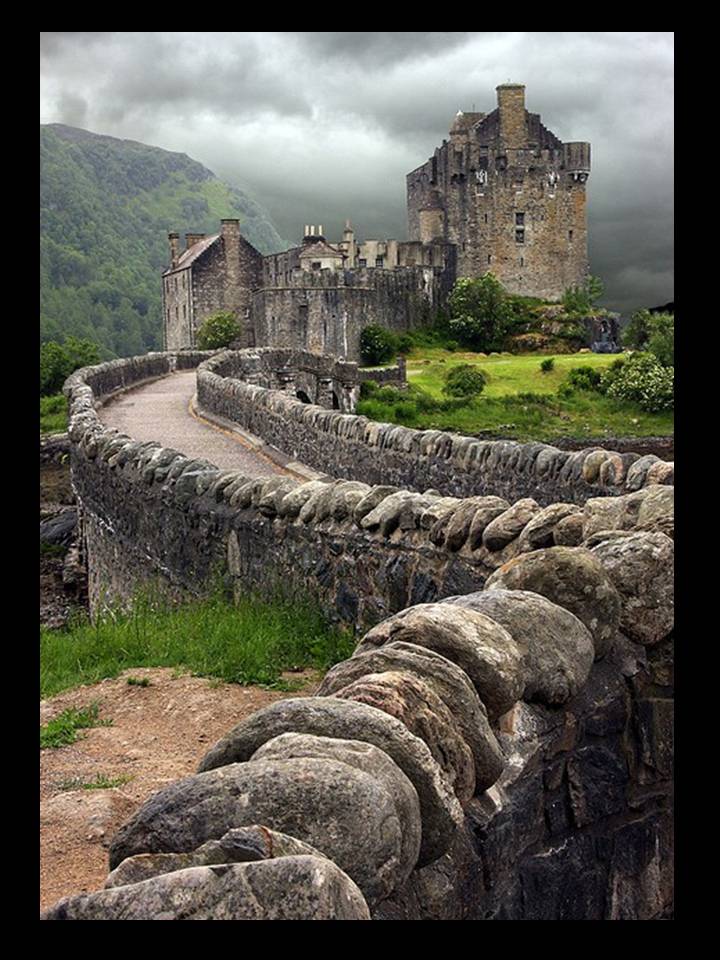
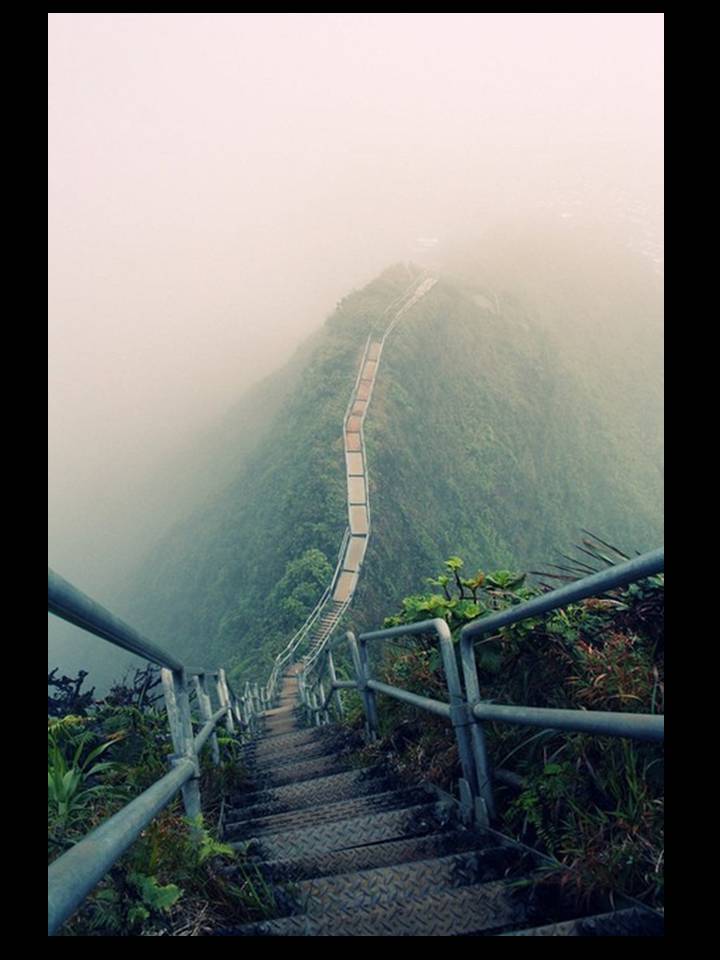
I am completely slammed on deadline and it’s getting down to the finish line for the first book in my HUNTED series with Harlequin Teen, YA thrillers. But when a friend sent the images below, I was able to take a mini-vacation by imagining any story set in these locations. I wanted to share them with you. I save images like these to trigger settings and these are so spectacular, they could inspire an entire book.
For you writers, tell me a story. Pick any one and share your thoughts or describe how you write settings and the research behind your favorites. I’m a fan of Google Maps and the little yellow man that can give you a 360 degree view of locations in my books. Very cool, but these exotic images took my breath away. I had to share them with my TKZ family.




The Joys of Schmoozing
I had a great time at Sleuthfest in Orlando. I got to visit with mystery author friends that I hadn’t seen in a long time, like Donna Andrews, Charlaine Harris, F. Paul Wilson, Toni Kelner, Reed Coleman, Hank Phillippi Ryan, Julie Kramer, Marcia Talley, Mary Anna Evans, and so many more. Then there were people I’ve met online, to whom I could finally assign a face: Jeffrey Marks, Alan Orloff, John Gilstrap, Steve Forman, Joanna Campbell Slan, and so on.
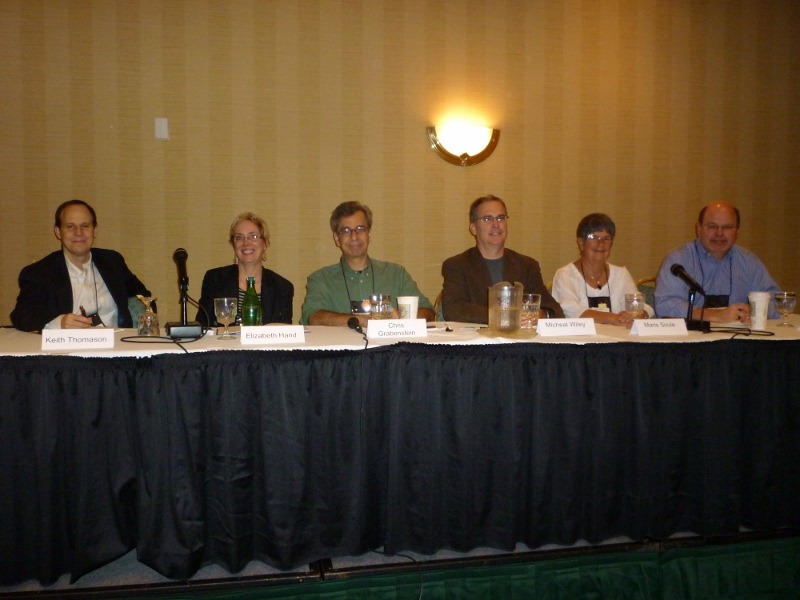
John Gilstrap is on the far right
And of course, our own Florida MWA members were present. They number too many to list here. We heard great keynote speeches by Jeffery Deaver and Charlaine Harris.
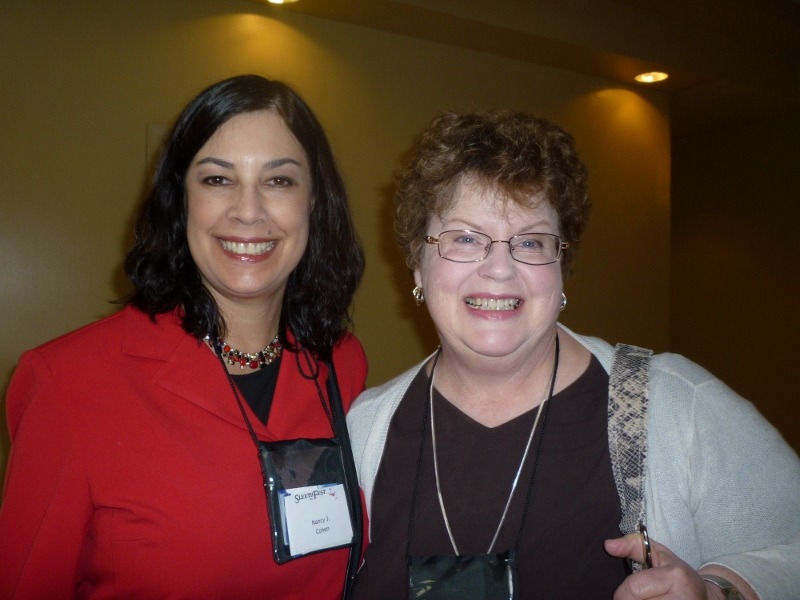
Nancy Cohen & Charlaine Harris
I got to chat with my Five Star editor, Denise Dietz, and reacquaint myself with an old writing pal, Pat Van Wie, now an editor for Bell Bridge.
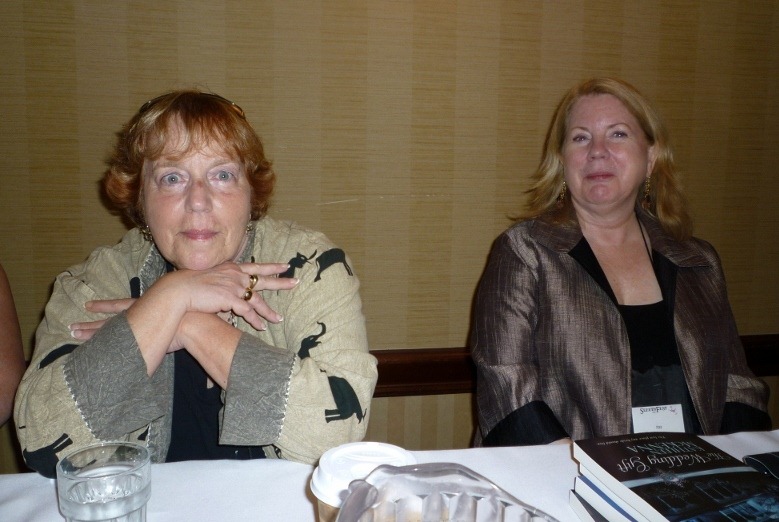
Deni Dietz & Pat Van Wie
I saw reviewers Oline Cogdill and Nancy Pate. And the booksellers from Murder on the Beach manned the sales desk while also in the bookstore room were wonderful raffle baskets designed by talented author Vicki Landis (and I won two!).
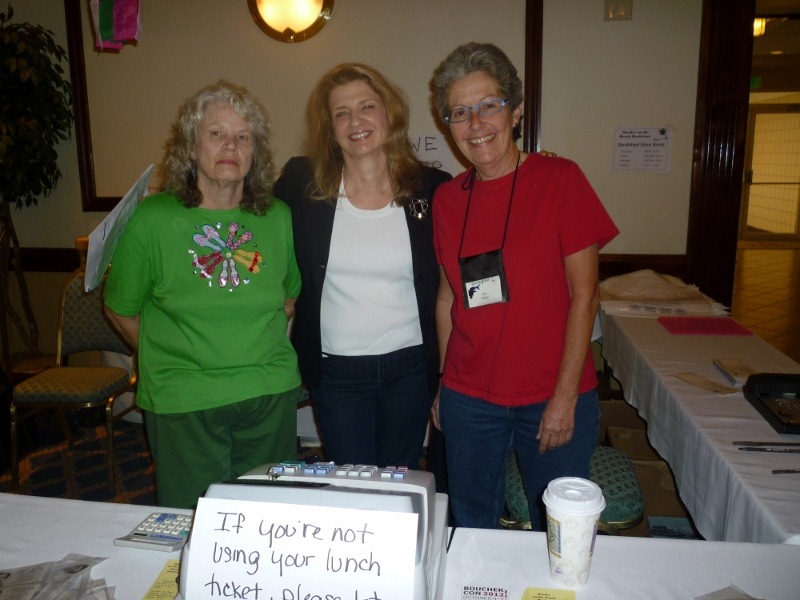
Linda, Joanne, and Sue from Murder on the Beach
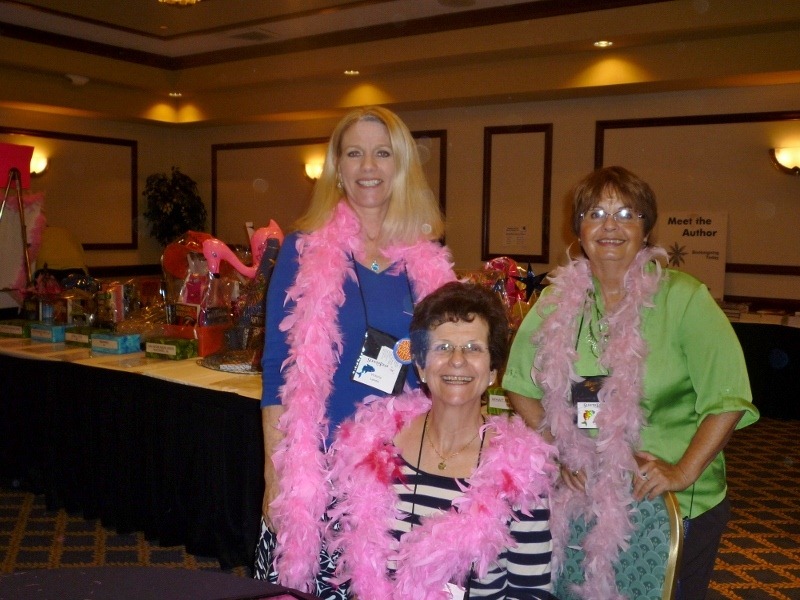
Vicki Landi, Gregg Brickman, Ann Meier
Bestselling author Heather Graham very generously sponsored a dinner party at House of Blues on Saturday night. It was great to loosen up and relax over drinks and fabulous food.
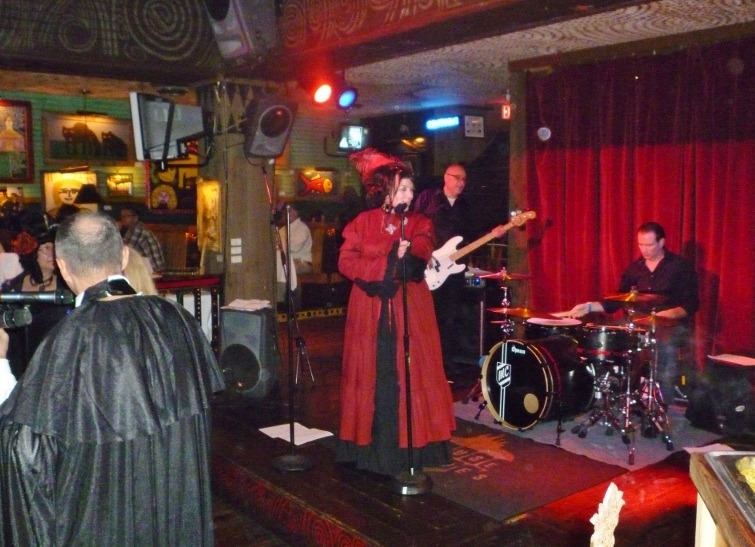
Heather Graham, vocalist and sponsor
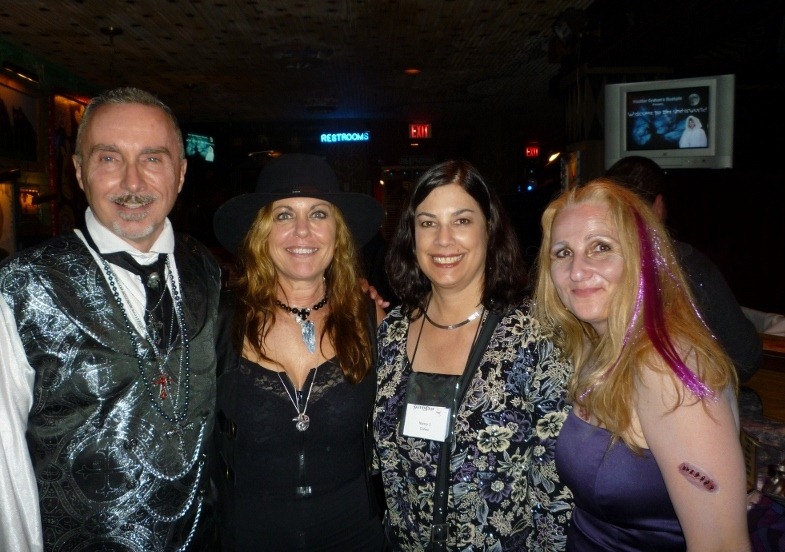
Michael Meeske, Kathleen Pickering, Nancy Cohen, Traci Hall
Of course I attended panels and participated on three of them. Maybe I learned a few new things.
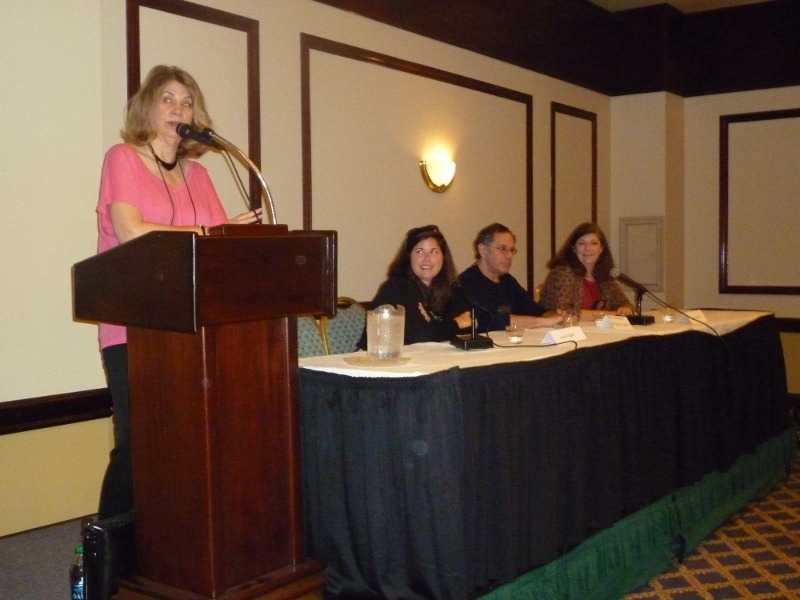
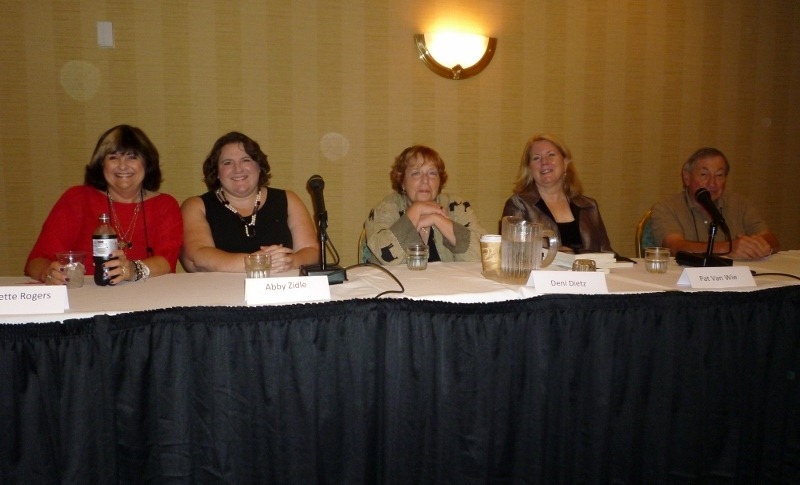
But the best part was hanging out with like-minded friends, chatting at the bar, having one-on-one discussions, and finding out what was new with everyone. Sometimes we only see these people at conferences and it may be years between visits.

Johnny Ray and Joan Cochran
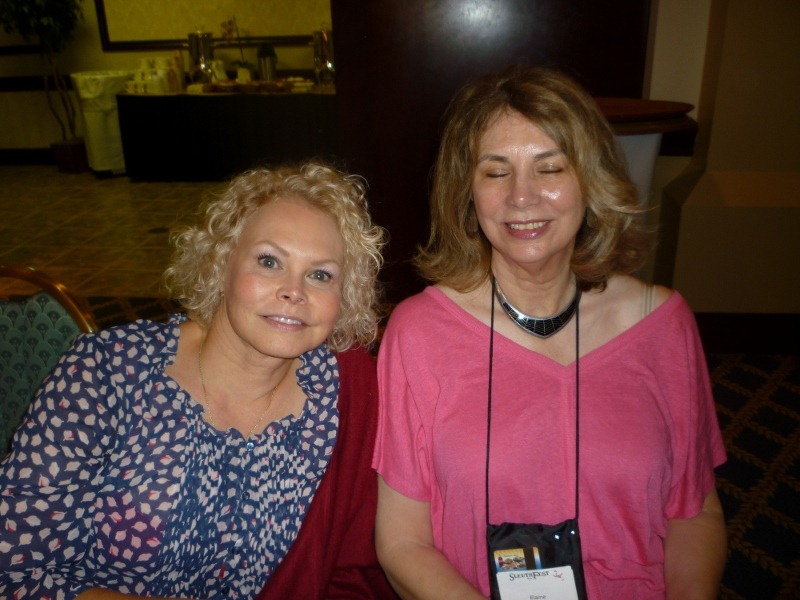
Joanna Campbell Slan and Elaine Viets
I met new people, too, whom I’ll hope to recognize at the next mystery conference I attend. Several members of RWA made an appearance: Heather Graham, Kathleen Pickering, Michael Meeske, Traci Hall, Rhonda Pollero, Lynnette Hallberg, Marty Ambrose, and more. Forgive me if I leave out your name!
It gives you such a warm, fuzzy feeling to be in a welcoming environment where everyone shares the same hopes and dreams. It’s easy to walk up to a perfect stranger, introduce yourself and say, “What do you write?” Conference goers are interested in meeting new people and making friends. At least, it’s that way with writers.
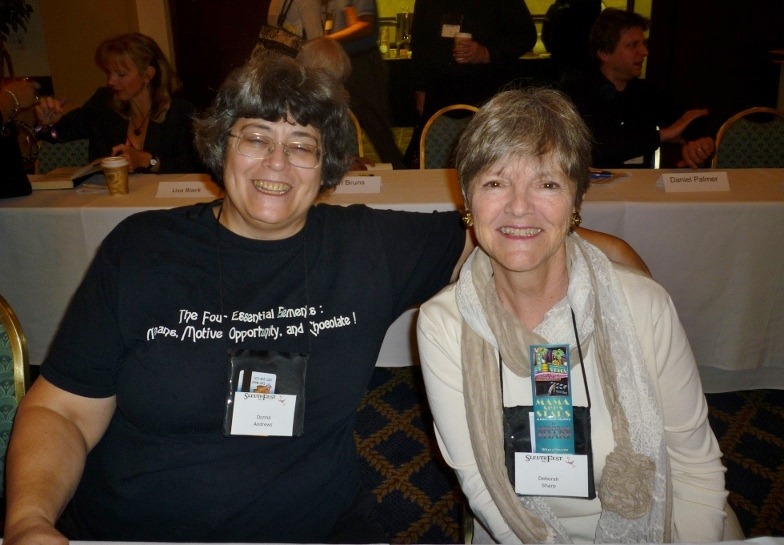
Donna Andrews and Deborah Sharp

Julie Compton, Becky Swets
Our prime goal is to schmooze. Oh, it may be to have an editor/agent appointment and pitch our work, or to speak on a panel and promote our books, but the real gratification comes from the camaraderie. Kudos to the Sleuthfest organizers and committee for a terrific conference!

Nancy, Miette, Linda Hengerer
Follow Your Dreams: Or Jumping Off Cliffs Is A Good Idea
By: Kathleen Pickering http://www.kathleenpickering.com
Some folks dream in color. Other’s fly in dreams. Me? I’ve jumped off a cliff and lived to tell the story.

Yeah. It was the most exhilarating dream I’ve ever had; even better than the ones where I can fly.
Since Kathryn Lilly brought up dreams in last Tuesday’s blog, I would like to show how dreams can be instrumental in sorting emotions, planning personal goals and life direction.
But, before I continue, I must say how happy I was to meet our fellow TKZ blogger, John Gilstrap, at Sleuthfest in Orlando. John is a very cool dude who I liked on sight and look forward to seeing again. We had an excellent conversation with authors Heather Graham, Traci Hall, Michael Meeske and Jeffrey Deaver. We discovered that writers, no matter what the genre, share a healthy respect for the inexplicable.
That said, let’s apply some logic to the outlandish. Our dreams. (Please note, nightmares will be left for another time.)
My dream went like this:
I was standing on this cliff looking out over the desert. As I’ve mentioned before, I’m not good with heights. I’m better since that volcano hike, but at the time of this dream, I was still downright chicken. I was, however, awed enough to appreciate the spectacular view.
 (Photo: Peter Lik)
Once again, I was feeling my smallness compared to this extraordinary world before me when this voice whispered into my ear, “Jump. Trust me. You will be okay.”
I replied, “What are you nuts? I can’t jump.”
The voice said, “No. You can do this. Just jump. As you are falling, start running in mid air. Pump your arms and legs. When your big toe touches the ground, keep running. The momentum will carry you forward.”
I answered that I absolutely could not and would not not jump.
The voice said, “Trust me.”
Now, in my dream, I’m not sure who was speaking, but he seemed familiar—and wise. My guess is that since I was dreaming, I decided to take the chance.
I jumped.
My stomach jolted. I couldn’t breathe. Then I realized I wasn’t following instructions. So, I started pumping my arms and legs and don’t you know? When my toe hit the ground, my momentum pushed me forward and I ran across the desert floor like the Road Runner leaving a plume of dust in his wake. I ran and ran until I realized I’d made it, and stopped.
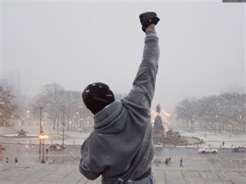 My adrenaline was so high I started jumping up and down. I could have been Rocky on the steps of city hall, screaming, “I did it!”
I felt this heady bliss all the way home until I told my family that I had jumped from the cliff. Everyone started yelling at me. Things like: “What? Are you insane? You jumped from a cliff?”
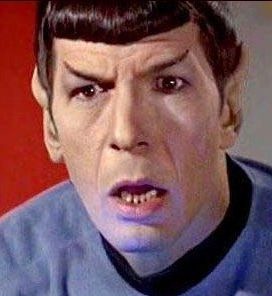 Or, “What would you say if one of your children came home and announced they just jumped off a cliff? You expect us to be glad for you? What you did was crazy!”
I thought about it. Saw their logic, and had to agree. Then walked away–only momentarily deflated.
These people I love didn’t get it.
Now, I’m still dreaming here. The fact that my family didn’t get that I had just accomplished a super-human feat, which we all get to do especially in dreams, disturbed me. This was a dream! My family should have realized we were all in this dream and cheered for me, dream style! (I will go on record that my family in this dream simply represented folks I trust. I’m not pointing fingers, here. I promise.)
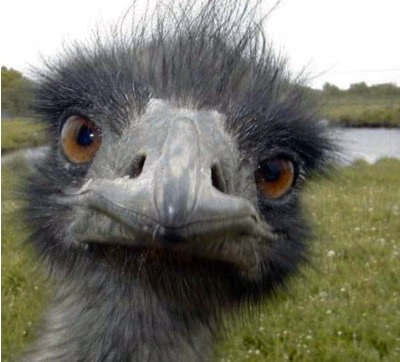 But, their reaction opened my eyes to the fact that in the past, I had permitted other people to impact my life’s direction with their ostrich-like fears and negativity.
Not any longer. I woke up from this dream so much more clearer. Just because others may not understand my point of view does not mean I am wrong. I can only celebrate the differences.
This dream confirmed to me that I am willing to go over the top to discover myself, my capabilities, my talents. For me, jumping from that cliff in a dream was the same as unzipping my skin and letting the real Kathleen step out.

Taking that step off the cliff not only cemented the direction and the attitude I have towards my personal goals, it symbolized to me that my goals are possible. No matter what the odds.
To this day, that dream stays with me. My leap of faith in my dream is bringing me the results I want in real life.
Proof? I received a call from my agent on Friday. Since my first sale, we’ve agreed to a new, three-book deal with Harlequin. Those three books coupled with the Nocturne anthology I’m writing with Heather Graham and Beth Ciotta for 2013 will make four books released in the next two years with my name on them.
 Yeah. I’m grateful. And, I’m stoked. I’m going to be busy writing and will love every minute.
My message to anyone who hasn’t tried it yet? Dare to dream. And, dream big. I might not be there yet, but I’m on my way. I knew it when I took that first step.
So, have you had any dreams that helped you trust yourself and remain fearless against all odds? If not, what is your greatest personal challenge in achieving your goals?
Let me know.
Write on!
xox, Piks
Book Trailers – Alive or Dead?
It’s a long weekend here and so I have taken time out of my ‘be healthy’ regime to be a bit piggy with brie, red wine, chocolate and, yes, kangaroo. The latter is very tasty even if it feels like you’re eating the nation’s favourite Skippy (believe it or not, kangaroo are actually ‘culled’ in many parts of Australia as vermin). The long weekend also means I’ve been slacker than usual in getting my post together…which means, in true procrastinator form, I have been surfing the web…
To my surprise I have been seeing something I haven’t really noticed in a while…book trailers…yes, these have been sneaking back into my online world just when (to be frank) I thought they had died a natural death.
Never having done one myself, I can’t say I’ve ever really understood the value of a book trailer. The ones I have seen have been, by and large, stilted, strange, artificial affairs which have failed to raise much excitement in me – either as a reader or as a writer. I was also never really sure whether they actually sold books in the way that a trailer ‘sells’ a movie. So I was surprised when I saw a recent one and started wondering – is the book trailer back? Or maybe it never died?
Assuming an author can afford it, I imagine a clever, funny, professional looking book trailer provides an additional and potentially valuable marketing and publicity tool, even if, in its own right, it doesn’t really sell many books. The key elements here are professional and clever – because, to be honest, some of the trailers I have seen have been embarrassingly amateur (especially when they try too hard to be like a movie trailer complete with ponderous, overblown narration). One I recall that made me laugh (and even contemplate buying the book) was a humorous spoof trailer for Sense and Sensibility with Sea Monsters but other than that most book trailers have drifted from memory like flotsam and jetsam…
But what do you think?
- Is the book trailer having a resurgence?
- Have you used a trailer and found it to be a successful marketing tool?
- Would you consider producing a book trailer for your current WIP? (and why or why not?)
- Has seeing a book trailer ever induced you to buy the book?
Jockeying for Position in the Muddy Publishing Future
James Scott Bell
Twitter.com/jamesscottbell
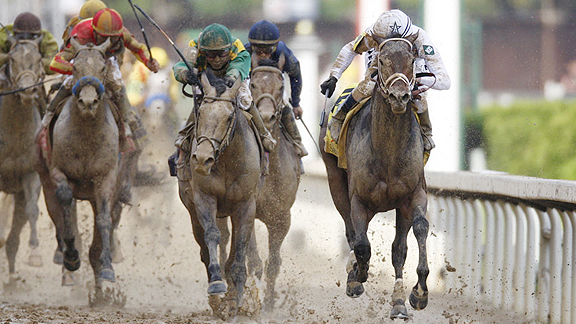
The future of the book industry got a little murkier this week. The Department of Justice, no less, thickened the soup with its announced intent to go after five of the “Big Six” publishers — plus Apple — on charges of collusion. The alleged nefariousness dates back to the wholesale versus agency controversy at Amazon.
Amazon was setting e-book prices lower than the big publishers desired. The pubs were afraid consumers would get used to lower prices, thus cutting into their margins. Also, there was major concern about undercutting a big cash cow for traditional publishing: hardcover frontlist titles. And, of course, they all worried about the future of brick-and-mortar stores as Amazon gobbled up more of the distribution pie.
So Steve Jobs comes along (allegedly) with a plan to take major e-book business away from Amazon. With the iPad just getting fired up, Jobs (allegedly) went to the Big Six and proposed going into an e-book agency model agreement with them (Random House didn’t join the circle then, so is not part of the DOJ lawsuit). In return, the publishers would agree to keep their books off Amazon if it sold them at a lower price. In effect the five big publishers, as one, told Amazon You give us the agency model or you don’t get our books.
The players, IOW, were jockeying for position with the future in mind. This is what big business does. It’s understandable and even desirable in a free market economy so long as the businesses are not running afoul of anti-trust laws.
Amazon, not happy with being forced into agency, decided to take on the publishing industry directly by mimicking it. So they went out and hired industry veteran Larry Kirshbaum to head up the effort. Amazon subsequently made some big name signings – Deepak Chopra and Barry Eisler, for example.
More jockeying.
And now comes a dark cloud dumping rain — the United States Gummint. The track is suddenly soaked and the mud is kicking up all over everybody.
Who is going to be the best mudder? Who is going to be left behind?
That remains to be seen. But right now it looks like agency pricing will be escorted off the track. If publishers are forced back into wholesale, Amazon will be sitting even prettier than it is now, prices will once again trend downward, and publishers’ margins will shrink. There will be renewed howls of “predatory pricing,” but the DOJ well knows that’s a much harder case to make. So Amazon goes back to selling at loss-leader prices which, in turn, will trickle down to brick-and-mortar stores where margins are razor thin anyway. More stores will probably close. Your local Barnes & Noble, for instance. There is a whole interlocking spiral here that is beyond the scope of this post.
My main interest is in what this all means for writers. For the last couple of years the self-publishing boom has been a net-gain for writers, especially those with a track record. And a backlist. But even new writers who haven’t been able to get inside the gates of the Forbidden City are seeing real money as independents.
But in gazing at the horizon in light of the DOJ’s action, some are saying that things don’t look so rosy. Here is what Mike Shatzkin, the Insightful One, has to say:
Over time, the biggest losers here will be the authors. The independent authors will feel the pain first. Agency pricing creates a zone of pricing they can occupy without much competition from branded merchandise. When the known authors are only available at $9.99 and up, the fledgling at $0.99-$2.99 looks very attractive and worth a try. Ending agency will have the “desired” effect of bringing all ebook prices down. As the big book prices are reduced, the ability of the unknowns to use price as a discovery tool will diminish as well. In the short run, it will be the independent authors who will pay the biggest price of all. But, in the long run, all authors will just get less. They will join the legion of suppliers beholden to a retailer whose mission is to deliver the lowest possible price to the consumer.
I am going to take issue with Mr. Shatzkin on his characterization of writers as the “biggest losers” in all this. Not so. This is simply another development in a long and ever changing contest. Writers who produce, consistently and well, will always have a shot at the rewards of a race well run.
We didn’t create the Big Six or Amazon. But we will use them just like they use us. We will make strategic decisions, as they do. It’s called doing business,and writers are better positioned than ever to do it in creative ways.
So get on your horse, writer. Learn to ride in the mud. Don’t trust your fate to anybody else. You are responsible for your future, and you need to grab the reins and get into the thick of it.
For example, if you pursue a traditional contract, take a hand in negotiations. Learn what contract terms mean. Negotiate a way to produce non-competing works on your own dime. Don’t just blindly hand the reins of your very life and career to somebody else. Ever again.
Have courage. There is a lot of bumping going on in the turns. Don’t be timid. Bump back. Hang tough in the saddle. If somebody tries to hit you with his riding crop, take it from him.
While the overall effect may be greater challenges vis-à-vis “discoverability,” so what? Facing and overcoming obstacles has always been the lot of the writer. Nothing’s different now. You must produce quality, and a lot of it, for the rest of your life to have a writing career. You must add a long tail to your horse. If you do, you have a chance to cross the finish line and get pelted with flowers.
And why, as a writer, wouldn’t you do this anyway? We write. Even if some of the big publishers fall off their horses, we writers will still be in the race. Even if bookstore shelf space continues to dry up, we writers will still be coming at you.
Because we are creating stories, which is what people want and need in this crazy world. We are weaving dreams, getting under your skin, keeping you up at night, making you laugh and cry and maybe sometimes throw our books across the room.
We are storytellers.
And we are not going away no matter how hard it rains.
“Yawsuhh, I’ze gwine gogitzome skrimps teat.” I would never write this.
If you wrote the line in the heading, you would catch a lot of crap, even if it were accurate to a certain region. I heard that line and wrote it in a notebook, but there it has rested for a decade. Writing in dialect is probably one of the hardest calls in the dialog department. Not that you can’t do it, because you can, but it won’t work over a distance. I give the reader a taste of what it sounds like, but switch to readable non-phonic after. Sometimes I just tell the reader what the words sounded like so they get it without them having to struggle with misspelled words or those that are unfamiliar to the readers’ eye. So, I say that, it sounds like, Baawstin for Bosten, or Mizippi for Mississippi to another character. I do it once for a character. Or I may have a character purposefully mispronounce the word. i.e. “Baawstin,” Carl said, mockingly. But long runs of dialect are a no-no for me. If you write thoughts, do characters who speak in dialect, think in dialect?) I suppose they would have to.
Dialect is hard. Accents are hard, unless they are your own. Deep Southern drawl is mine because that is who I am, when I relax. I grew up in it. I know it. I have an ear for it. I also do a passable Cajun because I’ve spent a lot of time in the Louisiana lowlands, the waterways and swamps. I like writing accents I know and enjoy. Cadence. Pacing of spoken words. You can not fool people who know an accent, so you have to do it right. Immerse yourself in a region and soak up the nuances of the spoken word in that place. You have to have an ear.
Nothing about writing is easy if you do a good job at it.
How do you deal with dialects and regional accents? What’s your favorite to write, to listen to?
NEWS FLASH: There Are No Shortcuts to Success
Everyone who does anything for a living owes it to himself to take advantage of learning opportunities. Even after one has attained journeyman’s status, to rest on one’s laurels is to invite disaster.
Last week, I had the honor and pleasure of attending SleuthFest in Orlando, Florida. I taught a class on pacing, and sat on three panels. And I hung out at the bar, of course, because that’s where all business is conducted, irrespective of chosen discipline. I met a lot of talented writers I’d never met—Heather Graham and Charlaine Harris among them—and hung out with old friends. And, of course, there are our own Kathleen Pickering and Nancy Cohen, whom I finally met in person—Nancy in a meeting room, and Kathleen in the bar. A lot in the bar. I’m just sayin’ . . .
For me, the big learning moment—the a-ha moment—came during Charlaine’s luncheon keynote, and it reinforced something I’ve known and admired about Jeff Deaver for years (Jeff and Charlaine were guests of honor, along with Chris Grabenstein). If I did my math correctly, the first book of Charlaine’s True Blood series—the one that launched her into the authorial stratosphere—was her twentieth book. Give or take a couple of books, that was the same number of novels that Deaver had published before he became a household name with the Lincoln Rhyme series. As Charlaine put it, she’d spent many years with $4,000 advances, pursuing what her husband had come to think of as a “well-subsidized hobby.”
I am currently pounding away at my tenth novel (fourteenth, if you count the ones that no one wanted). I’m proud of them all, but the recent ones are so way better than the older ones. And the ones that were never published? Well, thank God they weren’t.
At SleuthFest, I learned (again) what I’ve long known to be the truth: writing is a business, and the only way to succeed—and success to me means hundreds of thousands of copies sold—is to keep writing and playing by the rules. Agents are more important than they’ve ever been, and brutal, professional editing is what makes the difference between passable and entertaining.
Even in these days of new media and instant gratification, the bottom line is the bottom line: There are no shortcuts to success.
All comments welcome . . .
The Kill Bell
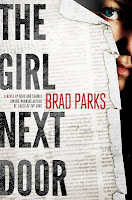
Today TKZ is delighted to welcome guest blogger Brad Parks, whose latest release THE GIRL NEXT DOOR has been described as, “darkly humorous…a Sopranos-worthy ragout of high drama and low comedy,” by Publisher’s Weekly.
By Brad Parks
I hear it all the time, echoing in my head.It sounds like a ticking at first – high, soft and steady, like a baby bunny’s heartbeat. It’s there, but it’s not terribly insistent. At least not at first.
Then it starts getting louder. And more ominous. And harder to ignore. I begin feeling the reverberations in my chest.
Before long, it becomes absolutely incessant. And unrelenting. And undeniable. It’s down to my toes and in my ears and I can barely hear anything else.And then, brrrrrring! Off it goes:
The kill bell.
That malicious peeling noise that lets me know, as I’m drafting my latest book, that it’s time to drop a body.
That’s how it sounds to me, anyway. Maybe yours sounds different, but I’m guessing I’m not alone in having one. As a mystery/thriller writer, I know I have to kill, early and often. And since you’re on this blog – it is called The Kill Zone, for goodness sakes – you probably know it, too. Lord knows, no one here is writing cozies. I’m betting the Kill Zone authors alone traffic in more blood than your average Red Cross chapter.
But how much do we spill? And how do we know when the time is right?
That’s what the kill bell is for. I’ve come to value it, to know to listen for it, and even to anticipate it. It’s that little friend that tells me things have gotten a little too comfortable for the reader and I need to shake things up.

It’s not like it happens in predictable intervals – and thank goodness, since it would get a little too cookie-cutter if you whacked someone every 10,000 words. I can sometimes go 40,000 words without slashing so much as a single throat. Then I shoot someone and I think I’m okay for a while but, ding-a-ling, there’s the bell again. And, even if it’s a mere 2,000 words later, I’m puncturing someone’s temple with a nail gun.
I suspect every writer’s kill bell is set to a slightly different frequency, which is why we all write different books. The important thing is to respect it and, when you hear it ringing, to act. Even when it’s not clear how.
I’m thinking about one of the more recent times I heard my kill bell. I was in the midst of drafting my latest, the as-yet-unnamed Carter Ross No. 5 (No. 3, The Girl Next Door, is the one that hits next week). I was cruising along, roughly 70,000 words in, and I realized I hadn’t killed anyone since word 40,000. And that, suddenly, felt totally unacceptable.
So I gathered all my characters in a room – yes, I talk to my characters – and said, “Okay, which one of you am I going to kill?”
Naturally, they all started staring down at their feet, scuffing their shoes, shoving their hands in their pockets, that sort of thing. Can’t blame them. Who wants to die, even in spectacular literary fashion?
But at that point my kill bell was doing a full-on whoopwhoopwhoop. I knew someone had to go. So I started going through my characters one-by-one until I realized, wait a cotton-pickin’-frickin’ second, I couldn’t kill any of them! It was either someone integral to a later plot point; or people who were totally implausible to kill, because they weren’t a threat to anyone; or my protagonist, who I can’t kill (this is a series and my kids will need shoes next year, too); or my protagonist’s cat (the kill bell does not apply to animals – sorry, I just can’t deal with that much hate mail).
I was stuck. But the kill bell has to be heeded. So I went back and wrote a character into the plot at word 20,000 for the express purpose of killing her later. And it turned out be a good thing, because I actually went back and un-killed her – she had taken a double tap between the eyes, but no more! – and killed someone else instead (I burned him, if it matters). It ended up leading to a great plot twist at the end. And I had the kill bell to thank.
As I said, I know I’m not alone in this. So what about you? What tells you when to follow the impulse to kill? I look forward to a robust – if slightly disturbing – conversation on the topic…
Brad Parks is a winner of the Nero Award and the Shamus Award. His latest book, The Girl Next Door, releases from St. Martin’s Press/Minotaur Books on March 13. For more Brad, sign up for his newsletter http://www.bradparksbooks.com/newsletter.php, like him on Facebook http://www.facebook.com/pages/Brad-Parks-Books/137190195628, or follow @Brad_Parks on Twitter.
PayPal vs. Smashwords
By Joe Moore
In February, PayPal, the global e-commerce payment service notified Smashwords, one of the biggest indie publishers or electronic literature that they had one week to remove all books in their catalogue that dealt with themes of rape, incest, bestiality and underage sex. Failure to do so meant that PayPal would deactivate their services. The pressure to take this action appeared to have come from the credit card companies that partner with PayPal (owned by eBay). Smashwords has over 100k books available online. A quick search of Smashwords showed that there were about 1k titles tagged with the offensive subjects.
Smashwords has been able to negotiate an extension of the deadline in order to come to some compromise with PayPal and its credit card, bank, and credit union partners. In the meantime, as this situation goes on, it raises many questions starting with:
Should a business such as a credit card company be allowed to force its moral beliefs directly or indirectly upon another company?
Before everyone starts pointing out the lack of redeeming literary qualities of the specific books targeted, let’s just move to the bigger topics of censorship and free speech—and who in this example has the right to decide when and how to implement it. Does a middle-man payment company like PayPal have the right to decide what is obscene? If PayPal can tell booksellers what they can and cannot sell, aren’t they also telling readers what they can and cannot read?
What’s your reaction to PayPal’s mandate? Is this just the start of bigger things to come in the censorship arena?