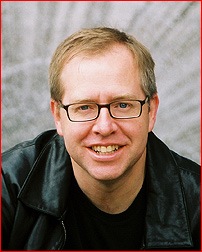
I’m Not As Flexible As I Thought

By John Gilstrap
http://www.johngilstrap.com

First things first: Thank you, John Miller, for swapping posting days with me. For those of you who showed up here today to read his words instead of mine (and who would not?), please scroll down . . .

I just returned from the worst week at the beach that I’ve ever endured. It all seemed like such a sure thing: I was with some of my favorite people, in Hilton Head, SC, one of the most beautiful resorts on the planet. I love Hilton Head. The plan was that we would arrive on Saturday evening and leave the following Saturday morning (that would be today). I would wake up early, as I always do at the beach (and only at the beach), get in an hour or so of writing in the early morning calm, and then we would head to the beach. After a few hours in the sun, occasionally visiting the outside bar, I would excuse myself from the group and log a few extra writing hours before cocktail time. It was going to be perfect.

Then the rain came. I don’t mean drizzle, folks. No misting, spitting or fog. I mean rain. Go watch the movie Platoon or Singing in the Rain if you need perspective. Gulley-washers, we used to call them when I was a kid. As if the sky was one big water balloon and someone popped it.

For five days. That would be Sunday, Monday, Tuesday, Wednesday and Thursday. I have no idea what Friday was like because we pulled the plug on Thursday morning and drove home. Not until, however, we had the honor of experiencing the coldest temperatures ever recorded in Hilton Head in May. Ever. A high of 53 on Monday. (Hint: I did not pack for winter.)

So, when you take the sun out of the equation for a beach trip, you’re left with movies (Angels & Demons was very good, I thought, as was State of Play. Ghosts of Girlfriends Past was exactly what you’d expect it to be, and Miller, before you get going, I’ll remind you that I was not traveling alone.), shopping (there was a rush on anything that was a) waterproof, b) warm, or c) both.) or hanging around a two-bedroom condo while four adults stared at each other pretending that it would somehow get better.

I used to tell people that I could write anywhere. Airport departure lounges, coffee shops, hotels, just about anyplace is a fine place to sit and write. I discovered the exception this week. I cannot, in fact, do any meaningful work in a two-bedroom condo where the only desk-like bit of furniture is the dining table in the middle of everything. Those other three adults staring at each other pretending that things would get better didn’t help a bit.

It’s sort of poetic, I think, that Miller’s post yesterday dealt so poetically with rain. I concur that it has its place. I like flowers and human survival as much as the next guy. But would a single day of sun have been too much to ask?

When Roosters Sing


By John Ramsey Miller

It appears that our long-running drought is over, and we’re up for the year with rainfall. That could change, of course. I love dismal weather. I love rainy days and nights and thunder storms. We’ve had several weeks of the kind of weather I love and the old home place is bright green. In the winter I can see my neighbors’ homes through the trees, but when the leaves come out they are no longer in evidence. I work best when it is dreary. When it rains we sleep with the door open to the screened-in porch, but we have to close it around four AM when our roosters, Ti Ali and Joe Bryant, wake up and want to have loud discussions with each other. I suppose they are bragging about the number of hens they have and how many ground bugs they intend to rid the place of as soon as they are released in the late afternoon. I love the sound of roosters, but at four AM it can be annoying. I wish they had a repertoire of songs to sing, or a few stories to tell, but they are like stuck records with the same shrieking notes in their repertory. “Er er errrr Er.”

There are writers who write the same book over and over again, and their readers want to read the same old plot gathered up and thrown through a larger fan. I’ve been thinking a lot lately about writing another kind of book. I’d keep the violence, the battle between good and evil, but I wouldn’t have a ticking clock, or a race across the landscape with guns thundering, and I’d work on deepening the characters and their relationships. Maybe let them tell longer stories. It couldn’t drag, but it could take place over months or years instead of hours. The relationships would be more complex and be allowed to develop the way they need to without all of the urgency of situation forging them. It would be nice if the female/ male relationship was built on something other than dodging bullets, her ability to load his magazines under duress, or drive through a gauntlet of fire.

I think about my father, who died almost two years ago, and his stand on human rights and dignity for all men in the 60s in Mississippi. I think about how he somehow managed to earn the respect of his friends and enemies alike, and let love, his beliefs and his spiritualism rule his life. At Emory when he was in Theology school my father went to Atlanta’s Ebenezer Baptist Church some Sundays to hear a man he called the greatest preacher of his era, Martin Luther King Sr.. I think, as did my father, that the bravest known man in Mississippi history was Medgar Evers. That man walked into a lion’s den every time he left his house, and he did so driven by his belief in a just world. It was no surprise to anybody that he was murdered, just that he lived as long as he did with the quantity and caliber of enemies he made by standing for what he believed was right and just in an unjust world.

I didn’t know Mr. Evers, but I did meet Byron De La Beckwith, the man who murdered him in cold blood. My father admired and respected him, and later he tried to bring Beckwith into the light of love––a waste of time. The day I took my cameras and accompanied a reporter from New Orleans to interview Beckwith at Rick’s Tractors where he worked at the time. He had been arrested while driving a bomb to New Orleans while heading there to murder A.I. Botnick, director of the New Orleans based B’nai Brith Anti-Defamation League, and he was awaiting trial at the time. Beckwith told me he didn’t care for my father’s politics, but that he respected my father for being genuinely able to love a man while hating his sin. That stuck with me. I have long wanted write a book that goes into the social complexities in the South during the sixties, how change came about on a personal level, and the ultimate value of forgiveness. I know it’s been done and done, but I am egotistical enough to think I can put a new spin on it and make part of that time my own.

I just finished a Thriller, and whether or not it sells, I think I am going to write the book I always wanted to put on paper. I don’t have any idea what it will look like, whether there will be a publisher for it, or whether or not it will be well received if it is published, but that isn’t why I will write it. I will write it because I want to do so, and because I think my roosters really do want to be songbirds.

Sometimes You Get To Feel Optimistic About The Future

John Ramsey Miller

A friend of mine called me last week and said an old friend of his gave him a short story written by this friend’s 14-year-old son. He thought it was very good, and asked if I would read it and see if I agreed. Kids need encouragement, and I always try to offer an eye and encouragement if I can. We’ve all read drek by the bucket load, and since I have free time here and there, I said sure. We’ve all seen these stories written by young people, and mostly they don’t amount to much. I mean they show some glimmer of promise or they don’t, but judging the potential of a young person by a few pages doesn’t mean much. The 7 pages were single-spaced, and printed on both sides of the pages, and in blue ink. When I got them, I was working on building a structure on the place, so I folded the envelope and stuck in into my back pocket. I forgot about the pages, it was hot, I sweated, and the ink ran some.

Two days later, I finally unfolded the pages and read them, and they were excellent. This kid needs to mature, but I believe he has what it takes. Opens on a rainy night in an alley––a man with a freshly killed (huge) corpse lying on asphalt. Here’s an exert:

“He was here. It was done. Nothing left to do except run. He fumbled with the gun for a moment, wondering whether to dispose of it, or carry it with him. He shoved down in the pocket of his gray trench coat. As he pivoted away from the body and turned onto the sidewalk, he reached into his left coat pocket for his cigarettes. The pack was drenched, but inside there were dry ones left. He stepped underneath the awning in front of a closed-down pawnshop and fished his lighter out of his pants pocket, with some difficulty in maneuvering around his trench coat. He attempted to light the cigarette, but failed. He was out of lighter fluid. He reached into his other pockets looking for matches, but could find none. It was all right, because he was trying to cut back.”

I forget when I was reading that a fourteen-year old wrote it. The short story is well done and entertaining, but mostly it’s exciting to find a young person who thinks about something other than video games and who seems to have been called to tell stories. The kid is thoughtful and already understands character, economy of words, how to set a mood, and he plays his story play out like fishing line …with a nice sharp hook at the end. Yes, it is amateurish in many respects, but there’s a lot of talent there and I am sure this young man will evolve and mature and add something to the world that is hungry for new voices and stories.

How many of us have discovered a young voice and offered encouragement? And how many of these offerings have we had to trudge through to find one that makes it all worthwhile.

PFM

By John Gilstrap
http://www.johngilstrap.com/

Have you ever stopped to think about what the reading process really is? We process spots on the page as letters, which we then combine to form words. Each word has a precise meaning, and when we combine them in our heads, the words form images that can be every bit as vivid as an image projected onto a screen. When you sit down to read a “good book” (the phrase means different things to different people), the images become more real than the physical environment in which you are reading. The plight of the characters who are trying to survive become far more compelling than the reality of your reading chair.

When I teach writing classes, I refer to this process as the magical transference, and I try to get students to recognize just how fragile it is. As a reader, when you’re in The Zone, it only takes a single word, or a single abberant act on the part of a single character to eject you out of the story. Once ejected, you may or may not return. For me, when I look back on a terrific read, my judgement has a lot to do with how thoroughly I have felt connected with the story.

As an author, I realize that none of that is coincidental. Just as my connection with the stories I love was intentionally engineered by the authors of the books I love, I bear the sole responsibility for providing that same experience to my readers.

It’s about “voice.”

People who know me tell me that when they read my books, they hear my voice telling the story in their heads, and it sort of creeps them out. From where I sit, it’s the highest compliment. And it’s not accidental.

When I write a scene I’m always keenly and consciously aware of what the scene is meant o convey. If it’s a relationship scene, I can take my time. I can use longer sentences with more complicated structure. If it’s an action scene, on the other hand–say a shootout–then rapid-fire staccatto sentences are the order of the day. And through it all, I strive to be invisible. I have no interest in impressing readers with my vocabulary (as if it were big enough to do that), and I have no plan for them to marvel at my turns of phrase. At the end of the day, I just want them to become lost in my stories.

My formula is to bond readers to my work through my characters. A friend of mine, whose books outsell mine by a factor of ten, freely admits that his chacaters are an afterthought–that plot twists drive his plots. At then end of the day, we both get to the same place–a good story well-told–but our routes of travel couldn’t be more different.

What do you think? How important is the magic spell that defines reading? How aware are you at every moment when writing that every new word threatens the magical spell? How do you make it all work for you?

At the end of the day, is it all just pure f%$#ing magic?

“The Past Is Not Dead, It Isn’t Even Past.” William Faulkner

By John Ramsey Miller

http://www.johnramseymiller.com

When I was in Miami, 17 years ago, a boy of sixteen was killed by one of two off-duty policemen late one night. Andrew Morello was the sixteen-year-old son of dear friends of mine. That was terrible enough, but what followed was a cover-up by the police for a bad shooting. I didn’t write the story for the Miami Herald because I was too close and emotionally involved at the time. And I was involved because I knew Andrew, and I knew he was a good kid who loved his parents. Andrew was dead for being in the wrong place, doing the wrong thing, at the wrong time. What might have been a tragedy turned into a life destroying event because of several things that happened afterward.

That Saturday morning I was in the shower in my home in Coconut Grove when my wife came into the bathroom and said, “John, Andrew Morello is dead. He was killed by the police.”

I learned that Andrew and three of his friends were stealing speakers from a vehicle, and the alarm went off and two off-duty cops ran out of their house and shot Andrew. He was shot in the heart, and his friends drove the van to his aunt’s house a few blocks away. She called 911. Someone cancelled the ambulance, saying it was not needed. The tape of the cancellation somehow was accidentally erased before a voice pattern could be charted. It was obvious that someone, nobody knows who, didn’t want him to live.

The female cop who shot the gun said Andrew was trying to run her down, but his two friends said he was backing up when the shot was fired. The windshield with the bullet hole in it was “accidentally” shattered by the cops before the Morellos’ independent investigators could test it. The CSI’s own test seemed to prove that the cop was not where she claimed to have been when the bullet hit the windshield and supported the evidence that Andrew was not driving toward the cop, but was turned in his seat so he could see while he was backing up away from the cops as the other boys testified. In the end, the two friends with him went to prison because Andrew died and they were taking a radio or speakers out of a Jeep. This was only really covered by the alternative newspaper, NEW TIMES, and it was covered well. The Herald wrote very little about it. The Morellos tried to have this tried by suing the police, but a judge ruled they couldn’t sue the police and closed the investigation, which was performed by the police department whose cops were involved.

The event put me at odds with Janet Reno, the Attorney General, and she and I had heated arguments about the fact that she would not investigate the police, but accepted their “evidence”, saying that I should bring her evidence of a cover-up. I told her that discovering evidence was her job. My wife can attest to her angry calls and our heated debates over the phone. At the time I knew Janet Reno a little, because I had done portraits of her for a NEW TIMES cover article. She was mad at me at the time for using a picture of her wearing bad glasses, but I doubt that was why she refused to investigate unless I came up with evidence of a cover up.

The Morellos have a large Italian family––a close knit bunch who live to love and love to live. Susie and I were taken into their family after I spent a week at the family’s pawn shop in North Miami Beach doing a piece for the Miami Herald’s Sunday Magazine titled “Pawnography”. Every Thanksgiving we had dinner with Joe and Andrea and their large extended family. Turkey and Lasagna. Andrew’s death all but destroyed that family. Not so much his death, as the unfortunate aftermath of it.

The point of this rehashing is that Andrew’s mother sent me an email saying that she wanted to write Andrew’s story. Not with a book in mind, but to tell the story from a mother’s perspective. She said a lot of her friends and family said she should forget it, that the past should left in the past. I sent her the Faulkner quote about the past. I want her to write that because I want to read it. It won’t matter whether or not it is published, because I think it will help Joe, and the family to heal and put it in their past. At least I hope so. I wrote Andrea that until she puts the past to bed, she can’t truly see her future. I know Andrew would want her to be able to do that. I received the first 13 pages and it was all I could do to read them. My wife cried as she read those pages. Of course it was personal for us and we saw the suffering first hand and love the people involved. Reliving the past can be painful but a healing experience. Losing a child is the worst fate a mother and father can experience, and after 17 years it is no easier for them.

And there were letters to the editor and calls and letters to the Morellos (all anonymous) who said all three boys should have been killed, and one that said that if they had raised Andrew right he would still be alive. How people can do this is simply beyond my ability to understand how people can be so cruel in the face of this heart-breaking event. Yes, Andrew was doing the wrong thing, at the wrong time, but he was a child being influenced by other kids. Andrews father owned a large pawnshop and he had tons of speakers that Andrew could have taken with Joe’s blessings, and that haunts his father. It all haunts his parents and friends, including myself. The Morellos are people of integrity and compassion and they didn’t deserve what happened. I believed that the shooter did nothing but make a huge mistake, and that what happened after was the true crime. I don’t believe the cops set out to murder a child, but that they over reacted in the worst way possible. Those cops, who were married, have to live with what happened––killing a child, and the rest of us have to live with the ramifications of their mistake. What haunts me most is that Andrew would have grown up and become a productive member of society because that was where he was headed, but he never got a chance to become that man.

The future is so uncertain that these days I think about the past more and more and it is clearer than it used to be. I guess my mind has polished the rough spots until it’s all glass smooth. Some things cannot be polished until they become smooth, and this is one of those. It was a horror and a tragedy and it changed all of us who were involved. Now when I write what loss does to good people, I do so from painful experience.

“The Past Isn’t Dead, it isn’t even past.”

The Dying Art of Writing …Letters

By John Ramsey Miller

http://www.johnramseymiller.com

I have a letter I keep in a lock box that my mother wrote to me thirty years ago just after she discovered that her breast cancer had returned in a big way. That letter arrived in the brand new lock box a few days after she died, handed to me by my father. In the letter she tells me how wonderful her life was and no regrets, and how much she loved me, and how everybody needs a lock box for important papers so here’s one I bought for you. That letter is still in that lock box under my bed––a prized possession. I like to read it. My mother’s penmanship was flawless. My own is quite good thanks to public schools in Mississippi and a lot of practicing over the years.

Thirty years ago people still wrote letters, but as long distance calls grew less expensive, it became easier to call and talk than to write a letter. With cell phones we are always near enough to a cell tower to talk whenever we feel like it. With the Internet, people send electronic messages. I get e-mails from friends almost every day, and I almost never print them out. Mostly the communications are short blurbs, and messaging on the cell phone means even briefer information passing. Twitter is dumbing down America faster than evolution. I text with my wife because she is at her desk and she can check every once in a while to see if I’ve said anything worth responding to. She texts me because it doesn’t interrupt my writing time.

Back when we all wrote letters, we put a week’s or a month’s worth of news in the letter. We wrote our feelings and what life was doing to us. You’d sit with a pen imagining the person we were writing to and thinking about that person who’d be reading it. The mail came, you opened a letter, you unfolded it and you read the letter in your hand. The paper had been in the hands of the person who’d written it. You could fold it up and open it again later, as often as you wanted to for as long as the paper held up. Think of the archives filled with personal letters from the famous and not so famous. I think of Ken Burns’ Civil War series for PBS and what it would have been without the personal letters from the time that gave it texture and meaning and humanized the war. We are losing history. The e-mails are being deleted almost as fast as they are read, which probably goes to what they are worth. We don’t compose e-mails the same way we did letters. I officially name it “jit-jotting.”

Recently I sent my step-mother a letter. She is in an assisted living facility in Dallas, and I love her dearly. Her daughter told me that she reads that letter over and over again. That letter connects us in a way no telephone or e-mail on a screen can. After my father passed away my brother went through his papers and he gave me several letters I’d written to him over the years, along with pictures I’d sent in the envelopes. I could tell he’d read them over and over, and I found myself wishing I’d written him more of them.

My dead mother is somehow still alive in that letter. The letter from my mother, only matters to me now––the living half of the communiqué. I suppose after I’m gone my children will dispose of it, and that’s okay with me since nobody else will feel the connection or its importance.

I think of the books written from the collected letters between people, mostly famous, and I wonder how many will be written in the future from the collected e-mails or telephone conversations of famous people. There is a style in written letters that aren’t reflected in most e-mails and lost forever with telephone calls.

Maybe part of the reason we write books is to leave something of ourselves behind. We are all jit-jotting our way through our days and our lives, and are leaving a thinner and thinner trail as we go into the future––and it seems to me to be a bleaker place in most respects.

~~~~~~~~~~~~~~
Coming up on our Kill Zone Guest Sundays, watch for blogs from Sandra Brown, Steve Berry, Robert Liparulo, Paul Kemprecos, Linda Fairstein, Oline Cogdill, James Scott Bell, Alexandra Sokoloff, and more.

Looking Backwards

by Tim Maleenytims author

Today TKZ is pleased to host author Tim Maleeny, whose Cape Weathers series not only has some of the coolest covers on the market, but also displays some of the best, funniest writing out there (think Chinatown meets Elmore Leonard). And for a feel of the real San Francisco, his books can’t be beat.

In the novel Downtown, a classic comedic thriller by Ed McBain, the hapless protagonist involved in the twisted storyline says glumly that it’s “a drug plot for sure.” It turns out to be much more than that, but the reference was an inside joke on the publishing industry, because at the time that novel was released, drugs were at the heart of every popular crime novel.

For the past few years vampires have been the drug of choice. The conventional wisdom has been, if you want to break into publishing, put a vampire in your book. Bookstore shelves are now crowded with romantic teen vampires, rural vampires, vampire detectives, gay vampires, bipolar vampires, vampire dentists, you name it.

Some of these books are great, others are pale imitations of the novels that paved the way. They got bought by publishers who believe that in our marketing-driven world, the nature of the subject is more important than the quality of the story.

Now there’s been a lot of buzz about Dan Brown’s forthcoming follow-up to The Da Vinci Code, which is understandable given the wager the publishing industry is placing on the success of this book. And it will be a success because “the machine” will make it one — the hype has already begun, and the marketing expenditures behind the launch will dwarf the promotional budgets of nearly a hundred other top sellers combined. So whether it’s the best book of the year or not, it certainly will be the biggest.
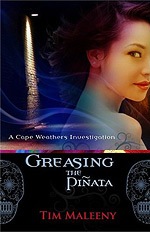
greasing And much like Michelle, I fall into the camp of writers who enjoyed The Da Vinci Code a lot, despite its flaws. The story worked, the subject matter was fascinating, and it cooked along. (And because I’m a blood relative to the Merovingians and have seen nude photos of John the Baptist on the internet, the story had a particularly deep resonance for me.)

But after all the code-copycats —in books and film — all the variations on a theme, the coming of the new book does feel a bit like the return of the vampires.

Which is funny, because before The Da Vinci Code, I understand it was damn near impossible to sell a mystery featuring art history, because the subject matter was perceived as too academic and boring. After The Da Vinci Code hit, countless authors were told by their publishers they had to work a conspiracy involving ancient art into their books. (A novel with a professor of art history who happens to be a Southern vampire would certainly have started a bidding war.)

The machine has become its own self-fulfilling prophecy. Rather than invest in new authors, the pressure from the chains has become so severe, and the margins so thin, that the plan is to bet on a sure thing. The marketing guys look for safe bets and proven brands. But as a marketing guy from way back, I can tell you there are no safe bets, and if you solve for the short-term, it often costs you big-time in the long run.

Sure, you can keep selling an existing franchise for a long time, no doubt about it. But at the end of that push, when the books start to feel predictable, the cost of that approach is reader fatigue, and beyond that, a slippery slope indeed.

This is what happened to the music industry before Napster and then iTunes came onto the scene and opened the floodgates, allowinapsterng us to rediscover our love of music instead of listening to only the Top 40 being pushed by the big labels. The industry almost collapsed under its own weight because it threw all its money at artists who already had a fan base waiting for their next record, or even worse, over-invested in artists who had clearly jumped the shark and weren’t putting out anything fresh.

The same thing happened in Hollywood before independent film put some control back into the hands of directors. Check out some of the bombs from the eighties and imagine them getting funded today, to the tune of hundreds of millions of dollars. Movies with plots so thin that any movie-goer in the country could have told the studios they were going to suck before a single scene was filmed.whos that
If you talk to voracious readers, let alone other writers, they can tell which books to bet on, and if you listen carefully, you can tell which books have broad appeal and the potential to break out, if only the machine would get behind them. But with so much money at stake, in an industry of taste makers, are you really going to trust the readers, or, heaven forbid, the writers, when you can just sell the same thing you sold before.
the wire Same thing happened with TV, before cable tore down the walls protecting laugh-track sitcoms, canned plots and formulaic dramas. HBO broke all the rules and, to no one’s surprise except the big networks, it became a magnet for viewers starved for original programming.

For some reason, all these so-called “entertainment” industries forgot that for something to be truly entertaining it has to be unexpected, fresh, something new.

Push the boundaries, twist a familiar story into a new shape, take me somewhere I’ve never been before. Only then will I come back, instead of putting down the book and turning to cable, powering up my computer, or playing a video game. There are too many options on my entertainment menu for me to just sit there and eat the same thing you’ve been serving again and again, because frankly it’s getting stale.

I am told by friends in publishing that zombies are the next vampires. I kid you not, one very talented writer I know was told to rewrite her book to include the walking dead, because “zombies are the next big thing.” Maybe so, but why can’t the next big thing be a great story, one I haven’t heard before. Maybe it features a zombie, but maybe the big thing after that doesn’t. Mix it up a little and see what happens.

Which is why I ask myself, whenever I walk into one of the big chains, does the next big thing have to come in waves? Because personally, I’m getting a little seasick.

Tim Maleeny is the bestselling author of Greasing The Piñata, which recently won The Lefty Award for best humorous mystery of 2008, and the forthcoming standalone novel Jump that Publishers Weekly called “a perfectly blended cocktail of escapism, with or without the beach towel.”

~~~~~~~~~~~~~~

Coming up on our Kill Zone Guest Sundays, watch for blogs from Sandra Brown, Steve Berry, Robert Liparulo, Paul Kemprecos, Linda Fairstein, Oline Cogdill, Alexandra Sokoloff, James Scott Bell, and more.

Location, Location, Location…

By John Ramsey Miller

http://www.johnramseymiller.com

Eudora Welty once said, “Every story would be another story, and unrecognizable if it took up its characters and plot and happened somewhere else… Fiction depends for its life on place. Place is the crossroads of circumstance, the proving ground of, What happened? Who’s here? Who’s coming?…”

A great story and solid characters mean nothing if they are walking around in a territory unknown to a reader. Successful authors know that setting is as important to a story as any of the characters. We have the characters, their conflicts and dilemmas, and all else is setting. Setting adds texture and our readers should feel as though they are right there with our characters. What are the characters seeing? What are they smelling? How does their environment feel? What are the characters hearing? Is the sun shining? Is it hot or cold, wet or muggy? Is the sun out, the light failing, or is it as dark out as six inches up a bull’s butt? Are the tall weeds these characters are running through infested with chiggers or poison ivy?

In James Lee Burke’s Dave Robicheaux novels his bait shop is so real you can almost hear the air pump and smell the minnow tank. You can feel the thick heat in the Louisiana air and see the ceiling fan as it stirs it. When he is sitting in a bar, you can smell the bourbon and see the condensation on the glass in front of old Dave.

Settings influence action. Nothing gets a reader’s blood flowing like a chase in a place where there’s no chance of outside interference. When the pursuer knows the territory and the victim doesn’t it adds suspense.

Writers should know enough about a place to describe it accurately, even if it’s made up from whole cloth. A made-up location should be taken from a real one the writer knows intimately and can convey. If you can see it, and you had better have it in your mind so it is real to you, you have to make your reader see it as well. You should take the time to describe the book’s settings in enough detail for the readers to have a clear idea of where the characters are and what is going on. Many authors, depending on style, leave a lot of details up to the reader’s imagination, while others define the setting so there is no guessing or imagining.

Your settings should be of interest to the readers. I have set books in cities and in swamps and in each I bring the setting in so the reader will see how the setting affects the characters and the plot. I think of locations as characters, and the feel of them as texture. In the way the choice of a hat can say more about a character than two paragraphs of description, something a character says or feels about the environment can set a scene adequately in very few words.

I stick to locations I am familiar enough with to make them seem real. I do occasionally set a chapter in a place I’ve never been, like a jungle in South America, or most recently Route Irish in Baghdad, but those are isolated instances where I need an action to take place that impacts my story. A jungle is easy since I lived in Miami. Iraq was also easy since I’ve all seen it on my TV screen over and over for the past few years. That is okay for the way the place looks, but not good enough. Since my son was in Iraq with the Marine Corps, I talked to him to get his impressions––about how the country felt and smelled to him, especially at night when my scene took place.

The best writers place us right next to the characters. There are authors who can do a great job with the other elements necessary to a successful work of fiction, but fail to bring in the setting to their advantage. In order for a story to involve a reader effectively and to satisfy them, setting has to become one of the major characters.

Who among your favorite authors uses setting most effectively?

Life Fills Our Pens

By John Ramsey Miller

We have been talking about research this week on these blogs and I’m going to touch on how life provides the majority of research that finds its way into our work. Life as our main source of material, and the material that matters most on our pages.

As I get older my major characters grow older with me because I understand aging and how older people relate to the world, and how the world affects them. For instance, I don’t mind change as long as things remain the same. But I also think I see younger characters more clearly, and especially how they relate to older characters, and how older characters see them. Somebody once told me that young writers depend more on style and older writers more on substance. We write what we know, and what we get to know is what life does to people, and how they get through it.

I am writing a book now about how an older man meets his teenage granddaughter for the first time and it changes his life in rather dramatic ways. I won’t go into details, but it is about how their relationship forms and evolves, and how the trials they are subjected to attach them to each other. In writing, I am drawing on my relationship with my granddaughter who is fourteen. She was seven when I first met her, and I was just a stranger who’d been thrown into her life. Mostly I bored her, until I taught her something useful that she was interested in––shooting guns. Now she’s a crackerjack shot, and she is so because I took the time to teach her gun safety and the relationship between her eyes, the gun’s barrel and the target. I doubt she’ll ever do more than shoot targets, and she may not do that given the strong draw of her other interests like texting her friends, boys, and fashion, which does not these days seem to include Eye protection, Beretta shooting jackets, lace-up boots, and Carhardt canvas pants. So it goes. I just wanted her to be able to protect herself, but in the process we bonded. I used that relationship in my WIP (work in progress), but I changed shooting to fishing. That was my research.

Last weekend we had chicks born in our new incubator, and I can’t tell you how amazing, delightful and flat wonderful it was to see the little feathered creatures fighting their way out of their hard shells. Nature. Nothing like it. Two of the Silky chicks had hip dysplasia, and couldn’t stand because their legs were at right angles. One of my nieces and one of my granddaughters had the same problem and they wore a brace for months after they were born to correct the angle of their legs. My wife went on a chicken board and discovered this happens sometimes when the hatchlings are crowded and can’t stand up just after they are born. And you can’t help them by opening the incubator to make room by removing the broken shells because opening it threatens the yet to be born by lowering the humidity. Lowering the humidity means the yet-to- be hatched could stick to their shells and perish. From the experience of other people who’d faced the problem, and after it was safe to do so, my wife and I took band-aids, cut long thin strips, and taped their legs at the correct angles so they could stand and walk. That came from my wife’s research. We’re just talking about fifty-cent chickens, and it was either splinting or taking a sharp pair of scissors to their necks. Not worth the effort, most chicken growers would say. But we had seen them fighting to become part of this world for the short time God grants a chicken. The mechanical interference proved successful, because we were willing to try it. I can kill game, and I do, but I love life and, while that’s quite a contradiction, so much of life is just that. Left to nature’s whims and solutions, the chicks would have starved to death or been pecked to death by the healthy chicks. Nature doesn’t well tolerate weakness or difference and animals. It culls its mistakes and accidents. And animals, like humans, can be cruel and prejudiced against anything different.

Humans are complex creatures, and we will likely never understand why we are so intolerant of people who are not just like we are. A friend of mine says that humans are just killer monkeys with clothes on, and maybe he’s right. It often seems like it. But when killer monkeys take the time and energy to save a pair of tiny birds, it gives me hope––not only for my own salvation, but for yours as well. So that’s more material for another time and another blank page.

Research is to good writing as Cool Whip is to sliced strawberries. You can go without the topping, but its infinitely more satisfying with it. While we all go to the internet [or other reference material] when looking to make our stories accurate (in the fact department), our human behaviors mostly come from our observations and not from a link to Psychology Today or Abnormal Psychology Tomorrow.

A Terrible, Terrible Day

By John Gilstrap

Two years ago, the world changed irreparably.

My son Chris—my only child—was a student at Virginia Tech on April 16, 2007. He was never in harm’s way, thank God, because on that particular morning he had afternoon classes. If the shooter had chosen a different day . . .

To finish the thought takes me to a place where I don’t want to go. The fact is that Chris is fine.
The dead, however, remain dead forever, and the physically and spiritually wounded carry their trauma still. It’s incomprehensible that so much pain and sadness invaded so many lives at the precise moment when their futures burned their brightest.

I think of the laughter that has been silenced. I think of the stories that will never be told, the landscapes that will never be painted, and the children who will never be born.

I think of the resilience of a remarkable community of students. I think of the outpouring of love from around the world, and the kind gestures of support that prove how such a horrific loss inflicts pain on all of us.

Today, my slice of the blogosphere is about the unspeakable cost of that day. Please read every name. Think a good thought for them. Pray that God continues to give their families strength:

Ross Abdallah Alameddine
Christopher James “Jamie” Bishop
Brian Bluhm
Ryan Clark
Austin Cloyd
Jocelyne Couture-Nowak
Daniel Perez Cueva
Kevin Granata
Mathew Gregory Gwaltney
Caitlin Hammaren
Jeremy Herbstritt
Rachael Elizabeth Hill
Emily Jane Hilscher
Jarrett Lane
Matthew La Porte
Henry J. Lee
Liviu Librescu
G.V. Loganathan
Partahi Lumbantoruan
Lauren McCain
Daniel O’Neil
Juan Ortiz
Minal Panchal
Erin Peterson
Michael Pohle
Julia Pryde
Mary Karen Read
Reema Samaha
Waleed Mohammed Shaalan
Leslie Sherman
Maxine Turner
Nicole White

They are Virginia Tech.