54% of the People Who Read This Have Nothing Better To Do. 42% Percent Will Be Sorry They Took Time To Read It. 4% Percent Can’t Read.


By John Ramsey Miller

Statisticians are working overtime to furnish us with statistics. The world runs on numbers and those numbers types are never going to slow down. As long as things happen, they will continue to crunch and spout. Long after we tire of listening to the results of their crunchings, they will be sitting in cubicles around the world comforted by their calculations. Even if they have to re-crunch old numbers and regurgitate them. And the numbers are always changing even as society changes.

In my world, Yahoo is the largest publisher of insipid crunchings. The top ten anything you want to know about will appear there on the home page along with the most frightening news available, the cutest animals, or just plain boring celebrity news they can accumulate. Want to know the top ten worst-smelling cities on earth? The top ten friendliest hell holes, The cutest kitten’s top ten favorite planets? How many dogs just like Obama’s people will be sell to people who want to be just like the President, but without the ears. The top ten best smelling decaying objects? It’s all there because somebody thinks we want to read the lists in order to improve our lives. They’ll never give you the names of the stat-crunchers until they want to list the top-ten-most-beaten-up statisticians in the United States. I’ve had way too much of this endless top tenning. It’s time for about 90% of statisticians to be in the unemployment lines.

Here’s another one that has stuck in my mind for eight point three percent of my adult life. A few years ago some scientists somewhere announced that fully ten percent of the matter in the Universe was unaccounted for. I still can’t wrap my mind around that one. How many scientists did it take to go out and weigh the mass of the Universe, to count the atoms and decide that a full ten percent was simply gone? Maybe it’s in the pants pockets of God, like so much dryer lint. Or maybe he made Paris Hilton’s ego with it. I don’t know a lot about science, but I have a God-given bullshit meter that goes off several times a day. I guess the scientists who made that statement will eventually sober up, or they will discover which Black Holes have sucked up the missing matter. I didn’t take it and I don’t really care who did.

I guess everybody has a calling in life, but list compilers are called from the ranks of accountants and actuaries who want more excitement, some way to introduce creativity, into their dull, number-generating careers.

Okay, I’m being unfair to statisticians. Some people need the comfort of numbers to make decisions. Me, I just run blindly from one situation to another, flying by the seat of my pants. I’m an emotional creature and I don’t generally make sound decisions based in reality, or on numbers. My wife will attest to this seventy percent of the time.

My business partner and I once hired a full-time statistician for our ad agency. I can’t remember why. It was doomed from the start. Perhaps it is like the time we got loaded and bought a quarter dozen pythons for our reception area. Seemed like a good idea at the time. We often did things like that. I guess we hired him because we were trying to kill the party reputation created by the festive snakes our clients were greeted by. That boy flat bubbled over and lit up like white phosphorous when he had new numbers to present to us or to a client. Clients love numbers that show growth. They hate numbers that point to stagnation or a reversal in sales. A good statistician can make the numbers sing his tune. Instead of ninety-nine-point nine percent of the readers of the newspaper didn’t act on our ad. Our guy explained that one-point-one percent of the people who read the newspaper acted on our ad, so it was amazingly effective. Stats were made to be spun like a drunk square-dance girl. Okay spinning stats could explain why one day coffee drinking is good for you, and the next it will shorten your life.

The truth is that I have no pressing use for that missing matter, so I vote we stop funding scientists to look for it and ask them to do something more constructive with the 90% of matter we have. One thing’s for certain, if it was my matter, I’d never be able to find anything close to ninety percent of it at any given time. Right now, the top ten things I can’t find [to save my life] would include my cell phone, phone book, car keys, and my electric razor.
The Waiting Is Over

By John Gilstrap
http://www.johngilstrap.com/

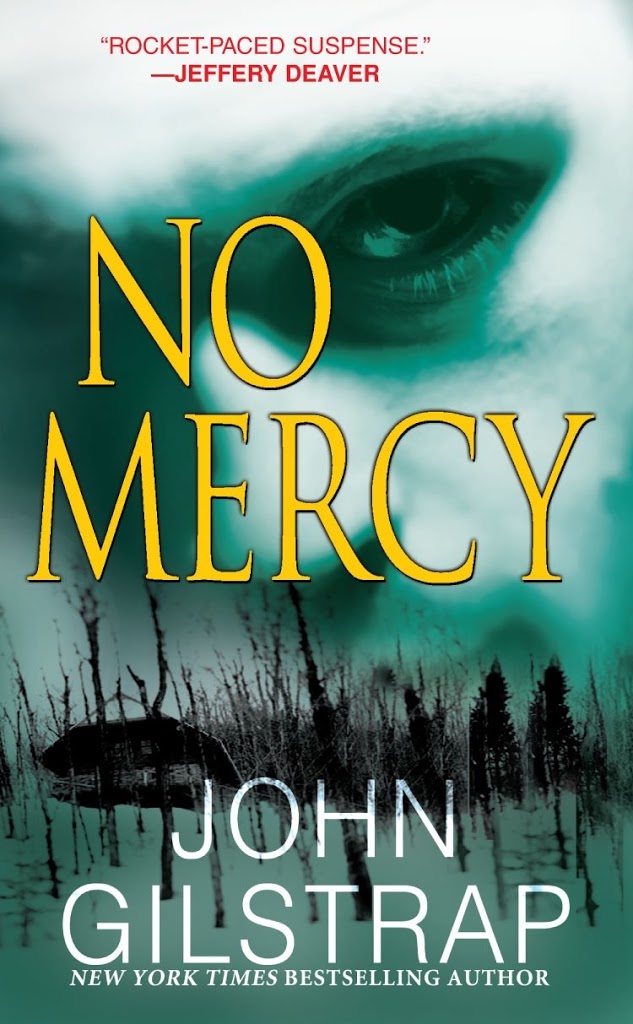
All right, this is it. Next week, anticipation becomes reality as No Mercy hits bookstores everywhere. I submitted the manuscript last August and finished the final revision in November. Since then, there have been copy edits and galley proofs, but I haven’t touched a word of the story since February.

Next week, everybody gets to decide for themselves if the characters are interesting and the story exciting. I certainly think they are, as do my editor and agent, but we’ve had our vote. Now it’s all in readers’ hands; which is why, for me, this is the scariest time in a book’s life cycle—the point where potential and reality finally intersect. On any given day, a writer has precious little control over his own career; but at this stage, the powerlessness feels to be in higher relief.
I thought I’d dedicate my blog this week to a behind-the-scenes peek at our marketing/publicity preparations.
Here’s what No Mercy’s publisher (Pinnacle) has done for me: they designed a kick-ass cover; they printed and distributed a couple hundred gorgeous advance reader’s copies (ARCs); they negotiated really strong sell-ins at the major big-box stores, as well as with distributors for the likes of Wal-Mart and your local grocery store. The book should have a big presence in airports, too. At ThrillerFest next month in New York City, No Mercy will be featured as a bag stuffer for a couple hundred attendees.
Here’s what I’ve done on my own nickel to market the book: I’ve bought advertising on well-visited blog sites that will bring 4 million views over two weeks; I’ve updated my website to be something worth visiting (http://www.johngilstrap.com/); I’ve hired a publicist who will get me on lots of local radio and television shows, plus she’s snagged me a few bookstore signings. (For details, please check the “Events” page on the aforementioned website.)
In July, I’ll be on the faculty of the Midwest Writers Conference at Ball State University. As the writers conference schedule heats up again in the fall, I’ll be making appearances everywhere—all of it to sell a book that I haven’t touched in months. All of it as I put the (not-so) finishing touches on my next book, which I’m supposed to deliver to my publisher in August so I can begin the cycle all over again.
On the one hand, it’s all very exciting; but as one who’s walked this walk a few times already, I know that none of it matters unless all of the promotion and marketing combine with the X-Factor that creates “buzz” about a book.
Buzz is what happens when book lovers start talking about a title among themselves. I’ve published to Big Buzz in the past, and I’ve published to silence. I could guess at what makes the difference, but I’d probably be wrong. Buzz hides in the cracks between the cushions of all the things over which I have no control.
Another factor of nervousness to throw into the mix is the fact that No Mercy is my first paperback original (PBO). The rules are all different for PBOs, or so I’m told. At $6.99 a pop, they’re considered to be an impulse buy, as opposed to a hardcover, which is a more targeted buy. The theory in my case is that people will be far more apt to try out a new series character for 7 bucks than they would be for $25. We’ll see.
Lord yes, we’ll see.
Now, just this once, in light of the Big Event, please forgive me for . . .
****SHAMELESS SELF PROMOTION ALERT****
No Mercy is the first book in a new series starring freelance hostage rescue specialist Jonathan Grave.
When a loved one is taken, you just want them back safely. You don’t care about gathering evidence for a future trial, or about Miranda warnings or search warrants. You just want them brought home. That’s why you call Jonathan Grave.
In No Mercy, when Jonathan’s meticulous plan to rescue an Indiana college student explodes into a deadly shooting spree, the local authorities are out for blood—and they’re not alone. Someone wants to control a devastating secret . . . someone willing to capture, torture and kill anyone to keep it. Even the people Jonathan loves most.
****END OF SHAMELESS SELF-PROMOTION****
Wish me luck! We now return you to your regularly scheduled Kill Zone.

Serial Killers ….Not In My Books, and New Babies

John Ramsey Miller

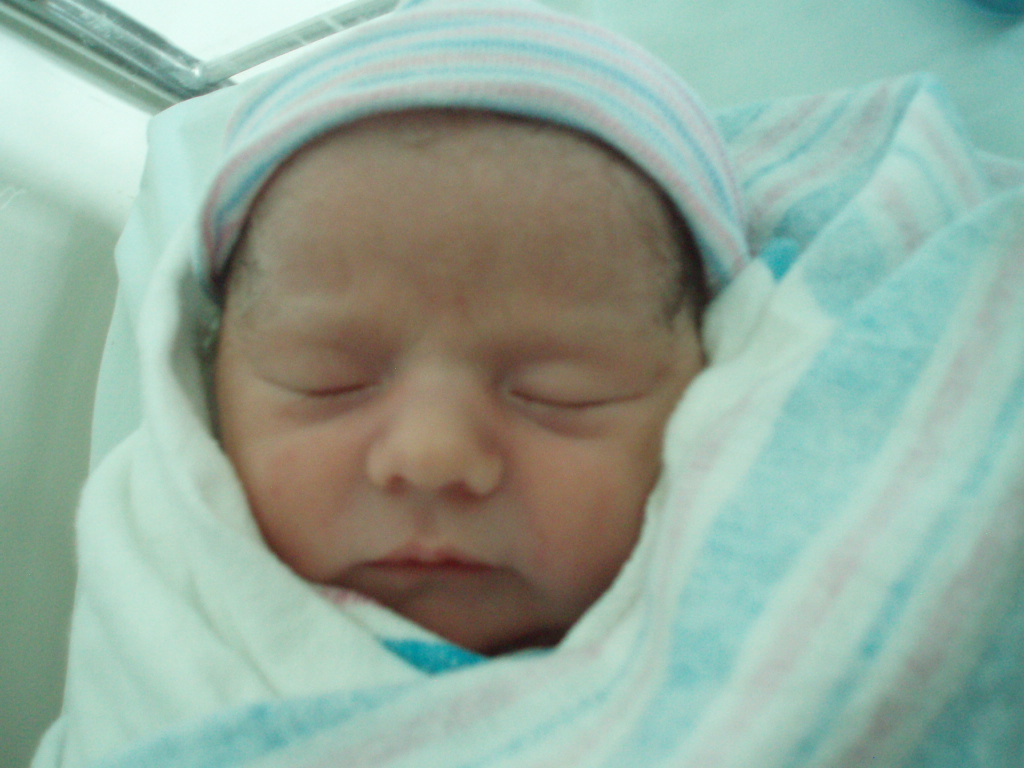
I almost didn’t make it here this week because my middle son’s wife had a baby yesterday and we have been keeping their two-year old. I haven’t had a moment to do anything but gather the rope and throw the lasso as he roars by. I hate it when people show pictures of newborns because most are either ugly or featurless, and really …who cares. I just put this picture here because this isn’t true in my family. For some odd reason, all of my grandchildren are born looking like movie stars.

My blog this week was going to be about serial killers and this is what I got done on that…

Someone asked me the other day if I had written any novels with serial killers in them and I said not yet, and probably not ever. All of my books have killers in them, but the motivation for my killers is usually based on self-interest. A person who kills over and over again for sexual gratification holds no interest for me and I’m not comfortable writing about them. My killers are usually murdering for revenge, profit, in self-defense, or due to a twisted sense of justice. My killers [those who are main characters] are complex individuals. They are usually intelligent, but almost all have a warped perspective on the world.

I like writing villains. A protagonist usually has to win more or less fairly against an opponent who isn’t into the rules so much. Not adhering to any rules of engagement usually gives my killers an edge against their opposition. Yeah, it really wasn’t going anywhere near new ground.

So, tomorrow is Father’s Day, and as it turns out between the new baby (see above), my older son’s family doing something because he is a father of four, it will be a smaller than normal turnout. It will also be 99˚ (after weeks of rain–think sauna) so I’ll be staying close to the air conditioner.

So I ramble back and try to tie something together…

Now I have six grandchildren, three-and-three, and instead of merely messing up the house, they can wreck several acres when they visit together for Sunday dinner.

I’ve always heard that the worst killer imaginable would be a three hundred pound three-year old, and I believe it. My oldest son doesn’t allow his children to use the word “kill”, but his children (6 & 4) have “accidented” two baby chickens, legions of frogs, lizards, bugs, etc… Now children will do these things when they are together, never on their own. Thrill killing on the farm. They are good kids, but kids are like adults. As long as they are not accompanied by other adults they don’t usually get into mischief. Two or more people and there is a chance for escalation. The clear exception is writers who do all of their mischief when they are alone.

By the way the new baby (born yesterday) is Shay Aurora Miller and she weighed 6 lbs 13 Oz, and I only mention this because I’ll call her Sam, because I should caption the picture.

My Crazies Are Better Than Your Crazies

By John Gilstrap
http://www.johngilstrap.com

My home city, Washington, DC, is blessed with a vast community of writers. Every three or four months, my dear friend Dan Moldea pulls a bunch of us together for an Authors’ Dinner at the Old Europe Restaurant in Georgetown. The one requirement to be a “member” of the otherwise non-exclusive group is to be a published author.

As you might expect for Washington, non-fiction outnumbers fiction ten-to-one, and the politics of the room lean decidedly to the left. My own lean a bit to the right, as do those of a few other members, and this is a group that loves to talk politics. And you know what? It remains civil throughout.

Most writers I know are intellectually honest; they understand that two people can easily view a set of facts and draw entirely different conclusions. It’s refreshing. People accept that a well-reasoned position is at least, well, reasonable. Discussions get heated from time to time, but the heat is 99% passion, not anger. I’m certain that few minds are changed, but at least people listen. How rare is that in this day and age?

I’ve been an avid debater of issues for as long as I can remember, and here’s what a lifetime of political discussions has taught me: Most “liberals” and “conservatives” are actually “moderates” whose political outlooks hover somewhere between 47 and 53 on my imagined 100-point political spectrum. Why, then, are the airwaves filled with take-no-prisoners extremists on every significant issue?

Come to think of it, when did it become so offensive to discuss politics among friends? Why is it so offensive? Could it be that too many of our fellow citizens don’t truly understand what they think or why they think it; that they are merely parroting what they hear from Keith Olbermann or Rush Limbaugh or Oprah Winfrey and know that they can’t possibly defend their positions? I know a lady who routinely asks people at nearby restaurant tables to stop talking politics among themselves because the discussions make her feel “uncomfortable.” In her mind, it’s rude to discuss issues within earshot, but it’s not rude to inject herself into an eavesdropped conversation. How’s that for an interesting social compass?

Hey, look, I’m not suggesting that anyone be rude to guests at a dinner party by putting them in an uncomfortable position, but it seems to me that silence on issues comes with a heavy price. When reasonable people don’t afford themselves the opportunity to vet their thoughts, the issues themselves get hijacked by extremists, and the debate becomes polarized by gas bags who make their living by filtering and shaping the “truth” into something that in fact bears little likeness to it. Comity and compromise become the first casualties.

For the sake of votes or ratings (the common denominator in either case being money), the gas bags assign labels wholesale to people on the “other side” of issues. People stop listening to ideas yet start parsing phrases to perpetuate presumptions. In legislatures throughout the country, I worry that what used to be the loyal opposition has simply become the enemy. Majority control is becoming a license to bully.

It’s scary, it’s bipartisan, and we’re allowing it to happen in part, I believe, because we’re afraid of speaking our minds.

A friend of mine, whose politics rest around 48 on my imagined political spectrum while mine hover around 52, put it best when he told me, “John, we vote for different candidates because the crazies in your party scare me more than my crazies in mine. But only by a little.”

What do you think? How do we bring civil discourse back into fashion? Is it even a good idea? Can a democracy (or even a representative republic) continue to exist without it?

My Wife Went to Prison Last Week

John Ramsey Miller

My wife’s bank was purchased by this other huge bank with offices in San Francisco and she was in that fine city all week, while I was at home with the chickens and dogs. Monday she went to Alcatraz Island and took the tour. She called me to say that she couldn’t believe how bleak the place was and how small the cells were. I knew that already since I’ve been in prisons before. And I reminded her that she had been there too, albeit only in the visitors area.

When I was photographing country music artists for album covers and magazine features I went to “The Walls” in Nashville with Tammy Wynette and Mel Tillis to photograph their concert for CBS Records. I got pictures of Tammy walking around in a huge room filled with a few hundred inmates armed only with a microphone, and she was a safe as she would have been sitting at home, where she actually died some years later. One of the inmates was also taking pictures and I talked with him about photography. The walls was a gothic prison where Burt Reynolds filmed the Longest Yard. Tony M., the inmate with a camera, was there doing 54 years for armed robbery.

A week later, I was approached by the warden at the prison (who later lost his job and, if memory serves, went to prison himself for borrowing money from inmates) who said Tony had asked him if I could help him set up a photographic darkroom for use by the inmates who put out the prison newspaper and I agreed. I looked at the space, which was across the main yard where the inmates spent their days. I designed a well-equipped darkroom, which Tony was to run. Tony was a very nice guy for an armed robber. In fact he was a nice guy period. The inmates liked him because he furnished them with pictures for their loved ones. In exchange they traded him things for the pictures, which is how prisons work.

For a period of a few weeks I would present myself at the gate and the guards would open the gates and let me in and I would wander to the designated darkroom space. I had nothing to fear because the inmates knew I was helping Tony, and I walked around unaccompanied by guards as safe as a newborn puppy. I went everywhere with Tony and being under his protection and I spent a lot of time talking with inmates. I taught Tony how to use the equipment I selected, and he was a natural. After Tony was moved to a newly built facility two years later I would take my wife and two-year-old son to visit him on Sundays and my son would sit in his lap.

Later I went to Leavenworth, Kansas to photograph Johnny Paycheck in concert in that federal facility, and it turned out that the warden was a nephew of Bill Monroe, the Bluegrass Icon. Bill Monroe was a casual friend of mine, and I had done a couple of his album covers. I was invited to go coon hunting with him. The warden gave me the celebrity tour, and I visited the rooms where the Birdman of Alcatraz had done his bird thing. The bird man was a cold-blooded sexual predator and murderer who had a soft spot for birds. The warden told me that the birdman killed several inmates after he’d raped them and that was the reason he was never released on parole. Hard to imagine Burt Lancaster filming a scene like that for the movie. I met well-known mobsters, a Brinks truck robber, killers of people with Federal implications, and other famous criminals. It was the kind of tour normal people didn’t get. That day I was with the warden, who walked around without an escort. I was amazed.

In 1981 I was living in New Orleans, and one night at a dinner for a mutual friend (Tony Dunbar, a lawyer who worked for Amnesty International). I was seated beside Sister Helen Prejean who lived in the projects and ran a ministry from her apartment. She worked with death row inmates. This was before she wrote DEAD MAN WALKING and I found her brilliant and totally delightful. She asked me how I felt about the death penalty and I said I was all for it. Long story short she said if I knew the inmates she worked with I couldn’t hold that belief. Two years later I found myself on Death Row setting up a formal portrait studio in the main hallway and loaded film in a cell on death row at Angola. During those two years I had spent untold hours negotiating with attorneys, inmates, and prison officials in order to do portraits of the men under sentence of death. In 1981 executions had been halted for a few years, and the big burn was in the works as cases wound through the courts. I met and photographed Elmo Sonier (Son-yay) one of the two men turned into one for the movie. The other was Robert Lee Willie, I didn’t photograph him. Elmo was one of an impromptu two-man team who raped a teen-age girl and murdered her and her boyfriend. The pictures ended up running in John Grisham’s The Oxford American in the largest selling issue in its history. The pictures, formal large-format portraits of smiling men dressed in street clothes ran years after the men in the pictures were executed. The handcuffs and leg shackles didn’t show in the portraits. If you saw MONSTER BALL, you saw Death Row and depictions of the guards. None of the guards were pro death penalty (at least they told me they were against executions) because they spend their days with the men they would have to help kill.

I have never written about prisons in my books, even though I am familiar with them and got to know more than a few inmates. After that series, I lost interest in photography, and began writing. When those men were executed it depressed me. I was depressed because I felt deep compassion and empathy for the victims, and I felt a sense of wasted lives of the inmates. I look at the pictures of smiling death row inmates and I try to imagine how their victims saw them in their last moments alive. It was impossible to imagine these men as cold-blooded murderers, but they were, and had done horrific things I won’t go into here. They did the crime and they each paid the price society exacted. As long as people harm others, prisons will be necessary. A lot of prisoners shouldn’t be there, but a lot should and have to be. The death penalty has the purpose of making certain that people who are executed never kill again. But the truth is that killers don’t think they’ll ever be caught, much less convicted and executed. It isn’t a deterrent. And it is certainly barbaric. Not much I can do about the people in there, but I can live my life hoping I can help someone make better choices, and know they are valuable.

Here I go wandering again and not blogging about writing, but talking about my life. (It’s all about me). Everything is about writing because our sum totals go into everything we write. The fact is that people flat amaze and astound me. That’s a huge part of why I write, and the people I’ve been fortunate enough to know furnish parts of the characters I put on paper. It seems to me that we all have an amazing capacity for doing good things and being positive influences on people in our lives. At the same time we all have the capacity (hopefully unrealized) for channeling evil and destroying lives. Although most of write about evil, it rarely if ever wins in the end, and good triumphs in the end. I like to think life is like that and good will always shine through and prevail.

Dare To Dream

By John Gilstrap
http://www.johngilstrap.com

It’s June, so another graduation season is drawing to a close. In high schools and colleges all over the United States, proud students are donning caps and gowns, and posing for pictures with even prouder parents and grandparents. Late spring is the time of unbridled opportunity. Those young men and women literally own the future—their own, to be sure, but also mine, by extension. Given the inherent joy of the season, I wonder why so many adults seem to take pleasure in screwing it all up.

When the announcement is made at the family dinner that young William or Wilhelmina has a computer science degree or a business degree, or that they’ve been accepted to the law school of their choice, the sense of approval is palpable. Everybody knows that those kids are set for life. Their future will be filled with money and material gain.

Have you noticed that music majors or creative writing majors or acting majors don’t receive the same universal acceptance? Is it because the presumed path to wealth isn’t quite so linear? Is it because liberal arts and social sciences aren’t as important to society as harvesting a new crop of lawyers? This bothers me.

I find it difficult to believe that at the doddering age of 21, every law school inductee is truly pursuing his or her passion. I could be wrong—I’ve spent a lifetime being wrong many, many times—but whenever I see a newly minted lawyer or accountant, I get the sense that in more than a few cases, their beaming smiles are reflections of just their own ambitions, but those of Mom and Dad as well.

Maybe I don’t want to see so young a person with so pedestrian a dream as being a lawyer or accountant. Age forty-one is the time for 12-hour work days and heavy responsibility, not twenty-one. Is this really their dream? For some, yes. For many, I suspect no.

You want to see lofty dreams? You want to be inspired by a youthful spirit? Sit down and talk to those creative writing students and the musicians. They know that the odds of success are stacked against them, but they don’t care. They’ve got a passion, and they’re going to pursue it to the end, until they either succeed or are forced by finances or a broken spirit to declare defeat.

If they beat the odds—and let’s face it, they are long odds—naysayers will pronounce them to be “lucky.” But that’s only if the success is huge. Like George Clooney or John Grisham huge.

Otherwise, in my experience, people will find a way to diminish true success and turn it into something less than it is. It’s only a TV movie, not a real movie. It’s only being published by a small press, not a major house. It’s only the Washington Opera company, not the Met. It’s only the touring company, not Broadway. Sure, he made it to the Chicago Bears, but he never made it above second string.

It’s a shame about William. He never really made it. Never mind that William is doing what he loves.

I feel sorry for the kids who have been career tracked by their parents. It’s foolish to think about becoming an artist, they are told, because it’s impossible to make any money at it. They’ll prove their point by reciting a litany of one hit wonders and abject failures from among their own childhoods. Give up now, son; you’ll never make it. This from the same mother or father who said never give up on the soccer field or in Math class. Those are important. Without the connections and the A-plus report card, Harvard is off the table, don’t you know.

I know that I am painting with a very broad brush here, but I’ve known these parents. I’ve had to justify why I was ruining my own son’s chances at success by not shipping him off to boarding school where he could start networking at age fourteen. (I’m not making that up. I turned the debate around, though, when I asked the overachievers why they were willing to surrender custody of their adolescent children at the moment in their lives when they most needed the steady hand and constant love of their parents.)

So listen up, graduates: It’s your life now. You have the God-given right to live it as you please. If acting like you’re forty when you’re 20 years younger is your thing, then go for it. But if you want to start a rock band or become a poet or set a new standard for sculpture, this is the time. If it doesn’t work, how much harm can you do to an accounting career that hasn’t started yet?

How do you even know that you want to be an accountant if you haven’t tried a dozen other things? I’ve got nothing against accountants, don’t get me wrong, but this is an important life choice. Suppose you hate being an accountant? Changing your mind becomes a lot harder after you’ve got kids and a mortgage, and I think that the seeds of doubt over what might have been if only you’d tried could be crippling.

I say if you’ve got talent and a dream, pursue the hell out of it. This is the time. Success only comes to those to endeavor to achieve it. Failure only comes to those who surrender.

And to surrender without trying, well, that’s just cowardice.

What kind of title is Smash Cut?

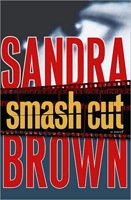
TKZ welcomes our guest blogger, Sandra Brown. Sandra is the author of over seventy novels including fifty-six New York Times bestsellers. Her latest is SMOKE SCREEN (August, 2008), and her new book, SMASH CUT, is scheduled for release in August, 2009.

By Sandra Brown

I can imagine the quizzical expression on the faces of most readers when they hear the title of my next book, SMASH CUT. 

brown-sandra What the heck? Is that a noun or a verb? Neither? A little of both? A noun plus an adjective or a verb plus an adverb? Unless you work in the film industry or have a more than pedestrian knowledge of script writing, you probably aren’t familiar with the term.  I’ve been a movie fan all my life, but I’d never come across that phrase until I started writing this novel and had to do some research into screen writing jargon, looking for a term that would apply to my story. Ergo – SMASH CUT. More on that later.

Most frequently asked question: Where do you get your ideas?

Most difficult question to answer: See above.

It’s tough for me to explain how an idea originated, because typically I don’t have a clue.  Colleagues often cite personal experiences on which they base stories. Either they’re bald-faced liars (and I strongly suspect this of most of them) or, by comparison, I lead a much more boring life, because nothing ever happens to me that’s exciting enough to write about.

Not that I’m complaining. I’m a card carrying coward, so I don’t go looking for adventure. I avoid encounters with mean people, and certainly with wildlife, toxic plants, biting insects, and white water. I enjoy the great outdoors, but only if I’m appreciating it from behind tempered glass. My idea of camping out is staying in a hotel that doesn’t have  room service after midnight. I have acute acrophobia, and I’ll go into the ocean only if the beach catches fire. I know, I know, I’m a barrel of laughs.

Where was I?  Oh, right.  I don’t have anything interesting to write about unless I make it up. And only sometimes can I say definitively how an idea came to me.

smash-cut1 To an extent, SMASH CUT is an exception. Because I can tell you that at least part of this idea came from my family’s habit of dropping movie quotes into our conversations. 

We’re all movie buffs.  We have family standards, movies we never tire of watching, movies we’ve seen so many times we can practically recite the entire script but enjoy re-watching anyway. I think the familiarity makes these classics even more delectable, although the diehards who will watch a movie only once, vehemently disagree.  These are also the people who will read a book only once. They are to be pitied. Probably a foundation should be started for them.

Anyhow, we in my family love movies of all kinds — funny, sad, scary, historical, contemporary, futuristic. Movies about war, cowboys, gangsters, love. Doesn’t matter. Our taste in films is as diverse as our taste in books. We like anything so long as it’s entertaining. 

sandra-brown In 2006, the Academy of Motion Picture Arts and Sciences (Surely you’ve heard of the Academy Awards. . .) put together a list of seventy-five famous quotes and made a great looking poster out of it. Against a black background are a big gold Oscar and all these quotes written in different fonts. We had one framed for our media room, and it draws the attention of guests who get a kick out of testing their memories. Some of the quotes are easy to identify: “Frankly, my dear, I don’t give a damn.” Some only film historians would be able to identify with alacrity.  Many are from recent pictures.  Others date back decades.

The point is, among my family members, we were able to identify all seventy-five films by title and the actor who spoke the line.

So our stockpile of movie quotes is extensive. We have a suitable quip for nearly every occasion and conversation. “Napoleon Dynamite” alone was a treasure trove. Whenever one of us drops in a line (and sometimes it’s said by several of us in unison), the rest of us “get it,” while an “outsider” is left perplexed, wondering what the heck we’re all talking/laughing about.  We’ve tried to ameliorate this rudeness by describing the movie scene and the context in which the line of dialogue was spoken, but it frequently loses it’s punch in the retelling. 

I guess you had to be there.

You may think this sounds like a real drag, something that only people with very little else to do would engage in, but in our defense, I can think of worse things families can do together.  It’s a harmless pastime.  But you’re probably asking what relevance it has to plotting a novel.  I’m getting to that, I promise. 

I suppose this family tradition was in the back of my mind when I asked myself, “What if?”

Now on this, my colleagues and I are in complete accordance. Every novelist asks, “What if. . .?”  It’s a derivative of the childhood “Play like. . .”

So I asked myself, “What if quoting lines of movie dialogue wasn’t quite so harmless? Play like one’s preoccupation with movies was detrimental or, say, deadly?”

Hmm. Interesting. Follow that and see where it goes.

About the time I began doing that, I revisited an idea which had occurred to me several years ago but had remained on the back burner: Passengers in an elevator become the targets of a vicious crime.

Hmm. Interesting. Again, follow that and see where it goes.

Are the elevator passengers acquainted or perfect strangers? Is the elevator in an office building, city hall, hospital, military post?  Who commits the crime?  Who’s the unlucky casualty?

What I didn’t realize until later is that a crime committed in an elevator poses all sorts of terrible problems, not only for the hapless fictional passengers, but for the idiotic writer who put them there!
And how would said writer tie in that scene – which was vivid in my mind and demanding to be used after languishing in my head for several years — with the movie buff? What’s the connection? And maybe the movie buff’s preoccupation with the movies isn’t a bad thing, after all. Maybe it just appears to be a negative fixation, when actually. . .

You see how this works? I keep asking, “What if?” until the plot reveals itself to me. I think of a story that way. It’s an entity that is there all along, but one day decides to shoulder its way into my consciousness. I can’t really take credit for doing anything except writing it down and passing it along to you, although more frequently than not, that shouldering thing takes months. It can be a painful process, involving a lot of hard work, self-doubt, cursing, and gnashing of teeth.

Once I had the plot for this book, I began “collecting” movie quotes and memorable scenes to incorporate into the story.  I commissioned every movie fan I know to submit suggestions, particularly favorite murder scenes. What I learned was that I’ve got some really sick friends and family members.  But I must admit, I came up with most of the film lines and images that wound up in the book. 

Now, about that title. Having done my due diligence on script writing terms, I learned that “smash cut” refers to an abrupt edit that’s specifically designed to shock, jar, or scare the living daylights out of the audience.

I hope you’ll experience a few in SMASH CUT.

~~~~~~~~~~~~~~~~~~~~

Coming up Sunday, June 14, our guest blogger will be New York Times bestselling author Steve Berry. And watch for future Sunday guest blogs from Robert Liparulo, Paul Kemprecos, Linda Fairstein, Julie Kramer, Grant Blackwood, and more.

“What’s The Frequency (Today), Kenneth?”

John Ramsey Miller

As if authors weren’t insecure enough… the sky is falling …again.

“Holy shades of the terror, Danton.” For as long as I’ve been in this game, the publishers, agents and editors have said things have never been worse in publishing, and everybody was always looking back at the “good old days.” Maybe this time they are right. If not worse, certainly our world has changed forever. And it could get worse than it is. The shakeout is not over, but there seems to be a lull in reorganizing and reshuffling at the major houses. At least it appears the wholesale bloodletting has slowed for the moment. The publishing behemoths seem to have reshuffled their cards and, leaning the fat, have resettled on their foundations. Some are acquiring books again in increasing numbers.

I’m not a businessman, but this is what I’ve managed to figure out:
More than usual even, booksellers don’t want to tie up capital in excess inventory. Most bookstores have lots and lots of books on their shelves, and the object is to roll inventory as often as possible. Thousands of books come out. If the author is new to them, and unless the buzz is enormous, they order as few copies as possible. If those sell, they might buy more, but normally they wait to see what the demand is before doing so––ordering as people ask them to. They order their stock based on the past sales of a book by a previously published author. On a clever or lucky buy, they will sell the books before they have to pay for them. Even though they can return books to the publisher for a refund, it’s a pain to lift them up and place them in boxes for shipping them back where they came from. With paperbacks they can just tear off the covers and ship them in envelopes to get credit, or a refund. I’m not sure exactly how the flow of funds between entities works because it’s irrelevant to me. Probably they send each other checks in the mail.

This is how it seems to go. If your book sells five copies, next time the store will order up to five, but probably less than five. If you are lucky, the people who bought the last book liked it enough to buy another book you wrote. But they might order it from Amazon, so the book the seller bought in anticipation of another sale to the same [hopefully loyal as if there were such a thing] customer, gets his feelings hurt and his computer places a black ball by your name.

The good old sink or swim move. A publisher pre-sells your book to the tune of 5,000 copies. They print 10,000 copies, ship the five they’ve sold, and put the other five in a warehouse in Soprano, New Jersey just off the turnpike near a group of storage tanks filled with things like food-grade motor oil. In the good old days the IRS allowed publishers and record companies to write off the (unsold inventory) boxes of books while the pages yellowed and the glue got stiff and lost its ability to hold things together. They do not tell anybody your new book is coming out, or brag about it when it does, (which is the sink-or-swim or natural selection). If it starts selling they will promote it because that makes sense. But the IRS decided this writing off inventory for years was a bad thing (on the order of writing off three-martini lunches) and put a stop to it. Martinis are great business greasers, and I believe that the captains of industry made better decisions while under the influence thanks to the 3ML. The loss of the three-martini lunch write-off did more to kill liquor sales than prohibition, but that is another story.

The way publishing works is the sort of thing you tell a room full of potential authors at your local high school if you want to nip future competitors in the bud. But seriously, authors need to know that no matter how good their books are, there’s slim chance they’ll rise to Dan Brown’s status.

The really dedicated upcoming talent will do as we authors have done and ignore the incoming rounds, forging ahead with laptops open and take our places on the shelves. The truth is, the odds are always stacked against us, and it’s the bean counters who make the decisions about our careers, not the editors and salesmen who actually like us and love our books. Always remember the words of Michael Corleone; “It’s just business.”

What I’m actually saying is that we authors are not selling dreams, which is what we think we are doing when we get into this life, we’re actually supplying a widget for the buying public and our careers depend on how many of them want to dream with us by purchasing our gizmos.

When I spoke to my local high school’s writing class the other day, I asked how many intended to become writers. I told them that when I was their age I didn’t think I’d make my living writing. I told them that life would lead them where it wanted them, and like me, although I didn’t set out to become a storyteller, the stories just began to pile up in my head and I just decided to put them down. I might not have done so had I known the probability of ever being published, but luckily I was ignorant of the astounding odds against me. I told the young people that once they discovered what they loved doing, they might be lucky enough to make a living at it as some of us have. I know the writing side pretty well, but the business side of the industry is impossibly murky. Sure there’s no security, and the work is really hard …if you do it right.

Write What You Know

By John Gilstrap
http://www.johngilstrap.com

Of all the instructional clichés, I think that “Write What You Know” discourages more new writers than any other. It’s a particularly pernicious thing to say to students, who tend to take such things more literally, but it’s also misleading for adults.

So here’s the Gilstrap version of that advice: Unless you live one hell of a life, stay away from what you know.

Who wants to read about commuting to and from a job, working hard and loving a family who loves you back? I can’t imagine a more boring story. (Actually, I can. The daily diary of a novelist: Got up this morning. Made stuff up. Went to bed.)

Looking at my own fiction, I’ve never: killed anyone; escaped from prison; blown up a chemical weapons facility (came close, though); survived a plane crash; or rescued a hostage. I like to think that I make my characters’ experience real enough for readers, but there’s no way I can say that I wrote those stories as something I “know.”

I have a hunch that the person who first launched the cliché actually meant something closer to, “Write From Your Heart.” Or maybe, “Write So It Feels Real.” I can live with those. To me, it’s about extrapolating emotion.

It’s about imagination. It’s about doing what most of us started doing as children, and then never grew out of: role playing. If you’ve loved people, how hard is it to imagine what it would be like to lose them?

I’ve never been in a knife fight, but I’ve been frightened and I’ve cut my hand slicing a bagel. If I’m writing from the point of view of the attackee, I’ve got everything I need for a convincing scene. (If I’m portraying the attacker, on the other hand, I have some research to do regarding fighting technique.)

I’ve taught writing seminars at the high school and college level where “Write What You Know” has actually stymied creativity. “Does that mean we can only write about school?” students ask. “I want to write about a serial killer.”

Then write the story, I tell them. If there’s a story in your soul pounding to come out, then write the damn thing down. Get it off your chest and out of your brain. Just do enough research to make it convincing. And make me love your protagonist from within. Imagine the character fully enough that I can see what he sees and feel what he feels.

It’s about the—forgive me—Human Condition. As a writer, your job is to pull me in.

I got it! The instructional cliché should be: “Write What You Understand.”

A little less action, a lot more thrills

Back in 1993, Country singer Toby Keith had a hit with the song “A Little Less Talk and a Lot More Action”. That was a great hook for a song, but the concept doesn’t always work for thrillers. I’ve found that one of the mistakes beginning writers often make is confusing action with suspense; they assume a thriller must be filled with it to create suspense. They load up their stories with endless gun battles, car chases, and daredevil stunts as the heroes are being chased across continents with a relentless batch of baddies hot in pursuit. The result can begin to look like the Perils of Pauline; jumping from one fire to another. What many beginning thriller writers don’t realize is that heavy-handed action usually produces boredom, not thrills.

When there’s too much action, you can wind up with a story that lacks tension and suspense. The reader becomes bored and never really cares about who lives or who wins. If they actually finish the book, it’s probably because they’re trapped on a coast-to-coast flight or inside a vacation hotel room because it’s pouring down rain outside. See John Gilstrap’s I’m Not As Flexible As I Thought.

Too much action becomes even more apparent in the movies. The recent Bond film “Quantum Of Solace” struck me that action1way. The story was so buried in action that by the end, I simply didn’t care. All I wanted to happen was for it to be over. Don’t get me wrong, the  action sequences were amazing, but special effects and outlandish stunts can only thrill for a short time. They can’t take the place of strong character development, crisp dialogue and clever plotting.

As far as thrillers are concerned, I’ve found that most action scenes just get in the way of the story. What I enjoy is the anticipation of action and danger, and the threat of something that has not happened yet. When it does happen, the action scene becomes the release valve.

I believe that writing an action scene can be fairly easy. What’s difficult is writing a suspenseful story without having to rely on tons of action. Doing so takes skill. Anyone can write a chase sequence or describe a shoot-out. The trick is to not confuse action with suspense. Guns, fast cars and rollercoaster-like chase scenes are fun, but do they really get the reader’s heart pumping. Or is it the lead-up to the chase, the anticipation of the kill, the breathless suspense of knowing that danger is waiting just around the corner?

What do you think? Is your favorite thriller filled with car chases or is it built on an undercurrent of suspense that’s just waiting to sweep you away? What about your own writing? Do you use a lot of action or is it all cerebral?

~~~~~~~~~~~~~~~~~~~~

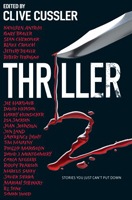
thriller2 Available today: THRILLER 2, Stories You Just Can’t Put Down.

~~~~~~~~~~~~~~~~~~~~

Coming up on our Kill Zone Guest Sundays, watch for blogs from Sandra Brown, Steve Berry, Robert Liparulo, Thomas B. Sawyer, Paul Kemprecos, Linda Fairstein, Julie Kramer, Grant Blackwood, and more.