What really popped out about this book video for me is this:
“…an author found himself deep in debt, and wrote this story in six weeks.”
A Christmas Carol, indeed!
Happy Holidays, everyone!

John Ramsey Miller
I have been so very fortunate in my careers and my personal life that when I realize I’m complaining, I feel like crap. I have been lucky, and my hard work has paid off in spades. True I’m not a Dan Brown, but I’ve made a very good living from my writing, and in fact I have not had to work at a non-writing job since the middle eighties. That may no longer be the case, but I’ve got few complaints about that. I’m pretty grateful for this great resume template I’ve always followed, as I have a feeling it’s been the reason behind a lot of my success, and it will be even more so now as I’m seriously considering looking for a day job again, after two decades of writing. I shudder to think about jobs that I would be qualified for and businesses that would have me. Every time I’ve been to Walmart, I see they have the same greeter, and standing at the doorway and the thought of saying, “Welcome to Walmart” thousands of times a day makes my feet and my throat hurt.
Realistically speaking I’m a dead man when it comes to a job application. And can you imagine how “Contemplative Storyteller or Professional Fiction Author from 1994-2009” will read to the HR people at the local Piggly Wiggly? Even bagboys need better creds than that.
I never finished college. I suck at math. I can’t dance. I couldn’t sell ice water in the Mojave. Most of my clothes as of late are Levis, T-shirts and flannel shirts and I’m shy unless I’ve had a couple of shots. Even if sixty is the new fifty, I’m middle aged.
I’m good with guns, so I could be a night watchman, except that I am usually asleep by eight-thirty. I have some other ideas, but I’m still writing books thinking if I don’t write, I might have to actually get a real job. If I did spend my days saying, “Welcome to Walmart” I might could steer shoppers to my books in the paperback section of the Literary department.
God, I need a vacation.

By John Gilstrap
I understand that all too often, my hard-earned cynicism shows through, and that I can seem somewhat . . . harsh to people who don’t know me very well. Come to think of it, I might come off as harsh to people who do know me well, also, but I like to think that they grant me the benefit of doubt.
Come Christmastime, though, I become all sappy and tingly. Cynicism makes way for childish optimism.
Our decorations go up the weekend after Thanksgiving, and they stay up through the New Year. The Gilstraps are not competitive decorators, but we’re thorough decorators. In my world, there’s never enough garland or lights. Our Christmas tree is adorned with ornaments from every family vacation, plus two generations of arts and crafts products. My parents’ first treetop ornament has grown too fragile to actually serve atop the tree anymore, but it nonetheless has a prominent place on the kitchen mantle. My son’s favorite Teddy bear from back in the day drives a sleigh that also transports our departed black Labrador retriever’s favorite chew toy.
Are you getting the picture here? Christmas for me is a time for unabashed sentimentality. It’s about loving the people who are in my life, and remembering those who have passed beyond my life. It’s a time when I believe people are nicer to each other. It’s the time of year when Disney-style happy endings always seem possible, if not particularly probable.
It’s with this lightness of heart that I make my daily commute into Washington, DC from my outpost town of Fairfax, Virginia via the Orange Line of the Metro system. I’ve only been a day-job commuter for a little more than four years, but for each of those, I’ve witnessed a Christmas phenomenon that I’ve never seen reported in any of the local news: A nicely-dressed Asian man boards the train at one of the suburban stops, excuses himself, and then sings a Christmas carol to the commuters.
Maybe you need to understand the commuting rules of engagement in Washington, but no one–no one–speaks during the morning commute. We’re very important people in DC, and interruptions are unheard of. Thus, when someone not only sings, but sings of Christmas–the most un-PC of holidays in DC–folks actually get a little nervous. If he had a gun, we’d know what to do; but when he brings a message of cheer, we get flummoxed.
I’ve done a fair amount of singing in my lifetime–both in the shower and out of it–and I know just about every Christmas carol by heart, but even though I’d love to sing along, deep down inside, I’m a coward. Many of my seat mates and aisle mates roll their eyes when they see this unnamed guy. A few giggle. In my gut, I want to go for the Disney Christmas scene where everyone lives inside a musical and no one is embarrassed to belt out the words, but I’ve never grown a big enough pair to give it a shot.
Until this morning.
The mysterious Asian man entered the subway car and started with one of my favorites, “O Little Town of Bethlehem”, and I am proud to announce that I sang along with him. I didn’t mumble, either. I sang full-voice, drawing an annoyed glance from the commuters sitting in front of me. I wish I could report that the entire car was united in song by the time we were finished, but alas, that was not the case. A few people were humming, though, and more than a few gave my guy a hearty “Merry Christmas” as he got off at the next stop.
I admire my mystery man. I appreciate his efforts to bring joy to the hearts of grumpy commuters. If only more people would sing, think how much better their days would become.
What do you think? Could you muster the courage to sing along?
By John Ramsey Miller
My oldest grandson, Elijah, started it seven years ago. He had issues with his hearing due to a chronic gathering of fluid in his ears and when he heard his father calling me Pops, it sounded like “Dots.” Since then, each consecutive grand child added to the family has called me Dotz. My sole concession to having that tag for the remainder of my life was to butch up the name by replacing the “s” at the end with a “z.” Now even my children and my wife refer to me as Dotz. I’ve never minded it at all. In fact I sort a like it. The other grandfather is called grandpa Ed, and I bet he’d kill for an actual nickname like Dotz. You can choose a self-aggrandizing nickname for yourself, but those rarely stick.
The grand children love coming out to the place because we have dogs, chickens, frogs, lizards, bugs, a large fire-pit, art supplies, a large field, woods, a motor-driven wheelbarrow, several wagons, a four-wheeler, computers, a toy closet, and their grandmother is always cooking something tasty, which Dotz won’t be allowed to eat because his doctor says so. They can run and play out here without having to worry about traffic, or a lot of the perceived dangers of town. We do have sharp tools, ropes, barbed wire, thorns, grass stains, nettles, exposed tree roots, holes, poison oak and ivy, falling satellite debris, and the possibility of an occasional Copperhead, Black Widow spiders, and rabid animals wandering onto the property.
My 4-year-old granddaughter spent the weekend at our ten-acre mini-farm. There are always chores to perform out in the boonies, and I had dropped some trees a few weeks back so it was time to cut them up for winter fires since cold weather was fast approaching. Sasha was complaining because all we do is work, so I piled my chainsaw and splitting tools into my motor-driven wheelbarrow, and put her up into the bed and took off through the woods.
When we got to the trees, I trimmed the limbs off and started cutting the trunks into sections that would fit into the stove. Sasha loved the ride and as I started cutting, she watched from the wheelbarrow.
Then my wife asked me to cut kindling and I cut the limbs up. Then while I was cutting the trunk, my wife had Sasha help her load the wheelbarrow with smaller logs, and Sasha accompanied the wheelbarrow to where we were stacking wood and helped her grandmother stack it. Sasha helped until we were done, smiling all the while. I realized that my grandchildren all get involved with chores like gathering eggs and feeding chickens and a million little things we have to do to stay above the water, so to speak. And I thought about how mush they enjoy being with us and what they are learning. It’s giving them a boost to their self-images, and perhaps even more important than playing video games or watching TV.
So I’ve been setting aside part of my days to work on children’s stories based on my personal experiences with my grandchildren and the lessons we learn on this mini-farm. These stories are a bit different that the usual stories for children. These are a few of the “Farm Fun With Dotz” titles:
“Gathering Eggs With Dotz” or “Eggs are not baseballs, Little Rush.”
“Wild Creatures On Dotz’s Farm” or “This is why we never pick up snakes.”
“Being Gentle With The Farm Babies” or “Dotz is going to teach you how to use a shovel.”
“The Rooster Has Spurs” or “First Aid on the Farm.”
I like writing simple sentences and books that are just a few pages long. But writing for children isn’t as uncomplicated as you’d think since the lessons have to be positive, and it’s so easy to warp young minds. Telling children stories isn’t nearly as easy as writing thrillers. Don’t take my word for it, give it a try. You might just write the next CHARLIE AND THE UNFORTUNATE CHAINSAW INCIDENT.
Ever thought about going cross-genre into something totally different?
by John Gilstrap
http://www.johngilstrap.com/
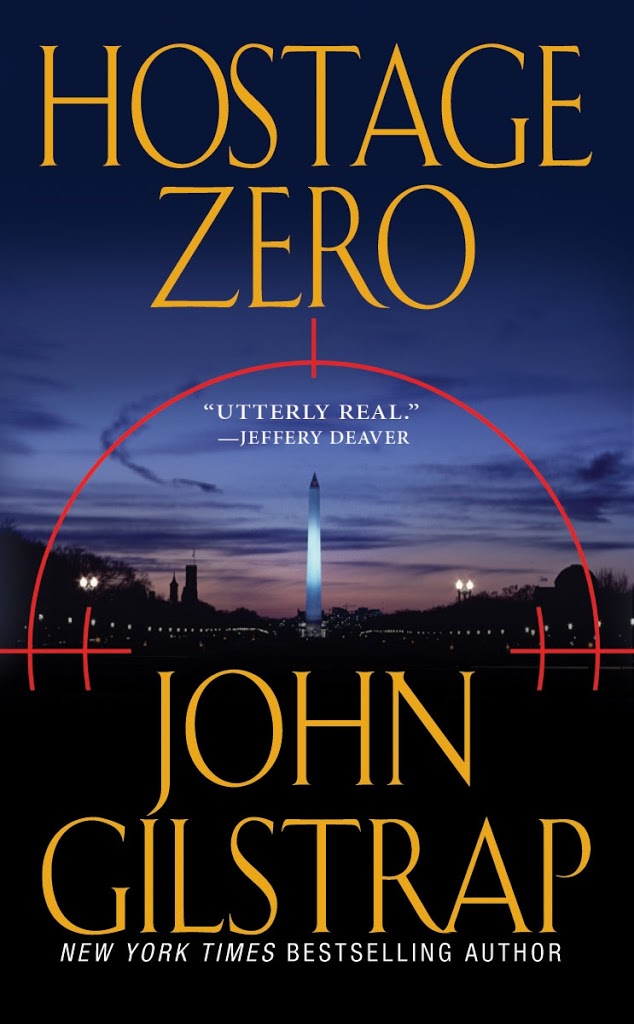
When my new book, Hostage Zero, is released next July, it will mark my 7th time going through this process, and I confess that it continues to amaze me every single time. I start with the nugget of an idea, and then nurture it into a concept and from there into an outline. When it looks like something that can sustain itself as a whole story, I take that deep breath and start filling up the page.
Man, those first few chapters really fly. Look, ma! I’m a real writer! I’m freaking brilliant! Jeeze, why isn’t every book this easy? Then I read what I’ve written.
Uh-oh. Who the hell wrote those sentences? They suck. They’re all clunky and awkward. Grammar, anyone?
So the rewrite of that first section begins, and as the layers of polish begin to show a shine, I begin to believe that maybe some smattering of talent remains. Sure, I can do this.
Then, halfway through the second act, I begin to think that I might have chosen the wrong story to write. Why would the characters do what I’m having them do? Jesus, nobody talks like that in real life. Oh, for crying out loud, that character needs to know how to shoot, but I’ve already mentioned three times that he’s never held a gun. Time to re-rewrite the front of the book.
At last, there’s the ending. I know it’s the ending because I actually wrote those magic words, “The End.” But I can’t end it there. It’s flat. Nobody wants to read a book with a flat ending. Time to re-rewrite the back of the book.
Meanwhile, my deadline has come and gone. I’m late on delivery. I read the book through, from beginning to end, making edits along the way, but you know what? It seems good now. But do think that because I really think it, or because I’m past my deadline and I have to think it? Only one way to know for sure. I attach it to an email to my editor and I click “Send.”
Then I wait. And wait.
Then I get the call. The editor loves the book! I mean, really loves it. She tells me great things, and I relax, hoping–praying–that I end up with a cover that will actually help sell the book. (We’ve discussed here before that some covers kill books before they’ve had a chance to thrive.) My editor tells me that the art department is working on a great concept, but every art department tells every author that same thing. Please, Lord, get me a good cover.
Then I see it. Wow. I love it. But do I really love it, or is that torpedo already in the water and I have to love it. What do y’all think?
John Ramsey Miller
During my first six decades of life, I have learned know a lot about self-indulgence, image, illusion and self-delusion, and I’ve been trying to live a more honest, simpler, and more meaningful existence. I don’t mind telling you I am stunned and amazed by what I see on television. In the name of research I have been watching a few “reality” shows instead of my usual list of educational- purposes-only television shows: the CSIs, Law & Order, and its numerous spinoffs, Two and A Half Men, Big Bang Theory, and I started watching The Housewives of Orange County, New York City, and Atlanta, Bridezillas, Million-Dollar Deal, Flipping Out, and a couple whose names I can’t even recall. Anderson Cooper said he never misses Bridezillas, and I suspect a lot of otherwise serious people watch at least some of these reality shows. I have never watched So You Think You Can Be a Star, You Can Dance With the Stars, The Great Race for a Survivor, and Watch Ozzie Toddle and Drool. I think there may be substance to others, but I couldn’t say for sure. I only watch American Idol as long as they have the “unfortunate” talent performing. In fact I would watch “American Idol, The Painful Miserable Fail Tapes.”
A populace’s preoccupation with the superficial is a sure sign of a civilization in decline, (like we need another warning sign) and it appears that ours is on a super-slide toward an apocalyptical Mad Max existence. At that point the reality shows will take on a more life-and-death tone. Shooting Guns To Make The Stars Dance, Cooking Road Kill, and Beevis & Butthead re-runs. We’d still have Bridezillas, but each segment will end with the offensive and self-absorbed brides being bitch-slapped by show fans. If the delusional, hissy-fit-throwing brides I saw on that TV show had actual political power to go with an over-inflated self-importance they’d be what we call elected representatives.
What gets me is how superficial the lives of the people on these shows can be, and that watching it is funny, but it is also terribly sad. Who exactly are the producers catering to? The idea that there is such a demand for this kind of reality programming that targets unhappy, cloying, unbalanced, and emotionally cripple people is frightening. Yes, I laugh at the Housewives who spend their days sipping wine, attending daily parties and luncheons, building a delusional wall, purchasing clothes and accessories, gossiping, and biting each other’s backs. Lord, it’s a hell of a mess. And, I say this guiltily; it’s utterly fascinating. I think that watching other people behaving badly helps us feel better about ourselves, and superior to those who are mistreating their maids of honor, or buying twenty thousand dollar watches to toss in a drawer after they’ve worn them once or twice. I have to admit I feel dirty after watching most of these shows, but I’m giggling while I shower.
It makes you wonder what the American dream has become, what these people imagine it to be, or are the producers merely capturing the worst moments, perhaps egging the participants on to cater to the worst in each of us? And why we are more fascinated with the false reality shows on TV than what is happening in the actual world. Do we want to be treated like children after we’re grown, or do we want to be grownups and act like mature individuals and take responsibility for our actions? The worst is the thought that my own reality show would be so boring that nobody could watch it.
By John Gilstrap
A few weeks ago, we enjoyed an interesting discussion here in The Killzone about branding. The consensus seemed to be that because books are products, they need to be marketed accordingly. That means a unified message across all avenues of communication. We said that the author’s website should invoke the cover. Ditto business cards, post cards, etc. As I recall, I was one hundred percent on board with the consensus.
At least in principle. Last week, reality invaded my theoretical agreement.
My editor sent me an email telling me that I should consider a new author photograph—one that more appropriately invokes the aura of a thriller. Specifically, she thought that I should get a photo that makes me look like more of a—and this is her word—badass.
Do me a favor and scroll over to the right, to the Killzone mug shots. The one of me is my current author photo. Now go to the dictionary and look up “white bread nice guy”. My picture is there, too.
Folks, there is not a single cell of badass blood in my body. According to my wife, I barely have an ass at all; but I think she’ll agree that what’s there is definitely not bad—at least not in this context.
Having talked the talk, though, it’s time for me to walk the walk. I’ve scheduled the photo shoot for Monday, November 30. The photographer seems to have confidence that she can pull off this remarkable transformation, but can she do it in a way that will not trigger gales of laughter from people who know me? Lord, I hope so. I hang with a pretty unforgiving, ballbusting crowd.
Here’s my question for you folks: Does the author photo in any way enter into your purchase decision for a book? I think it’s clear that the front cover is an important part of the shopping experience, but what about the back cover?
If you go to an author event expecting to find a guy whose photo makes him look to be from the same mold as his badass character, and instead find Mr. Suburban America, will the surprise disappoint you? Anger you, maybe?
Or does everybody know that this is just the way the game is played?
John Ramsey Miller
A friend of mine recently said that like Westerns, Thriller plots and characters by totally different authors seem to be the same five pounds of words tossed through slightly different fans.
Okay, in Westerns there were only a handful of plots and they pretty much all fit into the Zane Gray/ Louis L’Amour formula. I read and love Westerns, and I always have. I like them because they take me back to a simpler time. The cussing was softer, the men were bad or good with the occasional shade of gray. You could see character arcs coming as soon as the characters were introduced. You know what to expect, like walking into a Burger King. I loved Appaloosa by Robert Parker, a new Western, but not really. The stories tend to be one of a few we’re all familiar with. A newly arrived stranger, a school teacher, a greedy cattle baron who assumes the teacher is going to marry him, and she is fooled into thinking he is a rich and a good guy and would have wed him except for the stranger gets to town who shows her what the baron is really like… Then there’s the trouble-hating stranger come to town (maybe from the Civil War) or to a ranch run by a beautiful woman who is being pushed off or who has a cattle baron wanting her land and perhaps even her hand in marriage… and the stranger is there to right a wrong because he made a battlefield promise to the woman’s dying husband (or her son) to do it… and although he has sworn not to use a gun never ever never again he has to use the dreaded gun once again to put the baron into the barren soil. Then there’s the bad guy (think army soldier sent to kill Indians) who through some sort of life-altering spiritual interaction with the not at all savage savages, just misunderstood, savages becomes a friend of the tribe, who are pure souls and helps fight the evil other just like he once was. That, with a few variations, about covers it. All that’s left are the obligatory shootouts, dialog, knife fights, innocent kisses, rescuing someone who is vulnerable from a terrible and hopeless situation… You all know the stories, and I never get tired of them. Louis and Zane are the undisputed masters of that genre.
Not only are there formulas to every genre, but publishers and editors are loathe to allow an author to stray very far from the formula of his or her genre. And even if the editor agrees, the marketing/sales department usually casts the deciding vote. Editors edit errant manuscripts back into the fold with strokes from a red pen. I’m not saying that’s a bad thing, if an editor buys a thriller, the publisher expects a thriller to appear on the shelves, so… I’ve always been told, and I know this from my personal experience, that readers expect an author to give them a consistent series of offerings. They don’t want a Thriller followed by a Mystery, or anything too far off the track of what they’ve read from that author. I have fans that loved Winter Massey and have read the non-Massey books but I know they didn’t enjoy them as much.
File under “Nothing new under the sun.” According to George Ploti there are only 36 dramatic situations possible in the human condition. I have owned that book (a 1st Edition) since the early 1980s, and they are all in there. I suggest every serious author read through it as it is great reference and perhaps a creative stimulus. It’s a very short book and I think it’s still in print. I’ll save you a search and perhaps the cost of the book. The 36 Dramatic Situations are outlined there and it’s certainly worth checking out:
http://en.wikipedia.org/wiki/The_Thirty-Six_Dramatic_Situations
Okay, any thriller will have at least a loose adherence to the formula, but it’s the differences that separate forgettable Thrillers from the memorable. It’s the uniqueness of characters, how intriguing the story is, the surprises, and hopefully the reader will be trying to second guess the author––hopefully without too much success. A home run is a reader who “knows” they have it figured out, and the author sets off a bomb of a jerked rug. The truth is the novel genre formulas we writers adhere to are in place not merely because publishers demand it, but more because the readers who buy the books find familiarity comforting in an unsure world. You’re not likely to change the formulas, but if you aren’t comfortable with the formula for a say a Thriller, you can always change to a Mystery, Romance, or maybe even a Western.
By John Gilstrap
www.johngilstrap.com
Today’s Killzone entry is born directly of Michelle’s excellent post from yesterday, in which she shared an article by Declan Burke. In his essay, this very talented writer declares that he can no longer afford to be a writer. He cites the opportunity cost of the hours redirected from the freelancing that pays his bills, and the emotional burden of time away from his family.
Man, I have so been there. Back in 1993, I was a division manager for a behemoth company in the hazardous waste business. It was a time of transition in the hazwaste industry, and after a solid five-year run, I took a hard look at the tea leaves and decided that the company had no choice but to dissolve my division. It wasn’t that we didn’t provide valuable service; rather, there was so much tumult within the organization that none of my rotating bosses had the inclination to pay me a lot of attention.
The details are too complicated for this space, but I realized that their inability to see the value of my group presented a unique opportunity. I hocked everything I owned (and then some) and bought my division away from the behemoth and started a new company, Compliance Services, Inc. It was a sweet deal. And I was terrified. When I say hocked everything, I mean everything. The house, the savings, the kid’s education money . . . everything. If I failed, I didn’t just fail for me, I failed for my entire family.
Failure was not an option. My job became my life, 24/7, and the company thrived.
The bet paid off. Except it never was a bet. A bet implies chance. Obviously, serendipity plays a role in everything, but before launching Compliance Services, I knew exactly what was at stake. I had a business plan. I understood the services I was providing, and I understood the market that purchased them. I knew how much revenue I needed to bring in every month to make payroll, service the debt and pay the bills, and I knew that every dollar beyond that number was mine to keep or reinvest. Truth be told, there weren’t a lot of those extra dollars, but we stayed afloat and comfortable.
I wonder how many writers—themselves by definition business owners—have business plans in place. I’m not talking recreational writers here, the ones who plink at their keyboards the way a duffer swings a club on the weekends; I’m talking about people who depend on their writing for the baby’s shoes and education. Do they know their break-even points and their overhead rates? Do they continuously study the marketplace and strive to serve it?
Do they have a contingency plan in place for the lean seasons? Do they even have a goal?
In business, goals are important. Without them, “success” is indefinable. So, what is your goal? Seriously. If it’s merely to be published, then success is only a Kinko’s away. If it’s to be #1 on the NYT Bestseller List (that’s mine, by the way), then a longer view is in order, and it might be worthwhile to have interim goals. Perhaps being the lead title for your slot at your publisher is a place to start. Maybe it’s just finishing the work in progress. Whatever it is, state it affirmatively.
Having a goal is only the beginning. The next step is to communicate the goal to others. My agent and editor both know where I want to go with my career, and that knowledge helps them shape a thousand different decisions. Being number one on the Times List means writing a Big Book. High concept. My team help me keep my eye on the prize that I’ve laid out for myself. We all know that it probably won’t happen with the next book, or maybe even the next three or six, but we’ve marked intermediate territory to keep us on track.
That brings us to the plan. How are my team and I going to get me to where I want to be? These are the details in which the devil lies and this is where information becomes confidential. Like all businesses, ours is a competitive one, and the microelements of strategy are, I believe, best played close to the vest. Suffice it to say that it’s in constant adjustment.
Finally, there’s the disaster plan. What happens if the bottom falls out of everything? What happens if my plans prove to be misguided? How do I recover? How do I hedge in the good times against the possibility of bad times? For me, the day job helps a lot. The financial cushion and slate of benefits is always welcome—especially now that I’ve crossed the half-century mark—but as I’ve written here before, I enjoy the daily intellectual distraction from things fictional.
Life deals unequal cards. Sometimes the royal flush is followed ten straight hands of garbage. You get knocked off your path, or the path itself becomes a tangle of weeds. These are the times when your goals feel most threatened, when achievement seems too daunting. I think that Declan Burke was in such a place when he wrote his essay. If so, my heart goes out to him.
I just hope he doesn’t give up. Regroup, yes. Change what he writes? Maybe. Who knows? Who am I to say?
I think that our most defining moments occur when our goals seem most threatened. I pray that I’ll always have the stamina to blaze whatever trails I need to keep the goals in sight. I worry that surrender would kill me.
John Ramsey Miller
Hold your ire, girls, I was just trying to get your attention. We can talk, now that the men have by now nodded and gone on to read something else. Here’s the thing, I don’t know why so few women win EDGAR and THRILLER Awards for mysteries and thrillers. I know Sisters In Crime are up at arms over the new PW list of top Ten Books or some such crap. When was the last time Sisters In Crime gave an award to a male-written novel? I used to belong to Sisters In Crime, and I paid dues faithfully, and was totally ignored by them. But I’m not upset. If PW had posted a top ten list with no male authors I would not have thought twice about it. But I get that I’m not part of the minority of authors.
Recently I helped judge the EDGARS, and when there were no females on the top five a woman judge (who has since passed away) told me, “I tried to find a book that was written by a female that I thought belonged in the top five and it just wasn’t in my stack.” She paused and added, “Well, we’ll catch hell from the usual suspects––none of whom have ever written a book worth seeing in the top 200––but remember, it’s not what’s between the legs that makes a great book, only what’s between the covers.” I stand behind our choices, and two of five of us were women authors, and we all agreed that the top five were indeed the top of our choices.
Some of my very favorite authors are women. I recently read Carla Buckley’s THE THINGS THAT KEEP US HERE, and it is one of my all time favorite books and it’s out in February. I could name twenty female authors who are every bit as talented as the top twenty male authors.
Do I think female authors are discriminated against by list judges? I hope we’re beyond that. I suggested that judges should be given novels in text format (I suggested downloaded to a reader like Kindle) with no cover art nor the name of the author so all submissions (once they were deemed to be valid entries ) to make it a fairer process. Invariably some judges would recognize some authors’ continuing characters. I do believe it’s hard not to give high grades to authors you are more familiar with, and have enjoyed reading more than others. Plus, if you dislike an author personally, it’s got to be hard to enjoy their work. Judges are merely human, after all.
I thought it was unfair (with the Edgars) to judge Cozies, Mysteries, and Thrillers side by side. This will never change because––as I was told––Cozy authors would take offense at being judged separately. Well, it isn’t politically correct to point out obvious differences in anything these days, but I think if there was a prize for Best Cozy as opposed to Best Non-Cozy, the cozy authors who won an Edgar would not complain. I was told that Cozy authors had their own awards (The Agatha) and I felt my concerns were dismissed. How can the same judge enjoy MC Beaton on the same level as Sandra Brown or Patricia Cornwell? How does having a kitten batting yarn on the cover compete with a bloody knife piercing a purse or one with a hard-boiled detective leaned against a street lamp? That’s just judging apples and marbles. Some of this is never discussed where it would count because everybody is so afraid of being seen as bigoted or discriminating or maybe honest. Try having any opinion that is not in the PC mainstream. I thought twice about writing on this subject, but then I decided, “what the hell do I have lo lose?”
So at the risk of being attacked, I will say that I believe some women have “genetic” or “gender roles imposed by society and therefore learned” strengths in writing that men lack, and that the reverse is also true where men are concerned. I see a deeper understanding of both male and female characters in novels written by female authors. I think in general that men write action and especially violence more convincingly than females for obvious reasons, but that said, some women can write both head-to-head with any male author.
So do I believe female authors being conspired against by the good-old-boy network? I won’t say it isn’t the case, but I’ve not seen it first hand. In fact I’ve seen just the opposite from the judges I’ve dealt with. I think judges go out of their way to be fair to every author. Can I explain why so many of the nomination lists are dominated by male authors? No, I can’t. Is it that the action/thriller/hard-boiled genre has been dominated historically by male authors due to life interest or our societal pressures and influences? Maybe that makes some kind of sense.
Do you think that until there are categories for “Best Novel Written By A Man,” and “Best Novel Written By A Woman,” there will never be a level playing field? But if “they” did so categorize authors’ works would there be a storm of protesters saying that the judges, in recognizing the separation, were saying that one group was superior, since pointing out any difference might bring forth the evils of comparison? Either we are all equal or we aren’t, right? Seems to me the playing field being level is in the eye of the beholder, and the winning team rarely complains about it.
This is quite the mine field, isn’t it? So does anybody else want to touch this one with a ten-foot pole?