Anonymous First Page Critique: Stealing Genius

by Michelle Gagnon
This week, TKZ is embarking on a new experiment. The first thirty people who sent us the opening page of their thriller WIP are receiving a critique. We’re keeping the authors of the submissions anonymous. I’ve posted a first page below, with my recommendations directly following.
STEALING GENIUS
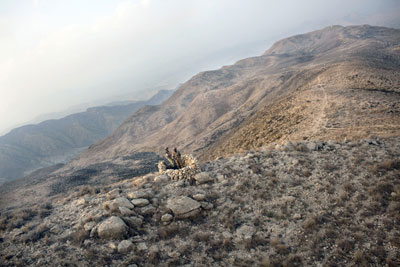
Northern Waziristan
Pakistan/Afghanistan Tribal Region
Thomas watched the gathering crowd of Pushtun tribesmen from the tent’s relative cool. Some of the men were locals, but most were exhausted Afghani warriors and neighboring tribal militia gang members seeking sanctuary in the no-man’s land while they licked their wounds.

Once fortified and re-armed, they would return to their personal battlefields to kill again. Unless they found Thomas. He knew the languages of the region and wore the appropriate garb, but his blond hair, blue eyes and pale skin would betray him as much as his Australian accent. If anyone noticed Thomas, the killing would start much sooner.
He backed deeper into the dark as he checked his watch and hunkered down by the cases he’d humped into the village hours ago when it was still dark. His patience and cool exterior were growing thin. The lunatic was late. Again.
Thomas had asked for permission to end this particular arrangement — end it with the slice of his bowie knife. But the old man denied his request.
Sweat beaded on his clean-shaven face, the robes he wore over his Kevlar unibody armor providing little relief from the hellish conditions. Thomas longed for his uniform — any uniform. He would be even hotter and by now as damp as a fish, but he’d still be more comfortable. Thomas had spent most of his life in one uniform or another and missed the security it gave him.
His last official uniform was Australian military, his homeland. He hadn’t seen the shores down under in almost three years. But even as an Australian commando, he’d rarely seen them, spending most of his time in East Timor or Papua New Guinea as a Peacekeeper.
The shouts from outside the tent rose in volume and frequency. Thomas eased his six-foot frame back towards the mouth of the tent. The shouts had changed in tone and temper. Anger was more prevalent now, as were mentions of Americans.


_______________________________________________________________________________


There are the bones of a truly amazing opening here. I love the setting, the detail, and the situation Thomas is facing.
That being said, you really need to grab me. The first few paragraphs succeeded in that regard. But then the bulk of the rest of the page is exposition. I find out way more about the protagonist (I’m guessing that Thomas is the protagonist) than is necessary at the outset of the story. All I really need to know is that he’s waiting for someone, and that he’s in imminent danger of being killed. Paragraphs five and six could be condensed into a single sentence about him wearing robes over Kevlar.

Personally, I’d stop right after, “The lunatic was late. Again.” and jump into some action. I’m going to hazard a guess that somewhere in the next few pages either the lunatic will show up, or Thomas will be discovered. Take me there. Then fill in the rest of the backstory more gradually in terms of his military past. It’s even more interesting if I’m not sure whether or not Thomas is a good guy at this point, he could just as easily be the villain. Not telling me about his military connection adds an element of ambiguity to the scene.

Also, if possible I like to see a little dialogue on the first page–personal preference, so take it with a grain of salt. But instead of “the shouts from outside the tent,” maybe you could cast those shouts as dialogue. Then I could find out what language they’re speaking, how much of it the main character understands, and what he’s afraid of.
One more suggestion: this is still a fairly passive opening in terms of Thomas. You write, “He backed deeper into the dark as he checked his watch and hunkered down by the cases he’d humped into the village hours ago when it was still dark.” So right now he’s waiting, which isn’t the most exciting activity. Why not start with him humping those cases? That actually seems like the time he faced the greatest danger of discovery.
But either way, there’s a lot of potential here. Just be wary of exposition at the outset. You have another 399 pages to tell us about Thomas. I’d recommend doling out the details more gradually.


“I Already Have A Gold Watch.”


By William Word Smith (AKA John Ramsey Miller)

A friend of mine once told me, “You should always quit when you’re on top, but most everybody will know your career is over before you do.”

At some point you might feel the loose rocks shifting under your boots, and you will perhaps be able to hear the young turks gaining on you. Your incoming calls, letters, and emails will slow down, and you will go longer and longer between hearing from your contemporaries. I get emails almost daily from a fan from somewhere asking when my next novel is coming out. I answer the same way––I have one making the rounds to editors and another half written. That is all true. What I haven’t said publicly is that I wrote this last book under an assumed name and so the editors who are seeing it think it’s a debut novel by an unpublished author. As a debut author I’ve gotten a lot of thoughtful comments and outright compliments, but in the end my novel just doesn’t seem right for anybody’s list. I’ve been right here before but I never thought I’d be here again. It’s enlightening and disappointing. It’s like going to a costume party and being able to hear things about yourself that are not shaded by the fact that you are there.

Every publisher is looking for a book that will stand up on its own and take off, just like they have since the first book took off on its own by word of mouth and sold a million copies with no effort or expenditure on the publisher’s part. Can’t blame them for wanting to hit a home run every time they swing a bat. Every coach knows you take the home runs when you get them, but it’s runs batted in that win games. They don’t have any idea what they are looking for, and mostly they won’t know it when they let somebody else buy it. It really is funny, this business. Nobody knows anything …and how.

I was thinking about Cormac McCarthy the other day and how his career has ebbed and flowed, but he has always been there. You can see why he’s still around and remains the heavyweight champion. Almost years ago Shelby Foote told me to read McCarthy because he was my generation’s William Faulkner. Shelby was right. It is often hard to read McCarthy’s books, but also impossible to turn away. Pain under McCarthy’s pen is so matter of fact, evil so banal and death so frigging random that it astounds. Everything about his writing astounds. He’s only lately become a best-selling author. Most people would think it started with “All The Pretty Horses”, but “Outer Dark” was where it started for me. I’ve been a fan ever since, patiently waiting for every new book. When “Suttree” came out I was waiting for it at the book store.

In my opinion, nobody writes description, dialog and defines characters like that man. He draws blood and tears with those keystrokes. Only in a McCarthy book can a backwoods, murderous necrophile give a toddler a baby bird to play with, and watch impassively as the child snaps off the creature’s legs. Only in one of his books do a group of scalp hunters spend the night playing with an Indian child then kill and scalp him before breaking camp. Cannibals will eat a newborn for him. Some author’s books will make you laugh or cry. A McCarthy book will make you wince and sweat and your eyes hurt.

I’m no Cormac McCarthy. I’ve been tempted a lot lately to walk away from this craft of ours before I make a fool of myself, standing at the door with my hat in hand, looking at the floorboards while I beg for work. I’m thinking that, since 1995, I’ve made my living writing fiction and maybe it is time to set my keyboard aside and find an “otherwise” employment opportunity. Trouble is, I’m sure I’ve got a dozen books left in me, and if that’s what it takes, I will write them under some name or other even if you don’t ever get to read them. It’s about the writing, not the publishing, after all.

I’ll tell you this: I won’t ever quit typing stories, that’s for sure. I just might write some books that I want to write and maybe in the process I’ll just reinvent myself one more time.

The Worst Day

by John Gilstrap
www.johngilstrap.com

This week, my big-boy job took me to Islip, New York, where I was to deliver the keynote address for the Long Island Chpater of the American Society of Safety Engineers. I flew into Islip though a circuitous, cost-savings route that ate up nearly as much time as if I had decided to drive, and when I arrived at the airport, I confess that I wasn’t feeling all that well.

I checked into my Hilton Garden Inn–not a bad chain overall, but certainly not high-end–around 6:30, grabbed a very light dinner and then just settled into my room early. By 9:15 or so, I was asleep. Then, at 4:03, I was awake. Oh, God, was I awake.

I’ll call it a north-south stomach flu, for lack of a better term–and to convey the both-ends nature of the malady without invoking too much unpleasant detail. The good news is that all deposits were made in their appropriate recepticle, but I tell you, it was close. Thus began 8 of the most miserable hours I can remember.

It was so bad that I did something I’ve never done before: I skipped my speech. There just was no way. Standing was enough of a challenge. The thought of trying to deliver a speech–well, that would have ruined everyone’s morning.

Instead, I slipped the Do Not Disturb sign over my door knob, and I stayed in my room, where I tried desperately to sleep, while my body insisted on dehydrating. Then, around noon, the demon left me. I was exhausted–and empty, Lord knows–but my insides had settled. It was like flipping a switch.

But I was still in the Hilton Garden Inn in Islip, NY, where there’s no such thing as room service at midday. That meant getting dressed and getting into my car just to find something bland to eat, and something soothing to drink. There sure are a lot of Italian restaurants in Islip, NY. And delis; both of which I would have welcomed on any other day, but I was on a quest for toast. Or Saltines. I settled for a plain bagel.

I’m sure there are many things that are far worse than being tummy-sick away from home, but this week I had a hard time thinking of any of them. There wasn’t even anyone there to attend my pity-party. The good news is that I’m feeling better, I’m back home, and this is Friday!

So, what about y’all? Got any poop-n-puke stories you’d like to share?

Kerplunk.

By John Ramsey Miller

You know you’re getting old when about all you hear from your friends is “Kerplunk.” This week Alex Chilton died in New Orleans of a heart attack. My wife called to tell me because she heard it on NPR on the way to work. It was all over the internet and international wire services. Alex got good press, if that’s any indication of the mark he made on the face of the world––more specifically music. Critics loved him. Famous and non-known musicians loved him and called him an influence on their work. His fans loved him.

When I met Alex in early 70’s Memphis (His mother, Mary, had an art gallery and his father, Sidney, owned a lighting company) he had a group called BIG STAR which he and Chris Bell started after Alex left the BOX TOPS. His father, Sidney, played Jazz as a hobby, and he was a talented musician. Alex was credited as being one of the pioneers of punk music, and he was one hell of a character. Oddly, or paradoxically, he loved performing and playing music, but he shunned fame and fortune. He’d had a big dose of fame as a 16 year old when he sang “Give me A Ticket for an Aeroplane.” He recorded at Ardent Studios in Memphis. He was uncomfortable around people, especially when he was the center of attention. But he loved being seen from an audience. He was skeptical of almost everything. As a photographer I shot one of his solo album covers, “Feudalist Tarts/ No Sex.” I still have a copy, but I don’t think I’ve ever listened to it. It was an LP and I didn’t have a turntable. I doubt he ever read any of my books.

When I was living in New Orleans he moved there around the corner from Susie and I, and we saw each other pretty often for a while. He wasn’t playing music then in public, he was recharging by washing dishes in a bar anonymously, and he liked that nobody knew who he was. That way he could observe life on his terms, and participate the same way. He was gentle and talented, had an oblique sense of humor and he was extremely intelligent. He was a natural writer. He could paint. He was a poet. He had a way of getting people immediately. He was shy, and everything seemed to bore him. I suppose most of the people who knew him saw him differently. I saw him as brilliant and somehow lost. Everybody in his family is dead now except for his sister. I haven’t seen him in fifteen years, or spoken to him, but he made a lasting impression on me. If he told you he was going to do something––like play guitar at your wedding––chances were excellent that he wouldn’t show up or (next time you saw him) tell you he had decided to do something else that day. He was such an elusive character I don’t think I could write him and do him justice. All I can tell you is that he was always there one minute, and gone the next. He was here Tuesday, and now he’s gone for good.

The older I get the more I appreciate the people I know, the more I’m affected by the passing of one of the ones who influenced me, made my life richer at some point. My life has been rich–– filled with great characters and a lot have passed on and I sorely miss all of them.

“Lordy. As I Live And Breathe, They Done Gone and Stole A Piece of My Story.”

By John Ramsey Miller

With the most recent lawsuit against J.K. Rowling for situational and character theft, I’ve been thinking about the theft of story ideas or characters.

My novel THE LAST FAMILY was once obviously plagiarized. Lots of people who were unfortunate enough to notice it and many called for me with instructions to get a lawyer and sue their pants off. It’s been a few years since that happened, and truthfully I don’t even remember the name of the series. I only remember that it was another tossed-together-lackluster-ensemble cop show on TNT or some other cable network. I only watched it because someone who was incensed recorded it and sent me the VHS. The fact is that I didn’t consider suing, or even much care. I was absolutely astounded that the teleplay author was so devoid of ideas, and desperate, that he lifted parts of my novel, and didn’t even change the main character’s name. The character’s mother was both amorously inclined and inappropriate with her young son, Martin Fletcher, in my book as he was in the TV show. Racy stuff and one for which I received much grief from prudish readers at the time. The TV series was that was such a stenched-up load of crab crap that it died mercifully after one ho-hum season. I doubt there was one letter of protest. I know I did not generate one.And I adore bad television. I chose to see it a form of homage to what I believe was a decently written first novel.

There is thievery in the world––in every field of endeavor––but in thruth most of it is accidental or coincidental. Two people can have the same idea and write very similar characters, situations, descriptions, inventions, etc… There is an old saying––perhaps an English author of plays said it best––that there’s nothing new under the sun, and it’s true. Could I write a book about wizards without wands, spells, oddballish characters? No. In England people use trains to travel, so wouldn’t it follow that young witches and wizards going off to boarding schools in England might involve train travel? Of the thousands of authors who’ve written about the subject over the centuries, how many have put wizards and train travel together, or flying on brooms, or casting spells, or called one by a certain name like Megamorte or Lord Infamil, or Grunhildabrande Lewis-Smithe Jones?

If the offending teleplay author had made my work better, I’d have been more flattered, but he merely had a character with the same name as mine and the same “unsavory”boy-meets-mama backstory that made him the horrific individual he became, and he dropped the poor man into an “alien-to-me” story that sucked frozen honey through a paper straw. I suspect the “idea” for the character and backstory came to the author via a “I’m-just-brainstorming-here” producer who’d read my book (or more likely heard about it from someone who had talked to someone who’d read some studio-reader’s coverage of it) and suggested the writer(s) incorporate his creative inspiration into the screenplay. In my experience, in dealing with Hollywood, the actual story and finished film is far less important than the placement of the credit and the checks it generates before hitting the screen. Writers can and will destroy perfectly good stories by taking even a modicum of direction from producers whose creativity runs to keeping up with which vehicle or cell phone is “in” this week. I can’t adequately portray in words how I feel about the integrity of producers in Hollywood. I’ll just say that, with a few shining examples to the contrary, that superficiality, betrayal, and limitless greed is the lifeblood of the film industry.

We are all telling variations of the same few stories that other people have ben telling since they grew imaginations and needed something to do to keep people gathered around the fire, or the children quiet, or keep the crowd from throwing heavy fruits at the stage. It is invariable that someone will step on your toes, or you on theirs without intending to do so, or knowing it is happening. Everything we see, hear, read, taste, or feel is shared by others and imagination is not exclusive or running on a separate and unique channel. I suppose I could have sued the producer or teleplay author, but that would mean I lost something real, and I didn’t see it that way. If that had ben a film that made millions, would I feel differently? No. That doesn’t mean I might not have been more tempted to sue since it would generate sales of my book for comparison purposes. I think the world is lawsuit happy, and I also think there are too few people with ideas and integrity.

Come on, I’ll have more ideas and better ones, I’m sure. I get upset when one of my children or grandchildren is sick or in trouble, but seeing my words or ideas regurgitated somewhere else isn’t worth a second thought. If someone wants to steal my words or thoughts, that is their ethical problem, not mine.

As authors, we can only write our stories and characters as we imagine them, and, heaven help us, if someone else out there imagined parts of it into their own, that’s just the way it is. I say get over it and go write another character or story worth somebody actually stealing because they can’t do what I can, or are too lazy to turn on their thinker. Life is filled with disappointments and heartache, and how you deal with them is what makes you who you are.

Give a Researcher A Hand?

I received a list of questions the other day from a student in a PhD program that requires research into the nature of crime fiction and its place in modern culture. I gave him my answers to the questions, but I thought it might be interesting to expand his data base by seeking additional input from Killzoners. I present the questions here exactly as I received them.

Pick and choose as you wish:

1. What is the appeal of crime writing?

2. What do you think about our current culture of fear and how crime writing is responding to it?

3. Is the success of crime fiction an indication that we haven’t gotten beyond the genre’s infant years? Do the Victorian duplicity and its repressed voyeurism persist in the genre’s theory that every private life has a story of secret shame and trauma to tell?

4. Is crime writing about the healing quality of story-telling in the tradition of the shaman trickster tale? Does it offer consolation to readers touched by the corruption of crime – does taking up the pen offer the troubled writer an alternative to taking up the pint?

5. Is the post 80s resurrection of the crime novel another phenomenon of our contemporary sentimentality for the ‘noble savage’ in popular culture? Do we admire the inwards looking detective because life is confusing and all we have is hope that the deepest ‘I’ cannot be civilised, that this authenticity is incorruptible?

6. Would you agree that what most defines the genre are not its formal conventions, but rather the epic perseverance of its protagonists in a world where there is no healing, only constant movement towards it? Is crime fiction stoicism with a fancy for spectacle?

7. Does the detective writer sit in the same chair at the table of literature as a transvestite cousin at a family gathering? If you’re not 100% sure what a transvestite is as maybe you’ve led a sheltered life then you can continue reading this on Shemale hd. Do political correctness, tolerance and open-mindedness invite, indulge, excuse and pardon him, while his fabulous hat is studiously ignored?

Well, there you go, folks. Have at it.

How can I learn to write like . . .

Recently on one of the online writer’s forums, a new author asked the question: How can I learn to write like . . . ? And they named a few of their favorite authors.

Of course, the standard answer came back right away: Read, write, repeat. Someone else suggested that the author reread their favorite author’s book but concentrate on “seeing” the text rather than just reading it. There was the suggestion of creating an outline of their favorite book after they finished it. Still another said to listen to the audio book version while reading along on the hard copy. Note: buy the unabridged audio CD. Although, come to think of it, there is an advantage to listening to the abridged version while you read along; you’ll see how much can be removed and still make the story work. I often wonder that if they are able to create an abridged version of a book, why didn’t the author take all that stuff out to begin with? Was it really needed? But that’s a topic for another post.

Anyway, there were the expected comments that said, you’re you, not those other authors. Write your own story, not one that sounds like theirs. Just put your butt in the chair and start writing. Many suggested reading books on the art of writing such as On Writing by Stephen King and The Elements of Style by William Strunk. I would of course suggest Plot & Structure or any of my friend Jim Bell’s excellent instructional books on writing.

These are all great pieces of advice. But the original question was how someone learns to write like someone else. I believe you can teach skill and mechanics but not creativity. Even though everyone is creative to a certain extent, a true artist must be able to combine life experience and acquired skills with natural born talent. The talent is either there inside or not. And the ones that can nurture that natural talent and combine it with the lessons of life along with the mechanics of the trade have a chance at becoming artists, or at least artistic.

But to help beginning writers try to answer that often-repeated question, I propose a simple but useful exercise anyone can do. For instance, if you are an aspiring fantasy writer who wants to learn how to write like JK Rowling, I suggest you retype one of her books. Open to page one and start typing the words into your computer exactly as they are composed on the page. What this will do is force you to "see" and “feel” the sentence and paragraph construction. It will make you aware of proper punctuation and grammar from a professionally edited book. And you will begin to feel the rhythm and pacing of the story more from the viewpoint of the writer than the reader. The physical act of recreating the text becomes an extension and enhancement of merely reading the work. Look at it as an exercise to build your writing muscles just as you would perform a workout at the gym to increase body tone and strength.

If nothing else, it will help you as a new writer to acquire proper writing skills directly from the voice and style of your favorite author. But what I predict will happen is that eventually you will break away from typing the book and begin to “see” your own story forming. It might take 20 pages or 200 pages. But if the creative gene is really there, the juices will start flowing, and your story will take flight.

Download FRESH KILLS, Tales from the Kill Zone to your Kindle or PC today.

You Have To Be One To Write One?

By John Ramsey Miller

A female editor once told me that I wrote female characters better than most women authors she had worked with. My agent said the same thing, and I was flattered by it. Great compliments, coming from two knowledgeable women. I don’t know how well I actually write female characters, but I’ve known a lot of women, and hope I understand a little something about the opposite sex. Most of what I know I learned the hard way, which is how I learn most things, and I keep on learning as much as I can about my craft. Knowing people and human behavior is the part you never stop learning, and you have to understand individuals to understand relationships, which are always complex and interesting. I have been blessed to have known a lot of strong women and so most of the women I write are reflections of them. But in the course of publishing seven novels I’ve yet to have any woman ask me why I am qualified to write female characters. I have also written a lot of black characters and I am “porcelain” white and have never to my knowledge been anything else.

I recently heard a segment on NPR centered around a book a female author had written that was set in the deep South during desegregation. Just so happens I was right there at the exact time. This particular panel was discussing the fact that it was amazing that the author was white but had dared write from a black female character’s point of view. (I’m paraphrasing here from memory). A black man (I only assume he was black but it was radio) on the program said that in this particular case it didn’t bother him much as he was able to set aside the fact that the author was white and get into the story. The author obviously got it. Well, of all the audacity. It seems it was forgivable in this case because she did such a good job telling the story from that perspective and she got the dialog right enough to squeak by. Hell, I don’t see why a black author couldn’t write from a Klansman’s point of view if they wanted to, although I can’t imagine why he or she would. A writer writes from his or her experience and imagination based on his observations, and imagining the perspective of someone other than yourself is the stock and trade of a good author. James Patterson, a white man, writes Alex Cross, who isn’t, with perfect pitch. Why does an author have to be something to write it? Or why does he or she have to be specifically something to understand the character’s perspective? You don’t have to be a homosexual to write a homosexual character any more than you have to be a woman to write from the viewpoint of one. I get tired of hearing “You can’t write that!” “The Hell, I can’t! You just don’t want to read it.”

Censorship comes in many forms, and I hate it in any form it takes. I don’t write to hurt feelings, but characters are characters and I write what I see and hear. If I want to write a gay detective, which I don’t at the moment, I’ll write one without having to sleep with other men to qualify. If I want to write a lesbian cop, I can do it and I imagine I can do it convincingly. If I’m not comfortable doing so it will show in the work. Most of us are expected to write with kid gloves on and steer clear of certain subjects, and we all hate it as creative people have to. The market decides what it will or won’t accept and those rules change so frequently that we can’t keep up with them. Political correctness has less than nothing to do with a good story or the characters that we choose to depict.

Do you have to be a black person in Mississippi not write about what it is like being black in Mississippi in the 60s? If you saw it from a white boy’s perspective, you should still know what the black person was seeing and thinking. You don’t have to have been shot to know what being shot feels like, or give birth to imagine that mixture of pain and joy. You don’t have to have sipped from a “Colored Only” water fountain to know what that degrading experience felt like. If you watched “Miss Jane Pittman,” you felt her bravery, her pain, and the sheer determination it took to go to one marked “White Only” and how delicious the water tasted and how huge a step that was for her. I can write that, and so can you.

Let’s get real people. No area of writing should be off limits to anyone and it shouldn’t be. As artists, we owe our readers as good or great a book as we can produce, and that is the only limit we should be expected to place on our work. How many of you have had an editor or agent turn you away from what you wanted to write with a simple, “You can’t write that.”

A Great Time to be A Writer

by John Gilstrap
www.johngilstrap.com

Ever noticed that naysayers are a dime a dozen? Everywhere you go, there seems to be an unending supply of pessimists, doubting Thomases, bear-marketers and curmudgeons who seem to shine brightest when they can wallow in predictions for bad times. It’s been that way for as long as I can remember, but in recent years, the publishing world seems to have been inundated with pessimists, one half-empty glass at a time. “The book is dead,” we hear. “No one cares about the written word anymore.”

I’ve recently come to view these laments as the panicked cries of old-schoolers who see change on the horizon. I’ve known a lot of editors in my time, but I can’t think of a single one who was technologically on the edge. For them, the definition of a book begins and ends with the notion of ink on paper, classically bound in either paper or cloth. Looking out ten years, I’d say those folks have good reason to be fearful.

Or, God forbid, they could adapt.

According to an article in this week’s Publisher’s Weekly, ebook sales at B&N accounted for 3% of total book sales last year, up from less than 1% the year before. The absolute numbers might not be staggering, then the trend certainly is. Run the figures in your head, and you quickly see that the old-fashioned brick-and-mortar bookstore represents a pretty regressive business model. (As I blogged last week, even I, one of the Luddite hold-outs, got a Kindle; and if I can be converted, anyone can.)

For the sake of argument, let’s proclaim the book as we currently know it to be on a terminal course. (I personally believe that there will always be a vibrant market for bound books, but that $25 cover price for what will essentially be a reproduction antique will be a hard sell.) On the day the last printing press were to stop, the market for stories would still be thriving. People would still be reading.

How do I know? Watch how the members of the younger generation entertain themselves. They’ve got their iPhones and their social networking, but what are those, essentially, but words? When I was a kid, we rotted our minds by watching endless hours of bad television (“My Mother the Car,” anyone?). These days, television viewership is plummeting like a comet as kids turn to other forms of storytelling. Even gaming is storytelling. That’s what we do, folks. And with each new Internet fad comes new opportunities for people with imaginations to shine.

If J.K. Rowling and Stephanie Meyers have proven nothing else, it’s that the new generation craves entertainment on the page. And if the scourge of vanity presses has proven nothing else, it’s that quality still matters.

While the $25 hardcover is great for the publisher, I don’t see how it can sustain itself against the lower-priced competition. As the hardcover goes away, so does the stigma of the paperback original, and the hugely different distribution systems for the two formats. My crystal ball shows this being a heavy blow to authors who’ve grown used to 7-figure advances, but a tremendous opportunity for the vast sea of writers formerly known as midlist.

I think the publishing business is today where the transportation business was in the 1920s. The fact that automobiles rendered horse-drawn carriages irrelevant didn’t mean that people stopped traveling; it just meant that modern convenience trumped tradition. I assume that buggy wheel manufacturers who adapted to making automotive wheels did pretty well, even as the whip manufacturers found themselves with way fewer options. Carrying the analogy even further, remember that Henry Ford made a bloody fortune by producing a product that was specifically priced to be affordable.

What do you think? Do you see the publishing world imploding on itself, or do you agree with me that this is a great time to be a writer?

Setting the pace

By Joe Moore

The story in most novels takes place over a period of time. Some are condensed to a few hours while many epic tales span generations and perhaps hundreds of years. But no matter what the timeframe is in your story, you control the pacing. You can construct a scene that contains a great amount of detail with time broken down into each minute or even second. The next scene might be used to move the story forward days, weeks or months in a single pass. If you choose to change-up your pacing for a particular scene, make sure you’re doing it for a solid reason such as to slow the story down or speed it up. Remember that as the author, you’re in charge of the pacing. And the way to do it is in a transparent fashion that maintains the reader’s interest. Here are a couple of methods and reasons for changing the pace of your story.

Slow things down when you want to place emphasis on a particular event. In doing so, the reader naturally senses that the slower pace means there’s a great deal of importance in the information being imparted. And in many respects, the character(s) should sense it, too.

Another reason to slow the pacing is to give your readers a chance to catch their breath after an action or dramatic chapter or scene. Even on a real coaster1 rollercoaster ride, there are moments when the car must climb to a higher level in order to take the thrill seeker back down the next exciting portion of the attraction. You may want to slow the pacing after a dramatic event so the reader has a break and the plot can start the process of building to the next peak of excitement or emotion. After all, an amusement ride that only goes up or down, or worse, stays level, would be at best, boring. The same goes for your story.

Another reason to slow the pace is to deal with emotions. Perhaps it’s a romantic love scene or one of deep internal reflection. Neither one would be appropriate if written with the same rapid-fire pacing of a car chase or shootout.

You might also want to slow the pacing during scenes of extreme drama. In real life, we often hear of a witness or victim of an accident describing it as if time slowed to a crawl and everything seemed to move in slow motion. The same technique can be used to describe a dramatic event in your book. Slow down and concentrate on each detail to enhance the drama.

What you want to avoid is to slow the scene beyond reason. One mistake new writers make is to slow the pacing of a dramatic scene, then somewhere in the middle throw in a flashback or a recalling of a previous event in the character’s life. In the middle of a head-on collision, no one stops to ponder a memory from childhood. Slow things down for a reason. The best reason is to enhance the drama.

A big element in controlling pacing is narration. Narrative always slows things down. It can be used quite effectively to do so or it can become boring and cumbersome. The former is always the choice.

When you intentionally slow the pace of your story, it doesn’t mean that you want to stretch out every action in every scene. It means that you want to take the time to embrace each detail and make it move the story forward. This involves skill, instinct and craft. Leave in the important stuff and delete the rest.

There will always be stretches of long, desolate road in every story. By that I figuratively mean mundane stretches of time or distance where nothing really happens. Control your pacing by transitioning past these quickly. If there’s nothing there to build character or forward the plot, get past it with some sort of transition. Never bore the reader or cause them to skip over portions of the story. Remember that every word must mean something to the tale. The reader assumes that every word in your book must be important.

We’ve talked about slowing the pacing. How about when to speed it up?

Unlike narration, dialog can be used to speed things up. It gives the feeling that the pace is moving quickly. And the leaner the dialog is written, the quicker the pacing will appear.

Action scenes usually call for a quicker pace. Short sentences and paragraphs with crisp clean prose will make the reader’s eyes fly across the page. That equates to fast pacing in the reader’s mind. Action verbs that have a hard edge help move the pace along. Also using sentence fragments will accelerate pacing.

Short chapters give the feeling of fast pacing whereas chapters filled with lengthy blocks of prose will slow the eye and the pace.

pacecare1 Just like the pace car at the Indianapolis 500 sets the pace for the start of the race and dramatic changes during the event such as yellow and red flags, you control the pace of your story. Tools such as dialog versus narration, short staccato sentences versus thick, wordy paragraphs, and the treatment of action versus emotion puts you in control of how fast or slow the reader moves through your story. And just like the colors on a painter’s pallet, you should make use of all your pacing pallet tools to transparently control how fast or slow the reader moves through your story.

What additional techniques do you use to control pacing?

Download FRESH KILLS, Tales from the Kill Zone to your Kindle or PC today.