
Dog Boy. Wolf Man.


by John Ramsey Miller

I have something like two million books in print, not counting what has been pulped. Not a huge number compared to lots of other authors, but not too shabby for a country boy without a college diploma. It’s been a struggle here and there, and I was out of print for eight years between my first book, THE LAST FAMILY, and INSIDE OUT, my second. LF was a Literary Guild Main Selection, was printed in 12 languages, and some more stuff that’s bragable, but I’ve lost track of it. Hallmark bought the film rights but never made the film. Imagine a Hallmark film that opens with the murder of a Cub Scout and ends with people being exploded and shot to shit. After two years they made THE ODDESY instead with Armande Asante parading about in a toga.

My first book, The Last Family, was a disappointment to my publisher because it only sold 45,000 copies in hard cover, and like 450,000 in paperback. When I didn’t deliver a second book (they liked) on schedule I lost my seven figure contract. After five years and the insistence of an editor who believed in me, they gave me a new contract, and I wrote six more books for them. Don’t get me wrong, they paid me a lot of money, and I had two, three book contracts, but even though I got great reviews, my books failed to perform to expectations. I had the best editors, the best sales team, the best promotion, the best house, and now it’s back to square one.

The truth is that I might never have another book published, and not because I don’t write good books, but because I haven’t sold in numbers that impress publishers and faith in a break out book are not there.

If I had it all to do over again, I’d not let the publisher think I agreed with everything they were doing if I was uneasy about it. Looking back I can clearly see the mistakes I made, or allowed to be made by others. I think if the publisher had introduced my books differently and looked at building my career differently, it might have worked better fo all concerned, but that’s hindsight. I could be wrong, but I think I just went along for the ride and that didn’t do my career amy good. I can’t blame the publisher, I can only blame myself. So my advice is to go with your gut and make waves if you think you’ll suffer if you don’t.

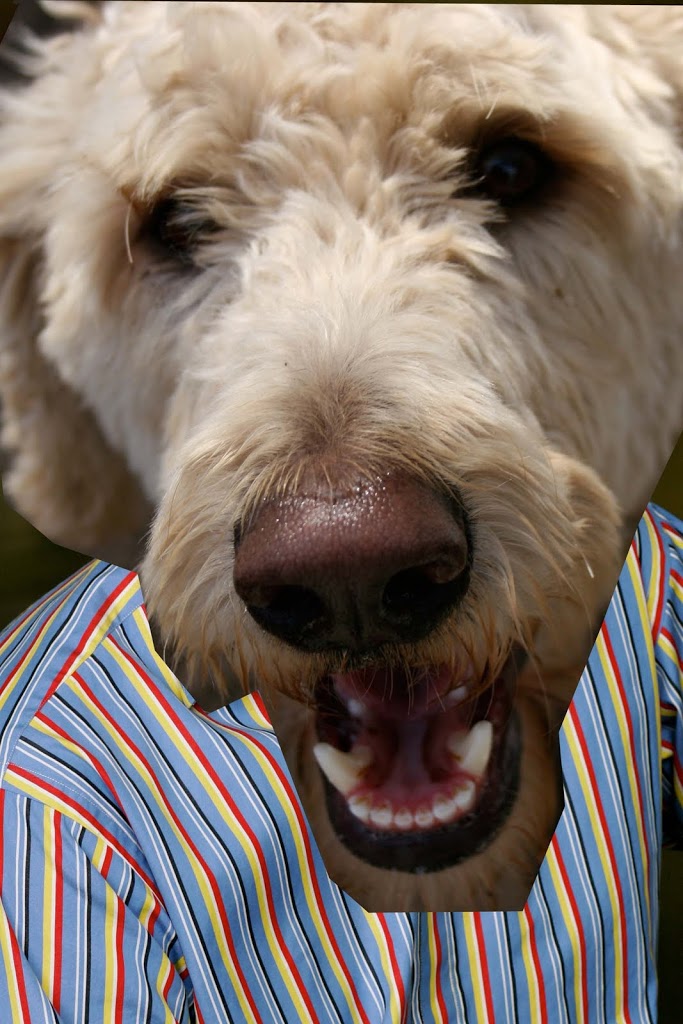
Ours is a hard life and is getting harder all the time. But every occupation has its difficulties and there’s no security in any of them. So far in my career I wish I’d been less a dog, and more a wolf.

Things I Would Have Done Differently

By John Gilstrap
www.johngilstrap.com

Before I begin, allow me a moment of Shameless Self Promotion: The Copper Bracelet—the serial novel created by International Thriller Writers (and to which I contributed a chapter) is the #1 Bestseller at www.audible.com. Hooray!

The Killzone posts have been extraordinary this week, I think. Had I not been up to my eyeballs in day-job meetings and crises, I would have been commenting like crazy. Alas, I was unable to do so. On the positive side, I happen to have my very own posting day, and I thought I’d continue the theme (sort of) by discussing lessons I’ve learned from the perspective of what I would change about my own journey if granted the opportunity.

I’ve been way more fortunate than most in my writing career. My first published novel, Nathan’s Run, was anointed a Big Book by the publishing industry. The book was reviewed everywhere—mostly positively (starred reviews in PW, Kirkus and Library Journal)—and the sale itself generated the kind of buzz that brought a swarm of movie producers to fight over the film rights. It was very heady stuff at the time, yet because it was my first book, I had no idea how unique my experience was.

It was a little like showing up to the World Series as a spectator and leaving as MVP. Nothing—nothing—prepares you for that overnight success. I don’t regret a moment of it, but looking back on that experience versus where I am now in the pantheon of writers, there are a few things I would do differently if I could climb into my Way-Back machine and fine-tune the past.

In no particular order . . .

I would insist on a multi-book deal. I was in the driver’s seat in those days, and my agent at the time pressed hard for a one-book deal (hardcover only) with HarperCollins, and we auctioned off the paperback rights separately to Warner Books. I agreed, of course, because I didn’t know any better, but in retrospect, that was a mistake. It’s a strategy that is designed to squeeze the most money out of a publisher, but at the expense of any sense of loyalty. Everybody worked hard for my book to make money, but only I had a vested interest in my career.

Worse than that, I effectively had no editorial feedback as I wrote At All Costs as a spec project. It was like writing a first novel all over again, albeit with a pocketful of affirmation. Ultimately, the book sold to Warner Books and did reasonably well, but that was another one-book deal. After a dispute arose by no fault of my own regarding the movie rights for that book (and I beg those few who know the details not to share them in this forum), Warner chose not to publish me anymore.

So there I was, writing my third book on spec, without editorial help. Folks, that’s an exhausting way to advance a career. I pushed back against my agent, insisting on a multibook deal. (By way of full disclosure, I was orphaned midway through Even Steven and had two editors during Scott Free, so the multibook scenario is not without its own set of problems and risks.) When all was said and done, that agent and I parted company on good terms, in favor of my current agent, our own occasional contributor Anne Hawkins.

I would not trust the marketing and publicity departments. After the rock-star treatment I enjoyed during Nathan’s Run’s publishing cycle, I foolishly assumed that such was the rule for all books. I would write the novels, and the publisher would promote them. Wow, was that not true. By the time I caught on, way too many horses had already fled the barn.

I would network more and make myself shamelessly visible. Hey, I’m a party animal. I like people. I knew nothing about the writers conference circuit until after Nathan’s Run had been on the shelves for months. Thank you Harlan Coben to cluing me in. Long-timer Internet surfers will likely remember the heyday of AOL, back when you paid by the hour for access. During those days, AOL hosted the Writer’s Club, where hundreds of writers of all levels of success would gather and chat. (That’s where I first met John Ramsey Miller, in fact.) During one of those chats, Harlan told me about this thing called Bouchercon, and of all the other themed conferences. Who knew?

I hit the circuit pretty hard for At All Costs, but not so much for the succeeding two. By the time Six Minutes to Freedom came out—my nonfiction book—I figured that with the real star of the book still alive and on the speaker’s circuit, no one would be all that interested in hearing from the author. That was a mistake. I allowed myself to disappear from my fan base, and to lose touch with far too many friends. Never again.

As I write this blog entry, I realize that this is a topic that could ramble for thousands of words, so I’ll let it go here. What about you folks? Any hard-learned lessons that haven’t already been shared this week?

Trudging Through The Snow Carrying Two Sacks of Groceries…

John Ramsey Miller

You know how “old” guys are always giving advice, usually unasked for and often as not unwanted. I find myself doing that these days. In the fifteen years since I began writing fiction, I’ve picked up a lot of knowledge, mostly by stumping my toe on obstacles that I didn’t know were in my path until I tripped over them. I wish I had known then what I know now. You get published and you learn this one way or the other, or you don’t…

Here goes…

The first advice I would give soon-to-be, or newly published authors would be:

1) No matter how much your publisher loves your first book, they won’t tell you that they’d better love your second book even more, and then your third, and so on and so forth.

2) No matter how many critics love your first book or rave about how amazingly talented you are, don’t let it go to your head. Next week they’ll use pretty much the same words to describe another author. So, take a bow and go right back to work. More often that not, the worst thing that can happen to a new author is to have a first book really do well, or to get an award on their first book. Chasing an initial success is a lot harder for most people than building success one book at a time over time.

3) You are responsible for your career. Don’t depend on the publisher’s promotions department unless your book is looking like it will be a big seller. Publishers tend to put their promotion and advertising money where the return is most promising. This is true with most businesses, so don’t take it personally.

4) Don’t lose sight of the fact that your publisher is a corporation and as such is pretty much only interested in the bottom line. Corporations hate to lose money because their bankers and shareholders don’t like it.

5) Keep things in perspective. Remember that your book is one in thousands that are printed every year and every author is competing for the limited space in bookstores.

6) You are seldom as well known as you imagine you are. It becomes your job to reverse this by getting your name and the name of your book out there. Remember that memories are short and growing shorter all the time.

7) Listen to your editor and remember that he or she probably knows more than you do about the shape your book ought to be in and how you can best get it there. When you think you know more than your editor, you are more than likely wrong, or you should set about finding one you think knows more than you do. The first thing authors with bloated egos usually do is ignore their editor’s advice because they know their work and audience better than anybody. It’s possible, but unlikely. Maybe most editors can’t write a book, but they are usually in their position because they know when your piano is out of tune and how to get it in pitch.

8) Always assume an advance is all the money you’ll get from the publisher until you sell another book. And you should pay the taxman as you go.

9) Get to work on the next one immediately.

10) Don’t take your positive or negative reviews too seriously, especially Amazon reviews. It’s all very subjective, and negative people, wing-nuts, and haters (especially failed writers) seem to love slapping published writers around. On balance, it’s also a place where an author’s family, friends and supporters post their applause.

Okay, authors, any advice for new authors you wish you’d had the benefit of, or paid attention to?

How I Bungled Bouchercon

By John Gilstrap
www.johngilstrap.com

This year’s Bouchercon in Indianapolis was a terrific event. It was extremely well organized, and I had the opportunity to participate on a terrific panel. Then I blew it. I missed my own book signing. How humiliating is that?

For as long as there have been conferences, signings have always followed panel appearances. I know this–I’m not a rookie, after all–but at Bouchercon, I forgot. In my own defense, my panel was in the last slot of the day, just hours after I had arrived in town. Apparently I had a lot on my mind. I dunno, maybe I’m just grasping at straws to make the simple reality of a brain fart more complicated than it really was. In any case, I forgot.

It wasn’t till much later that evening, well after dinner, that a colleague approached me in the bar and asked why I had blown off my signing. “What signing?” I asked. Then, as soon as the words left my mouth, I got it. The signing that always follows a panel at Bouchercon. Damn.

I did my best to make amends the next day by visiting each of the booksellers the next morning and offering my apologies. I signed their stock, and begged them to spread the word to anyone who asked that I was terribly sorry for any inconvenience or disappointment I caused. I truly am sorry. Beyond that, I’m more than a little embarrassed.

A couple of days ago, I got a blistering email from a (former) fan who tore into me for having so little regard for my readers–the people who make or break my success. God love her, she had waited for me in the signing room, and when I didn’t show, she was naturally put out. I get that, and I have reached out to her to make amends.

That email, though, raises an interesting point, I think: The fragility and intensity of the relationship an author creates with his or her readers. By offering our imaginations for scrutiny, we touch people, whether for good or ill. We invite them into our brains, if not a little bit into our lives. It’s important to take that seriously.

And I bet you a hundred bucks that I’ll never again forget that there’s always a signing after a panel at Bouchercon.

Larger Than Life.

John Ramsey Miller

Recently I listened to, “Breaking Through The Wall Of Sound,” an audiobook about Phil Spector, and it was a very sad listen. I’m sure most people are familiar with Spector, if not for his unprecedented unbroken string of number one hits in the fifties that lasted through the eighties, then because he was convicted of murdering actress Lana Clarkson.

Spector produced 25 top 40 hits: “To Know Him Is To Love Him, The Beatles White Album, Lennon, George Harrison’s “All Things Must Pass” album, A Concert for Bangladesh, The Ramones, the number one played song in history – “You’ve Lost That Loving feeling” and “Unchained Melody” by the Righteous Brothers, and many, many more. There is no doubt that Spector was brilliant at what he did with recordings and sound, but he was, as best I can tell, a miserable human being. Now he’s in prison for between nineteen years and life, and since he’ll be 88 at his earliest parole date, he’s likely to die in there. Once the small man who wore four-inch heels and wigs was much larger than life, but by the end he was just lonely, pathetic, an alcoholic and a convicted murderer.

The book is a cautionary tale about success, fame, insecurity, and behaving badly because you have money and influence. But it’s more than that. No matter how good you are at what you do, you have a window in which to operate and when it closes, you move aside, or you are moved aside by talented comers. In his later years Spector did practically nothing because he was professionally frozen by the fear of producing a flop. He made a record with Celine Dion that he wouldn’t release to her label, Sony, and that he couldn’t release independently because she owns her vocals. He didn’t care. He was rich and had never failed, and by not trying he couldn’t fail.

There’s nothing like being at the top of your game in the eyes of the world, but the world is always changing and looking for the next thing. Nobody gets to stick the world in place. It’s true in music and just as true in any profession. The up and comers produce the new work that the world turns to next. The young lions wait for the old lions teeth to dull and for them to grow lazy and then they move in. It’s the way of the world, and the way it should be.

In writing, success is all about the work, not so much the author. A lot of authors believe it’s about them, but I suspect most readers aren’t all that impressed with the lives of any of today’s authors the way they once were. I remember when authors were larger than their books. Once it was Hemmingway being a man’s man with deep-sea fishing, big-game hunting, bull fighting, hanging out around wars. There was the suave F. Scott Fitzgerald being a woman’s man and social butterfly whose exploits were legend, and Bill Faulkner who won the Nobel Prize for Literature and was hanging out with the Snopes in Mississippi and the Bennett Serfs in New York and drinking to excess in whatever place he found himself in. I’m talking about men who were bigger than their books. I’ve been sitting around trying to think of today’s equivalent examples. I draw a blank after Mailer and I know there are some of us worth a mention. Any ideas on authors who are larger than life in the world of literature?

No Title Comes To Mind

John Ramsey Miller

Writing a blog is sort of like having a weekly column in a newspaper. In fact that’s what it is, only without the publisher paying you for it, or having newspaper for priming your fires after you’ve read it. Don’t get me wrong, I get a kick out of it or I wouldn’t do it. The blogs here are mostly about writing thrillers, defining our craft, and I try to blog about my writing process, the rules, what I’ve learned and the shortcuts to being published and becoming best sellers, which all published authors are sworn not to share with laboring inspirons. Often I blog here about what I do when I’m not writing, which is sometimes the better part of a day. I know it can make dull reading, but when I judge contests for ITW or MWA awards I always have to read the bad as well as the good.

Let’s be honest here. At this point I have served up everything I know about writing that came to mind in some form since I began writing this blog. Here’s what I have to write about:

A) Writing process, technique, style, character, story, plot, re-writing, setting mood, place as character, dialog, promotion, working with editors, etc…

B) Growing older. I just turned 60 last week, but I feel a robust fifty-seven. My hair is turning gray, I’m more easily winded than I used to be, and my eyesight is no longer eagleish. I am also more cynical, have a lower threshold for annoying things and boorish people, am more interested in making my time and effort count, spending more time with my grandchildren, and my animals, whom very likely could all care less.

(C) For more blog subjects, I have my wife, my three children, their spouses and six grandchildren, three dogs, 75 chickens, close friends & casual acquaintances, problems we all have, and problems only I could have, and hunting and stalking game a few times a year to get wild organic meat for our table so we can stay healthy and trim.

Life is filled with great moments. Sunday our youngest grand baby kept spitting out her pacifier, and her four-year-old cousin kept putting it back in the baby’s mouth. After repeating this five or six times, the four-year old looked at me exasperated and said, “It won’t stay in her mouth because she doesn’t have any teeth. I don’t know why she didn’t get any.” Life is filled with moments like that if you just slow down and take the time to open your eyes and ears.

After so many years on the planet, I have learned a few things, and it has never been more apparent that I have a lot more to learn. I know that things you don’t need, but merely want because they call to your ego, are not important and you will probably be happier without the added complication. I’ve also discovered that nobody with an ego wants to hear it. I never did when people told me the same thing.

I am a far better writer now than I ever have been before because I’ve learned as I have written along over the years, and as I have read more good (and bad) books. I have experienced more, and I’ve figured out more of what makes people tick and know better how to get that on paper.

The only thing I’ll say, is that getting older is great experience if you just pay attention as you do it. So, are any of you getting older too?

Politics and Dinner: Necessary Bedfellows?

By John Gilstrap
www.johngilstrap.com

This post is a little late because it is not the one I had intended to put up today. That one was already written, but then I experienced something yesterday that I thought would make a way better topic: Political Discourse. You know, something light and nonconfrontational.

I’m at Bouchercon this weekend, one of my favorite events. I like the conference environment. Lots of smart, talented people hanging out with each other, discussing smart topics in intelligent ways. Writing is by definition about ideas, right? It’s about expressing ideas and tolerating the opposing views of others. Until, it turns out, the topic wanders toward politics.

I dined last night with a new group of friends. There were ten of us, and the evening was a lot of fun. Toward the end, one member of the party (I swear it was not I) started saying, a propos of nothing, ugly things about people who occupy the right end of the political spectrum. The presumption was that every thinking person would agree. As one whose politics run maybe ten degrees to the right of center, which put me at least ninety degrees to the right of the group, I saw trouble on the horizon, so I found an excuse to announce that I was more conservative than liberal, and the I thought the current administration could be in real trouble if some important things didn’t start turning in their favor.

Two things happened instantly. One, the sense of disgust that someone of my ilk would be breaking bread with them was palpable (not from all, but from more than one); and two, it was announced that it’s time to stop talking about politics. I tried to point out that my intent was not to shut conversation down, but rather to talk about the strategies that will be necessary for the Democrats not to take a significant shelacking in the mid-term elections. Voices were never raised, and no one got ugly. I was trying to trigger the kind of discussion I frequently have with my colleagues in Washington, where politics is every bit the spectator sport that football is (and given the performance of the Redskins this year, a way more enjoyable one).

Nope, no politics.

Okay, fine. I was good with that. We moved on to other stuff, the check came and we went off on our own. No harm, no foul.

But then I started thinking. Is it possible that the current polarized, scorched-earth nature of politics these days is directly attributable to non-discussions like the one last night? The overarching message there was that political discussion is only unacceptable if there’s an opposing point of view. Firing broadsides against an ideology or against a large group of people is fine so long as the other group is not present to defend their point of view. It’s the Rush Limbaugh theory of discourse, and I think it’s doing great harm in this country.

As mentioned above, Washington is an epicenter of intelligent political discussion. I explore issues all the time with colleagues who are on the other side of what I believe, and through rational (sometimes passionate) discussion, opinions really can be influenced. Certainly, stereotypes can be dismantled.

It’s no secret that the current administration’s politics don’t agree with mine, but the fact that people I admire are huge fans gives me solace, born of the knowledge that the opinions on the other side are well-reasoned; something I wouldn’t understand if we hadn’t discussed the issues. If groups of us don’t start having these discussions, if we don’t start discussing issues intelligently, and airing differences, how will we ever undo the polarization?

If we don’t invite opinions from the other side–or worse yet, if we reduce the other side to ugly stereotypes–how can we ever grow, either as individuals or as a nation?

Locked Down For Lying… And That’s The Truth


John Ramsey Miller

I really hated to do it, but I was forced to put my chickens on lock down for several days last week. That might not seem like a big thing, but if you sell eggs as “Free-Range” and presently, after a major poultry insurrection, they are in fact “lock-down” eggs… Until they get that we moved their coop two hundred yards into the field so we could have grass over the dirt in our yard… See where I’m going? They keep returning to their old coop and it’s occupied with new baby chickens so we had to gather them up two and three at a time and drive them to the new place on the four-wheeler.

So our printed cartons read, “Susie’s Free-Range eggs” so I had to take one of those fat Sharpies and make truth-in-advertising alterations.
I have this thing about lying. I mean I do it, but I’m not happy about it and I’d like to quit doing it. But the truth is people expect you to do it. If you ever answer truthfully a question like: “Does this hat make my ass look wide?” and it actually does, you are so screwed.

I think about the truth a lot, and I am always working to evade it. I practice denial, often with almost professional results. Sixty is the new forty, I am in the best shape of my life, my mind is a steel trap… There’s nothing wrong with self-delusion if you know how to practice it correctly and with the proper diligence.

Fiction isn’t about lying, it’s about telling a story that originates in your mind, and hopefully could happen, but just hasn’t yet as far as we know, but sure as hell might.

This is not a political statement, but yesterday President Obama won the Nobel Peace Prize, but he hasn’t earned it yet. I don’t blame him for accepting it, but next year, don’t be surprised if Michael Moore gets the Nobel Prize for Economics, and Nicholas Sparks gets it for literature.

Adverbally Yours

Book #2 of my Jonathan Grave series, Hostage Zero, (July, 2010) is done at last. The bad news is, I blew my deadline by a few weeks; the good news is, I like the story, and it think it advances the characters well. I hope that means it was worth the wait. (Knocking wood and all that.)

I’ve spent many hourse this week revising and trimming in preparation for final submission (trimmed 20,000 words with half my keyboard tied behind my back). I’m sure there’s more trimming to come as we put the final coats of polish on. In doing the rewrites, though, I was shocked by my use of adverbs. My key offenders were, actually, really, nearly, clearly, apparently, exactly and quickly. Not that there weren’s a bunch more, but many, did I hammer the hell out of those. I cut every one that I encountered, though I’m sure a few sneaked by.

Another word that invaded my writing like kudzu is “just”. (Just about, just lazy,just wondering . . .) It’s a word that accomplishes nothing. The adverbs accomplish nothing. Their like parasites on prose, and what I found most stunning is the fact that I know better. I teach creative writing classes from time to time; I consider myself to be a journeyman writer. How come I’m still making rookie mistakes?

I hope it’s because we all make rookie mistakes in the initial drafts, and that professionalism is defined by a writer’s ability to recognize the weaknesses and errors before it’s too late, and the book is inflicted upon the world. It’s not a definition of professionalism that would work for, say, brain surgeons, but for us scribes I’ll take it.

My editor noted in her notes for No Mercy that I was obsessed with arching eyebrows. All the characters did it, and I was oblivious. Taking her remarks to heart, I tamed most of the eyebrows in that book, and pretty much kept them at bay in Hostage Zero. It seems, however, that you can’t tame one writing reflex without tickling another. It’s frustrating.

Am I alone here? Do you find yourself locking onto a repetitive writing gremlin from time to time? Are you likewise plagued by adverb invasions? Come on and share your own prose parasites.

Hello Sixty…

John Ramsey Miller

Sixty years ago today I was born in Greenville, Mississippi at Kings Daughters Hospital. I’ve enjoyed every single day since, and look forward to the next decades and making new friends, appreciating the ones I have, and finding new challenges. Next week, for instance, as part of celebrating my 60th I am going to walk rolling plains and attempt to stalk and kill a Bison that is roughly the size of a Dodge Ram and do it with a handgun. If the Buffalo wins, you can bet I was thrown into the next county with a smile on my face. Well, maybe not a smile.

I often think about how lucky I have been. A perfect wife, a wonderful family, great friends, few enemies, great careers that enveloped me, the lessons I’ve learned, the events I’ve participated in, the people I’ve shared experiences (both good and bad) with.

This is about all I can think of to say.