Getting Inside the Mind of a Killer

One of the skills a thriller writer needs to master is getting inside the head of the villain. This can be hard to do if you’re not a villain yourself. I’ve never killed anyone or ordered an execution. I’ve never tortured an enemy or smuggled drugs across a border or hacked national-security secrets out of a Defense Department computer. The challenge isn’t describing how to do these things; you can read manuals to learn how to hack a computer, and there have been excellent newspaper stories detailing the mechanics of smuggling. (And if you want to learn how to torture someone, just read a book on the CIA’s recent history.) No, the problem is describing the why. Why is the villain doing all these awful things? Does he/she have a reason or an excuse? A traumatic childhood? A thirst for power or riches or revenge? A misguided idealism? Or just plain old psychopathic insanity?

Without a thorough understanding of your villain’s motives, you run the risk of defaulting to the Snidely Whiplash cliché, the evildoer who cackles and twirls the ends of his mustache as he reveals his foul plans. But how can you achieve this understanding without descending into villainy yourself? You have to employ your imagination, sure, but what can you use as a real-world guide?

One strategy is to read the memoirs of famous villains. Mein Kampf is a good example. The manifesto of the Unabomber is another. It’s definitely not pleasant reading, but it can be instructive. You learn that evil really does exist. And that we should take hateful people seriously and never underestimate them.

This past week, as a result of the horrible murders in Isla Vista, California, we have another manifesto to add to this sad genre. The 22-year-old berserker, Elliot Rodger (who killed himself after stabbing three people in his apartment and fatally shooting three more on a rampage across the college town), wrote a 140-page memoir titled “My Twisted World” and e-mailed it to two dozen people before he went on his spree. After reading about the killings in the New York Times, I clicked on the link to Rodger’s memoir and spent the next hour perusing it. Here are the things I learned about this kid’s particular strain of banal evil:

1) He was a pathetic creature full of grievances, both large and petty. One of his earliest memories was getting upset at his three-year-old birthday party because another kid got the first slice of cake. His background wasn’t extremely privileged, but he had some contact with the spoiled-brat Hollywood world, and its screwed-up values infected his mind. He expected everything to fall into his lap and threw tantrums when it didn’t happen. He played computer games for hours at a time and failed at school. He became obsessed with playing the lottery and freaked out when he didn’t win. And he grew enraged at all women because none of them would have sex with him. This was his primary grievance, the one he repeated ad nauseumthroughout the manifesto. He was an “unkissed virgin” and he deserved better. It drove him mad to know that other people were having sex and he wasn’t. So he decided to take revenge.

2) Were there any mitigating circumstances? He was bullied in school. His parents divorced, and he had conflicts with his stepmother. And yet I got the sense that he was the main cause of his own misery. He wasn’t liked because he wasn’t likeable. It’s a vicious circle, I suppose.


3) I was shocked at how openly racist this kid was. He was a Eurasian obsessed with “hot blonde girls” and he shows vile scorn for any Asian, black or Latino man who has the nerve to date a white woman. I know there are millions of other racists who share these attitudes, but it’s rare to see them expressed in print like this. The newspaper reports didn’t emphasize this aspect of his personality, which seemed surprising given the fact that three of Rodger’s victims were his two Asian roommates and their Asian friend. In the manifesto, Rodger calls his roommates “repulsive.”


4) The kid was a world-class narcissist. Just listen to him: “Humanity has never accepted me among them, and now I know why. I am more than human. I am superior to them all. I am Elliot Rodger… Magnificent, glorious, supreme, eminent… Divine! I am the closest thing there is to a living god. Humanity is a disgusting, depraved, and evil species. It is my purpose to punish them all. I will purify the world of everything that is wrong with it. On the Day of Retribution, I will truly be a powerful god, punishing everyone I deem to be impure and depraved.” It’s hard to take this stuff seriously, right? And yet the kid kept his promise. He had his Day of Retribution.

No, it’s definitely not pleasant reading. But texts like this are windows on the world of evil, and getting a good view of the Adversary can be useful for both fiction and life.
Getting Inside the Mind of a Killer

One of the skills a thriller writer needs to master is getting inside the head of the villain. This can be hard to do if you’re not a villain yourself. I’ve never killed anyone or ordered an execution. I’ve never tortured an enemy or smuggled drugs across a border or hacked national-security secrets out of a Defense Department computer. The challenge isn’t describing how to do these things; you can read manuals to learn how to hack a computer, and there have been excellent newspaper stories detailing the mechanics of smuggling. (And if you want to learn how to torture someone, just read a book on the CIA’s recent history.) No, the problem is describing the why. Why is the villain doing all these awful things? Does he/she have a reason or an excuse? A traumatic childhood? A thirst for power or riches or revenge? A misguided idealism? Or just plain old psychopathic insanity?

Without a thorough understanding of your villain’s motives, you run the risk of defaulting to the Snidely Whiplash cliché, the evildoer who cackles and twirls the ends of his mustache as he reveals his foul plans. But how can you achieve this understanding without descending into villainy yourself? You have to employ your imagination, sure, but what can you use as a real-world guide?

One strategy is to read the memoirs of famous villains. Mein Kampf is a good example. The manifesto of the Unabomber is another. It’s definitely not pleasant reading, but it can be instructive. You learn that evil really does exist. And that we should take hateful people seriously and never underestimate them.

This past week, as a result of the horrible murders in Isla Vista, California, we have another manifesto to add to this sad genre. The 22-year-old berserker, Elliot Rodger (who killed himself after stabbing three people in his apartment and fatally shooting three more on a rampage across the college town), wrote a 140-page memoir titled “My Twisted World” and e-mailed it to two dozen people before he went on his spree. After reading about the killings in the New York Times, I clicked on the link to Rodger’s memoir and spent the next hour perusing it. Here are the things I learned about this kid’s particular strain of banal evil:

1) He was a pathetic creature full of grievances, both large and petty. One of his earliest memories was getting upset at his three-year-old birthday party because another kid got the first slice of cake. His background wasn’t extremely privileged, but he had some contact with the spoiled-brat Hollywood world, and its screwed-up values infected his mind. He expected everything to fall into his lap and threw tantrums when it didn’t happen. He played computer games for hours at a time and failed at school. He became obsessed with playing the lottery and freaked out when he didn’t win. And he grew enraged at all women because none of them would have sex with him. This was his primary grievance, the one he repeated ad nauseumthroughout the manifesto. He was an “unkissed virgin” and he deserved better. It drove him mad to know that other people were having sex and he wasn’t. So he decided to take revenge.

2) Were there any mitigating circumstances? He was bullied in school. His parents divorced, and he had conflicts with his stepmother. And yet I got the sense that he was the main cause of his own misery. He wasn’t liked because he wasn’t likeable. It’s a vicious circle, I suppose.


3) I was shocked at how openly racist this kid was. He was a Eurasian obsessed with “hot blonde girls” and he shows vile scorn for any Asian, black or Latino man who has the nerve to date a white woman. I know there are millions of other racists who share these attitudes, but it’s rare to see them expressed in print like this. The newspaper reports didn’t emphasize this aspect of his personality, which seemed surprising given the fact that three of Rodger’s victims were his two Asian roommates and their Asian friend. In the manifesto, Rodger calls his roommates “repulsive.”


4) The kid was a world-class narcissist. Just listen to him: “Humanity has never accepted me among them, and now I know why. I am more than human. I am superior to them all. I am Elliot Rodger… Magnificent, glorious, supreme, eminent… Divine! I am the closest thing there is to a living god. Humanity is a disgusting, depraved, and evil species. It is my purpose to punish them all. I will purify the world of everything that is wrong with it. On the Day of Retribution, I will truly be a powerful god, punishing everyone I deem to be impure and depraved.” It’s hard to take this stuff seriously, right? And yet the kid kept his promise. He had his Day of Retribution.

No, it’s definitely not pleasant reading. But texts like this are windows on the world of evil, and getting a good view of the Adversary can be useful for both fiction and life.
Cats Are the New Vampires

By Elaine Viets

sv-frank-langella_0

    “Your next Dead-End Job mystery should be about cats,” my editor said.
    I reacted as if she’d handed me a freshly used litter box.
    “No,” I said. “Not cats.”
    “You love cats,” she said.

New Harry photo 6-13
    I do. And I like most cat mysteries, too. But some are so cutesy they make my teeth ache. Cats are not sweet. They’re funny, they’re beautiful, they’re elegant. But I never forget that under a cat’s soft fur beats the heart of a killer.
    So I persuaded my editor that I should write my 13th Dead-End Job mystery about another subject. I sent her the outline. She was underwhelmed. “You really should write about cats,” she said.
    “But they’re so girlie,” I said.
    “They don’t have to be,” she said. “Write the Elaine Viets take on cats.”
    That’s when it dawned on me. Cats are the new vampires. They’re a subject that’s eminently portable and ever changing. Cats are whatever you want them to be: cuddly, ruthless, aloof, loveable – or all four.
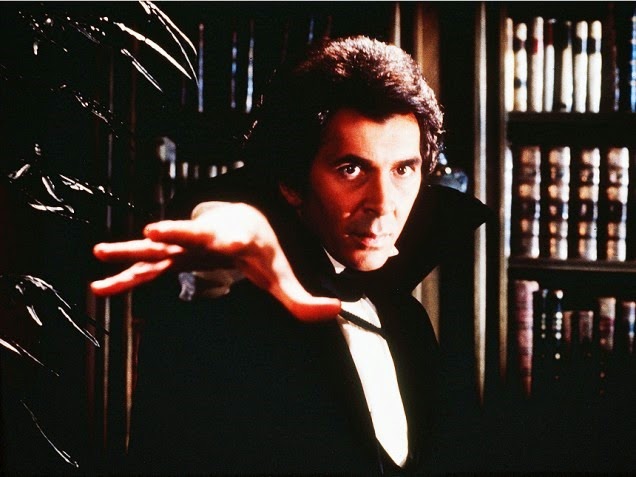
    Each generation reworks the vampire myth. The classic Bram Stoker vampire was the rich preying on the poor. The ’70s Frank Langella vampire was sex without responsibility – or pregnancy.

Deaduntildarkcover
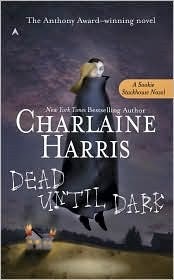
    Charlaine Harris brilliantly reworked the vampire myth, and I’m not saying that just because I know her. Charlaine was already a successful New York Times mystery writer with several series when she got the idea for her Sookie Stackhouse  Southern Vampire series.
    Charlaine added a fresh twist. Her vampires, like gay people, lived unrecognized among us. Then the Japanese blood substitute let the vamps come out and northern Louisiana was overrun with the undead.
    When other writers tell me they’re going to write a vampire mystery, I congratulate them. But I wonder if they’ll write a different vampire mystery, or simply another variation on one of the timeworn themes.
    I wrote a vampire story called “Vampire Hours,” about a woman who becomes a vampire to escape the trials of middle age – an unfaithful husband, constant dieting, fading beauty. People asked me if I was going to make that story into a novel. No. My idea was different, but not universal.
    But cats are universal. So I agreed to do the cat book. I’m owned by a defrocked show cat, Columbleu’s Unsolved Mysterie. She bit a judge at her first show.

DSCN0512

I would write my new Dead-End Job mystery about the world of show cats and the people who love and care for them. I’d report on a culture.
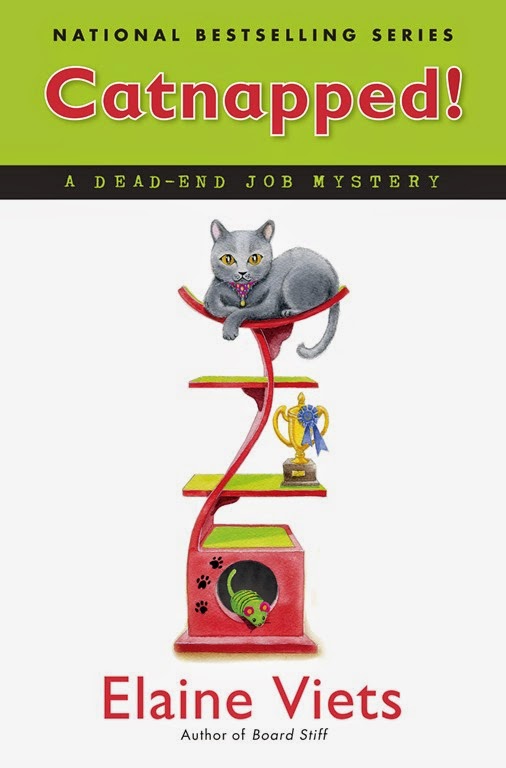
    Catnapped!

And so Catnapped! was born. Helen Hawthorne and Phil Sagemont, my husband and wife PI team, are the in-house lawyers for a Fort Lauderdale attorney. The lawyer’s client, Trish Barrymore, is divorcing her husband, financier Smart Mort,  and the only thing the couple can agree on is custody of their show cat, Justine.
    When Mort fails to return the cat on time, Helen and Phil are sent to collect the cat. They find Mort dead and Justine kidnapped and held for half a million dollars. Helen goes undercover to work for a show cat breeder.
    Judge Tracy Petty, Cat Fanciers’ Association southern region director, helped with the cat show details.
    Did you know that long-haired show cats have to be bathed – and they learn to like it? Their fur is so thick they are slathered in Goop, the mechanic’s hand cleaner, and then the cats get two shampoos, a conditioner and more. Their fur is dried with a special blow dryer. There’s more. Much more. But you’ll have to read the book to find it out.
    When you pick your next subject, ask yourself: How novel is it? How universal?
    Catnapped! is two days old today. Too young to know if I have a were-tiger by the tail, like Charlaine. But my show cat is scratching her way up the charts.

___________________________________

Check out the first chapter and the book trailer for Catnapped! at www.elaineviets.com

Kill Thoughtfully

By Elaine Viets   

    In my first mystery, “Backstab,” I had a character named Lee the Rehabber. I killed him. In fact, in that book I slaughtered folks like a serial killer on a rampage.
    Then I had to write the second book in the series. That’s when I discovered I needed Lee again. He was smart, funny and city savvy.
    Too bad he was dead. Not only dead but autopsied. I had to come up with another character, and he wasn’t as good as Lee.  
    That taught me a lesson about writing a series – kill wisely and with restraint.
    I also learned not to nail down the family details. In my Dead-End Job series, Helen’s father is dead. She has a disapproving mother and a younger sister. But how many uncles, aunts and cousins does she have?
    I’m not sure. I just finished my 13th Dead-End Job mystery and I may need a long-lost relative.

Catnapped!
    One of my friends discovered she had a half sister. Her mother – a homemaker –  confessed that she’d had an unwanted teenage pregnancy and given the baby up for adoption. Forty years later, Mom broke the news to her bewildered daughter. My friend went to meet her half-sister at her mother’s insistence. She decided the woman was nice enough, but the only thing they have in common is DNA. They may exchange Christmas cards, but they’re not going to be best pals.
baby

    I tucked away that tidbit for future reference.
    I was equally vague with Phil Sagemont’s past. He’s Helen’s PI husband, and he has an ex-wife named Kendra, but that’s all we know about him. Phil’s extended family could be useful for future mysteries.
    I was really glad I never made up my mind whether Margery Flax, Helen and Phil’s seventy-six year old landlady at the Coronado Tropic Apartments, was married or divorced and if her husband was dead or alive. Helen and Phil weren’t sure either. The two private eyes noticed Margery never displayed any photos of her husband, but felt they had no right to investigate a friend.
    Good thing I kept Margery’s marital status vague. In “Catnapped!,” my 13th Dead-End Job mystery, Margery’s husband walks back into her life. Here’s the scene.

dreamstime_m_10837982
    
    Helen and Phil barely passed the umbrella table when an older man appeared at the back gate. He didn’t walk up. He seemed to materialize.
Helen stared at him. He was Margery’s match in every way: dramatically handsome with an unconventional edge. Six feet tall, slender, with broad shoulders and thick hair like fine white silk. Blue eyes. So blue Helen could see the color from this distance. He wore Florida dressy casual: crisp, blue fitted shirt, rolled at the forearms, white linen slacks and boat shoes.
    His bouquet of purple flowers belonged in an Impressionist painting.
    “Margery!” he said, striding toward her with the flowers. “Margery, my darling, I’m back.” He knelt at her feet.
    Margery jumped back as if she’d been attacked, and knocked over her chair. Her lit cigarette rolled across the concrete. “You!” she said. Her eyes were fierce with rage.
    “I love you, Margery,” he said. “I always have. I know purple is your favorite color and brought you these.” He held out the bouquet. Helen could see velvety lavender roses, pale fragrant lilacs and star-shaped asters.
    “I don’t want your damned flowers, Zach!” Margery said. She hit him in the face with the heavy bouquet.
    “Get out!” she said. “Get out and don’t come back!”

LANDLADY222

    But Zach does come back, until he’s murdered and Margery is jailed for killing him. The man’s definitely dead. But this time, I’d killed thoughtfully.

Check out the book trailer for “Catnapped!” here
http://www.elaineviets.com/new/Misc/trailers.asp

Enter my contest to win a free Dead-End Job mystery at www.elaineviets.com Just click on Contests.

Hardcovers vs. Paperbacks


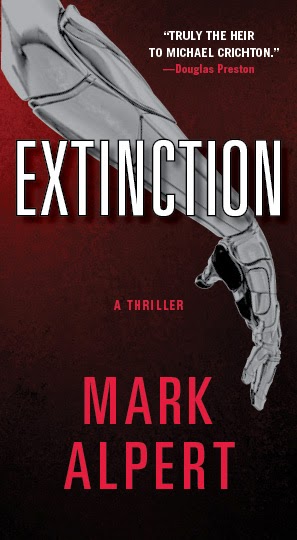
My third novel, Extinction, will come out in paperback on Tuesday. I’m a big fan of paperbacks in general; of all the books I buy, only about twenty percent are hardcovers. The main reason is the price difference. Whereas the list price for the hardcover of Extinction is $25.99, the price on the cover of the mass-market paperback is only $9.99. The difference isn’t quite so extreme after discounting — Amazon, for example, sells the hardcover for $18.80 and the paperback for $8.99 — but it’s still pretty significant for all but the wealthiest book-buyers.

Paperbacks are also lighter and more portable. They fit inside the pockets of my winter jacket. They’re easier to hide (in case you’re embarrassed about what you’re reading). And they take up less space on your bookshelves, which is an important concern if you live in a smallish apartment with a spouse, two kids and all their paraphernalia. (Electronic books would be even better in that respect, but I just don’t feel comfortable reading them. I can’t really relax when I’m holding a screen. I can’t ignore the screen’s presence, which makes it hard for me to get lost in the story.)

Don’t get me wrong — hardcovers have their place. When I buy a book as a gift, I never get a paperback if the hardcover is available. And I love certain authors so much that I just can’t wait for their paperbacks. (I’m talking about you, Lee Child. And you too, Dennis Lehane.) But I’m a pretty patient guy. I’m dying to read Gone Girl, but I’m willing to wait a few more weeks until the paperback comes out. I’ll bide my time by reading a classic or two. (I’m reading Blood Meridian now. What a freaking amazing book!)

Speaking as a writer now, I love being published in hardcover. I’ve been lucky to have gorgeous book jackets for all my novels. And it feels good just to hold the hardcover — it feels substantial, weighty, lasting. But I’m a relatively unknown writer trying to reach new readers, so publishing paperbacks is crucial to broadening my audience.

Over the past year I’ve noticed that a few very famous authors are eschewing the hardcover route for some of their books and putting out paperback originals. Stephen King did this last summer with Joyland, which was a fun read (definitely not weighty!) and had a great pulpy cover. Taipei, a serious literary novel by Tao Lin, also went straight to paper.

And there’s one more advantage to paperbacks that I haven’t mentioned yet: the teaser. After I finish reading a fantastic paperback, I love turning to the last pages of the book and getting a sneak preview of the author’s next novel. I’m pleased to say there’s a teaser at the end of the Extinction paperback, previewing the prologue and first chapter of my fourth book, The Furies. That novel will be published — in hardcover — next month.