
Only one thing is impossible for God: To find any sense in any copyright law on the planet. —Mark Twain
* * *
Article I, Section 8, Clause 8 of the United States Constitution grants the U.S. Congress the power “To promote the Progress of Science and useful Arts, by securing for limited Times to Authors and Inventors the exclusive Right to their respective Writings and Discoveries”
Congress has used that power to define the “limited time” for authors’ works to be placed in the public domain. According to Google AI
Current U.S. law generally puts works into the public domain 95 years after their publication (for pre-1978 works) or 70 years after the author’s death (for post-1978 works, or 95/120 years for corporate works), with new works entering each January 1st, so as of January 1, 2026, works published in 1930 entered the public domain. This means works from 1930, like early Mickey Mouse cartoons, are now freely usable, while works created today will remain protected until 70 years after the creator’s death.
* * *
The Center for the Study of the Public Domain on the website of Duke University Law School has a good explanation of the notion of the public domain. Here are a couple of quotes:
When works go into the public domain, they can legally be shared, without permission or fee.
The public domain is also a wellspring for creativity. You could think of it as the yin to copyright’s yang. Copyright law gives authors important rights that encourage creativity and distribution—this is a very good thing. But the United States Constitution requires that those rights last only for a “limited time,” so that when they expire, works go into the public domain, where future authors can legally build on the past—reimagining the books, making them into films, adapting the songs and movies. That’s a good thing too! It is part of copyright’s ecosystem. The point of copyright is to promote creativity, and the public domain plays a central role in doing so.
* * *
Fortunately for us, as of January 1, 2026, thousands of copyrighted works from 1930 entered the public domain in the U.S. Sound recordings from 1925 are also included.
Here are a few that entered the PD this year (with some interesting trivia):
- The Maltese Falcon by Dashiell Hammett – Even though the gold- and jewel-laden Maltese Falcon wasn’t found in the story, the statuettes used as props in the movie turned out to be very valuable indeed. In 2013 a buyer paid $4.1 million for one of them.
- The Murder at the Vicarage by Agatha Christie – Although Miss Marple had appeared in short stories before, The Murder at the Vicarage was her first role as the detective in a novel.
- As I Lay Dying by William Faulkner – Faulkner claimed to have written the book in six weeks (!) while working at a Mississippi power plant. The book has 15 narrators over 59 chapters. (The title comes from a quote in Homer’s Odyssey where Odysseus has traveled to Hades and meets his old pal Agamemnon who complains about his wife’s behavior as he lay dying.)
- The first four Nancy Drew books by Carolyn Keene – As most of us know, Carolyn Keene was the pseudonym for the group of writers in the Stratemeyer Syndicate who produced the Nancy Drew novels. The first books were penned by Mildred Benson, a woman whose adventurous life as a journalist and pilot (I hope Patricia Bradley is reading this) contributed to Nancy Drew’s persona.
- The Little Engine That Could by Watty Piper (pseudonym of Arnold Munk) – The tale’s basic idea appeared in a Swedish journal in 1902. Early versions were published in American newspapers around 1906 as sermons or moral tales. The themes of optimism, perseverance, and service over status have captured children’s (and adults’) imaginations for decades. (I wonder if I could write a good book with those themes. I think I can. I think I can.)
A few more books on the 2026 list:
- Cakes and Ale by W. Somerset Maugham
- Strong Poison by Dorothy L. Sayers
- Private Lives by Noël Coward
- Ash Wednesday by T.S. Eliot
- The Conquest of Happiness by Bertrand Russell
And several movies:
- All Quiet on the Western Front, winner of the Academy Award for Best Picture
- Cimarron, winner of the Academy Award for Best Picture
- Animal Crackers, starring the Marx Brothers
- Soup to Nuts, featuring later members of The Three Stooges
- Hell’s Angels, Jean Harlow’s film debut, directed by Howard Hughes
- Murder!, directed by Alfred Hitchcock
A more comprehensive list can be found on the Center for the Study of the Public Domain site.
* * *
So TKZers: Have you read or watched any of the new public domain additions? What other artistic works that have recently come into the public domain do you recommend?
* * *
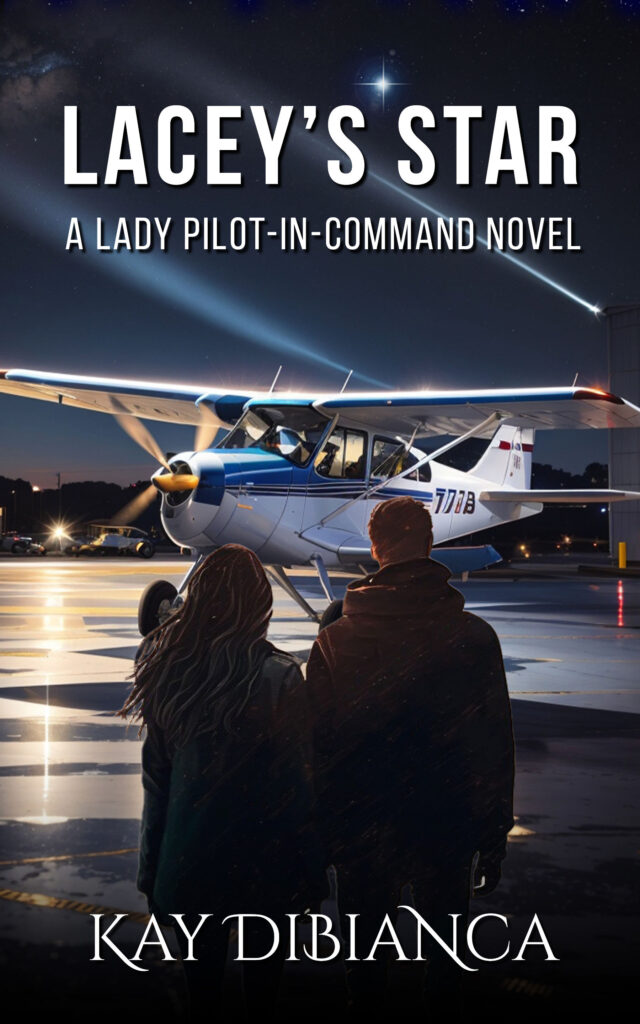
Forty years ago, Lacey Alderson died—and the truth was buried with her. In Lacey’s Star, private pilot Cassie Deakin lands in the middle of the mystery and discovers old secrets that refuse to stay hidden any longer.
Click the image to fly with Cassie.