

“Almost everything will work again if you unplug it for a few minutes—including you.” —Anne Lamott
* * *
Many thanks once again to James Scott Bell and Dale Ivan Smith for covering for me these last months.
* * *
While I was writing this post about taking a break from writing, I got very interested in the word hiatus. I like the way it sounds. Hi-a-tus. The two adjacent vowels are pronounced separately, and that’s relatively rare in English.
So before I get to the main subject here, I’m going to plunge down a rabbit hole to learn more about this unusual word. Join me!
* * *
Most double vowels in English are either dipthongs (e.g., coin or house) where the sound glides from one vowel to the next one to make a single sound, or they are digraphs (e.g. bread or boat) where the two vowels make one sound.
But then there are words like hiatus or chaos where the two adjacent vowels are sounded separately. And what is the proper term for this English oddity? Ready for this? They’re called hiatus vowels. How good is that?
* * *
So what’s the origin of this interesting word? According to Merriam-Webster.com, the word hiatus comes from the Latin hiare which means “to yawn,” and the word yawn means gap. I always associated hiatus with a voluntary break in routine, like an athlete taking a season off to rest tired muscles before jumping back into the fray. While it certainly can mean that, the word has a lot of other connotations.
For example, the esophageal hiatus is a passage of the esophagus through the diaphragm into the stomach. A bulge in that area is called a hiatal hernia. And there are other hiatuses in the body. There’s the aortic hiatus and the hiatus semilunaris. You’re on your own to look those up.
But that’s not all. We find hiatuses in other interesting contexts:
The British novelist Laurence Sterne used the word in Tristram Shandy to describe a clothing tear, calling it “the hiatus in Phutatorius’s breeches.”
In The Myth of Sisyphus, Albert Camus used the term to reflect on the human condition when he noted “the regular hiatus between what we fancy we know and what we really know.”
* * *
All of this information about the word hiatus is very interesting, but it’s time to climb out of the rabbit hole and return to the real point of this blog post: Should authors take a hiatus away from writing occasionally?
I found several sites (masterclass.com, Helping Writers Become Authors, and The Write Practice) with good information on why you may want to take a break from writing and the benefits and risks of doing so. I’ve summarized some of their points here.
Why Take a Break?
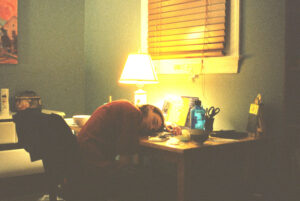
- You feel exhausted, drained of creative energy
- You don’t know what to write
- You need to prioritize other commitments
Whatever the reason you decide to take a break, consider some of the benefits and risks.
Benefits
- Short writing breaks provide needed rest. Sticking to a regular routine is important to a writer, but day in and day out sameness can become stale and boring. A short break can refresh the old gray cells.
- Writing breaks can prevent writer’s block. I’ve always associated writer’s block with fear. The kind of fear that makes you wonder if you can come up with another good story, and that can have a paralyzing effect on writing. Taking time to get away for a few days can stimulate new ideas and get the juices flowing again.
- Writing breaks refresh the mind. We all need to recharge our creative batteries by challenging ourselves to look at things from a new perspective now and then. Taking a break gives the writer a chance to step back and look at the bigger picture.
Of course, there are risks associated with taking time off. Consider these:
Risks
- Loss of Habit: Once you break a daily writing routine, it may be hard to get back to it. The longer the hiatus, the more difficult it may be to return.
- Fading Momentum: Taking a break in the middle of a WIP could cause the project to stall or be left unfinished.
- Decline in Audience: Lack of deliverables can reduce the author’s readership. Once you’ve dropped off the radar, readers may turn to other writers.
Strategies to avoid the risk
- Fill your time with inspiration. Many writers get creative inspiration from art, music, films, and podcasts. Consider spending your free time exploring other media or going out into the world and trying something new. Use the time to outline next steps on your writing journey.
- Focus your energy on a different project. When working on a writing project, like a novel or short story, it can be helpful to write something else periodically. If you feel like you’re hitting a wall, try journaling to record your thoughts. This can help get the creative juices flowing again.
- Follow a schedule. Writing every day on a schedule can keep you on task and build a habit. The same goes for taking a break. Eating, exercising, and taking time for self-care will help your mental and physical well-being and your writing practice.
- Take a break once you reach a milestone. Take a break between writing your first draft and rewriting, or between writing and editing. Give yourself at least a few days, so you can read your work with fresh eyes. It can also help to take breaks when you’ve hit a target word count or finished a chapter so that you can acknowledge your accomplishments.
The Involuntary Hiatus
Of course, taking a hiatus from writing is not always optional. Sometimes life intervenes. You have a new job or a new baby, you move to another city or have a medical issue. Any of these can force an unwanted hiatus from writing. So what do you do then?
- You may not have time to write, but you can still think about writing and jot down ideas for stories.
- Work on one chapter of your WIP to fine tune it. Just slow down, but don’t stop.
- Read if you have time. Talk to others. Expand your horizons. All of it will make a better writer in the long run.
- Take care of yourself. Exercise has been shown to stimulate creativity.
* * *
So TKZers: What’’s your opinion on taking a hiatus from writing? Have you tried taking a break? How hard was it to restart the engine?
* * *
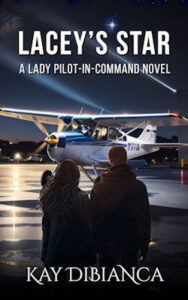
Cassie Deakin takes a break from her contract piloting career to help solve a mystery. But there’s no hiatus from danger when a murderer is on the loose.
Click the image to go to the Amazon book detail page.