Using Fence Post Characters

fortitude My favorite stories, written by me or someone else, are those dealing with characters best described as “fence post” characters which usually possess at least two or more of these traits: they are out of their element; in at least potentially in trouble: they have little or no idea how they got where they are; and have to rely on their skills and wits, to get out of the situation, though they appear to be ill-suited to do so. Think of a turtle on top of a fence post, if that helps. Sometimes a character like that can make, or save, the story you are telling, particularly if it just isn’t working otherwise.

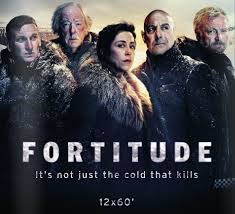
I thought of this while binge watching a new dramatic series named Fortitude. It’s on the Pivot Network, which you’ll find in the equivalent of the nosebleed seats of your cable television system.  Fortitude is set in a desolate section of Solvard, a Norwegian territory; the title is the name of the small town where almost of the story takes place. Two murders bookend the first episode, and at first it looks like your typical whodunit which will be investigated by a barely competent sheriff who may well be in the tank for some special interests relating to tourism as well. Everything changes, however, in Episode Two, with the arrival of our “fencepost” character in the form of Detective Chief Inspector Morton. Brilliantly played by the criminally underappreciated Stanley Tucci, Morton is 1) an American; 2) an ex-FBI agent now working for the London Metropolitan Police; and is 3) investigating the circumstances surrounding the death of one of the murder victims, who is a British citizen in 4) a God-forsaken area of Norway that looks like Boston (or Columbus, Ohio) did last week. Morton’s arrival puts almost everyone concerned in high dudgeon, particularly the sheriff (at least at first), but there isn’t much anyone can do about it because of some treaty of some sort which gives Morton jurisdiction. Morton no sooner sets foot on the slippery ice when he starts uncovering things, frozen ground and non-stop snowfall notwithstanding. Think of a cross between True Detective and Twin Peaks (the television series, not the restaurant chain) and you’ll have a vague idea of where things seem to be going. Morton, however, out of his element but not out of his league, is the fulcrum which takes the story off in an entirely new direction.

You can do this in your own work. If your story or novel isn’t working, change up your primary character. Make them uncomfortable in their own skin. Change gender or race or education level, just for a start. Even a small difference taken to its conclusion, logical or otherwise, can change the character and or the story dramatically. Downsizing your character’s abilities, such as they are, and throwing them to the sharks when they can’t swim works even better. I read a book several years ago — and I apologize out front for not being able to recall either the name or the author (yes; I’m getting old) — of an Asian father whose daughter disappears while attending college in England. He doesn’t speak English but makes the trip, determined to find her, armed with little more than fortitude and a keen power of logic and observation.

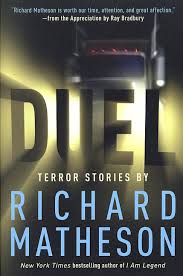
I do recall the name of a short story — because I have read it at least once a year since it was published — which puts a somewhat unassuming turtle on top of a very dangerous fence post. I’m speaking of “Duel” by Richard Matheson. “Duel,” in case you haven’t had the pleasure, concerns duela motorist named “Mann” who is terrorized along several miles of highway by a trucker. The story was written over four decades ago, some eighteen years before the term “road rage” ever entered the nation’s lexicon, but still reads well. Mann is not Jack Reacher, or even his baby brother; he is totally out of his element and just wants to be left alone to keep driving. It doesn’t happen, of course, but what does will keep you reading. Steven Spielberg made an excellent attempt at capturing Matheson’s magic in a made-for-television movie, but you have to read the story to really appreciate what Matheson did so well.

Now, if I might ask…authors: have you tried this? And readers: have there been any fish out of water characters that you have enjoyed in novels, stories, or films? Please. Share with us.

Bad Boy, Whatcha Gonna Do?

By Joe Moore

If I asked you to name 5 of your favorite heroes and 5 villains, which would you think of first? Which would come easier, the good guys or the bad? If you’re an action-adventure fan and you read a lot of Clive Cussler novels, Dirk Pitt would probably pop into your head right away. Now, name one arch-villain in a Dirk Pitt novel. We all know or have heard of Jack Ryan, Jason Bourne and Lara Croft. But name the bad guys they fought against. The reason it’s harder to recall specific villains is because it’s harder to write memorable bad guys. There aren’t that many Hannibal Lecters out there. But there are quite a few Clarice Starlings.

If you’re working on making your villain memorable, here are a few tips to do so.

Your villain must have multiple layers, perhaps even more that your hero. Stereotypical 2-D villains are boring. Why? Because we’ve all seen our share of non-motivated antagonists. A bunch of teens go to a cabin by a lake and start getting chopped up one by one. Seen that before? The villain is a killing machine. Why? Most of the time we have no idea. How about a good guy who turns bad. The motivational layers are all there. Just watch BREAKING BAD or DEATH WISH.

Your villain must be intelligent. Perhaps even more so than your hero. The brilliant bad guys are the ones that make the hero work really hard to solve the conflict. Their meticulous planning and concentration make them memorable. To see a brilliant villain in action, watch DIE HARD or SPEED.

Your villain had to have baggage. Preferably enough to make the reader cheer for him at least once. This usually happens near the beginning of the story where we see what motivates him. There is a hint of sympathy from the reader. But it doesn’t last long. Mr. Villain does something nasty and the sympathy shifts to the protagonist.

Your villain must face a fork in the road—a point in the story when he chooses to become a bad boy. The reader must believe the choice was voluntary. No one is born evil. They must choose to become evil somewhere along the way, for a believable reason.

Most important of all, your villain must be convinced he’s right. He needs to believe that his course of action is the correct path. Whether it’s revenge or jealousy, or some other strong motivator, he must do what he does out of commitment to being right. He must believe it and so must the reader.

As you write your villain into your manuscript, remember that he is not a throwaway character. He must be accepted by the reader for what he stands for and what he believes. For most of your story, he has to be as strong a character, if not stronger, than your protag. Make him memorable.

Now your turn. Name 5 of your favorite heroes and five villains your love to hate.

Don’t Stop the Story to Introduce Each Character

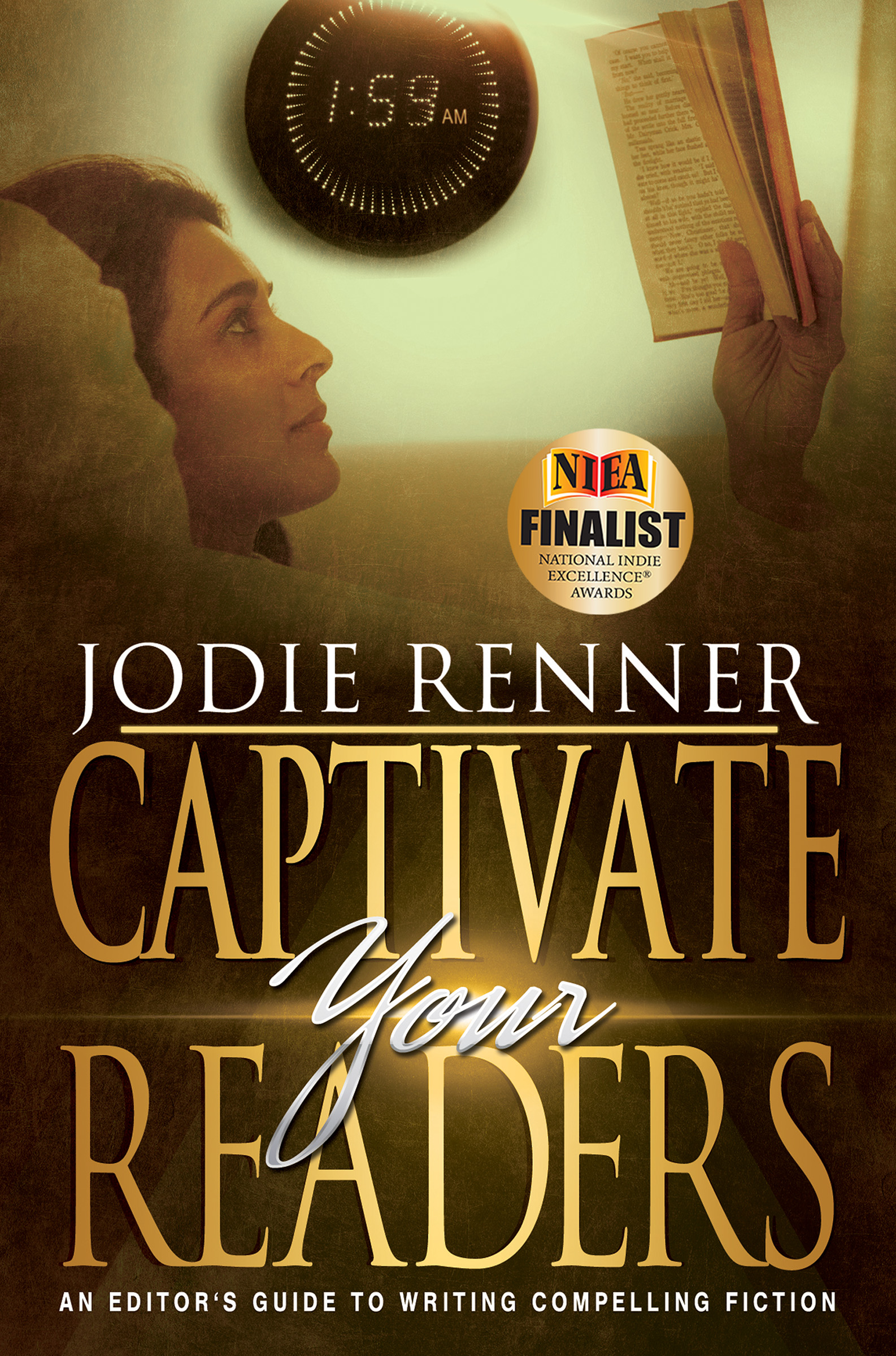
Captivate_full_w_decalby Jodie Renner, editor & author
Follow Jodie on Twitter

Imagine you’ve just met someone for the first time, and after saying hello, they corral you and go into a long monologue about their childhood, upbringing, education, careers, relationships, plans, etc. You keep nodding as you glance around furtively, trying to figure out how to extricate yourself from this self-centered boor. You don’t even know this person, so why would you care about all these details at this point?

Or have you ever had a friend go into great long detail about someone you don’t know, an acquaintance they recently ran into? Unless it’s a really fascinating story with a point, I zone out. Who cares? Give me a good reason to care, and feed me any relevant details in interesting tidbits, please!

In my editing of novels, I’ll often see a new character come on scene, then the author feels they need to stop the action to introduce that person to the readers. So they write paragraphs or even pages of background on the character, in one long expository lump. New writers often don’t realize they’ve just brought the story to a skidding halt to explain things the readers don’t necessarily need to know, certainly not to that detail, at that point. And it’s telling, not showing, which doesn’t engage readers. In fact, they’ll probably skim through it, and more likely, find something else to do instead.

Another related technique I find less than compelling is starting with the character on the way to something eventful, and as they’re traveling, they’re recollecting past or recent events in lengthy detail. It’s much more engaging to start with the protagonist interacting with others, with some tension and attitude involved. Then work in any necessary backstory info bit by bit as the story progresses, through dialogue, brief recollections or references, hints and innuendo, or short flashbacks in real time. And through reactions and observations by other characters.

Rein in Those Backstory Dumps!

Contrary to what a lot of aspiring authors seem to think, readers really don’t need a lot of detailed info right away on characters, even your protagonist. Instead, it’s best to introduce the character little by little, in a natural, organic way, as you would meet new people in real life. You might form an immediate physical impression, especially if you find them attractive or repugnant. You notice whether they’re tall or short, well-groomed or scruffy, timid or overbearing, friendly or cold, intelligent or dull, charismatic or shy.

If you’re interested in them, if you find them intriguing, you pay attention to them, ask them questions, and maybe ask others about them. You gather info on them gradually, forming and revising impressions as you go along, with lots of unanswered questions. Maybe you hear gossip, and wonder how much of it is actually true. Through conversation and observation, you formulate impressions of them based on what they (or others) say, as well as their attitude, personality, gestures, expressions, body language, tone of voice, and actions.

Involve and engage the readers.

It’s also important to remember that readers like to be involved as active participants, not as passive receptors of dumps of information. Finding out about someone bit by bit, trying to figure out who they are and what makes them tick, what secrets they’re hiding, is a stimulating, fun challenge and adds to the intrigue.

Unlike nonfiction, where readers read for information, in fiction, readers want to be immersed in your story world, almost as if they’re a character there themselves. So be sure to entice readers to get actively engaged in trying to figure out the characters, their motivations and relationships, and whether they’re to be trusted or not.

Let the readers get to know your characters gradually, just like they would in real-life.

For ideas on how to approach introducing your characters to the reader in your fiction, think about a gathering where you’re just observing for a while, trying to get your bearings, maybe waiting for some friends to arrive. You look around at who’s there, listening in to snippets of conversation. A few people interest you so you move closer to them, trying not to be obvious. You might pick up on glances, smiles, frowns, rolling of eyes, and other facial expressions. You read their body language and that of others interacting with them.

Perhaps you decide to strike up a conversation with one or two who look interesting. You find out about their personality and attitudes through their words, tone of voice, inflection, facial expressions, body language, and the topics they jump on and others they avoid. Then, if they interest you, you might start asking them or others about their job or personal situation and get filled in on a few details – colored of course by the attitudes and biases of the speaker. Maybe you hear a bit of gossip here and there.

That’s the best way to introduce your characters in your fiction, too. Not as the author intruding to present us with a pile of character history (backstory) in a lump, but as the characters interacting with each other, with questions and answers, allusions to past issues and secrets. Even having your character thinking about what they’ve been through, isn’t that compelling, so keep it to small chunks at a time, and be sure to have some emotions involved with the reminiscing – regret, worry, guilt, etc.

So rather than stopping to give us the low-down on each character as he comes on the scene, just start with him interacting, and let tidbits of info about him come out little by little, like in real life. Let the readers be active participants, drawing their own conclusions, based on how the characters are acting and interacting.

Reveal juicy details, little by little, to tantalize readers.

And don’t forget, the most interesting characters have secrets, and readers love juicy gossip and intrigue! Just drop little hints here and there – don’t spill too much at any one time. Give us an intriguing character in action, then reveal him little by little, layer by layer, just like in real life!

Readers and authors, do you have any observations or advice to offer on dealing with character backstory in fiction?

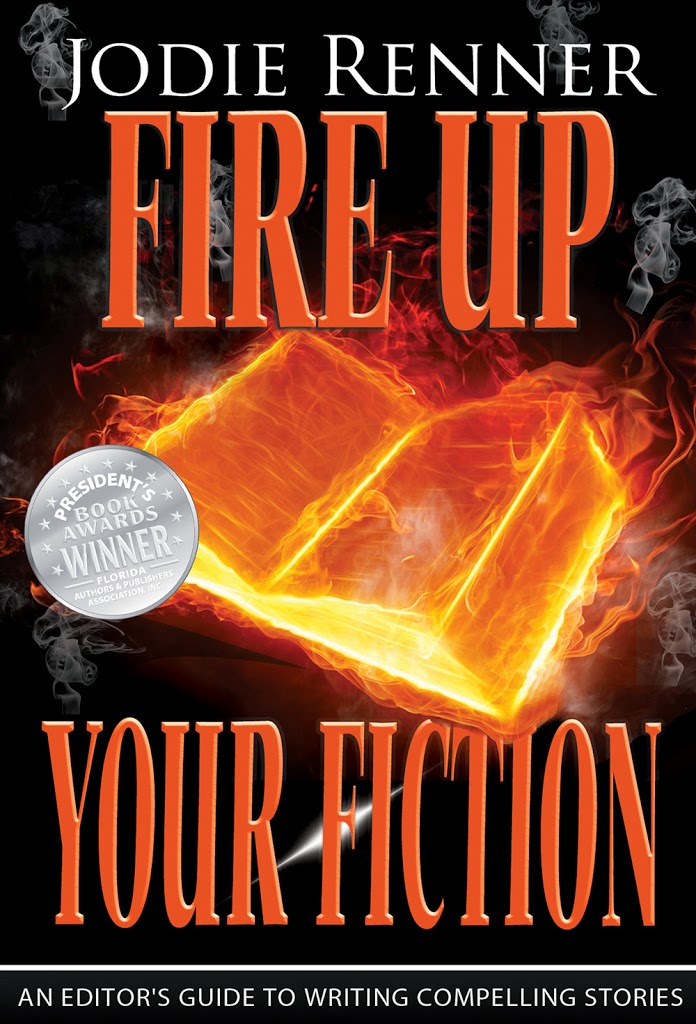
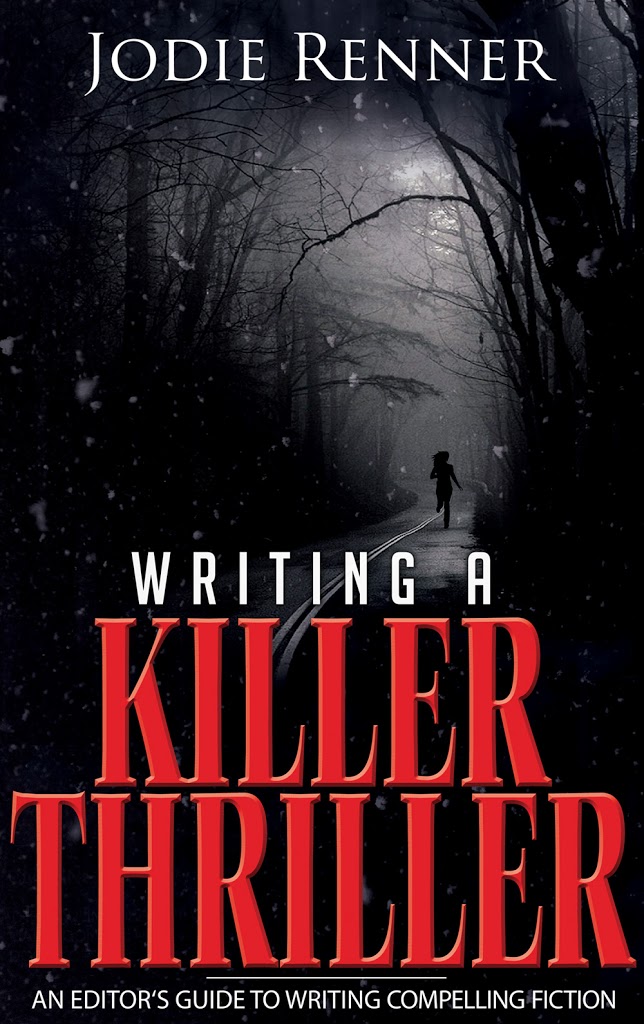
 Jodie Renner is a freelance fiction editor and the award-winning author of three craft-of-writing guides in her series An Editor’s Guide to Writing Compelling Fiction: Captivate Your Readers, Fire up Your Fiction, and Writing a Killer Thriller. She has also published two clickable time-saving e-resources to date: Quick Clicks: Spelling List and Quick Clicks: Word Usage. You can find Jodie at www.JodieRenner.com, www.JodieRennerEditing.com, her blog, http://jodierennerediting.blogspot.com/, and on Facebook, Twitter, and Google+.