About Kathryn Lilley

A crime writer, former journalist, and author of IMBA-bestselling mystery series, The Fat City Mysteries. She lives in Los Angeles with her husband and two neurotic cats. http://www.kathrynlilley.com/

Internet Fame Doesn’t Always Drive Book Sales

shutterstock_175846916Have you ever wondered whether “going viral” with a video or Tweet would boost your book sales? Think again. The impact of sudden fame on a writing career can be fleeting as well as fickle.

Author Jami Attenberg recently wrote about her experience with instant  Internet fame. Attenberg, who has written around a half-dozen novels including a NYT-bestseller, became an overnight sensation when she set up a successful sting to recover a stolen bicycle. So how did all that media attention affect her book sales? Nada much, according to the writer. Attenberg’s “fame” faded quickly, and she eventually returned to the daily, unglamorous grind of writing.

It’s a different story with Zoella Sugg, a YouTube “vlogger” who built a large following with her online tutorials telling young women how to apply makeup, do their hair, and deal with personal issues. According to an article in The Guardian, sales of Sugg’s first book, Girl Online, made her the fastest-selling debut author on record. Her forward progress hit some bumpy air when it became known that Girl Online had been created in collaboration with a ghost writer. Happily for Sugg, her online fans didn’t seem to care about the news of a ghost writer, any more than they cared about her Tweet asking her fans to “Bare with me” as she took a hiatus from the Internet to uncloud her head.

There’s a scary side of Internet fame as well. You’re probably familiar with the story of how one ill-considered Tweet upended the life and career of a corporate communications executive. That story shows that when we take a false step on the Internet, we can quickly find ourselves swimming in uncharted waters. Such areas of risk on the Internet map should be marked with the cartographer’s ancient warning: “Here Be Dragons.”

Here’s my take on the benefits of Internet celebrity. If you become known for posting make-up tutorials, grumpy cat videos, or quitting a job in a dramatic fashion, you might be able to cash in on that celebrity with fans of make-up, grumpy cats, or dramatic exits. But if you’re an author who writes fiction for a living, don’t expect a passing burst of Internet attention to push your books. For that you need to focus on your writing, instead.


Five Inspired Gifts for Writers

If you’ve ever struggled to find a perfect gift for a writer friend, Buzzfeed has come up with a list of 32 suggestions. I surfed the web and turned up five more interesting gift ideas for the writer in your life:

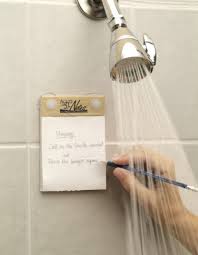
1. Aqua Notes

1aquanote

Every writer knows that some of the best ideas occur to us while we’re in the shower. Aqua Notes notepads contain waterproof sheets of paper– now you can scribble down those great ideas before they go down the drain.


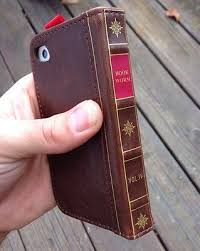
2. Antique Book Leather Case for a Smart Phone

1iphonecaseThese distressed leather cases for smart phones make it look like you’re toting around a vintage book. You can even customize some of these cases with your own text.


3. Bamboo Bathtub Caddy

1bathrub A spa caddy lets you read in the tub while you’re drinking a glass of wine. What could be better?

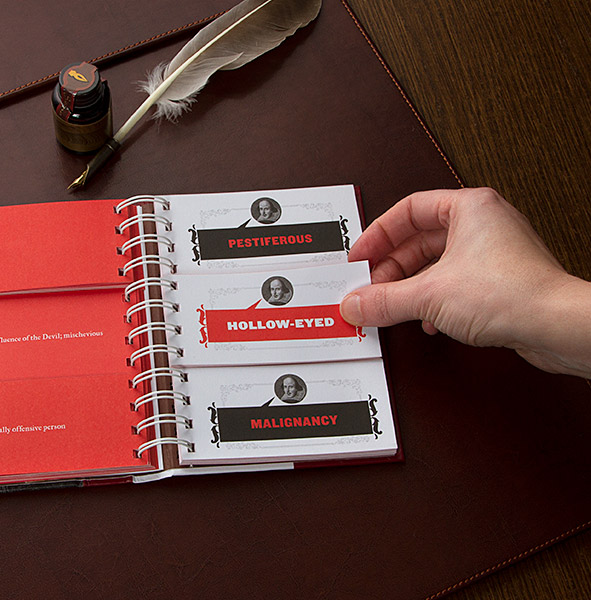
4. Shakespeare Insult Generator

1shakespeare

My favorite. The Shakespeare Insult Generator suggests creative ways for telling off any “obscene rump-fed horn beast” who cuts you off in traffic. I had to buy one for myself.


5. Night Writer LED Pen

How many times have you wished you had one of these? These LED pens let you write in the dark without disturbing others.

Let us know if you have any more gift ideas to add to our list!

Creating Tangible Connections in an Online World

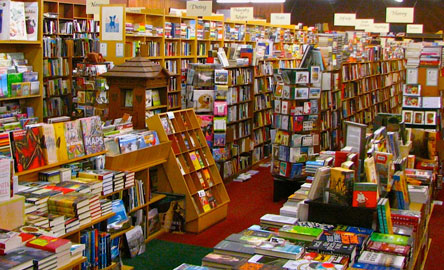
Chaucers-2Later today I’ll be driving north up the coast to attend a book signing in Santa Barbara. The event will be held at Chaucer’s, which the LA Times has called “the little bookstore that could“. Chaucer’s has flourished and grown during a time when other local retailers, including mega-bookstores such as Borders and Barnes and Noble, have faltered and closed their doors in the wake of Amazon and the advance of online marketing.

I’m enthusiastic about the prospect of enjoying some tangible, human interaction that is centered around reading and books.  I should seek out this experience more often, I  suddenly realize. In years gone by, I used to make regular pilgrimages to bookstores, if only for a fly-by and to grab a cup of java. Nowadays, most of those bookstores have disappeared. Seldom did a month go by in the past when I didn’t find some reason for dropping by our local library. Today, I always seem to be hunched behind my laptop or iPad.

When did the reading experience become so solitary? (Let’s not even mention writing–the craft of writing has always been a lonely road.)shutterstock_62915473

So here’s my epiphany for the day (you’re probably already aware of it): when we replaced our physical reading venues with virtual ones, we also lost a quality of personal connection. Those connections may have seemed fleeting and minor in real time, but they added real value, I think. I miss them.

So tonight, I’m planning to set things back to rights. I’m going to honor and celebrate the human connection of reading, by driving two hours to attend a book reading at Chaucer’s. (Tonight’s author, by the way, will be Robin Winter. She will be signing and reading from her latest science fiction novel, WATCH THE SHADOWS. If you’re in the Santa Barbara area, I hope to see you there!)

Am I alone in feeling that something important has been lost during the gradual transition to an online reading world? Please share your experience about what has changed for you as a reader in recent years.

First-page Critique: THINGS NOT FORGOTTEN

Today we’re critiquing the first page of a story called THINGS NOT FORGOTTEN. I’ll add my comments at the end, and then I invite you all to add your thoughts in the Comments.

THINGS NOT FORGOTTEN
normanbates_thumb2Wednesday, 10:30 p.m.

But the tongue can no man tame; it is an unruly evil, full of deadly poison.

James 3:8

Keep running. Don’t stop until you know the madman is gone. But he was still alive.

Jason smelled his own sweat…pungent and sour. And vomit. He’d thrown up, splattering the front of his plaid flannel shirt, the taste still in his mouth. Urine soaked the front of his jeans. He couldn’t believe he’d pissed himself.

How could he run away and leave his best friend?

Eric’s screams still echoed inside his head.

His feet pounded the earth. He glimpsed over his shoulder to see if the maniac chased after him. His heart pulsed in his ears.

When he turned back, his forehead slammed into a branch. Jason staggered but stayed on his feet. Eyes watered from the pain.

Got to keep running. Don’t look back.      

His feet obeyed despite the dizziness swimming in his head. Moonlight flickered patches of light through the trees. Instead of providing a path, it only contributed to the vertigo. It had been two years since he and Eric came to the cabin to hunt. If only he somehow had grabbed his rifle when he escaped, but there was no going back.

As he ran, he used his hands as battering rams to clear a path. Knock down any low hanging branches. Twigs and brush slashed at him but he refused to stop. Blood trickled down his face and arms. It mixed with sweat and stung his eyes. He swallowed. His stomach lurched, threatening to spew whatever contents remained.

His mind replayed the events in short, choppy segments. Eric and he had been drinking beer, swapping sea stories in the navy when someone knocked on the front door. If only they had never opened it.

Now his best friend was dead, or soon would be. He didn’t know for certain. As the psychopath tortured Eric, Jason worked his hands and feet out of the rope binding him to a chair.

The nearest neighbor was five miles away, but he didn’t know in what direction. In his haste, he rushed into the thicket of trees and brush, running as fast as he could. Nothing else mattered.

But he must be far away from the cabin by now. Rare streaks of moonlight revealed glimpses of the ground. He tripped over a fallen tree. He tried to catch himself, arms flailing to catch anything his hands could grasp. He went down hard, his body spiraling across leaves like a helicopter until it crashed into a tree.

Pain shot through his ankle.

Get up!

His leaden legs wouldn’t obey. A twig snapped, then a rustle, soft and subtle. Then the crunch of leaves and footsteps like someone closing in on him.

It’s not possible. How could he have found me?

My comments:

I have to say my stomach tightened as I read this page, which is good news for the writer. The use of short sentences and strong verbs (pounded, slammed, staggered, flickered) are appropriate for an action scene. The punchy verbs and short sentences used in this example help underscore the sense of urgency and panic that is being experienced by the character. (An aside: this scene reminded me of a newspaper story I once read about a mass shooting that took place in Australia. The story included an unforgettable description of a mother and her two young girls fleeing into the brush, trying to escape from the shooter.)

I did get distracted by a couple of things in the writing. As I first read the third sentence, “But he was still alive,” I wasn’t sure if “he” referred to to the victim or killer. That unclear pronoun reference should be fixed to avoid causing potential confusion.

I found the references to the actual encounter with the killer to be generic, and therefore a bit of a let-down. Imagine that a maniacal killer has suddenly appeared at the door of your remote cabin in the woods, tied you up, and tortured your best friend. Wouldn’t you have a vivid impression of the experience as you attempt to flee? Each moment spent with such a  monster would be burned into into your brain cells. I think the writer could improve the scene by finding a stronger way to convey that experience to the reader.

The sentence, “It had been two years since Eric and he came to the cabin to hunt” was confusing. Had they been living in the woods for two years? The writer needs to rework that section, or simply edit out that line.

The phrase “dizziness swimming in his head” struck me as a bit off the mark. Same comment applies for the image of the body spiraling like a helicopter. That sentence  comes off as a bit of overreach. (Also, I think one tends to think of a person’s arms flailing in space in a circular pattern like a helicopter, not the entire body.)

This comment is a really tiny nit: I stumbled on “rare streaks of moonlight”, probably because I initially misread it as “rare steaks.” (Silly, I know, but you don’t want to lose any reader for a reason that can easily be avoided.)

Overall, I think this page is in promising first-draft condition. The writer just needs to sharpen the language here and there, and do some polishing with an edit.

Now I’d like to hear from the rest of you. How do you like this first page? Please add your comments and suggestions. And thank you to the brave writer who submitted this work!

Finding Strength in Numbers

1MWAEdgarsKris is off this week, attending to her official duties for the upcoming Edgar(R) Awards ceremonies. Awards season is traditionally a time of anticipation and excitement for writers. The ceremonies present a rare opportunity for us to emerge from behind our glowing screens, don beaded gown or black tie, in order to honor and socialize with our peers.

In addition to handing out awards, professional associations can support and add value to any writer’s career. Here’s a roundup of some of the leading associations for writers:

Mystery Writers of America

MWA, which presents the Edgar(R) Awards, is a well-established association for crime writers in the United States. MWA works to raise the the level of recognition for writers who write in the crime genre, while educating its members about their rights and interests.

International Thriller Writers

As the title suggests, ITW is an association of writers who create thrillers. Emphasis is placed on finding ways for bestselling authors to pass their knowledge of the writing craft to mid-list and debut writers. ITW presents its yearly Thriller Awards at its annual conference in New York City.

Sisters In Crime

The stated mission of Sisters in Crime is to “promote the professional development and the advancement of women crime writers to achieve equality in the industry.” There are SinC chapters all over the country.

Science Fiction and Fantasy Writers of America

SFWA, which hosts the Nebula Awards, “informs, supports, defends, and advocates” for its membership of science fiction and fantasy writers. High-profile members of the past include Ray Bradbury, Anne McCaffrey, and Isaac Asimov.

Romance Writers of America

RWA seeks to enhance the professional interest of romance writers through networking and advocacy. It presents annual awards for both published books and unpublished manuscripts.

Horror Writers Association

HWA promotes the interests of “dark literature”, and those who write it. HWA presents the annual Bram Stoker Awards(R) for achievement in horror literature.

Question

Are there any groups I’ve overlooked? Which professional associations do you belong to? How have those associations helped your development as a writer?

And congratulations to all the nominees for the Edgar this year!

Things Left Behind Suggest Stories

imageI’ve been on the road for the past two weeks, helping family members get organized to downsize and move to a new home. Among other things, I spent the better part of two days rummaging around my dad’s attic in Vermont. My job was to determine which items should be given away, and which should be kept within the family.

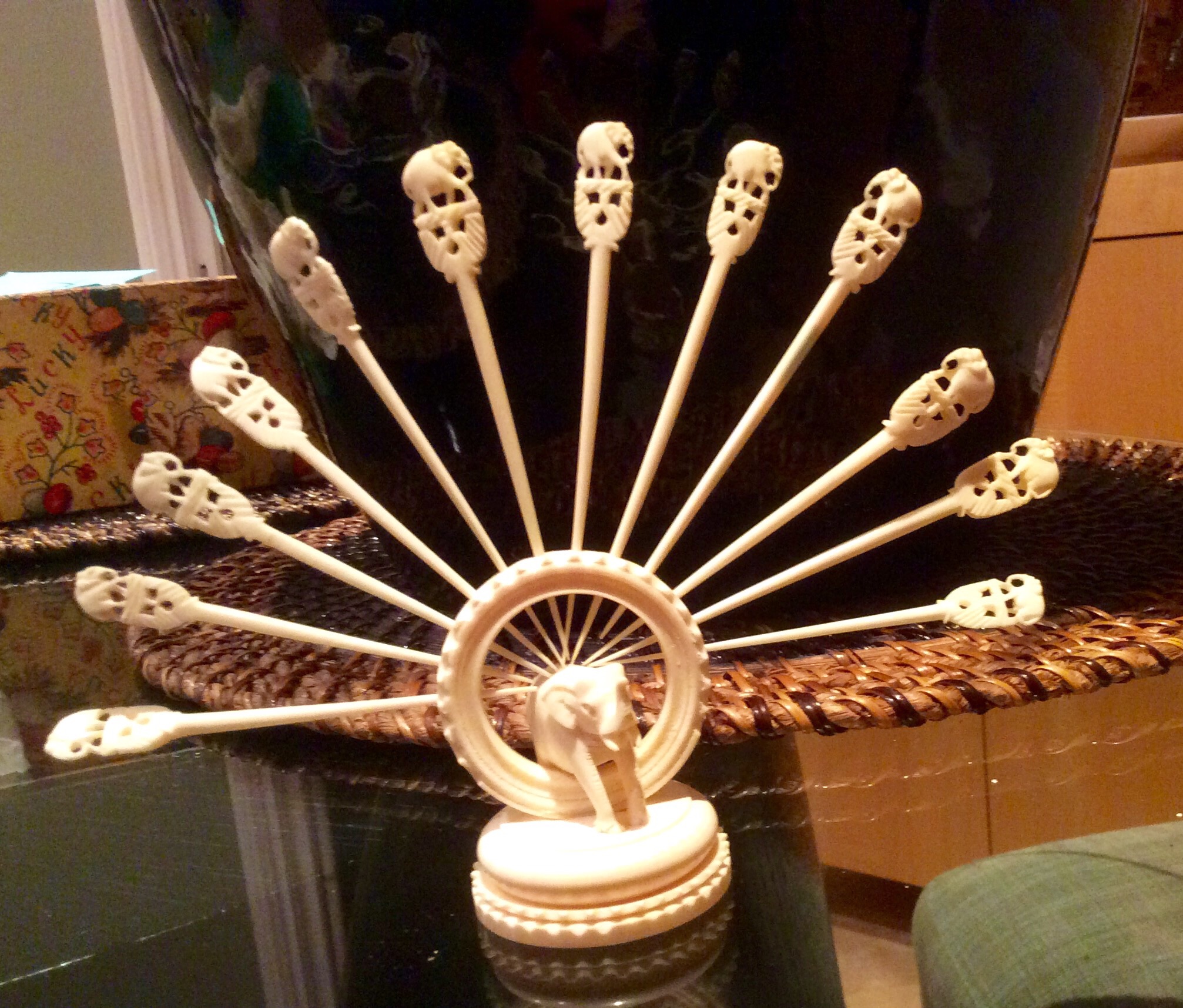
This was no easy task. My father has alimageways been an avid collector and Saver of Things. Walking through his farmhouse in Vermont is like being in a very homey museum or antiques shop. There’s the oil lamp collection, the vintage China sets, the scientific instruments, and the cannons (yes, cannons), for starters. I was really trying to help organize the process, but I kept getting distracted. For example, I came across a collection of silver spoons, the kind travelers buy when they’re visiting a new place. As soon as I found some spoons from the 1915 San Francisco Exposition, I was hooked. I then had to try to recreate that long-ago trip. And then I polished the spoons. There was a box of trinkets from a trip to Japan in the 1950’s, a set of antique toothpick holders from India, and a Victorian portable writing desk. Everything I saw suggested some interesting story. Who wrote on that desk? What lady kept her calling cards in the delicately carved ivory case? What ancestor used that Confederate sword in battle?

In the end, I couldn’t decide to part with any significant portion of my dad’s collection. So I’m renting a storage place to store it all, which I guess makes me the family’s official new Saver of Things. But if I’m ever in need of a story idea, I’ll know where to go for inspiration.

Has a family object ever inspired you to write a story? Tell us about it!