About Joe Moore

#1 Amazon and international bestselling author. Co-president emeritus, International Thriller Writers.

Limit the Exposition in Your Opening Pages

James Scott Bell
Twitter.com/jamesscottbell
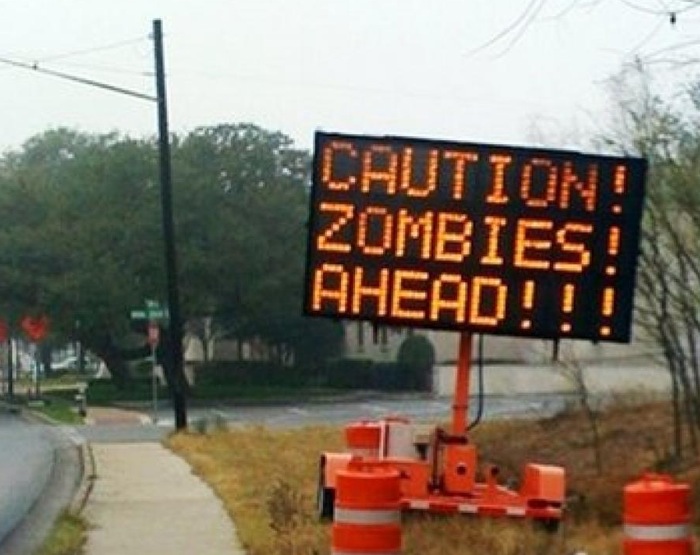

Since I am the resident zombie fiction guy, the first page I’ve been given for critique is, not surprisingly:
Z.O.M.B.I.E. Squad:  Hot ZOMBIE Nights
Jaz surveyed the semi-dark alley after escaping from her BMW. Drat. ZOMBIES. Not what she needed at the moment. How would she explain this to her new boyfriend?  Not the ZOMBIES per se, but the fact that this would be the third time this week that she’d bailed on dinner with him. Well, if he was a quality catch, he’d let her make it up to him, if not, there were other non-ZOMBIES out there in the world. Right?
There was a screech of metal on metal, as one of the ZOMBIEs dragged something along the side of her M3, and it would definitely leave a mark.  Ok, “drat” just officially became “double-damn” the minute both her love life and her car became casualties. Being undercover with ZOMBIE International Technologies was never easy. Often it downright stunk, just like this alley. It always seemed to be us or them and just a street away from normal. Whoever thought that all aliens were smarter and more techno-savvy, never met a pod-ZOMBIE.
The pod-Zs looked almost as unearthly as they were. Jaz could see their sallow, waxy faces as they stepped out of the shadows and into the moonlight. Light-colored images of the humans they might have been. Ok, maybe she could see why someone who didn’t know better might think they were just the walking. Jaz’s chest heaved a bit as she took in one, deep, cleansing breath. It was warm, wet, and tasted a bit like the Cuban carne asada she’d planned on having for dinner. She sighed as she pulled the transonic pen-dart from her bra: her $100 Dior Du jour, lace alternative, super-sexy, continental blue bra, with matching underwear. Yes, they did match her Beemer perfectly. That should say something about the level of clothing perfection and date desirability she had worked so hard for as she prepared to meet up with 3DP-vid god, Wylie Taylor.
It pained her to risk her Dior bra by using it as a weapon holder, but without stockings, there were few choices to secure a pen-sized super weapon and keep it accessible.
****
Paranormal fiction. Zombies. You have to build a world, and that’s what the writer is attempting to do here, plus give us exposition to boot. And the instincts are good: weave the exposition within the action.
However, this opening is weighted too heavily on the informational (notice how “blocky” the text is on the page). It’s a common mistake made because the writer feels the reader has to be clued in to a lot of background before he can understand what’s going on.
Almost always a wrong choice. Because readers will wait a long timefor explanations so long as something is happening that is disturbing.
This first page delivers a great opening disturbance. To make it even more effective, let the action be primary and drop exposition in later, a bit at a time.
To show you what I mean, here is the opening rendered with just the action sentences:
Jaz surveyed the semi-dark alley after escaping from her BMW. There was a screech of metal on metal, as one of the ZOMBIEs dragged something along the side of the M3.
She could see their sallow, waxy faces as they stepped out of the shadows and into the moonlight. Light-colored images of the humans they might have been. 
She sighed as she pulled the transonic pen-dart from her bra.
***
I am much more in this scene now. I want to keep reading. I want to know what that thing in her bra does.
The author has me hooked, and can begin to drop in exposition as needed. But keep it brief. The next lines might be:
Being undercover with ZOMBIE International Technologies was never easy. Often it downright stunk, just like this alley.  
Then get back to the action. Then later the stuff about the boyfriend. More action. And so on.
Also, I’d cut: The pod-Zs looked almost as unearthly as they were. This is a “tell” just before the “show” of the next sentence. The latter creates a picture for the reader, who can then draw his own conclusion.
I like the voice that is “lurking” here. But it sounds “once removed,” e.g. in this line: That should say something about the level of clothing perfection and date desirability she had worked so hard for as she prepared to meet up with 3DP-vid god, Wylie Taylor.
This is the author commenting on Jaz, not something from Jaz herself. I wonder if the author might consider turning this into a First Person narration. Then the fun aspects of the voice could come out more naturally, e.g.:
I pulled the transonic pen-dart from my $100 Dior Du jour, lace alternative, super-sexy, continental blue bra, with matching underwear. Matched my Beemer, too. But this was about date desirability. Hard work, but then again it was 3DP-vid god Wylie Taylor I was going to meet up with.
If I ever got away from these Zs.
That’s just a suggestion, something to consider. You can achieve pretty much the same effect in Third Person, but you should make sure the narration sounds like thoughts your character would actually think, and keep author commentary out of it.
I like this concept. Hey, fun zombie thrillers are my bag. So hook me with action in this first chapter and drop in only the exposition that is absolutely, positively necessary for the understanding of the scene.
It is much less than you think. And a much better start without it.

Dang Excellent Submission

John Ramsey Miller is very much impressed with this submission. What can I say? It starts with the end, or does it? The bubbles tickling as they exit. Vibro dance. It’s all here. Just read it and agree. 
Nerve Damage
 
Beads of sweat glowed on sun-drenched, silken skin. She lay on the diving board, positioned on her stomach, face resting on folded arms. The wickedly delicious events of the morning left her physically sated.  Her other appetites blazed. The cell phone rested within easy reach. Any moment the call that would make it happen. From captive princess to ultimate victor; she’d outsmarted them all. She basked in the sun and the brilliance of her imminent triumph. 
Jester, her King Charles spaniel and favorite creature on earth, sat atop the poolside settee. He startled as the ring-tone trilled and the phone vibro-danced on the board’s grainy surface. She picked it up and noted the incoming number. She closed her eyes, savoring the moment. She raised the phone.
Before the device reached her ear, it dropped from her hand, bouncing off the board and splashing into the water below. 
The muscles of her forearms quivered as a freakish spasm passed through her body.* Jester jumped off the settee with a yelp. He crouched, whining, paws extended and belly pressed tight to the ground. 
Weakness cloaked her. She struggled to her elbows. Her limbs failed and her shoulders twisted as her now unresponsive arm acted as a lever that rolled her, as if in slow motion. Her muscles would not respond. She summoned one weak cry as her body hit the water.   
Her face plunged under the surface. Internal commands to swim and thrash yielded nothing. The fresco on the bottom of the pool rotated before her fixed and unblinking eyes as she spun and sank. Can’t move shrieked through her consciousness. Her heart pounded in her chest and ears. Water passed through her nose and mouth. Tiny bubbles rushed for the surface, tickling in their exit. Fluid advanced down her throat and balloons of air escaped, belching out and up. The reflex imperative to cough and gag was insistent but her body did not respond.
 
Water flowed down her windpipe, the dense and cool sensation terrifyingly foreign but unmistakable. It invaded her lungs. Like a continuous first breath on an icy winter’s morning, but it was not air. And it did not stop.
 

First Page Critique: DON’T SAY A WORD

by Michelle Gagnon

Today’s first page critique submission is entitled, DON’T SAY A WORD. As Joe said yesterday, we’re accepting 350 words max of works in progress. We aim to provide an overall assessment of the work based on what we’ve learned through our own publishing experiences. We hope it will be helpful not just to the author of each work, but to all of our readers.

DON’T SAY A WORD

“All right, Marconni, see Valentino. There. Mickey’s the one in the red silk,” I said, pointing to the three gang members of the Valentino family gathered in the New York City Italian restaurant.

Assistant FBI Director John Marconni drew in a deep breath as we watched the surveillance feed. The lights inside glowed dim, and the closed sign appeared in the window with the red checkered curtains two hours ago. The last public patrons were long gone.

“They won’t be there long. Valentino doesn’t socialize well,” I said, running a hand over my neck, massaging the tight muscles.

Marconni nodded. “He’s not slipping out this time, Aiello.”

“You won’t take him alive,” I said, shaking my head, “he’ll never testify.”

I grimaced and felt adrenaline pumping into my system. At least at this hour, whatever went down, no more civilians would die at Valentino’s hands.

Marconni raised his hand and spoke into the mike. “Hold, Team one. Eyes open, Team two!”

I saw it.

Movement on the street caused Marconni’s hesitation.
A figure appeared out of the shadows and walked toward the restaurant. A woman, dressed to the nines, clingy red scrap-of-a-dress, four inch heels, body to die for. Long brown tresses cascaded to her waist. She fished in her purse for something.

“We got her, boss. She’s going in. Team two, hold position. We got a renegade on approach.”

My heart slammed into my chest.

She inserted keys into the lock and for a fraction of a second, as she opened the door to the Valentino hideout, the dim lights inside illuminated her face.

“You seeing this, Tony?” Marconni asked.

“I see it,” I growled, the recognition flooding into me, twisting my gut.

I watched as the woman walked over to Mickey Valentino. He pulled her into his arms and they embraced. Kissed. His hands roamed all over her, and I watched with revulsion as she responded to him.

“We gotta go in, Tony. I’m sorry,” Marconni whispered where only I could hear. Then he spoke into his mike, “Go, Team Two. Take ‘em alive. All of them.”

As an opening page, I really enjoyed this submission. The author does a good job of dropping the reader into the middle of a scene without an inordinate amount of exposition. The stage is set nicely for whatever is about to transpire.

I do wish that I was given a better sense of where the narrator is vis a vis the action; is he in a van? I assumed so, based on the surveillance feed line, but a single sentence of clarification would be helpful. What does it smell like inside the van? Maybe it reeks of take out, since they’ve been there for awhile. Perhaps our narrator is hungry, since he’s been stuck there for hours. Also a few lines about the restaurant, and/or the surrounding area. Is there anyone else outside? Is it summer, spring, fall? This is another opportunity to provide a few key details that really set the stage. I understand that it’s late; can he hear garbage trucks collecting trash from dumpsters? A few cabs sliding past on the nearly empty streets? Are homeless people dozing in nearby doorways?

And what does Marconni look like? Is he in a sharp or rumpled suit? Old, or young? Again, just adding in a sentence here or there to build a sense of what the characters look like and what they’re feeling would be helpful.

There’s a nice noir feel to this piece, and I think it would be great to expand on it a bit. But some of the phrasing is a bit trite: grimacing, heart slamming into my chest, adrenaline pumping into my system. These are all nice and descriptive, but a bit overused. I would aim for more subtlety, and coming up with a way to illustrate these sensations that is more original.

All in all, I would definitely keep reading. I’m curious to find out what the narrator’s relationship is to this woman, and to discover what’s about to happen in the restaurant. Well done.

First-page critique of LISTEN TO ME

By Joe Moore

Today we kick off our annual first-page critiques marathon. This is where we invite you guys to submit the first page (350 words max) of your WIP. We’ll take turns featuring a submission on our blog posting day and offer comments. In general, this is not meant to be a line editing exercise although suggestions on misspelling, improper punctuation, and other obvious errors are sometimes included. Instead, what we try to determine is our personal first impressions on story content, hooking the reader, establishing voice, creating a setting, developing characters, and any other advice that we hope will help the anonymous author move forward toward attracting the attention of an agent or editor.

Today, the first page is from a story called LISTEN TO ME. Join me at the end of the sample for my reaction and notes.

As he sinks slowly into the chair across from me, he looks just like a doctor should — greying hair, a well-trimmed beard with badger stripes framing his lips, and wire-rimmed glasses his wife must have chosen. They’re far too tasteful compared to the terrible shirt he’s wearing. On the plus side, his smile seems genuine.

"How are you feeling about today, Stacy?" His voice is too loud for the muted tones of the room – – all earthy browns and soft corners. It’s his office, but he’s tried to make it look like a living room. There’s a broad coffee table between us, and lamps on the tables at our sides. Too bad the external door has a combination lock. Kind of kills the good-time vibe.

He’s waiting for an answer. I start shrug, then freeze in place until the razors of pain ease. My stitches are all out now, but the hard pink lines spider webbing across most of my upper body are just the flag of truce for healing. Underneath I am still many layers of mangled nerve endings and fractured flesh.

Doctor hears me catch my breath and his eyes snap to mine. All that beguiling distinterest is an act. He is measuring me.

"Pain?" he says, softly this time.

"Yes. But it’s not so bad. I just moved wrong." It burns and crackles under my skin until I want to scream. But I won’t tell him that. He may measure me as wanting.

I will get out of here today.

His lips press together, barely visible under the curtain of heavy mustache. But after a second he smiles again. Planting his hands on his knees, he creaks to his feet, speaking as he turns to reach behind his chair.

Overall, this is pretty good storytelling. There’s a lot of mystery and unanswered questions already forming in my head. I immediately wanted to know more about Stacy, what brought her into what looks like an exit interview with the doctor, what kind of place is she being released from, why is there a combination lock on the door, and most of all, what caused her extensive and dramatic injuries. The setting is developed well as is the uneasy relationship between Stacy and the doctor. Tension is present right from the start.

Now lets take a look at the text again and I’ll include some specific impressions:

As he sinks slowly into the chair across from me, he looks just like a doctor should —

How should a doctor look? Instead, just describe him as having greying hair, a well-trimmed beard with badger stripes framing his lips, and wire-rimmed glasses his wife must have chosen. They’re far too tasteful compared to the terrible shirt he’s wearing.

I’m not sure what a “terrible” shirt is.  Florescent, day-glow, Hawaiian, animal skin, camouflage? Tell us why it’s “terrible”.

On the plus side, his smile seems genuine.

"How are you feeling about today, Stacy?" His voice is too loud for the muted tones of the room – – all earthy browns and soft corners. It’s his office, but he’s tried to make it look like a living room. There’s a broad coffee table between us, and lamps on the tables at our sides. Too bad the external door has a combination lock. Kind of kills the good-time vibe.

You didn’t describe a place that has a “good-time vibe”. Unless you’re being sarcastic, in which case we don’t know yet what Stacy’s personality is, so good-time vibe doesn’t really work here.

He’s waiting for an answer. I start to shrug, then freeze in place until the razors of pain ease. My stitches are all out now, but the hard pink lines spider webbing across most of my upper body are just the flag of truce for healing. Underneath I am still many layers of mangled nerve endings and fractured flesh.

Flesh is soft. I’m not sure if you can fracture soft flesh. Perhaps torn would be better?

The Doctor hears me catch my breath and his eyes snap to mine. All that beguiling distinterest is an act. He is measuring me.

"Pain?" he says, softly this time.

"Yes. But it’s not so bad. I just moved wrong." It burns and crackles under my skin until I want to scream.

Is “crackles” really the best word choice here?

But I won’t tell him that. He may measure me as wanting.

I will get out of here today.

His lips press together, barely visible under the curtain of heavy mustache.

I don’t think “a well-trimmed beard with badger stripes framing his lips” works visually with “barely visible under the curtain of a heavy mustache”.

But after a second he smiles again. Planting his hands on his knees, he creaks to his feet, speaking as he turns to reach behind his chair.

————-

My advice about the typo (distinterest for disinterest) and a missing word (I start to shrug): Rule number one before submitting anything to anyone for review: Proof read it. Then get someone else to proof it. Finally, check and double check it again. A typo on the first page of a manuscript can be deadly.

Like I said, this is pretty good storytelling. A cleanup and edit would solve the minor issues I raised. I like the way the author is building suspense right out of the gate. I would not hesitate to read on and see what happens next. Thanks for submitting this, and good luck.

How about you guys? Do you agree with my critique? Any other comments? Would you keep reading this manuscript based on the first page?

We’re doing first-page critiques again at TKZ

We’re launching another round of first-page critiques  here at TKZ! You can send us the first page of your manuscript (anonymously, of course!), and we’ll critique it. Sound good?

Here’s how it works: Send the first page (350 words max) of your manuscript  as a Word attachment, along with the title, to the email address killzoneblog at gmail dot com. (We’ll take the first 33 submissions we receive over a month’s period, first come first served.) The pages will be divvied up among the Killers. From time to time we’ll post each page, and do a critique. Everyone will be able to comment as well.

Last year we had great fun doing this exercise! We’re looking forward to reading some of your pages!

Disconnection

by Clare Langley-Hawthorne

I had the most frustrating experience this weekend as I returned to Australia only to discover that the painters who had been painting the inside of our house had not only failed to return any of the furniture to its  rightful place but had also managed to disconnect our wifi. After 15 hours flying solo with my twin 7-year olds in tow I can’t say I was  thrilled to face either prospect – but it was the disconnection from the outside world that I found the hardest to bear. 


After trying and failing to reconnect the wifi (picture a heap of tangled wires, various Apple, Sonos and wifi devices on the ground and me, tech-moron extraordinaire, standing over it all in despair) I found myself hunched over my iPhone desperately trying to send email and texts and reading the news in 4pt font. I never thought of myself as addicted to being online but once I was disconnected I realized just how ingrained my need for internet access 24/7 had become. 


It’s amazing how everything I do – from my role as secretary to the local American Women’s Auxiliary to my writing job – depends on email. I couldn’t email the agenda for our board meeting or send my latest proposal to my agent. I was truly (if only temporarily) off the grid…and it kinda freaked me out. 


Of course, my husband has now managed to instruct me long-distance how to restore all necessary connections so I am back online but not before I realized (sadly) just how reliant I had become.


So what about you? How would you cope being ‘disconnected’ – would you revel in the freedom of not being tethered online or would you, like me, stare into the void and blink…

My Favorite Movies About Writers

James Scott Bell
Twitter.com/jamesscottbell


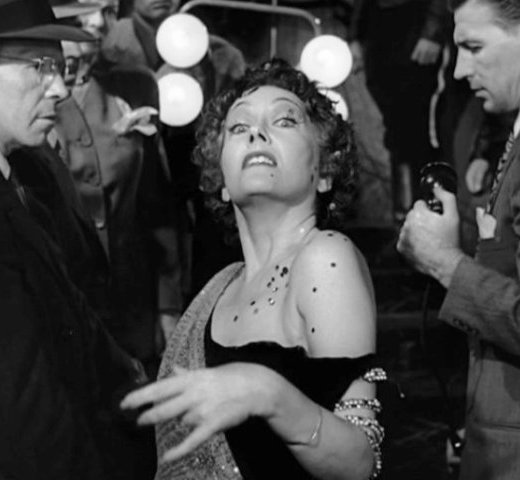
1. Sunset Boulevard (1950, dir. Billy Wilder)

One of the best American films of any kind. You know the story. Down on his luck screenwriter Joe Gillis (William Holden) avoids the repo men by pulling into the driveway of a decaying mansion, wherein resides the aging silent screen star Norma Desmond (Gloria Swanson). Gillis hatches a plan to make a little money off her, but who is actually controlling whom? Great support from Eric Von Stroheim as Max the butler, and Fred Clark as the producer who holds a pitch meeting from hell (not all that much has changed in Hollywood).

In any other year Swanson would have walked away with an Oscar. She was up against Bette Davis in All About Eve (another iconic performance) but they both lost to newcomer Judy Holliday in Born Yesterday.


2. The Whole Wide World (1996, dir. Dan Ireland)
A moving biopic of pulp writer Robert E. Howard (creator of Conan the Barbarian). Vincent D’Onofrio and Renée Zellweger deliver powerhouse performances as the doomed writer and the teacher who befriended him. Based on the memoir of Novalyne Price Ellis, played by Zellweger in the film.

Howard was one of the most prolific writers of the Depression era. He died by his own hand at the age of 30.


3. Old Acquaintance (1943, dir. Vincent Sherman)
A tale of art vs. commerce, of the real literary talent ignored by the public and the hack scribe who lucks into all the fame and money. Bette Davis plays the former and Miriam Hopkins the latter. It’s worth it just to watch these two divas (who intensely disliked each other) vie for attention (there’s a scene where Davis shakes Hopkins a bit too energetically). For my money, Davis steals it because she does not attempt to chew the scenery, the way Hopkins tends to. Makes you appreciate what a great actress Davis was.


BTW, Bette Davis was the greatest smoker in film history. If you watch her carefully, she never puffs the same way in any scene. She always works her cigarette in keeping with the mood of the moment.  


4. Teacher’s Pet (1958, dir. George Seaton)
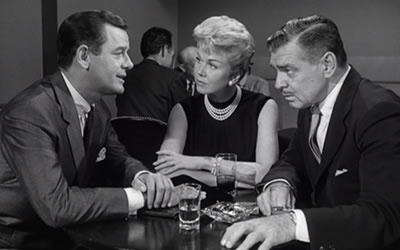
This one’s about old school journalism vs. trendy classroom theory. Clark Gable is the crusty newspaper editor trying to get the best of college journalism teacher Doris Day. Gig Young is hilarious in support (he picked up an Oscar nod). The best scene is in a night club where Gable tries to drink Young under the table while Gable’s too-young-for-him squeeze, Mamie Van Doren, bumps and grinds a song that embarrasses everybody. Day is a monster talent: she could sing, dance and act in both comedy and drama.

BTW, did you know Doris Day was offered the role of Mrs. Robinson in The Graduate? She turned it down because she thought it too much against her image, but she would have killed that role, just like Anne Bancroft did.


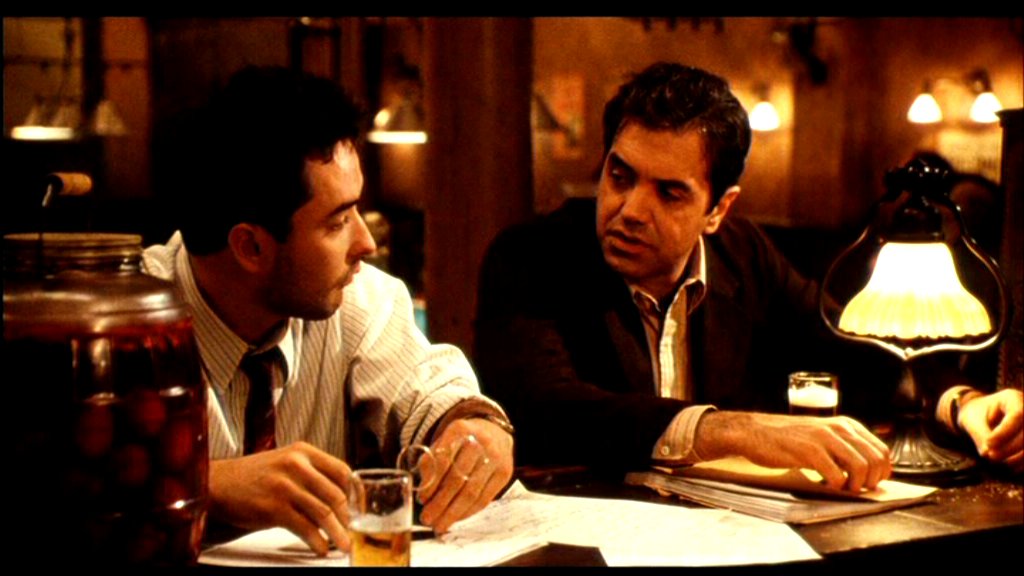
5. Bullets Over Broadway (1994, dir. Woody Allen)
What do you do when a cheap thug is a literary genius, and you, the writer who wants to be great at all costs, don’t have that touch? 


It’s a movie full of great moments (Woody Allen is never funnier than when puncturing pretensions) and solid performances, most prominently Chazz Palminteri as the thug-genius and Jennifer Tilley as a mobster’s gal who, naturally, wants to be an actress (Oscar nods for both). Dianne Wiest won the Supporting Actress statuette as an over-dramatic Broadway star.


6. Midnight in Paris (2011, dir. Woody Allen)
Owen Wilson is perfectly cast as the Hollywood screenwriter who is transported back in time to meet some of his writing heroes. He’s hilarious as he relates to everyone in 1920s Paris in his laid-back, Southern California style (like when he offers a Valium to a wigged out Zelda Fitzgerald).


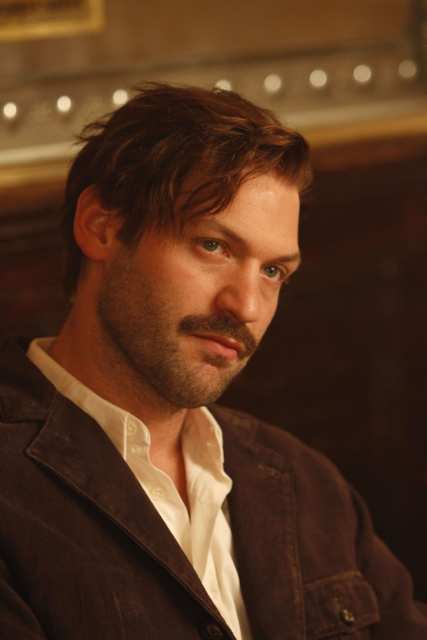
Corey Stoll as Ernest Hemingway (above) gives my favorite performance. He manages to capture both the bluster and genius of Hemingway, and neither he nor the script make him out to be a buffoon, which in our politically correct days would have been the easy choice. I also cracked up at Adrian Brody’s rendition of Salvador Dali.
So what about you? Any favorite films about writers or the artist’s life you’d like to put on the list? I’ve got plenty of microwave popcorn and am ready for some recommendations.   

Morning, Noon and Night

Morning, Noon or Night
Early morning, noon, or night?
When is your favorite time to write?
I hesitate to start this entry with rhyme, particularly since we have some real poets among those who contribute to The Kill Zone. But I thought it would be a good way to get your attention, which is what this is all about, anyway. So…

Keep in mind that the query is presented with the understanding that one can write anytime, anywhere. You don’t have to go to the local coffee shop and commandeer a booth, although it looks cool as all get out. Inspiration comes and goes at any and all hours. I was in New Orleans last year when my computer cra…er…passed a sand castle and died. I wrote a couple of chapters of a work in progress using the Swype feature on my droid phone. It wasn’t pretty, but the job got down. And I wrote while riding on a streetcar in the morning, waiting for dinner with a frosty bottle of Barq’s Root Beer, and in the afternoon during a part of a seminar when my attention span was MIA. I’ve seen others do it too, of course. I was leaving John Ramsey Miller’s home after a delightful evening when he and his lovely wife Susan hosted my family and as I pulled down the driveway I spied John at his desk, typing madly away at 10:00 PM.
But…the question is: when is your favoritetime to write? Mine, since I asked, is early morning. I get up before everyone else, feed the cat (as he does figure-eights around my calves, crying, I ask him: “It’s a real bear, not having opposable thumbs or a soft palate, isn’t it?” and he agrees) and the guinea pigs who whistle like tea kettles until the food is served up. By then the Keurig has done its thing and I am set to go to work in the grammar mine. There are no interruptions, the slate is clear, and the word stream has the effect of pushing the nightmares away. For a while, anyway.
So when is your favorite, or most productive, time to write? And if you are a reader and not a writer, when is your best time to read? 

My Coolest New Internet Toy

By John Gilstrap


A few weeks ago, I posted about my adventure with Jeffery Deaver in which we got private instruction on tactical shooting while at the SHOT Show in Las Vegas.  Well, now there’s videos evidence: http://tinyurl.com/clxzbry.  You can also find a link on the News Feed on my website.


If it looks like slow motion, that’s because it was.  We were using live ammo in a car, assuming shooting positions that could easily have made our own legs the primary target while drawing.  The “quick draw” contest at the end–also rather slow–was a one-shot, three round accuracy contest.  The first to hit the gong won the round.  While the video shows Jeff winning the first shot, the next two, which I won, somehow ended up on the cutting room floor.  I’m just sayin’ . . . 


This brings me to the stated purpose of this week’s post: my coolest new Internet discovery: Dropbox.  Like everything else that dwells in cyberspace, I’m confident that I’m one of the last ones to the table here, but my goodness, is that cool!


You go to www.dropbox.com and download the program free of charge, and Bingo! you have cloud storage for your files that is accessible from any computer anywhere.  You can even share files, which is how I was able to give my web mistress access to the 100MB video of our shooting adventure.


I still depend heavily on my thumb drive as primary storage, backed up to whatever machine I’m working on at any given time, but it’s great to have Dropbox, accessible from anywhere.


What are the other cool Internet toys that I’m behind the times on?  Which ones are indispensable toyou?

Hook Your Book

By Jordan Dane

High concept story lines are based on an intriguing premise or hook. A hook is the same thing as a logline, best described as a 1-2 line TV guide listing. A short pitch line takes a complex book plot and summarizes it down to an enticing teaser. Generally this teaser is the first step to conveying your novel idea to an editor or agent, whether in a query letter, proposal, or during a pitch session at a conference.

Elements of your hook line should include:
Main Characters
Conflict
Unique Qualities
Setting/Time Period
Main Action
Emotional Element

Important questions to ask in order to define your hook:

Characters – Who is the main character? What does he or she want? What is their goal?

Conflict – What is the obstacle in the way? Who will play the part of the villain? Does the main character have a flaw that adds to the drama of why he can’t get what he/she wants?

Setting/Time Period – What is unique about your setting or time period? Does it contribute to the conflict for the character?

Main Action – What is the most compelling action in the story?

Emotional Element – What is the most gripping emotional element to your story?

Even if your story has been told before, you can add a fresh take or twist on it. An effective hook can make it seem new. High concept hooks can also be based on “what if” questions like:

·         “What if man could clone dinosaurs?” (Jurassic Park)

·         “What if there was a place that stayed dark and vampires never had to interrupt their feeding to sleep?” (30 Days of Night)

·         “What if a defense attorney couldn’t lie?” (Liar, Liar)

Sometimes a high concept idea can be only in the title. So even if a movie or a book doesn’t get top reviews, people still buy it because they “have to” experience it.

·         Snakes on a Plane

·         Abraham Lincoln, Vampire Hunter

I’d like to share the hook on two books that I enjoyed reading. These represent daring authors who didn’t take the easy road in determining their plots. Imagine the craft it would take to write these two novels. Better yet, read them and enjoy.

The Book Thief by Markus Zusak – The story of a 14-year old girl living during the time of the Holocaust, narrated by Death. The hook is the author’s narrator choice. The time period is very compelling and the fact that the girl steals books to teach herself to read during a time when books are being destroyed is a gripping period piece, but to have Death be the narrator puts this book over the top. The New York Times is quoted as saying this book is “life changing.” All I can say is that it changed me.

Thirteen Reason Why by Jay Asher – This is the story of a girl who commits suicide but sends 13 audio tapes to the people who contributed to her making that fatal decision. The audio tapes are an effective hook, but the writer chose to tell the story through one boy who got a recording. He was the one person who had a secret crush on this girl, but did nothing about it. The story is told one night as he listens to the intimacy of her voice in his ear as he follows the map to all the locations she sends him to. Recorded flashbacks mix with the present, but the reader never loses track of what is taking place.

Here is the hook for my latest series with Harlequin Teen – The Hunted series. In this series, kids who can’t speak out, without drawing attention to who and what they are, make the perfect victims on the streets of LA. A covert faction of a church hunts them under the guise of doing God’s work—to stop the abominations from “becoming.” The tag line on the cover will be: They are our future, if they survive.

A fanatical church secretly hunts “Indigo” teens feared to be the next evolution of mankind. These gifted teens are our future…if they survive.

For those of you writing a project now, please share your hook. Take up to 3 lines. Even if you don’t have a current project, make something up that you’d like to write and have fun using the questions above. You never know what might pop up.