
 by Debbie Burke
Spell check thinks the word “motional” is a typo. But it isn’t.
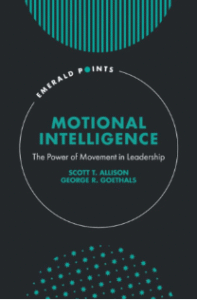
Motional Intelligence: The Power of Movement in Leadership is the title of a new book by Dr. Scott Allison and Dr. George Goethals, professors emeriti at University of Richmond. Their premise is that humans register first impressions of others, not from physical appearance nor what they say, but from how they move.
They write: “Motion is core to social interaction. Before anyone speaks, a conversation has already begun…Speech came late. Motion came first.” Motional intelligence sounded like a great potential tool for writers to build more interesting characters. So I reached out to Scott Allison to learn more.
Here’s our interview:
Debbie Burke: Thanks for agreeing to talk with me about Motional Intelligence. Would you please explain this concept to Kill Zone readers?
Scott Allison: Yes indeed. Here’s our definition of Motional Intelligence, which we abbreviate as MI. MI is the capacity to use one’s body movements intentionally to communicate and influence others, to accurately perceive, decode, and interpret the body movements of others across contexts, and to regulate one’s own movements – and one’s interpretations of others – in response to shifting social demands. So you can see there are 3 aspects of MI – an expressive component (how we display our own motions), an interpretive component (how we decode others’ motions), and a regulatory component (how we plan and adjust our motions to situational demands). We do these three things effortlessly and often without conscious awareness.
DB: What inspired you to write this book?
SA: One day, somewhere between burgers and coffee, my co-author George Goethals and I shared an epiphany: everything we were analyzing – heroism, leadership, empathy, influence, conflict – depended less on what people said and more on how they moved. Yet psychology had no comprehensive framework for this. This book began the moment we realized that these motions are not incidental to human life; they are human life. According to evolutionary biology, speech came late, and motion came first. George and I just had to write about this!
DB: You talk about familiar ways to measure intelligence like IQ (logical reasoning, problem-solving) and EI (emotional intelligence) but you say MI (motional intelligence) is different. Can you expand on that?
SA: Motional intelligence (MI) is one of many aspects of overall intelligence. MI is not the same as emotional intelligence (EI). EI centers on the perception, regulation, and expression of emotions, typically through facial cues, vocal tone, and affective appraisal. MI, by contrast, isolates a different communicative channel entirely: the dynamic language of body movement.
DB: Is “body language” the same as motional signals?
SA: Yes, in the sense that we use our bodies to communicate, to persuade, and to trigger emotional responses in others.
DB: What character/personality traits are revealed through MI?
SA: Pretty much every personality trait than humans possess can be revealed through motion. Kindness is revealed through a soft posture, a smile, a tilt of the head, and the reaching out of a hand. Dominance is revealed through very different posture, facial expression, and use of limbs. Before anyone speaks, a conversation has already begun. A stranger’s shoulders soften as you approach; a friend leans in before offering a word; a colleague’s foot angles toward the door long before they admit they’re late for another meeting. We live inside a constant choreography of meaning – signals given and received, often without our awareness.
DB: Do you have ideas how writers could use MI to bring fictional characters to life?
SA: Authors of fiction can use MI to animate characters in ways that transcend dialogue and emotional description. Rather than merely telling readers what a character feels, writers can reveal personality, motives, status, intentions, and inner conflict through patterns of movement—posture, gait, gesture, rhythm, pacing, stillness, spatial orientation, and bodily timing. A character with high MI, for example, may subtly mirror another person’s posture to build trust, regulate the emotional climate of a room through calm and deliberate movement, or communicate dominance through economy of motion rather than overt aggression. Conversely, low MI might appear in awkward timing, invasive spatial behavior, rigid posture, excessive fidgeting, or an inability to interpret others’ bodily signals accurately. Fiction writers can also use MI developmentally: a character’s evolving movement patterns may symbolize psychological transformation, growing confidence, moral corruption, intimacy, trauma, or heroic maturation. In this way, bodily motion becomes a narrative language that conveys character identity and relational dynamics at a pre-verbal level, making fictional people feel vividly alive and authentic.
DB: Writers are advised to show, don’t tell. Can you suggest how MI might be used to show relationships between characters? How about to show their conflicts?
SA: MI offers fiction writers a powerful “show, don’t tell” toolkit for revealing relationships and conflict through bodily movement rather than explicit explanation. Healthy relationships can be conveyed through movement synchrony—characters mirroring posture, walking in step, sharing relaxed rhythms, anticipating one another’s actions, or comfortably occupying shared space—thereby signaling trust, intimacy, affection, or familiarity. Romantic attraction may appear in subtle orientation cues, lingering gestures, or softened movement, while friendship may emerge through playful physical ease and unguarded posture. Conflict, though, often disrupts bodily coordination through avoidance, rigid posture, pacing, competing movement rhythms, territorial spacing, or emotional stillness. Writers can also show relational transformation over time by altering these movement patterns, allowing bodily synchrony, distance, hesitation, or tension to function as a nonverbal narrative language that makes fictional relationships feel psychologically authentic and vividly alive.
DB: I can imagine ways that misreads of a character’s MI could lead to misinterpretations and plot complications. You’re also a film expert and co-author of the book Reel Heroes and Villains. Can you give movie examples where MI (or lack thereof) was instrumental in driving the plot?
SA: Absolutely. MI is often central to cinematic storytelling because film is an inherently movement-based medium. In The Dark Knight, Heath Ledger’s Joker possesses a dark form of MI. He constantly manipulates spatial dynamics, bodily unpredictability, and movement rhythm to destabilize others psychologically. His erratic gestures, invasive proximity, asymmetrical posture, and sudden stillness generate tension and fear, driving much of the film’s emotional chaos. In The Devil Wears Prada, Meryl Streep’s Miranda Priestly uses highly regulated MI to project authority. Her economy of motion, precise pacing, controlled stillness, and minimal gestures create an aura of dominance that shapes every interaction around her. In Napoleon Dynamite, Napolean’s social awkwardness emerges through stiff posture, delayed reactions, unusual gait, and poor synchrony with peers, creating both comedy and emotional isolation.
DB: Where can readers find your new book?
SA: Our MI book is available on Amazon or Barnes and Noble. There is a kindle version, too.
DB: Thank you, Scott, for exploring this interesting topic.
SA: My pleasure and thank you for showing an interest!
~~~
TKZers: Can you think of film characters who use MI especially effectively? Do you see ways MI might help your work in progress?
~~~
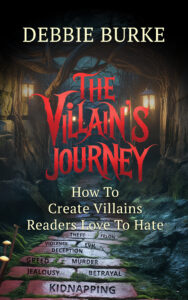
Dr. Scott Allison and Dr. George Goethals graciously gave me major assistance with the psychology of villains for The Villain’s Journey: How to Create Villains Readers Love to Hate.
Please check out The Villain’s Journey at:
This was so interesting! Great new ‘tool’ to use in writing.
Glad you found the info helpful, Bonnie! It certainly makes me more aware of how my characters move.
I love this! Another example Is Don Knotts as Barney Fife — he often made me think of a banty rooster.
Great example, Pat!
Silent films are a crash course in motionality. As Scott points out before there was speech, there was movement.
Interesting. In high school, I was effectively a bouncer. Body language, how and where you stand, your stance in general were right. Now what I learned is a science. It works.
Alan, absolutely! Bouncers, law enforcement, soldiers, and others in potentially dangerous situations have to quickly size up their possible opponent.
As a skinny young teen, a relative worked in an all-night gas station in a bad part of town. He learned to read people accurately. If he didn’t, he risked being beaten up and/or robbed.
This is fascinating information. I do try to use body postures to help convey emotional state or intent. I wonder whether any research has been done to see whether descriptions in reading materials are picked up as well as they are when an individual sees another individual with their eyes. Do readers subconsciously get what the posture descriptions convey? Reading is going through the speech center, whereas viewing someone is all visual.
Great questions, Kathy! Reading and seeing are vastly different. Another intriguing research rabbit hole to explore.
I wish more fiction authors would add physical attributions, especially during dialogue. Many of them state that the dialogue stands for itself, that the extra words of someone clenching their hand into a fist, or someone straightening in their chair, or eyes becoming watery, aren’t necessary. Much of the dialogue I read these days could occur in the back seat of a taxi cab amongst robots, or cows standing in a pasture. To me, MI has a great deal with the old adage – Show, don’t tell.
Henry, I agree that the right gesture or expression at a crucial time adds much more depth and resonance than plain dialogue. I often use action tags in my fiction instead of attributions like he said/she said. .
Screenplays are hard for me to read b/c dialogue feels flat and disembodied.
Yes to the occasional action beat. My caution is that too much of it tires out the reader at the expense of what’s being said. (Which is why said is still the go-to, IMO.)
Excellent interview, guys! MI is also used by wildlife. All animals rely on it, considering different species don’t speak the same language. As a species ourselves, I love that you attached a phrase to it. Motional Intelligence is perfect!
Sue, communication among different species of animals is an outstanding example of MI. Not a word is exchanged but the message comes through loud and clear. It can be the cat telling the dog “Get off my pillow” or the lion telling the jackal “This is my dinner, not yours.” Everyone understands.
Great interview and discussion, Debbie!
I’d never heard of this.
Thinking how this concept applies to myself, as a vocalist onstage my bodily movements are completely different than in everyday situations.
And as for characters, I think Marlon Brando and Al Pacino in The Godfather are good examples. Their body movements are almost iconically opposite each other. IMO…
Have a good one!
Terrific observations, Deb! Singers, musicians, dancers, comedians, actors, trial lawyers—all cultivate that “stage presence.”
Recently I’ve been using The Godfather as an example in my villain classes. Now you’ve prompted me to go back and watch Brando and Pacino again with MI in mind. Thanks!
Really interesting post Debbie, and I will definitely think about this in my writing.
One film character that immediately comes to mind is Hannibal Lecter. Not a lot of movement, but his posture is quite deliberate, and I think adds to the menacing aspect in a unique way.
Great example, Linda! Hannibal is the MI master of sinister presence, from the disconcerting smile to the hungry gleam in his eye. Thanks for adding him to the discussion.