Beware of Dog and Other Things to Remember

Beware of Dog and Other Things to Remember
Terry Odell
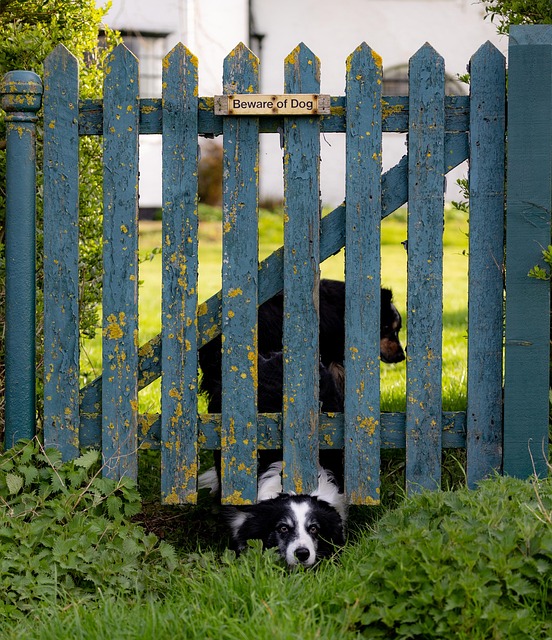
black and white dog with its face poking out underneath a blue fence with peeling paint and a sign saying Beware of Dog

Image by Kev from Pixabay

People like dogs. Readers like dogs. So, when I was starting my current wip, without much conscious thought, this appeared in the first 400 words of the manuscript:

“Evvie snatched the envelope from Roger’s hand, wrestled the cart to the door, and not waiting for him to offer to help, pushed the cart—none too gently—against the door to open it. She maneuvered the cart, fighting the universally requisite out-of-alignment-wheel, down the sidewalk to her SUV. After arranging her photos on the towels she kept in the back for Baxter, not concerned about his sheds of black dog hair, she slammed the hatch. She left the cart next to the nearby red maple—let Roger come get it—and drove home.

As she entered the kitchen of her little house near downtown Colorado Springs, Baxter greeted her. Bouncing, shimmying, his stump of a tail wagging as if she’d been gone a month, not thirty minutes.”

Okay, so Evvie has a dog. Dog loving readers will connect.

Then what? First, this isn’t a cozy, and these dogs don’t talk or have a POV role. The book is a romantic suspense, which means it’ll fall into the romance category. That means a hero. And they have to meet. Per reader expectations, very soon. Being a good dog parent, Evvie takes Baxter for a walk, and they end up at the neighborhood dog park. Enter the expected hero. With his dog, a golden retriever named Sammy.

All should be good. Hero and heroine have a connection. Their dogs. Although they’re not in a relationship at this point (Chapter 2), the hero has a dog, he likes dogs, and that scores points with Evvie.

Now, here’s the problem. It’s a romantic suspense, which means Bad Stuff Has to Happen. Whether they’re working independently or together, if they go anywhere, they (meaning me) can’t forget about the dog.

I’ve read books where a dog was introduced, and then hardly shows up on the page again. This is unacceptable. You put a living, breathing being on the page, and it has needs. Food. Water. Walks. And you have to take this into account in Every Single Scene. How much time has elapsed since the last scene? Where were the dogs?

In my writing, I try to keep time moving forward in real time, more or less. If I jump ahead, I make sure that’s noted. Here, I give readers credit for assuming that if it’s much later in the day, or the next day, or three days later, that the characters have gone about the normal day-to-day events, and that the dogs have as well.

Now, if I’m with my characters, then all those normal day-to-day events need to be covered somehow. Not a minute-by-minute, but at least a mention to readers can keep track of elapsed time. “After lunch” is good enough unless something important happens that moves the plot forward.

Since my characters are in the ‘getting to know each other’ stage, they need to be together. I don’t know about you, but back in my day, that was usually along the lines of dinner and a movie. Movies don’t make for good page time, but as long as some plot advancing happens, I have no trouble showing them in an eatery, where they’ll interact with servers—because how else will their food appear?—ordering, eating, etc., along with discussing those plot advancing topics.

But now I have to remember that they’ve got dogs at home. Did I skip the time where they were tending to them? It’s okay to tell rather than show everything—“After feeding and walking the dog…” but you put them on the page, so you can’t neglect them.

Likewise, if your characters have children, or are caring for an elderly parent, you can’t pop them in and out when you think of it. They’re part of the story and can’t be neglected.

JSB talks about the shadow story to keep track of other characters, especially the villain. Most of my books don’t have the kind of villains that more traditional “murder mysteries” have, so any tracking of bad guys tends to be minimal for me. However, secondary characters both human and otherwise, require tracking.

So, when the Real Trouble starts and my characters have to leave town in a hurry, they (meaning me) have dogs to deal with. Kennel them? Do they have dog sitters? Or do the dogs have to come along?

A sticky note on my computer saying “Don’t forget the dogs!” is the equivalent of my dog coming into my office and staring at me when one of her daily routine boxes needs to be checked.

(Side note, along similar lines. If you say a character needs to pee, I want to see that they’ve had a chance to hit a restroom. I’ve seen authors ignore this step, too. Drives me nuts.)

Basic “rule.” If you mention anything, it becomes a thread that has to be followed. Don’t leave readers hanging. Or thinking your characters are less than likeable because they’re not taking care of the dogs (or people) they’re responsible for.

What about you, TKZers? Do you avoid pets because of the complications they throw into the work? If your characters have pets (or other humans they’re responsible for), how do you deal with the requisite “care and feeding”?


Find me at Substack with Writings and Wanderings

Deadly Ambitions

Peace in Mapleton doesn’t last. Police Chief Gordon Hepler is already juggling a bitter ex-mayoral candidate who refuses to accept election results and a new council member determined to cut police department’s funding.
Meanwhile, Angie’s long-delayed diner remodel uncovers an old journal, sparking her curiosity about the girl who wrote it. But as she digs for answers, is she uncovering more than she bargained for?
Now, Gordon must untangle political maneuvering, personal grudges, and hidden agendas before danger closes in on the people he loves most.
Deadly Ambitions delivers small-town intrigue, political tension, and page-turning suspense rooted in both history and today’s ambitions.


Terry Odell is an award-winning author of Mystery and Romantic Suspense, although she prefers to think of them all as “Mysteries with Relationships.”

When Is It Their Turn?

When Is It Their Turn?
Terry Odell

red curtain with a man's hand reaching throughSecondary characters, as PJ pointed out in her post, can be great fun to write. They don’t have the responsibilities of the protagonists. They can provide insight into the protagonist, add some humor, be sounding boards, love interests, or foils.

Sometimes, they branch out and become protagonists themselves. John Sandford gave Virgil Flowers his own stories. Robert Crais gave Joe Pike his own books. Will CJ Box’s Nate Romanowski move from strong secondary character into a protagonist in his own right?

In television, branching out into new shows happens all the time. Michael Connelly gave Renee Ballard her own books, and soon her own television series. Lee Child’s Reacher television series has a Neagley spinoff.

The rise of secondary characters is prevalent in romance, where “series” (I call them connected books) tend to have an ensemble cast in which a secondary character moves up to center stage in a subsequent book. I do that in my romantic suspense books, although when I wrote When Danger Calls, my first Blackthorne, Inc. book, I had no idea there would be another one. That series now contains twelve books, and a lot of secondary characters have had their turn at taking the lead. How do I decide whose turn it is? Often, I’m having fun with that character and want to do more. But sometimes, the character shows up and requests a bigger role. That’s what happened with Jinx, who became the lead in Dangerous Connections.

cover image of Dangerous Connections by Terry Odell

Here’s what happened.

Jess, my admin buzzes me.

“Terry, there’s someone here who insists on seeing you. Says his name is Josiah Nix.”

Jinx? What’s he doing here? “Tell him to have a seat, and I’ll see him shortly.”

Shortly—the most vague word in the English language. But it’ll buy me some time. I open my computer and pull up the files for my Blackthorne, Inc. series. After a quick review—somehow, once I finish writing a book, it’s gone from my head as soon as I start work on the next one—I feel ready to meet Jinx.

I buzz Jess. “Send him in.”

The door opens, and Josiah Ignatius Nix—which I’d shorted to Jinx for the books—enters. He’s not quite the same man I interviewed for his initial role in Where Danger Hides. Same not-quite-six-feet tall. His shoulder-length hair is pulled back into a tail at the nape of his neck. Same deep blue eyes and lashes to die for. But he’s hesitant, not curious the way he was at that first meet, which was quite some time and several books ago.

“Have a seat, Mr. Nix.”

“Jinx will do. I’m used to it now.”

He sits on the small sofa, as if he’s afraid taking a visitor chair would put him too close to me. One foot bounces, almost imperceptibly. Nervous?

“What brings you here today?” I ask.

He tugs at his ponytail. “Wasn’t completely my idea.”

This isn’t the behavior of a man in charge of Blackthorne’s command center.

“Who else?”

Another ponytail tug. The foot bouncing becomes more noticeable. “The guys, mostly. Harper. Dalton. Fozzie.”

“Can I get you something to drink? I’d offer a Red Bull, but from where I’m sitting, it doesn’t look like you need caffeine. I have coffee—decaf. And herbal teas.”

I open my drawer, check my snack stash. Down to a couple packets of cashews and almonds.

“I’m all right,” Jinx says.

I look at the clock. Just shy of three. “I generally have a break around this time, so it’s no trouble.” I flash my best reassuring smile, then buzz Jess and, voice lowered, ask her for the usual job interview refreshment tray.

“So,” I go on. “You’re still in touch with some of the Blackthorne team?”

“Sort of. Molly—that’s Harper’s kid. Actually, she’s Frankie’s kid, but Harper considers her his own. It was her birthday, and they invited me—us. Harper had a few things to say to me, and so I’m here.”

Jinx definitely wasn’t behaving the way I’d written him. Where was the always on top of things, always in control character I’d created?

Jess opens the door and comes in carrying a tray of assorted munchies. Cheese, crackers, cookies, nuts, and fruit, along with cocktail napkins. Do I detect a show of interest in Jinx?

“Help yourself.” To break the ice, I take a napkin, a piece of cheese and layer it on a cracker, along with a small bunch of grapes.

“Thanks.” He chooses an assortment of offerings. “Maybe a cup of decaf?”

“Coming right up.” I pop a pod into my brewer and start things going. Once we’ve had a few moments of more routine behavior, Jinx seems relaxed.

He sets his coffee cup on the end table and inhales a deep breath. “I like my job. I’m good at it. But I’m ready for … more.” He meets my gaze. “If that’s possible.”

Now we’re getting somewhere. “What do you mean by more?”

“I’m not complaining, don’t get me wrong. I mean after Where Danger Hides, you really increased my parts in the next books, and my parts were important. But—”

I wait. He doesn’t seem willing to go on. “What’s the but?”

“I’m always behind the scenes. Nobody ever sees me. And—” he lowers his gaze to a point between his feet. “And I want what the others got. A woman.” The word is barely audible.

“Someone they’re happy with. I want that, too. I mean, except for Harper, because it was the first book, the others start out in the background. I don’t know what you call them.”

“Secondary characters,” I offer.

“Right. And then, they get their own story, and they get their woman. I don’t want to keep being a secondary character.”

“I understand.” And I do. Seeing his book friends living their happily ever afters would make him—anyone—want the same thing.

“Are you saying you want to be part of an op? On the ground, so to speak, not at the command center.”

He nods. “Zeke’s good at the command center. The teams could manage with him at the helm for an op.”

I’m remembering an article I saw on the internet a week or two ago. I saved it, thinking there might be a story there. I hadn’t considered Jinx for the lead, but I could make it work.

“Are you willing to travel?” I ask. “Solo? Undercover, at least at first. Of course, if it’s a Blackthorne book, your team will have your six.”

“I think so. Would I still be using my intel skills?”

“Of course.”

Ideals swirl.

I’m already planning. Jinx isn’t a covert operative. Will he be willing to accept a partner—female—who would be more than an equal?

“Can you come back, let’s say in two weeks, and we can go over a story premise?”

He smiles, the first sign of the Jinx I remember. “I’ll be here.” He grabs a cookie and heads for the door.

After he’s gone, I go back to that article that caught my eye. Communication. Drug cartels. Mexico. All I need are some more characters. I’ve got one in mind for Jinx. He’s going to love her.

cover image of Dangerous Connections by Terry Odell

Okay, so it doesn’t always happen like that, but every once in a while, you—or I, anyway—need some fun.

Feel free to share other secondary characters that have moved up to protagonists.


New! Find me at Substack with Writings and Wanderings

Danger Abroad

When breaking family ties is the only option.

Madison Westfield has information that could short-circuit her politician father’s campaign for governor. But he’s family. Although he was a father more in word than deed, she changes her identity and leaves the country rather than blow the whistle.

Blackthorne, Inc. taps Security and Investigations staffer, Logan Bolt, to track down Madison Westfield. When he finds her in the Faroe Islands, her story doesn’t match the one her father told Blackthorne. The investigation assignment quickly switches to personal protection for Madison.

Soon, they’re involved with a drug ring and a kidnapping attempt. Will working together put them in more danger? Can a budding relationship survive the dangers they encounter?

Available now.


Terry Odell is an award-winning author of Mystery and Romantic Suspense, although she prefers to think of them all as “Mysteries with Relationships.”