
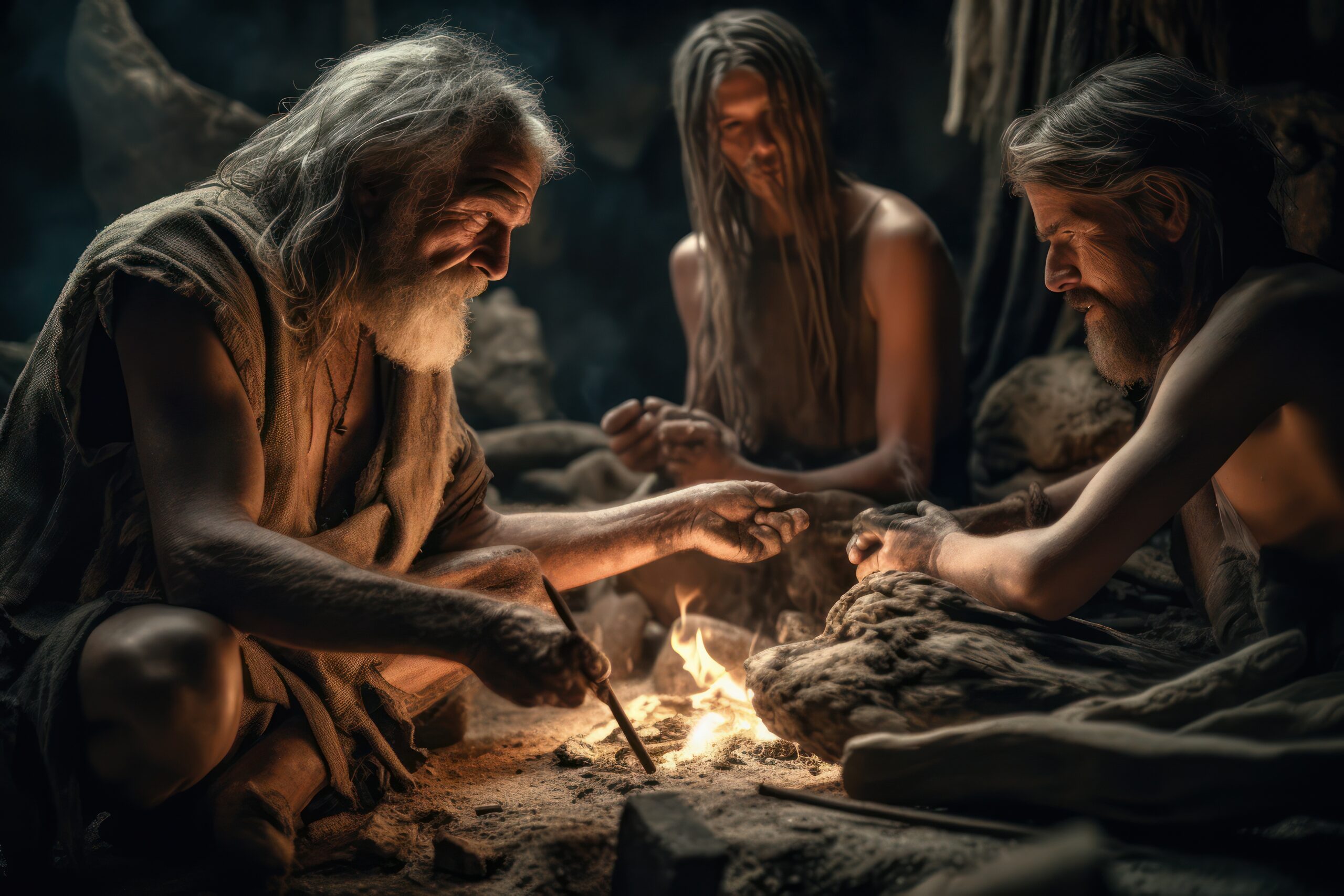
The earliest stories and myths were passed along orally. There were no books or libraries. Most people couldn’t read. That was left to the scholars and monks, who wrote enough down to preserve our developing world (see Thomas Cahill’s How the Irish Saved Civilization). The Visigoths weren’t into reading.
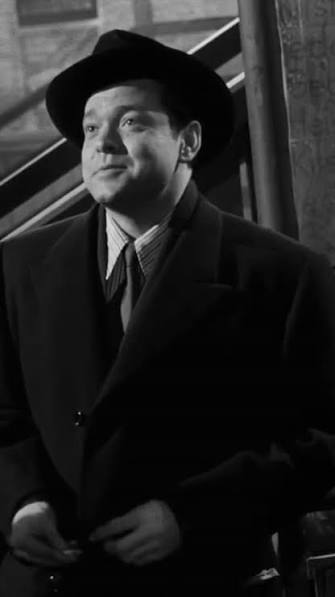
Then a guy named Gutenberg invented movable type, and the book business began. The Renaissance bloomed. It was also a bloody time, but as Harry Lime explains in the classic film The Third Man:
Orson Welles as Harry Lime
“Don’t be so gloomy. After all it’s not that awful. Like the fella says, in Italy for 30 years under the Borgias they had warfare, terror, murder, and bloodshed, but they produced Michelangelo, Leonardo da Vinci, and the Renaissance. In Switzerland they had brotherly love. They had 500 years of democracy and peace, and what did that produce? The cuckoo clock.”
All that to say, we paid a price for literacy, but it was worth it. The United States was born by way of a single-page written document (for you kids playing at home, identify the document without Googling or Grokking). We became a land of readers, voraciously gobbling the printed word, set down in everything from cheap wood-pulp magazines to beautifully bound volumes with gilt-edged pages.
Perhaps the height of our reading prolificacy was in the 1950s and its robust market of “middlebrow” fiction, exemplified by the Book-of-the-Month Club. This was a vast realm between mass market and high literary. The books were more “challenging” than the former, and more accessible than the latter. Every middle-class home had a bookshelf. The one in my parents’ house was stocked with hardbacks, one of which was a book called Ulysses (that no one seemed to have finished).
But there was one called Gone With the Wind which I picked up one summer in junior high and was, as they say, transported. I can still feel myself lying on the front-room sofa getting truly “lost in a book.” It was a transformative moment. (Tarzan of the Apes was another such experience.) I had become a dedicated reader of books.
Now, I fear, such transformation may be going the way of the Dodo. A chilling article in The Atlantic has been the subject of much online discussion. Get this:
According to the National Endowment for the Arts, which conducts the most comprehensive survey of the nation’s reading habits, fewer than half of all adults reported having read a book of any kind in 2022. Only 38 percent read a novel or short story. A study analyzing 236,000 responses to the American Time Use Survey found that the proportion of Americans who read for pleasure on any given day fell from 28 percent in 2004 to 16 percent in 2023. (The study looked at people who had read a book, magazine, or newspaper; listened to an audiobook; or read an e-book.) Gambling has become a more common leisure activity than reading a book: Last year, 57 percent of Americans placed a bet.
The decline in reading cuts across age groups, gender, and education levels. Even the demographics that traditionally read the most—retirees, women, and college graduates—have seen a collapse.
And this:
In 2024, in a national test, just 35 percent of high-school seniors were “proficient” at skills such as analyzing complex fictional themes and evaluating the effectiveness of an author’s argument. About the same number scored below “basic,” meaning that they may struggle to draw conclusions from concepts explicitly included in a text, or to use context clues to determine the meaning of an unknown word. Adult-literacy scores have also dropped: Nearly 30 percent of American adults cannot paraphrase or make inferences from a multipage text. In 2017, that number was less than 20 percent.
More:
Things are about to get worse, and fast. The next generation reads much less than today’s adults did when they were kids. Kindergarten teachers say that many of their students don’t know nursery rhymes or fairy tales, Benjamin Powers, the director of Yale and the University of Connecticut’s Haskins Global Literacy Hub, told me. (In the study of 236,000 American adults, only 2 percent read to a child on a given day.) From 1984 to 2025, the percentage of 13-year-olds who said they rarely or never read for fun rose from 8 to 29 percent. Every year older a child gets, the less they like to read. Robert Townsend, a program director at the American Academy of Arts and Sciences, recently ran focus groups asking high-school students how they felt about reading for pleasure. He told me that most thought of it as an alien practice.
Now, with AI taking over all life forms and media, my head spins like Linda Blair’s (can you kids identify this reference without Googling or Grokking?) Every day on X or TikTok or Instagram there is a flood of visually stunning videos created by 13-year-olds in a bedroom without books.
I have no conclusions. I only have a keyboard, and each day I type words for the creation of books. But my back feels like it’s pressed against the gates of Rome circa 410 A.D.
What’s a writer to do? I ask you.
[Note: I’m on the road today, and don’t know when I can check in, but I will. Meanwhile, have a robust discussion amongst yourselves!]