
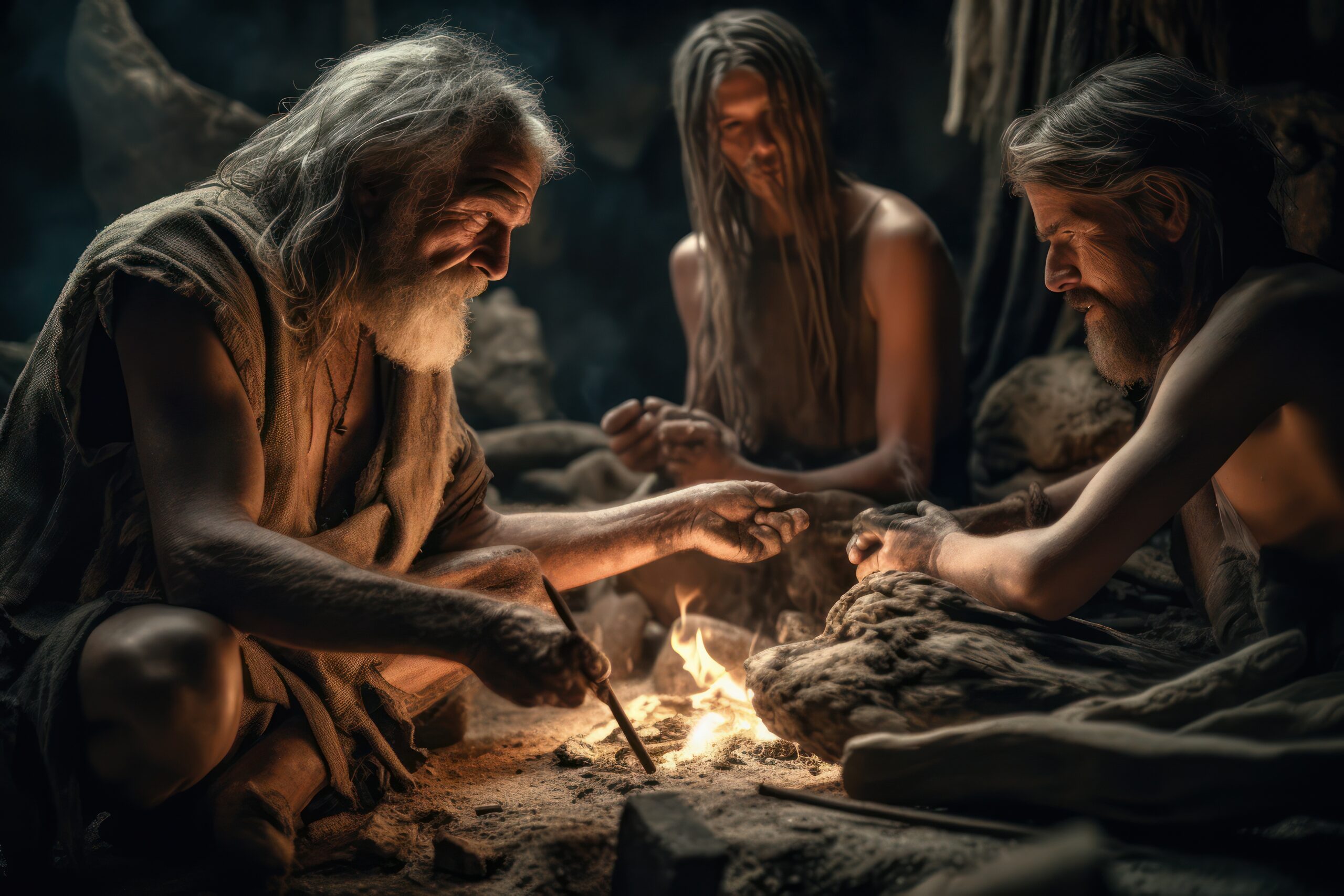
The earliest stories and myths were passed along orally. There were no books or libraries. Most people couldn’t read. That was left to the scholars and monks, who wrote enough down to preserve our developing world (see Thomas Cahill’s How the Irish Saved Civilization). The Visigoths weren’t into reading.
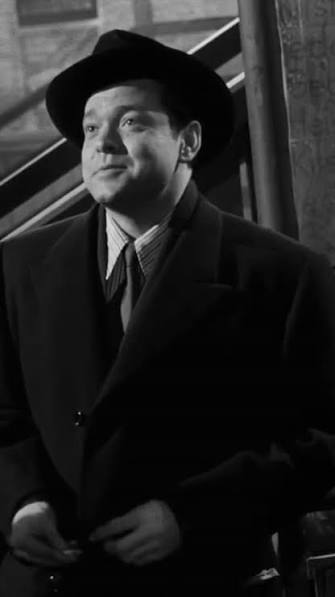
Then a guy named Gutenberg invented movable type, and the book business began. The Renaissance bloomed. It was also a bloody time, but as Harry Lime explains in the classic film The Third Man:
Orson Welles as Harry Lime
“Don’t be so gloomy. After all it’s not that awful. Like the fella says, in Italy for 30 years under the Borgias they had warfare, terror, murder, and bloodshed, but they produced Michelangelo, Leonardo da Vinci, and the Renaissance. In Switzerland they had brotherly love. They had 500 years of democracy and peace, and what did that produce? The cuckoo clock.”
All that to say, we paid a price for literacy, but it was worth it. The United States was born by way of a single-page written document (for you kids playing at home, identify the document without Googling or Grokking). We became a land of readers, voraciously gobbling the printed word, set down in everything from cheap wood-pulp magazines to beautifully bound volumes with gilt-edged pages.
Perhaps the height of our reading prolificacy was in the 1950s and its robust market of “middlebrow” fiction, exemplified by the Book-of-the-Month Club. This was a vast realm between mass market and high literary. The books were more “challenging” than the former, and more accessible than the latter. Every middle-class home had a bookshelf. The one in my parents’ house was stocked with hardbacks, one of which was a book called Ulysses (that no one seemed to have finished).
But there was one called Gone With the Wind which I picked up one summer in junior high and was, as they say, transported. I can still feel myself lying on the front-room sofa getting truly “lost in a book.” It was a transformative moment. (Tarzan of the Apes was another such experience.) I had become a dedicated reader of books.
Now, I fear, such transformation may be going the way of the Dodo. A chilling article in The Atlantic has been the subject of much online discussion. Get this:
According to the National Endowment for the Arts, which conducts the most comprehensive survey of the nation’s reading habits, fewer than half of all adults reported having read a book of any kind in 2022. Only 38 percent read a novel or short story. A study analyzing 236,000 responses to the American Time Use Survey found that the proportion of Americans who read for pleasure on any given day fell from 28 percent in 2004 to 16 percent in 2023. (The study looked at people who had read a book, magazine, or newspaper; listened to an audiobook; or read an e-book.) Gambling has become a more common leisure activity than reading a book: Last year, 57 percent of Americans placed a bet.
The decline in reading cuts across age groups, gender, and education levels. Even the demographics that traditionally read the most—retirees, women, and college graduates—have seen a collapse.
And this:
In 2024, in a national test, just 35 percent of high-school seniors were “proficient” at skills such as analyzing complex fictional themes and evaluating the effectiveness of an author’s argument. About the same number scored below “basic,” meaning that they may struggle to draw conclusions from concepts explicitly included in a text, or to use context clues to determine the meaning of an unknown word. Adult-literacy scores have also dropped: Nearly 30 percent of American adults cannot paraphrase or make inferences from a multipage text. In 2017, that number was less than 20 percent.
More:
Things are about to get worse, and fast. The next generation reads much less than today’s adults did when they were kids. Kindergarten teachers say that many of their students don’t know nursery rhymes or fairy tales, Benjamin Powers, the director of Yale and the University of Connecticut’s Haskins Global Literacy Hub, told me. (In the study of 236,000 American adults, only 2 percent read to a child on a given day.) From 1984 to 2025, the percentage of 13-year-olds who said they rarely or never read for fun rose from 8 to 29 percent. Every year older a child gets, the less they like to read. Robert Townsend, a program director at the American Academy of Arts and Sciences, recently ran focus groups asking high-school students how they felt about reading for pleasure. He told me that most thought of it as an alien practice.
Now, with AI taking over all life forms and media, my head spins like Linda Blair’s (can you kids identify this reference without Googling or Grokking?) Every day on X or TikTok or Instagram there is a flood of visually stunning videos created by 13-year-olds in a bedroom without books.
I have no conclusions. I only have a keyboard, and each day I type words for the creation of books. But my back feels like it’s pressed against the gates of Rome circa 410 A.D.
What’s a writer to do? I ask you.
[Note: I’m on the road today, and don’t know when I can check in, but I will. Meanwhile, have a robust discussion amongst yourselves!]
Sixteen percent read and 57 percent gamble??? Whoa, what a comment on American culture (or lack of it!).
Yet when B&N opened a store in our town a couple of years ago, the checkout lines snaked around like DisneyWorld. Most heartening were the kids, arms full of books. Maybe that was a one off. Maybe that was in a rural area with long winters. Maybe there are fewer total readers but the ones who do are more dedicated.
Maybe when the overstressed power grid goes down and everyone’s device runs out of charge, some of us will be happily reading those clunky, musty old books.
Wow. Much to take in with this post. First, I learned a new word: “prolificacy”. 😎
The least surprising of the points shared is about modern-day kids not knowing nursery rhymes or fairy tales. Parents would have to spend time with their kids in order for that to happen and baby-sitting occurs by cell phone these days in most cases. My parents bought lots of physical books for me, including these cool huge over-sized hardcover fairy-tale books that probably measured something like 11X17.
I find it horrifying how willingly humankind has chosen to cease use of its brain and allow technology to take over pretty much every aspect of life.
But I myself don’t read as many books a year as I used to and the reason is time. When I was younger, I always thought that the older you got the more time you had to do stuff you wanted to do. I have, unfortunately, found the reverse to be true. Despite the so-called ‘wonders’ of technology, modern society makes some things take longer. For example, now, if you want to find accurate news, you typically have to access multiple sources to try to get at the real gist, whereas back in the olden days you just turned on one of 3 channels and got the news. So trying to stay informed in this day and age takes a LOT longer then it used to.
But bottom line, reading is still a staple for me, even if I can’t read as many books in a year as previously. I do not like “listening” to books. I have to physically read, whether Kindle or print. Just not the so-called “classics” of literature. I still have a rebellious streak in me after being forced to read such stuff in school instead of getting to pick my own choices.
Thank you for initating this discussion, Jim. I read the Atlantic article earlier this week and share your trepidation of what some are calling the emergence of a post-literate society. Beyond the statistics, Ms. Horowitch convincingly cites how reading sharpens our cognitive abilities and fortifies our institutional, historical, and cultural memories.
So, what’s a writer to do? Stay the course. Focus on what we can first control. Write and read. Then focus on what we can influence. Advocacy of both. Post-literacy is being driven by emergent technologies we can’t control and, at best, weakly influence. But we can seek creative ways to use those avenues for our advocacy.
What I’m doing is turning my writing into “moving media.” I’m writing screenplays and scripts that I’m then filming (more accurately, videoing). The writing (and storytelling) is the foundation, but the build-out is leading me more and more into camerawork and editing. I still read (novels, nonfiction), but I also watch (movies, TV, crazy videos). Multimedia, I guess one could call it.
I don’t know who they’re surveying. But I sure don’t see this in my world. My daughter, daughter-in-law, grandkids, and a multitude of nieces and nephews are prolific readers. My daughter-in-law belongs to 2 book clubs with members around her age (30). When we go to “our” B&N it’s also packed as is the Half Price bookstore. I check out a lot of books from Libby because books have become so expensive. (Which I fear will make reading and owning books like owning original artwork one day. Only the wealthy can afford it). I often wait months to get a book from Libby because so many borrowers are ahead of me. I’m reminded of my husband’s favorite Monty Python saying, “I’m not quite dead yet.” I think the same is true of reading. I know my grandkids will read to their kids just like their mom and dad. In the meantime we need to do all we can to protect our public and school libraries, where budgets are being disseminated and librarians robbed of their decision-making power. Sorry, you touched a nerve!
“Reports of my death have been greatly exaggerated.” Mark Twain.
I was an avid reader as a child, so much so I had even one of my junior high teachers tell me I read too much. In my own schools back then, reading wasn’t something every one did. However, my mother modeled avid reading for me and I caught the bug from her. I wound up a librarian as well as a published novelist and short story writer.
I’m worried about the current erosion in reading habits, think that there will always be some who will want to lose themselves in a good book or a story, and even if there is a “dark age” of unliteracy, reading will endure.
I agree with Kelly…my grands all read, and I read at least one book a week and listen to one if I’m driving. Also, when I was in the schools teaching abstinence, I often saw kids carrying around the latest YA bestseller.
As I read your post, I wondered if AI-written slop was to blame, but I also think the low percentage of readers is due to shorter attention spans. I wish they could feel the magic of reading—transporting us to all sorts of unfamiliar worlds, where we befriend all sorts of characters. It’s an experience like no other.
This may well lead to a two-caste system, where those who can process written information wind up as the upper caste. Even now, when I hear people talk of elites, they are almost always referring to those who are educated. Education always requires the ability to change symbols into thoughts.
Your figures didn’t surprise me. Most of the kids today graduate functionally illiterate. They are unable to read OR write coherent essays. Most never have read a classic book since those are not required. They are force fed bits and pieces of information to pass a test without any critical understanding of what those bits and pieces actually mean.
We have allowed the dumbing down of our schools to the lowest common denominator and it is now showing. And to think we used to be #1 in education. I’d say we are almost 3rd world in education today and that is sad. And it only took us 45 years to destroy our education system.
I still read a lot and buy paperback book or hardcovers from my nearest library. I read ebooks. And I find the time to do that by staying off social media which is a total time suck. (I work 48 hr as week and write in the evenings and on my one day off a week.)