by Michelle Gagnon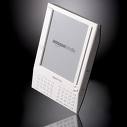
So a few months ago I posted about ebooks on the Bookbitch blog. I was an unexpected convert, one of those people who waxed eloquent about the smell of the paper and crack of the spine. But last year I purchased a Sony Reader for my husband to take on a trip to Europe. For months after his return, the Reader sat forgotten in a kitchen drawer.
Then came the day I was packing for a vacation, doing my usual tortured book shuffling, trying to figure out how I was possibly going to bring everything I wanted to read. I remembered the Reader, and decided to give it a whirl—if nothing else, it would free up some room in my suitcase. I was trepidatious, convinced my eyes would tire after a few hours of reading, or that the simulated page turning would prove irritating.
I returned home a convert. I’d read six books in a week, a tiny fraction of what the Reader was capable of holding, all in a device smaller than a trade paperback. No tired eyes, and once I got the hang of it I didn’t even notice that I was reading the books in a completely different format. In fact, turning pages was easier than it would be with a “real” book. I was hooked. In fact, now I own a Kindle too—my husband gave me one for my birthday, so that I’d stop hogging his.
And that got me thinking about what these new electronic readers mean for the future of publishing. Amazon Kindles are flying off the proverbial shelves. There’s a generation of kids who are acclimated to reading everything off a screen. On the opposite end of the spectrum is a generation of baby boomers with aging eyes, and the new readers offer up to six different font sizes, eliminating the need for large format books. As the prices of these devices come down, and more books become available electronically, I foresee them attracting an ever-increasing share of the reading population.
And you know what? IMHO, this is a good thing. Readers are readers, it doesn’t matter to me whether my books are bound or scrolled across screens. And environmentally speaking, it’s hard to argue with a format that doesn’t destroy any trees, and leaves a negligible carbon footprint.
If I’m correct, it’ll be interesting to see how this changes the publishing landscape. Some people have posited that publishers as a whole will be eliminated, that being able to sell books directly to vendors will eliminate the need for them. Frankly, I don’t think that will happen. Every book needs a good editor (at least, I know that mine have always benefited from having one), and I believe that the publishing houses do tend to provide a filter for what reaches the public. Sales and marketing teams are still necessary to get the titles into the public eye. And every book needs an attractive cover.
But  imagine the savings for them. No longer will they have to gamble when determining a book’s print run. No more remaindering. Every author could potentially earn out their advance. The risks and costs for publishers will be greatly reduced, which might lead to a more even split of the proceeds.
Going a step further, imagine what else could change. Recently, to celebrate the release of her latest book, Julia Spencer-Fleming’s publisher offered free downloads of her first novel for a limited time. Brilliant marketing idea, in that it offered the possibility of garnering new readers at little or no cost. Currently, the Kindle offers a free download of the first chapter of every book, then gives you the option of purchasing it. I love that feature, and nine times out of ten I end up buying the book. Which then downloads to the device in a minute or less: instant gratification.
Further down the line, picture interactive book covers. Alternate endings that the readers can choose, or links to backstories on the characters. It could be a brave new reading world.
Of course, there are concerns. Piracy is an issue, one that the music industry has b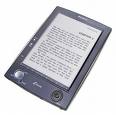 een grappling with for years. That initially prevented them from seizing opportunities, something that Apple readily exploited by exploding onto the scene with iTunes while major labels were still churning their wheels with outdated marketing models.
And as a huge fan of independent bookstores, I fear for their demise as much as all of their other supporters. If ereaders really take off, it could prove an insurmountable obstacle for them. I’m hoping it won’t be, because there will always be a need for the kind of knowledge base and informed guidance they do such a wonderful job of providing. But bookstores on a whole will be facing an uphill battle.
Of course, I’m not saying that books will stop being printed entirely. There will probably still be limited editions for collectors and everyone who loves the feel of a real book in their hand. I still buy books, even ones that I’ve already read electronically, when I’ve enjoyed them so much that I couldn’t resist adding them to my shelves. You can’t gift wrap an ebook, and as of right now they’re still not ideal for reading in the tub or at the beach.
So tell me what you think. Are ebooks the wave of the future? Or have I just fallen under the thrall of my spiffy new Kindle? (Speaking of which, on October 1st one lucky subscriber to my newsletter will win a Kindle and be inducted into the cult. There’s more info on my site if you’re interested).

 Is it just me or has anyone else noticed how hard it is to talk after spending so much time in front of a computer writing thousands of words? It seems that the longer I spend writing, the more my ability to speak with others has diminished. When I’m at a social gathering or pretty much any situation where I try to communicate verbally, I tend to open my mouth and stammer or stutter as fragments of thoughts shoot out like shrapnel. Talking with others in real-time doesn’t allow me to craft my speak with first drafts, second drafts, rewrites, spell check, and thesaurus comparisons for alternative words. After all, I’ve spent hundreds of hours in a dark room with my eyes going buggy from the glow of my monitors while I labor over choosing just the right verb, avoiding passive voice, trying to catch myself from falling into the trap of using useless adverbs and flowery adjectives, cliches, over-writing, under-writing, starting my thoughts in the wrong place, line editing, plotting, split infinitives, dangling–well, you get the idea. As a writer, talking to others has become hard for me.