
by James Scott Bell
@jamesscottbell
 It helps to think of writing as a game.
We all want to make some scratch from our efforts to tell a great story. We all, at one time or another, have a dream of appearing on Today touting our upcoming #1 NYT bestseller. Then we wake up.
Side story: I was once in a Starbucks when Bruce Jenner, the Gold Medal decathlete, came in. I’d been a Decathlon fan as a boy after watching The Bob Mathias Story (starring Bob Mathias himself) on TV. Mathias was the first two-time Gold Medalist in the Decathlon, and one of the greatest athletes we’ve ever produced. So, wiseacre that I am, I sidled up to Bruce and said, “Say, aren’t you Bob Mathias?” To his credit, he cracked up, and we had a nice little conversation, in which I said, “I dreamed of being a Decathlete.” Bruce: “And then you woke up?”
I relate that because part of being a champion in any sport is a matter of two things: natural talent and hard work. I could have worked harder at the Decathlon than anyone in the world, but I just didn’t have the industrial springs in my legs that Jenner and Mathias were born with. My sport was basketball and I worked at it, got to be good enough to play in college, but I didn’t have the hops of a Michael Jordan, though I humbly assert that had I been six inches taller I might have given Larry Bird a run for his money (I could shoot lights out).
So there’s talent and work involved in any successful enterprise. Which is why I often think of this writing gig like my favorite game, backgammon.
This ancient game has been around for 5,000 years, and is brilliantly conceived. Dice are involved, so there’s always an element of chance. A player who is way behind still might win if the dice give him a roll he needs at just the right time. But there’s also strategy, which means you need the ability to think, which is something you’re born with. You can develop the latter through work, which is what education used to be about. (Don’t get me started.)
There’s one other element of backgammon—risk. The “doubling cube” allows a player at any point to double the stakes. The other player may decline and forfeit the game for the original bet (playing for penny stakes is enough, which is a good reason to keep pennies in circulation!). Or he may accept the risk and later, should things change favorably, double back.
So someone who knows how to think strategically, can calculate odds, and take risks at the right time will win more often than the average player who depends mostly on the rolling bones.
Early on I studied the game by reading books. I memorized the best opening moves for each roll. I learned how to think about what’s called the “back game,” what the best “points” are to cover, and when it might pay off to leave a “blot.”
And I played a lot of games with friends and, later, on a computer. I discovered a couple of killer, though risky, opening moves. I use them because they can pay off big time, though when they don’t I find myself behind. But I’m willing to take these early chances because they are not foolhardy and I’m confident enough in my skills that I can still come back.
This, it seems to me, is analogous to the writing life. There is luck involved. I sold my first novel because I happened to be at a convention with an author I had met on a plane. This new acquaintance showed me around the floor, introduced me to people. One of them was a publisher he knew. That publisher just happened to be starting a new publishing house and was looking for material. I pitched him my book and he bought it a few weeks later.
But I was also ready for that moment. I had been studying the craft for several years and was committed to a weekly quota of words. I’d written several screenplays and at least one messy novel before completing the project I had with me at the convention.
Thus, as in backgammon, the greater your skill, the better your chances. The harder you work, the more skill you acquire. The old saw “Luck is when preparation meets opportunity” certainly applies.
There are different talent levels, but that’s not something you have any control over. And someone with less talent who works hard often outperforms the gifted but lazy writer.
Now, that doesn’t mean you’ll always win big in any one game. Far from it. If the dice are not your friends, things might not turn out as planned. That book you thought was a sure winner might not be.
But if you love writing, you don’t stop playing.
And don’t ever worry about the dice. You cannot control them, not even if you shake them hard and shout, “Baby needs a new pair of shoes!” The vagaries of the book market are out of your hands.
Just continue to work, write, play and take some risks. It’s a game, after all.
Comments welcome.
NOTE: This post partially adapted from and brought to you by How to Make a Living as a Writer and The Mental Game of Writing.

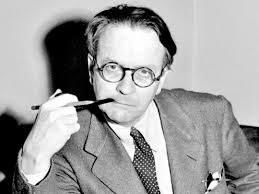
 One of the more ubiquitous quotes about writing out there, almost always attributed to Hemingway, is: “There is nothing to writing. All you do is sit down at a typewriter and bleed.”