The Blank Page––Make That The Blank Screen

By John Ramsey Miller

www.johnramseymiller.com

I have never had writer’s block. I have had my share of fits of laziness, but I can always sit down at my computer and knock out a chapter or three. I credit my time, in the late eighties, that I spent as an advertising copywriter with Hoffman/ Miller Advertising. Each day I would sit at a typewriter––an IBM Selectric first, and later an Apple Lisa–– and I would knock words out in short or long lines. I knew I wasn’t writing The Catcher In The Rye, but I took what I was doing seriously because I knew that companies and their employees depended on what I did to communicate what they offered, and that they depended on my judgment and creativity to grow their sales.

In those days, in a booming New Orleans, I would work on several accounts every day, so my mind was constantly changing gears between real estate, to jewelry, Italian clothing, oil & gas, tank storage farms, banking, foods, hot tubs, parking decks, mayonnaise, coffee & tea, chemicals, hospitals, restaurants, and other private, retail and wholesale clients whose needs varied. I wrote or directed to be written, brochures, catch lines, jingles, TV and radio spots, body copy and point of sale ads. There were always deadlines that couldn’t be missed no matter what else was going on, and we never missed one, although our suppliers did on occasion.

Most importantly, I learned to take rejection, and never to take it personally, and to get on to the next thing with enthusiasm and a clear head. We were a young agency and we often went up against other larger agencies and often we lost out, not based on our creative solutions, but because other larger agencies were seen as “safer”. We rarely had the advantage, but we often won with our creative approaches.

We’d begin campaigns by asking ourselves questions about what the client’s target customer was going to stop and look at, and what they might act on or would likely pass over. I was fortunate that I had a partner, Nathan Hoffman, who was and had a remarkable work ethic, and we didn’t care who came up with or got the credit for an idea that made sense.

I learned to take criticism of my ideas and copy and to make changes based on what other people who knew thought without feeling offended or slighted. If you don’t have a thick skin you can’t be successful in advertising or writing commercial fiction. Once we sold a new logo and accompanying campaign to a CEO of a large company, but before we left, he asked the cleaning lady who was emptying his trash can which one she liked, and she picked the old one and said she hated the one we’d agreed on because she “didn’t get it.” Even though she was accustomed to the old one because she knew it, she planted a bad seed in his mind and shook his confidence in the new logo. He had a point since a logo had to make sense to everyone and might be too radical a change too fast and leave some old customers baffled. We ended up doing an updated variation of the old logo, and nobody was lost in the shuffle. Once we had to throw out a campaign that was unfolding over several months because the client’s wife had a friend she trusted who was “bored” with the campaign and thought it ought to be more exciting. Explaining numbers of impressions needed over time to establish the client’s products was a waste of time. The client ate the expense of starting a new more exciting campaign because, and I quote, “I have to sleep with my wife.” All we could was what the client asked for.

I had one client, David Rubenstein, whose Rubenstein Bros. clothing stores told me. “John, you can agree with my ideas and do what I think is best against your better judgment, which is what I am paying you for, but if it fails, I’ll blame you. If you disagree, just say so, and if I go against your suggestions, I’ll take the blame.” Clients as perfect as David Rubenstein were indeed rare, but treasured by our agency.

So I think back on those days and what I learned, and realize that it helped me become the writer I am. I am easy to work with because I understand that it’s the end product that counts. Although I have a lot of control of my stories, I always listen to my agent and my editor because they know more than I do, and I am always ready to make whatever changes they feel will improve my work. And, you know, so far they have always been right.

When I am called upon to give advice to new authors, I can only go back to what worked for me, and most of it all goes back to those days when I was filling blank pages without knowing there was such a thing as writer’s block.

A Day Job: The Cure For Writer’s Isolation

By John Gilstrap
www.johngilstrap.com

For me, the dream of becoming a full-time writer turned out to be a bad one. My first book, Nathan’s Run, sold very well and a lucrative movie deal followed. Eighteen months later, a second bestseller and a second movie deal convinced me that maybe it was time to walk away from my career as a safety and environmental engineer and do this writing stuff full time. After all, isn’t that the dream of every artist—to get paid full-time for what you’ve always done just for the love of it?

My son was nine years old back then, and this whole adventure was brand new. Here I found myself with a healthy bank account, some minor celebrity and a dream at my doorstep. How could I not walk away from the humdrum world of business? My wife and I moved to a little nicer house, to a better school system, and for the next seven years or so, I lived what was supposed to be my dream.

I should have known early on, though, that I had chosen poorly. Those were the halcyon days of the brand new Internet (at least as far as I was concerned), and AOL had a terrific authors’ room called The Writers Club, where I spent hours chatting with the likes of Tom Clancy, and the then-unknown Harlan Coben, Tess Gerritsen, Lorenzo Carcaterra and our own John Ramsey Miller. On any given day, I spent at least as much time in that chat room as I spent at my computer screen creating the stories that were now the sole means to pay the mortgage. I wasn’t ignoring my responsibilities—I was still churning out books—but I was hungry for company.

Here’s the thing: I am a classic Type A personality. I am an extrovert in the true meaning of the word—I draw energy from being around others. By spending my days in writer’s isolation, I was feeding my creative side while starving my need for social interaction. I made the best of it, turned out four novels and four screenplays for the studios, but I needed change.

The final blow came in 2004, when my baby boy left for college (he just graduated cum laude from Virginia Tech—way to go, Chris!), and my faithful foot-warmer and dear friend Joe (the dog) died at age twelve. My wife and I were truly empty-nesters. My wife had embraced the need for social interaction two years before and gone back to work, so that meant it was literally just me and my imaginary friends knocking around the house all day. It was a loser of a plan.

So, I sought and found a day job again—my wife calls it my big-boy job. I am the director of safety for a trade association in Washington, DC, just three blocks from the White House. If I could magically remove the commute from my daily equation, it would be perfect. On the other hand, without a daily trip on the subway, where would half of my characters come from?

Oh, and as for the writing . . . I am at least as productive, if not more so, as a part-time writer as I was when I was full-time.

A Non-Glamorous Life

My children have accused me of being a boring person. I like to think I merely give that impression because I listen more than I talk, and I am usually content to be an observer of the world around me. And now I live in a boring place––very rural North Carolina––where nobody seems impressed by authors who didn’t write something practical and useful to their daily lives. For instance my coffee table at this moment has two books sitting on it: a copy of Storey’s Guide To Raising Chickens, and Basic Country Skills. I don’t advertise the fact (to my few neighbors) that I’m an author, because people out here would view making a living writing stories as suspicious behavior. But my new environment is making me a more relaxed, and much more focused, writer.

After fifty-eight years of living in major cities, large or small towns, my wife and I decided we wanted some solitude and more control of our lives. My wife, a proven country girl, and I sold our house in Concord, NC, and moved way out here off a gravel road named for a small clapboard church. It’s a place where most of the roads, that aren’t just numbers, are named for churches or schools they run in front of, or harness shops, or are called things like Shortcut Road.

They knew me in town as a fiction author, while out here at the feed and seed store they know me only as “Blue Toyota Highlander” because that is what they put my feed sacks into after I pay for my order. One of the perks of living several miles from the middle of nowhere is that despite my fish-belly-white, chicken legs, I can go around the community in shorts without anyone making “sunglasses” jokes or caring at all. Sometimes, when it’s cool enough, I wear overalls or jeans with missing knees. And I have been honing my carpentry and necessary 4-H skills.

My writing studio is a converted feed storage shed, a 12X12 room (with a covered porch where my three dogs lounge while I work), which despite new oak floors, large double-pane windows, and sheet-rocked and painted walls still smells of sweet feed. Plus I can shoot my guns at stationary targets from the rear deck without a single complaint from neighbors, as they often shoot from their own decks as well. Most late afternoons I get a cold beer, or perhaps a Martini or a single malt, and my wife and I sit on the deck and watch the chickens milling about the yard in search of bugs and young plants. I have snakes: black rats, hog-nose, rough greens, kings, and corn snakes, which have free run of the place since they eat crickets, rats, mice, and poisonous snakes, and are left more or less alone by my dogs. My field is surrounded by thick woods. We raise and eat organic chickens, we buy grass fed beef from the farm next door. We eat fish I catch, fresh produce from our garden, wild hogs I shoot, venison I shoot, and free-range eggs we grow to counteract the effects of all those years of eating food from the shelves of grocery stores. This morning wild turkeys came to the chicken pen and gobbled at the rooster, that cockadoodledooed back at them. My grandson walked right up to them, and they didn’t run, just watched him. I took a pictures.

You know you’ve arrived in the country when of your neighbors lists his occupation for the IRS as, “working in the woods”. People out here mind their own business, drive pickup trucks because they need to haul more than booming speakers, work hard all day, and enjoy the simpler things in life. I’m doing my part to fit in.

I can sit at my desk, cruise the Internet and watch all manner of wildlife crossing my field or my driveway. But, best of all, I can commute to the office in my boxer shorts without worrying that anyone will come by unexpectedly. I love my friends, but because it’s just too inconvenient for the vast majority of my city dwelling friends to pop in, it allows me fewer interruptions and longer spells at my desk.

Are ebooks the future of publishing?

by Michelle Gagnon

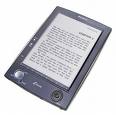
So a few months ago I posted about ebooks on the Bookbitch blog. I was an unexpected convert, one of those people who waxed eloquent about the smell of the paper and crack of the spine. But last year I purchased a Sony Reader for my husband to take on a trip to Europe. For months after his return, the Reader sat forgotten in a kitchen drawer.

Then came the day I was packing for a vacation, doing my usual tortured book shuffling, trying to figure out how I was possibly going to bring everything I wanted to read. I remembered the Reader, and decided to give it a whirl—if nothing else, it would free up some room in my suitcase. I was trepidatious, convinced my eyes would tire after a few hours of reading, or that the simulated page turning would prove irritating.

I returned home a convert. I’d read six books in a week, a tiny fraction of what the Reader was capable of holding, all in a device smaller than a trade paperback. No tired eyes, and once I got the hang of it I didn’t even notice that I was reading the books in a completely different format. In fact, turning pages was easier than it would be with a “real” book. I was hooked. In fact, now I own a Kindle too—my husband gave me one for my birthday, so that I’d stop hogging his.

And that got me thinking about what these new electronic readers mean for the future of publishing. Amazon Kindles are flying off the proverbial shelves. There’s a generation of kids who are acclimated to reading everything off a screen. On the opposite end of the spectrum is a generation of baby boomers with aging eyes, and the new readers offer up to six different font sizes, eliminating the need for large format books. As the prices of these devices come down, and more books become available electronically, I foresee them attracting an ever-increasing share of the reading population.

And you know what? IMHO, this is a good thing. Readers are readers, it doesn’t matter to me whether my books are bound or scrolled across screens. And environmentally speaking, it’s hard to argue with a format that doesn’t destroy any trees, and leaves a negligible carbon footprint.

If I’m correct, it’ll be interesting to see how this changes the publishing landscape. Some people have posited that publishers as a whole will be eliminated, that being able to sell books directly to vendors will eliminate the need for them. Frankly, I don’t think that will happen. Every book needs a good editor (at least, I know that mine have always benefited from having one), and I believe that the publishing houses do tend to provide a filter for what reaches the public. Sales and marketing teams are still necessary to get the titles into the public eye. And every book needs an attractive cover.

But imagine the savings for them. No longer will they have to gamble when determining a book’s print run. No more remaindering. Every author could potentially earn out their advance. The risks and costs for publishers will be greatly reduced, which might lead to a more even split of the proceeds.

Going a step further, imagine what else could change. Recently, to celebrate the release of her latest book, Julia Spencer-Fleming’s publisher offered free downloads of her first novel for a limited time. Brilliant marketing idea, in that it offered the possibility of garnering new readers at little or no cost. Currently, the Kindle offers a free download of the first chapter of every book, then gives you the option of purchasing it. I love that feature, and nine times out of ten I end up buying the book. Which then downloads to the device in a minute or less: instant gratification.

Further down the line, picture interactive book covers. Alternate endings that the readers can choose, or links to backstories on the characters. It could be a brave new reading world.

Of course, there are concerns. Piracy is an issue, one that the music industry has been grappling with for years. That initially prevented them from seizing opportunities, something that Apple readily exploited by exploding onto the scene with iTunes while major labels were still churning their wheels with outdated marketing models.

And as a huge fan of independent bookstores, I fear for their demise as much as all of their other supporters. If ereaders really take off, it could prove an insurmountable obstacle for them. I’m hoping it won’t be, because there will always be a need for the kind of knowledge base and informed guidance they do such a wonderful job of providing. But bookstores on a whole will be facing an uphill battle.

Of course, I’m not saying that books will stop being printed entirely. There will probably still be limited editions for collectors and everyone who loves the feel of a real book in their hand. I still buy books, even ones that I’ve already read electronically, when I’ve enjoyed them so much that I couldn’t resist adding them to my shelves. You can’t gift wrap an ebook, and as of right now they’re still not ideal for reading in the tub or at the beach.

So tell me what you think. Are ebooks the wave of the future? Or have I just fallen under the thrall of my spiffy new Kindle? (Speaking of which, on October 1st one lucky subscriber to my newsletter will win a Kindle and be inducted into the cult. There’s more info on my site if you’re interested).

Finding Nemo’s Needs

nemo I was over posting on Absolute Write the other day and a beginning writer ask the question, how do you find out what motivates your characters? I suggested it could be done with something as simple as an interview. I said to interview your character as if you were a newspaper reporter asking probing questions about their life, quest, current situation, and other topics that could yield the answers. Come up with all the questions first. Then conduct the interview. It sounds simplistic, but it works.

As authors, we know how vital it is that all our characters have a goal. They must want something, and that something is what drives them. But it’s more than just a want. They must also have a need. If we don’t know what our characters wants and needs are, neither will our readers. With nothing to root for, the reader will lose interest. And in the end, they won’t care about the outcome.

So what is the difference between want and need? Think of Marlin, Nemo’s father in FINDING NEMO. Marlin’s only son, Nemo, is captured by a scuba diver and placed inside a fish tank in a dentist’s office. Marlin sets out to find Nemo. But he has a big problem, one that’s quite unusual for a fish: he has a terrible fear of the open ocean. So with just that much information, we now know his want and need. He wants to find his son, but to do so he needs to overcome his fear of the ocean. The reader (or viewer in this case) will root for Marlin to make it through all the perils he faces in order to find Nemo and rescue him.

Every character must have a want and need. The most critical are the ones for our protagonists and antagonists. But I think that even the smallest, one-time, walk-ons must be motivated. If we determine the goals of every characters, we will have an easier time writing them, and the reader will have a more distinct picture of the character in their minds.

In planning our stories, it’s important that we determine our main character’s wants and needs first. In doing so, we’ll always have a goal to focus on as we write. So what are your main character’s wants and needs? Can you express them in one sentence like we did with Marlin? Let’s find your Nemo’s needs!

Note: Join us on Sunday, September 28 when our guest blogger will be bestselling author Allison Brennan and on Sunday, October 26, when Agatha award-winning author, Chris Roerden is our guest.

Lost in translation

By guest blogger, Alafair Burke

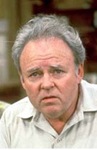
burke-alafair So I got an email today from an editor with my UK publisher, which will publish Angel’s Tip in November under the title City of Fear. All of my prior books were published in the UK in the identical form as the US editions. This time, however, the UK editor has ach-bunk suggested deleting cultural and  commercial references that might not be recognized on the other side of the pond: e.g., deleting an Archie Bunker reference and changing Tasti-delite, a ubiquitous NYC not-quite-ice-cream-like "food," to a Starbucks.

starbk I honestly don’t know whether UK versions of US-based books are typically changed to delete cultural references. Are they? Should they be? If I read a book based in the south and a character chows down on some ridiculous fried something or another at a food shack called Lucy’s, I don’t need to know about Lucy’s to get the general picture. On the other hand, if readers in the UK don’t want to feel left out of the story, I can certainly understand. What do you think?

Alafair Burke is the author of what the Sun-Sentinel has hailed as "two power house series" featuring NYPD Detective Ellie Hatcher and Portland Deputy District Attorney Samantha Kincaid. A former prosecutor, she now teaches criminal law at Hofstra Law School. She is a graduate of Stanford Law School and frequently serves as a legal and trial commentator for radio and television programs. She lives in New York City.

Note: Join us in the Sunday Kill Zone when our guest bloggers will be:
Allison Gaylin, September 14
Allison Brennan, September 28
Chris Roerden, October 26

Welcome to Bean-Counter Land

I still hear tales of authors in the old days whose work never sold impressively, but were published religiously because their words were deemed by the houses to be important to future readers and gave an author’s work deserved time and effort on their part to eventually build an audience. I don’t have to tell you that those days are, for the most part, long gone and any author’s importance to a publisher is measured strictly in units sold. The exception would be authors with exalted reputations whom a house wants to list as an author of theirs for reasons of status. Like movie studios, publishers seem only interested in books they believe will be blockbusters that will rapidly swell their quarterly numbers for stockholders. We can decry it as a shame, but we all need to understand that the world we write in is about numbers. The good old days, if they ever truly ever existed, are gone, baby gone.

By the way, it isn’t just numbers sold, but also the numbers of returns that publishers tend to go by. If you sell 50,000 copies of a first book, but they figured it would be a hunko seller so they printed 250,000 units because that was what “they” decided to print, you have failed them the worst way imaginable. And chances are that they will make you feel like a child who has disappointed his father––picture a New England Episcopal minister’s son who marries a snake-handling, poison-sipping toothless Holy roller from the mountains of West Tennessee.

Unless you are somehow able to sell a substantial number of books on your own, or if a book builds from word of mouth, the publishers won’t advertise, and if they do they will plant one ad in one spot and wonder why the advertising failed to move books. I was in advertising for many years and I can tell you that (according to some vague research we believed in) any ad has to be seen nine times to make an impression on an individual––and that’s a person who’s open to the product the ad is about. Print ads are a prohibitively expensive way to sell books, and unless you are a major best-selling author you will be lucky to get even one ad anywhere. Best-selling authors need ads only to hold their market share, so you can’t blame the publishers for putting their money where they are most likely to see results on their bottom lines. You can’t blame a business for wishing to make money because that is how everything is measured. It’s disheartening for an author to put a year of their life into a book, work to make sure it’s as good as they can make it and then watch the publisher ship it out to see what happens to it on the shelves. Even if a book wins a major prize, and gets great reviews, unless it hits their expectations, they watch it disappear after a few weeks and that’s it. It isn’t that they don’t care or believe in the book, it’s just a fact of business.

I have a great editor and a publisher I’ve been with since I started writing fiction and I know they care about me personally and want to see my career take off for all concerned. Okay, there’s some enlightened self-interest there, but such makes the world go around. I don’t mind. I am loyal to them, and they have been loyal to me. Each time I write a book I know they are watching and working hard and praying it will break out and I’ll sell enough books to make their sales team smile. I know when I fall below expectations, and I have, they are as disappointed as I am, but perhaps for a shorter time than I spend frustrated about it.

This business is hard, but I think no harder than most others. I see authors as cottage industry manufacturers working alone who make a product for a company that will refine and distribute it the best they know how. Some of us see the publishing company we’ve been with as our extended family, but unfortunately it’s not unconditional love, or life-long commitment. No matter how big your numbers are today, you are only as valuable to a publishing company as your sales sheets say you are. When you are selling big and making the lists, they dote on and pamper you, but when those sales slip, they will go to the next thing. This is true in most businesses. It’s as disheartening as discovering that the person you loved and thought you’d stay with forever has a change of heart, and falls for another, but it’s the reality.

The life of an author is hard. We work alone, are paid by the job, don’t receive insurance benefits from the company, work long hours, have no job security whatsoever, probably have little or no 401 Ks building up, and, if we are lucky manage to make a boom-to-bust living at it. But we do it for our own personal reasons, and if we complain, we know we’re wasting time we could be using to write, and that nobody outside our family really cares.

Recently a student asked me what advice I’d give an aspiring author. I said what I always say, “The writing life has its rewards for sure. Making a living doing what you love is as good as it gets. Despite highs and lows, creating stories from thin air and living with a book as you create and improve it is almost orgasmic. Seeing your books on bookstore shelves is a rush for sure, and hearing from truly appreciative readers is truly a great feeling. But… don’t become a writer if you think you will get rich from doing so. Don’t write for a living if you have a thin skin or can’t take rejection. Don’t become a writer, especially of commercial fiction, if you can’t take direction from editors and hack at your wonderful novel with a meat cleaver when it is necessary. And, if you are lucky enough to sell a book to a publisher, treat the first and each subsequent advance as though it is the last money you’ll ever see from your publisher …because it just might be.”

How Much Violence is Too Much?

By John Gilstrap

Language and violence are sensitive topics for fans and critics alike. My first book, Nathan’s Run, which I never considered to be a young adult book but nonetheless won the Alex Award from the American Library Association because of its relevance to teenage readers (the Nathan of the title is 12 years old), was banned by several school systems because of its language and violence. Apparently, there are 109 objectionable words in the book—an incensed mother actually counted. Maybe it was 409. Anyway, the book was banned from school libraries. (Memo to file: If you want to sell a lot of books, get it on a banned list somewhere.)

The whole book-banning thing is a soapbox of its own which likely will be the subject of a future rant, but for this blog entry, I want to focus on violence. As a society, we’re a little weird about it. There’s a whole subgenre of suspense fiction that celebrates vampires, the eroticization of oral exsanguinations, but if you kill a puppy or a kitty cat on the page, you’ll never sell a book in this town again. A few years ago, I was writing a very loose adaptation of Norman McLean’s Young Men and Fire for Warner Brothers, a never-produced flick about smoke jumpers—those wonderfully insane men and women who parachute into forest fires. The producers told me in no uncertain terms as I wrote the script that I should feel free to kill as many firefighters as I needed to serve the story, but that I could under no circumstances show a suffering, dying or dead animal. If I showed an animal in jeopardy, I had to later include a scene where we see that Yogi and Bambi made it out safely. Hey, the rules are the rules, and I signed the contract, so who am I to argue? But still.

In the world of the novels I create, no one tells me what I can and can’t do, and I have to say that the violence thing is something I struggle with. Not to keep flogging my fire service background, but I’ve seen violence up close. Torn, punctured flesh and broken bones are all ugly as hell. The screaming is unnerving, and injured people invariably smell awful. They make wee-wee and doo-doo on themselves, and if they’ve been dead for more than a couple of hours, they’re really unpleasant to be around.

As an author whose job it is to bring readers into the word of my characters, isn’t it my responsibility to make violence and its aftermath as squirmy as it is in real life? Shouldn’t violent actions have terrible consequences on the page as they do in the mean streets and combat zones? Clearly, I think the answer is yes, but truthfully, only to a point. A very fine line separates verisimilitude from a discomfiting violence-as-pornography. Like other forms of pornography, I suppose, it’s hard for me to define, but I know it when I see it.

A couple of weeks ago, John Ramsey Miller posted brilliantly on the importance of keeping scenes real in the reader’s mind. Along those lines, I become infuriated when I’m reading a story and a protagonist takes a bullet in the shoulder (or the thigh or the knee . . .) and keeps going. It’s not possible. The human body just doesn’t have a lot of free space in it. Every joint is a fragile structure. If you shatter a part of the scaffold that gives us structure, it doesn’t matter how tough you are; you’re going to fall down. You’re sure as hell not going to have one more fist fight with the bad guy just because you’re angry. Again, the anatomy and physiology of traumatic injury can be the subject of yet another future blog entry.

So here’s the tacit deal I make with my readers: Even when I take you to unpleasant places, trust me that I don’t do it for prurient reasons, and that I’ll never make you want to throw up because of what you’ve read.

Shake on it?

When good books go bad

By Joe Moore

How often have you heard a writer ask, "I don’t understand why my book is being rejected while so many bad books are published?" Or, "I keep reading books that are nowhere near as good as mine. Yet they wind up getting published while mine don’t. I don’t get it!"

Sound familiar?anger2 Here’s my spin on the answer to this never-ending source of frustration: there’s no such thing as a bad book. The reason I feel that way is I believe that all books are considered good or even great by someone.

No publisher will intentionally release a "bad" book. Doing so would be a doomed business plan, especially in today’s economy. Their goal is to find the best written manuscript, give it the most professional editing possible, promote it within budget limitations, and work closely with the author to raise the awareness of the book in the marketplace.

Here’s the problem: No publisher has a plan that is immune to failure. Not all books appeal to enough readers to make back the original investment. The dumpster is full of great books that did not make it into the hands of enough readers. And we have all come across books that we didn’t like or thought were "bad". (To be honest, I couldn’t make it through the first 50 pages of a huge best selling novel that won the 2007 Pulitzer Prize for fiction. Does that mean it was a "bad" book?)

Not liking a book is individual preference. Someone else may love it, which is usually the case. If a book is truly written poorly–spelling errors, typos, incorrect punctuation, etc.–that’s the failure of the line editor. And if it’s built on weak or sloppy writing (massive plot holes, 2-dimensional characters, stilted dialog, pacing issues, redundancy, cliche, etc.), that’s the fault of the acquisition editor. In both cases, the book should not have been published.

I have never met an author who said, "Today I’m going to write a mediocre book." I’ve never dealt with an agent who was seeking writers with minimal talent. There are no publishers out there willing to risk their money on a sure-fire loser. All books are considered great by someone. That’s why they were written, represented, and published. Did enough readers agree? Better yet, did enough readers even get the chance to agree. And if they didn’t, where does the fault lie? Marketing? Distribution? Promotion? Bad luck?

But even if we write a great book, there’s no guarantee that it will ever be published, much less sell enough copies to earn back the advance (many books fall short of that task). Don’t get me wrong, we all have to write the best book we can. But there are more great books that fail than succeed.

I think all books are great to someone. What do you think? Why does it seem that so many "bad" ones still get published while great books fail or never see the light of day?

Why I Hate Genres

By guest blogger, David Hewson

davidhewsonsmall Back when I was young, a time of plague and much wailing, I used to spend long and happy days in libraries. I’d like to say this was a literary leaning on my part, though the absence of girlfriends and money may also have made their contribution. In the late 1960s my local library in northern England was a wondrous place, full of books all neatly divided into two principal categories. There was non-fiction, broken down into the obvious sub-divisions, such as science and philosophy, nature and art. And there were novels which, as far as I recall, had just a single section to one side  – the yellow-jacketed science fiction titles bought in for the local weirdos.

The rest was just fiction. No labels for crime or thriller, noir or mysteries. Just books all jumbled up together. The way you picked one was to ask for recommendations among the people you knew or simply flick through the covers on the shelves to see what took your fancy. This, I guess, is why I read widely, from Robert Graves to Ray Bradbury, Jung to the weirder corners of magic. The grim god of genre had not yet reached my cold little corner of the north. As readers we were free to enjoy what we pleased without wondering whether we had crossed some invisible line into the land of the damned.

The writers of the time were, I guess, free to pen whatever took their fancy too. Don’t you envy them? A little while back I heard a couple of people saying about one well-known author who’d dared to do something unexpected, ‘He’s dissing the genre’. Apparently I’ve transcended the genre too on a couple of occasions, which is good I gather, not that I care much because a part of me wants to know this: What *$@*^& genre?

Now don’t get me wrong. If you write about werewolves and vampires, distant galaxies or detectives who happen to be the pet cat of Tutankhamen, you are in a fixed and discernible category of fiction to which people can and will attach a label. The same goes for an author who chooses to set a tale in 1940s Hollywood with a private detective as the protagonist. Or maybe anyone who uses a PI as a lead character. I’m a Brit. I have never in my entire life met a private detective. We scarcely have them over here. Yet still people turn out Brit-based private eye stories as if the back streets of Peckham are just duller, rainier versions of Chandler’s LA. Why? Beats me…

Most of us – and I include the luminous regulars around here – don’t fit any such bill. We write about a world that’s near as dammit real, and that – I hope – is what gives our work its power. There is no deus ex machina, no wizard with a wand, sometimes no super hero, with or without magical powers, to get our characters out of their fix. Nor are we alone.

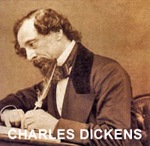
200px-Charles_Dickens_3 Consider this for a story. A troubled young man discovers his father was murdered by the man who went on to marry his mother (who he, the son that is, happens to find rather hot). Crime? Noir? Thriller? Or just Hamlet?

How about this one? A starving student cooks up a plan to murder a greedy old woman he regards as a parasite. The crime goes wrong and he winds up killing her half sister too after she stumbles on him mid-blow. Haunted by his increasing guilt he’s driven to confess the crime first to a prostitute, with whom he has a strangely sexless relationship, and finally to the police. When he’s sent to jail in a distant prison the prostitute follows with some hope of redemption. Dexter with a twist? No, Dostoevsky’s Crime and Punishment.

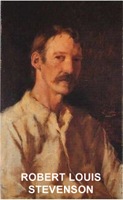
200px-Robert_louis_stevenson You see the point? Genre, for most of us, is an invention, a con, a tag to make us outcasts stuck in some well-labelled siding so that people – well, literary critics anyway – don’t make the mistake of taking us seriously.

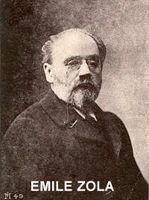
The truth is that most of the folk around here are slap bang in the mainstream of popular story-telling, writing for the most part about ordinary people in extraordinary and threatening circumstances, which is 200px-Joseph_Conradwhat authors have been doing for centuries. Charles Dickens, Robert Louis Stevenson, Joseph Conrad and Émile Zola are just a few of the ‘literary’ writers who produced work which, if it were new today, would be classified as crime or thriller or noir or mystery. Does that lessen the power of books like Oliver Twist, Treasure Island, The Secret Agent or Thérèse Raquin? Of course not.

Genre is an irrelevance, at best a marketing tag, at worst a straitjacket that stops people writing what they should. It’s a control freak parent screaming at you to conform when you should be rebelling. It’s a comfort blanket slyly telling you to be lazy when really you ought to stretch and feel the pain.

200px-Emile_Zola_2 The longer I spend in this business, the more difficult I find it to categorize the work of the many talented and interesting authors I encounter along the way. This is as it should be. The little library back home that first fired me with the ambition to be an author derived its power from its refusal to classify the books it contained. If it had, I wouldn’t have read as widely as I did, and I wouldn’t be writing the books I do today.

Literature’s greatest strength is its rich breadth, the fact it doesn’t adopt the dumbed-down one-size-fits-all philosophy that has taken over so much of our culture. Does that embrace sub-categories? Yes, but only when we choose to place ourselves inside classifications – horror, history, or science fiction, say – that make sense to readers and writers alike.

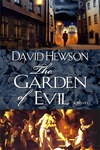
garden-evilFiling everyone else who writes popular fiction under the catch-all labels of crime, thriller and mystery serves no one any purpose. Next time you find yourself in a book store gravitating automatically to the shelves and names you know so well here’s a tip. Go try something else.

David Hewson’s latest book The Garden of Evil is the sixth in his Nic Costa series set in contemporary Rome, and his twelfth novel. He lives in the UK (hence the spelling) but will be at Bouchercon if anyone is still speaking to him.

Special note: Join us on Sunday, September 7, when our guest blogger will be bestselling thriller author, Alafair Burke and on Sunday, September 28 when we welcome guest blogger, Allison Brennan.