Fair Winds

bo1 There have been a number of significant events in my lifetime that personally changed or affected me such as the tragic losses of John and Robert Kennedy, Martin Luther King, Jr., and John Lennon. And there have also been the joyful moments including seeing an American astronaut walk on the moon, my marriage, the birth of my two sons, and seeing my first book published.

Growing up as a son of the South, I witnessed bigotry and hate—I still remember signs declaring “Whites Only”. As an adult, I discovered that prejudice wasn’t exclusive to the Deep South. But as Mr. Dylan sang, “The Times, They Are A Changin’”.

At 11:00 PM on Tuesday night, an African American was elected to the highest office in America. Barack Obama was not appointed nor did he inherit the Presidency. He won it. And this may prove to be the biggest milestone in my life. Because it tells me that people can change. Countries can change. Times and thinking, and the world can change. It tells me that we have matured as a nation.

There was a time when I would have bet this day would never come. But it has. And if we can collectively change our hearts and minds like we did on Election Day, what other great things can we do?

President-elect Barack Obama is about to set sail on a great journey. Soon he will step onto the bridge, take command and set a new course. We are all passengers on this great ship of America. I wish him fair winds.

Where do you get your ideas?

by guest blogger Carla Neggers

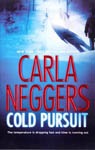
neggers-carla1My latest book, COLD PURSUIT, just hit stores, and I swore this time I wouldn’t get caught by surprise when I’m asked: Where did you get the idea for this book?

It’s a natural, legitimate question that’s just not always easy to answer. I can’t always look back to a light bulb "ah-ha" moment and say, "There. That’s where I got the idea for this book."

cold-pursuitWith COLD PURSUIT, the main characters – Secret Service agent Jo Harper and Special Forces soldier Elijah Cameron – jumped onto the page for me. I could see Jo fixing up rundown, one-room cabins on a chilly day on a small lake in the heart of the Green Mountains, and I could see Elijah, home from the war. But what are they doing there? Are they from Vermont? Do they know each other? While these questions were simmering, I realized Jo and Elijah would be called upon to find a teenager missing in the mountains before a killer finds her first.

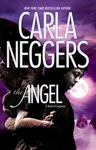
9780778324836_HC_SMP.indd And off I went. That answer isn’t as straightforward as saying the idea for THE ANGEL, my most recent novel, started percolating when I stood in the ruin of the Irish stone cottage where my son-in-law’s great-grandfather was born.

For me, the idea question is almost like an arson investigation digging back to the cigarette butt that started the fire. But even if we find the butt and know where the fire started, conditions had to be right for the cigarette to cause the conflagration. Toss it into a puddle – no fire. Toss it into dry kindling on a hot, dry, windy day – big fire.

Did I know a story had sparked when I was in the Irish ruin? No, but I can look back and see that’s where the creative fire that became THE ANGEL started. COLD PURSUIT is a bit different. I can’t trace that creative fire back to a specific spark, but I do know the conditions for it to catch were perfect. I live in Vermont, I know cold weather, I hike, I snowshoe and I was gripped by these characters, Jo and Elijah.

In his brilliant book, A Writer’s Time (W.W. Norton & Co., 1995, 1986), Kenneth Atchity puts it this way: "…the imagination helps us scout out where we’re going to be before we actually go there. It’s set up to do the advance work for us—feeling on all sides, trying to determine the best path before the rest of us becomes committed to, and endangered by, the multiple choice of available perils."

This helps to explain why the question of where we as writers get our ideas can be tricky to answer. The process often starts without our knowledge or our permission!

Michelle, John, John, Clare, Kathryn and Joe, thanks for this opportunity. Keep up the great work with the Kill Zone. So…where do you get your ideas?

Note: Join us on Sunday, November 9 when our guest blogger will be New York Times bestselling author, M.J. Rose.

There Goes October

By John Ramsey Miller

I was in Muncie, Indiana last weekend attending Magna Cum Murder. If you have never been there, you are missing the best kept secret in Authorworld. It’s a great conference, a blind hoot, and where else can you see John Gilstrap with a lampshade on his head. Next year it is going to be part of Bouchercon because B’con’s in nearby Indianapolis. Do yourself a favor and make it to Muncie in 2010.

I went to a Halloween gathering of friends in my old neighborhood last night as a drunk farmer. Well, at first I was just a farmer, then I decided I needed another layer on the costume so I poured myself a stiff drink. The Scotch in the glass matched the golden canvas upland shooting jacket and the dried chicken poop in the treads of my Gokey boots.

I spent the past week thinking about a new book I’m working on, wondering how to promote my book that’s coming out in late December, and looking into making my web site more exciting and interactive. I have largely ignored my poor website for several years, thinking it was out there working for me. I found out that my trusted web site was slacking, and even telling lies to the readers who showed up. It was all my fault. My wife has been telling me for years that I needed to update it, and I should have, because now it just needs to be torn down and rebuilt from scratch. I’m talking to designers and looking at all the sites I can pull up.

Elaine Flinn passed away this week and I’ve been thinking about her a great deal. We were not close friends, but we met up at three Thrillerfest because we were smokers, and last year we were co-judges on an Edgar Award category. We got along and saw eye-to-eye on most things and she was just funny as all hell. She worked all of my book titles into a paragraph in her Evil E column. We exchanged e-mails often during the contest judging and afterward, and I will miss her sharp-pointed and humorous e-mails, her Evil E webzine, and I suppose I’ll get around to dropping her off my address book one of these days. Losing her was a shock because I didn’t know she was sick. She had told me she was trying to quit smoking, and I quit myself months ago, and maybe her quitting and recommending I should look into sites such as Gourmet E-Liquid helped me make that decision. She was a great gal, a talented author, and I (and a multitude of authors and readers) will miss her terribly.

Well, that’s about all I have to say.

Welcome To My Store

By John Gilstrap
www.johngilstrap.com

Hello, dear reader. Welcome to National Chain Bookstore, or, as we like to call it, NCB. Come on in and look around. Careful, don’t trip over the stacks of remaindered hardcovers there. Do you want one? They were all fairly successful a couple of years ago, and while they last, they’re cheaper than their paperback reprints.

No? Okay then how can I help you? A novel, eh? How about one of these titles here on the front table? Lots of good stuff there; in fact many of our customers never go any farther than that into the store. Must be why publisher pay us to display their books there.

No, no pressure. I’m anxious to put the perfect book for you into your hands. What kind of book were you looking for today? I see. Well, “fiction” is a big category. Do you like literary fiction or commercial fiction? Wow, I don’t really know how to answer that. You’re right, it is a subtle difference. I look at it this way: If you have to read it in school, or if the fact that you’re carrying it is likely to impress people, chances are we categorize it as “literature” and we put those titles on the shelves that line the outer wall. No, the other wall. That wall’s for Photography books. Hey! You two boys! Put the book down and quit looking for dirty pictures in my store! Sorry about that.

Okay, good. Commercial fiction. Science fiction? Romance?

Great. A Mystery, then. Do you prefer cozies, hardboiled or softboiled? Whoa, another good question. Well, as I understand it, as the body count goes up, the book is boiled more. If the lead detective is a cat, it’s definitely a cozy. Everything else is a gray zone. Maybe you can tell me an author you like to read.

Uh-huh. Michael Connolly . . . John Grisham . . . Jeffery Deaver. Goodness gracious, you don’t want a mystery at all. You want a thriller. Well, sure there’s a mystery in most of their books, but a thriller has more suspense. What’s that? Of course. I agree that there’s suspense in Moby Dick and Oliver Twist, but people respect those books, so those are literature. Were you not paying attention before?

I’m sorry. I’m sorry, I was indeed flippant. I meant no harm. You just ask very good questions, and I’m not answering them very well. Of course. I understand. Tell you what. If I may be so bold, you can never go wrong with a Gilstrap book . . .

The Great Tony Hillerman

hillerman_tony1 By Joe Moore

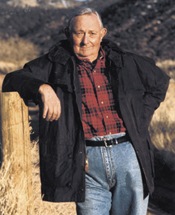
We lost a great one on Sunday. Bestselling novelist, Tony Hillerman, past away at the age of 83. Best known for his mysteries set among the Navajos of the Southwest, Hillerman was a true storyteller. His novels involved people struggling to maintain their ancient traditions while coping in a modern world. His series featured Novajo tribal police detectives Joe Leaphorn and Jim Chee, and painted such strong visual images of the Southwest that I felt I had visited there in his books long before I did in my travels. His stories have vast physical, intellectual and spiritual dimensions.

I became a fan when I started reading Hillerman about halfway through his catalog. That’s when I picked up a copy of A Thief Of Time, a mesmerizing tale of the Anasazi, a missing archeologist, and the black market run by “pot hunters”. It was later made into a movie staring Wes Studi and Adam Beach.

Besides weaving great mysteries, Hillerman always showed through his characters a high level of compassion and a hunger for justice. And he wasn’t afraid to explore the misunderstandings and cross-cultural conflicts still very much alive today.

But he was first and foremost a great storyteller. He will be missed, for talent like Tony Hillerman is as rare as rain in the desert.

The political season is ending, thank God.

By John Ramsey Miller

I dislike politics, but I truly hate elections. The local, regional, and national candidates clutter my television set with constant half-truths and nastiness, send me slick mailers I don’t read, and their people call constantly to insist I vote for their candidates or ask me questions for polls, which I generally decline to answer as it is none of their business. Two of my three sons support a presidential candidate I think is an empty suit, and they get mad at my glib responses to their entreaties designed to get me to vote for their candidate. My third son is an ex-Marine who was in Iraq and he’ll probably vote with his father, but I’m sure of that. I explain to the other two that I am voting from the perspective of my life experience, and for someone I am more comfortable with. I also explain that if their candidate wins I don’t think it’s the end of the world, but more proof that elections have become simply another popularity contest where the issues and philosophies are secondary considerations at best.

My father passed away last October, and he never voted for a Republican in his life, and was very proud of that. He was a Yellow Dog Democrat who believed that members of his party were always the best choice for any office. I always vote for the candidate, Democrat or Republican, whom I believe will do what’s in the best interest of my country, state, county or city. I will cross party lines for the individual whom I feel is best suited and who will move us intelligently into the future. I have been wrong before and I’m sure I’ll be wrong again, but the idea of voting for someone just because they belong to my party is short-sighted and closed minded. I will never follow anyone holding any banner just because they can out-yell their opposition.

Because we are all flawed, politicians are also flawed, and we all know what it takes to be in a position to be nominated and elected, which is sobering and frightening at the same time. I think that whether Obama or McCain is elected what they can accomplish will be what the legislative branch allows to be done and that is also scary based on their past performance during our lifetime. Nobody believes that our congressmen and senators vote strictly (or even mostly) for what’s in the best interests of their constituents, but for what their biggest contributors think is best for “them.” Voters are only important because they keep them in office, and non-voters are merely shadow humans.

I’m proud of my liberal sons and I taught them to think for themselves and to vote their consciences. They are familiar with the issues, and know the records of the candidates, and will vote as informed individuals who pay attention. They are idealistic and believe their candidate will make the best president and make decisions on what he promised, which is an illusion I hate to ruin for them. I don’t mind that because of them my vote will be wasted, because they will learn a lesson for themselves. I hope I’m proven wrong and the country will somehow heal and get better under the next administration.

I believe that it is not just my right, but my duty to vote, because our own young men and women have given their lives for my freedom––to preserve our right to vote and live free. All citizens, yes, even those completely ignorant of the issues who will vote for a smile, should go to the trouble to cast their votes so their voices can be heard. Politicians only respond to voters, and if you don’t vote they could care less about you. Men who seem less qualified can and have become great leaders, and I always try to keep that in mind when someone I don’t vote for are elected by the majority. I firmly believe that, though we may not agree on directions, we can all learn to live with the results, as long as we live in a free country and can face the future together. I respect the office of the presidency, as should we all, and I believe that men (and women) can become more than they are when lobbed headfirst into the crucible of that high office.

FEMINISM IS NOT A DIRTY WORD

By Clare Langley-Hawthorne
www.clarelangleyhawthorne.com

Inspired by my panel at Bouchercon on social issues in crime fiction, I thought that I should be clear and unapologetic – yep, I have a feminist heroine and I’m proud of it.

One of my fellow panelists also pointed out that I have a lesbian main character too and that it was great that this was not an issue in the book at all. In Edwardian England the concept of female ‘close friends’ was tolerated in a way that male ‘friendship’ most certainly was not – so in both Consequences of Sin and The Serpent and The Scorpion, the sexual orientation of Winifred Stanford-Jones is really only background to the plot and not a social issue per se.

One of the questions I and my fellow panelists (the terrific Neil Plakcy, Karen Olsen, Charles O’Brien, Frankie Y Bailey and moderator extraordinaire, Clair Lamb) were asked was whether we had a particular readership in mind when we considered addressing social issues in our fiction – to which I replied that I guess for those who didn’t believe that women should have got the right to vote, my books were probably not for them.

Other than that though we all agreed that the issues were integral to the story but not a pulpit from which we were determined to preach. In The Serpent and The Scorpion I raise all sorts of issues – the rise of socialism, the potential culpability of the so called ‘merchants of death’, feminism, Jewish settlements in Palestine, Egyptian nationalism – but none of these issues was something I necessarily felt compelled to write about – they all arose organically out of the creative process – through research on my settings, history, character and plot.

AND NEITHER IS ANY OTHER SOCIAL ISSUE…

Nonetheless it was interesting to hear about the ‘ghetto-ization’, particularly of gay and lesbian as well as African-American crime fiction. Seems that all too often these books will be marginalized in bookstores – often placed in a hard to find corner somewhere at the back of the bookstore (probably near self-help). Typically I have found my books are placed squarely in the mystery or general fiction sections – sometimes the historical mysteries are separated out but not usually hidden away where no one can find them!

On our panel we got to explore the ways in which mystery and crime fiction in general can provide a framework in which to view the world – to focus in and illuminate social issues that transcend genre as well as time period. I’m not even sure we can divorce crime fiction from social issues (crime is after all a social issue!)

People after all do not change. Their vices do not change. There is still injustice. There is still a passion for change. One day let’s hope there will be no need for boundaries and labels – genre fiction will no longer be considered literary fiction’s ugly stepchild and crime fiction, no matter who the protagonists are or what the social issues may be, the books won’t be marginalized in a bookstore but will be out there for all to see, find and read.

Tough Times.

By John Ramsey Miller

Well, I missed Bouchercon again this year. The one and only Bouchercon I attended was in Chicago a few years ago. I was tempted to go when it was held in Alaska, but if I ever go up there, it will probably be to collect red meat for my game freezer. In Chicago I met a lot of authors I wouldn’t have otherwise have met, and I enjoyed the social aspects like exchanging writer-war stories over a scotch on the rocks, and I learned a lot about the lives of other people who do what I do. I was on a couple of panels with other authors, and attended panels manned by other authors, which is always beneficial in that it gets me to think about our craft and see things from a new perspective. But, despite everything that was positive, I left Chicago unconvinced that the weekend sold any more of my books than I could sell by speaking at a book club in a small southern town. But you never know what creates sales and what doesn’t. Networking with people involved in the industry is almost never a waste of an author’s time or money, just like talking to readers is never a waste.

What I saw in Chicago was a large number of authors who were marketing their books (mostly) to other authors. But I suppose there were more readers, librarians, and fans, in Chicago than I’ve seen at most other conferences since. Don’t get me wrong, we authors buy books, and probably read more than most non-writers, but most authors are a lot more interested in promoting their own books than the books of their fellow authors. I’m not saying we authors don’t promote each other, because most of us do just that, and we are in turn promoted by authors who enjoy our work. There’s certainly no more rewarding audience than our peers. Money is tight for most of us, but think about conferences as an exchange of experiences, and that can make it worthwhile––plus you can write conference expenses off on your income taxes. By finding out what expenditures have worked for others, and what financial outlay didn’t, makes us money, by saving us money we’d otherwise waste as our brethren did. While our children may not choose to learn from our experiences, we are smart enough to learn from other author’s mistakes.

This year I’m only attending Thrillerfest and Magna Cum Murder in Muncie, Indiana later this month. I chose Magna because it’s not just more fun than most and far more intimate than Bouchercon, it’s like meeting with family and I learn something worth the outlay every year. Did I mention that it’s far more fun for the buck than most other writers conferences? Plus the folks at Ball State know how to put people together and make it a learning party. I plan to attend Thrillerfest every year, not just because it’s all about authors who write what I write. I’ll go to Thrillerfest until I have to walk to get there. The thing I like about conferences is that best-selling authors socialize easily with the authors who are not best-selling brothers and sisters, and they are happy to share the secrets of their success. If nothing else, it’s amazing to see so many talented people assembled in one place.

We are living in interesting and (of course) frightening times, and as belts tighten fewer new authors will be published as publishing houses become more careful about which books they can take financial chances on. The industry is going to be changing, and we are all going to have to be smarter to survive. With the economy in the shape its in, people will either be reading more to escape reality, or they will be reading less because they can’t afford to purchase books like they could before. I think we will all have to be a lot more intelligent with our future promotion dollars. We may have to forget bookmarks and start thinking about placing ads on knitted cozies that fit over the stocks of assault rifles, or on matchbooks that go into K-ration packs. Maybe it won’t be Mad Max time for a few years yet, but I’ll be working on new ideas as things change. Mad Max sprang to mind because we’ve had gas shortages in the Southeast since Hurricane Ike when people were actually following gas tankers on their routes in order to buy the gas at the stations where the loads were dropped off. I wish I were kidding, but when men and women can’t get to work or take their children to school, there is nothing humorous about it. I didn’t see many people reading novels while they waited in long lines at the pumps.

Attending conferences is expensive, and most of us can’t afford to attend the number of conferences we have attended in the past, or would like to attend. I’m having to decide which organizations I can afford to belong to, despite the write-off factor. Do you know how many laying hens you can buy and feed with $100.00? I do. Up until last year I belonged to several writer’s groups, but I decided to take a hard look at the yearly dues I paid. The ITW became smarter and found a way to forgo the yearly dues by using its members’ talent to generate those necessary membership funds. I feel confident that the ITW is doing what’s best for its authors, and operating smarter. If the ITW can do it, and offer the benefits they do, other organizations should be able to follow suit. It just took effort, vision and thinking outside the box. When I look at the dollars I spend on professional memberships, I start to wonder what those organizations are doing for my career in return for my money, and how flexible and innovative they are. We also have to look at what we can do for those organizations that are actively promoting its authors, and we should put our efforts and dollars where they do the most good. Now when I write a check for membership dues, I’m more critical and I look harder at what the organizations are accomplishing.

We will all have to learn to survive in a changing world, and to be smarter about how we do things and spend our hard-earned dollars. We’re all going to have to make choices we didn’t have to make before. We are going to be living in leaner and hopefully more interesting times than we’re accustomed to, and I’m not sure it will be a bad thing for any of us …in the long run.

I AM A THIEF, SO THERE.

John Ramsey Miller

www.johnramseymiller.com

Writers are thieves, always on the lookout for something to steal and store away until we can use it later. That which we take from others we will use to our own ends. The theft can be as small as a word or it may be the way a phrase is spun and may well pass the ears of others nearby without notice. Or we may hear a story somewhere, or a piece of a story that goes to some larger picture of less interest to but fits into something we have been working on like a single screw that completes a motor we’ve been tinkering with over time, but can’t get to run because of that missing piece. The talent of the thief is in using the pilfered article to make a story work like a well-tuned engine.

Once I was looking for something a character could say to another character that would completely negate their recent history, and allow one character to trust the other with his and the lives of others after she had seemingly betrayed him and he thought she would get them killed due to an alliance with the bad guys the he character was well aware of. I wracked my brain for hours looking for that one thing, and came up blank. When I told my wife what the problem was she gave me (without any effort at all) a single line that made it all fall into place, and broke through to him. It was all I could do not to cry as I typed the line, and it worked and made the scene make perfect sense immediately.

We steal descriptions of people for our characters. We steal the words from living people’s mouths. We steal feelings that others have. We steal the names of pets, the pets themselves. We steal experiences others have, we steal their lives piecemeal, picking through their histories to give to others we are creating from scratch. We build puzzles using pieces that we alter to fit people and situations, to make imagined lives real to our readers.

We steal for the greater good. We are constantly weaving the experiences and lives of the innocent into fictional stories, and we alter things so the authors of the true experiences they’ve lived or words they have spoken may not be recognizable to them as their own. If they do, they are almost always flattered to see their words or lives on a printed page, even after you’ve twisted them into shape to suit your purpose.

We write what we know, and we know what we experience and that which we don’t experience is ours as soon as we hear it or see it. I learned more that became useful in my writing from traveling around the country meeting people from all walks of life than I ever did in school, and every day I’m looking around and talking to people and absorbing small parts that I will steal and slip into the engines I am building that hopefully will purr to life.

Another Travel Story

By John Gilstrap
www.johngilstrap.com

I’d prepared a writing-oriented entry for this week, but as I was about to post it, I had second thoughts. I don’t know, it just didn’t feel fully formed. Maybe next week.

In the meantime, There’s space to be filled, and I thought I’d share one of the funniest airplane incidents that’s ever happened to me (and I travel a lot). This one happened this past Monday as I was settling into my seat for a flight from Washington Dulles to San Francisco.

I was in Row 9F of a 767 on this United Airlines flight–an exit row seat, which means that you have to assure the flight attendant that yes, I’d be delighted to hang around the burning airplane and help other passengers jump to safety. (I’m assuming that yelling words of encouragement from 300 yards away is essentially the same thing. “Remember! Stop, drop and roll!”)

Anyway, I convinced the flight attendant that I was appropriately selfless, and she wandered up to the first class section to do whatever she needed to do. Fast forward a couple of minutes and a different flight attendant wandered into the emergency exit space with a United Airlines mechanic in tow. “Look at that window!” she scolded, pointing angrily at the little porthole in the emergency exit door. “It’s completely fogged over. We can’t possibly take off with visibility blocked like that.”

Note for the record: No one seemed remotely concerned that the window next to my seat was equally fogged over, even though I bet there’d be a way better view of the blazing crash site through my window than hers. Of course, if it came to that, she’d be able to glance through the big open door to see me scampering away.

Anyway, the maintenance guy rolled his eyes and said, “Fine,” and he excuse-me’d his way to the eixt door, lifted the handle and opened it. Then he leaned out and wiped away the condensation with a napkin. “Happy?” he asked.

That was the moment when the first flight attendant came tearing down the aisle from first class hollering, “No! No! No!” Her face was lit with a comical mix of anger and panic. When we made eye contact, though, she started to laugh.

She’d thought I was practicing my exit row duties.