The Inaugural Onslaught

By John Gilstrap
www.johngilstrap.com

Forgive me for wandering from the topic of writing, per se, to something that’s been bugging me.

Five days out of every week, I commute from the Virginia suburbs into Washington, DC via Metrorail. Generally, it’s a half-hour drive to the station in the morning, then a half hour on the train, topped by a three-block walk to my office, which is itself three blocks from the White House. Until I took my job with the trade association, I’d never worked downtown. Washington is a beautiful city, so there’s something attractively urban to me about the commute. Most days, it’s an opportunity to read in peace amidst a couple hundred strangers.

n its busiest, craziest days, Metro sets new records that top out somewhere south of 850,000 passengers. That includes commuters and tourists in the high season, along with Independence Day celebrations when about a million people flood the city for the fireworks. During those occasions, for security reasons, the Metro stations closet to the action are all closed off, forcing revelers to flood fewer stations located quite a few blocks away. Imagine thousands of people crammed onto an underground train platform, each of them wanting to get on the next subway. It’s actually scary when you’re in the middle of it. That’s why I never go downtown on the Fourth of July.

On January 20—Inauguration Day–DC government officials are reportedly anticipating a crowd of four million people to observe the festivities. That’s four times more people than Washington has ever seen for an event! Each of them needs to get in and out of the city, and, presumably, at some point during the festivities they’re going to have to eat. More than that, they’re going to have to pee—or, worse yet, make big potty. I don’t care how many porta-poops you import; there’s no way to support that much excrement.

Judging from the barricades that are already beginning to be staged around the city, huge swaths of preferred viewing real estate are going to be closed off to mere mortals to leave plenty of elbow space for the bigwigs. Widespread street closures will make parking garages inaccessible, which will in turn force hundreds of thousands of would-be drivers onto the subways for which access will be limited.

Now let’s throw in the security checkpoints that will search all purses and bags within X yards of the Capitol Building or the White House, along with the fact that a huge percentage of those being searched wouldn’t know which building was which without a picture to guide them. The mind boggles.

I personally don’t have any hard plans for that day, but I do know precisely where I will not be. What do y’all think? Is any historical event worth that much inconvenience?

Gender Bias

There was an interesting article in the Guardian this week asking whether or not young female writers are operating at a deficit when itmorrison comes to major literary awards. Not due to any shortcomings on their part, but because (as the author posits) "the literary industry as a whole – agents, editors, booksellers and critics – currently offer disproportionate encouragement to aspiring male writers to produce the kind of serious-minded, bookish work that gets on shortlists, compared to young female writers." The argument being that for whatever reason, publishers prefer discovering the next Norman Mailer to finding another Toni Morrison.

I’m not entirely certain I agree with this, but it’s an interesting piece, particularly since it was written by a young male author. I also did a quick head count, and during the past two decades only five women have won the Nobel Prize for Literature. Five mailerwomen won the Man Booker Prize. Only with the Pulitzer did women even approach parity, with eight out of twenty taking home the prize.

This got me thinking about gender bias in our own  neck of the woods. When my agent first called to sign me, she was noticeably taken aback. Toward the middle of our conversation she confessed that after reading THE TUNNELS, she’d thought I was a man (though the name "Michelle" was pretty straightforward, in my opinion). Since the subject matter was so dark, she felt it might appeal to more male readers than female ones. She recommended that I consider adopting a pseudonym, or shortening my name to just the initials (sadly, that would leave me "M.A.Gagnon," which doesn’t exactly trip off the tongue, and sounds like something the Mayo Clinic might have a specialized treatment for).

In the end, I opted to stick with my full name. Partly because I didn’t entirely believe that gender bias exists, partly because I’m just obstinate that way. But I do wonder. When I meet people at conferences who have read my books, the universal exclamation is, "but you seem like such a sweet girl." I suspect that very few male authors are referred to as "sweet" when they meet their fans, or hear that they seem "too happy to write these sorts of books."nobel

Impossible to say whether or not it affects my sales. Occasionally this question rears its head on one of the mystery discussion groups, and everyone gets up in arms. Most people declare that they will happily read any book regardless of who wrote it. But does that apply to the world at large? Especially since I don’t write cozies (which are marketed more toward women), but thrillers, is my name working against me?

Where do you stand? Will you read anything by anyone? Or does gender bias sneak into your decision-making process, subconsciously or otherwise?

Don’t worry, it’s just the end of the world …Part II.

John Miller with Ramsey in the middle

The Mayan calendar ends in 2012, or so I’ve been told. I have been thinking about the future a lot and I have a few thoughts I’m almost sort of fairly sure of. Firstly human life on earth will probably survive 2012––the actual year and possibly even the movie of the same name. If the world does end in 2012, I’ve gotten one hell of a deal on my mortgage as I will have only paid five of the thirty years worth of payments they are expecting me to make. If the world does end, it’ll be a shock to a lot of people, but not for long. Most of us will be in denial way after we find the world dead, and denial is one of my favorite states of being.

Lately I’ve been thinking that maybe I would have been better served to have become a sheet metal bender, or a very sexy model and sometimes prostitute, or a super hero with some really neat power like mentally cashing checks across state lines. Being a writer is just so hard. Truth is, this week I’ve got nothing at all to write about. I mean my son did strike out to go back to school after the holiday and his car broke down and I had to drive a million miles and deal with his car and bring him back until I can get his car fixed on Monday, and I’m thinking being a parent never stops being hard, expensive and tiring. And what with Thanksgiving and Black Friday with a Walmart worker being crushed in the melee and the end of the world coming up in five years I think I’ll slide this week and stop this before this gets really ugly.

Plus I’m making venison sausage this weekend.

By the time you read this some Bambi’s mother will be dead.

John Ramsey Miller

I am writing this on Tuesday because when it runs Saturday I’ll be deer hunting in dear old Mother Mississippi, and by 7 AM EST I very likely will have knocked down at least one deer. I hunt in November and December with the same boys, now older men like myself, whom I’ve been hunting with for forty-two years. My family eats venison all year long. I love it, my wife loves it, my sons love it, and their children love it. Yum, yum. I have never killed a deer I didn’t eat and I guess I’ve killed two or three every year I’ve hunted. Venison makes the best chili meat, the best crock-pot roast, the best tenderloin medallions, the best ground hamburger. Aside from the possibility that they eat grass tainted with pesticides or fertilizers, they are grass fed, acorn tempted and pure. Game won’t add weight to you either. Game and fresh vegetables is the best diet there is if you ask me. Nobody in my family is fat, nor are any particularly wormy-looking.

I sometimes hunt wild hogs in Tennessee and although wild pork smells dreadful when you cook it (we do that outside on the grill) it makes the best spaghetti sauce I’ve ever tasted. I also love boar chops, wild pork tenderloin, and Bar-B-Q. Store-bought meat has nothing on game. Game is 100% natural with no harmful fat, antibiotics, steroids, or other drugs in their systems. It keeps better than store bought. My wife cans it or freezes it. It is apparent that God put game on the earth to feed man correctly, and every time I take a game animal I thank Him for supplying the food. I almost forgot. Another good thing is, because I write about deer hunting in some of my novels, I get to call it research.

We just harvested a whole bunch of meat chickens we raised from chicks, and after 8 weeks their dressed weight ranged from 4.5 to 6.8 lbs. We fed them organic feed that comes from a local feed mill where they grind everything themselves from quality ingredients.

Our laying hens eat only organic feed, free-range for bugs and plants two hours a day, and our eggs are at least twice as tasty as store bought. I have fourteen, but want fifty or more so I’m building new quarters for them. Those I will not kill. When they stop laying, I have a friend with a large farm and he will let them pasture there as long as they live.

I do not think it’s the end of the world yet, and I’m pulling for President Elect Obama, but even if the country doesn’t collapse with half the country out on the street, food riots and infected zombies roaming the countryside, I’m serious about surviving as close to the bone as I can during the next few uncertain months and years and part of that is feeding my family as best I can. The farming community around here sort of roll their eyes at us, and probably think we’re being secretly filmed as part of some kind of reality show, but that’s okay. We are trying, and having one heck of a good time.

I know some people are opposed to killing animals, and frankly I don’t enjoy that part of hunting or harvesting, but there’s no other practical way to separate animals from their meat.

Hunting and raising animals gives me a chance to enjoy nature and think about my life and what I want to write, and sometimes even if I intend to keep doing it at all. Not that I don’t love writing, because I do and it has been good to me over the years. I just keep thinking that I should start some kind of a family business that involves my sons and grandkids. Maybe we can manufacture some sort of widget nobody can figure out how to live without owning. I do know that it should be some sort of business that won’t fail miserably, but I just don’t know what that could be yet. Feel free to give me some sure-fire ideas.

No Guarantees or
The Sophomore Principle
By John Ramsey Miller

When I speak to book clubs, writing students in high schools and colleges, I often tell them the story of my pre-career and payment of dues, but not my fall from grace and resurrection.

I wrote four books in my low-rent apartment bedroom on a computer set on a door supported by sawhorses. I spent five years writing my fiction full time while my wife worked at a bank. Our family car was a 1981 Camaro with 200,000 miles on it. To accommodate our youngest of three I made a jump seat of foam to go over the center hump in the back and I installed a seat belt for him since the car was designed for four people, not five. Most people who knew us during those years thought I was a parasitic deadbeat until I sold my first novel. My wife believed in me and she insisted that I give writing everything I had for a few years, and that I would know when it was time to move on. She never doubted that I would succeed, and that trust in my ability was my fuel and my inspiration.

After the first attempt at a novel, I acquired an agent who schlepped my first four around to the major and minor houses. I accumulated over 100 rejection slips before I sold The Last Family to Beverly Lewis at Bantam. She had my first three, rejected them all, but she saw something in them she liked, and she called and told me that if I would rewrite the draft taking into consideration her concerns, that she would like to see it again. I did and she made an offer on THE LAST FAMILY.

THE LAST FAMILY was something of a hit. It sold 40,000 copies in Hardcover, did amazingly well in paper back, was a Literary Guild Main Selection, was translated into a dozen languages, was optioned for a film, and gathered a stack of glowing reviews. The publisher offered a money-back-if-not-satisfied guarantee on the HC and they ran full-page ads in USA Today. I went on a 13-city tour at the request of Books A Million. I was wined and dined by the publisher and was offered a three book, seven-figure contract. After years of working hard, I thought I’d been escorted to the front of the line, and I was going to be right up there with my literary heroes.

I was no longer a deadbeat. Our friends said they’d always known I was a talent and that I’d eventually sell a book. I was an honest-to-God-fiction author with a big contract. I bought a four-bedroom house, wrote checks for a minivan and a Honda Accord, and the Millers moved to a wonderful and small southern town with good schools for my sons and nice neighbors. I had a large comfortable office in the new house, but I was so swept up in being a successful author, that I failed to concentrate on my writing. I had a deadline for my second book, and I made the date easily with a nice thick manuscript entitled THE DOWN DOGS. The trouble was, my editor didn’t think it was up to snuff (or more likely up to my pay grade), and to be perfectly honest, it wasn’t a worthy follow-up. I tried and tried to get it right. It was a book with decent enough characters, but structurally it had weak bones and I couldn’t make it work because I couldn’t see that I just wasn’t thinking hard enough and writing before I had thought things through. It was so frustrating that my editor suggested we scrap it and start from scratch with a new book. The publisher flew me to New York so I could pitch a new book idea, which was not bad at all, and so I went back to work. My contract was in jeopardy and I knew it. Now I was working in panic mode, and fear is a killer of creativity. I sent in a first draft and the publisher decided to pull the plug and I was released from my contract. Luckily I had earned out the advance, so there was no financial ugliness. Nobody was happy about it, and my editor and I kept in touch and she never stopped pulling for me, and I’ll never forget her continuing encouragement and the fact that she was always willing to talk to me about what I was working on.

After a few years spent actually writing every day and thinking about my work and being supported emotionally by friends like John Gilstrap, I got a new agent and went back in search of a publisher. As fate would have it, a highly respected editor at my old house read INSIDE OUT and wanted to buy it. Due to the publisher’s less-than-positive experience with me, she fought an uphill battle, but after a rewrite and an outline for a follow up novel, I signed another three-book contract. After those books were completed, I signed another. I have just delivered the last book under that last contract and I’m not sure I’ll be offered another one. My publisher loves the books, they even like me, but it’s the bean count that matters in the end. If I write this next book without a commitment from a publisher, so it goes. I’ll survive, and write without knowing if it will sell.

Being under contract actually only means the publisher has first refusal on the books in that contract, so I never know from one book to the next if I’ll be able to interest the publisher in the book I’ve just written. It’s been psychologically preferable to selling one book at a time, and usually the publisher does publish the books under the contract. It also allows an author to work with the same people book after book. Some think a publisher’s level of interest lags with familiarity––especially if the author doesn’t break out as soon as they would like. So I guess the question is whether changing publishers and sales teams a good thing or a bad thing?

Cynicism

By John Gilstrap
www.johngilstrap.com

I’m not making this up:

About seven or eight years ago, a former business colleague of mine called to tell me that his twenty-something son wanted to write a novel, and to ask if I would be willing to show him the ropes. I said yes, of course, and we all gathered at a Northern Virginia restaurant for dinner.

His son—we’ll call him Mark because I can’t remember his name—sat quietly through most of the meal while his father, Lloyd, explained this lavish plan he had put together to make his son a fortune by writing a hit book. Writing is a business, Lloyd explained, and since Mark wants to write full time, Lloyd pulled some strings to assemble a board of directors to fund the start-up costs (folding money for Mark) and to provide quality control for the product (the book). Mark would submit each new chapter to the board for approval, and then together they would determine the plot points that would generate the most revenue, based on market analyses of what sold well. With proper business oversight, they would have a product that they could all be proud of.

As this presentation ground on, complete with market charts, I watch Mark sink further and further into his chair. When Lloyd was done, he got to the reason I was there: to give some tips on what plot points sell the best. I was also offered a seat on the board, but I refused. Instead, I told him that if torturing his son was really the point of this exercise, then pulling out his toenails with pliers would be more merciful. Toenails grow back with time; that kind of assault to self-esteem lasts forever.

The meeting ended shortly after that. We didn’t even have dessert.

I think about that meeting often, especially when I talk to my writing colleagues who are losing their publishing contracts and editors who are losing their jobs because the suits at the top of the corporate chart decided that we need more of X, and that Y just doesn’t sell the way it used to.

I believe that if the publishing industry as we know it dies (and I don’t think it will, even though I think painful times lie ahead), it will be at its own hand; under the weight of the business model it has chosen. Gone are the days when art producing businesses were run mainly by lovers of the art form. Now those art businesses are run as profit centers of behemoth companies. It’s not enough to turn a profit at the end of the year; you have to hit target goals.

Hey, I’m a free market guy, a great believer in capitalism, so at face value, the model makes sense. After all, a publicly-owned company has responsibilities to its stockholders. I’m all over that. If cinnamon toothpaste doesn’t sell, it makes no sense to keep the cinnamon toothpaste division in business. You gotta go for mint toothpaste. People like mint toothpaste. You build your market share by differentiating your product in other ways, but you start by acknowledging that everybody’s doing mint.

Thing is, art is not toothpaste, and it defies market analysis. Sure, we can declare Painter X to be the best gol-durned artist on the planet and talk people into buying his mass-produced canvases at ridiculous prices, and in the process we can have success. With enough success, we can push the independent art gallery on the corner out of business and flood the market not just with Painter X’s work, but with knock-offs of his work.

But what about people who want something else—people who dare to like what others don’t? They might try a Painter X just so they can talk about it with their friends, but they’re not going to buy another one. In fact, maybe they’re going to move away from galleries altogether and just paint murals on their walls. A few years down the line, people will wonder why the art market is shrinking.

The big publishers today anoint “lead titles” on which all the “co-op” money is spent to “package” the book in a way that will give it the best “placement” in the store. The idea is to hit a home run every time. If the ball falls inside the park instead of blasting over the wall, then it will of course be the author’s fault, and we all know how many more of those are out there to take his place.

To hedge the bet, the B-school graduates at the top look at what people have bought in the past, and they push writers to create more stuff just like that. That’s what they buy, and that’s what they push. There’s very little future for a writer these days who merely earns out his advance. It’s The List or nothing, baby.

And then we wonder why the public prefers the fresh, unlimited (even occasionally awful) content on the Internet over plunking down $25 for a rehashed version of a book they’ve read a dozen times already.
I’ve vastly over-simplified here, and I of course exempt myself and my Killzone colleagues from any of the above. What do you think?

Just say no

by Joe Moore

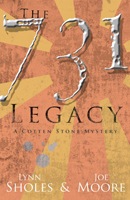
731 I was a guest at a recent writer’s event. I got to discuss my new book, THE 731 LEGACY (co-written with Lynn Sholes). Afterwards I took part in a meet-and-greet with the audience. Among the questions, someone asked me: What was the most important advice I could give a new writer? My answer was to realize that you can just say no.

I explained that publishing is a manufacturing industry. But unlike most other industries, publishers don’t manufacture anything. Instead, they have an endless tsunami of writers constantly beating down their doors with pre-manufactured product. Yes, they have to know what the customer is looking for. And yes, they need to edit, package and market it in a professional and appealing manner. But publishers will never run out of product because there will always be writers wanting to be published.

New writers want to be published in the worst way. Unfortunately, their journey to publication can turn over time from excitement and enthusiasm to desperation and fear. You write a book, send out queries, start getting rejections. But you don’t give up. You revise your query, send it out again, and get more rejections. So what happens? You become desperate. You think that maybe you’ll never get published or never find an agent. Never see your precious work on the shelves of Borders or B&N.

Out of fear, you become so desperate that you are ready to take the first offer that comes along. Because when it does and you don’t, you may never get another shot.

Then the call or letter finally comes and someone is willing to issue a contract. What do you do? You jump at it without a moment’s hesitation. You just want to be published. And you finally got an offer. You go for it.

Now, stop and consider this. Did you marry the first person that asked you out? Did you buy the first car you saw for sale? Or the first house?

When that offer to publish finally comes along, ask yourself: Is this publisher perfectly matched to my writing? Will this publisher put in place the appropriate marketing and distribution to get my book to the correct audience? Do they have the expertise? Do they understand the genre? Will I get the quality and personalized service I need? And most important, do they have the ability to help me grow my career as a writer?

Remember that desperation is not a reason to say yes. It’s a reason to stop and realize that you can say no. Because getting married is blissful, but getting a divorce is not. Always remember that you can just say no.

What is the most important advice you can give a new writer?

The inspiration for The Memorist

By guest blogger, M.J. Rose

rose-mj Once upon a time, my husband and I went to Vienna on a vacation and fell in love. Not with each other – we’d already done that – but with the city.

Growing up in Manhattan you don’t bump into history on every street corner – mostly you’re bumping into other people or great shopping or eating experiences. In New York you have to go out of your way to find eighteenth century history, but it’s still alive on every block in Vienna. There’s so much of it you are literally breathing it in. Arts and sciences have flourished here for centuries and whatever your passion you can visit museums, monuments and memorials to art, music, architecture, literature philosophy and psychology.

And visit them we did including making visits to homes of many famous people who’d once lived there, and since my husband is a musician, the trip turned out to be what I now jokingly call our Beethoven pilgrimage.

There are several of the great composer’s residences in the city proper and its environs, and we visited every one of them as well as churches, cafes and music halls Beethoven frequented. We walked the streets he walked following the routes he took and spent one day wandering the woods he wandered during the summers he spent in Baden, a spa town an hour out of the city.

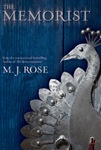
memoristBut it was in the Heligenstadt house that the idea for my novel, The Memorist, was born.

The house at Probusgasse 6 is in a neighborhood called Heligenstadt at the bottom of the Kahlemberg, which in Beethoven’s time was outside the city and filled with vineyards that are still growing there. And it was there at the end of the summer of 1802 that the 31-year-old Beethoven wrote the heart-wrenching Testament to his two brothers documenting his anguish at the onset of his terrible deafness.

The upstairs of this small apartment is open to the public, and we walked through the ordinary rooms where he lived. Wandering over to the window I looked down at a simple courtyard where there was a single tree growing.

I stared at the gnarled, twisted trunk and the rich healthy verdant green leaves and realized that Beethoven must have once stood there and looked down at that same tree. Suddenly the composer’s ghost was standing there with me looking out the window.

Later I told my husband what I had been thinking and he said: “You’re going to write about that aren’t you?” Until that moment I hadn’t thought about it but after he said it, I couldn’t stop thinking about it.

image At home I read several biographies about Beethoven and in one discovered the great composer had been fascinated with Eastern philosophy which includes a strong belief in reincarnation. His own notebooks contain quotes of passages from Bhagavad-Gita. As well as a quote from William Jones that was included in his Hymn to Narayena; "We know this only, that we nothing know."

And with that piece of information the idea at the heart of my tenth novel revealed itself.

The Memorist is not about Ludwig Van Beethoven although he does play a small part in it. Rather it’s a suspense novel about a woman on a search for her own ghosts, but it was Beethoven’s spirit that inspired the book and his everlasting gifts to us are at the heart of the mystery I attempted to unravel.

The Memorist has been chosen as the People Magazine Pick of the Week (11/10), garnered starred reviews from Publishers Weekly, Library Journal, is on the November Indie Next list. Please visit MJRose.com and Reincarnationist.org to read an excerpt and find out more about M.J. Rose and her work.

Excuse My French

By John Ramsey Miller

I’m tickled shitless the Presidential elections are over. I despise the process. As an old advertising practitioner I saw the election race as one big three card Monty game fueled by a billion plus dollars and piloted by armies of self interested suits. Call me cynical because I am. I used to get angry, but I’m older now, and I get to say, “I told you so” …a lot.

I hate the constant ads, the barrage of invasive robo phone calls from urging me to dislike this candidate, or to love that one, or to believe the worst or the best small minds could come up with to wrestle my vote from me by any means necessary. I resent the fact that a president is selected in what is no more than a long and tiresome beauty pageant. I resent that we are just buying one product over another based on largely inaccurate, untruthful, and manipulative ads. We are asked to choose a leader the way we are asked to decide between a Ford and a Chevrolet. And no politician ever does what he or she says they will do to get elected. “They” are all always going to give us “change”, but what we get is the same sack of wind spray-painted a different color.

My kids supported Obama because of his promise of affordable health care. I told them to listen to what he was actually saying. He said that he believes everybody “ought” to have it¬¬, never promising that he would “give” them affordable health care. I told them as soon as he was elected he would start explaining why he couldn’t come through on most of his “promises”. I told them that he’d say something like, “Due to the failed policies of the W guy, I can’t give you what I said I could. (This is always the case because a politician “never” admits they made a mistake or lied). Maybe I can do what I said I’d do in my “second” term.” And it would have been just as true with McCain. I’m not a psychic, I’ve seen it over and over. Politicians rarely make good on their promises because that old reality thing gets in their way. If you buy a product that doesn’t do what it advertised, you can take it back. With defective or non-performing politicians you’re stuck with them for years.

I’ve known quite a few politicians, and none are in danger of becoming my close friends. I think you have to be sociopathic to be a successful politician–-to want to rule supreme over some little corner (or large corner) of the world. And I don’t think it really matters all that much who the president is since they are all owned by the people they owe who are going to be calling the shots, or actually steering their course for four or eight years. It isn’t that they don’t do some good, because most do some good even if it’s incidental. After all it’s necessary to please some people in order to stay in office and keep gathering a power base.

The truth is I didn’t vote for Obama, but I am willing to support him as long as he doesn’t betray the people who did vote for him as well as those of us who didn’t think he was the right choice of the two we ended up with. I’m proud that we have a black President, and I’m praying he can impress this old cynic by governing in the best interests of all Americans, not to the detriment of those who didn’t support him due to philosophical differences. I am a centrist, which is a schizophrenic blending of liberal and conservative philosophies. I can live with, and even support, a liberal president. All I can say is I’ll be watching what he does and who he hangs with, and whether he can reach across the aisle and govern from the center, because he won’t have to do that unless he wants to be the president who’s better than the last one, not the same one in a different suit.

Yes we’re the greatest nation on earth, maybe in history, but I truly believe that America is great despite her leaders, not because of them.

Oh, yeah, this is suppose to be about writing. Okay–– All of this watching and listening to politicians gives us (authors) great material, insight into the human animal––especially villains, and into the human condition as well as the state of our country.

All I Need Is A Couple Of Words

By John Gilstrap
www.johngilstrap.com

So there I was on Tuesday—election day—giving a presentation to about a hundred people as part of my big-boy job when my cell phone buzzed. A casual glance at the caller I.D. revealed a 212 area code. New York City. The source of some of my life’s most exciting calls—and some of the most disappointing. But you can’t very well answer the phone in mid-speech, can you?

Maybe a minute later, the phone buzzed a second time, and I knew that the caller had left a message. Twenty minutes to go.

Applause. Questions. Finally, the phone. The message was from my editor. “We have a major problem with GRAVE SECRETS,” she said, referring to the book that comes out next June. “Call me.”

So much for another of life’s most exciting calls.

“We can’t use GRAVE SECRETS for a title,” she told me. “The name Grave—” It’s a reference to my protagonist, Jonathan Grave; it has nothing vaults for the dead. “—makes every cover concept we come up with look like a horror novel.”

Oh.

So all we have to do is change my baby’s name. No problem. Yeah, I’d been living with GRAVE SECRETS as a title for a couple of years, and yeah, I’d planned a franchise of similar titles for the series, but that kind of attachment is all emotional. It should be easy to overcome. Publishing is all business, after all, and nowhere do market concerns play a bigger role than with the title.

So change it already.

Right.

Hey, I stitched 120,000 words together to write the damn thing in the first place; how tough can it be to stitch two or three more to get a title?

Right.

But we need a title! It’s almost time to go to press with the advance readers copies. C’mon! Two or three lousy words!

Right.

Nothing.

I’ve got long lists of two-word phrases, but none that really work as a title.

I can do this.

Right.