Stuff That Bugs Me

By John Gilstrap
http://www.johngilstrap.com

I’m a reasonable man. I understand that people have jobs to do, and I respect anyone who does honest work for an honest wage. I think being a novelist makes me fairly empathetic, almost by definition, and I really do try to see issues from both sides. That said . . .

Why do the baristas in Starbucks insist on asking me if I want to leave room for cream? Having paid for a whole cup of coffee, why wouldn’t I want a whole cup of coffee? As it is, a “full” cup is typically one-eighth empty. I confess that I do, indeed, put cream in my coffee (along with two Splendas for the grande size), but I reserve the right to decide how much of my justly-purchased morning dose gets poured into the trash can to make room. Some would argue that baristas make their offer as a customer service, but in my hard-earned cynicism I know that the real mission is to collect the revenue for eight or nine servings while incurring the cost of only seven or eight.

While the topic is coffee, what is it about the customer base of Dunkin’ Donuts that makes them vapor-lock when they get to the counter? “I’ll have a dozen donuts,” they’ll say. “I’ll take two glazed, and one chocolate frosted . . . No, three glazed and two chocolate frosted, a blueberry cake . . . No, really, I only want two glazed . . .” Good God almighty, it’s a freaking donut shop! What the hell have you been thinking these last five minutes as we stood in line behind the previous indecisive customer? All I want is a damn cup of coffee.

United Airlines flight attendants, listen up. Since your bosses have decided to charge 20 bucks to check bags, people are going to bring their luggage on board and try to stuff it into the overhead bins. Get over it. Your company made the call to fill every square millimeter with additional no-legroom seats; it’s not our fault. Yelling at people for taking too long in the aisle doesn’t help anything. As for your on-time departure, where the hell was all that concern when the previous late flight made me miss my connection?

Attention drive-thru fast food tellers: Quit asking me if I want your special of the day. If I want your special of the day, I’ll ask for it. However, if you must continue to ask, try pronouncing all the words. That little speaker out there sucks.

Attention fast food restaurant managers with drive-thru windows: Political correctness aside, quit putting non-English speakers on window duty. Seriously. I said cheeseburger, fries and Diet Coke. I shouldn’t have to repeat that three times.

Tourists of the world, the fact that you think might be lost is no excuse to stop dead in your tracks at the top or the bottom of a Metrorail escalator at rush hour. Come to think of it, when you’re a tourist in Washington, I’d consider it a personal favor if you would just stay off the public transit system at rush hour. It’s astonishing how badly you screw it up.

On the highway, if you’re going to pass me, pass me. If you’re going to follow me, follow me. What are you thinking when you pull up next to me and go the same speed?

I save my final appeal for the medical community: Hey Doc, as long as you’re going to make me wait in that ridiculous gown for the 45 minutes that you’d have charged me for if I was late, is it too much to ask for a little heat?

Thanks for indulging me, folks. I actually feel a little better.
Sunday Writing School (normally Guest Sunday)

We’re trying something a little different today–there’s no scheduled guest blogger today, so the Killers are holding "Sunday Writing School." We’ll open with a writing question, provide an opinionated answer, and then you can post more questions in the comments. As the day and night goes on we’ll all pick up questions from the comments and update the post with any more questions that come in, and add our (sure to be) very opinionated responses.

Question #1 (from ZenGirlWorld):

I’m working on my first mystery but I can’t settle on a point of view. Which one is best? I want to use first person but everything come out sounding like a bad Humphrey Bogart movie.

Kathryn: ZenGirl, you’re right in thinking that the selection of the right POV for your story is key.

I think it’s tempting to use first-person POV, but a drawback is that your character has to be in every scene, and that gets to be awkward. Plus, if you use a first-person POV, make sure that character doesn’t "know" anything in the story that he or she hasn’t seen, read, or been told. Sometimes authors have to do backflips to get around this constraint.

I’ll let some of the other Killers jump in while I’m thinking some more about this POV question…

Hi, ZenGirlWorld. Gilstrap here. I stay away from the first person for several reasons. First of all, as Kathryn says, storytelling can become a real pain when you have to develop every detail through the eyes of a single character. By telling the story through shifting points of view, I find it easier to build the tension because the reader can know things that the characters don’t. In first person, you simply don’t have that luxury. Most importantly for me, though, is the fact that first person narrative guarantees that the narrator lives. I don’t ever want a reader to feel comfortable about that.

Kathryn again: You’re talking about multiple third person POV, right John? There’s also limited third-person POV, which lets the POV be shown from both inside and outside the character’s head (I had to go back to my writing books to look that term up)!

Gilstrap’s turn. I actually don’t know what to call what I’m talking about (limited vs. multiple 3rd person). I’m pretty much self-taught, so the terminology escapes me. I always just ask myself, "Who’s scene is it?" If I’ve got a killer sneaking up on a helpless victim, I have to whose POV provides for the best thrill ride for the reader. When I’m writing from Bad Guy’s perspective, all the observations, and even the narrative voice are exclusively his. He (and therefore the reader) can only feel his own feelings and observe the actions that he can see, smell, hear, taste and feel.

Let’s say, for the sake of illustration, that Bad Guy is hunting Good Guy, but doesn’t know yet where he is. In that circumstance, while I’m in Bad Guy’s POV, it would be a huge cheat for me as the narrator to throw in a line like, "Only fifty feet away, Good Guy tried to make himself invisible." While I’m locked in BG’s POV, I can’t have the knowledge.

If it’s important to the story, however, that the reader be aware of cowering GG only 50 feet away, I’ll have to switch to GG’s point of view.

Question #2 :Sarah asks:

I also am writing my first mystery, I normally write Urban Legend. I started with one character as the main focus, but quickly realized that she was not where the real story was. Although she does hold some of it. So I changed to the partner being the MC and he is in 1st person. But I also have his partner Devin and others POV’s written in third. I don’t mix them, if it’s from Detective Michael’s pov, it stays on his in first. If it’s 3rd person from Devin’s or the killers, it stays in theirs. Is that okay?

I don’t think it’s confusing, but how often is that done?

Kathryn: I think one question to ask yourself about your story, Sarah, might be whether you’re writing a mystery or a suspense thriller. It sort of sounds to me like you might have more of a suspense story, but that’s just my first impression. I think the other Killers could give you more insight on that if we knew more about your story. (Author Carolyn Wheat has a great sixteen point comparison between mystery and suspense, and if I can find a link to it I’ll add it).

(Couldn’t find the link to the tips but here’s an article with Carolyn Wheat – her book will have the tips I’m sure!)

Certainly some stories have used mixed POVs, but the POV has to be handled very carefully to control the POV. In the book Writing the Thriller by T. Macdonald Skillman, MacDonald mentions Michael Connelly’s The Poet as one example. One effective technique is to use third-person POV for the protagonist and other major characters, and then use first-person POV for the unidentified killer. It gives the story a very creepy effect.

Gilstrap’s advice: You’re attempting to do a very difficult, non-traditional sleight of hand that is fraught with potential pitfalls. I’ve said for years that there are no rules in this game, and that every writer should steadfastly stay the course for any strategy that is crucial to the story. In my experience, fancy stuff is rarely essential, and can often distract from the reader’s experience. Only you can make the call as to what works and what doesn’t, but as you make your evaluation, I encourage you to think like a reader, not like a writer.

[ See the Comments for more advice from the Killers!]

~~~~~~~~~~~

So what are your writing questions? Post them in the comments and the Killers will do our best to answer!

CALENDAR OF UPCOMING GUESTS

Mark your calendar for the following guest bloggers at the Kill Zone:

Jordan Dane, February 15
Michael Palmer, February 22
Mario Acevedo, March 1
Cara Black, March 8
Robert Gregory Browne, March 15
Neil Plakcy, March 22
Liz Jasper, March 29
Eric Stone, April 11

If it wasn’t for denial, just imagine how bad things would be.

John Ramsey Miller

I’ve been busy lately––really busy––and I let Saturday slip up on me. I woke up an hour ago, discovered it was Saturday morning and so I’m writing this before Gilstrap emails me to ask where my blog is. Not that I don’t take this blog seriously, because I take it as seriously as most bloggers possibly can. I know people read it, but I’m not convinced anybody really sits around all week waiting to see what I have to say about anything. Life has just flat been taking up all of my time. I’m sorry. So kill me.

The publishing news is all downbeat. All the news is downbeat or insane. They are finding out that depressed people read less, and flogging people with doomsday scenarios hourly doesn’t seem to be raising spirits at all. Imagine that.

The good news has become depressive. Normally a woman has eight babies at one time and it’s “Joy To The World” time, and people flood the parents with cash, give them a reality show, build new rooms on the house, neighbors volunteer to help change diapers, pay millions for pictures… Goo. Goo. Ga. Ga. Not any more. Yesterday there was the woman who had the octupletinos, or whatever you call eight babies (other than a litter). After a couple of days, the media turned on her like wolves. She’s got six kids already but she’s lonely so she wants as many children as she can shoot out. I’m thinking Queen ant here. She can somehow afford to have eggs implanted by some “irresponsible” clinic run by a mad scientist. Only six eggs, but two eggs made twins! The newscast says the medical bill could run one to three million dollars. I’m sure she’ll pay that bill if it takes three billion years. This single mother says she is not only going to raise fourteen children, but she’s going to take this opportunity to go back to college. In good times she’d be untouchable––a virtual saint and media darling. This story was, according to the media, a wolf in sheep’s clothing.

What planet do they find these people on? Maybe she’ll run for congress. God knows she’d fit right in. And if she waits and gets all of her kids to vote for her, she’s a shoe in.

Michael Phelps smoking marijuana. So what?

The media (this was on Today) is already comparing President Obama with Jimmy Carter. Remember that administration?

North Korea has a new long-range missile to hang a nuke on.

Foreign fighters have lost in Iraq, so they are flooding into Afghanistan.

And the Russians want to get back into Afghanistan to help us.

Congress wants to run the financial end of our country like they’ve run the government.

I think I’ll quit watching the news. I mean what’s the point? It’s like watching a train wreck from inside the train.

Now is the time to write fiction.

The whole world is fictional.

I feel better now.

Things I don’t Get About Facebook

By John Gilstrap
http://www.johngilstrap.com

I say once you’ve got a good blog topic rolling, stay with it.

I’m a part of two “social networking” sites, on of which is Facebook. On the positive side, I’ve rediscovered enough long-lost friends to make it a valuable experience overall. So I’m really not complaining. There’s just so much of it that I don’t get.

Why, for example, would I want to post something on someone’s wall instead of sending them a note? When someone posts something on my wall, why can’t I respond? I can do the wall-to-wall thing, but when you do that, my reply shows up as a non-sequitur because the context of the original wall-posting isn’t there.

I hate chain letters. As a result, I know I’m doomed to die young and destitute, but I refuse to perpetuate that which I loathe. The whole “25 things about me” thing came as close to tantalizing as any of those things have come, but I didn’t participate because I didn’t want to burden my friends—even my virtual ones—with a chain letter.

And the “groups.” What’s with them? I was hoping to recapture the halcyon days of the old AOL Writers Club, where there was a real—albeit virtual—community of writers who cared about each other. Through that Writers Club I met and became real-life friends with dozens of people, including Miller. The writers groups on Facebook, such as they are, seem to me to be an endless string of marketing pitches. It’s shocking to know how many charlatans there are who are desperate to steal people’s money under the guise of “self publishing.”

And the poke. WTF?

Okay, maybe I am complaining. Actually, as I read this, I realize I’ve come dangerously close the whining.

But I don’t have time to change anything. I have to go update my “status” page.

The Project That No One Wanted

By John Gilstrap
http://www.johngilstrap.com

When I first met Kurt Muse about eight years ago, and he told me the story of his clandestine efforts to topple Manuel Noriega, and of his subsequent arrest and escape at the hands of Delta Force, I confess that I didn’t believe him. The story was too spectacular—too big—not to have been written about already. But it all checked out.

After Kurt and his wife, Annie, met with my wife, Joy, and me at the always-wonderful Café Renaissance in Vienna, Virginia, we shook hands and a pact was made. Together, we would write a book about courage and patriotism; about success over outrageous odds. It would be a story of public servants who truly serve the public, about people who risk everything for strangers with no expectations of recognition or thanks.

No one would touch it.

First, we were told, the Central American setting is the death knell for any book. Americans don’t care about the other Americas. One editor declared that he’d be delighted to buy it if we’d be willing to re-set it in Eastern Europe. It’s non-fiction, I told him. But books set in Eastern Europe sell, he replied.

The advice from everyone in the proposal stage was for me to forget the project and move on to something else.

I refused. It was a good story—it was an important story—and on the heels of 9-11, I thought it was the kind of story that people craved. At every turn, I was told I was wrong. Everybody loses in war, and no one believes in that patriotic stuff anymore. But it really happened, I’d say. What’s not to believe?

Rejection after rejection kept piling up until one day it occurred to me that Steve Zacharias over at Kensington Publishing is not only a fan of my work, but the kind of guy to whom a story like this may well resonate. Bingo. We had a publisher, albeit one with still relatively low expectations.

Finally, five years after the saga to publish this story had begun, Six Minutes to Freedom arrived in bookstores, and it outstripped everyone’s expectations. It went into a second printing, and then a third. Meanwhile, all the non-patriotic, we’re-the-bad-guy movies of the past few years all tanked at the box office. When Kurt signed books, military people and firefighters and police officers—the kinds of public servants who might not understand what sells, but do understand what it means to put their lives on the line for the benefit of others—stood in long lines for his signature.

When we visited Delta Force headquarters on Fort Bragg, members of the Unit bought books five and six and ten copies at a time. They wanted their friends and families to know that they were not the caricatures painted by embittered Hollywood directors, but rather peace-loving men and women whose job requires violence. I lost track of the number of times I heard people tell Kurt about how they had studied his exploits in various military training classes.

And the presses kept printing books. On November 6—the day after we elected President Obama into office—Six Minutes to Freedom was listed on amazon.com as the number one book on political activism. I have no idea why, and it has since dropped away, but that’s still kinda cool when it happens two and a half years after it was first released.

Now I’m pleased to report that we have optioned the movie rights for SixMin to an independent producer who seems to really get it. He’s committed to telling the kind of story that honors its subjects. And best of all, I’m attached as the screenwriter.

So at least for the first draft, the screenplay will stay true to these remarkable people.

Really, truly, sometimes the good guys do win.

The Change I Want to See, Mr. President

John Ramsey Miller

I missed the Obama inauguration because I was writing something, and I honestly just forgot it was on. By the time I tuned in I’d missed the swearing in, but I read his address online. Although I had my reservations, I think if he can bring about real change in Washington it will be good, if that change makes life better for Americans it will be very good, and if he can fix the economy, it will be a miracle, but one I approve of. If the economy gets better, maybe they’ll work on the fundamentals to help it stay that way. I’ll be watching as his term progresses, and I’ll be hollering at the TV a lot. I’m a TV talker and it drives my wife crazy. My grandmother talked to the TV, answering any questions the actors asked with personal comments. Once I heard her address James Arness, Matt Dillon, tersely when he asked Miss Kitty a question, “mind your own business! You don’t know me that well.” She wasn’t in control of her faculties, but she had a good time in Lu-Lu Land and it entertained us kids. I tend to be sarcastic and abusive when something on the TV touches a nerve. When Justice Roberts flubbed the oath because he didn’t have crib notes, if I’d been Obama I would have said, “Check the damned script, your honor!” I also suspect that Chief Justice Roberts used the Hussein part of the President’s and messed up the text on purpose because Obama opposed his nomination to be the Court cheese. I think he thought it would make Obama look silly, if he knew the oath and said it correctly. Imagine just one of them had practiced over and over in front of his Blair House mirror the night before.

The publishing and book-selling industry is no doubt getting a lot of business from the spate of Obama books that have shot from the presses like stomped shrimp, but it won’t inspire anybody to start reading other books, the way Harry Potter did. So (in a way) President Obama is helping the economy and he didn’t have to give the publishers billions of dollars of tax money. However, that said, books are one of the few our country actually still produces from raw material to finished product. Well, that and cheese. And books are as necessary as weapons for our armed forces. The sharing of knowledge is paramount to maintaining our country’s greatness, and literacy is a national treasure. The best thing about Obama being elected is that inner city youths can see the value of education and how simple knowledge can get you ahead in life more surely than a trick shot on the basketball court, or throwing or catching a pass accurately under pressure. I hope this spurs an interest in reading, and that everybody benefits from it, which they’d have to. Stupidity is forever, but ignorance is fixable.

I found it astounding that out of two million visitors to Washington on Tuesday, there was not one arrest related to the people attending the inauguration ceremonies. They did make one hell of a mess. The Mall looked like Woodstock after that event. Astounding. Woodstock, in comparison, even given the love-and-peace theme, didn’t even come close since a lot of the music worshipers were arrested, beaten, overdosed on that brown acid and stuff like that. Seriously, I have never seen so many smiles and people who’d, in a lot of cases, given up a lot to get to DC and went to a lot of trouble to be in attendance. I find that amazing, awing, heartwarming and hopeful. If this man can bring so many different kinds of people together in such a joyous manner then there is hope. The President is just a figurehead really. He can do a lot officially like start wars, and earmark stimulus money, and raise hell on TV, but it’s just a shame that he’s going to be working with the same old people who are corrupt and shortsighted and nearsighted and greedy for mo power.

I like to think there is hope and that reading will become popular once more with young people as it was with my generation. People are still reading, buying books, When I was fourteen my mother enlisted me in The Book of the Month Club, and I chose my books and I waited for them to come the way kids wait anxiously for a new video game. If Obama can do just that––just bring back a sense of awe for books by his example, I’ll be in awe of him. That’s the kind of change I’m looking for. Have at it, Mr. President, and best of luck.

Could It Be . . . Good News?

By John Gilstrap
http://www.johngilstrap.com/

Perhaps the future is not as bleak as we fear it to be.

According to the January 19, 2009, edition of Publishers Weekly, the National Endowment for the Arts reported last week that the population of fiction readers in the United States has increased by 16.6 million since 2002, “creating the largest audience in the history of the NEA survey.” No one knows why, exactly, but there’s general agreement that this is a good thing.

I have to tell you that the news doesn’t surprise me. For years—even during the days of the booming economy—I’ve listened to publishers and frightened authors complaining that no one ever reads anymore; yet when I walk into a B&N or Borders anywhere in the country, the aisles are fairly packed with people, and I have to wait in line before I can check out. Who are these people if not readers?

More recently, we’ve heard about the “collapse” of the publishing industry, with the concomitant panic response of layoffs and such, but then we hear of net sales declines of less than one percent. I understand that negative growth is never good in business, but a gnat’s whisker from break even—on the heels of five years of record growth—is hardly a “collapse.”

Years ago, when I was a junior officer in the fire service, a veteran captain gave me one of the great antidotes to panic: a good old fashioned deep breath. When you roll up on a working fire in the middle of the night, where people may or may not be trapped, and there’s a fleet of additional fire trucks on their way, and you have to make a thousand relatively irreversible decisions in just a few seconds, it’s easy to get overwhelmed. The captain’s specific advice was to sit in the cab of the fire truck for five seconds, and allow myself a couple of cleansing breaths before I say anything to anyone. It always worked.

I think the CEOs of the major publishing houses need to take a breath. I think authors need to take a breath, too. There seems to be this snowballing of doom that is augmented by rumors of more doom. This despite the fact that bookstores are still crowded, and more people than ever are reading. More books than ever are being published. Writers make the Times List for the first time every year. The Internet is an unexplored new frontier.

There are a lot of positive things happening. Sure, there are negatives, too, but I choose not to concentrate on those.

For the time being, I get to write books and get paid for it. No, really. Think about it. I get to write books and get paid for it! The publishers and their distribution networks will find their balance, and good times will return; but even when they do, I’m still going to have to work just as hard as I do now. In fact, no matter how good the business becomes in the future, this business of living one’s dream will never be easy.

As writers, we face far greater challenge than any of the suits in the publishing houses: We have to stay relevant.

I think of that great line from Field of Dreams, “If you build it, they will come.” Nowhere is the statement truer than in the entertainment business–our business. The reading public is building everyday. They’re building new tastes in new media. They’re seeking new inspiration, and they’re facing new fears. They’re telling us all as clearly as they know how what they’re looking for.

But will we come? Will we be the ones to satisfy their needs, or will that honor fall to others who spend less time looking behind, and more time thinking like entrepreneurs? They’re the customers, after all. We are merely the supply chain.

Bill Was Writing

By John Ramsey Miller

There is an oft-told story about William Faulkner and I’m not sure if it’s true, but it probably is. One day he was walking near the downtown square in Oxford, Mississippi and someone who knew him socially spoke to him, but he didn’t so much as turn his head to look in her direction when she saluted him. Later she complained to Mrs. Faulkner, who said, “Don’t take it personal Honey, Bill was writing.” It’s a great story, and it applies to so many authors I know. It’s quiet where I live, and I have the luxury of not being interrupted through the days and nights. I do my best writing when I’m using a chain saw, building something, or driving, and when I’m plotting in my head I am oblivious to everything.

We fiction authors are a group of individuals who have so much in common. What we do is ninety percent mental and ten per cent physical. Kate Miciak, my editor at Bantam, told me that good writing requires deep thinking, and I think about what I’m going to write a lot more than I write. I think that’s true for most of us, and if it isn’t it should be. If you are writing without planning where you are going, your work could probably be a lot better.

I’ve had a long-running discussion with Gilstrap over many a cocktail ….many, many a cocktail about process. We’ve discussed this and I think John may have blogged this one, and if so I apologize for repeating it. I heard an author say recently that he creates his characters and follows them around recording what they say and do. My characters don’t write the books, I do, and I can’t imagine how much LSD I’d have to eat so that I could follow them around and record what they do. It seems absurd to me that you can let fictional characters dictate to you, but it may be true. I create my characters and I dictate what they will do on my pages, and by God they do it. Unless my editor says they can’t, or they shouldn’t oughta do it, or that it couldn’t happen in a hundred million years, not even if we’re talking California. And I never talk California, nor do I allow my characters ever to go there. They can go as far west as Las Vegas, but no farther. A character off on their own could get stuck in California, and I’m not about to go way out there to fetch them back, or follow them across Death Valley with my pen flying.

I haven’t been writing much for the past few days because I’ve been winterizing my pump house, and the chicken coop because the Yankees are sending their damned cold weather down here. Heated water bowls, brooder heat lamps, thick layer of sawdust on the floor, covers on the outside faucets, stacking firewood close to the house, and gathering chestnuts to roast. I don’t want my rooster’s comb to get frostbitten and turn black, which can happen and could seriously diminish his sex appeal although he’s the only rooster in the yard and the hens have no choice in mates. Cold is an unwelcome export and definitely not a Southern thing and from here on out none of my characters will be allowed in the North in winter, although my villains might well come from there.

I am going to try to write a few hours every day on my new book, regardless of the weather. It’s hard to write on a book that’s set (at its beginning) in the Louisiana Lakes area south of Houma in August. Think par-broil. I fish there a few times a year, and there isn’t a more beautiful place on earth and although I’ve used the locale in other books, I’ve never had a Cajun protagonist before. I like Cajuns. They talk funny but there’s nothing funny about them if you piss them off. How do y’all feel about Cajuns?

That’s it for this week.

http://www.johnramseymiller.com

Has Anyone Seen Mike Hunt?

By John Gilstrap
www.johngilstrap.com

If you’ve ever been a thirteen-year-old boy, chances are the title of this blog entry made you chuckle. (If you don’t know what I’m talking about, just say it out loud.) When I was a kid, this was the Holy Grail of setups. I lived for the moment when I could set up a friend or a teacher—or, ideally, a store clerk—to help me find my friend. As far as I know, the only time it ever worked was in the movie, Porky’s, but at least I had a goal.

Thinking back on those days, it occurs to me that language is funny. It’s such a regional thing. Where I grew up, a group of more than two people were greeted as “y’all.” Where my wife’s family comes from in the Pittsburgh area, that same group would be “y’uns.” Each of us thinks and writes in the language that resonates to us.

Cussing was part of my kid culture. I’d have cut out my tongue before I did it in front of my mother—or any adult, for that matter—but the creative use of the F-word was a major league sport among my friends. By the time I joined the fire service, I considered myself a veteran potty-mouth; but man did I have a lot to learn. Hanging out in a firehouse was like a master class in creative cussing. Way beyond the words, there was that magical combination of cynicism, dark humor and truly foul imagery. It was inspiring. Seriously, if you’ve never been chewed out by a fire captain, you’ve really never been yelled at.

It makes sense, then, that my potty mouth would transfer to my writing. My first book, Nathan’s Run, is replete with cuss words—enough, in fact, that the book has been banned in some school districts, despite the fact that the protagonist is a 12-year-old. There are F-bombs galore, more than a few GDs, and a character who calls herself The Bitch. I didn’t put the words into the book with any intent to shock; I just wrote it the way I heard it in my head. Who knew that the rest of the world would be so offended? If I had, I would have written it differently.

While F-bombs and GDs ruffled a few readers’ feathers, nothing—nothing—brought as much hate mail as my assassin’s one-time use of the C-word in a sentence. As in, “I’m going to effing kill you, you effing c-word!” Whoa.

It seems horribly naive, I know, but this was a dozen years ago, and I had no idea that that word carried the burden that it does. I’m not sure I fully understand it even now, but I sure as sh . . . shootin’ know not to use it again. In fact, now that I know that bad language actually offends a lot of readers, I’ve recently made a concerted effort to de-effify my writing. The F-bomb still detonates from time to time, but now it’s a conscious decision on my part, and it’s used to make a specific point.

Writing is ultimately about the reader, not the writer . . . right? What accommodations to readers’ tastes have y’all made in your writing?

Is That Noise An Avalanche Or A Stampede?

By John Ramsey Miller

In case you haven’t noticed, TV shows like THE TODAY SHOW are basically 95% advertisement/ promotion content and 5% news. Seriously, unless there’s a disaster of epic proportions, the first five minutes of the telecast contains the most news you’re going to see for three hours. The other morning Al Roker stood before a Sharp TV monitor to wave his hands at the high def map of crappy weather happening (and he shamelessly plugged “This Sharp Monitor”). That was followed by one of many “What’s new in Electronics” features. Then cooking with chef whoever, make-up tips, some stuff about babies, and a controversial author hawking her book condemning the left-wing media over the left-leaning media. I love irony. Yet I watch it every morning and I’m a consumer and I want to see or hopefully own the latest electronics just like everybody else. Since I am officially downsized for life I am not buying all of that totally unnecessary shiny crap like I used to. For Christmas I got an iPod. It’s on my dresser and one of these days I’m going to figure out how to use it and at that point I intend to load it with music and books and possibly videos of my dogs lying under the porch.

The world is all about promotion of products because unless we all buy, buy, buy, the economy collapses. Most of us fall for sales pitches in some form or another every day, and night until we sleep. In order for someone to act on a sign or ad, they have to see it nine times and have to be open to the product, or they zone it out. Of the millions of messages most of us are exposed to, our brains screen out all but a few. I spend a few years in advertising and I was pretty good at making people want things. But after twelve years at this craft I still have no idea how to promote my own books. Even though I understand that if I don’t do it, it probably won’t get did, I curl up in a corner at the thought of promoting myself. It’s no secret that the authors who best promote themselves …sell best.

My first fiction editor told me something that stuck with me, “It is your job to write the books and ours to sell them. You handle your end and we’ll handle ours.” The perfect situation for this author, and most other authors I know. She wanted me to spend my time writing and not out at signings because she explained that they could sell more books with one small ad than I could crisscrossing the countryside pen in hand. And she was right …at the time. Gilstrap told me recently that what she said was probably true twelve years ago but that the days of being an author and staying away from “flogging” the work and letting the publicity department at the publisher take care of it, is in the same trash can with last year’s Sony Play Stations. Don’t get me wrong, my present publisher’s publicity department does a thorough job, but none of the houses have the budgets they had in the old days and not a farthing to waste. If your books sell in big numbers it’s a different story, but most of us don’t knock Patterson off the best-sellers lists with any regularity.

I’ve been thinking about doing an infomercial where a reader can (if they act immediately) get two books for the price of one if they pay the ten bucks shipping and handling plus they’ll get a bonus offer of a plaster pig-lying-in-the-sunshine-smiling paperweight.

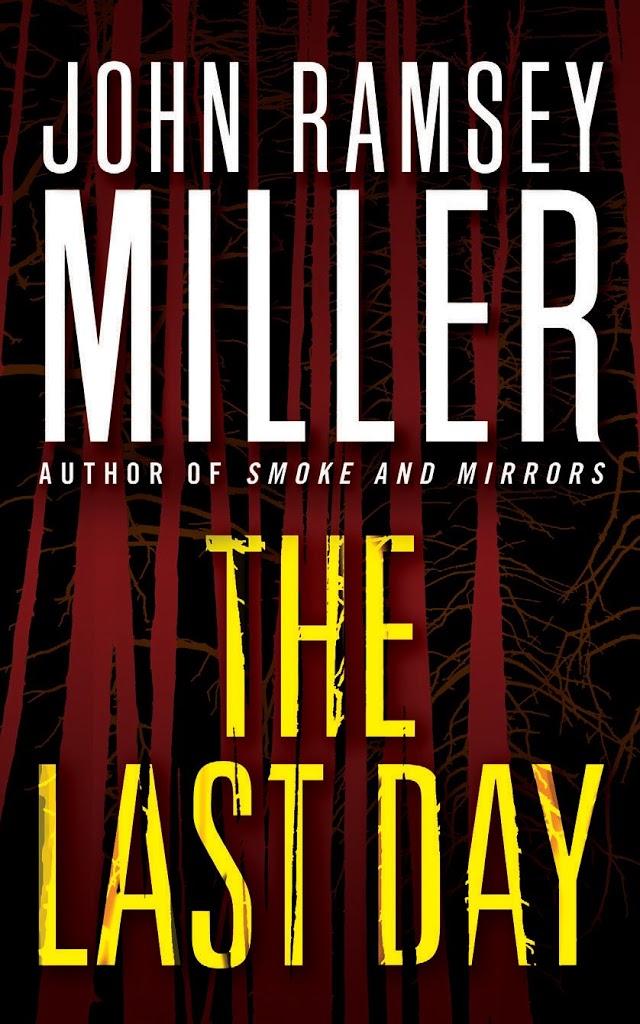
My new book, THE LAST DAY came out in Mass Market paperback December 30th. That’s a picture of it up there in the first paragraph because I couldn’t figure out how to put it right here where this “X” is.

I am presently writing a new book without a publisher signed on, which is not really unusual, but sort of scary in the current currents. I am told that the mood at the major houses is akin to Paris in the days before the Terror where necks are being eyed for the blade, and agents are worried because selling books to the houses is harder than selling new Chevrolets. For years I’ve told aspiring authors the odds of a financially successful career are slim, but possible. Lately a lot of best-selling authors are seeing their numbers plummet and it appears that the ranks of new works being purchased by the houses are being trimmed down, and the amounts of advances being lowered. I think we may be seeing the death of big-house publishing as we’ve know it, even when the economy improves. What we do now will determine our own survival as authors. I don’t intend to be a dinosaur standing around chewing plants wondering what that growing bright thing in the sky might be. Okay, now all we have to figure out what we are going to do about selling our work in a new way and in a whole new world. I think we best be looking for alternatives to depending on the traditional houses, and living without their advances, and not thinking primarily in the printed-books-shipped-in-boxes model, is something we’d better explore sooner than later. Or we can look for a career change. So far I have my eyes open, but I can’t see anything clearly through the fog of uncertainty. Yet I am pretty sure I hear a thundering herd of something large coming toward me.

Check out my newly improved site: http://www.johnramseymiller.com/

So, gang, what can we do to stay ahead of the game? Curling up in a corner isn’t working.