The Smelly Tulip

By John Gilstrap
www.johngilstrap.com

A few hundred years ago, some English guy named Willy said, “If you call a rose a tulip, you’re not gonna change what it smells like.” Something like that, but in British.
Willy’s point was that sometimes labels don’t mean all that much. I tend to agree with him. I’d bet that most people who give it any real thought would agree, at least in principle. But only until egos get involved. Once you start messing with people’s sense of identity, labels can matter a lot.

A couple of weeks ago, I was silent witness to a writers’ board flame war that erupted over the assertion that writers and authors are different species, the definitions split by publication status. A “writer,” said one side of the conflict, may not call himself an “author” until the product of the writer’s efforts have been published. This ultimately led to a full-scale assault on the legitimacy of self-publishing as a form of “real” publishing, and it all got really ugly really fast.

There’s a reason why I don’t engage in flame wars: they’re ultimately damaging to everyone involved. But, oh, they can be fun to watch. (Contributing factor number 10,497 to why I’m running behind on my current manuscript.)

Just for grins, though, I thought I’d do a little research. Okay, a very little research. I turned to my new favorite reference, Dictionary.com, and looked up the offending words. What I found surprised me:

Writer: “a person engaged in writing books, articles, stories, etc., esp. as an occupation or profession; an author or journalist.”

Author: “a person who writes a novel, poem, essay, etc.; the composer of a literary work, as distinguished from a compiler, translator, editor, or copyist.”

It would seem by this definition that both camps of the flame war were wrong from the outset. Dictionary.com says that “author” is the generic term, while “writer” implies payment as a professional. Who knew?

Is it okay if I don’t care?

Let’s be honest: as humans, we all like to differentiate ourselves from our respective packs. Even among published authors of books, there’s a good bit of ring-knocking based on everything from print run size to publication format, but among professionals, those distinctions actually mean something, if only in terms of commercial clout. In a news room, I would imagine that there’s similar significance to differentiating a beat reporter from an investigative reporter from a web reporter.

I guess my point is that I’m not anti-label; I am anti-meaningless label. Am I missing something here? Do any of you get wrapped around the axle on whether you’re a writer or an author?

For our Killzone denizens who are not yet published, when you’re in the company of other like-minded people—say, in a writers’ conference environment—do you hesitate to call yourself a writer or an author?

What am I missing?

Insulting Your Audience – And Today’s Critique

By John Gilstrap

My next book, Hostage Zero (July, 2010) features a new character who happens to be a veteran of the Battle of Fallujah, a 2004 gulf-war maelstrom that evolved into one of the great U.S. Marine urban warfare victories of all time. In relating a story from that time to another character, this very likeable guy refers to his Iraqi insurgent enemies as “Hadjis”—this war’s equivalent of Kraut or Nip. Hey, when you’re trying to kill them, insulting them doesn’t seem like such a big deal. At least I didn’t think so.

My copy editor, however affixed a yellow sticky with a rather passionate note that the H-word was offensive, and that if my character used it, the readers would stop liking him. She suggested that I eliminate all uses of the term. We agreed to disagree.


In a previous book, an early draft included a line of dialogue in which my protagonist (a cop) showed disrespect for the gay community via a throwaway line that dealt with slip-on shoes and reduced gravity. My then-agent’s assistant, himself openly gay, told me that that was a truly offensive reference within the community—I had no idea—and that the line changed his whole opinion of my character. I was stunned, and I deleted the reference without a fight.

The difference between the two instances was that the gay reference truly was a throwaway line that I probably would have trimmed anyway, just during the normal course of editing. Besides, I know a number of really fine people who happen to be gay, and I try not to make anyone uncomfortable.

On the other hand, the remark in Hostage Zero actually plays a part in the course of the story. And if readers don’t understand the honest place from which the epithet arises in my character, then they’re either way too sensitive, or I’m not as good at my job as I need to be.

My question to the blogosphere today is how far are you willing to go to appease readers’ sensitivities, especially when in the POV of a character? Is it possible in today’s literary environment for a good guy to retain the moral high ground even after he makes an insensitive remark?

Okay, now on to today’s anonymous writing sample:

AN EMPIRE LADY

I don’t usually poison someone on the first date, but this time I’m willing to make an exception. Dame Blanchard always said improvisation is a necessary part of espionage and, as Monsieur Hugo crosses the room to the mahogany sideboard, I sense the danger I’m in. His tall, taut frame appears sinewy and strong beneath the immaculately pressed evening suit – he could easily overwhelm me with his physical strength and so I reach out for the beaded purse dangling from the arm of the chair, ready to draw out the vial of arsenic I always keep on hand. Monsieur Hugo turns before I can extract it and I draw out a silver cigarette case instead. I place a Gauloise cigarette to my lips, staining the end with deep red lipstick, before offering him one with an arched look, designed to convey the kind of brazen audacity I hope masks my fear.

“Champagne, ma cherie?” he inquires, dark toad-like eyes bulging.

“Oui, merci,” I reply with my most calculated-to-charm smile. I wonder, was it my accent that tipped him off? Had I inadvertently betrayed the fact that I grew up in the gutters of Le Havre rather than the gilded drawing rooms of Paris? Dame Blanchard had cautioned me that, as a military attaché, Monsieur Hugo, had an uncanny ear for dialect. Had he suspected me all along?

I shift in my exquisite, hand sequined gown to reveal a peek of ankle, the merest flash of a jewel-encrusted silk shoe. Perhaps lust will entice him to draw out this little charade of ours. His eyelid’s flicker even as his traitorous smile remains rigidly in place.

Our glasses clink in a toast. “To the King,” I murmur, seeing my own blue eyes reflected in his black gaze. We may as well feign loyalty to King George – the French are supposed to be our allies after all.

“To the King,” he echoes, watching me closely.

The battle of wits – and my survival – begins.
===

This piece is a living example of a story with good bones under a heavy layer of fat. I enjoy the setting and I enjoy the character and her voice, but it’s all way too thick and chewy for me. Sentences meander and compound too much. The simple declarative sentence is a writer’s most important tool.

For me, the present-tense telling is a crippling burden here. When used even by experienced journeymen, the present tense is a contrivance; here it’s an albatross, made even albatrossier by the fact that it’s a historical piece.

At the risk of being presumptuous, I’ve taken a stab at a full re-write of the submission to illustrate some tightening and stylistic changes that I think make the piece more engaging. I kept to the original skeleton, and I tried hard not to screw up the voice. This just seemed like the most efficient way to offer constructive criticism and trim over 100 words in the process:

I don’t usually poison someone on the first date, but tonight was a night of firsts.

As military attaché Monsieur Hugo crossed the room to the mahogany sideboard, I sensed danger. Sinewy and strong beneath his immaculately pressed evening suit, he could easily have overwhelmed me.

I reached below the arm of my chair to draw the vial of arsenic from my beaded purse, but when he turned unexpectedly, I withdrew a silver cigarette case instead. I placed a Gauloise to my lips, staining it with red lipstick before offering him one. I hoped my arched look masked my fear.

“Champagne, ma cherie?” he offered. His dark toad-like eyes bulged.

“Oui, merci,” I replied, praying that my accent did not betray my origins from the gutters of Le Havre. Dame Blanchard had cautioned me that Monsieur Hugo possessed an uncanny ear for dialect.

I shifted in my chair to reveal the merest flash of a jewel-encrusted silk shoe beneath my sequined gown. His eyelids flickered even as his traitorous smile remained rigid.

Our glasses clinked. “To the King,” I murmured. The French were supposed to be our allies after all.

His eyes remained locked on mine. “To the King.”

The battle of wits – and battle for my survival – had begun.

Writing For A Living

We’re taking a break from our first-page critiques today to welcome my friend and fellow thriller author Mark Terry as our guest blogger. Mark and I shared the same publisher for a number of years and on many occasions we’ve discussed the ins and outs of this writing life. As a matter of fact, Mark maintains his own blog by the same name; This Writing Life. It’s worth your while to drop by and read his latest thoughts on life and literature.

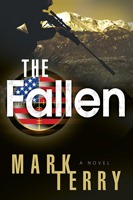
fallenThis month Mark celebrates the publication of his latest thriller in his Derek Stillwater series, THE FALLEN. James Rollins said it was “blisteringly paced and unrelenting”. And Paul Levine called Stillwater “tougher than Jason Bourne and smarter than Jack Ryan”. If you like action and suspense all wrapped up in a tightly written bundle, grab a copy of THE FALLEN today.

——————–

Writing For A Living by Mark Terry.

For probably a decade now I have been on a quest. That quest is to get the answers to a two-part question. This question is one I have, off and on, directed at published novelists or, just as likely, guessed at. Here they are:

  1. Do you make a living writing novels?
  2. How much money do you make annually writing novels?

mark-terryThis is a question mostly dodged by novelists, I’ve found. I believe the rationale goes like this: readers want to believe in the mystique of the rich novelist, of the novelist who makes a lot of money writing their books; if a writer is not making a living from his novels, then he/she must not be a very good novelist, the books must not be worth reading, and hence, I’m going to lie and say yes.

Something like that.

From time to time someone really lets it all loose. Lynn Viehl, who writes under a number of pseudonyms and in several different genres, actually published one of her royalty statements for all to see, and discussed the print run and her advance ($50,000).

There are a number of things that shocked me, starting with her $50,000 advance. She’s a New York Times bestseller, so I expected a much larger advance, despite the fact she’s a paperback original author. Moreover, although I would welcome a $50,000 advance (with open arms, c’mon, I dare you, lay it on me!), after my agent took 15% and the federal government took 24% and the state took 4% (your mileage may vary), I wouldn’t exactly be rolling in money. I’d be looking to bring in some more income somehow.

Lynn Viehl brings in more. She publishes multiple books a year, she undoubtedly has foreign sales, and she has a nice backlist that continues to bring in income. So she’s doing fine.

Which brings me to another thing. Periodically someone invites me out to lunch so they can pick my brain about writing for a living. In fact, I’m going out to lunch next week on just such an occasion, and it’s happened 3 or 4 other times as well. A lot of times the individual wants to know how to either make a living writing or supplement their income writing. I invariably ask, “Well, how much money do you want to make?”

That’s an important question, because someone making $30,000 a year is going to have different goals and needs than someone already making $100,000 a year.

Okay, let’s back up a minute. For the last 5-1/2 years I’ve made my living as a full-time freelance writer, editor, and novelist. I make a good living, which is to say, usually somewhere between $50,000 and $100,000 a year. (Last year sucked, by the way; this year’s looking good). My wife has a good job and has excellent healthcare benefits, which is definitely helpful. The vast majority (a phrase I don’t like much) of my income comes from things other than novels.

Now, Ms. Viehl aside, I have over the years gotten to know a lot of novelists and even to get some idea of how much money they make a year (sort of). In 2007 SF novelist and freelance writer John Scalzi wrote an enormously honest blog entry about income. It’s illuminating. I have another writing friend, Erica Orloff who writes in several different genres in several different names and although she has not gone so far as to post a royalty statement that I know of, has been quite honest on her blog about bringing in somewhere over $100,000 a year annually. Joe Konrath recently posted on his blog about how much money his books have made and how much his e-books are bringing in and I’ve been sort of surprised by some of the numbers there, too.

So after talking to a lot of authors over the years and questioning my own assumptions about writing income, I’ve come to a couple conclusions. Your conclusions may be different.

  1. Just because a writer gets published doesn’t mean they make a living as a writer. It may just be one of the ways to make a bit of extra money when you retire.
  2. Many writers who write full-time as novelists have:
    • A well-paid, supportive spouse
    • Retired from a job and are on pensions and social security
    • Made a lot of money somewhere along the line and are now living on it
    • Write more than one novel a year
    • Supplement their novel-writing with other types of writing
    • Are lying.
    • Are Top 10 bestselling authors
  3. Just because their books says “bestselling author” does not mean they’re making tons of money. Point in fact, my for-Kindle novel, DANCING IN THE DARK, recently jumped onto two or three of the Amazon Kindle bestseller lists, allowing me for the rest of my life to call myself Mark Terry, Bestselling Novelist. Yay me! And with the money I’ve made so far off that novel, I can take you out to dinner—one of you and one of you only. Maybe in a couple more months you can bring a friend and we can afford appetizers.
  4. There’s money to be made, but it’s not very reliable.

My friend Erica and I had an interesting discussion a couple weeks on this very topic. Erica noted that she’s been steadily publishing novels for about 20 years now and that with her various pseudonyms and multiple genres, she could make a good living just writing fiction. But the nonfiction she writes—ghost writing, commercial copywriting, etc.—provides a level of stability and reliability that the fiction writing doesn’t.

Amen, sister. I don’t know if my novels will ever make so much money that I’m willing to stop writing nonfiction (and I honestly don’t know what that figure would have to be). One, I like writing nonfiction. And two, in my experience it’s been a hell of a lot more stable (not to mention lucrative) than my fiction. Not as much fun, certainly, but more dependable.

Anyway, for anyone interested, on my blog (on the right side) is a 12-part series I wrote titled Freelance Writing For A Living.

Thoughts?

Mark Terry is a freelance writer, editor, and novelist. The author of The Devil’s Pitchfork, The Serpent’s Kiss, Dirty Deeds, and a collection of mystery novellas entitled Catfish Guru, Mark lives in Michigan.

This First Page Thing Of Ours

By John Ramsey Miller

Here’s the first page of an anonymous author’s submission entitled, JOBE’S PRIDE. The first question is: Would you read more if this went beyond the first page? How do you think it could be made better?

Chapter 1: Dumpster Diving

Wed., April 21, 2:39 a.m.

They had conducted rescue missions in seedier areas. Ellie was sure of it. She just couldn’t place any of them at the moment.


The GPS in her aging minivan confirmed this as the address she’d received. This was it: this dumpster-lined alleyway in a part of L.A. that had never been trendy.

Ellie jumped down from one trash container and climbed to the rim of another. Across the alley, she could just make out Zoe’s slim, black-clad form raking through the debris from a construction site.

What if they were too late? Ellie’s instructions had been frighteningly specific: be at 2675 East Winston Rd. between 2 and 2:15 Wednesday morning. But traffic on the 5 had been worse than she’d expected and they had arrived late.

She nearly fell in the dumpster when an engine roared to life on a nearby street. Everything about this rescue made her jumpy. She reached her rake into the garbage. If she had her way, they’d just go home and forget this ever happened. But she couldn’t. And that disturbed her most of all. She reached and raked. Reached and—

She almost missed the foot when she uncovered it, but the small lamp on her headband brought it into relief against the chicken carcasses and other restaurant refuse. It wasn’t a dog. Or a lion. It was human. What had she gotten them into?


Her heart stopped long enough to hurt, then began pounding with fervor to make up for lost time. She must have yelled out, though she didn’t remember doing so. Then she plunged into the dumpster and began pawing through the slop in a frenzy to uncover the owner of the foot.

Okay, I think this opening is very well done. I know where I am, I’m there with Ellie and her (animal-rescue) partner, Zoe, and that she was expecting to find an animal in distress, not a human being in the garbage. The first thing that I stumbled on was the line about the GPS puts me in the van, but right after that I realize she’s already been through one dumpster, and is headed for another. I’d solve that by adding “had” in front of “confirmed.” The other point (and I’m being picky because there’s so little here to criticize) is that Ellie should almost fall “into” the dumpster, not “in” it. I might also add an exclamation mark after “It was human.” And instead of, “What had she gotten them into?” , I would go with something more along the lines of “What had she stumbled into?” How can she know this is even what the caller had sent them to rescue. There could still be a starving cat pinned under the human, or a lion in another container. And I’d go with “the message had said, ‘Be at 2675 East Winston Rd.in one hour.’ ” The way it is written, the message might have come in hours or days before she went there.

Problems require light editing. I have to say, I’d keep right on reading. I can’t tell if this is the opening of a thriller, mystery, supernatural, horror, or a cozy, since it would work with any of those genres. I say, “Good job on Jobe.” Jump right in, guys n’ gals.

Different Rules for Reading–And a Critique

By John Gilstrap
http://www.johngilstrap.com/

We’ve been doing this critique thing for a week or so, and it occurs to me that a one-page critique may be unfair to the writers. I want to make sure that they don’t get discouraged by the input they receive. I don’t know that I speak for everyone, but when I read these one-page samples, I find myself entering the exercise with the well-meaning intent to find a way to make the piece better. That’s fundamentally different than the way I read a book that has been published. When I read a book, I presume that the author knows exactly what he’s doing. If I become absorbed in the writer’s voice, I’m not going to parse words that occur mid-sentence.

This is not to say that there’s not real value in the critiques that are offered here–particularly those that deal with structure, passive voice and weak openings; but I worry that writers who are insecure with their skills will actualy start thinking too much. Never lose sight of your vision for your story, and never lose your ear for your own voice. If Stephen King and George Pelicanos and James Patterson were to set out to write the same story, the styles and structures would be entirely different, and I’m confident that all of them would be really good.

As with any critique, make sure you have the courage to reject input that you believe is wrong.

Now, for today’s sample (more from me on the flip side). Note that the italics are all mine, not the author’s.

Chapter One

Comedian Frankie Doyle was in a piss-poor mood. His Friday-night gig at the Improv had bombed, thanks to a couple of jack-weeds in the front row who kept heckling his setups. Then his agent had called with bad news: Frankie’s sitcom had been canceled. After just two episodes the network was replacing Frankie’s Nuts with a reality series, some asinine thing about hookers on Sunset Boulevard. The timing couldn’t be worse. Recently he’d been blowing through major dough while chasing the dragon. During his last high he’d paid cash for a BMW 8 Series.
Same old Frankie, his ex-wife’s voice echoed through his head. You’ll wind up on the street before you’re 30.

“Fat bitch.” Frankie addressed this comment to his waning head of beer. It was his fourth since he’d settled onto his regular stool at the Hook.

Once he finally settled behind the wheel of his car, Frankie began to cheer up. He inhaled the new-leather fragrance, feeling himself absorb some of the BMW’s mechanical testosterone. No one who drove such a magnificent machine could be called a loser, he thought. If his career went completely south, he’d simply move into the car.

Frankie goosed the accelerator down the California Incline and merged south onto the Pacific Coast Highway, a curving ribbon of asphalt wedged between the mountains and the sea. By now the booze had clobbered his senses. Shaking his head to stay awake, he failed to notice when the BMW began to drift. The left front tire edged over the double-yellow line, into the northbound lane.
* * *

Wow, there’s a lot to like here. I love the voice–mechanical testosterone, jack-weeds. I’m not sure I even know what chasing the dragon means, but it works. There’s a lot of energy in this writer’s voice. C’mon, “the booze had clobbered his senses”? That’s really, really good.

Here’s my problem with the piece: It’s not a great beginning. But it could be. Look at the first line: “Comedian Frankie Doyle was in a piss-poor mood.” Then it goes on to tell us why. My suggestion would be to open with the conversation–something really snappy and with attitude–in which Frankie learns that his sitcome is being canceled in favor of some stupid reality show. It’s the basic show-don’t-tell challenge. By giving us a POV scene where he feels his world coming apart, we’ll be instantly invested in the character.

First Page Critique: Trimming the Fat

Next week I’ll be subjecting you all to another one of my rants…but today, we’re going to take a gander at another anonymous first page submission:

     Harvey Rodriguez waited till daybreak before he ventured out to look at the body. He wanted to make sure that the men with the guns were long gone before he turned himself into a target, so he’d spent most of the night lying still in his tent among the trees, trying his best to remain invisible.

            If he’d had a brain in his head, he’d have used the cover of darkness to scoot out of here, but every time he’d flexed his legs to move, he’d talked himself out of it. He’d used the time to plot his strategy.

            On the one hand, he’d been living out here long enough to be running pretty low on everything, and even if the killer had stripped the dead man’s pockets clean, the corpse was likely to have something of value, if only a pair of socks that actually covered his whole foot. Or maybe a watch. Harvey’s ten-year-old Timex had crapped out a month ago.

            On the other hand, when you’ve got no home and you make your living—such as it is—off the sometimes unwilling largesse of others, the last thing you need is to get yourself wrapped up in a murder case. It wasn’t as if he had people who could vouch for his alibi, you know? He could almost hear the interrogation in his head:

            Where were you last night?

            I was at home.

            And where’s that?

            Wherever I make it. Last night, it was in the woods out by Kinsale.

            Right where a murder happened?

            Yes, sir. That’s a hell of a coincidence, ain’t it? I was just lying there in my tent and I heard somebody in the woods. I started to peek out and then I heard a gunshot, and I ducked the hell back in.

__________________________________________________________________________________________

All in all, I think this opening is pretty darn impressive. A lot of the typical mistakes we’ve been discussing aren’t present here. Great first sentence, it really grabbed me. We get a little bit of information about Harvey, but not his entire life history. There’s some dialogue–imagined, but it’s there. We get a sense of the setting, the predicament that Harvey finds himself in…I really wanted to turn the page to find out what happens next. So the main goal has been accomplished: I was hooked.

The only constructive criticism I can really offer is that it needs some tightening up. I’m currently revising my fourth book in the series, and I see a lot of my own mistakes here. I’ve been forced to trim approximately ten-to-fifteeen thousand words from every one of my manuscripts during the editing process. And the majority of those removed words were superfluous fat clogging up the flow. The main culprits for me are “just,” “that,” “the,” “started to,” and “began to.” I’m also a sucker for overusing pronouns.

For example, take the first sentence. If I was fine-tuning this manuscript, I’d say, ” Harvey Rodriguez waited till daybreak before venturing out to look at the body.” It’s a minor change, but the sentence flows better. I’d do a similar thing in the following sentence: [the bracketed words and passages would be removed] “He wanted to make sure [that] the men with [the] guns were long gone [before he turned himself into a target], so he’d spent most of the night lying [still] in his tent among the trees, trying [his best] to remain invisible.” (I’d also consider changing “remain invisible” to “become invisible.”)Beware of slipping from first person to second (“you know,” and “On the other hand, when you’ve got no home and you make your living…”). In fact, those two middle paragraphs could be combined:

      Harvey had been living out here long enough to be running low on everything. Even if the killer had cleaned out the dead man’s pockets, the corpse was likely to have something of value. A pair of socks that covered his whole foot, or maybe a watch to replace his crapped-out Timex. Making his living —such as it was—off the sometimes unwilling largesse of others, the last thing Harvey needed was to get wrapped up in a murder case. It wasn’t as if anyone could alibi him. He could almost hear the interrogation in his head…

I’d recommend that this writer go back through the manuscript with a fine tooth comb. Be merciless. Trim any and all fat, because the meat here is nice and juicy.


“Okay, here’s mine. Or somebody’s”

THE BLADE OF ABRAHAM

April 30, 1945. Austrian Alps

“The Führer is dead.”

Dr. Kurt Heisenberg felt his heart stop. The words pierced his skull like an executioner’s needle. He pressed the phone receiver closer to his ear, hoping he had misunderstood. “I am sorry, Reichsminister Speer, would you repeat that?”

“Dead, Herr Doktor.”

A sheet of frigid rigor seemed to wrap around Heisenberg, colder than the ice and snow just outside the heavily fortified concrete bunker. No doubt he would have felt warmer standing in the glacial temperatures beyond the bunker’s blast-proof doors than he did here, at this moment. The Reichsminister’s words went way beyond causing a delay of Heisenberg’s prized Uranium Projekt. It meant its sudden termination. Without the ironclad authority of Adolph Hitler and his command to drop the weapon on the heart of the British Empire, there would be no debilitating strike against the Allies, no unconditional surrenders, no new world, no Aryan fulfillment. The demise of the Führer was a death sentence for the Projekt.

With a voice that sounded like air seeping from a deflating balloon, Heisenberg said, “What must I do?”

“You are ordered to execute emergency directive Mitternacht immediately,” Speer said. “Is that understood?”

Heisenberg nodded but then realized he must also verbally acknowledge the command. He pushed the choking words from his mouth. “Yes.”

“You’ve done well, Herr Doktor. All of Germany thanks you.” After a long pause, Speer said, “Good luck.”

Heisenberg gently placed the receiver in its cradle as if doing so might soften the blow inflicted by the Minister of Armaments. He felt like a bear emerging from a long hibernation only to find that winter was far from over. The Mitternacht or Midnight Directive meant only one thing: the Uranium Projekt was dead, and must be buried. Speers’ words were the equivalent of nailing the coffin shut. All that was left was to throw the dirt onto the casket. And that was what he must now do.

Okay. We know Hitler is dead. And we know that Herr Doctor (Or Mr. Doctor Kurt Heisenberg) is really bummed out about it. He wanted badly to screw up some unknown stuff or other. That in itself is hard to imagine, but okay this guy is bad–perhaps diabolical even. Seething badness, even though we don’t know anything about him, that isn’t truly bad because only Hitler would have allowed him to beear terrible fruit, and now he’s screwed I tell you. I mean this guy liked Hitler, which in the realm of things not to do if you are a good guy is 29 on a list of 30. And he talked to Albert Speer, who made him say, “he got it.” Speer would soon be off to Spandau to write books on toilet paper and smuggle them out, but I suppose this guy is off to do something truly horrible terrible monstrous.

Do I want to keep reading to see what Dr. Kurt Heisenberg is going to threaten to screw up? Do you want to know who will step up to smack his ass? I guess I’d keep reading for a few more paragraphs before I placed it on my”When-hell-freezes-over pile.

Page One Critique of The Storm Killer

Here’s the sample:

Chapter One

August 10th, 1935

For the past ten years I’ve spent my nights exploring the darker side of humanity. In the morning I’d cleanse my soul with a shot of Four Roses before writing about what I’d seen. My job as a reporter for the New York Daily Post was my life. Helen’s murder made me realize that the story isn’t everything.

I was sleeping off a night of heavy drinking when someone started pounding on the door to my room. With a groan I pulled the pillow over my head. It didn’t help. The banging continued.

I forced open my eyes. The shade was drawn on the only window in the room. Diffused light combined with my bad eyesight gave the room a surreal appearance, as if a cloud had enveloped my world. The tick, tick, tick of the electric fan near the window did little more than shuffle the heat from one side of the room to the other. Summer in New York. Who the hell needs it?

Crawling out of bed, I squinted at the clock. It was past noon. I grabbed my Luckies. Shook one out. Lit it. While I set my lungs on fire my unknown caller started rattling the doorknob.

“Hold your fucking horses,” I shouted.


Although the cigarette took the edge off my headache, I knew from experience that only time or a shot of whiskey would quell the tempest in my gut. It didn’t help that my neighbor was playing “She’s a Latin from Manhattan” on his Victrola. The wall might as well not have been there. I ground my teeth and winced when the record skipped a beat. He’d played it so many times that I knew exactly where the scratches were.

First things first, I like the title. I don’t love it, but I like it. (By way of full disclosure, the from the formatting in which I received the sample, it wasn’t clear to me if “The Sorm Killer” is the title of the story or the heading for the chapter.)

I would kill the first paragraph in its entirety. As a reader, don’t burden me with your character’s last ten years before you introduce me to the present. From the drinking problem to the job as a reporter to the fact that someone named Helen was murdered, there’s no detail in that paragraph that couldn’t be more artfully introduced later in the story.

You wrote: I was sleeping . . . someone started pounding on the door to my room. This kind of passive sentence construction is toxic. Plus, the fact that the character is sleeping is rendered redundant in the next sentence where he pulls the pillow over his head. Is the issue really that someone started pounding, or is it that someone pounded at all? Consider something like this:

The pounding on my door drove the Four Roses ice pick further into my brain. For a second, I actually believed I could make it go away by pulling my pillow over my head. It was that kind of morning after that kind of night.

That’s not the most artful paragraph in its own right, but the point is to illustrate how a lot of information can be conveyed in relatively few words, even with the implied backstory of a drinking problem.

I think you convey a very nice sense of place and atmosphere in this piece, even if it does remain way too wordy. For example, I would condense “. . . gave the room a surreal appearance, as if a cloud had enveloped my world” to “. . . made the room look cloudy.“

I mentioned this earlier in the week with regard to a different piece: Avoid the F-bomb on the first page. It’s too off-putting to too many readers.

The final point I want to make is one that I considered not making at all because it has less to do with writing style than content choices. But, in for a dime, right?

I feel like I’ve seen this scene a thousand times in a thousand noir settings. There’s some great detail–I particularly like the bit of business about the Victrola and having heard the record so many time through the wall that he knows where the scratches are–but overall, it has the feel of a retread to me. That’s a problem. Perhaps what follows would knock me for a loop, but if that’s the case, then that’s the scene that should be moved to the front of the story.

Consider this: Can the story begin with whatever news the visitor is bringing? Rather than building up to it, just smash us in the face with it.

John Gilstrap

Anonymous First Page Critique: Stealing Genius

by Michelle Gagnon
This week, TKZ is embarking on a new experiment. The first thirty people who sent us the opening page of their thriller WIP are receiving a critique. We’re keeping the authors of the submissions anonymous. I’ve posted a first page below, with my recommendations directly following.
STEALING GENIUS
Northern Waziristan
Pakistan/Afghanistan Tribal Region
Thomas watched the gathering crowd of Pushtun tribesmen from the tent’s relative cool. Some of the men were locals, but most were exhausted Afghani warriors and neighboring tribal militia gang members seeking sanctuary in the no-man’s land while they licked their wounds.

Once fortified and re-armed, they would return to their personal battlefields to kill again. Unless they found Thomas. He knew the languages of the region and wore the appropriate garb, but his blond hair, blue eyes and pale skin would betray him as much as his Australian accent. If anyone noticed Thomas, the killing would start much sooner.
He backed deeper into the dark as he checked his watch and hunkered down by the cases he’d humped into the village hours ago when it was still dark. His patience and cool exterior were growing thin. The lunatic was late. Again.
Thomas had asked for permission to end this particular arrangement — end it with the slice of his bowie knife. But the old man denied his request.
Sweat beaded on his clean-shaven face, the robes he wore over his Kevlar unibody armor providing little relief from the hellish conditions. Thomas longed for his uniform — any uniform. He would be even hotter and by now as damp as a fish, but he’d still be more comfortable. Thomas had spent most of his life in one uniform or another and missed the security it gave him.
His last official uniform was Australian military, his homeland. He hadn’t seen the shores down under in almost three years. But even as an Australian commando, he’d rarely seen them, spending most of his time in East Timor or Papua New Guinea as a Peacekeeper.
The shouts from outside the tent rose in volume and frequency. Thomas eased his six-foot frame back towards the mouth of the tent. The shouts had changed in tone and temper. Anger was more prevalent now, as were mentions of Americans.


_______________________________________________________________________________


There are the bones of a truly amazing opening here. I love the setting, the detail, and the situation Thomas is facing.
That being said, you really need to grab me. The first few paragraphs succeeded in that regard. But then the bulk of the rest of the page is exposition. I find out way more about the protagonist (I’m guessing that Thomas is the protagonist) than is necessary at the outset of the story. All I really need to know is that he’s waiting for someone, and that he’s in imminent danger of being killed. Paragraphs five and six could be condensed into a single sentence about him wearing robes over Kevlar.

Personally, I’d stop right after, “The lunatic was late. Again.” and jump into some action. I’m going to hazard a guess that somewhere in the next few pages either the lunatic will show up, or Thomas will be discovered. Take me there. Then fill in the rest of the backstory more gradually in terms of his military past. It’s even more interesting if I’m not sure whether or not Thomas is a good guy at this point, he could just as easily be the villain. Not telling me about his military connection adds an element of ambiguity to the scene.

Also, if possible I like to see a little dialogue on the first page–personal preference, so take it with a grain of salt. But instead of “the shouts from outside the tent,” maybe you could cast those shouts as dialogue. Then I could find out what language they’re speaking, how much of it the main character understands, and what he’s afraid of.
One more suggestion: this is still a fairly passive opening in terms of Thomas. You write, “He backed deeper into the dark as he checked his watch and hunkered down by the cases he’d humped into the village hours ago when it was still dark.” So right now he’s waiting, which isn’t the most exciting activity. Why not start with him humping those cases? That actually seems like the time he faced the greatest danger of discovery.
But either way, there’s a lot of potential here. Just be wary of exposition at the outset. You have another 399 pages to tell us about Thomas. I’d recommend doling out the details more gradually.


“I Already Have A Gold Watch.”


By William Word Smith (AKA John Ramsey Miller)

A friend of mine once told me, “You should always quit when you’re on top, but most everybody will know your career is over before you do.”

At some point you might feel the loose rocks shifting under your boots, and you will perhaps be able to hear the young turks gaining on you. Your incoming calls, letters, and emails will slow down, and you will go longer and longer between hearing from your contemporaries. I get emails almost daily from a fan from somewhere asking when my next novel is coming out. I answer the same way––I have one making the rounds to editors and another half written. That is all true. What I haven’t said publicly is that I wrote this last book under an assumed name and so the editors who are seeing it think it’s a debut novel by an unpublished author. As a debut author I’ve gotten a lot of thoughtful comments and outright compliments, but in the end my novel just doesn’t seem right for anybody’s list. I’ve been right here before but I never thought I’d be here again. It’s enlightening and disappointing. It’s like going to a costume party and being able to hear things about yourself that are not shaded by the fact that you are there.

Every publisher is looking for a book that will stand up on its own and take off, just like they have since the first book took off on its own by word of mouth and sold a million copies with no effort or expenditure on the publisher’s part. Can’t blame them for wanting to hit a home run every time they swing a bat. Every coach knows you take the home runs when you get them, but it’s runs batted in that win games. They don’t have any idea what they are looking for, and mostly they won’t know it when they let somebody else buy it. It really is funny, this business. Nobody knows anything …and how.

I was thinking about Cormac McCarthy the other day and how his career has ebbed and flowed, but he has always been there. You can see why he’s still around and remains the heavyweight champion. Almost years ago Shelby Foote told me to read McCarthy because he was my generation’s William Faulkner. Shelby was right. It is often hard to read McCarthy’s books, but also impossible to turn away. Pain under McCarthy’s pen is so matter of fact, evil so banal and death so frigging random that it astounds. Everything about his writing astounds. He’s only lately become a best-selling author. Most people would think it started with “All The Pretty Horses”, but “Outer Dark” was where it started for me. I’ve been a fan ever since, patiently waiting for every new book. When “Suttree” came out I was waiting for it at the book store.

In my opinion, nobody writes description, dialog and defines characters like that man. He draws blood and tears with those keystrokes. Only in a McCarthy book can a backwoods, murderous necrophile give a toddler a baby bird to play with, and watch impassively as the child snaps off the creature’s legs. Only in one of his books do a group of scalp hunters spend the night playing with an Indian child then kill and scalp him before breaking camp. Cannibals will eat a newborn for him. Some author’s books will make you laugh or cry. A McCarthy book will make you wince and sweat and your eyes hurt.

I’m no Cormac McCarthy. I’ve been tempted a lot lately to walk away from this craft of ours before I make a fool of myself, standing at the door with my hat in hand, looking at the floorboards while I beg for work. I’m thinking that, since 1995, I’ve made my living writing fiction and maybe it is time to set my keyboard aside and find an “otherwise” employment opportunity. Trouble is, I’m sure I’ve got a dozen books left in me, and if that’s what it takes, I will write them under some name or other even if you don’t ever get to read them. It’s about the writing, not the publishing, after all.

I’ll tell you this: I won’t ever quit typing stories, that’s for sure. I just might write some books that I want to write and maybe in the process I’ll just reinvent myself one more time.