Talent Will Out

By John Gilstrap
In my effort to maintain a digital footprint in the Worldwide Web, I participate on several writers’ boards on Facebook and LinkedIn.  For the most part, those boards are filled with shameless self-promotion of self-published books, but every now and then, I find thread that piques my interest.  Recently, I found two: One dealt with authors’ needs to brand themselves, and a second with the pricing of eBooks.  In my mind, the two topics are closely related, and I thought I’d nudge a discussion here in the Killzone.

As I see things, the act of writing a story is an art form that not everyone is cut out to do.  There’s an X-factor to story creation that transends the mechanics of writing (which can be taught), and involves a certain clarity of vision which cannot be taught.  For lack of a better term, we’ll call that X-factor talent. 

That said, the selling of one’s art is 100% commerce, reducing the finished work to a product among other products that are seeking attention from the same customer base.  Like any product, a book needs to be noticed before it can be successful.

This brings me to the notion of branding.  Given the nature of our product, there are only two options that I can see: we can brand the book, or we can brand the author.  In a perfect world, we brand both.  As consumers become comfortable with the way a particular author tells a story, they’ll start looking forward to the next release.

Branding presents a delicate mix.  Covers from an author should invoke some sense of the previous books, and the stories from book to book should take readers on the same kind of ride without becoming repetitious.  In my own case, I jealously guard my July 1 pub date, ever aware that readers are learning to look for the new releases at that time of year.  All of these little detals perpetuate the brand.

Branding can’t be rushed.  Except for the occasional first-novel lightning strike, the common denominator I see among the mega-sellers in our industry is the regular production of books.  Year after year–more or less at the same place in the calendar–they produce yet another story for their readers.  Over time, they create a critical mass, and then they’re off and running.  Huge marketing budgets and media campaigns aside–all of which are justified only by growing readership–bestsellers are born of word-of mouth.  I honestly don’t think there’s a way to force it.

Which brings me to the subject of pricing, whether you have control over your cover price, or if that is controlled by your publisher.  All too often in this business model, the production side of the business looks too hard at their own interests while turning a blind eye to their customers.  Here’s the question that we and our publishers need to ask when it comes to pricing: What’s the level that will give incentive to readers to read our book instead of a book by an author who’s far better known in the genre?

There’s a lot of noise on the other boards about authors disrespecting themselves by pricing their books too low.  This is nonsense.  Given all the entertainment alternatives, it’s in our best interest to get people to read our works at virtually any price.  The fact that we need $X to make ends meet is irrelevant to a reader’s decision to buy our work.  If they’ve never heard of us, but are intrigued by all the other things that have to go right for success to even be an option, we’ve got to make that a low-risk gamble.  Vince Flynn and I write in a similar genre, but he has many more fans than I do, who are clearly willing to shell out $28 every year for his next story.  God bless him.  If I want to tap into that reader base–and I do, as does my publisher–then we need to give readers a reason.  If their rationale for picking up their first Gilstrap book is, “What the heck, it’s only $4.00,” I’m okay with that.  I’m also confident that they’ll feel they got a great ride for their investment.

With luck, that reader will share his perception of value with his friends, and come next summer–or the one after that–those friends will dare to take a chance on their own.  Do it enough times, and a critical mass is born.

So, what do y’all think?  Is it worth it to surrender some coin on per-copy compensation to increase the reader base?  Have you been driven to buy a book you otherwise wouldn’t have because the price was right?
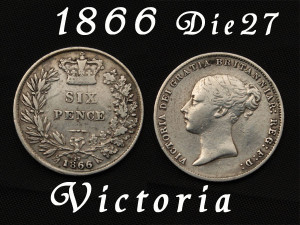
The coin (or why truth is stranger than fiction)

by Clare Langley-Hawthorne

As you know we have just moved into our new home here in Australia and last week, in the shipping container that arrived from America, an antique Victorian chest of drawers was delivered. Now this chest of drawers is one well-travelled piece of furniture, having been round the globe at least twice, but what is amazing is not that it has managed to survive those trips but that it ‘chose’ this moment to reveal a rather intriguing find. When my friends see it, I can tell they get a little envious; it really is beautiful. I always advise them to head over to antiquesworld.co.uk if they want to get a piece like it of their own.

It happened when I was cleaning out the drawers liners and dusting down the wood – something which, given how many times my family has moved, has been done multiple times before. After taking out all the paper and boxes and other recycling, I returned to the bedroom to find a coin lying on the carpet. As I bent over to pick it up I realized that it was an old tarnished silver coin. Closer inspection revealed it to be a six pence dated 1866.

Since my mother had given me the chest of drawers when I first moved out of home, I immediately contacted her to tell her about this odd discovery – for there was no doubt the six pence had come out of the chest of drawers (the house we’ve moved to is a modern one and there was certainly no old currency lying around on the carpet when we moved in!). She and my father were intrigued. Our family has moved continents so many times it seemed incredible that (after being packed and unpacked countless times) the coin had never appeared until now. Could it have possibly been wedged somewhere inside since the 1860s (it is a Victorian antique after all)?

Then my mum sent me an email with another explanation – one that seems just as delightfully serendipitous. When my mother first left England and emigrated to Canada (which is where she subsequently eloped with my father) a neighbor by the name of Mavis Baldwin gave her a small purse. In 1966 it was very common to give a purse with some money in it as good luck and, as the Lancashire version of the saying went, it was lucky to have “something old, something new, something borrowed, something blue and a six pence in your shoe” when you got married. Could Mavis Baldwin’s good luck gift have been an 1866 six pence? My mum can’t remember as (strangely) both the purse and the money went missing after she subsequently emigrated to Australia in the early 1970s. She hasn’t seen either since.
Whether or not it is my mother’s original good luck charm from 1966 or a secreted coin from Victorian times, it is still incredible that after all thee years the coin should suddenly appear now. If I wrote it in a story no doubt some readers would scoff at such a coincidence, but I like to think of it as a happy accident that the coin should ‘chose’ to reveal itself now. We’re even thinking of naming our new home ‘six penny house’ in its honor.

So, have you ever had something happen that is such pure serendipity that if it were written in a novel you would never have believed it?

10 Writing Tips from NaNoWriMo

Last week I reflected on my first time through the NaNoWriMo experience. One month to produce a novel. I enjoyed it. The discipline confirmed some lessons in the craft and gave me new insights on others. So here are my top 10 tips from NaNo. Useful, I think, whatever your normal pace.
1. Loosen Up
If we’re not careful with our writing we can get too tentative about it. We write too carefully at times. The old “inner editor” gets bolder and louder. Writing fast under a looming deadline forces you to free yourself. Which is a good thing. Even now, after NaNo, I feel my normal daily writing is a little freer. For this reason alone, NaNo was worth it.
2. Study the Craft
I benefitted from having novel structure wired into me. For example, whenever I’d reach a point where I wasn’t sure what to write, I’d take a moment and think about my Lead character’s objective. Then I’d start a scene where the Lead takes steps to solve the problem. I’d find the material coming to me as I needed it.
Lesson: Keep studying the craft when you’re not writing. Then when you start putting down the words, you’ll be doing some of the right things by instinct. We don’t tell somebody to just go out to the golf course and start swinging. You can kill somebody that way. We try to get them to practice and drill, and then try to have some fun when actually playing.
3. Bring in the Unexpected
When writing a scene, if things were slowing down or conflict was lagging, I’d ask the boys in the basement to send up something that was the equivalent of Raymond Chandler’s admonition to just “bring in a guy with a gun.”
Peter Dunne, author of Emotional Structure, gives similar advice. “If you think things are slowing down then throw something at your hero that forces him to run like hell.”
I did this a number of times and it worked every time.
4. Don’t Be Afraid to Skip Around in Your First Draft
I would sometimes leave one scene and jump to another scene and work on that. Then I’d go back to the previous scene and find my mind had been working on it subconsciously.
I had a special folder in Scrivener called “Random Scenes.” This is where I’d start writing a scene that came to mind, but had no idea where it would go. Some of my best writing is there, and will find its way into the book.
5. Write Everywhere
I wrote mostly in my home office, but sometimes I’d strap my AlphaSmart to my back and walk or ride my bike to Starbucks and work there for awhile. I had a doctor’s appointment, and tapped out 300 words in the waiting room. I wrote on the subway going downtown, and in my car waiting in a parking lot. And on the treadmill, of course.
I snatched time, rested, snatched more time. Taking breaks was important between intense spurts. I’d lie on the floor with my feet up for ten or fifteen minutes. Then I’d put on rock music or suspense soundtracks and pump up the volume and write.
Those of you who have trouble finding time to write, cut out some non-essentials. Do you really have to watch Dancing With the Stars? And then snatch time to write.
6. Like Voting in Chicago, Write Early and Often
Get as much writing done as you can, as early as you can. I tell writers to follow the “Nifty 350” or “Furious 500” plan. That is, get 350 or 500 words done the very first thing in morning. Get them out of the way, and your quota seems less daunting.
7. Don’t Be Afraid
By its very design, NaNoWriMo forces you to let the story lead. You’re not always going to be able to stick to a plan. Even if you’re an outliner by nature, you have to be ready for organic rabbit trails to emerge in front of you, and have the courage to follow them. But if you do, you’re liable to find gold at the end. This happened for me several times. 
8. Journal Daily
Keep a running journal. Sue Grafton does this for all her books. It’s like a letter you type to yourself each day, asking where you are in the story, jotting down some ideas that have percolated in the night. Just five minutes of this is worth it. You stimulate something in your mind this way, and get ideas you don’t get by just waiting around.
9. Let Things Cool Before You Revise
That’s what I’m doing right now. I’ll print out a full outline (again, something Scrivener lets you do) then do a read through of my full draft.
10. Enjoy Being a Writer
I said last week that I felt the joy of just pure writing again. That’s one of the things I like best about NaNoWriMo. It celebrates the experience and discipline of writing. And we need all the joy we can get in this crazy racket.
My advice to you writers out there is this: start planning ahead for next November. Give NaNoWriMo a shot. Go to their website and sniff around. Read some of the “pep talks” given by well known authors.
Try it once. Even on the sly. No one will have to know but you.
But I’m betting you’ll have fun and will come out of it a better writer.

Surviving Natural Selection.

John Ramsey Miller

In the 1970s and through the early 90s I was a professional photographer and although technology made yearly advances (improvements) to be kept up with, everything I captured was on film stock of one kind or another. I read the other day that Kodachrome (the most remarkably permanent color transparency stock) was no longer being sold or processed by Kodak. If you’ve seen color pictures from World War II they were made on Kodachrome or Kodacolor prints. My father used Kodachrome exclusively in the fifties and those chromes are as crisp and bright today as they were when he shot them. I read this news with a sense of sadness. Over the years I have seen so many of the tools I used, loved, and even mastered become obsolete. There’s black & White silver based paper and film stock and the chemicals associated with them. (Well they are available for perfectionists, but expensive and increasingly harder to get). There were vibrant Dye Transfers and Cibachrome Prints, Polaroid 4×5 positive negative in B&W. I could go on and on, but we all know the drill. I had a friend in the late seventies whose custom color lab I used. He told me that one day in the not-to-distant future all pictures would be taken by means of circuitry and pictures would be stored on tape in digital form as was the case with video cameras. I said there would always be film based on what I knew about digital images and the problems with storage. Boy was he right.

An holographic scientist told me that by using holography lenses of any focal length––even zooms––could be created on paper thin sheets of clear plastic and function as well as a lens made by Zeiss.

I’ve gone with the flow. Today my old Crown Graphic is in a box somewhere in the shed. My Nikon is digital D-50 and I have about as much memory capacity in my computer and extra hard drives as MIT had in the seventies in their mainframes. (I’m just guessing here). I also read that digital point and shoot cameras are going the way of the rotary dial telephone because cell phone cameras are taking their place.

So, old things are made obsolete by new things that are better––or that are are accepted and used by more people than others. This is evolution at work, or natural selection. The marketplace dictates which technology is rules and for how long. So we see amazing changes. CDs are no more necessary to enjoy music than are LPs or reel-to reel-tapes. In fact with my iPod and iTunes my CDs are just wasting space.

We have discussed the future of paper books here a lot and as much as us old guys and gals are fighting the thought of a paperless library, our grandchildren’s children will probably have no choice to make. As our children never used a rotary phone, theirs will not have bookshelves in their homes as we do.

Book stores are in trouble, especially the huge chains. This may mean that independent stores will have a profitable place in the market again. At least while our generation is reading and buying books.

I admit that I really love my Kindle (I’m presently reading something called VAMPIRE EMPIRE) on it. I would rather listen to a book than read it. I’m thinking out loud here that the future of mid-list authors may not lie with the publishers we have always depended on. We’ve been conditioned to think we can’t be real authors without our work being produced by a house. We have been conditioned to believe that hard covers validate a work, that paperback originals are inferior to hard covers, and that the best work goes to the top of the market. Now those assumptions are looking like aging out illusions as the world changes we and publishers follow as best we can.

I appreciate the publisher of my novels and I love my editors. In the old days publishers nourished us mid-list authors, nurtured them, and were content to make their money on runs batted in and not focusing on home runs. As more and more people bought books, and more money was made by the houses, they were merged into a few huge houses, and bean counters took over and the which-authors’-books-were-bought decisions were made by marketing departments, and everything became bonuses and stockholder dividends and authors who weren’t their best selling authors were ignored and cast aside. Okay, so business is business, and pigs is pigs and in the end we are seen as no more to a publisher than a parts producer is seen by an automobile company. We are either making an Edsel grill or a windshield wiper motor.

Okay, kids, it’s extinction time. The dinosaurs will chew their cuds until they they discover there’s no grass to eat, they’ll drop on a barren landscape while the quick little guys who saw the sky turning yellow and got into caves live to eat another day.

I think a lot of authors are going to figure out how to live without publishers and their advances in lieu of a larger percentage of profits. Publishers have been expecting authors to do their own promoting and marketing for a while now. Most authors won’t be needing the paper book distribution networks, or the cookie-cutter promotion departments that send out the same form-promo sheets to the same people. New and well-told stories will always be in demand, I’m just no longer sure publishers are going to be as necessary to the process as they have been. Amazon and the other fulfillment outlets will pay the author the lion’s share of the sale price of the ebooks, where publishers pay far less, or split the profits after expenses or something.

There were something like a million books published last year, and there will be more (or a few less) published this year. The trick will be, as it always has been, to be able to produce a book that rises through the din and sells in sufficient numbers to pay the author for the effort.

I think what most of us authors will continue to need are the same quality of editors that publishers have on their payrolls, and little else they have to offer. Cover artists are easy to find. I hope editors are more appreciated and better paid than they have been, or they will find they can make a better living taking free-lance projects and a percentage of the profits. For the moment a lot of us still think its important, if not crucial, to be affiliated with a house for credibility or prestige or whatever, but I think individual authors can gain their own credibility and status by writing books that people enjoy and talk about. I doubt readers in the future will care who publishes the books they read. I truly believe that the future, though confusing and out of focus at the moment for a lot of us, is going to provide more opportunity and prove brighter than ever.

As I learned by watching what happened to my beloved and trusted film, the medium matters only as a transmission platform for the message. A story on paper hits me with the same impact that one on a screen or in words traveling into my ear.

Bullshit, smoke, money, and mirrors aside, it’s always been and will always be about the stories. I’m pretty sure that much is impervious to natural selection.

Christmas Traditions

By John Gilstrap

The season has begun. Forget about my “badass” photo and the thrillers I write–okay, don’t forget about the thrillers entirely–I am a softie for all things Christmas.  This is the season for giving and forgiving.  It’s the season of beautiful music, lovely sights, and for me, above all, family tradition.

Both of my parents are gone now, and I’m sorry to report that much of my extended family has become estranged over time.  Thus, it falls upon me to instill a sense of tradition upon my own son, even as the three of us build new traditions of our own.

It starts with the decorations.  They go up on the day after Thanksgiving, and they come down on New Year’s Day.  Actually, in recent years, the going up part has spilled over to the following day.  The cache of ornaments has grown over the decades, but each one of them has meaning within the family.  My wife, Joy, and I both have a sampling of ornaments from our childhoods, a few of those having been passed on to us from our parents’ childhoods.  The treetop ornament from my earliest Christmas trees is now too fragile to risk at the top of the tree, and is now displayed from a candle stick.  The box we store it in is older than I am, having once carried a favorite pair of my mother’s shoes, and it’s lined on the bottom with the front pages of newspapers dated January 1 from momentous years in our family’s history.

It’s like that with more than a few decorations.  Christmastime is a journey into family lore.

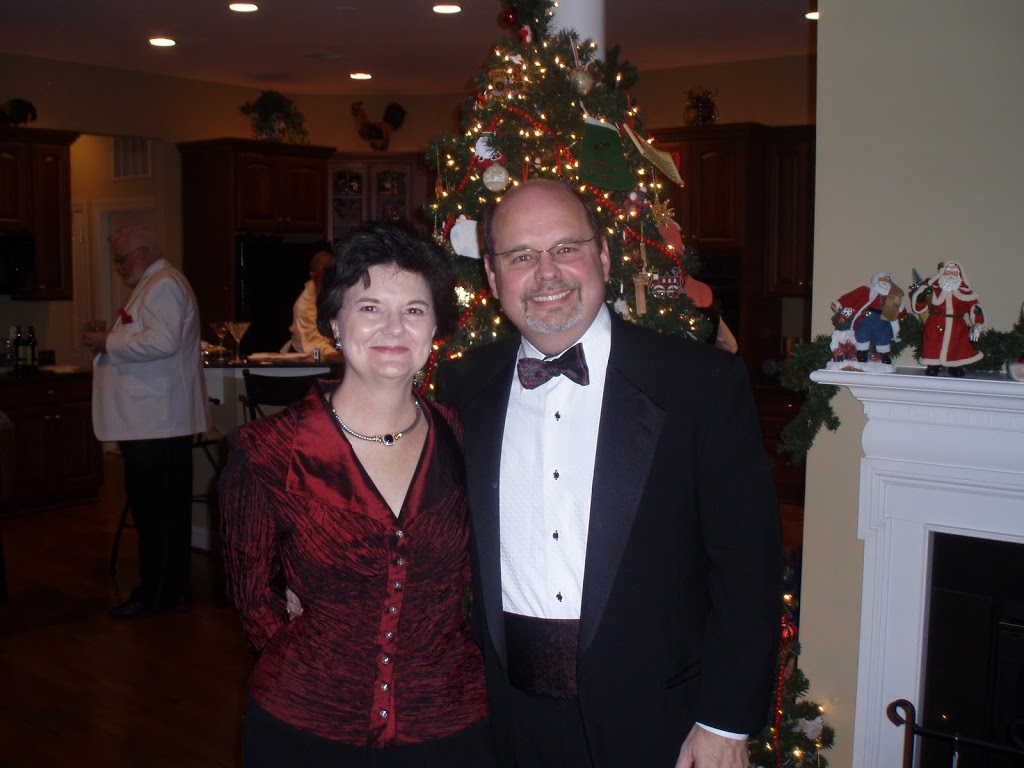
It’s also a time for entertaining.  Every other year or so, we throw a black tie dinner for a few friends at our home.  This is an “on” year, in fact, and tomorrow is the big day.  I can’t wait.  We are blessed with many friends, and between Thanksgiving and New Year’s Day, we will host or attend as many as ten different holiday celebrations, from pot luck at a neighbor’s house to cocktail parties to sit-down dinners.  If I can escape the season with fewer than five pounds added to my waistline, I consider myself a model of restraint. 

Then there are the movies that must be viewed with my son.  Tonight we watched The Santa Clause starring Tim Allen.  Before the end of the season, we’ll carve out time to watch A Charlie Brown Christmas, Home Alone, and, newest to the list, The Polar Express.  The common trait shared by these films is a huge heart.  They’re all about people who love each.  Even after seeing it well over a dozen times, I still cry at the scene in Home Alone where Kevin finally talks to the old man in the church on Christmas Eve.

So, what about you, dear Killzoners?  What are your favorite Christmas traditons?  Beyond It’s A Wonderful Life (from which I need to take a continued break), am I missing any important Christmas films?  Can we all agree that George C. Scott made the best Ebeneezer Scrooge?

Reading Myself, Myself…

John Ramsey Miller

Last week I uploaded a completed manuscript I finished a year ago to my Kindle and started reading it. After having read it numerous times on the computer screen and on paper, I was amazed how on my Kindle I found myself reading it differently as it was more just book-like. It was easier for me to spot my typos, see the weaknesses and flaws that I missed on the other passes. Of course correcting on the Kindle is beyond my understanding and abilities, so I will have to go back to the lap box. It’s one of those novels with good bones, but it needs work. I know my strengths, but not as well as I know my weaknesses. My friend Phillip Hawley read it and made a lot of very valuable and insightful comments and suggestions. In fact he’d make a great editor. I’ve had four great editors, and they made my books what they were. No doubt about it. In fact, sometimes I feel like I am one of them singers who’s records are only great because of the producer’s mastery of soundboards and studio tricks that fool the ears of just about everybody.

Speaking of my Kindle, I noticed one of the novels I read by Ken Follett (A Dangerous Fortune) contained several typos–probably put there by the typesetter. Just made me wonder why they weren’t caught in the years since the book was published and lately transferred to Kindle format. There’s nothing more annoying than finding typos in your book that were put in after the final edits, or missed by the final set of checkers after everybody else missed them. Worse still is finding them early and then having them “not” be corrected.

Of late I’ve been reading a lot more than I usually do. Maybe it’s the time of year and the gloomy days. I think I should be reading less, living and writing more.

I hope everybody reading this had a great Thanksgiving. Mine was Norman Rockwell perfect until the first shots were fired across the table. I’m looking forward to our annual Christmas fiasco.

Homeward bound

Note: I’m on the road in New Mexico–literally homeward bound–so I won’t be able to chat until late Tuesday night.  Catch you then!

Writers often have two types of homes: The first is the place where we live, and the second is our writer’s home.  The writer’s “home” is the place where we find inspiration, characters, setting–and especially, theme. Often it’s based on the place we grew up, or a time that was especially formative for us. Our writer’s home is the place we never leave behind in our imaginations.

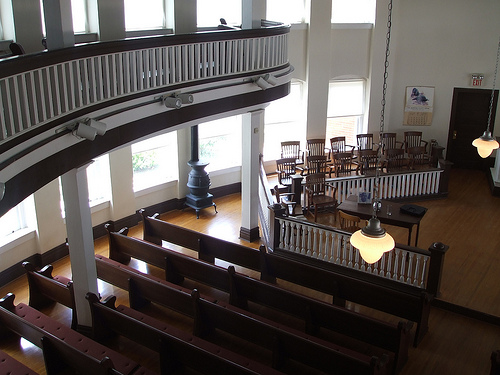
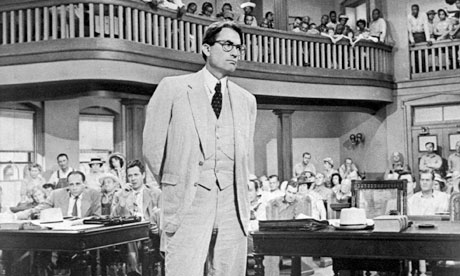
I was thinking about the writer’s home as my mother and I have been on the road this week. We’re driving from Washington, D.C. to Los Angeles, stopping at various relative’s houses and historical spots. My mother is the family genealogist, so she insisted we stop in Monroeville, Alabama, where her side of the family has strong roots. I’d never been to Monroeville before, but I was thrilled to discover that this charming southern town is the place where Harper Lee, Truman Capote, and other notable writers grew up. It’s easy to see how the town inspired scenes in Lee’s wonderful novel, To Kill A Mockingbird. The original court house is still there where Atticus Finch–a character based on her own father, who was a lawyer and newspaper editor–thundered in defense of justice. 


I can’t claim Monroeville as my writer’s home because I didn’t grow up there, but I’m happy that my kinfolk did. It gives me a sense of literary pride by proxy. 


What about you? Do you have a spiritual writer’s home, a place that serves as a creative well for your fiction? Do you actively incorporate your “home” into your writing?


Bringing Inhumanity Home

I love a good history. This week, while I’ve been healing, I’ve been reading a history on my Kindle. BLOODLANDS, by Timothy Snyder. It is the true story of the largest loss of human life in human history, and all due to the efforts of two men: Adolph Hitler and Joseph Stalin. Hitler is the illustration for evil, but Stalin made Hitler look like Mother Theressa. I’m not talking about their soldiers killing each other, and people in the way of those battling forces, but innocent people targeted specifically. Genocide and ethnic cleansing and murder and destruction of life on such a scale that it is inconceivable. The thought of having tens of thousands of people to slaughter millions is so stunning there is no word to describe it.

We write books about threats on a personal level, not wholesale butchery. As I read the statistics––fifty thousand here, three hundred thousand there ––I realized that the scale made less of an impression than two here and ten there. Each of these forty or fifty million individuals had a life and a story, as each killer had, but with few exceptions they were never recorded except as a name and number, a space in a hole or bones under the sky. If you want to read the whys and hows of the mega murder of whole ethnic populations, political movements, and religious groups, it’s a good enough book. But in all of the numbers and statistics and justifications and evil there was one scene that most horrified and affected me. There were two orphaned Jewish children on the street in the Warsaw ghetto when a van stopped to collect them for death. The girl, holding her brother’s hand, told the German soldiers, “Please, sir, don’t hit us. We will get into the truck ourselves.” I am more haunted by those words, and that scene, than by all the murder and mayhem in the entire book. Sometimes, one personalizing paragraph is worth a library of facts and figures. You suddenly can imagine your own children or grandchildren in the same situation and it breaks your heart on a whole new level.

What I’m driving at here is the small stories within larger ones often make the difference to the reader.

Blame it on the Time Zone

By John Gilstrap
Yeah, yeah, yeah, I know I’m posting late today.  I write this from the departure lounge of McCarran International Airport in Las Vegas, having just finished a grueling week of meetings in service to my Big Boy job.  Parroting the words I spoke so often in my college days, I’m sorry, but I’m unprepared for the assignment.  Sir.  Or ma’am.

If it makes anyone feel better, it’s really friggin’ early here, on the end of a not-very-early night.  If that sounds like an excuse, it is; and it gives me the right to disavow any stupidity contained in this post.  (That semicolon was for you, Joe.)

Within the range of my casual gaze, I see two people reading newspapers, six or seven people thoroughly absorbed in their PDA devices, and one person with an eReader.  I can’t tell the Nook from the Kindle at a distance, but I’m pretty sure it’s one of those.  Of the two people who are reading pBooks, both are reading stories by Stieg Larson.  (They actually have Stieg books open on their laps as they watch the crowd milling around them.  I see that happen a lot with Stieg books.)

I spent the week in the new Aria Hotel on the Vegas strip.  It’s up there on the opulence meter, and it’s enormous.  Unfortunately, according to the Wall Street Journal, it’s losing $126 million this year.  I’m no economist, but I’m guessing losses like that can’t be sustained for very long.  If you want to stay there, perhaps you should plan to travel soon.

I’ve been to Vegas many times over the years, and I still can’t decide whether I like the place or hate it.  There’s a grandness to it that is sort of mesmerizing, but after a few days, the audible and visual noise begins to make me feel kind of twitchy.  Where else, though, can you find PornCon–the convention that represents the puplishers and purveyors of pornography.  (PornCon might not be the actual name, but it’s close.)  According to the ads, for $50, anyone over 21 can spend the entire day touring the aisles, perusing the publications and meeting their favorite stars.  Proctor and Gamble doesn’t make enough anti-bacterial soap to get me to go there, but I bet the security tapes are a little slice of porn unto themselves.

As I wrote that last paragraph, a lady sat across from me carrying a bag marked, “Lube Gard/World’s Finest Lubricants.”  Hey, I’m just reporting what I see.

The Stieg books are both closed, and their owners are both trying to doze. 

Here’s hoping that the movie on the plane doesn’t suck.

Steel Teeth and Soft Thumbs

John Ramsey Miller

On Monday I went stupid for a split second and damn near lost my left thumb to the blade on my table saw, which was spinning at 4,000 RPMs. I’ve been using table saws all of my adult life and this is the first time I’ve drawn blood. I kept the thumb, but involved 17 stitches and I will long bear a greatly revised fingerprint and a lack of those nerves that tell a person what their thumb is discovering. At the time, I was working alone out at my place so I had no choice but to wrap a bandanna around the injury and drive myself the 25 miles to the hospital of my choice.

This Tuesday past I was scheduled to speak this week and so I had to wear something other than denim overalls and slip-on boots. Alone at home, I discovered that I had to iron a dress shirt, which is slightly harder with a thumb cocooned within a huge bandage. Then I had to button my shirt, tie my tie, and lace up my dress shoes with one thumb. I haven’t had so much trouble with tying a bow since I was five. After managing to do all of that, I had the pleasure of speaking to a group of fifty or so supporters of the library at a nearby college. I talked about my background and how I fell into my career, and how I do what I do. I ran through the old standards: developing characters, where my plots come from, the differences between mysteries and thrillers and then I went into ebooks and what seems to be the future of publishing. For instance, by 2014 ebooks should account for 25% of publishing income. I basically scared the crap out of the audience.

But the cool thing (and one of the points of this blathering) was I started my talk by holding up my Kindle, explaining how it works, how I can put a library inside it, and then placing it on the lectern and waking it up. After I was finished with the basics of my life and career, I told them what was happening with ebooks and the publishing industry. After my talk there was an hour and a half of questions. And I confessed that the points for the talk I had just given were on the Kindle screen. I emailed them to my kindle, and when I had covered the points on the screen I would just hit the “next page” button. The night before I was trying to decide if I would use note cards or wing it as I usually do, but this thumb thing requires stiff medication and that can fog the sharpest mind. I knew I could email my manuscripts into the creature, and so I went modern and emailed my notes to John’s Kindle, which has its own email address. Worked like a charm. But the entire time I was speaking, and glancing down, I swear the Kindle was breathing raspily and saying, “John, I am your father. Embrace the force. Love the technology.” Well, I guess I’ve gone over completely.