Get The Juices Flowing . . .

By: Kathleen Pickering

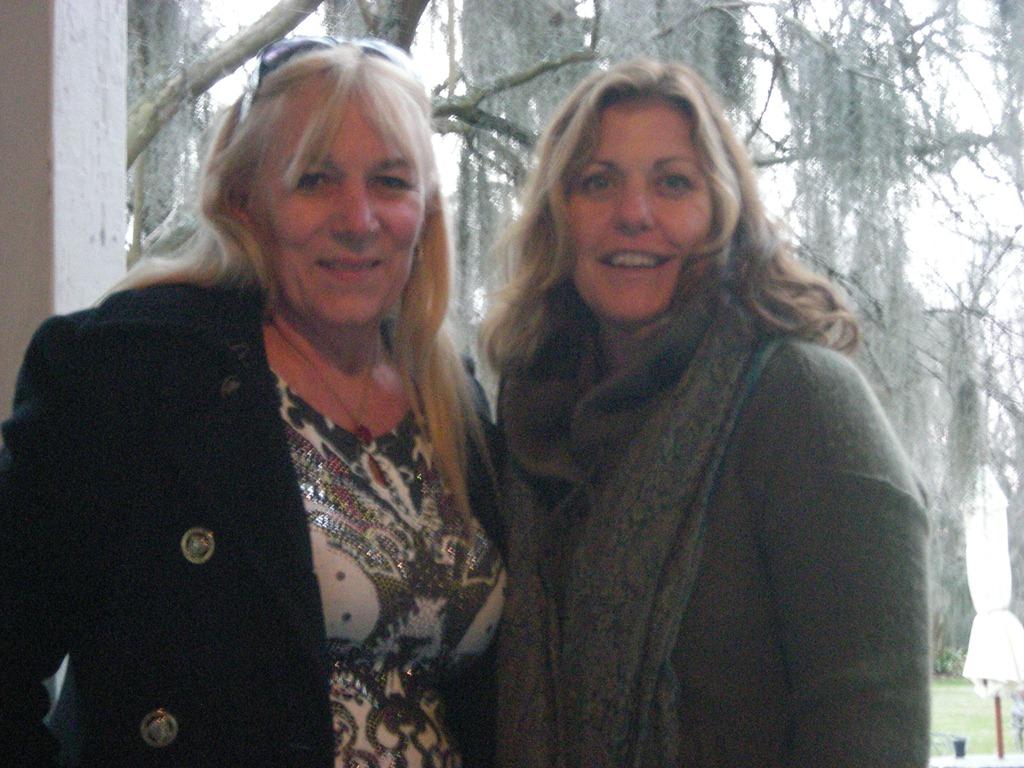
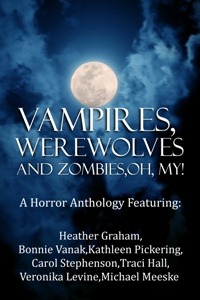
DSCN1177Twice now I’ve enjoyed writing workshops presented by my friend, Heather Graham, where she uses an effective, interactive writing technique employing random words to build story ideas. My first effort resulted in the horror lampoon, “A Zombie Love Story,” which became a short story included with Heather’s and other FRW authors in the Florida Romance Writers e-book anthology, Vampires, Werewolves and Zombies, Oh, My! Pickering_SM

Heather’s great method either helps bring new story ideas to life, or move an already stalled story forward. When creating a new story, random nouns describing three people, one place and three adjectives  become the cornerstone for a full page of narrative. While we haven’t experimented with moving a current story forward with this technique, I’d suggest choosing three characters from a current story, a site they’d go to, and adjectives best used in the story’s particular theme. Using the first words that come to mind for each category works best.

Let’s test the creative juices.  My latest words drawn from Heather’s pool were:

People 1. Alligator Wrestler. 2. Ventriloquist 3. Girl Scout.

Place: an RV.

Adjectives: Crass, Distant, Startled

In the workshop, Heather supplied the lead sentence:

“Blood dripped from the wall . . .”

Just for kicks, take five minutes or less to try your hand at creating the first paragraph (or two) of a story using the above words and Heather’s sentence. I’d be curious to see what  you build. I’ll post the paragraphs I crafted from these leads later on in the day. (Fair warning: my son’s birthday is today. I’ll most probably be distracted until evening.)

Best of all, would your results entertain you enough to consider growing them into a story? Enjoy!

First Page Critique: Untitled aka “The Watcher”

This came with no title, so for convenience’s sake (and for reasons which will become self-evident) we will call it “The Watcher”:

The Watcher was patient, exceedingly patient. He was on the hunt. He had his prey in sight and alone walking through the Caesars Palace parking garage that was as hot as a preheated oven. The air was stale with a simmering heat that would dissipate in the winter months and then come roaring back like a lion in the spring, teeth bared and hungry. He paced his prey, following behind in his rented red Ford Mustang convertible one lane over. His disguise was in place. He wanted to be recognized and remembered for the man that he was impersonating.

It was all part of a long term plan. There she is another hapless girl who escaped from the farm. A sheep who’s lost her way, thought she could make it big in Las Vegas, get discovered and become a star. She wobbled on six inch high heels toward her car. She was quite attractive as they all had to be in Vegas. However, it was her petite frame and long red tendrils of hair that set her apart from the herd.

Thwack, thwack, thwack. The Watcher flinched as he stopped the car and looked around for the source of this noise. He had heard this noise before; it was etched in his brain. Many years earlier a ruler had been slapped across his bare knuckles, thwack, thwack, thwack, always in sets of threes. Shuddering, he looked at his hands. Those damn nuns. They used to ties his hands to his chair before they whacked his tiny four year old fingers. They always told him he was a bad boy. Told him he was a bad seed before the wood smacked the nape of his neck. You want to see bad behavior, you should see me now. They had tied his hands to his small wooden chair because if they didn’t he would scratch them; scratch their eyes out if he could reach them. No one loved him, so now he loved no one. Shaking his head the noise dissipated, for it bled only through his ears as a stinging memory of disgrace.

There are some things to love, here, others…not so much. Let’s try itemizing them:

1) The author sets the mood beautifully in this hot, steamy parking garage. I can practically feel the humidity. Defeat is then snatched from the jaws of victory with the talk about the heat going and coming over the next couple of seasons. Nobody cares what it’s going to be like in three or four months or even three or four days. The initial description — the preheated oven simile — was fine. The bit about the lion is overkill, for so man. There are a couple of grammatical errors here — “man that” should be “man who,” and I would have put a common between “alone” and “walking” — but otherwise it’s okay.

2) The author in the second paragraph changes tense in mid-stream, back and forth. Actually, there’s a bunch of things wrong with this paragraph which can easily be fixed. It’s easier to show than tell:

The original:

“It was all part of a long term plan. There she is another hapless girl who escaped from the farm. A sheep who’s lost her way, thought she could make it big in Las Vegas, get discovered and become a star. She wobbled on six inch high heels toward her car. She was quite attractive as they all had to be in Vegas.”

My suggestion:

“It was all part of a long term plan: there she was, another helpless girl who had escaped from the farm, a sheep who’d lost her way, who thought she could make it big in Las Vegas by getting discovered and becoming a star. She wobbled…”

In my suggested re-write, the tense is consistent, and there is some consistency to the order of how these things usually happen: one gets discovered, becomes a star, and thus becomes big in Vegas, as opposed to getting big in Vegas and then getting discovered and ultimately becoming as star, as the original submission would have us believe.

3) Thwack, thwack, thwack. If the woman is actually that attractive, I can pretty much guess the origin of the “thwack, thwack, thwack” and it has nothing to do with the Watcher’s past. Actually, I like the explanation; it just a)comes way too early in the story, b) goes on for a bit too long, and 3) is plagued with grammatical problems. We’re only going to deal with a) right now. To whit: The Watcher has the girl in sight and then he’s distracted by the “thwack.” Let it bother him now, and explain why later. It will give the readers a reason to keep going reading through the book. As it stands now, by the time we get done with the explanation, we’ll have a “now, where was I?” moment. Let the Watcher attack the woman or let her slip away while he is having the convulsion, or whatever, but finish the scene. There are other ways to build suspense that one can do right in the garage — someone else comes along so the Watcher has to wait, the woman gets a phone call, etc. — that are better than discussing the attacker’s distraction issues on the first page. I would keep the first three sentences and cut everything else out but the last sentence. Since I’m cutting everything else out I won’t even go into the problems with some of the sentence structure in that (hopefully) deleted section.

Despite having chewed all of this up (teeth bared and hungry), I would love to see what happens next, and happens later. Maybe some day I will, with a lot of work on the part of the author.

Oew wee. Now we’re having fun!

John Ramsey Miller

The following are either two front page submissions…
or perhaps one is a real submission and the other a spoof…
or perhaps both are real submissions…
After reading them both tell me which is the real submission
…or which is a spoof, or if both are one or the other.
And tell me why.
tell me what you think about them.
Make it short.
Make it long.
At some point I will post the fact of the matter.
I am doing this because it is the way I think this will be the best way to have some fun.
Plus I am a loss for words.

WHILE I HAVE BREATH, I WILL NOT DIE
By Anonymous

It was a truly hot day. Rivers of stinky sweat ran from the killer’s armpits like thin clear soup that no sane person would want to put into a spoon. Of course, being on a deserted beach in south Florida as it was, there had been many hotter days, but not so many as a layman might imagine. His teeth were black crackly stumps, which probably accounted for his breath that was truly like rotting fish. The billowy clouds looked to the woman, who was lying on her back bleeding, like sweet fleecy sheep swimming across a river as seen from a good way up in the air, even though they were up in the sky.

“Oh, my, no, no, no,” she said in a dying whisper, blowing bubbles of blood as she spoke in a choked fearful rasp looking at the black handle of the butcher knife with a black handle that was erected out of her chest where he had left it. “I feel a little like Little Bo Peep.” She wondered which of the killer’s rusty eyes was actually looking at her lustily and fevered and which was looking somewhere else.

“I would not uv stobbed you, uf you wuz a mind to frisky with me instead of being all stuck-uppity. No all have ta run frum the poleeces and maybe be featured on America’s Most Wanted.”

Suddenly she started flipping around in the sand like a fish would if it was pulled out of the water. She jumped up onto her feet and jerked the knife out from her chest and waved it in the air in front of him like she was sending him a message with a signal flag that was dripping blood. Red blood spurted out of her many wounds the evil killer had made when he slammed the knife into to her beautiful body more than a dozen times, but probably less than fifteen she thought to herself, unable to count them in the horrible memory in her brain.

Fear filled the eye that was looking at her, the other looked out at the ocean on account of he was truly one walleyed, ugly, evil, stink-breathed man with huge wads of hair on his shoulders and a tattoo of a mermaid on his throat, and cut off shorts with the fringes all uneven like he’d bitten them off using his rotted teeth. And his feet had purple flip-flops on them, with toenails like walnut hulls.

With amazement, he said, “Holy God, gal. Won’t you never die? Give me at knife.”

“Not yet,” she said, surprised as he was that she wasn’t already dead yet from losing so much blood. The wounds really hurt and she was all swimmy headed. “Come a little closer, cooter face, and I’ll send you to Hell to shovel coal for the rest of all time.”

DAMAGED
By Anonymous

29th June 2004 – Tuesday

Something gruesome had happened in Morecambe.

Stu read, ‘Happy Mount Drive Murders: Neighbours ignored smell. The bodies of murdered Morecambe business-man, Paul Guerrero, 52, and his wife Jean, 48, had lain undiscovered for several days despite the appalling smell coming from their five bedroom detached luxury home. Neighbour Cedric Farnham, 45, explained their reluctance to investigate stating, “Mr Guerrero was a very awkward neighbour. He once accused my son of revving his motorbike in an intimidating and racist manner.” Farnham eventually contacted the police …’

Stu was suddenly aware of his own smell. Calvin Klein’s Obsession for men, applied liberally fifteen minutes earlier after his morning shower. Stu wondered why body odour was so repulsive? What’s the evolutionary advantage of males having a body odour that repels females? He resolved to look it up on the Internet.

Lindy, Stu’s nineteen year old daughter, interrupted his thoughts. “I met a very nice lady at the salon yesterday.”

“Good.” The distraction made The Times suddenly unappealing – he’d save it for later. He folded the paper along its length, plopped it on the table next to his buttered toast and picked up The Echo turning to the lonely hearts section. He never seriously considered contacting anyone. He imagined the women casting these text shadows, pictured them and idly thought about the part he could play in satisfying their needs for companionship; a dance partner, a fellow gastronome, or maybe more.

“She’s renting the Round House.” Lindy tucked wayward blonde strands of hair behind her ears then poured her dad more tea.

Stu turned past the lonely hearts, scanning the rest of the paper.

Lindy forded over the lack of response. “Her name’s Brenda, she’s forty-eight, works for The Echo, ironically.”

The Echo also lost its appeal. Stu folded it and placed it on top of The Times. “I think you mean coincidentally.” He took a bite of toast then sipped his tea.

See what I mean.

The Creative Bond

by L.J. Sellers

Since there’s an extra Thursday this month, Jordan and I decided to host a guest blogger. So today L.J. Sellers stops by to discuss her latest thriller, and the benefits of working in tandem…

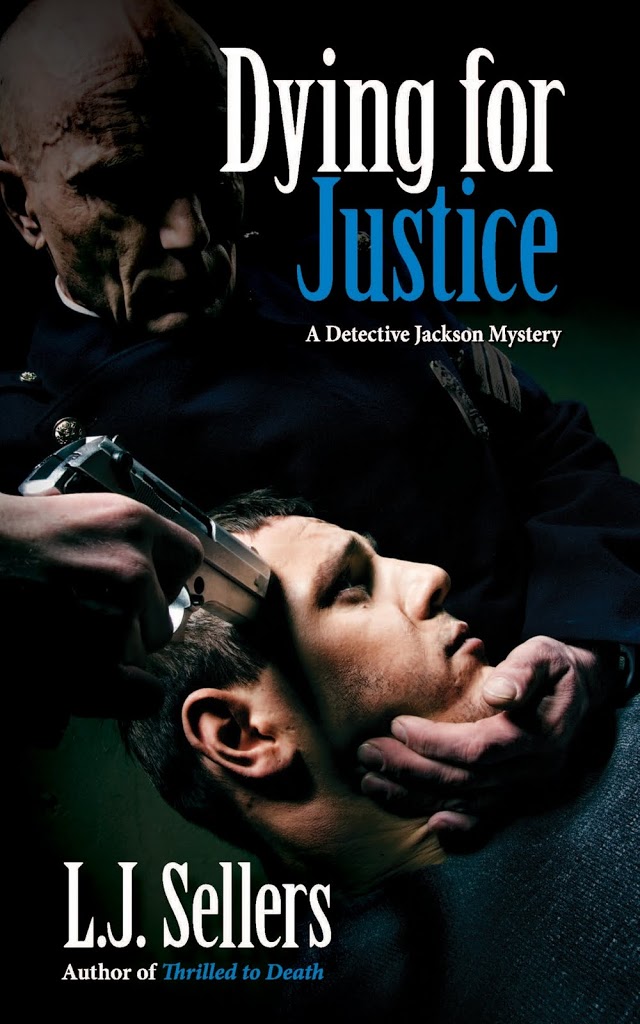
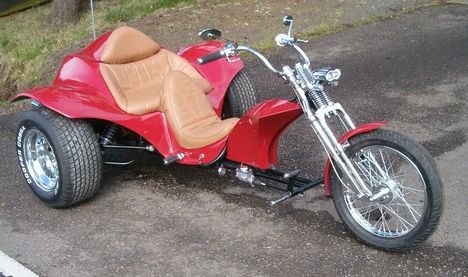
Last fall my husband started building his seventh trike, just as I started writing the fifth book in the Detective Jackson series (my tenth novel altogether). Dying for Justice was released last week, and yesterday Steve took his first ride on the new trike. Always having a creative project in the works is one of the bonding elements of our 23-year relationship. He listens while I talk about plots, publishing, and promotion, and I listen while he yaks about Type 1 Volkswagen engines, fiberglass bodies, and adjustable foot pegs. He reads my novels, and I take trike rides with him. I believe he gets the better deal, but I’m biased. Still, I think the three-wheeled motorcycles are so cool, I’ve given my main character, Detective Jackson, a trike-building hobby.

You wouldn’t think a three-wheeled motorcycle and a crime fiction novel have much in common, but the creative process is surprisingly similar. Both start with a concept, a simple idea that each of us has been thinking about and can’t wait to develop. For me, it could be a vivid opening scene or a character that sparks the whole novel. For him, it’s often a type of engine or a new way to connect the two halves of his vehicle.

Next is the planning/designing phase. The first part of this process is all mental. We both spend a couple of weeks thinking about our projects, turning them over in our minds until they began to take shape. I can look at the expression on his face and know he’s thinking about his next trike. Honey, you’re focused on your trike and haven’t heard a word I’ve said, have you? On the other hand, I do a lot of my brainstorming while I’m exercising. (Those endorphins help produce some great plot twists!)

Then the tangible planning takes place. For me, it means outlining. Determining and plotting, day-by-day, what happens in the story and in the investigation, then mapping it out in a Word document. For Steve, my trike builder, planning means drawings. He starts with a pencil drawing of the whole trike, then progresses to CAD versions of all the individual components, including dozens of parts for the frame alone. We each modify our plans as we go along, seeing what works and what doesn’t.

Then he starts building and I start writing. For both of us, this is the hands-on work, the joy, and how we spend the bulk of our time. We’re both happiest in the crafting phase. Of course, we have occasions when we get stuck. I’ll realize a plot element doesn’t work because of wrong timing and have to back up and revise. He’ll recognize that two components don’t fit together the way he envisioned, so he’ll stop and redesign.

But it’s just part of the process. We know from experience that we’ll work through whatever glitches we encounter. In all our years, he’s only abandoned one trike project, and I’ve only abandoned one novel. (But my agent at the time discouraged me from it, and I may finish the thing yet.)

I don’t mean to imply we’ve always worked in tandem—in fact, we’re often in different phases—but we do have a similar process and timetable. And eventually, we both end up with a finished product that we’re proud of. Some people insist that what we both do is art, but we think of our projects as crafts…and now, small businesses.

Here’s where the difference comes in. Steve sells each trike (or motorcycle) to a single individual to enjoy, and I sell my novels to thousands. But we both love what we do and can’t imagine our lives without a project in the works. Sharing a creative compulsion is a big part of what keeps our relationship healthy.

What is your creative process? Do you have someone you can share it with?

L.J. Sellers is an award-winning journalist and the author of the bestselling Detective Jackson mystery/suspense series. The Sex Club, Secrets to Die For, and Thrilled to Death have been highly praised by Mystery Scene and Spinetingler magazines. Her fourth Jackson story, Passions of the Dead, has just been released. L.J. also has two standalone thrillers, The Baby Thief and The Suicide Effect. When not plotting murders, she enjoys performing standup comedy, cycling, social networking, and attending mystery conferences. She’s also been known to jump out of airplanes.

Knowing Too Much and Telling It All Is Bad…

John Ramsey Miller

I once knew a man named Bill W., now dead, who was a lawyer in a small delta town in Mississippi. Bill was extremely intelligent and just a great-big-hearted man of some substance. Bill was always smiling. Bill loved art and owned the worst examples of several well-known artists. He knew a lot about art, all of it technical. In fact Bill was one of those people whose mind was a sponge, soaking up everything and maintaining every last bit of it. If you asked him how cotton gins worked, you would know every nook and cranny of a cotton gin before he finished on the subject, and you would feel like you’d worked a ten hour shift there. After that he might tell stories about cotton gin accidents, the number of bales on any farmer’s harvest of whatever year, and he ‘d tell you how much change Eli Whitney had in his pocket the day he started work on the first gin. I spent a lot of time around Bill because I enjoyed listening to him go on and on and on… I had lots of questions and he had the answers and more. Once his daughter was planning to go to Europe and her mother saw her reading a guide book. She told her daughter to ask her daddy about Paris, one of his favorite cities. The daughter looked up at her mother and said, “But I don’t need to know that much.”

It has been my privilege to have known a great number of dedicated authors. Most of the authors I have known share two things: a natural curiosity about damned near anything and knowledge spanning a wide range of subjects. It takes more than that to be a good writer, but I think those two things are necessary for successful storytellers. It isn’t so much “write what you know” as it is “know what you write.” And the more you know about something, the less you have to write about it to say the least that needs saying. The reader will feel that you know more about ‘it” and although they will understand that there’s more about “it”, they as readers don’t need to know any more than you tell them. I hope that makes sense.

If I know how to completely break down a Colt 1911 and reassemble it blindfolded, and have fired it thousands of times, one short sentence will make the reader understand how the gun functions to the extent it is relevant to the story. I don’t need to show off my in-depth knowledge, just allow the reader believe its made its appearance and done its job. We fictionalistas aren’t writing text books, biographies, true crime, or books about the Battle of Shiloh or worm farming. We write about imagined people in real or imagined places doing all manner of things that people might be doing. We are magicians pulling rabbits out of a hat, cobbling together tales that have never been told to them before. There are a finite number of situations, names, motivations, and actions, and there is some closeness of some stories to others, but each of us tells our stories in our styles and from our own perspectives––each as unique as a fingerprint.

At a cocktail party a few years ago a physician told me that as soon as he retired he was going to sit down and write novels. I told him that when I retired from writing I was going to become a surgeon. He looked at me in stunned disbelief. I told him I could be trained to do his job a lot faster than he could learn to do mine. I wasn’t completely serious at the time, but I’m convinced now that I was probably telling the truth. I do know that he isn’t a published author. I don’t know if he tried his hand at our thing, but I doubt it.

After thinking about doing these first page critiques, I was thinking about new authors and about what advice I’d pass along.

I had no idea what the odds were when I decided to write fiction or I’d probably never have done it. I tell aspiring authors that it’s a bad business to get into. I say don’t go into writing because you expect to make a lot of money at it. You’d probably do better panning for gold on a sandbar on the Mississippi River. I once read that ninety six percent of published fiction authors don’t make a living writing novels. Also remember that being published by a reputable house doesn’t mean your book will sell. And self-published books rarely sell more than a handful of copies. A person only has a limited number of friends and relatives to market to.


The problem with most of the books I read is that they have nothing new or different to say. Books are like drugs in that the more you read the more it takes to get you to the same place. A well-written book is just another book unless the writer has a memorable voice and isn’t writing a story you can see on television every night. Style means little if the author doesn’t have a slant on a story that grabs the reader, characters that are alive, and these days a way to market a book so that it breaks out of the hundreds of thousands of books that are competing.


That said, trying to keep an author from writing, is just as futile as trying to get a teenager not to try a first beer. Every day of the week a J.K. Rowling, Stephen king, or Truman Capote is putting a pen to a piece of paper, or opening a laptop for the first time and the best of these beginners don’t give a damn about their odds. Even if the know the odds they also know in their hearts that it’s what they have to do, and they believe they will make their mark. Thank God for each and every one of them.


To Betta or not to Beta

By Joe Moore

For those of you who like fish—raising, not eating—there are few more beautiful and easy to care for than a betta fighting fish. They come from Thailand and can live in as little water as what’s left behind inside a human footprint in the mud of the rice paddies. I’ve bettaowned a number of them over the years and am always amazed at their gorgeous display of color. I’ve always been impressed by the lifespan of a betta fish. And pound for pound, the betta is one of the most vicious, aggressive animals on the planet. They are meat eaters, and putting two males in the same bowl will result in a fight to the death. If you want a beautiful pet that takes next to nothing to raise, get a betta fighting fish. But that’s not what my post is about today.

It’s really about beta readers.

A lot of writers including myself rely on beta readers to scrub our WIP and find all the plotting holes, mistakes, and general stuff that doesn’t work. So what is a beta reader? Should you go looking for one? How do you find and qualify them? How do they differ from a critique group? What are the things to look for in their feedback?

The term beta comes from software designers who use the term alpha and beta for different stages of program development. Alpha is the rawest stage—incomplete and untested—and beta is still under development but a small number of copies are released to the public for testing. In novel writing, this might be the first completed version of the manuscript where the author has made at least one pass through to edit and tweak.

A beta reader is someone whose opinion you value, who’ll take the time to read your manuscript in a timely manner, and who’ll give you an honest assessment of your work. For starters, I would mark off your list of potential beta readers anyone who is related to you, works with you, or lives in your immediate neighborhood.

Should you utilize a beta reader(s)? It depends on whether you’re working on your first unpublished manuscript or are further along in your writing career. Most beginning authors are searching for anything that will build up their ego and confidence, and keep their hopes alive. And most new authors have manuscripts that are littered with flaws and mistakes—it’s part of the learning process. Weak or unqualified feedback from others can cause a new writer to become confused and/or discouraged. And their hopes and dreams can be crushed by negative feedback. Or their egos are so artificially inflated that negative criticism can cause friendships and relationships to crash.

At the same time, established authors know the value of real, honest, sincere feedback and will react in a professional, business-like manner. Beta readers are a solid tool toward writing a better book.

In recruiting beta readers, try to line up at least three to four that are willing to take the time to not only read your work but give you constructive feedback. It’s also good to mix male and female readers. In general, try to find age-appropriate readers that are familiar with your genre. A female teen may not give you the feedback you’re looking for if your manuscript is male action/adventure. If you write YA, a retired senior citizen might not be the best choice, either.

Try to choose beta readers who are not acquainted with one another. And they don’t have to be your best friends. In fact, casual acquaintances could work better since there might not be a hesitation that they will hurt your feelings if they don’t like what you’ve written. There’s a good chance they’ll take the whole process more seriously than a relative or close friend.

Don’t ask your beta readers to line edit your manuscript. Tell them to ignore the typos and grammar issues. What you’re interested in is: Does the story work? Does it hold together? Are the characters believable? Can you relate to them? Are there plot contradictions and errors?

Beta readers differ from members of a critique group in that they measure the WIP as a whole whereas groups usually get a story in piecemeal fashion and focus in on a chapter at a time. Most critique groups also deal with line editing.

So once you round up your bevy of beta readers and send them your WIP, then what? Start by listening to their feedback. If your beta reader has a problem or issue, chances are others will, too. And most important is when numerous readers raise the same issues. That should be a red flag that there’s a major problem to address.

Other tips: Don’t be defensive. Sure, we all love our words—after all, they’re hard to come by. But comments from your beta readers are meant to be helpful and constructive. Don’t take offense. Take what they say to heart. Think about it for a while. Consider that they have a valid point and are not trying to tear down your writing.

Finally, always remember that it’s not personal. If it is, you chose the wrong beta reader. Regard the feedback as if you were giving input to a fellow writer.

And if their feedback sounds fishy, you might have chosen a betta fighting fish by mistake.

How about the rest of you guys. Do you use beta readers? Are you a beta reader for someone else? Do you like your fish grilled or fried?

————————————
THE PHOENIX APOSTLES, coming June 8, 2011.
(The Phoenix Apostles is) “packed with action and suspense!” — James Rollins, New York Times bestselling author of THE DOOMSDAY KEY

First Page Critique: Stress Fractures

Stress Fractures

Kevin let go of the boxcar and jumped, hit the ground hard then tucked and rolled down the steep bank. His arm throbbed and his head felt light. It was still too dark to see the blood, but he could feel it running down his arm, dripping off the fingers. He fought the dizziness, got to his feet and looked around. He should have stayed on the train, but when it slowed down he thought it best to bail out, before it picked up speed again.

His plans involved getting off in the State Park near Staatsburg around two a.m. It wouldn’t be that time yet, because he’d jumped off early. A look at the sky showed no sign of the sun yet. No kidding. Nothing there but the clear black sky, the pinpoint lights of the stars, with a few white clouds and a hazy ring around the half-moon. Something in the recesses of his brain told him that meant rain. Perfect, then he’d be wet and cold as well as hurt and tired. He scrambled back up the bank and began to walk along the tracks, following the long gone train. He twined the fingers of his left hand into the fabric of his tee shirt and grabbed the open wound on the arm with his right hand, applying direct pressure. That nearly caused him to pass out, but he fought it, kept his head above the rising tide of black nothingness, and made himself keep going.

He’d been alternating resting with walking, force a few steps, stop and breathe, take a few more steps, sit and rest, when he realized he could hear and smell running water. He took a deep breath, then slid down the embankment, off the railroad tracks, pushed through the brush and waded into a stream. The water came over the tops of his boots and filled them, cooling his feet. He cupped his hand and splashed some of the cold water on his face and neck, then began to walk in the stream.

***

What I liked:

There is nothing like a train to get things rolling. Yes, ha ha, but seriously. Besides that, it tells us quite a bit about Kevin in just a couple of sentences. If he is riding a train in a boxcar —- the rail equivalent of steerage — it demonstrates that he is not a person of means, either by poor choices, bad luck, or an unfortunate combination of the two. So we start out with Kevin, who is down so deep he has to have sunlight pumped down to him, is injured to boot, and is somewhere far from where he is supposed to be. Not good, not good. And it’s going to get worse for him, almost certainly.

What needs work:

1)Jumping off of the train well short of Kevin’s intended destination just because the train slowed down doesn’t pass the smell test. Trains on their way from Point A to Point B slow down frequently for a lot of different reasons. Why jump off a good distance from your destination? The train is going to slow down anyway at some when it gets to Staatsburg (state and local law mandate so), and almost certainly as it passes by/through the state park, so why impulsively jump off prematurely? The answer of course is that the author wants Kevin to jump early in order to get him into even worse difficulty. The trick is doing that without making the author’s intent too obvious. I would have been a lot happier if Kevin had a more immediate, better reason to exit the premises, to wit: 1) someone who Kevin is sharing the boxcar with doesn’t like sharing the accommodations and physically throws Kevin out; 2) Kevin doesn’t like the way a couple of guys with whom he is sharing the boxcar are looking at him (a mixture of longing, edged with some free-floating hostility) and decides to exit; or 3) he was told by a friendly fellow rider of the rails at some point that a really nasty yard bull or park ranger or whatever rules the roost in Staatsburg, and that Kevin should get off early and hoof it the rest of the way. Or something else. Anything else. But just jumping off the train ahead of time because the train slows down doesn’t pass the smell test.

2) On what did Kevin cut his arm? I’ve done tumbles down hillside myself (well, “bounce” may be a more accurate description) and have been bruised, but not bloody.

3) How does Kevin know it isn’t 2 a.m.? Maybe the train is running slow. Does he have a watch? And if so, what time is it? Did he break his watch on the jump and then cut his arm on the glass? There! That kills two birds with one stone!

4) Why does a guy who is worried about it raining, because he’ll get wet and cold, walk through a stream? I know, to cool his feet off. But he’ll find out that it will chill him to the bone as well by page two.

Anyway…it’s an interesting set up, and for the most part a good start. It leaves you with the feeling that Kevin is in for a really, really bad night. With just a little bit of touching up I think that readers will be happy to walk with him. Or maybe a safe distance behind him.

More important than writing what you know, is knowing what you write.

Critique by John Ramsey Miller


STORM RISING
Author Unknown

Tuesday December 14th 7:53 A.M.

West 164th and Broadway – Alleyway

Detective Kelli Storm ducked under the yellow crime scene tape as her partner, Bob Jenkins, held it up for her. She spotted the M.E., Jack Hastings, kneeling next to the body of a nun.

“So what do we have, Jack?”

The portly grey haired man spun his head and looked up at her. “Caucasian female, mid-forties. I noted ligature marks around her neck and petechial hemorrhaging. My preliminary COD is asphyxiation. She’s also missing her right hand.”

Kelli leaned in for a closer look. “Son of a bitch. What kind of sick shit would do that to a nun?” She stood back up, feeling a chill run down her spine.

Jack shook his head. “You got me, you’re the detective. From the looks of it, whoever did this is a pro,” he said, examining the arm. “No jagged edges, a clean cut.”

Kelli could swear she caught a hint of admiration in his voice. “Got a time of death?”

“Hard to say. It’s pretty cold, but judging by lividity, I’d put it somewhere around midnight. I’ll know more when I get her back to the morgue.” He motioned for two assistants who had been standing a few feet away.

Kelli watched as the two swooped in like vultures, a body bag unfolding as they closed on the corpse. She stepped back and bumped into Bob.

“Sorry,” she said, sidestepping.

“What’s wrong, Kelli? This isn’t your first crime scene.”

“I don’t know. Maybe it’s just the way she died. The way this monster mutilated her. I mean a nun for Christ sake.”

“Yeah, it’s pretty sick. Are you going to be okay?”

She nodded. “Who found the body?”

Bob tilted his head toward the street. “The elderly woman over there. Name is Mrs. Kilpatrick.”

Kelli turned and spotted the woman standing next to a uniformed officer. “Let’s go and talk to her,” she said, and headed for the street.


Okay, let’s begin at the beginning.

1- I would make this opening chapter the second chapter. The two-line time and place slug that opens the book is no substitute for description that sets time, place and mood. Movie scripts open like this. Draw the reader in. Where is the texture? I want to be there. What does it smell like? What does it sound like? How many people are there? If you aren’t going to start off with action to pull in the reader, then put us at the place. It’s a flat opening and doesn’t say anything interesting, show any compelling action, set a mood, describe or or introduce characters effectively.

2- M.E.’s head spins and he looks up? What is this, The Exorcist?

3- Too much too soon. The nun is the punchline. I would withhold the fact that the victim is a nun until later in the scene. If she is wearing a habit nobody has to say that she is a nun. Until the word is used, she’s just another corpse, who becomes a strangled woman and her right hand missing.

4- The detective likely wouldn’t say, “What kind of sick shit would do this to a nun?” Obviously the same kind of sick shit who would do this to any other human being. Unless you are Catholic, nuns are just religious women wearing a monochromatic outfit. This makes Kelli look like a rookie, (or perhaps she is a failed nun who became a detective due to priest friskiness or something). A missing hand is nothing. New York City homicide detectives see hollowed out heads, tortured children, limbs torn off, people with crowbars sticking out of their chests.

5- How about some black humor in introducing the fact of the victim being a nun. Kelli might say, “Who would do this to a nun?” Her partner, Bob, might reply, “Looks like she wouldn’t give up the ruler.” Kelli might frown at the retort, since vic is a nun. I think this would be more upsetting to Kelli if the victim were a child, a pregnant woman, or a young mother.

6- Lividity would be one indicator of time of death, but that is only accurate (color and intensity wise) for the first six hours or so. It tells if a body has been moved. An M.E. would use a liver temp (The organ that holds heat the longest) weighed against outside temperature and rate of cooling to get an approximate time of death. He would also rigor and the stage of blood coagulation.

7- A body bag doesn’t unfold itself and I wouldn’t use “vultures” to describe their motion. Vultures circle and land carefully, alert to danger. These guys are professionals and move fluidly because they do this all the time.

8- What about a cleanly severed hand points to ta professional? Would that be a professional killer, butcher, biologist, doctor, or an upholsterer? With a sharp instrument, anybody can remove a hand cleanly. If organs have been removed surgically, or the corpse skinned, or tattooed, that might indicate involvement of a person with medical knowledge.

9- Confusing use of tense. “Kelly could swear” right after “Kelly leaned in”

10- How does Bob know the woman’s name who found the body? Reading this, I assumed Kelli and Bob got there around the same time since they are partners. He’s been behind her since they arrived, I thought.

It feels more like a quickly written, rough first draft. The author’s notes in the margins might say:

*check out an alley in NYC for dimensions, lighting, etc…

*what would a female NYC detective wear? What is her rank? What precinct is she with? How does she carry her weapon? Does she wear sneakers or flat sole leather shoes?

*Check out steps M.E. would take and in what order. Would M.E. check lividity on the scene by undressing a nun? How would he figure time of death. Would the M.E. be there ahead of the detectives? Who rolls the body? What would the M.E. need to know in situ, and what would he do back at the morgue?

I think a large problem here is that there is nothing fresh, different or compelling here. It feels stale, and not well visualized or thought out.

Reading this, I didn’t get the feeling that the author knew as much as they should about what makes up this scene. I wouldn’t be surprised to learn that their knowledge of police procedure comes in large part from watching TV. You can tell when an author knows a subject whether it’s from doing their research or first hand knowledge. This chapter just doesn’t feel real to me. I think you can tell when an author knows more than he or she puts on the page.

I think the author should take a deep breath and start over.


Government Funding for the Arts (?)

Fair warning: This post wanders into the realm of political discourse, but I assure you that I’m coming from a very honest, confused place.

Earlier this week, Ron Schiller, National Public Radio’s (NPR’s) senior vice president for development (read: fundraising) accidentally went on the record stating that Republicans were ““radical, racist, Islamaphobic, Tea Party people . . . not just Islamaphobic, but really xenophobic, I mean basically they are, they believe in sort of white, middle-America gun-toting. I mean, it’s scary. They’re seriously racist, racist people.” He made this statement during an amateur sting engineered by filmmaker James O’Keefe, in which Mr. Schiller thought he was speaking to representatives of the Muslim Brotherhood, whom he believed would be donating funds to NPR.

Skirting the perceived truth or untruth of the statement, there’s no denying the leftward leaning political orientation of the speaker, whose parent company, the Corporation for Public Broadcasting, is supported by something north of $400 million in taxpayer funding. Mr. Schiller went on to say, “it is very clear that in the long run we would be better off without federal funding.” This at the very time that the newly-elected Republican majority in the House of Representatives is hunting for a reason to cut billions of dollars from the federal budget.

From a strictly business perspective, Mr. Schiller is a moron. There’s a time and a place for bigoted statements, and the moment when you’re under a microscope by people who are trying to shut you down is exactly the wrong time. He resigned, as did his boss (also name Schiller, but no relation), and that’s exactly as it should be, as far as I’m concerned.

All of this raises a larger question in my mind: Should taxpayers be compelled to pay for art?

I’m really on the fence on this one. On the one hand, I’m a big believer in the arts, and I fully subscribe to the notion that without art, there can be no civilization. On the other hand, I am as pure a capitalist as one could imagine, and I abhor the very thought of state-run media and state-rung propaganda campaigns. An independent media is our primary safeguard against totalitarianism.

There’s a huge part of me, as a resident of the Greater Washington Metropolitan Area, that loves the millions of dollars in subsidies that go to the John F. Kennedy Center for the Performing Arts (The Kennedy Center). To the degree that Lincoln Center in New York, and the Buttscratch Community Center in Middle America get federal funding (thanks to recently-prohibited earmarks), part of me supports the introduction of “culture” into areas of the country that would otherwise not see it. There’s real value to federal grants that help artists find their voice.

On the other hand, we are a free-market economy—and economic model that I believe in 100%. Every dollar I’ve made in my lifetime has been paid for by customers who decided that the products and service I represented were better than those represented by our competitors. I’ve never received a penny in grant money (I’ve never applied). For me to succeed in the book business, I have to produce compelling stories that people want to read, and I need to convince them that spending money on my imagination is at least as rewarding and an identical investment in the works of my competitors. The marketplace will decide whether I am financially successful or not. If I crash and burn, there you go. A bitter part of me questions why I should subsidize with my hard-earned income on art that I will never see in a part of the country that I will never see.

What do you think, dear Killzoners?  Should the United States government be subsidizing art?