Category Archives: Writing
The five most disturbing homicides in fiction
One day when I was ten years old, I plucked one of my mother’s books from a shelf. It was a shiny paperback with a knife dripping blood on the front–a “potboiler,” she called books of that type.
That story (which technically I wasn’t allowed to read) helped me graduate from Nancy Drew to the world of grisly homicide. I never developed my mother’s taste for potboilers, but I quickly discovered Poe and later, Truman Capote.
Some of these murder stories remain standouts–over the years, I’ve never quite shaken their chill. Here’s my list of the top five most disturbing homicides in fiction:
1. The Cask of Amontillado
I’ll never forget my horror as I read the story of a chained Fortunato being sealed behind a brick wall. It was the cheerfulness of his murderer that most unnerved me. Never again would I put my full trust in a smiling face.
2. The Tell-Tale Heart
Another Poe classic, this story of guilt and obsession is also told from the the murderer’s point of view. What sound could be louder than the victim’s heart beating from beneath those floorboards?
3. The Silence of the Lambs
This story is the perfect intersection of creepiness and terror. It blends cannibalism with the skin-deep antics of a cross-dressing tailor.
4. The Godfather
This book counts the many, many ways one can eliminate the business competition. My favorite was being garroted by a wire from behind.
5. Jaws
Technically, death by monster-shark isn’t murder. But twenty years after reading this novel, I’m still won’t put a toe in the ocean. Jaws killed my love of swimming. So I’m counting it.
So what tales of murder have most disturbed you over the years? Are blood and gore as disturbing to you as the psychological aspect of a crime?
Who are your characters?
Most writers at one time or other get asked “is your protagonist you?” – in the belief, maybe, that all of us secretly yearn to place ourselves in our work (hey, as a character, you get to have all the fun!). When I completed Consequences of Sin and handed it to my husband to read, his immediate reaction was “I know Ursula is you, but who is Lord Wrotham, because he sure as hell isn’t me!” I of course vigororously denied that Ursula was in any sense, me, but, in many ways, she was a direct projection of who I would have liked to have been had I lived in Edwardian times.
It was only when my sister, Bridget, got upset that I had named the housemaid after her (completely unwittingly, I might add), that I realized how much family and friends were trying to see if they recognized anyone in my books. No one seemed to believe that I hadn’t based any of my characters on anyone I actually knew in real life (well, that’s my story and I’m sticking to it).
This question has got me thinking about other writers and whether they incorporate themselves or other people they know into their novels. I’m sure all of us has subconsciously done this to some extent – but how many of us have deliberately chosen to model a character on someone we know?
While I often use real historical figures to inform my writing, I have never deliberately based a character of anyone in particular. To me that seems to be crossing the line into non-fiction (and opening up a potential can of worms if any descendants get upset!)
What about you? Have you ever deliberately incorporated someone you know as a character (victim, hero or perpetrator!)?
Did you try and disguise them to ensure the person didn’t realize the character was based on them?
If you have used a real person, did that person recognize themselves when they read it? If so, how did they react (…any lawsuits pending…?!)
Who are your characters?
Most writers at one time or other get asked “is your protagonist you?” – in the belief, maybe, that all of us secretly yearn to place ourselves in our work (hey, as a character, you get to have all the fun!). When I completed Consequences of Sin and handed it to my husband to read, his immediate reaction was “I know Ursula is you, but who is Lord Wrotham, because he sure as hell isn’t me!” I of course vigororously denied that Ursula was in any sense, me, but, in many ways, she was a direct projection of who I would have liked to have been had I lived in Edwardian times.
It was only when my sister, Bridget, got upset that I had named the housemaid after her (completely unwittingly, I might add), that I realized how much family and friends were trying to see if they recognized anyone in my books. No one seemed to believe that I hadn’t based any of my characters on anyone I actually knew in real life (well, that’s my story and I’m sticking to it).
This question has got me thinking about other writers and whether they incorporate themselves or other people they know into their novels. I’m sure all of us has subconsciously done this to some extent – but how many of us have deliberately chosen to model a character on someone we know?
While I often use real historical figures to inform my writing, I have never deliberately based a character of anyone in particular. To me that seems to be crossing the line into non-fiction (and opening up a potential can of worms if any descendants get upset!)
What about you? Have you ever deliberately incorporated someone you know as a character (victim, hero or perpetrator!)?
Did you try and disguise them to ensure the person didn’t realize the character was based on them?
If you have used a real person, did that person recognize themselves when they read it? If so, how did they react (…any lawsuits pending…?!)
A Valentine for My Muse: Danger Ahead!
By: Kathleen Pickering http://www.kathleenpickering.com
My muse returns to the spotlight for Valentine’s Day, not because I love writing more than I love my husband (please, let’s not go there) but because when I decided to join my husband in courting danger, I did so for my Muse—and only for my Muse.
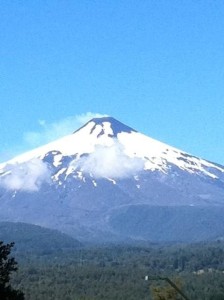
It all started with this volcano in the resort village of Pucon in southern Chile. The approximate elevation of Volcan Villarica is 9,750 feet from sea level. Villarica is smoking. She is alive, well and dangerous. As a matter of fact, the photo above of Villarica with smoke billowing from her crater was taken from Pucon by my sister-in-law at the time we were approaching the top.
Now, in all fairness, Villarica has been smoking for a very long time. She belches now and again. Last lava flow was 1984. This photo shows its last path:
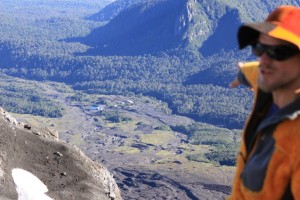
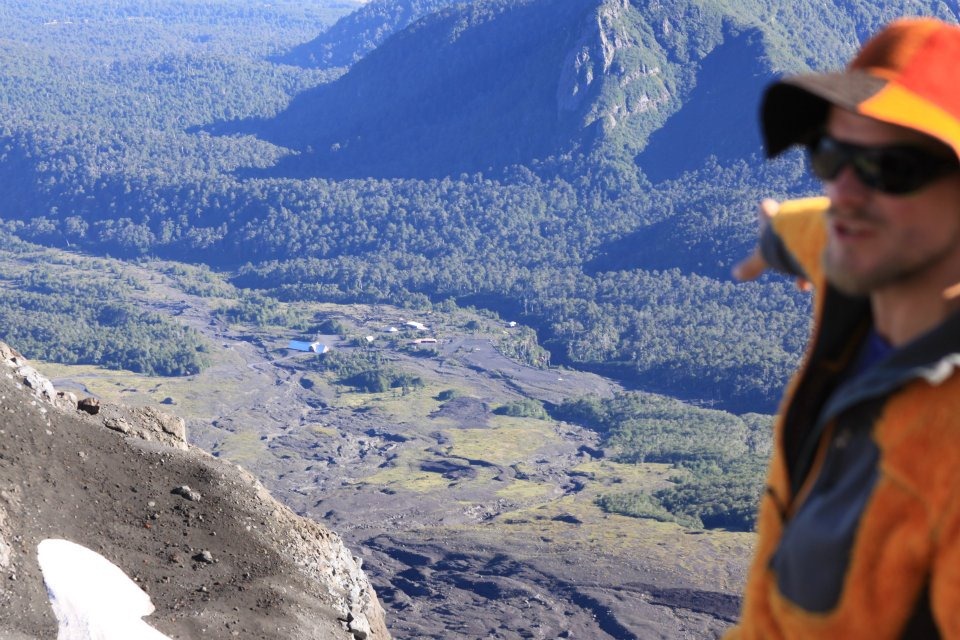
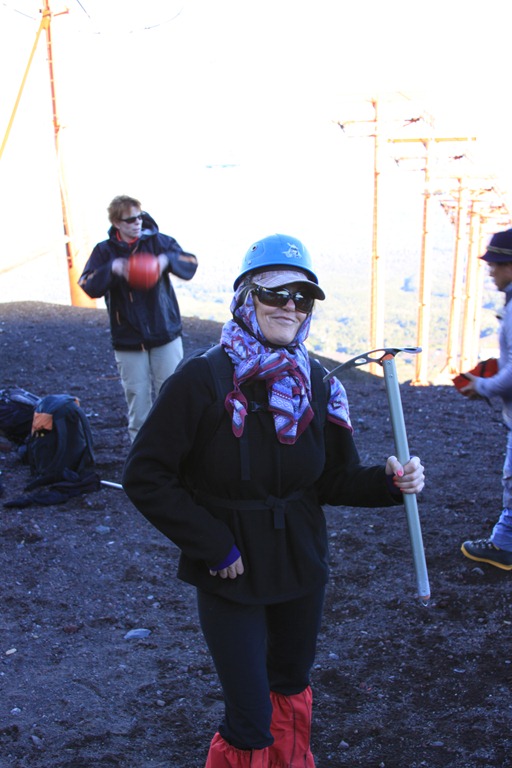
Our guide, David (shown in the picture) promised that there is seismic equipment to detect impending volcanic activity enough in advance that we were free from danger of an eruption. However, when they give you tools like hard hats, ice axes (which he said would be our best friend on the climb—and was right!), crampons for your boots, and cold weather gear for a five hour climb to the top, you sort of figure you’re not going on a picnic.
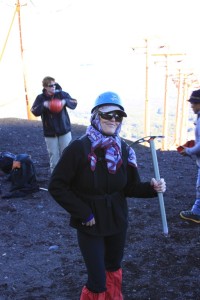
I tell you what. When my Muse and I rode the first leg up the mountain on a chair lift with no seat belt, I held on for dear life (I’m terrified of heights) while my flighty Muse started jumping around the chair lift, wanting to take off. You see, Sam Wilson in my Mythological Sam series will have a demon battle on a volcano at one point, so I took my girl up there to really test her wings. As I had expected, she started pulling in scenes from the moment I pulled on my first boot.
While I cavalierly mention the danger factor, I have to admit that when I agreed to make this climb, I hadn’t considered danger. I’ve hiked so many less grueling places before that the words volcano, toxic gas, rock slides and fissures in glaciers were terms relegated to National Geographic, not my physical well-being. Reality started to settle in when they gave us instructions on how to use the ice ax to keep from sliding off the glacier should we lose footing and fall. I mean really!
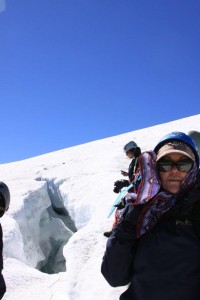
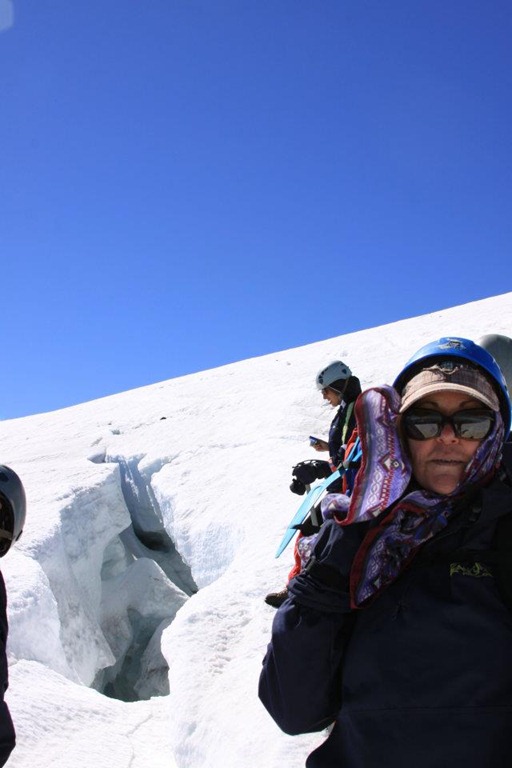
Here is a fissure in the glacier. Not a place to lose one’s footing!
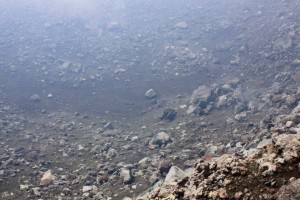
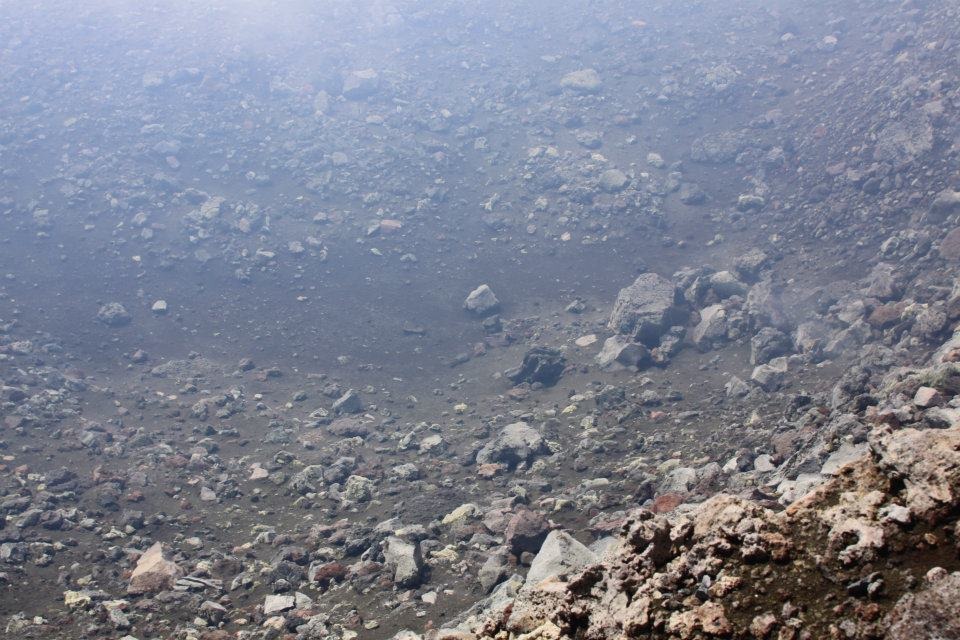
This photo shows Inside the crater with sulfur dioxide gas seeping through the surface.
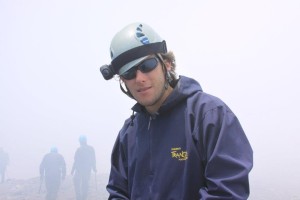
Friend, Gustavo, is holding his breath on the crater rim here. (Crazy, I know! At least I knew enough to get off the edge.) The gas literally burns the inside of your nose. Can’t imagine the lung damage should one breath in those fumes for too long. The buzz word here is toxic. We were lucky there wasn’t a wind shift.
On the flip side of all this danger, when walking in a slow, steady rhythm in single file across the glaciers or up the rock faces, I found myself one-on-one with nature, once again, renewing my awe in her Presence. The captivating views sent my Muse soaring. In my mind, I was out there flying right beside her.
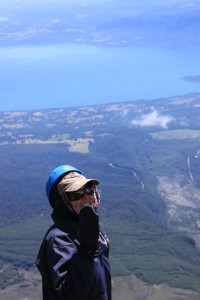
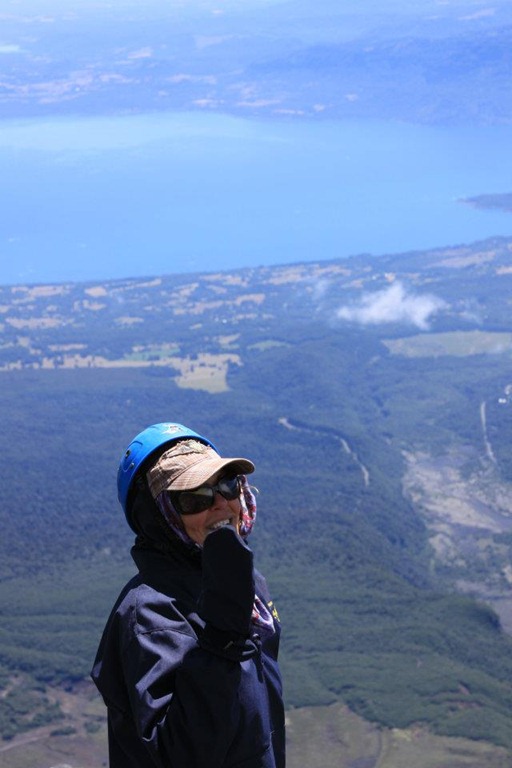
These spectacular vistas changed my point of view from ground level, for sure!
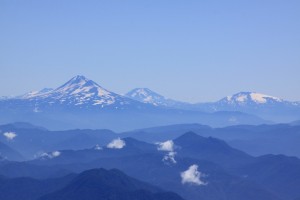
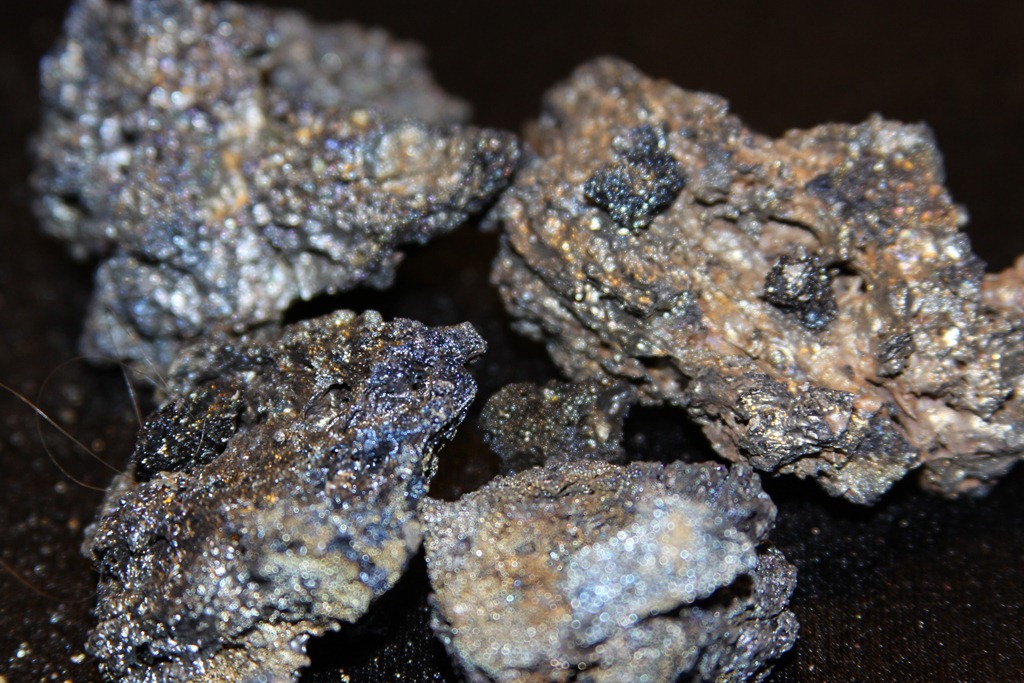
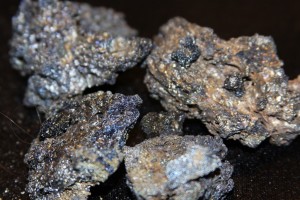
Once we came off the glacier and arrived at the rocky climb to the “false peak” just below the crater, the unexpected (in a good way) happened. The closer we traversed to the top the more colorful the black lava became. The photo below doesn’t do justice to the iridescent colors of the lava rocks littering the peak . . . glittering with blue, orange and gold colors like jewels in the sunlight. I couldn’t resist. I scooped them up by the handful. That mountain with it’s layers of lava flows, glacial formations and different rock types is a geologist’s dream.
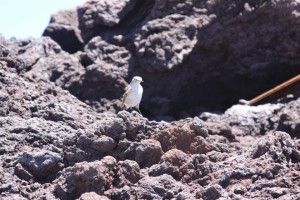
So, when my heart finally stopped pounding, I was able to catch my breath. We actually reached the top without incident, except the gas had me scrambling back down to the glacier edge, toot sweet. What we didn’t see? Animals. Not a one. Except for a lone bird at the top—and that’s a story for another time.
For the return, the group was rewarded with a two and a half hour slide down the glacier. No joke. Curving channels like toboggan runs were cut shoulder deep into the glaciers just wide enough to accommodate a person seated on a plastic disk with a handle attached at the waist. I wish I had a photo of one of us descending in those channels. It cut the descent time in half and the laughter made up for all the labor spent on the challenging climb up.
I’m thinking this trip covered all three rules for keeping Muses happy: love, feeding, and letting her fly.
Then why a Valentine’s gift, you may ask? Because I don’t usually put my tail in danger to prove my love for my Muse. This adventure was like a box of bon-bons on steroids, and given my fear of heights (which has lessened now, I must say) I took her higher than she’s ever flown before, at least with both feet still on the earth.
Since we just got home, I’m taking all of today to recover. My Muse is full and happy. Now, I just hope my husband will understand (and laugh out loud) when I hand draw him a Valentine’s Day card and order take-out—delivered. We’re staying in!
If you’d like to see more volcano pictures, please feel free to visit my Facebook album: Climbing Volcan Villarica. (You may have to sign in first for the link to work. Otherwise, visit: www.facebook.com/kathleenpickering.)
Then afterwards, let me know what you are doing today for Valentine’s Day . . . is there any Muse involved?
Happy Valentine’s Day to you, and most importantly, Happy Writing!
A Valentine for My Muse: Danger Ahead!
By: Kathleen Pickering http://www.kathleenpickering.com
My muse returns to the spotlight for Valentine’s Day, not because I love writing more than I love my husband (please, let’s not go there) but because when I decided to join my husband in courting danger, I did so for my Muse—and only for my Muse.
It all started with this volcano in the resort village of Pucon in southern Chile. The approximate elevation of Volcan Villarica is 9,750 feet from sea level. Villarica is smoking. She is alive, well and dangerous. As a matter of fact, the photo above of Villarica with smoke billowing from her crater was taken from Pucon by my sister-in-law at the time we were approaching the top.
Now, in all fairness, Villarica has been smoking for a very long time. She belches now and again. Last lava flow was 1984. This photo shows its last path:
Our guide, David (shown in the picture) promised that there is seismic equipment to detect impending volcanic activity enough in advance that we were free from danger of an eruption. However, when they give you tools like hard hats, ice axes (which he said would be our best friend on the climb—and was right!), crampons for your boots, and cold weather gear for a five hour climb to the top, you sort of figure you’re not going on a picnic.
I tell you what. When my Muse and I rode the first leg up the mountain on a chair lift with no seat belt, I held on for dear life (I’m terrified of heights) while my flighty Muse started jumping around the chair lift, wanting to take off. You see, Sam Wilson in my Mythological Sam series will have a demon battle on a volcano at one point, so I took my girl up there to really test her wings. As I had expected, she started pulling in scenes from the moment I pulled on my first boot.
While I cavalierly mention the danger factor, I have to admit that when I agreed to make this climb, I hadn’t considered danger. I’ve hiked so many less grueling places before that the words volcano, toxic gas, rock slides and fissures in glaciers were terms relegated to National Geographic, not my physical well-being. Reality started to settle in when they gave us instructions on how to use the ice ax to keep from sliding off the glacier should we lose footing and fall. I mean really!
Here is a fissure in the glacier. Not a place to lose one’s footing!
This photo shows Inside the crater with sulfur dioxide gas seeping through the surface.
Friend, Gustavo, is holding his breath on the crater rim here. (Crazy, I know! At least I knew enough to get off the edge.) The gas literally burns the inside of your nose. Can’t imagine the lung damage should one breath in those fumes for too long. The buzz word here is toxic. We were lucky there wasn’t a wind shift.
On the flip side of all this danger, when walking in a slow, steady rhythm in single file across the glaciers or up the rock faces, I found myself one-on-one with nature, once again, renewing my awe in her Presence. The captivating views sent my Muse soaring. In my mind, I was out there flying right beside her.
These spectacular vistas changed my point of view from ground level, for sure!
Once we came off the glacier and arrived at the rocky climb to the “false peak” just below the crater, the unexpected (in a good way) happened. The closer we traversed to the top the more colorful the black lava became. The photo below doesn’t do justice to the iridescent colors of the lava rocks littering the peak . . . glittering with blue, orange and gold colors like jewels in the sunlight. I couldn’t resist. I scooped them up by the handful. That mountain with it’s layers of lava flows, glacial formations and different rock types is a geologist’s dream.
So, when my heart finally stopped pounding, I was able to catch my breath. We actually reached the top without incident, except the gas had me scrambling back down to the glacier edge, toot sweet. What we didn’t see? Animals. Not a one. Except for a lone bird at the top—and that’s a story for another time.
For the return, the group was rewarded with a two and a half hour slide down the glacier. No joke. Curving channels like toboggan runs were cut shoulder deep into the glaciers just wide enough to accommodate a person seated on a plastic disk with a handle attached at the waist. I wish I had a photo of one of us descending in those channels. It cut the descent time in half and the laughter made up for all the labor spent on the challenging climb up.
I’m thinking this trip covered all three rules for keeping Muses happy: love, feeding, and letting her fly.
Then why a Valentine’s gift, you may ask? Because I don’t usually put my tail in danger to prove my love for my Muse. This adventure was like a box of bon-bons on steroids, and given my fear of heights (which has lessened now, I must say) I took her higher than she’s ever flown before, at least with both feet still on the earth.
Since we just got home, I’m taking all of today to recover. My Muse is full and happy. Now, I just hope my husband will understand (and laugh out loud) when I hand draw him a Valentine’s Day card and order take-out—delivered. We’re staying in!
If you’d like to see more volcano pictures, please feel free to visit my Facebook album: Climbing Volcan Villarica. (You may have to sign in first for the link to work. Otherwise, visit: www.facebook.com/kathleenpickering.)
Then afterwards, let me know what you are doing today for Valentine’s Day . . . is there any Muse involved?
Happy Valentine’s Day to you, and most importantly, Happy Writing!
Unpleasant Characters
I’m currently reading The Slap by Christos Tsiolkas, an Australian book that provoked quite a bit of controversy a couple of years ago, not surprisingly, as it centers around someone slapping another person’s child at a backyard BBQ. Although I find the issues it raises about Australian culture and parenting interesting, I have nearly thrown the book in the bin (and seriously, I’m not sure I even want to bother reading the rest of the book) because of the repellent nature of the characters.
What makes this strange, for me at least, is that it is the very unpleasantness of these characters that has made the story less rather than more compelling. This is in complete contrast to the previous two books I have read – The Ghost Road by Pat Barker (about shell shocked WW1 soldiers including the poet Wilfred Owen and a character, Billy Prior, who is unsympathetic for most of the book) and A Game of Thrones by George R.R. Martin – which has a number of pretty unlikeable characters.
So what makes an unsympathetic character nonetheless compelling? Why is it that in some books, you might dislike, even loathe, a character, but still find the book intriguing – while in others, that same visceral reaction makes you want to hurl the book at the nearest wall and be done with it?
Although I am not the sort of writer who subscribes to the notion that you have to have a sympathetic main character, I do believe that there must be some redeeming feature, flaw or level of humour that ensures a reader isn’t alienated by an unlikeable character. In the case of The Slap I’ve found some characters so distasteful that I simply don’t want to spend any more time inside their heads. In the case of the other books (which are as unlike each other as it is possible – one, historical the other total fantasy) the world and the characters that inhabited it were flawed but intriguing. They hadn’t crossed the line to become either dull or intolerable.
But how, when you are writing a novel, do you avoid falling into this trap? None of us want to read books about one-dimensional goodies or baddies, but neither do we want to hang-out with boring or repellent three-dimensional characters either.
This got me thinking about how to write ‘unpleasant’ characters, knowing of course, that there are no rules – only pitfalls to avoid. For me, these include alienating a reader, failing to provide any redeeming feature for a character, or ‘telling’ the reader to such an extent that the reader does not believes the character to be realistic. For me (and I am in the minority as most reviewers loved The Slap) the characters themselves impeded the story. I didn’t want to delve into their minds, not because it was an unpleasant place to be, but because it was unpleasant to the point of being dull. It turned me off what I might otherwise have been interested in reading. I had no sympathy. I had no compelling reason to find out what happened to them.
So how do you think writers should tackle the subject of unpleasant and unsympathetic characters? Who do you think does this successfully and why?
In many ways, tone can be as important as characterization. In Kingsley Amis’ Lucky Jim, the protagonist is likeable because of the humor brought to his predicament as well as the tone of the book. Perhaps in The Slap I simply didn’t like the ‘voice’ brought to bear for the characters – too strident, too boorish, to misogynistic perhaps. That probably says as much about me as it does about the book…but still how do you feel about reading books about characters you find morally (or otherwise) repugnant?
Unpleasant Characters
I’m currently reading The Slap by Christos Tsiolkas, an Australian book that provoked quite a bit of controversy a couple of years ago, not surprisingly, as it centers around someone slapping another person’s child at a backyard BBQ. Although I find the issues it raises about Australian culture and parenting interesting, I have nearly thrown the book in the bin (and seriously, I’m not sure I even want to bother reading the rest of the book) because of the repellent nature of the characters.
What makes this strange, for me at least, is that it is the very unpleasantness of these characters that has made the story less rather than more compelling. This is in complete contrast to the previous two books I have read – The Ghost Road by Pat Barker (about shell shocked WW1 soldiers including the poet Wilfred Owen and a character, Billy Prior, who is unsympathetic for most of the book) and A Game of Thrones by George R.R. Martin – which has a number of pretty unlikeable characters.
So what makes an unsympathetic character nonetheless compelling? Why is it that in some books, you might dislike, even loathe, a character, but still find the book intriguing – while in others, that same visceral reaction makes you want to hurl the book at the nearest wall and be done with it?
Although I am not the sort of writer who subscribes to the notion that you have to have a sympathetic main character, I do believe that there must be some redeeming feature, flaw or level of humour that ensures a reader isn’t alienated by an unlikeable character. In the case of The Slap I’ve found some characters so distasteful that I simply don’t want to spend any more time inside their heads. In the case of the other books (which are as unlike each other as it is possible – one, historical the other total fantasy) the world and the characters that inhabited it were flawed but intriguing. They hadn’t crossed the line to become either dull or intolerable.
But how, when you are writing a novel, do you avoid falling into this trap? None of us want to read books about one-dimensional goodies or baddies, but neither do we want to hang-out with boring or repellent three-dimensional characters either.
This got me thinking about how to write ‘unpleasant’ characters, knowing of course, that there are no rules – only pitfalls to avoid. For me, these include alienating a reader, failing to provide any redeeming feature for a character, or ‘telling’ the reader to such an extent that the reader does not believes the character to be realistic. For me (and I am in the minority as most reviewers loved The Slap) the characters themselves impeded the story. I didn’t want to delve into their minds, not because it was an unpleasant place to be, but because it was unpleasant to the point of being dull. It turned me off what I might otherwise have been interested in reading. I had no sympathy. I had no compelling reason to find out what happened to them.
So how do you think writers should tackle the subject of unpleasant and unsympathetic characters? Who do you think does this successfully and why?
In many ways, tone can be as important as characterization. In Kingsley Amis’ Lucky Jim, the protagonist is likeable because of the humor brought to his predicament as well as the tone of the book. Perhaps in The Slap I simply didn’t like the ‘voice’ brought to bear for the characters – too strident, too boorish, to misogynistic perhaps. That probably says as much about me as it does about the book…but still how do you feel about reading books about characters you find morally (or otherwise) repugnant?