Listen: Let Your Ears Do The Writing In Ten Easy Steps

By: Kathleen Pickering  www.kathleenpickering.com
danDo you want to know a secret? I visualize a collective leaning forward with a hand to ear, to which I’ll whisper: “If you want to find a good story, listen!”

Where co-blogger, James Scott-Bell, spoke in his last blog about listening to your characters as they unfold to bring their story to life, I’ll discuss how listening to the world around you can uncover a story.

I can guarantee you that every published author you meet will tell you how something they heard triggered a novel. If folks wonder how an author can accept a multi-book contract without even knowing what they’ll produce, it’s because authors listen as intently as they write. Stories are floating all around you: in the news, eavesdropping on a conversation in a restaurant, elevator or train, chatting with  colleagues at work, conferences, with strangers, or for me the best source—family drama.

Sometimes I’ve spoken with people who tell me something they’ve never told others before, and they’re suddenly shocked that they’ve revealed their story. That’s because I have honed listening skills that make others comfortable in talking with me. Please understand, I don’t listen to folks to elicit deep dark secrets (though that would be nice!) but, because long ago, I discovered that I find people fascinating. No joke. I love to listen to what others have to say. If I’m talking with you it’s because I am genuinely interested in you.

A few years back, we were on vacation in Montana. From a single question I asked the cook at the dude ranch I learned that she was hiding from her drug dealer husband way down in New Mexico. This woman’s story spawned one of the proposals that Harlequin bought in my three book contract. Added bonus? A family member is an undercover narcotics detective who is telling me specific details to give the story life. Am I listening? You bet!

The next listening coupe was from my niece. She is an emergency room nurse who had a bout with cancer and survived. (YAY!) Listening to her recount her determination to outwit her fears and stay courageous during her treatment became book two of my Harlequin proposal. And, the love story that grew from her ordeal is so romantic it gives me goose bumps. I can’t wait to write the book based on her story!

The third plot hit me unexpectedly. I was discussing with friends the plight of rape victims who become pregnant and learned that several US states have no laws protecting women from rapists seeking custody of children born from their attack. Not only did this make me want to use some of Steven King’s horror tactics to stop such an atrocity, but hearing this information ignited the first of the three proposed novels I’ll be writing for Harlequin.

So, if you want to tap into a world of stories waiting to be written, then listen. And listen well. There are two approaches to good listening. One for business, one for empathy. I use both. Here are the first five steps offered by business consultant, Bernard Ferrari, to hone listening skills. These work exceptionally well when interviewing someone:

1. Show Respect. If you’re seeking information, let the person to whom you are speaking know that you value their knowledge and/or opinion, so are asking for their response. That way, they understand your agenda.

2. Listen to Everyone. Developing a good rapport not only with folks in the industry, but anyone in your sphere of existence lays the groundwork for “nuggets of gold” to surface in conversations.

3. Be Quiet! Even though as an excellent story teller, you can “top this” in sharing stories when someone is speaking, refrain! Let your conversation partner speak for 80% of the time. Use your 20% for thoughtful interaction. Remember, you are the one listening here.

4. Understand Emotions. Avoid having important discussions when you are tense, angry, upset or frightened. These emotions will distract you from listening. Sometimes it’s better to know when you should postpone and reschedule an interview (or listening) opportunity.

5. Ask Questions. When you are listening well, asking questions helps bring forward new facts. Even if you disagree with the speaker, phrasing your response with a question shows you are open, flexible and interested in their point of view. A well phrased question can also help the speaker think in a new way or reach different conclusions.

Now, for the second approach to listening, I have learned that in making an emotional connection, the most important fact to remember is to listen to others how you would want them to listen to you. Here are five additional steps to creating an emotional connection with your conversation partner:

6. Body Language. Face the speaker, sit straight or lean forward to show your attentiveness. (Actually, as a good listener, this happens automatically because you ARE interested!)

7. Maintain eye contact. You don’t have to drown in those limpid pools, but while someone is speaking stay glued to the discussion. Don’t let your eyes wonder over their shoulder, or stare at the floor or passersby as they talk. We all know what that feels like. It’s an instant turn off to the person speaking.

8. Create an empty space. This is my most favorite tool for listening. I start a conversation with absolutely no expectations of what my partner will say. It’s what I’ve learned to call an empty space between speakers. The response I get from my question can host a tapestry of answers; all from which new threads of conversation can be lifted. If you have expectations of what your partner will say, it clouds the clarity of information opportunities. You end up unconsciously steering the conversation, or worse, not fully hearing what was said.

9. Minimize external distractions. If your conversation is over a meal, or while giving a workshop, put down your fork for a minute to listen, or stop flipping through your notes while a question is being asked. Again, it’s the one-on-one message you give while listening that keeps the comfort level engaged.

10. Mirror the response. To ensure the speaker that you understood his statement or question, it helps to say, “So, what you’re saying/asking is . . .” and repeat their statement in your own words. This gives the speaker an opportunity to clarify a misunderstanding, or better yet, confirm that you understood. Again, mirroring shows your conversation partner that you are interested in what he/she is saying. It not only connects them with you, but enriches your understanding of the person about whom you’ve taken time to learn more.

Every listening encounter is a learning experience. Every listening encounter is a chance to connect with your world. Can you tell us here on The Kill Zone when a listening encounter spawned a story for you?

I am listening.

Write on, my friends!

xox, Piks

Agent Timelines

by Clare Langley-Hawthorne

Recently a friend sent off a manuscript to an agent and asked me how long she should wait before sending it out to other agents. Under normal circumstances, I would have said she could send out simultaneous queries, but this agent was a referral who had requested the entire manuscript so I counselled her to wait to give this agent a decent chance to respond. But, she asked, how long should I wait? 


Good question. How long should you wait to hear back from an agent before you start following up/move on/feel resigned to your fate?


I’m not sure I have the answer – all I can say is that, in my experience, authors are (by and large ) an impatient lot and agents are (by and large ) an extremely busy lot who can take their sweet time in getting back to you. So today’s blog is about expectations as to agent responses (and I’d love to get some feedback from my fellow TKZers on what is a ‘reasonable’ response time). I think (as a pretty impatient author myself) it can be tricky knowing when to expect a response from agents, particularly when you are a debut author.


When I first sought out an agent I had no idea what to expect but, after I had some requests for partials following on from the SF Writer’s conference, I sent out my material and waited. I had some responses within couple of weeks but the agent I eventually signed with took close to 6 weeks to respond. I even had one agent (the outlier!) who contacted me months later to ask if I had representation yet! (Then again, an editor did contact my agent a few weeks before my first novel was due to be released expressing interest in the manuscript so I wonder if their isn’t an alternate form of time known as “publisher and agent time” out there in the ether!)


Obviously, if you haven’t heard from an agent within what you think is an acceptable time period you should follow up with a professional email (no – “why have you not bothered to contact me, can’t you tell my work is genius?!” emails please!). I think it’s also perfectly fine to ask them for an estimated date that you could expect to hear back from them – though be aware, you may not still not receive any response.


So what do you think are reasonable time frames for an agent to respond to:

  1. An initial query letter; or
  2. A partial manuscript; or
  3. A full manuscript and (hopefully later on…any subsequent manuscripts you send!)

How long have you waited for an agent to respond?

STEAL THIS BOOK. Oh, you did? My Stepmom Died on Facebook. I’m about to co-write a supernatural thriller.

John Ramsey Miller

Here’s one for ya. My stepmother, JoAnn, died a week last Monday. I dearly loved my stepmother. She was an intelligent, humorous, loving, and wonderful woman. She was as responsible for my writing career as anyone because she loved my writing and said so. She pulled stacks of my work out of the burnpile and gave them to me years later. (I later burned them). We shared a love of literature. She was a yellow-dog Democrat and I a Republican scally-wag, but she never held it against me, and we got along just fine. My father died several years ago and she moved out to Texas to be near her Texas-living daughter. I found out that she was sick and I asked my stepbrother to keep me posted and to give her my love. I found out on Friday when someone my sister knows saw my stepmother’s obit in the Jackson Clarion ledger. When I blasted my step-brother for not bothering to tell me she passed away he said, and I quote: “I posted it on my Facebook page on Monday.” The funeral was a private affair, and I was not invited. Holy Shit Bat-woman. Needless to say my step-siblings don’t care much for me. But I love them anyway. Well, at least I can write that book I always wanted to write but wanted to wait until all of the people who would be less than favorably portrayed were dead.

By the way, I am joining forces with Mark Tufo (one of my favorite supernaturalists) to pen a series of novels. Since I’m a long-standing fan of this guy’s work, I didn’t hesitate to agree to play in the sandbox with him. His genre and mine are in different locales on the literary map, so we are thinking we will be meet at the fence. He’ll be putting his best characters into the pasture, and I’ll be sending my gang into the same place. It should be quite a shot of ice water to the face for our fans on both sides. We’re presently working on how this is going to work on a practical level, but I’m thrilled to be doing something challenging with someone I admire.

I am using my best character or two, and taking them into a world they would have never believed existed. Can I take established straight thriller characters and put them into a bump-in-the -night world. We shall see and I intend to. The great thing about not being under contract is that one can experiment and do that which one would never ordinarily be allowed to do.

By the way, if any of my author buddies want T-shirts for promotion, my son has a new company and lots of tasty equipment. Use my name and get deals.

On Monday evening I received this from a tech-savy author friend’s wife email via my web site contact form. She runs his e-enterprises, and she is upset about how many of her husband’s novels are not being paid for.

Comments: FYI stolen books:

The Last Day, Too Far Gone, Inside Out,Upside Down, Side by Side, Smoke & Mirrors.
Downloaded average of 723 times each, last time 2 hours ago. Maybe your publisher can do something?

She went on to say: Most of the authors that you blog with on Kill Zone are on there. I wrote one of them as she had an easy contact to find. I can get you a list and you can pass it around if you so desire.

I forwarded the email to my editor and agent, but I expect if Bantam could stop it, they would have. There are more sites like this. That one site is responsible for a minimum of four thousand copies of my books being downloaded for free. I appreciate that so many people downloaded my books, and most downloaded all of them. That means dedicated fans. I have mixed feelings about this loss of revenue, which I, like most authors need in order to pay bills, which enables us to write more books for our fans–a % of which will download others of them. If we have the cow in the pasture, why buy milk. Cheese, which is hard to make, maybe, but not milk free for the tugging.

One way to look at this is that this is really no different than having a book someone buys, sharing it… often until it falls apart. If it is outside our control, should we worry about it?

Gosh, I’ve had a busy week on the farm.

Follow Your Dreams: Or Jumping Off Cliffs Is A Good Idea

By: Kathleen Pickering  http://www.kathleenpickering.com

Some folks dream in color. Other’s fly in dreams. Me? I’ve jumped off a cliff and lived to tell the story.

desert cliff

Yeah. It was the most exhilarating dream I’ve ever had; even better than the ones where I can fly.

Since Kathryn Lilly brought up dreams in last Tuesday’s blog, I would like to show how dreams can be instrumental in sorting emotions, planning personal goals and life direction.

But, before I continue, I must say how happy I was to meet our fellow TKZ blogger, John Gilstrap, at Sleuthfest in Orlando. John is a very cool dude who I liked on sight and look forward to seeing again. We had an excellent conversation with authors Heather Graham, Traci Hall, Michael Meeske and Jeffrey Deaver. We discovered that writers, no matter what the genre, share a healthy respect for the inexplicable.

That said, let’s apply some logic to the outlandish. Our dreams. (Please note, nightmares will be left for another time.)

My dream went like this:

I was standing on this cliff looking out over the desert. As I’ve mentioned before, I’m not good with heights. I’m better since that volcano hike, but at the time of this dream, I was still downright chicken. I was, however, awed enough to appreciate the spectacular view.

goals3(Photo: Peter Lik)

Once again, I was feeling my smallness compared to this extraordinary world before me when this voice whispered into my ear, “Jump. Trust me. You will be okay.”

I replied, “What are you nuts? I can’t jump.”

The voice said, “No. You can do this. Just jump. As you are falling, start running in mid air. Pump your arms and legs. When your big toe touches the ground, keep running. The momentum will carry you forward.”

I answered that I absolutely could not and would not not jump.

The voice said, “Trust me.”

Now, in my dream, I’m not sure who was speaking, but he seemed familiar—and wise. My guess is that since I was dreaming, I decided to take the chance.

I jumped.

My stomach jolted. I couldn’t breathe. Then I realized I wasn’t following instructions. So, I started pumping my arms and legs and don’t you know? When my toe hit the ground, my momentum pushed me forward and I ran across the desert floor like the Road Runner leaving a plume of dust in his wake. I ran and ran until I realized I’d made it, and stopped.

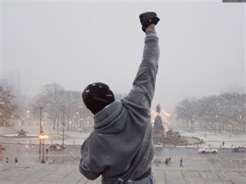
RockyMy adrenaline was so high I started jumping up and down. I could have been Rocky on the steps of city hall, screaming, “I did it!”

I felt this heady bliss all the way home until I told my family that I had jumped from the cliff. Everyone started yelling at me. Things like: “What? Are you insane? You jumped from a cliff?”

Incredulity Or, “What would you say if one of your children came home and announced they just jumped off a cliff? You expect us to be glad for you? What you did was crazy!”

I thought about it. Saw their logic, and had to agree. Then walked away–only momentarily deflated.

These people I love didn’t get it.

Now, I’m still dreaming here. The fact that my family didn’t get that I had just accomplished a super-human feat, which we all get to do especially in dreams, disturbed me. This was a dream! My family should have realized we were all in this dream and cheered for me, dream style! (I will go on record that my family in this dream simply represented folks I trust. I’m not pointing fingers, here. I promise.)

negative thinkingBut, their reaction opened my eyes to the fact that in the past, I had permitted other people to impact my life’s direction with their ostrich-like fears and negativity.

Not any longer. I woke up from this dream so much more clearer. Just because others may not understand my point of view does not mean I am wrong. I can only celebrate the differences.

This dream confirmed to me that I am willing to go over the top to discover myself, my capabilities, my talents. For me, jumping from that cliff in a dream was the same as unzipping my skin and letting the real Kathleen step out.

success-article

Taking that step off the cliff not only cemented the direction and the attitude I have towards my personal goals, it symbolized to me that my goals are possible. No matter what the odds.

To this day, that dream stays with me. My leap of faith in my dream is bringing me the results I want in real life.

Proof? I received a call from my agent on Friday. Since my first sale, we’ve agreed to a new, three-book deal with Harlequin. Those three books coupled with the Nocturne anthology I’m writing with Heather Graham and Beth Ciotta for 2013 will make four books released in the next two years with my name on them.

Yeah. I’m grateful. And, I’m stoked. I’m going to be busy writing and will love every minute. 

My message to anyone who hasn’t tried it yet? Dare to dream. And, dream big. I might not be there yet, but I’m on my way. I knew it when I took that first step.

So, have you had any dreams that helped you trust yourself and remain fearless against all odds? If not, what is your greatest personal challenge in achieving your goals?

Let me know.

Write on!

xox, Piks


Book Trailers – Alive or Dead?

by Clare Langley-Hawthorne

It’s a long weekend here and so I have taken time out of my ‘be healthy’ regime to be a bit piggy with brie, red wine, chocolate and, yes, kangaroo. The latter is very tasty even if it feels like you’re eating the nation’s favourite Skippy (believe it or not, kangaroo are actually ‘culled’ in many parts of Australia as vermin). The long weekend also means I’ve been slacker than usual in getting my post together…which means, in true procrastinator form, I have been surfing the web…


To my surprise I have been seeing something I haven’t really noticed in a while…book trailers…yes, these have been sneaking back into my online world just when (to be frank) I thought they had died a natural death. 


Never having done one myself, I can’t say I’ve ever really understood the value of a book trailer. The ones I have seen have been, by and large, stilted, strange, artificial affairs which have failed to raise much excitement in me – either as a reader or as a writer. I was also never really sure whether they actually sold books in the way that a trailer ‘sells’ a movie. So I was surprised when I saw a recent one and started wondering – is the book trailer back? Or maybe it never died?


Assuming an author can afford it, I imagine a clever, funny, professional looking book trailer provides an additional and potentially valuable marketing and publicity tool, even if, in its own right, it doesn’t really sell many books. The key elements here are professional and clever – because, to be honest, some of the trailers I have seen have been embarrassingly amateur (especially when they try too hard to be like a movie trailer complete with ponderous, overblown narration). One I recall that made me laugh (and even contemplate buying the book) was a humorous spoof trailer for Sense and Sensibility with Sea Monsters but other than that most book trailers have drifted from memory like flotsam and jetsam…
But what do you think?

  • Is the book trailer having a resurgence?
  • Have you used a trailer and found it to be a successful marketing tool?
  • Would you consider producing a book trailer for your current WIP? (and why or why not?)
  • Has seeing a book trailer ever induced you to buy the book?

“Yawsuhh, I’ze gwine gogitzome skrimps teat.” I would never write this.

If you wrote the line in the heading, you would catch a lot of crap, even if it were accurate to a certain region. I heard that line and wrote it in a notebook, but there it has rested for a decade. Writing in dialect is probably one of the hardest calls in the dialog department. Not that you can’t do it, because you can, but it won’t work over a distance. I give the reader a taste of what it sounds like, but switch to readable non-phonic after. Sometimes I just tell the reader what the words sounded like so they get it without them having to struggle with misspelled words or those that are unfamiliar to the readers’ eye. So, I say that, it sounds like, Baawstin for Bosten, or Mizippi for Mississippi to another character. I do it once for a character. Or I may have a character purposefully mispronounce the word. i.e. “Baawstin,” Carl said, mockingly. But long runs of dialect are a no-no for me. If you write thoughts, do characters who speak in dialect, think in dialect?) I suppose they would have to.


Dialect is hard. Accents are hard, unless they are your own. Deep Southern drawl is mine because that is who I am, when I relax. I grew up in it. I know it. I have an ear for it. I also do a passable Cajun because I’ve spent a lot of time in the Louisiana lowlands, the waterways and swamps. I like writing accents I know and enjoy. Cadence. Pacing of spoken words. You can not fool people who know an accent, so you have to do it right. Immerse yourself in a region and soak up the nuances of the spoken word in that place. You have to have an ear.

Nothing about writing is easy if you do a good job at it.

How do you deal with dialects and regional accents? What’s your favorite to write, to listen to?


Is There a Literary Glass Ceiling?

by Clare Langley-Hawthorne


VIDA, an American organization that supports women in literary arts, recently released ‘The Count‘ for 2011 providing a sobering (and somewhat depressing) look at the current state of rates of publication between women and men in some of the most prestigious literary review outlets (including the New York Times Book review, Times Literary Supplement and the New Yorker). The statistics on the gender split in book coverage is, though not surprising (in 2010 they were just as depressing!), an indication that we women still have a long way to go in terms of breaking the perceived literary glass ceiling.


Now, before I raise the hackles of every male reader of TKZ (and no doubt some of the female readers too!), I want to preface this blog post by stating that I do not believe there in overt bias in the literary world – what concerns me more is how we deal with what appears to be an ongoing systemic issue – one in which women continue to be underrepresented in terms of publication, review, awards and media coverage. 


My aim is to promote discussion not to whine, complain or moan (which sadly, seems to be the reaction to many women commentators when they raise the issue of gender in publishing!)


The statistics, however, speak for themselves…


For example, Vida’s ‘Count’ for 2011 reveals that at the London Review of Books last year 26% of authors reviewed were women, at the New York Review of Books that figure was 18% while at the New Yorker of the books mentioned in the ‘briefly noted’ section only 33% were authored by women.  When looking in terms of reviewers that are women the results are eerily similar – with 16%, 21% and 30% of female reviewers at the London Review of Books, New York Review of Books and Times Literary Supplement respectively.


When I started telling my husband about the figures he immediately leapt on the fact that, when considering the statistics in terms of reviews, you also need to look at the percentage of books authored by men and women. Fair enough. 


Now these statistics don’t seem all that easy to come by, though The Guardian newspaper recently contacted some of the UK’s largest publishing houses and found that for their 2011 non-fiction releases Penguin, Atlantic Books, Random House and Simon & Schuster reported 74%, 73%, 69% and 64% of their titles were (respectively) authored by males.(The article citing this can be found here) This genuinely surprised me – for I had no idea that there was such a gender imbalance in terms of publishing. 


These figures are, however, for non-fiction titles, and I wondered whether there were similar figures in terms of  fiction. An article by Ruth Franklin on the 2010 VIDA figures in The New Republic provided me with a little more insight. Franklin reviewed the Fall 2010 publisher catalogs and again, to my surprise, this revealed a similar pattern with most of the major houses hovering around 25-30% female authorship. Only Penguin’s Riverhead imprint came close to parity with 45% of its titles authored by women. When the Franklin investigated the smaller, independent presses she found their results fared just as poorly with the best performing publisher (Graywolf) having only 25% of titles by female authors.


All in all these statistics suggest we have a long way to go before we understand why women are underrepresented in publishing – especially given that the overwhelming percentage of readers are women.


So what do you think these statistics suggest (and please, no abusive comments…) and how do you think the balance can be redressed? Should it even be redressed?  In my view the first step is awareness and the second will be getting more men to read books authored by women(!) as well as more women involved in the upper eschelons of both publishing and reviewing. But will this really help? 


What are the numbers really saying about the perceived literary glass ceiling?

BRAND MARKETING: Can You Live With Yourself?

By: Kathleen Pickering

Here I am, a mere mortal and I’m morphing. I am undergoing a change in identity without super powers, scientific experimentation or surgery.

kp-morph3

Within the next few months I will be assuming a new identity through Brand Marketing. My mug will be little affected. My personality will most certainly root itself in the duo identity. I will change my website easily, but it might take me, Kathleen Pickering, a while to get used to the new moniker I will assume.

Now, as a romance writer for Harlequin, I will remain as my established self: Kathleen Pickering. However, for my paranormal and urban fantasy works that I will most probably self publish, I will morph into someone new, and hopefully, wonderful. This is so exciting!

Think about it. You get a chance to pick a new mystique, a new name. Revamp your whole look, should you choose. Who would you be?

famous authors

My brand specialist and I are tossing around author names for my new, self-publishing identity. Here are a few of the choices:

Erica Miles

Amanda Foster

Kate Mills

Kim Lucas

Nan Leonard

Believe me, the list goes on and on. My advisor insists I should choose a name that not only reflects my genre, but is a name I can live with for a long, long time. I don’t want to do this more than once.

How did I choose my list of names? I used a baby name book. Ran through the girls names I liked and made a list. Then ran through guy names I would use as last names. Then played with them to see what appeared. By the time I finished I had over 30 names. And, believe it or not, I could live with myself under any of those chosen names. Talk about multiple personalities!

One of the many reasons for the pen name? Liability. I have already self-pubbed under my legal name, but I’ve learned that if I plan to publish myself and be professional about it, it’s best if my real self stays at home.

Establishing a Limited Liability Corporation is a good idea, as well. Obtaining a post office box in the name of my LLC and/or my pen name is another step I shall take. These are points all self-pubbed authors should consider. Whether e-pubbing digitally or offering POD hard copies, authors should consider how exposed they want to be. Which brings me to another good reason for this new direction – Security! In this time of online hacking, credit card and banking security terrorism, working under a pen name and LLC help reduce risk to me and my family at little expense.

Now you say, but what about ME?? I like ME. I like my current name and who I am. I don’t want to change. What about my back lists? My works already on Amazon?

Well, ME is still fabulous but vanity is not worth the risk in which I can potentially place myself and my family. So, I humbly suggest that if you choose to take the self-publishing route, consult your attorney on the legalities behind the process and decide what works best for you.

researchAs for back lists, again, it’s personal choice. I made my first self-publishing efforts last year; not that long ago. One by one, I will pull the books already out, announce the changes through my social media channels and re-release the works under my new name.

I have already begun revamping Mythological Sam-The Call. The book is currently written in first person. I’m switching to third person and I love the new personality arising with the story. We’re creating a new cover as well. So, if you own the current version of Mythological Sam-The Call, it will become a collector’s item. Congratulations!

Why make so drastic a change? We all know plenty of successful, well-branded authors using their own names. Since I’m relatively new to the publishing scene, I’m choosing to switch before the momentum increases. The industry is morphing before our eyes. I will, too. 

This takes me to an additional reason for changing my name. I plan to brand a personality around my works that defines me as an Author and a Publisher —and if done properly, this personality will appeal across genres. Appealing to multiple genres is important to me.

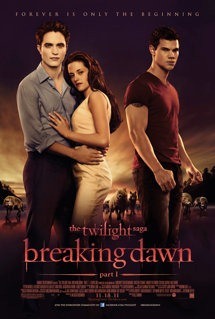
Twilightharry

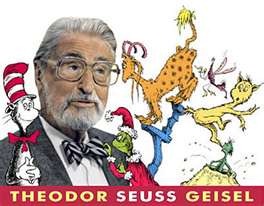
Think of the YA’s that adults practically tear from their kids hands to read for themselves. (Twilight or Harry Potter, anyone?) Or the mysteries that appeal to romance readers because of the finely-honed heroes/ heroines. Or best of all, consider the books by authors like Patterson, Childs, Roberts and King. Even if folks haven’t read them, they know who those authors are. Why? Because these authors and their books are well branded. Look at the fabulous Dr. Seuss! Everyone knew his name. (God Rest His Soul.) Why? Branding. I can guarantee you these authors have, and had in Dr. Seuss’s case, no trouble living with themselves.

famous authors3

Bottom line: with this changing industry, I’m changing, as well. I am investing in my long- term future safety and repositioning my self-publishing line of business into a position that will handle my success safely and securely.

I will continue to give my agent and editor first dibs on everything I write. I still honor and seek brick and mortar publishing houses over self-publishing because they have the experience, the marketing savvy and influence in the business. However, if they do not express interest in my manuscripts, my alter-ego will take over and funnel the stories to my self-publishing line of business.

The best part? I have yet to meet this new author I am creating. Not unlike Frankenstein, she is still under my Brand Marketer’s tarp. Bwaaaaahaaaahaaa. I will let you know who she is after the lightning strikes!

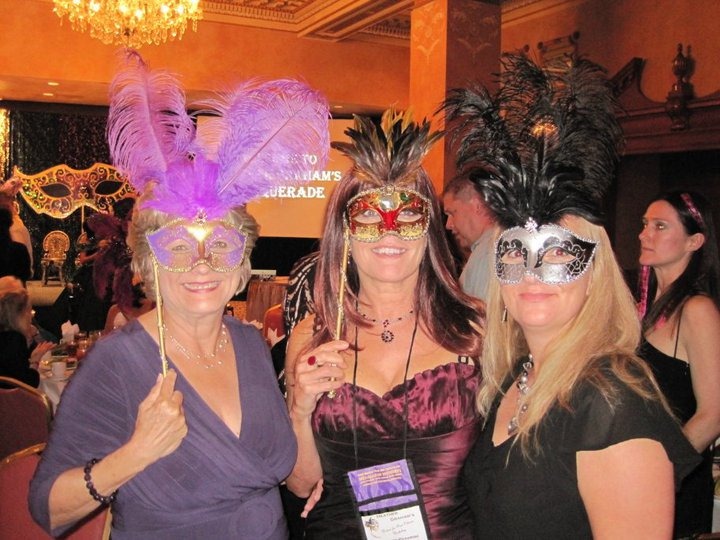
writersforneworleans-2010Piks with authors Linda Conrad and Traci Hall (and their alter-egos) at one of Heather Graham’s Writers for New Orleans Workshops.

So, let me ask. If you were to develop an author alter ego who would he/she be, and after creating this being, could you live with yourself?

Happy writing!

xox Piks


JK Rowling’s New Book Deal

by Clare Langley-Hawthorne

Apologies for the delay – for some reason this didn’t post as scheduled!

The Guardian book blog’s speculation on Friday that JK Rowling’s recently announced adult book deal may be a crime novel created a flurry of comments, many of which were (to my surprise) extremely negative. Many of the responders were dismissive of Rowling’s work and then there were those who said that they really couldn’t give a toss what she was writing now. Really? One of the biggest bestselling authors inks a new deal and people couldn’t care less? 


It started me thinking about attitudes towards successful authors which seem to range from:
1. I could have written that drivel (my answer to that is always, well, why didn’t you then?!)
2. I’m above reading such ‘populist crap’…
3. I would be a bestseller too if only I’d had… (insert appropriate response – opportunity, marketing behind me etc. etc.)


Now, of course the Guardian’s opinion is pure speculation only – based on the fact that her editor at Little, Brown is well-known for his crime and thriller writers (the likes of which include Dennis Lehane and Val McDermid) and that Rowling apparently has a penchant for crime writing and Dorothy L. Sayers.  But if the Guardian’s suspicions turn out to be true, it will be interesting to watch reactions to Rowling crossing the genre wall into mystery and thriller writing (and what critics and readers alike say about the novel once it comes out). 


If some of the comments on the Guardian book blog are any guide,  Rowling already faces a heady mixture of anticipation (from her fans) and derision (from the naysayers). 


So what would your reaction be if Rowling’s first foray into adult fiction (and I mean that in the non-erotic sense) is as a crime writer? Do you share the ambivalence shown by many of the commentators? Given that Rowling has already said her new book will be very different to her Harry Potter series, it seems clear that 
the work is unlikely to be fantasy. Crossing genres is no mean feat – especially for the woman who created the world of Harry Potter – so what do you think of such a decision? 

Here Goes Miller and His Zombies Again.

John Ramsey Miller


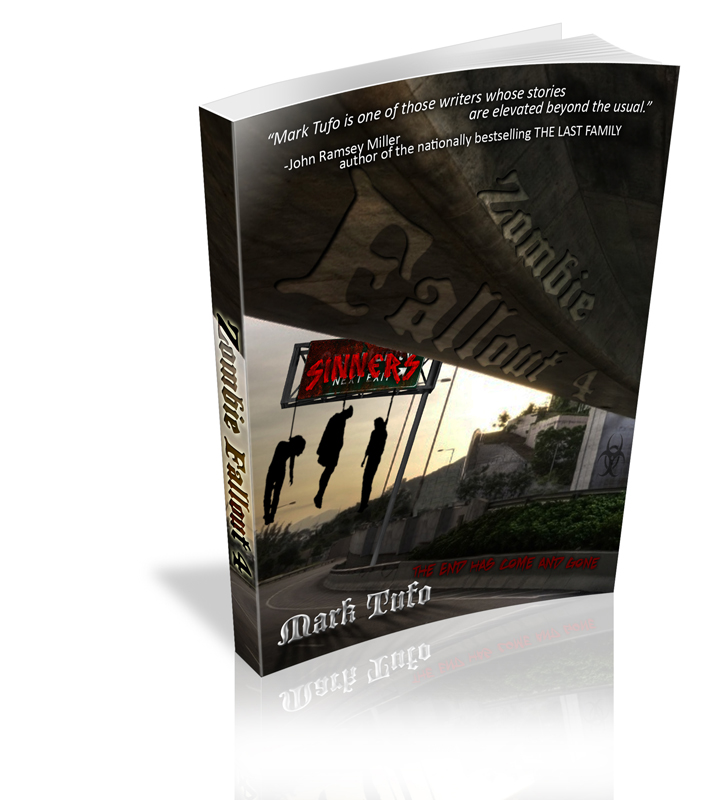
Recently, as I’ve discussed here before, I binge-read a load of Zombie Apocalypse books just hoping to read something for entertainment and are they ever. I read several standalones and several series. In my quest I stumbled across an author by the name of Mark Tufo, who writes in the the Zombie Quadrant of the horror genre. His ZOMBIE FALLOUT series is to die …and reanimate for.

You don’t have to be a horror fan, much less a fan of Zombie books to enjoy the series. The books I read a while back were the first Zombie books I’ve ever read. Sure I’m a fan of George Romero movies, and those of other directors of Zombie films. But watching a film and committing to reading for a hours over the course of days is a different matter.

Zombie books are more of a Western story with zombies as Indians chasing a wagon train filled with settlers but who have to aim strictly for the heads of the attacking tribal warriors. I love westerns, even if they are cast with zombies. As I was going on about the books to friends, my wife decided to try one. I suggested the first of his Zombie Fallout series. Ten minutes in (on the kindle) I heard her laughing as she read. She read all four in a few days, just as I did. They are beautifully constructed, frightening and humorous. Tufo is a self-described blue collar guy, and he writes as well as most any author I know. Mark’s a Marine (there are no ex-Marines) and he has a natural gift for this writing thing. He gives great characters, action, descriptions, settings, knows survival strategies, and weapons.

And his Zombies are amazing. His Zombies stink to a degree that you generally smell them long before you see them. Just think thirty male skunks fighting while sealed inside of a septic tank filled with cat offal and rotting hamburger meat packed into two-day-old shrimp heads. His descriptions of them are gut-wrenching, easy to imagine, and often hilarious.

Tufo’s Zombies answer a lot of questions I have to ask about Zombies as portrayed in other books and films. MTz’s (Mark Tufo’s zombies) are not technically dead at all. If Zombies were dead they would decompose to immobility in very short order. Wait in a basement for a few weeks and it’s all over. His Zombies are infected by a virus, but their hearts are beating just very, very slowly. You blow up their heart and they will still go on for a long while. Since they eat, they move human flesh through their systems with the hygienic awareness of infants. In the winter they slow down and hibernate until a meal happens along. When they aren’t looking for food, they rest in piles so they won’t waste energy. TMz’s also have a leader who is a vampire who drank the blood of someone infected with the Zombiizer virus.

So anyway Mark Tufo was until recently completely self-published (this is his second series) and his books have accumulated quite a following. Although he has never published conventionally, a large well-established company that we are all familiar with is going to do audio releases of the Zombie Fallout series. A small publisher of horror books has published one his novellas, TIMOTHY, but he is holding on to his eBook rights because there is nothing a publisher can do in that area. His eBooks are selling very nicely, and 65% of the people who read his first installment of Zombie Fallout go on and read the rest. That is an impressive carry over rate for a series from an unknown author.

TIMOTHY is a novella written from a Zombie’s perspective. Timothy is an ex-football player who is dressed as a clown when he turns due to being bitten by an infected child at a birthday party. Timothy is aware of what is happening and is not driven insane by the invading entity (constantly screaming, “EAT!”) as most of the turned are. In time, Timothy makes a deal with the invading entity so he is able to enjoy shared control of his powerful body, which is a win/win for both Timbo the entity. So he can think as usual, open doors, move fast and talk. By the way, Timothy was a sociopath and makes a perfect vessel.

WARNING: TIMOTHY one is not for the weak at heart, or those with a low threshold for acute grossness. Cozy fans would be well advised to stick with Agatha.

I sent him a laudatory email after reading his books. I have exchanged emails with him and had one telephone conversation with him about writing and publishing. I offered a blurb, which he accepted. I hope that helps him somehow. It never helped me having my name on my books. I am not writing this to sell Mark’s books. Plain fact is he makes more money than almost all of us do.

We all understand that there are more very talented authors in the world than published books would bear testament to.

Mark has completed the fifth, and, almost certainly, not the last Fallout book. He and his wife, Tracy, are getting it ready to set to selling it. Good, cause I can’t wait to get back to the fun.