Today is the end of the world. What are your plans?

by Mark Alpert
I started having eye problems a few months ago. My eyes got dry and irritated while I slept, and my vision was blurry when I awoke. My ophthalmologist said this was a common, age-related problem. He recommended eye drops and a humidifier. It’s not a big deal, just annoying. I hate the fact that my body doesn’t work as well as it used to.
And it made me think about the importance of eyesight to a writer. Most writers are also voracious readers, so we ruin our eyes on novels and newspapers, not to mention all the hours spent rereading our own manuscripts. What’s more, so much of our memory and imagination is visual, at least for writers with normal eyesight. For better or worse, I rely on my eyes more than my other senses, blithely ignoring entire universes of sound, smell and touch. When I think of my childhood, I see mental snapshots of my family’s old apartment in Queens, along with a half-remembered collage of classrooms, playgrounds and birthday parties. And when I use my imagination to construct fictional scenes, the building blocks are mostly visual: what the setting looks like, what the characters look like, how their expressions change, and so on.
In my latest novel, which will come out in a couple of months, I take this idea to its logical extreme: you are what you see. One of the characters in the book, a brilliant bioengineer, figures out how to build brain implants that can copy and download a person’s visual memories. The technology has great commercial potential; millions of people would surely pay for the implants so they could archive their lives or share their favorite memories on Facebook. But the bioengineer has an ulterior motive. He’s dying of cancer, and he believes he can resurrect himself by downloading all his visual memories to a powerful computer that can mimic the functions of the human brain. The computer would be programmed to generate new thoughts and emotions based on his memories, and because memories are the building blocks of personality and identity, the intelligence inside the computer would be identical to the bioengineer’s intelligence (in theory at least).
This idea, I hasten to add, isn’t my own invention. It’s the Holy Grail of the Singularity movement, which has been inspired by the writings of futurist Ray Kurzweil (The Singularity is Near) and others. My twist on the notion is to focus on visual memories. Scientists understand the visual cortex better than other brain regions, because it’s relatively easy to do experiments that involve visual stimuli. Researchers have constructed elaborate, spaghetti-like maps showing how visual information moves from one part of the brain to another, traveling to the regions that store memories (so you can recognize the objects you’re looking at) as well as the regions that control muscle movements (so you can catch the baseball that’s speeding toward you). Because we already know a lot about the visual cortex, the prospect of building a computer that mimics this brain region seemed somewhat believable to me — more like a thriller, and less like science fiction.
In my novel, the bioengineer’s technology goes awry, of course. (I won’t say any more, because I want you to read the book!) But while I was writing the novel I became convinced that the underlying premise — you are what you see — may have some truth to it. I don’t believe there’s any need to assume the existence of some intangible, unobservable entity (soul, spirit, whatever) to explain the mysteries of consciousness and personality. The brain can assemble an identity out of the memories of early childhood, because the interconnected whole is greater than the sum of its parts. Strictly speaking, some of the parts aren’t really memories — they’re instincts genetically hard-wired into the brain, which govern an infant’s life until learned behaviors can take over. And memories of sound, smell, taste and touch also have powerful influences, particularly on the development of language and emotions. But for someone like me, who relies so much on eyesight, life is like a long, meandering movie, a film that’s being constantly re-edited as I watch it.
And this brings me back to fiction. When I’m working on a novel, I see the scenes in my mind’s eye before I put them down on paper. I can’t start writing until I can see, at least blurrily, where the characters are and what they look like. As I write the scene, the setting and characters usually come into better focus, and when I’m finished I can go back to the blurry parts at the beginning and sharpen them by adding more detail. I also add sounds and smells if they’re relevant and compelling; it’s a good idea to describe taste sensations when the characters are eating, and tactile sensations are vital to any description of sex or violence. But for me, the process starts with images. I have to see it to believe it.
I’m not alone on this one, am I? Do most authors visualize their scenes before writing them? And does anyone else have this nighttime dry-eye problem? I’d appreciate any advice, because it’s driving me crazy.


Well, it’s officially moving time and for the second time in two years the Langley-Hawthorne’s are moving continents. Moving from one side of the world to the other is one of the most stressful things you can do, yet we’ve decided to do it twice in as many years! Next thing you know we’ll be moving to somewhere like Singapore. We’re joking, of course, but if we were to do something like that, we’d seriously have to consider somewhere like Piermont Grand as a living space. One move at a time though, I guess! This time we’re headed from Melbourne, Australia to Denver, Colorado and I can tell you that moving (especially when combined with the end of the school year, my twins’ 8th birthday as well as Christmas) can be rather stressful! I wish we had hired a queens moving company to make the move easier, but if we move again, we’re definitely going to look into it! The stress hasn’t been fun at all! Although, a perk of moving is it can be a great opportunity to review how much you are paying for bills and maybe even look online for things like the best broadband deals to see if you save some money by switching. But as we hang on in there, I’ve been enjoying seeing all the ‘top 10 lists’ that inevitably emerge at this time of year.
It felt strange, however, watching a recent countdown of the ‘Top 10 Australian books to read before you die‘, not because I hadn’t read most of them (I had – forced to at school!) but because I realized how disconnected I feel to many of these so called ‘classics’. Even the more recent books, like top-ranked Cloudstreet by Tim Winton, failed to resonate with me and I had to wonder why. Was it because I was just too dim-witted to ‘get’ these books or did it run deeper than that? Am I just not Australian enough to appreciate them?
So have any of you felt the same level of disconnection from your own country’s ‘must read’ lists? If you had a ‘top 10 books to read before you die‘, what book would be at the top? Do you feel a level of kinship to your own country’s writers and books or does that rarely enter into the equation for you?
by Mark Alpert
To maximize my mortification, I feel obliged to provide an example. The following poem is titled “Katie.” It’s named after a Vassar coed I met at a college party in November 1979 and never saw again.
my much too brief delight,
please say that you’ll remember me
on some cold November night.
Too quick you left my fierce embrace,
too slow was I to follow,
too many the miles of endless waste
that tear me from your special grace,
each step a cause for sorrow.

Our stay in Hong Kong and Taipei has been wonderful (We didn’t end up going to mainland China, because the jittery authorities there denied one of our party a visa); my attempts to absorb the local flavor including the cuisine, however, met an abrupt and decisive defeat.
On the final day of the stay we were treated to lavish meals including pigeon, fungus, sea cucumber, soup with the innards of some unspecified creature, duck feet (they might actually have been goose feet, they were so large), plus a dessert of curdled whey with mango chunks, which looked like something an orangutan might have yarped up. I tried to sample everything to avoid insulting my hosts. Three hours later, I was doing my own share of yarping back in the hotel bathroom. By the time this post is published I’ll be in the air on the way back to Los Angeles– if I make it past the airport health monitors in Hong Kong, that is. In Asia they come at you wearing masks and waving handheld thermometers as you walk past cameras that show you in infrared. I’m afraid they might mistake me and my husband, who is also sick, for a pair of Patient Zeroes. If we do get quarantined, at least it’ll be fodder for a story.
Either way I’ll be out of pocket on tuesday, so I’ll leave you with a question–what’s your favorite medical malady thriller of all time? Mine have got to be COMA and THE ANDROMEDA STRAIN. I’ll never forget that image of the human bodies suspended from wires.
See you all stateside!

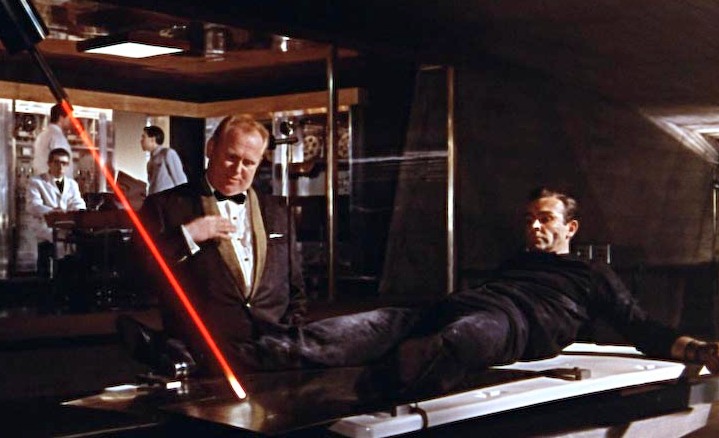
I’m chomping at the bit to see the latest James Bond movie, Skyfall, and hoping that through the fog of moving preparations and children illnesses I’ll get a chance to see it before it goes to DVD (sadly I only get to see most movies after this fact!).
Although I remember being taken to the Roger Moore movies as a child, I really didn’t fall in love with James Bond until I read the original Ian Fleming books. These were true Cold War classics – taut and tightly plotted – they were vastly different to the slightly-camp, bloated movies that peppered the 1980s.  That was when I went back and watched the Sean Connery Bond movies which were closer to the feel of the books. Now, with the emergence of Daniel Craig as Bond I feel the tone is returning to the original Fleming ideal (though I’m sure some of you will disagree:)) and I have the urge to re-read the books. My only fear is that they will suffer from ‘re-reading fatigue’ (you know, when you read something you loved and realize it’s not as lovable second time round – I had a severe case of this with John Fowles’ The Magus…)
So who amongst you have read the Ian Fleming books? What do you think – should I risk picking them back up? Will they seem merely dated and dull, given the current calibre of thrillers and spy mysteries out there?
In the Bondian spirit of things, I have to confess Daniel Craig is my favorite Bond, followed closely by Sean Connery. Timothy Dalton was probably the most akin to the Bond of Ian Fleming’s books but it didn’t seem to resonate on film as it should have. My least favorite Bond was Roger Moore (And boy was Moonraker a dud!). The best movie for me is Daniel Craig’s version of Casino Royale followed by Dr No.
So what about you? What’s your favorite Bond actor and movie?Also what about villains? ( I have to confess the ‘Jaws’ guy is mine – just for sheer novelty value!) Why do we think after so many decades, James Bond can still pull a crowd (not to mention the girl)?