8 Ways to Add Layers of Depth to Your Scenes

By Jordan Dane
@JordanDane


I’ve been working with college-aged writers recently and noticed that many of them rush a scene by sending it to me too soon, as if they’re in a race. My job is to get them to be their own critic and not settle for mediocre, even if it means they won’t get a grade. To get noticed in the slush pile of an agent or editor, today’s author must bring something new to the table that is uniquely from them and their storytelling ability.

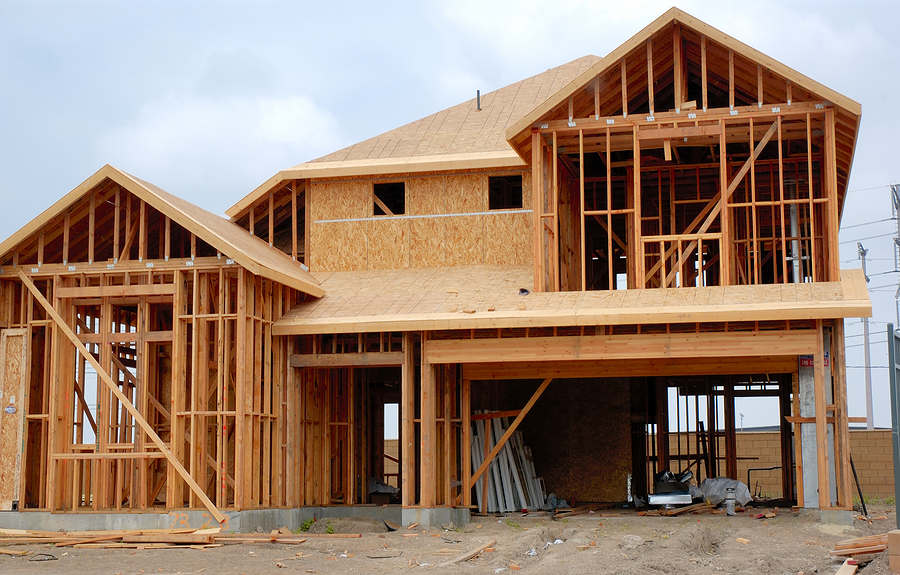
Using an example of constructing a house, they send me the basic framework, but the finishing touches are lacking. Is the dialogue there? Check. Is there a beginning, middle and end to the writing sample? Check. Did I meet the bare essence of the assignment? Check. But a good house needs walls and all the finishing touches that make it feel like a home. Well-balanced scenes can be those finishing touches that make a house a home. They can add a balance of color/setting, voice, emotion, and memorable characters that doesn’t slow the pace down and make your work stand out as unique, too.

Here are 8 key ways to layer your scene with more depth and make them stand out:

1.) MAKE YOUR VOICE UNIQUE – Pick a POV for the character who will tell the story of the scene and give him or her a unique voice. That means you must see through their eyes and add their senses and opinions to the scene. You can talk about what’s in a room, as if it were a forgettable inventory, OR you can add color by having your character say things like, “the dump smelled like cat piss.” Also give each character their own unique voice, using the same care as you craft each one.

2.) USE ACTION – Show your character taking part in the scene, rather than merely talking about the emotion they’re feeling. A guy who is forced to fight when he’d rather cut and run like a coward will behave differently than a guy who wants to be there and do the right thing. The coward might hang back or urge someone else to take his place or fake an injury to get out of what he really doesn’t want to do. The brave guy would take lead or protect the others by shielding them with his body, for example.

3.) USE DEEP POV – Set your character’s deepest thoughts in italics as “Deep POV” to give the reader insight into your character’s internal motivation. These could be expletives or funny one liners that he /she would mutter under their breath or in their head. The right Deep POV touches can add punch.

4.) WEAVE IN BACK STORY SPARINGLY – Know your character and their back story so you can slip it into the story seamlessly. Not many readers today tolerate a back story dump. There’s not many ways to disguise it either. But weaving a back story over a longer timeframe of your story is a good way to build upon your character’s history without slowing the pace—and it can create a mystery element. Other characters (who have a past with him or her) can fill in the gaps in a more interesting way.

5.) PICK THE ESSENCE OF EMOTION – Emotion is vital to make a scene memorable. Pick out the best images or set the stage in actions that best highlight the emotion you’re trying to weave into the scene. Add only the essential images. This could be a man talking about the small of a woman’s back, at a certain time of day when her body entices the shadows, or his memory of the first time he’d ever noticed how perfect that gentle curve had always been. The sensuality can be there, without overwriting the description of her, plus it conveys his enduring love for her in a sensual way. I’m not a poet, but I often think that good writers have the soul of a poet in them when I read certain passages that make me stop and reread them.

6.) PICK THE MOST PROMINENT PHYSICAL TRAITS – Beauty is in the small details. Today’s average reader may not tolerate an author describing a character in great detail because that would slow the pace, but try picking out the most essential characteristics of your character and pepper your scene with those images to suggest traits, rather than spell them out. Instead of describing how thin a guy is, add color by saying his suit hangs on him as if he were a human coat hanger.

7.) GIVE THE SCENE STRUCTURE – I think of scenes as mini-stories that will propel the story along with 1-3 plot points infused into every scene. They have a beginning, a middle and an end so that the characters in that scene take a journey and move the story forward. Internal monologue should not be repeated. Have your character discover or learn something about themselves during the scene, for example.

8.) ADD SETTING THAT ENHANCES YOUR SCENE – Any scene can be enhanced with the right setting. The bare bones of two characters talking in a study can be enhanced if there is a menacing storm rumbling outside, a loud crackling fire in the hearth, and a musty old library smell in the air from the countless alchemy books that lined the shelves, an extensive collection of magic books that spanned centuries, set in a mansion in the French Quarter of New Orleans. Classic.

I’ve mentioned 8 key ways to add depth to your scenes. Can you add more to this list? Please share your thoughts and what has worked for you.

Reroofing for Writers

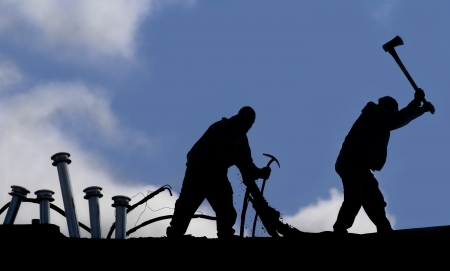
My house was invaded by an army of roofers early Monday morning. Here’s how much of a ruckus roofers make: I didn’t even notice yesterday’s 4.7 earthquake and its 100 aftershocks. The quake was lost in the din of men with tools who were prying off the top of our home like an F3 tornado. Our neighbour recently had an extension built and had one of those roofs fitted that you can get from Leka Roofs, when they fitted the neighbours roof there was hardly any noise at all, well from where we were that is, but I can’t imagine the few meters distance between our homes would make that much of a difference but clearly it does.

There’s a hidden opportunity in this interlude of mayhem, which will continue through much of the week. I’m having lots of time to ponder the folly of certain things. For example, I’m pondering the folly of ignoring an ailing roof for ten years. Sooner or later, a roof will let you know it’s terminally ill. Usually it will deliver the news in the middle of a major thunderstorm. Often, homes in areas of Texas that sit in Tornado Alley may experience storm damage requiring the services of the likes of roofing austin professionals to rectify.

I’m thinking it might be beneficial to apply the lessons of preventive maintenance to the writing biz. Do we have any creative shingles that are coming loose? Is there a minor but annoying leak that could develop into a gully washer, if left unattended?

So between hammer blows this week, I’m doing an inventory of my own needed repairs, in terms of writing. So far I have identified the following areas in need of remedy:

Low productivity

Low productivity has been an issue for me for the last several years. If I don’t have a deadline, I don’t produce. For example, I’m writing this blog post at 3 a.m. Pacific Time. Enough said.

Laziness

See low productivity.

Web avoidance

For some reason I don’t like to update my author’s web site. It’s looking mighty stale these days. Time for it to get a facelift, I think.

Creative confusion

To be honest, I’m not quite sure where I’m going with my writing these days. I’m working on a new installment of my series: PLUS-SIZE HOMICIDE. But I keep straying off track to write in other genres. So far I haven’t liked the results, so those efforts have stayed in the drawer. I feel like I should commit one way or another.

Well, there are all my writing roof’s flaws, laid bare. What about you? Do you have any shingles in need of replacement? Hammer away in the comments!

A Surefire Hook

This is an exercise I invented the other day when I should’ve been working on my novel. I tried to come up with a list of surefire hooks, subjects that have an irresistible appeal to a vast number of readers. A novel that incorporates one or more of these hooks, I thought, is sure to attract some interest, even if it’s a terrible book. I used gut instinct alone to compose the list. Some subjects just seem to be universally popular.

The first hook on my list is Albert Einstein. I thought of this one because my first novel, Final Theory, was about Einstein, and I think that’s one of the reasons why the book sold fairly well. Who doesn’t like Einstein? Well, the Nazis didn’t like him, and neither did J. Edgar Hoover, but other than that, the guy has pretty widespread appeal.

The second hook is Marilyn Monroe. I’m surprised more books haven’t been written about her. Yes, her appeal was mainly visual, but her story was also pretty interesting. And she was a good actress too, at least in some of her movies. I thought about adding Elizabeth Taylor to the list — she was an even better actress — but I’m not sure her appeal is as deep and wide. Would just about anyone want to read about her?

Two U.S. presidents made my list: JFK and Lincoln. Everyone loves those two. Look at the popularity of the recent Stephen King book (11/22/63) and the Steven Spielberg movie. President Washington seems harder to warm up to. The audiences for FDR and Teddy are a little narrower too, I think.

Even in this secular age, the Bible is still a damn good hook. If you can work Jesus into your fiction, God bless you.

War can also be a good hook, but it really depends on which conflict you choose. The Civil War has the most appeal, I think, followed by World War II. I love books about the Vietnam War, especially Tim O’Brien’s novels and short stories, but I think they have more of a niche readership.

Babe Ruth also made my list. My favorite part of Dennis Lehane’s novel, The Given Day, was his fictionalized Bambino. And at the last minute I added Elvis to the list. I know at least three novels with the title Heartbreak Hotel.

It was a fun exercise, but then I ran out of steam. (And I had to get back to writing my novel.) Please feel free to add to the list or tear it up, as you see fit.

8 Key Ways to Edit Suspense & Pace into Your Finished Manuscript

Jordan Dane
@JordanDane


If you’ve made it through your first draft of a novel and want to edit for suspense and pace to give your book a page-turner feel, below are questions to ask yourself.
 
1.) Did you begin your story at the right point? Opening in the middle of action is an attention getter, but don’t spoil it with excessive back story. You can also add an element of mystery or intrigue to your opener that will draw readers in if action doesn’t exactly fit your story, but remember that less is more. You’ll always have the opportunity to weave in back story if it’s necessary as the story progresses. It might be helpful to ask yourself if the start of your book is the last possible moment before your main character’s life is changed. Change is an excellent starting point. I sometimes start the story where I think it should, then consider adding either an inciting incident by way of Prologue or a standalone jumpstart to the story that precedes where I began.
 
2.) Have you picked the right setting for your story? I love an evocative atmosphere or setting that adds intrigue to stories. A plot set in West Texas would have a different tone than one set in New York City, for example. Pick which might make your novel work best and do your research. If your book feels flat after it’s written, it may not be an easy fix to move the story setting, but it can make a big difference and really enhance your book.
 
3.) Are your subplots helping or hurting you? Subplots can be used like good harmony when it comes to ramping up the stakes. A cold case murder mystery can add a smoldering element of suspense that builds and can add unexpected twists at the end. And while the main plot is slowing down to give the reader a breather, a subplot can be just the right element to infuse a page turning feel. Subplots can also feed off the energy building in the main plot to give a rush to the reader. So be the maestro of your own orchestra of tension.
 
4.) Do you have flashbacks that work or drag down the pace? Flashbacks can be tricky. We’ve all read books where flashbacks drive the novel and do it effectively, but make sure yours have a purpose and build on the tension of the main plot going forward. Flashbacks aren’t just another way to sneak in back story. Give the reader insight into the main plot with an effective and brief look into the motivation of the characters, if the flashbacks are necessary.
 
5.) What is your black moment, when does it occur, and does it create a major reversal or dark moment for your characters to deal with? Whether you’re writing action blockbuster movie-type books or family dramas, black moments (where all seems lost) are vital for an emotional story. If you write the black moment too soon, you have a long way to go toward the end that can slow the pace. I tend to write mine midway or 3/4 through, depending on the plot. It’s also important to make sure the dark moment itself is a twist or your protagonist learns something major that he/she figures out to turn the tide in their favor. The darker the moment, the bigger the triumph.
 
6.) Do you use foreshadowing to your advantage or is it a detriment that deflates your tension? The right balance of foreshadowing can add a sense of pace to your story. It can propel your storyline from scene to scene, but too much can burst the bubble of any mystery and telegraph your punches. Sometimes I look at my scene endings and see if I can stop them sooner at a more critical suspense moment. Or I split up an action scene at the bottom of a chapter and carry it over to the top of the next chapter. This simple idea of splitting scenes or cutting them off at a more appropriate spot can add a sense of pace, without any major rewrites.
 
7.) Have you been patient enough to hold back your twists and vital information that can kick start an exciting ending? It is really hard to be patient when it comes toward the end of your book. But holding off for the big reveal for as long as possible, can save an ending. Savor the clues too and reveal them at the last possible moment. Readers will appreciate it.
 
8.) Are your stakes high enough? Don’t be afraid to punish your characters for failure. That’s your job as an author, to raise the stakes and abuse your characters because they can take it. They have a starring role in your book for a reason. Let them show their stuff.
 
Please share your tricks of the trade on adding suspense and tension to your first draft. What would you add to this list? What’s worked for you?

Moving Day

by Clare Langley-Hawthorne

We are moving this week into our new home in Denver so my apologies but no real blog post this week as I am up to my ears in boxes. I will be thinking of my fellow TKZer Nancy as I unpack the hoard of books that travel with me (unlike her I seem incapable of biting the bullet and undertaking a much overdue cull!). 

Before I do this, though, I have a question – how do you organize your books? 
Do you have them in alphabetical order or by genre (or both)? 
Do you shelve hardbacks and paperbacks separately or keep an author’s books together (a challenge I find on most book shelves)?
Or do you adopt a ‘put it anywhere it fits’ approach? 

I’ve tried most approaches only to end up with the final ‘wherever it will fit’ option… So any advice for an untidy, somewhat irrational and not very organized book lover like myself?

Is social media developing a personality disorder?

Like most people, I spend a lot of time online. Facebook, Twitter, LinkedIn–you name an Internet watering hole, and it’s likely that its  Login barkeep knows my name.
But recently my love affair with social media has turned sour.

It started when my Twitter account started texting my cell phone. Suddenly my inbox got flooded with messages. Hundreds of them, from people I didn’t know. All the messages were written in Portuguese. A bit of sleuthing revealed that my account had been hacked. After spending an hour deleting the reams of messages that had collected over two days, I changed my password. And voila! I immediately lost my fan base of piratas eletrônicos.

Then came a new wave of messages, purportedly from people I do know. These missives were mildly unpleasant. They said intriguing things like, “Oh my God, this person is saying horrible things about you online.”  They included a link for me to click. Somehow I knew that if I clicked that link, I’d be the next person in line sending news of horrible rumors to all my contacts. Against huge temptation, I resisted clicking the links. (If you really want to read horrible things about me online, just check out my 1-star Amazon reviews).

I
t’s not just Twitter that’s gone wacky. Every day comes fresh news of some kind of Facebook privacy or hacking scare. Every so often I read desperate-sounding messages from friends, in which they disclaim some bizarre message that had been sent in their names. Yesterday someone sent out a dark warning that hackers were posting pornographic pictures on my timeline. The catch: I can’t see the pictures, but everyone else can. (That one turned out to be a hoax.)

And then there’s LinkedIn. I don’t use LinkedIn much, but one day I made a minor change to my profile. Somehow that simple update auto-triggered a “connection request” to be sent out to everyone in my contact book. Those contacts included a couple of ex-boyfriends who, trust me, I don’t want to be linked to again.

So what’s happening with these social media sites? My relationship with them has gone from fun to semi-fearful. It feels like I’ve been dating  a guy who seemed charming and easygoing at first, only to discover that he’s a passive-aggressive control freak with a secret cyberporn habit.

I have a theory about the whole thing. I think social media sites change their character when they go public. Once the bean counters start trying to figure out ways to wring money from their user base, a la Facebook and LinkedIn, the whole experience goes cockeyed. You have to start triple-guarding your privacy from that moment on. 

And let’s talk about hackers for a second. What kind of pathetic, loser soul spends his time thinking up ways to randomly annoy strangers? Is this some kind of new mental illness going around?  Or simply the revelation of one?

Whenever I get exasperated by this kind of silliness, it’s always nice to come back here to TKZ. Our little plot of cybersphere is actually a community. We all are trying for the same thing–to improve our writing–without ulterior motive. (Well, except for occasional BSP–Blatant Self Promotion–when we have a new book out.) 

So thank you, my fellow TKZ’ers, for being here. And tell me, have you noticed that the social media world is getting scarier? Have you had any experience being hacked or hoaxed?


Lessons My Father and Mother Taught Me

James Scott Bell
@jamesscottbell

I was blessed with good parents. They were of the “Greatest Generation,” decent and dedicated to taking care of their family of three boys. When I look at how I’ve lived my life, it’s all been a variation on a theme: I wanted them to be proud of me. 


Even now, with both of them gone, I still think about them when looking at my own behavior.
From my dad I learned these things:
1. Never hit a girl.
2. You have to work hard to get anywhere.
3. Never, ever use the N word (my dad played baseball with Jackie Robinson on the UCLA team).
4. Everybody is entitled to the protections of the United States Constitution, even (nay, especially) those who can’t afford a lawyer.
5. If you make a commitment to someone, keep it.
6. Don’t lie.
From my mom I learned:
1. Don’t be selfish.
2. Don’t drink milk from the carton.
3. Take care of somebody when they’re sick.
4. Stand up for a friend if he’s treated unfairly.
5. Laugh a lot—it helps get you through life.
6. Finish your homework before you watch TV.
If I’ve managed to achieve some measure of success, I really do owe it to my parents. They laid the foundation.
When I started to take writing seriously, I determined that while I may not have the native talent of certain writers (for example, I think Stephen King is a literary and imaginative genius) at least I could work as hard as anyone. And I’ve tried. Thanks, Dad.
I also appreciate the value of a good laugh at strategic times. I write suspense, but I like comedy relief, a la Hitchcock. Reader mail tells me I do pretty well with that. Thanks, Mom.

What about you? What lessons for life would you pass on, and who did you learn them from?

Why We Write

by Mark Alpert

One thing’s for sure: We don’t do it for the money. Yes, it’s possible to make a living from writing fiction, but on average it’s one of the least lucrative professions in the whole economy. And forget about fame or adulation from the masses. Have you seen the nasty book reviews posted on Amazon? It’s open season on novelists there. Even the best authors get trashed.

So why do we write? Because of the book parties, baby. There’s nothing like a good party.

On Wednesday I had the pleasure of hosting the book party for my new thriller Extinction. The venue was The Mysterious Bookshop in Tribeca, one of my favorite stores in NYC. The shop’s owner is renowned author, editor and publisher Otto Penzler, founder of The Mysterious Press and co-author of the Encyclopedia of Mystery and Detection. Best of all, he’s a Michigan grad. His store has wonderfully tall bookcases and movable ladders for reaching the top shelves, and none of the employees seemed to mind when my kids climbed the ladders and started doing midair acrobatics. Well, they probably did mind, but no one told the kids to cut it out.

I signed a ton of books. I love doing that. Who doesn’t want to be the center of attention every once in a while? My only regret was that the party was too short. Over the course of two hours I could manage to say only three or four sentences to each of the friends who came. These are people I’d love to spend more time with, friends from high school and college and my old jobs at Fortune and Scientific American. These are the parents I see at my son’s Little League tournaments and my daughter’s soccer games, folks who are amazed to see me wearing anything but jeans and T-shirts. (“Oh my God, you own a suit?”) If life were longer and easier, I’d see these people all the time. We’d have brunch, we’d go skiing, we’d get on a plane and fly to Barcelona for the weekend. But in the real world, time’s winged chariot is always hurrying near, and I’m way behind on my next novel. I wrote only 700 words yesterday, so I have to write 1,300 today.

The best part of the event, by far, was my wife’s speech. The spouses of writers have to absorb a lot of bitterness — who else are you going to complain to when things go wrong? — so it’s only fair to give them most of the credit when things go well. And she made an excellent point in her brief remarks: book parties are especially important for authors because writing is such a solitary activity. We have to spend so much time with our fictional characters, talking with them and moving them around like chess pieces and inventing quirks and flaws and back stories for them. And sometimes we even fall in love with them. But it’s also nice to hang out with real people for a change.

We have liftoff!

By Joe Moore

blade-cover4-smallToday is launch day for my new thriller, THE BLADE (co-written with Lynn Sholes). This is our first venture into indie publishing. After 5 novels written together and released through a traditional publisher, we decided to try something different—sort of like a tennis player moving to a clay or grass court after years on hardcourt. The game is the same—write the best book you can—but becoming a “hybrid author” brings new challenges. Suddenly, we are the publisher making all the decisions that were left to our traditional publisher in the past—editing, cover design, marketing, budget, advertising, promotion, and on and on. So far, it’s been fun. Now we’re laying it out there for the taking. Like a science experiment, we’re either going to prove we can do it or blow up the lab.

So what is THE BLADE about, and how did we come up with the concept? First, here’s the elevator pitch.

While investigating the theft of a 4000-year-old biblical artifact, a federal agent finds herself hunting an international fugitive who threatens Las Vegas with a nuclear device if a ransom from all the casinos is not paid.

After writing 5 supernatural apocalyptic novels, we decided we wanted to tackle a “straight ahead” thriller—no “woo-woo” as we like to call it. We also wanted to write a book in first person. THE BLADE is the result—all the protagonist’s chapters are in first person.

But how did the concept come about? As I’ve blogged about before, we started with “what if” questions. What if the Nazis had developed an atom bomb? What if they were ready to use it but time ran out because the war ended? What if the weapon was hidden away in a secret Austrian mountain bunker and eventually forgotten? What if 65 years later, it was found and fell into the wrong hands?

The second part in developing the concept was our new main character Maxine Decker. During an attempted recovery of stolen artifacts in Iraq, Max is critically wounded. After 20 years as a federal agent for the Air Force Office of Special Investigations (OSI), she decides to call it quits and retire to her Colorado cabin to enjoy a life of not getting shot at. Of course, just when she thinks she’s out, something pulls her back in. Her ex-husband, a computer forensics expert also with the OSI shows up to inform her that a stolen biblical relic, one she has deep emotional attachment to, may have surfaced on the black market—the 4000-year-old Blade of Abraham. The news entices her back into temporary service as an OSI consultant. What she doesn’t realize is that from that moment, everything that happens is a planned setup motivated by hatred, revenge and a big dose of deception.

How does all this tie into the Nazi atomic bomb? You’re just going to have to read the book. But, as Lisa Gardner said, "THE BLADE completely kept me guessing. As fast as you think you know what’s going on, you’re wrong. An absolute thrill ride.” David Morrell called THE BLADE, “a dark, chilling cat-and-mouse game to stop an unimaginable act of terrorism.” Suspense Magazine calls it “One incredible suspense thriller.” And Doug Preston said, “From the opening scene in Iraq to the final explosive climax in the mountains of Colorado, this is one hell of a thrill ride.”

Starting tomorrow, Feb 21 through Saturday, Feb 23, you can download THE BLADE for free at Amazon. Also included is an excerpt from our #1 Amazon bestseller, THE PHOENIX APOSTLES. I hope you get a chance to read and enjoy our latest thriller. Let me know what you think, and forgive me for this shameless promotion.

Reader Friday: Q & A

Today’s topic — a Q & A — comes to us from a suggestion by our friend Diane Krause.  Let us know in the comments whether you have any specific questions you’d like the TKZ’ers to address. We’ll all pitch in with our thoughts as the day goes on. Happy Friday!