By PJ Parrish
Thanks to my dad, I was really into woo-woo stuff as a kid. But back then, we didn’t have a whole genre to ourselves like they do today — YA vampires, urban fantasy, speculative fiction, you name it. So I had to cadge my dad’s Dell paperbacks — I remember one in particular called The Witching Night — before I graduated to Shirley Jackson. My dad loved the old TV show One Step Beyond and of course, The Twilight Zone. So for today’s submission, in the paranormal genre, we’ll let Rod Serling guide us in: “You unlock this door with the key of imagination. Beyond it is another dimension – a dimension of sound, a dimension of sight, a dimension of mind. You’re moving into a land of both shadow and substance, of things and ideas. You’ve just crossed over into the Twilight Zone!”
Catch you on the flip side, fiends.
Dark Things
She’d come in off the street. My last patient of the day had just left, followed out the door by Dorinda, my receptionist. I was standing at Dorinda’s desk flipping through messages when I looked up to see a woman watching me. I jumped. I hadn’t heard her enter.
“Dr. Gilder, I presume?”
“Yes. I’m Carrie Gilder.
“I need to talk to you.”
“Office hours are over for today. You should call in the morning and make an appointment.” I started around the desk. “Now, if you don’t mind—”
“I won’t be able to come back in the morning. Please. It’s important.”
I narrowed my eyes, appraising. She was striking. Tall, well dressed, elegant. Her bearing radiated power and confidence. I was irritated at her presumption that I would take a walk-in. I had no desire to stay later and intended to encourage her to go back out the door she’d come in through, but something stopped me. I’m used to usually being the one controlling the situation, and I was aware of the control slipping out of my hands. I felt drawn in by her eyes, somehow, unable to look away. Maybe that’s why I relented, as if I had no choice. “Step into my office.”
She glanced around the room. What a contrast, I thought. My office is warm and comfortable, with its quaint country decor and fresh flowers gracing the credenza along one wall. And she’s so sleek and…what? Cold comes to mind. She bent to smell the late summer flowers, touching a petal with one long finger. My eyes widened when the petal she touched fluttered to the floor.
She sat in the overstuffed chair opposite mine. I jotted down a few quick notes. Young woman. Attractive. Blonde hair, dark eyes, almost black.
“You’re very lovely, Dr. Gilder.”
I frowned. Not something I usually hear from my patients.
“Okay,” I said with a shrug. “First, why don’t you tell me who you are?”
The young woman leaned forward in the chair and extended her hand, which I found surprisingly cold. “I am Pica. Pica Sharp.” She settled back in the chair.
I studied her. “Do you mind if I ask how old you are?”
“I was 27,” she replied.
“Was?” Odd, I thought, making a note. Is she trying to be funny? My patience wasn’t increasing with this woman, and I found myself wondering how I’d gotten sucked into letting her in.
___________________
Some good creepy stuff going on here. I like that it’s a twist on the old dectective cliche — beautiful dame walks in the door and messes up the protag’s life. But the protag’s a doc not a dick and it’s a she not a he. So far, so good.
I like the voice and writing style — clean, crisp with spare but insinuating dialogue. For instance: It’s intriguing that the femme fatale here comments on another woman’s looks. I like the casually tossed out line “I won’t be able to come back in the morning.” It makes me think we’re in Vampireville here, but the writer is too sly to just come out and say that. It reminds me of that great moment in the Frank Langella Dracula when at the dinner table he is offered wine and Langella says, “I don’t drink (pause a half beat) wine.”
And then there is that zinger line: “I was 27.” Very very nice. That one line makes me want to read on because it tells me the stranger is either crazy…or dead.
I would definitely turn the page here. So kudos, writer, you’re off to a great start. But there are a couple things I might offer for you to chew on.
Your style is so spare that I think you can afford to stitch in some description. Yes, your dialogue is muscular and is working hard for you, but what you’re lacking here is mood. Can we have some telling details about the setting? What does Carrie’s office feel like as it nods off to sleep? What is the light like? It’s just past quitting time, around 6 pm and where are we in the world? It would be dark in Chicago in winter but still light in Miami in summer. You can use description here to slip in some missing details like that. Your style is so tight you can risk slowing down a tad. We need feeling here. We need mood and tone. Especially in paranormal.
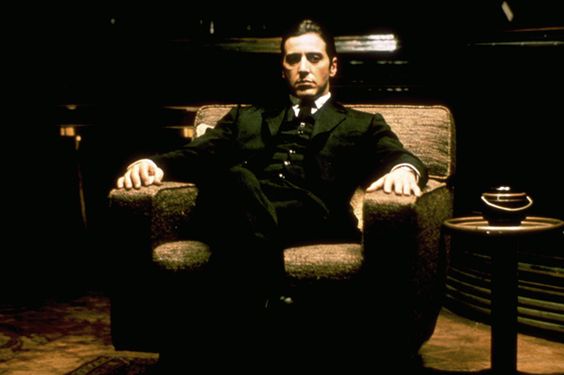
Michael Corleone, a portrait in dark and light
Here’s an exercise: Imagine this scene as a movie and you are the cinematographer. What colors are you filming in? Is everything shadowed with the gold pooled light of a lone desk lamp? Is a bloody setting sun seeping through the blinds? Remember how Francis Ford Coppola used chiaroscuro lighting (the interplay of light and dark) for drama and suspense in The Godfather? Sometimes he lit only half a subject’s face. It was a metaphor for the protagonist’s inner conflict, Michael Corleone’s own struggle between light and dark—good and bad. You have to think of your book in those same terms — description is your cinematography. Exploit it to create mood and maybe metaphor.
Another point about description: Don’t let an opportunity slip by to use it to illuminate character. You TELL us this: “She was striking. Tall, well dressed, elegant. Her bearing radiated power and confidence.” SHOW us this in details. At risk of sounding sexist here, women appraise women differently than men might. What specifically would Carrie notice? Is Pica wearing a close-cut Italian suit a la Prada? A flowing red caftan a la vintage Pucci? How is her hair styled? A severe chignon? Botticelli curls? See what I am asking for here? TELLING DETAILS.
And remember: Every detail you put in tells us two things: How the strange woman thinks of herself via her style and how Carrie perceives her via her prism of experience and taste. With details, you begin layering in character.
One last thing before I go to line edits. I really like this submission. I am not so crazy about its opening line — “She’d come in off the street.” I can’t think of a better one, but I feel it doesn’t do justice to the great set-up you’ve got going. It lacks punch, mystery and feels too matter-of-fact. Maybe our commenters can help out here?
Let’s do some quick line edits:
She’d come in off the street. My last patient of the day had just left, followed out the door by Dorinda, my receptionist. I was standing at Dorinda’s desk flipping through messages when I looked up to see a woman watching me. I jumped. I hadn’t heard her enter.
“Dr. Gilder, I presume?”
“Yes. I’m Carrie Gilder. Slipped in the protag’s name up high! Bravo.
“I need to talk to you.”
“Office hours are over for today. You should call in the morning and make an appointment.” I started around the desk. “Now, if you don’t mind—”
“I won’t be able to come back in the morning. Again, this feels flat on first read but then we find out later she’s dead! So it works. Please. It’s important.”
I narrowed my eyes, appraising. She was striking. Tall, well dressed, elegant. Her bearing radiated power and confidence. This is a classic example of telling instead of showing. There’s nothing wrong with it on its face but this writer is better than this! I was irritated at her presumption that I would take a walk-in. I had no desire to stay later and intended to encourage her to go back out the door she’d come in through, but something stopped me. I’m used to usually being the one controlling the situation, and I was aware of the control slipping out of my hands. Not sure this works because we are not far enough into the scene for Carrie to feel threatened of losing control. I felt drawn in by her eyes, somehow, unable to look away. This is borderline cliche. If you can show somehow what is so seductive about Pica’s eyes it might feel more fresh. Depending on the lighting and the MOOD YOU ARE GOING FOR! Also, this is where you tell us what her eyes look like, not later as you do. It belongs here when it is part of the action. Maybe that’s why I relented, as if I had no choice.
“Step into my office.” need new graph.
She glanced around the room. Get them in the room first then filter this through Carrie’s POV. Something along the lines of: She didn’t automatically head for the plush wing chair near the fireplace as most my patients did. She paused in the doorway then came in warily, like a stray cat assessing whether it wanted to move in or take its chances out on the street. I watched as she slowly took in my office. I wondered what she was seeing in my country decor with its braided rug, old white-washed desk and the wood bookcase crammed with wicker baskets and the antique teapots I had collected from my foraging in New England estate sales. Well, that’s not great but see what I am trying to do? USE DETAILS TO ILLUMINATE CHARACTER. What a contrast, I thought. Again, this is TELLING when if you SHOW, you can trust the reader to pick up on the contrast via details. My office is warm and comfortable, with its quaint country decor and fresh flowers gracing the credenza along one wall. And she’s so sleek and…what? Cold comes to mind.
She bent to smell the late summer flowers, touching a petal with one long finger. My eyes widened when the petal she touched fluttered to the floor. A nice telling moment here but again, make it mean something. What KIND of flowers. Always be specific if you can. Later summer flowers (good way to tell us it’s summer btw) Are they from her own garden? Don’t miss any chance to tell me something about this woman. And why did her eyes widen when the pedal dropped? It’s natural for flowers to drop petals. Unless you can give me a good reason to think otherwise.
She sat in the overstuffed chair opposite mine. I jotted down a few quick notes. Young woman. Attractive. Blonde hair, dark eyes, almost black. You’ve already mentioned her looks so it’s filler here. Have her do something else if you need a physical motion break. And the eyes, which are so important, belong way up above when Carrie first notes them.
“You’re very lovely, Dr. Gilder.” This, of course, is predatory.
I frowned. Not something I usually hear from my patients. She might think, even the male ones.
“Okay,” I said with a shrug. “First, why don’t you tell me who you are?”
The young woman leaned forward in the chair and extended her hand, which I found surprisingly cold. Did they shake hands? Don’t skimp on simple details of physical choreography. In fact, make the gesture MEAN something. ie: She held out her hand. I hesitated then took it. She didn’t shake my hand so much as hold it tenderly. Her hand was soft but ice cold. I pulled my hand away.
“I am Pica. Pica Sharp.” She settled back in the chair. I’d flip these to: She settled back in the chair. “I am Pica Sharp.” Which is a cool name if a tad too on-point given the severe portrait you’ve painted. Unless you’re going for the Full Vampire Monty here because Pica is an eating disorder where a person craves or eats nonfood items, such as paint chips or sand. Or other people…
I studied her. She’s a doctor. She would know what pica is. No reaction? “Do you mind if I ask how old you are?”
“I was 27,” she replied. Boom, there it is! Really good line.
“Was?” Odd, I thought, making a note. What did she write down? Odd is putting it mildly.Is she trying to be funny?
Pica was asked a question. She needs to answer. Or gesture or something. You can’t just leave that hanging there.
My patience wasn’t increasing with this woman, and I found myself wondering how I’d gotten sucked into letting her in. She didn’t let Pica in; she materialized out of thin air you said. Which is why we need to return and re-examine your opening line. Which is why I don’t think it works. Because given all the cool stuff you’ve now revealed in this scene, Carrie cannot have known “She’d come in off the street.”
One more thing about your opening line. To paraphrase Joyce Carol Oates, you sometimes can’t know your book’s opening line until you’ve written the book’s last line. At its best, an opening line foretells your whole story or its theme. Like this from Jean Rhys’s Wide Sargasso Sea: “They say when trouble comes close ranks, and so the white people did.” As I read through your first 400 words, I began to get pulled into your story, especially when I hit the line that Pica WAS 27. But I’d like to see you come up with an opening that pulls me in from the get-go. You’ve got it in you, dear writer!