About Kay DiBianca

Kay DiBianca is a former software developer and IT manager who retired to a life of mystery. She’s the award-winning author of three mystery series: The Watch Series, the Lady Pilot-in-Command Series, and the Reen & Joanie Detective Agency Middle Grade Series. She's decided three series may be enough to keep her busy for a while. Connect with Kay on her website at https://kaydibianca.com.

The Adventure Begins Anew

I’m honored to be the first to welcome TKZers to 2022! I hope you had a wonderful holiday season, filled with family, food and fun, and ending with a resolution to begin a new writing adventure in the new year. Consider this quote by Winston Churchill:

“Writing a book is an adventure. To begin with it is a toy then an amusement. Then it becomes a mistress, and then it becomes a master, and then it becomes a tyrant and, in the last stage, just as you are about to be reconciled to your servitude, you kill the monster and fling him to the public.”

While I can’t relate to every one of the phases Mr. Churchill describes, I love the metaphors, and he made me wonder how I would describe.my own adventures in my limited experience of novel-writing. Here goes:

When I begin a new book, I spend some time searching for ideas. Is there some message I want to convey? Or a character who’s anxious to make his/her debut? Is there a particular mystery I want to challenge readers with or a basic theme I’m interested in? I spend time reading good novels and craft-of-writing books. I go for a run and play what-if games. I try not to force the issue, but let my brain relax, hoping for inspiration.
 

Then it happens. Something bubbles up and captures my imagination. Oh, happy day! Now it’s time to get to work.


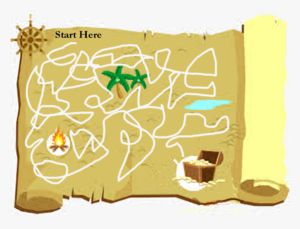
I pull on my virtual hiking boots, strap my laptop in place, and head out to First Draft Land. Although I have a good idea where I’m going, I’m not entirely sure how to get there, so I wander around for a while. (A long while.)

Even though I made it to the end of the story, it’s just a mess, so I go into revision mode. Applying lessons learned about plot, structure, dialogue, tension, and other TKZ topics, I straighten out some of those detours and rabbit holes. I weed the prose, kill my darlin’s, and heartily eradicate the dreaded adverbs. (Just checking to see if you’re paying attention.) Now we’re getting somewhere:


Having reached what I believe is the end of my writing adventure, I gleefully ship the manuscript off to my developmental editor, convinced she will be delighted with the almost-perfect story. My editor has a very direct approach to feedback as you can see by her response to the manuscript.

Maybe she was just having a bad day, but I trust her judgment, and I take her critique to heart and work some more. The adventure resumes, and we loop through each leg of the journey to clear away the debris so the reader won’t stumble.

Finally, the editor gives it a green light, and I begin the last mile to the finish line. Beta readers come alongside to offer their wisdom, then it’s off to the line editor and proofreader for the final changes. (Who knew it took so many people to write a novel?)

What started as a joyful romp through the garden ends with a quiet sigh of relief and gratitude. There’s only one thing left to do: launch it out into the world.

Success! Adventure complete. Dragons slayed and townspeople rescued. After a short nap, it’s time to start another adventure.

Now where did I put that book on marketing?

* * *

How about you, TKZers. What writing adventure are you planning for 2022? What phases will you go through? How will you manage the long trek to publication?

Festina Lente!

There are many familiar adages that refer to the need to be careful and diligent in our work.

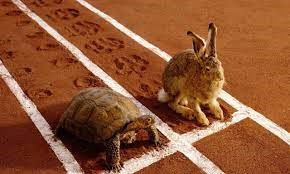
“The race is not always to the swift.” – from Aesop’s Fable, The Hare and the Tortoise

“Whatever is worth doing at all, is worth doing well.” – Philip Stanhope, 4th Earl of Chesterfield

“There are no shortcuts to any place worth going.” – Beverly Sills

Here’s one you may not have heard of:

“Festina Lente.”

I encountered this saying a couple of years ago, and it captured my imagination. So much so that it’s written at the top of the whiteboard that sits on my desk so I see it every day as I’m working.

Festina lente is a Latin phrase that literally means “make haste slowly.” It’s an oxymoron, a contradiction in terms, that refers to the proper balance of speed and diligence in one’s chosen field. Too fast and you risk delivering a sloppy product. Too slow and you miss opportunity. Finding the right pace is the key to success.

The phrase has been used throughout history. One notable proponent was the Roman Emperor Augustus who used it to caution his military commanders against making rash decisions. The emperor apparently felt so strongly about it that he had coins minted with images that referred to the saying.

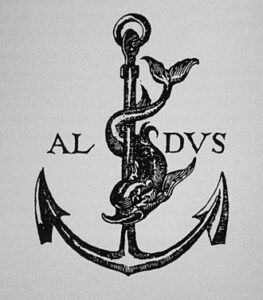
Writers will be interested in the Renaissance printer Aldus Manutius who adopted the phrase Festina lente and its symbol of a dolphin wrapped around an anchor for his publishing business. Interestingly, the dolphin / anchor symbol is currently used by Doubleday Books.

Manutius was a highly successful businessman who made significant contributions to the fields of printing and publishing. In addition to inventing the italic typeface, he produced the first small, portable books that scholars regard as the prototype of modern paperbacks.

So how does Festina lente apply to authors today?

Self-publishing has made it easy to publish without a quality gatekeeper, so the opportunity is there to rush an unpolished manuscript into production. On the other hand, it’s possible to overanalyze every word and phrase in an endless cycle of revision and never publish anything at all.

Each author has his or her own methodology from concept to production. Some are awesomely speedy in their work. Others (me, for example) are on the lente side of the equation. But in any case, we each build the finished product to our own specifications and on our own timeline.

So TKZers, how do you thread the needle between too fast and too slow? Do you have a word count quota to keep your pace up? What quality controls do you employ? How do you know when you’ve cleared the last hurdle and are ready to release the book into the wild?

* * *

“Slowly make haste, and without losing courage;
Twenty times redo your work;
Polish and re-polish endlessly,
And sometimes add, but often take away.”

— Nicolas Boileau-Despreaux

Festina Lente!

* * *

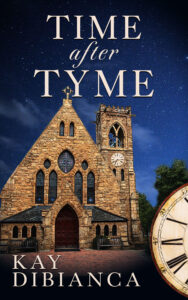
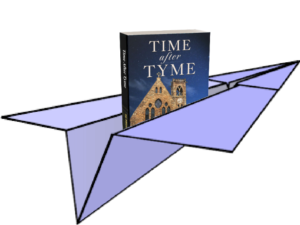
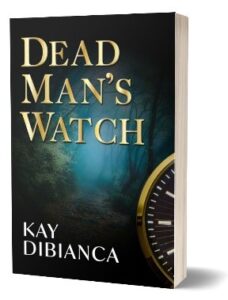
Nancy Drew meets Tom Sawyer in this new release, book three in the Watch series of cozy mysteries featuring Kathryn Frasier and Cece Goldman.

Mr. Tyme is dead, and strange, coded messages have been left in the chapel prayer box on the campus of Bellevue University. When Kathryn and Cece attempt to decipher the codes, they begin to suspect foul play. But things get dicey when a couple of misguided young girls get wind of the investigation and decide to find the killer on their own. It’s bedlam in Bellevue!

The Science of Gratitude

Several weeks ago, James Scott Bell posted a question about gratitude. There were a lot of responses to his query, proving writers are a grateful bunch. As we begin this week on final approach to Thanksgiving, I thought I’d take a deep dive into the meaning of the word gratitude to see if there’s been any research into its effects.

Wow. I found a lot. It turns out scientists are discovering a wealth of benefits that come from just being grateful. Remember how Mom used to say, “Count your blessings?” In an article entitled “How Gratitude Changes You and Your Brain,” researchers Joshua Brown and Joel Wong state, “many studies over the past decade have found that people who consciously count their blessings tend to be happier and less depressed.” They noted the positive effects of gratitude are felt even if you don’t share it. (It’s nice to see science is catching up with Mom.)

Brown and Wong also performed functional MRIs on some of their subjects’ brains and found those people who were more grateful experienced greater activation in the medial prefrontal cortex of the brain, an area associated with learning and decision making.

Dr. Robert Emmons from the University of California, Davis, is a leading expert on the science of gratitude. In his article “Why Gratitude is Good,” he lists a wealth of benefits experienced by people who regularly practice giving thanks. Some of these are

  • Stronger immune systems
  • Lower blood pressure
  • Better sleep
  • Higher levels of positive emotions
  • Relationship strengthening
  • Feeling less lonely and isolated
  • Increased daily word count in their writing (Okay, I made that one up, but it’s probably true.)

Now, I’m not advocating that we pretend to be grateful just so we’ll receive the benefits of better mental and physical health. But it’s clear that by sincerely affirming the good things we’ve received, we will enjoy happier and healthier lives. And we may make somebody else’s life a little better along the way.

Since we’re writers, let’s return to the question Jim asked several weeks ago, but with a narrower focus.

Name one thing about writing you’re grateful for. It can be a book you’ve read, a mentor who’s inspired and helped you, a blog you love, or any other person or thing you’re grateful for.

I am certainly grateful for all the contributors and commenters on TKZ. Happy Thanksgiving! Wishing you all a safe and healthy holiday.

“Gratitude is the sign of noble souls.” – Aesop

* * *


COMING SOON

Nancy Drew meets Tom Sawyer in this fun and chaotic romp through the third book in the Watch cozy mystery series.

With Time All Things Are Revealed

Running and Writing

Kay DiBianca

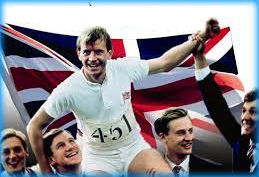
Chariots of Fire is one of my favorite movies. If you’ve seen it, you know it’s a great film about running. It’s well-constructed, beautifully rendered, and thought-provoking, and I occasionally watch it when I’m on the treadmill as an inspiration to keep huffing and puffing.

The film tells the mostly true story of two very different men, both exceptional runners, who are training to compete in the 1924 Olympics.

Harold Abrahams is a brash and confident law student at Cambridge University who boasts that he’s never lost a foot race. He follows it up by winning the College Dash, a race against the clock that had never been accomplished in the 700 years of its history.

Eric Liddell is the modest and devout son of a Scottish missionary who has determined his own future will be in the mission field. But Eric is also a remarkably gifted runner, and he wants to try his hand (and legs) at the Olympic track events before he returns to China.

The two men are headed toward an inevitable showdown, and their individual efforts comprise much of the film’s early scenes.

But the movie is about more than running and winning. That’s the obvious theme, the WHAT of the story. As the plot moves forward, a more subtle sub-theme emerges. The essence of the movie is the WHY.

Why were these men willing to spend so many lonely hours in the painful pursuit of a minute or two of glory that may not even happen?  A lot of people lust after a moment in the spotlight, but few are willing to put in the kind of grueling work these two did. There must be something deeper.

Perhaps the reason was revealed in a dinner conversation between Harold and Sybil Gordon, a talented singer/actress who eventually became his wife.

On their first date, she asks him, “Why running?”

He responds, “Why singing?”

“It’s my job,” she replies, but then immediately pauses and reflects. “No, that’s silly. I do it because I love it.

Ah.

Several scenes later, Eric has a conversation with his sister who is urging him to give up running to return to the mission field. Trying to make her understand his desire to compete in the Olympics, Eric says, “I believe that God made me for a purpose, for China. But He also made me fast. And when I run, I feel His pleasure.

* * *

Running and writing have a lot in common. To be serious in either field requires discipline, hard work, and perseverance. The runner paces himself/herself through long distances one step at a time just as the writer progresses word-by-word through his or her story. Along the way, one must develop the ability to deal with frustration, injury (running) or rejection (writing). These attributes are not for the faint of heart.

Now there’s no doubt the benefits in both areas are profound. Runners and writers enjoy time alone to explore their thought-worlds. Runners experience improved health, a sense of well-being, and even a boost to creativity. Writers often find a deeper meaning in their own existence when they offer the gift of their creative talent to the world. They might even make some money.

But is there something more? Like the runners in Chariots of Fire, serious writers seem to have a devotion to their chosen activity that transcends worldly reward. Perhaps it’s natural talent that draws them in, but there must be something deeper to hold them. Is it the challenge? The possibility of riches? The lure of fame? Is it the desire to create, to give a gift of oneself to a troubled world? Or is it simply the love of the craft?

* * *

The TKZ community is made up of writers who run the gamut from the relatively new like me to best-selling authors and authorities in the field. So there must be a variety of opinions on why each of us writes. I’d like to know. Why do you write?

 “Where does the power come from, to see the race to its end? From within.” — Ian Charlson in the role of Eric Liddell in Chariots of Fire.

* * *


Saving One Life Is Like Saving the Whole World

Kathryn and Cece find themselves in another tangled web searching for a killer in order to save the life of a friend. Could the dead man’s watch hold the key to the mystery?