About Joe Moore

#1 Amazon and international bestselling author. Co-president emeritus, International Thriller Writers.

Jump, and Figure Out What to Do When You’re Up There

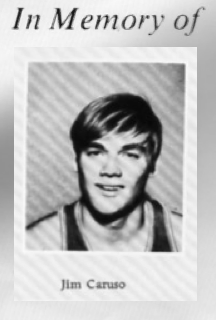
Got an email some time ago from a guy I played high school basketball with. Nice to hear from him. Those were glory days. We had one of the best teams in the city. I wrote back and finished off my email with this: “We had a great team, didn’t we? A bunch of hard working, normal guys . . . and Jim Caruso.”

Caruso. He was a year ahead of me and clearly not wired the same as I was. I was dedicated to being an athlete. I didn’t smoke, drink, party or stay up late. Caruso was the exact opposite. 

To give you a picture, we were once playing in a winter league at another high school. We drove over to Pacific Palisades on Wednesday nights, played, drove home. To get there and back we had to take twisty Sunset Boulevard. 


So I was driving back once after a game. It was a cold night in the canyon, and I carefully guided my Ford Maverick along Sunset. Suddenly, a convertible comes tearing by me. I don’t remember who was driving, but I do remember who was in the passenger seat: Caruso, a cigarette in one hand and a beer in the other, his sweaty blond hair blowing in the wind. I remember he was laughing. 

The thing was, Caruso had all this natural athletic talent. He was about six feet tall and built like a bull. And that’s how he played basketball. He had one speed, full, and I don’t think he ever took a shot that looked the same as any other. He was at his best when driving the lane and jumping in the air…then figuring out what to do once he was up there. Which was usually something very cool that either ended up with the ball going through the hoop or off the wall.

This drove our coach, John Furlong, absolutely crazy. Furlong was a strict disciplinarian and team-oriented coach. He yelled a lot. He got red faced mad at you if you messed up too badly. None of us wanted to be on the wrong side of Coach Furlong.

Except Caruso. He just didn’t seem to care. No matter how mad Furlong got at him, Caruso would take it silently, then go out on the floor and pretty soon do the same thing again. Which was why Furlong wouldn’t start him. But he couldn’t keep him on the bench for long because, despite everything, Caruso was too good not to be in the game, scoring points and grabbing rebounds. 

It was impossible not to like him. He had this infectious smile and he seemed to go through life with a certain damn the torpedoes, full speed ahead kind of joy. In pickup games he’d always be laughing, joking, talking smack and slapping you on the butt when you did something good.  
Jim Caruso graduated in my junior year. The next year we had another great team at Taft High, this one disciplined and predictable, much to the relief of Coach Furlong. Still, I couldn’t help feeling our team lacked a certain, what’s the word, exuberance? I missed seeing Caruso cutting through the key, doing his thing, a thing uniquely his own.

Then one Saturday I was in the gym shooting around and a fellow teammate came in.

“Hey,” he said, “did you hear about Caruso?”

I stopped shooting. “No, what?” I figured maybe he’d been picked up on a DUI or something.

“He’s dead,” my friend said.

I just stared at him, stunned. 

“Killed in a car accident,” he said. 

And I immediately remembered that night I saw Caruso in the convertible, and thought maybe this wasn’t such a shock after all. In fact, looking back, it was both sad and oddly predictable. That year, in our high school yearbook, there was one of those “In Memory Of” pages for students who’d died. It was the last any of us would ever see of Caruso, and that was hard to believe.

I don’t know what was going on in Jim Caruso’s life. The only thing we had in common was basketball. It was enough. I didn’t want to emulate his off the court antics. What I did want to do, when the situation was right, was go for the wild shot, the totally improvised move, just to see what happened. I knew you couldn’t play a whole game that way, but you at least needed to have that kind of fearlessness in your arsenal. 

I draw an analogy to writing here. Discipline, fundamentals and hard work are still the keys, but you have to be willing to “go for it” sometimes. You have to jump in the air and figure out what to do when you’re up there. Fearless.

I still have this indelible picture of Jim Caruso. It was in a pickup game, the first time I’d ever played with him, just before I started at Taft. His name had been whispered to me. Everybody knew about Caruso. I was a little bit intimidated at the prospect of playing with him. But then we started the game and I remember just watching him, marveling at his raw ability. Crunch time came and the game was tied. Caruso did his thing, driving toward the hoop and jumping up with a taller guy all over him. He seemed to hang in the air for a full minute. His legs were splayed and his left elbow (he was a lefty) stuck out like divining rod. And then somehow, some way, he got off a hook shot (it was the only shot available to him) and it banked off the backboard and through the net.

And he came down laughing and turned around and looked at me as if to say, “See? That’s how it’s done, son.”
And sometimes, it is.

First Page Critique: OF DREAMS AND STARS


This is an excellent example of a first page by an author who does a great job of creating a mood but who needs to pay more attention to basic grammar and punctuation. Reading this first page is similar to being seated in a restaurant and loving the promise of the menu but finding spots on the glasses and — worse — a crusty flake or two of something unidentifiable on the silverware:
Between Dreams and Stars
John knew that if he didn’t find shelter soon, that this would be the end.  It would be fitting though, for this icy wasteland was the first place that reflected how he had felt for the past three years, since she disappeared.
The shrieking wind reached another octave.  John brought his arms and head towards his chest. Even if he could have lifted his head up, it would have been useless.  The wind distorted the snow and ice into a blinding static. Groping along the frozen mountainside, he struggled to bring one foot in front of the other, sinking deeper into the snow.
He felt like he must be getting close now.  The Sherpa, who remained thousands of feet and a day and a half behind, claimed that what he was after was within hundreds of yards of the summit.  This peak, with rock as dark as the night, was a nameless crag amidst the Himalayas. Anonymous, jagged, and relentless, it challenged John’s resolve.  He had to know.  John moved his leg forward and suddenly there was nothing. The narrow rock he had been on, slid down the mountain.  Losing his balance, he reached out, hoping there would be something. His left hand found a slim crack, it was enough.  He swung his right hand around and he fiercely clung to cliff, heart racing with adrenaline, his chest heaving with rapid breaths.
He closed his eyes and focused, slowly bringing his respiration rate down.  He began to inch his way backwards until after an excruciating hour he made it back to the last place he had solid footing.  He collapsed to the ground. The near fall had sapped a lot of energy out of him.  He reached for his pack to grab some food.  To his dismay it was gone.
Let’s get the bad and the ugly over with first so that we can focus on the good. The problems begin with the first sentence, and that’s not a good way to begin: two “that(s)” when one would do nicely with a comma the author doesn’t need at all. Try this:  “John knew that it would be the end if he didn’t find shelter soon.” You can switch the clauses around if you want.  Just use one “that,” however. Additionally, the absence of that pesky comma makes for a smoother sentence and introduction. It’s the first patch of storytelling ice that lets the reader slip right into the narrative and heightens the suspense. Let’s keep going. The second sentence is a bit overlong, and needs more than a comma to break it up. I’d like to know who “her” is as well. It makes the tragedy of “her” disappearance a bit more personal.  Maybe: “It would be fitting.  The icy wasteland around him was the first place that reflected his mood for the past three years, since (fill in name of ‘her’) disappeared.”
Similar problems surface and resurface throughout this piece. The author uses too many commas,  an ongoing problem I have with my own writing as well). “His left hand found a crack, it was enough,” is but one example. It could be separated into two sentences or set off by a semi-colon, if one likes those.  There are also some problems with adjectives and metaphors and the like (the wind doesn’t reach a new octave; the shriek of the wind would. Static would not be blinding, but a haze would be). Sometimes the author tells us the same thing one too many times. If John is cold, hungry and on the side of a mountain and he reaches for a pack of food and it’s gone, we don’t need to be told that he’s dismayed. “(D)ismay” doesn’t cover it in any event; I’d feel as if someone had p**sed in my cornflakes if I hadn’t already dropped them down a crevice. Add some good old fashioned typographical errors (“…and he fiercely clung to cliff…”) and it is quickly apparent that this piece needs some hard-nosed red-pencil review.
So. There are spots on the glasses and the silverware isn’t serviceable. The menu, however, is impressive. The author creates a great mood immediately. John is cold and hungry and between a slippery rock and a hard place that is waiting several thousand feet beneath him. There was a discussion here several days ago about opening a story with the weather. That is fitting and proper to do here. The weather is the story — at least for the moment — and it is a dangerous mother indeed. The author sets it up well, demonstrating that John is driven and desperate. He otherwise would be back at the lodge or camp or whatever, riding the storm out in front of a roaring fire while trying to talk the reindeer sweater off of a snow bunny. There is also that high peak where John is perched. You don’t have to be acrophobic when confronted with a stepladder in order to appreciate John’s predicament.  

I’d like to see what happens next and find out what happened to the “her” that got him on the mountain and the snow. First, however, the author needs to rev up the snow blower and make the path accessible.

First Page Critique: END POINT

First the submission, and then my input: 
END POINT 
Mason Boll leaned forward in the driver’s seat of the van, squinting to get a better view of his target. Twenty yards away the focus of his attention—a tall, gangly youth named Brett Feinman—was chatting with a girl at the corner of two residential streets in a tony section of Santa Monica. The girl seemed to be doing all the talking. Feinman was mostly listening. Periodically he cast shy glances down at the sidewalk.  The girl wore a smug, flirty smile, as if she relished her power over the kid. She kept leaning in, touching his arm for emphasis.
Mason’s orders were clear: grab Feinman off the street and deliver him as promised. Today’s job would pay handsomely: well into five figures, with a promise of more to come. For that kind of money his employer demanded that everything go without a hitch. Feinman had to be delivered without any injury to the head. Not even a bruise. Mason wasn’t worried on that score. He prided himself on swift, error-free operations using the skills he’d honed as a military contractor in Iraq. 
From the van’s cargo bay behind him, Mason heard one of his crew crack his knuckles for the umpteenth time. What the hell were those two kids yakking about for so long? Mason wondered. Stifling a surge of impatience, he checked the van’s long side mirror for any sign of a cop or nosy Neighborhood Watch type. Except for some wild parrots doing acrobatics on an overhead power line, the street appeared deserted. Without taking his eyes off Feinman, Mason extracted a pack of cigarettes from the glove compartment. He lit a smoke. Then he settled in to wait.
There’s stuff to like here, storywise, but the author gets in his own way, stylewise, by reverting to passive voice, and non-specific language.  Consider this change to the first paragraph after a little cosmetic adjustment:
Mason Boll leaned forward in the driver’s seat of the van, squinting to get a better view of his target. Twenty yards away, a gangly sixteen-year-old named Brett Feinman chatted with a girl at a residential corner. Actually, Feinman mostly listened, periodically casting shy glances at the sidewalk while the girl flirted, occasionally touching his arm.  As in most adolescent conversations, the girl seemed to have all the power.
Okay, I added a detail there at the end, but by doing a little tightening and adding detail where there was only generality (sixteen-year-old instead of “youth,” for example), the piece feels more professional to me.
I would severely trim or even cut the second paragraph.  This is page one—the hook, the most important bit of literary real estate.  We don’t need to know that Mason had been a contractor in Iraq, and we certainly don’t need to know what his fee is.  If that stuff is important to the story, I would find a way to plant it somewhere else.  As for the mission to snatch the kid, let the reader piece that together from Mason’s actions.
Moving on, allow me to play with another paragraph:
Behind him, in the cargo bay, Paulie Knuckles earned his handle yet again, popping his finger joints for the umpteenth time. “Must you?” Mason asked.
“They get stiff,” Paulie said.  “You don’t want them stiff if I have to hit the kid, do you?”
“I don’t want you hitting him at all.  No bruises, remember?”
“No bruises on the head,” Paulie corrected.  “Everything else is free game.”
“I want this paycheck,” Mason said.  “Don’t screw it up.  We only hurt him enough to get him into the van.”
“Whatever.”
Mason let it go.  Paulie knew the rules, and he needed the money, too.  
“Come on, kids,” Mason grumbled.  “Either get a room or break it up.  I ain’t got all night.”
Okay, that wasn’t true.  He’d stay here for a week if it took that long to get the job done.
I tried to do a couple of things right there.  First, I gave a name to “one of his crew” and then gave some life to characters.  I have no idea if the changes reflect the specific desires of the author, but that doesn’t really matter in this case.  The point is that characters don’t become interesting until you hang a few details on the skeleton.

Note also that I was able to accomplish through dialogue and character interaction all of the important elements of that expository paragraph that I cut.  I’m still not convinced that the first page is the best place for that interaction, but this is a pretty clear illustration of how “showing” through interaction is better than “telling” through narration.

First Page Critique: Beware the Wolf

By Jordan Dane
Please enjoy Beware the Wolf, an anonymous submission for critiquing, My thoughts are on the flip side.

***
Hoards of onlookers pushed and shoved to the front as they congregated behind the yellow tape, all hoped to see the mutilated body. Police huddled, compared clues, and discussed the who, the how, and the why of the crime. They may work and eventually answer who and how, but the why will always be a mystery.

Derek Mitchell reached for the tape, ducked below it and entered the crime scene. He waved a moth from his face as he stepped around the temporary lights.

“Hey.” A scowling officer pointed at him.

He held up his ID. “I have authorization to be here,” he said in a low voice. The man retreated.

He turned his head, and studied every detail of the park. Hours before the killing, children played on the slides and swing sets feet from where the body now lay. Oak trees and crepe myrtles surrounded the area, which provided ample cover for the attacker to wait for a victim. The location would indicate a random murder. Only, he knew this victim wasn’t random. The why is what he needed to understand in order to stop future killings.

Uniformed officers searched the flora with flashlights looking for clues, bagging every gum wrapper and lollipop stick, while two detectives stepped back from the corpse and waved the medical examiner forward.

He arrived too late. He needed to examine the body and area before the authorities arrival to detect fragile clues. He approached the examiner. “I need a few minutes to examine the evidence.”

The man nodded and walked back to his van.

He took a deep breath and raised the crimson stained sheet. It appeared to be a wild animal attack. The skull peeked through deep gouges of skin and muscle. The throat open, exposed the larynx, which was the source of blood that now seeped into the ground. Eyes, wide, stared into nothingness.

A shiver ran down his spine. To the human eye, a dog or wild animal killed her. Only he knew the truth. One of his people killed her.

***

Critique

The author sets a dark tone from the start – a crime scene with a dead body—but the punch of the last couple of paragraphs might work better if their essence were moved to the front of this scene to put the reader right into the action as seen through the eyes of a different kind of detective. Derek could be looking right down at the body and gathering “clues” in his own way.

With Derek walking up to the crime scene—and with the scene description so generic without details—these parts could always be described later during the course of the next narratives, if they are still important to the scene. Readers of crime fiction are familiar with aspects of a crime scene. To write it so generally is almost like waving a red flag that the author is glossing over details they may not be as familiar with. This sentence is a good example of too generic with POV problems: Police huddled, compared clues, and discussed the who, the how, and the why of the crime. Derek would not know what’s in the heads of the police or what they’d been discussing, so this reads like a bit of author intrusion.

If the author clues the reader in from the beginning that Derek isn’t quite human, he/she can build in his “abilities” to read a crime scene like a wolf. Derek could sense the fear from the crowd as he searches the bystanders. (Killer sometimes watch the cops work at scenes where they killed.) He could search the faces through the eyes of a predator at night, for example.

Sniffing the air, he could be drawn to the smell of blood and the splatter before he even sees the body. He might overhear snippets of distant conversations between the human detectives mixed with chatter from the crowd, since he has wolf instincts. Don’t go too crazy with this. That could slow the pace. Tease the reader with the set up, but leave more for later. For now, the author should “think” and “react” like a feral wolf. Since dogs/wolves can recognize scents off specific animals, does he have the same ability? Does he “mark his territory”? (Just kidding, but you get the idea.) Use your imagination on what his instincts are and why he’s a cop working “special cases.”

Another point – the author describes the park, right down to the oak trees and crepe myrtles as making “good cover.” Trees and shrubs could be cover, but why mention the variety? This reads like the author is using Derek’s POV to set the scene in a manner that would not be natural for a cop. It’s forced.

I’m also not sure how Derek would know from the start that the victim wasn’t a random kill. He’d have to establish a relationship between the vic and the killer, which is typical cop procedure that is backtracked after more is known about the victim’s life and a timeline of her activities that led up to the killing. But the first step in any investigation is to ID the victim, which isn’t mentioned here either.

If the attacker hid behind cover and waited for any victim to show up, that’s random, yet Derek seems to have an unexplained reason for knowing this wasn’t a random act of violence. Rather than spell all this out in the first 350 words, the author might focus on Derek’s instincts and his ability to read a crime scene in his feral way and leave the details/clues of the case to be discovered later. The intriguing part would be Derek, his instincts and abilities, and the conflict he faces being an outsider to both worlds—as a cop who isn’t human.

The author mentions that Derek “arrived too late,” but I would venture an opinion that he could detect far more than the average human who needs specific evidence to build a case. He wouldn’t need a human ME’s opinion of what happened and fragile clues would be his specialty. Is Derek trying to stay ahead of the cops to wield his kind’s brand of justice? Does he keep secrets to that end? Or does he work with human cops to keep the peace? Derek is the ultimate “lone wolf” cop.

There is definitely enough here to make me turn the pages. There are inherent conflicts in this scenario of an outsider cop working his own cases, sometimes at odds with humans and perceived as betraying his own kind. Plus he’d be tracking a killer with greater abilities to evade pursuit—a classic outsider theme that could be fascinating to explore. Good job of conceiving this plot, character, and conflict!

Kunoichi: Critique

Chapter 1
“Dismantle the bridge after crossing it”
Wednesday, August 26

S.S. Palma Soriano, 120 miles off the coast of Sevastopol, Ukraine

They executed the entire row. Two dozen men on their knees. Hands tied behind their backs. Looking over the side of the freighter at a reflection of the quarter moon on the calm waters of the Black Sea. Just a few seconds of racket. Then the bodies fell forward. Bled out. The men in black military fatigues relaxed. Let the muzzles of their suppressed MP5 submachine guns face the deck. A stocky, Nordic-looking redhead standing at one end of the firing squad whistled. Pointed at them.

“Reload!”

They changed their clips.

The second half of the crew was brought out. Knelt next to the bodies of the first group, in deep, warm puddles of maroon.

“Fire!”

Racket. Fall. Bleeding.

The wheel lock for the bulkhead hatch spun around and the door opened. An Asian woman in her late thirties walked out onto the deck, a twenty-four inch sword strapped to her back, a ninja-to. Two men in Russian military officer uniforms, a general and a colonel, followed her. Behind them, two more men in black fatigues escorted out the white-haired captain of the ship handcuffed. The general said something in Russian to the Asian woman. She turned to the colonel. In heavily accented English, he said, “General Kornilov wants to know if your men have checked the entire ship yet. He also thanks you again for agreeing to meet him here for the exchange, Ms. Mochizuki.”

With an American accent, she said, “Please, Colonel Grieg, call me Chiyome.” The colonel put his hand to his chest, genuflected slightly. Chiyome motioned towards the row of dead men. “We checked every inch, could only find forty-eight. But I’m sure your smuggler friend has a few secret compartments you’re unaware of.”

Grieg translated for Kornilov, briefly discussed something with the general. Then he sauntered over to the ship’s captain, said something in Russian. The white-haired man answered, shook his head at Grieg. Emphatic. The colonel got in the old man’s face. Yelled.

Pointed at the crew’s bodies.

The captain shook his head again, repeated his previous answer.

Grieg stepped away, turned to Chiyome. “That is everyone.”

“Good.” She moved in front of the captain. Smiled. Brushed his shoulders off. Then unsheathed her ninja-to and decapitated him in a single fluid motion.

Kornilov and Grieg froze. Watched the head roll across the deck. Over the side.

“Well,” said Chiyome, taking a breath, “now that that’s out of the way….” The redhead came over to them with a laptop under his arm, opened it so that Kornilov could see the screen. Chiyome flung the captain’s blood off of her sword. “Fifty million American, as promised. All you have to do is press enter.”

Grieg translated.

Snickering, Kornilov moved to press the key.

Chiyome put the tip of her blade against his chest.  “Wait.” She pushed her sword into him, forced him to move back. “Colonel Grieg, would you be so kind as to ask General Kornilov if he’s spoken to anyone else about our transaction?”

The colonel did as instructed. Got a response. “He says no, not to anyone.”

“Is that so?”

“He swears it.”

She stared into the general’s eyes. “How honest.”

The two men who’d been holding the white-haired captain drew their pistols on Kornilov and Grieg. Forced them onto their knees.

Kornilov shouted. Grieg translated. “What’s going on? I thought we had a deal.”

Chiyome sheathed her ninja-to. Took the computer from the redhead. Pressed several keys. Held it so that Grieg and Kornilov could see a video feed of the general talking and having coffee with a man in a suit in an office. The symbol of the Russian Federal Security Service, the FSB, was visible on the suited man’s cup. The video cut out. Came back on a close-up of the suited man’s dead body on the floor of the office, Chiyome standing over him. Static. Chiyome closed the laptop, squatted in front of the general. “You could’ve at least switched cars before driving to Lubyanka.”

Kornilov spat in her face.

She wiped it off. Nodded to the man behind him.

Racket. Fall. Bleeding.

Chiyome came over to Grieg.

“No, no,” he said. “Please…I—I don’t even know what this is about. I am just a translator.”

“Unfortunate.”

She nodded again.

Racket. Fall. Bleeding.

My Critique

This action-packed opening grabbed my attention right away. It’s a great opening hook. I could easily envision the scene. And the terse, rapid-fire style lends itself to the thriller genre.

That said, some of the longer paragraphs could be more divided. For example, the one beginning “They executed….” I’d like to see a new paragraph start with, “The men in black military fatigues…” We are switching attention from the executed to the executioners, and this would be a good place for a paragraph break.

I wasn’t sure who was meant by “Pointed at them.” Who? Maybe change to “Pointed at his comrades.”

I started to get confused by the paragraph beginning with, “The wheel lock opened…” Three people are mentioned here and I wasn’t sure who was the translator at first. I think this could be made clearer. I’d start a new paragraph beginning with “The general…” And I might name the characters more quickly. Here’s my rewrite:

General Kornilov spoke in Russian to the translator, Colonel Grieg. The colonel turned to the Asian woman and said in heavily accented English, “General Kornilov wants to know if your men have checked the entire ship yet. He also thanks you again for agreeing to meet him here for the exchange, Ms. Mochizuki.”

You mention that the Asian woman speaks with an American accent. Is this necessary? Is she American? Yet she’s Asian. And the other guys are speaking Russian and accented English. It gets confusing.

Also, the second time you mention “the redhead”, I’d rather you say “the redheaded man or soldier.” I tend to think of redheads as being female.

By the third “Racket. Fall. Bleeding,” I am getting tired of this phrase and I’m ready for the language to have a more natural flow.

More importantly, whose viewpoint are we in? An omniscient presence hovering over this scene? While the action holds my interest and I get the gist of what’s going on, I’m yearning to be in someone’s head and to experience this emotionally from a viewpoint character. In other words, emotional impact is missing.

In the best thrillers where the story starts with a prologue and someone dies, the writer immediately puts you into a character’s viewpoint so that you feel their horror as they face the last minutes of their life. Thus you care as a reader about what happens to them. Action without reaction is merely plot.

What if you have the trio on deck during the initial executions? What if we’re in the general’s head? We’d experience his cold sweat, his twisted gut, his fear of discovery. With this emotional investment, we’d be eager to see who would bring down this Asian woman after she kills him.

It’s a great beginning, but it could be even better if the reader identifies with one of the victims. Or you could even make the viewpoint character one of the soldiers who is sickened by what he has to do and what he sees.

This sounds like an exciting story, and after this engaging opening, I’d certainly be curious to read more.

WHAT’S THIS STORY ABOUT?

I dunno. I got dis feelin’, ya see? Like, sometimes I start a story. Ya know? An’ da autha thinks it’s so important for ya ta listen–and dat you understand. Ya know? Yeah. So, he, well, he tells ya stuff that doesn’t really go no where because he’s workin’ up a head o steam to get to da point. Ya know what I’ mean? But you keep listenin’ cuz da way dis guy is tawkin’ you know there’s sometin’ interestin’ coming. I’m just sayin’.

You’ll have to excuse my fooling around with dialect, but, that was my immediate reaction to this first page I’m critiquing today.

Now, please understand that this first page has actually intrigued me with the narrator’s voice. I know this character dislikes public speaking even though he’s in front of a huge audience, and he is reunited with a mountain of a man from whom he wished he had  the chance to run. Even the few misspellings and wrong word choices were surmountable. My biggest concern is that from this first page, I have no idea what is going on.

No Who? (Well, two guys with gangster-sounding names.) What? Nope. Where? (A stage somewhere.) Why? Nope. When? Nope.

Again, it all can’t be delivered on the first page, but I’m lost. I want to know much more. I feel like I was asked on a blind date and all I have to go on is a fascinating voice over the phone. Otherwise, I’m in the dark.

That said, I’d take a chance on that date—cuz’, ya know? Sometin’ tells me I’d find a diamond in da rough here. Ya know what I’m sayin’?

So, hook me, baby. Don’t need much. Perhaps spend less time telling me about the voice Nicky hears in the crowd. Maybe, let him hear it, then  spend a few sentences telling me why Nicky wants to run. That way, when they embrace in that bear hug, I can be screaming, Run Nicky! Run!

Kudos to the author for the courage to share. I would read more. Tell me what you think.

Catalina Eddie

THE CROWD ERUPTED. Dominic Bellagio grasped a microphone and waived his appreciation to his audience. Hating public speaking, Dominic’s subsequent expression of appreciation was perfunctory and terse. Once completed, he offered a final waive. Just as he was about to leap from the stage, he picked out a familiar sound coming from the audience. A sound he hadn’t heard in years. Right away, he couldn’t believe it. Didn’t want to believe it. But there it was just the same. There was no mistaking Eduardo Catalanos’s big hoarsey laugh. Too late to make a run for it. Catalanos had plowed through the crowd, shoving people aside, as if they were little children. Now he stood at the edge of the stage grinning up at Dominic.

“Hey, Nicky! NICKY!” The big man shouted, arms opened wide. “How’ya doin’, bro?”

“Hey . . . uhhh, Cat. Wow! CAT!” said Dominic. “It’s . . . it’s been a while . . . buddy.”

Dominic jumped from the stage and the two men wrapped each other in a bear hug. His friends called him Cat; anyone else knew him as Catalina Eddie. An imposing sight—six-six and two-eighty-five—two coal-black eyes gleamed from a smiling face. To his credit, he looked a cheerful person. In truth, he was far from it. Favoring black, he was dressed in a simple black tee shirt and matching karate pants. His body was solid and tight.

“So, Cat . . . whaddaya been up to the past three years? Least it seems like three years since . . . since what was it now? Cartagena, I think it was. Huh?”

“Yeah, Nicky. That’s about right, bro.”

Grounding the Reader – First Page Critique


 Today’s first page critique is for a piece entitled Eyes in the Ashes. By now, you all know the drill, and my comments follow:
    Layla blinked, unable to see.  She strained trying to see something, anything in the pitch-black darkness.  She groaned. Her head hurt, much worse than a hangover ever had and the pain throbbed in time with her heartbeat.  She ran her fingers over her face, her eyes.  Her eyelashes fluttered against her fingertips.  They were open, nothing covered her face, but something sticky was all over it.  She tried to think. The last thing she remembered – walking out of the back room of the art studio. She’d heard someone in the outer room and when she walked out caught a movement out of the corner of her eye, someone grabbed her and then…. Nothing. 
She couldn’t remember. She must have blacked out.  She waved her hand in front of her face.  Why can’t I see?  I can’t be blind. She tried to sit up but something tangled around her body, some sort of soft, smooth material. A sheet?   She struggled to loosen it and sat up.  The movement sent her head  spinning. She groaned, pulled her legs up and dropped her head to her knees.  “Oh God” she whimpered and the sound echoed all around her.  
“h h h hello”  she whispered.
    Her voice echoed back to her.  Something rustled behind her and from nearby came a high pitched squeak.  She drew in a startled breath and shuddered. A horrible stench stung her nose and throat. She grabbed the cloth and covered her mouth, trying not to gag. Noises all around her now, squeaking, fluttering , scratching.  She struggled to her feet, swayed when they sank into the mushy ground. Something cold and wet crept between her toes.   
    She grimaced and stumbled forward, one foot at time, dragging the sheet with her like a security blanket.  She held one hand out in front of her, groping, searching, hoping to find something solid to touch.   Her throat stung and she took shallow breaths as she shuffled forward.           
    “Don’t pass out, don’t pass out”.


My comments:


I liked the visceral sense of foreboding that this first page evoked, and the author has created a situation that is both compelling and scary. I must confess, however, to finding myself a little ‘ungrounded’ at times in the scene. 


First off, I found the phrase that her eyes “were open, nothing covered her face, but something sticky was all over it”, awkward. I started thinking about how her eyelashes could flutter if they were sticky which made me question whether her eyes had sticky stuff over them or not (which is making the reader work too hard!).  Then, having discovered this stuff all over her face, why didn’t she try and work out what it was? (I was imaging all sorts of horrible stuff…) But instead she immediately starts thinking back to what had happened at the art studio. As a reader, I confess I wanted to get a stronger sense of the horror and panic she must be feeling. 


Two paragraphs later, when the horrible stench ‘stung her nose and throat’,  I wondered how she hadn’t noticed this immediately (had there not been a stench before then?) When the cold and wet seeped between her toes, I realized I had no idea whether she was clothed or not and, given I assumed she was clothed when she was attacked, wondered how she could notice the softness of the sheet around her but not the state of her undress  (or at least the fact that she didn’t have any shoes and socks on)?  This is when I think the author needed to think through the sensory experiences depicted and make sure they were consistent and well-grounded so that, even though the reader is as unsure as the protagonist about what has happened, we feel like we have enough information to keep reading without getting confused. 


I would also have expected her to scream or yell rather than whisper ‘hello’ (I certainly would panic in this situation!) but I was willing to go along with this reaction until I learned more about her as a character. On a more pedantic note, the sentence at the end of the first paragraph: “She’d heard someone in the outer room and when she walked out caught a movement out of the corner of her eye, someone grabbed her and then…. Nothing.”  is awkwardly phrased (and grammatically incorrect – is something missing perhaps?).  I think the author needed to proof read this page a little more closely. (For another example, the word ‘stung’ is used twice which is repetitive for one page).


Otherwise, I was intrigued. I would probably keep reading but I would want to be a little more firmly grounded, in terms of her sensory experiences and location, to feel fully engaged in the story.


What do you think? 

The Case of the Thin Man and the Soft Opening

Here is today’s first page:
The thin man bent down and scooped up a handful of burnt red sand from a beach that no longer existed. He let the coarse bits spill from his palm and into a small glass vial, a calm smile spreading across his wrinkled face.
The man crouched in silence as he capped the vial, looking out over the horizon of the Galapagos archipelago as the sun set across them, orange tendrils stretching out between the clouds.
“It’s hard to believe that such a magnificent place as this is now virtually wiped off the face of the earth,” he said, still looking out into the distance.
He spun around a moment later when no reply came, cocking his head to the side. “Don’t you think, Agent Ward?”
Agent Eli Ward turned his attention toward the man and nodded in agreement. “Certainly,” he replied, tugging at the neck of his stuffy crimson uniform. Though it was near sunset and the air smelled of oncoming rain, the weather was muggy.
“That it is…” the man pondered, inserting the vial into a round slot in the large metal box beside him. The box held several other vials, all filled with different sorts of minerals. “Things sure are different  in our day and age, aren’t they? Not as simple anymore.”
Eli withheld his reply and glanced at the device on his wrist, tapping at its glowing display. It was slightly larger than a deck of cards, secured to him with an elastic band. “Dr. Vanderbilt, we’re on a tight schedule, I must insist…”
“Yes, I know, I know,” Vanderbilt replied in disappointment. He pushed himself to a stand, closing the lid on his collection of vials. He lugged the box up with a small grunt and came alongside Eli.
Eli tapped the display a couple times more. “Alright,” he said. “I think we’re ready. Let me see yours.”
Vanderbilt held his arm out to Eli, who took it. The device on Vanderbilt’s wrist was smaller than that of Eli’s, about the size of a digital watch. Since it received commands remotely from Eli’s device . . .
***
We start off without knowing who Vanderbilt is. He is called “The thin man” (a designation that should be reserved only for William Powell). But Vanderbilt’s identity is revealed a few paragraphs in. So why is it kept a mystery for six paragraphs? There’s no need for this.
Unless you want to create an ongoing mystery about who someone is, use their name up front. This is especially crucial for this piece, because we are not in a close POV. We are looking at this scene through objective and distant lenses. It would be much better if we were deep inside either Vanderbilt’s or Eli’s head throughout.
But I’m confused as to who the main character is supposed to be. The first four paragraphs make it seem this scene belongs to “the thin man.” But since he would not think of himself as “the thin man,” we’re either in an omniscient POV or with another character.
The only other character is Eli. But since he was not paying attention to the thin man, he can’t have observed what was going on in the first four paragraphs.
We are therefore in omniscient POV by default. Omniscient POV is not much in style anymore, save for epic length historical or speculative fiction. In what I am assuming is a thriller, it’s virtually non-existent. For good reason: Readers of a thriller get invested in it in direct proportion to their care for a character in trouble.
Every time a reader starts a novel, he’s asking (subconsciously) Who am I supposed to follow? And why?
We don’t get answers to those questions here.
This is also what I call a “Here we are in sunny Spain” opening. That is, it feels as if it’s mainly for set-up. Information is being given to us unnaturally. For example, this bit of dialogue:
“It’s hard to believe that such a magnificent place as this is now virtually wiped off the face of the earth”
This doesn’t sound like what the characters would really say to each other. It’s the kind of thing each character already knows. Dialogue such as this is the author feeding information to the reader, and true characterization suffers.
So here are my suggestions:
1. Whoever is the main character in this scene, use close 3d Person POV throughout. Everything from inside that one character’s head.
2. Cut these two lines of dialogue and adjust accordingly:
“It’s hard to believe that such a magnificent place as this is now virtually wiped off the face of the earth”
“Things sure are different  in our day and age, aren’t they? Not as simple anymore.”
  
Other thoughts?
***
(Commercial)
Pretty good is no longer good enough, whether one wants to be published traditionally or make a buck self-publishing. For writers interested in a 2 day intensive workshop designed to get your fiction to the next level and beyond, I’m coming to Austin, Nashville and Cincinnati this year. Details may be found here

First Page Critique: ROAD TO ARRAY

By now, we all know the drill.  First, the submission in its entirety (the italics are mine), and then I’ll see you on the other side:

Daniel watched the rain drops rolling down the windshield. The drizzle had quickly become a downpour, but he couldn’t use the wipers, couldn’t risk the burr of the engine.  The car’s lights were out, and the Crown Victoria hidden in the alleyway where no one could spot it.
“Rick.”
He whispered instinctively, then remembered that this time they weren’t using the communication wires. Rick had argued the situation was dicey enough without a guard pointing out the tiny earpiece and microphone. Daniel shifted in his seat. He should have insisted. Not that it would have made a difference. He was a rookie on his first major assignment. Rick had been on the force for a decade.  His partner made a decision, and that was that.
Daniel glanced at his watch again. Rick was ten minutes late, which wasn’t very long in this weather, but he couldn’t shake the feeling that something was wrong.
“Ah dammit.” Before he changed his mind, he rushed out the door. He was drenched in an instant. 
            Removing the gun from his shoulder holster, he pointed the Browning .38 at the ground as he slid alongside the apartment building. He and Rick had scouted the area earlier, but he peeked at the entrance again from around the corner. He saw no one. He would have welcomed some security on the place, even a sniper on the roof, to ease the queasy feeling forming in his gut.

My first thought in reading this is that I’ve seen it before—a hundred different times in a hundred different cop shows.  I realize even as I write the comment that it’s a tad unfair criticism, because at one level, we’ve all seen elements of every story before.  In this case, though, there’s not much to differentiate it.  A stronger narrative voice would have helped.  Some distinctive action would have helped, too.

When we did this critique exercise last year, I believe it was either Jim Bell or Joe Moore who verbalized something that I had always felt, but had never quite put my finger on: It is always, always, always a mistake to start a story with a weather report.  That first paragraph is arguably the most valuable slice of real estate in any book, and I hate to see it squandered with rolling raindrops.

In his haste to bring readers into action, this author neglected to give us a sense of the stakes.  Weather is not tension.  It’s barely even atmosphere.  By placing a barrier of non-communication between the two characters in this scene, the author robbed himself and his readers of an opportunity to care about the characters.

The issue of the “communication wires” bothers me at several levels, beginning with the phrase, communication wires.  I’m not a cop so I don’t know their lingo, but that phrase strikes me as not-legit.  I was an emergency responder for many years, though, and I know my way around assault operations, and I have heartburn with “a rookie on his first major assignment” getting to make decisions regarding something as essential as the communication protocol.  As the senior team member, Daniel is responsible for everything that happens on this op, and he comes off as a real toad when he tries to palm that responsibility off on the new guy.
 
How, exactly, does one whisper instinctively?  Is that really something we’re born with?  I think you might have been going for reflexively, but even that’s not quite right.  Even more importantly (certainly for Rick), ten minutes is a freaking eternity when an op is in motion.  What could Daniel possibly have on his calendar that was more important than pulling his partner out of a jam?  (This, by the way, is why communication protocols exist.)

If Daniel preferred to have additional security, why didn’t he call for it?  Just because Rick ran off without a radio doesn’t mean that Daniel didn’t have one either.  And if firepower is the thing he’s worried about, why the hell is he advancing on the apartment with only a “Browning .38” (whatever that is)?  Surely, he’s got some higher-caliber toys in the trunk of his Crown Victoria, and if he doesn’t there should be a reason.

I’m sorry to say that this piece really didn’t resonate with me.  It read as research-by-television series, and it just didn’t work.  Not knowing what lies ahead in the story, I will venture a guess that this part of the story might be better told from Rick’s point of view.  Assuming that he’s having a bad day on the other side of Daniel’s suspicions, I propose that Rick’s world view might be more interesting.

Setting the Stage: A Writing Exercise

by Michelle Gagnon

For a change of pace today, I thought we could tackle a writing exercise. One of the things that’s struck me during our critiques lately is that I’m not alone in sometimes neglecting to include enough descriptive prose to set the stage for my stories. In fact it’s such a weakness of mine, I rarely add much detail in first drafts. I get the plot and dialogue in place, then go back during the editing process to flesh everything out. In all honesty, scenery description is my least favorite part of the craft of writing. 

For one, remembering to include all five senses is always a struggle; I have a terrible sense of smell, and have to remind myself that my characters might not. Also, describing anything from a basic room to a crowd scene is rife with pitfalls; there isn’t a writer alive who hasn’t caught themselves typing out a trite cliche about the shape of the moon, or something similar.


So when my book is set somewhere specific, I rely heavily on photographs. The corkboard behind my desk is always layered with photos representing nearly every scene in the manuscript. I find that looking at them triggers sense memories, especially if I’m writing about somewhere I’ve been. I remember how streets in Paris are always wet in the morning, having been freshly washed by maintenance crews just before dawn. Or how the light in Central Park shifts dramatically season by season, or how the air in South America just tastes different (maybe my sense of taste is stronger, to compensate for that lack of smell).


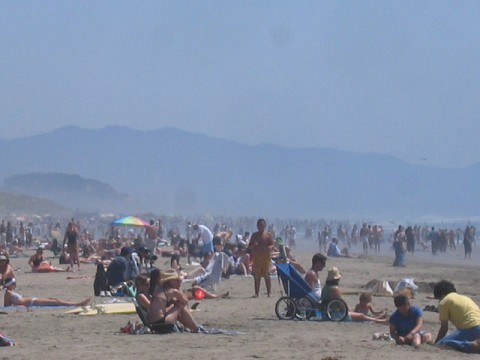
Below I’ve pasted three photos. Pick any one and describe it in a paragraph, or use it as the jumping off point for a scene. Take care to avoid overused metaphors: “The sea was dark as slate,” for example, or, “The sky was as blue as a robin’s egg.” 


Bonne chance!