
by Debbie Burke
Here’s a familiar trope in crime fiction: an author protagonist details a fictional murder that the author is later accused of. The book they wrote is used as evidence to prove their guilt or innocence.
Today’s True Crime story is a real-life case that carries that trope to the extreme.
In 2000, a Polish businessman named Dariusz Janiszewski disappeared. Four weeks later, his body was pulled from the River Oder near Wroklaw in southwest Poland. He had been tortured and tied with a rope noose around his neck that fastened to his ankles, pulling him into a painful backward cradle shape. If he struggled against the bonds, the noose would tighten, strangling him.
According to a scholarly paper (public domain) by Katarzyna Struzińska entitled “The Murderer as Writer, Storyteller and Protagonist: The Case of Krystian Bala”:
“The autopsy revealed that Janiszewski most probably died because of ligature strangulation; however, owing to some indicators showing that he was still alive when someone dropped him into the river, the possibility of death by drowning was not excluded [34]. Furthermore, the traces left on the deceased’s body showed that he had been beaten and starved for several days before he died.”
The gruesome crime shocked the community but there were no leads. The case went cold for several years.
Then in 2003 an author named Krystian Bala self-published a grisly novel entitled Amok that described a murder with specific details similar to Janiszewski’s death. The protagonist was named “Chris”, a variation on “Krystian.” Chris was portrayed as an arrogant narcissistic sadist who pushed beyond the limits of social, religious, moral, and legal boundaries.
A detective named Jacek Wroblewski had been working the unsolved cold case. When he learned about Bala’s book, he pursued that line of investigation, gathered some damning circumstantial evidence, and questioned Bala.
The alleged motive was jealousy for an affair between Janiszewski and Bala’s wife. A polygraph was inconclusive.
Bala reportedly confessed to the murder but then recanted.
Per Polish law, he was released after 48 hours because of insufficient evidence.
Bala made public accusations against the police, claiming he’d been kidnapped, a plastic bag placed over his head, and tortured during questioning. His claims were disproved but the media had already kicked into high gear. The sensational case went viral with articles in Europe as well as international publications including The Guardian and Time.com.
Without physical proof or eyewitnesses, the detective continued to collect more circumstantial evidence. Phone calls to the victim shortly before the murder were traced back to Bala. He had also done online research about hanging and strangulation. Within days of the murder, Bala had sold Janizewski’s stolen phone through an internet auction site.
Meanwhile Bala vehemently protested his innocence, claiming an “oppressive police and justice system” had “treat[ed] the book as if it was a literal autobiography rather than a piece of fiction.”
In 2008, an in-depth account by David Grann was published in the New Yorker after Bala’s trial. Grann examined Bala’s background, influences, and beliefs. It’s a long article but gives considerable context detailing why many people were convinced of Bala’s guilt.
Grann’s article quotes Bala’s friend and former classmate Lotar Rasinski:
“He would tell these tall stories about himself,” Rasinski says. “If he told one person, and that person then told someone else, who told someone else, it became true. It existed in the language.” Rasinski adds, “Krystian even had a term for it. He called it ‘mytho-creativity.’ ”
Struzińska’s paper observes:
“Bala’s case might be one of the first stories that drew global attention to such a possibility of crossing the border between facts and fiction; nevertheless, this case of a writer-murder is not one-of-a-kind. For instance, in 2018 world media extensively covered the story of Nancy Crampton-Brophy, an American romance novelist, author of the novel The Wrong Husband and the essay How to Murder Your Husband, who was accused of killing her spouse, and in 2017 there was similar coverage of the case of Liu Yongbiao, a Chinese author (e.g., of the novel The Guilty Secret), who was sentenced to death for murdering four people after a 20-year-old cold case was solved [cf. 14, 17, 23, 26].”
During Bala’s 2007 trial, the court decided his book couldn’t be treated as evidence but still found him guilty based on other circumstantial evidence. He was sentenced to 25 years. He appealed and the case was retried, again resulting in conviction. He continued to protest, ultimately presenting his case to the Supreme Court of the Republic of Poland. They decided against him, which ended his legal recourse.
The case inspired Dateline-style true crime shows in Europe. Grann’s New Yorker article was reportedly optioned for film.
Despite the publicity, Struzińska’s paper says Bala admitted his book only sold a few thousand copies. He claimed to be writing a second book while in prison but apparently it has not been published.
Grann’s article quotes Bala as saying:
“I’m truly convinced that one day my book will be appreciated,” he said. “History teaches that some works of art have to wait ages before they are recognized.”
Bala achieved notoriety but the jury’s still out on the author’s “work of art.”
~~~
At TKZ, we often joke about police knocking on our doors based on our internet research.
As a writer, how consciously do you draw the line between fact and fiction?
~~~
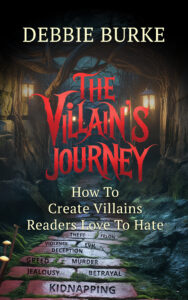
In The Villain’s Journey-How to Create Villains Readers Love to Hate, discover fictional and real-world villains to inspire your own stories.
Fascinating case, Debbie! Have you heard of Jack Unterweger, crime writer turned serial killer? I wrote about it here, if you’re interested: https://www.suecoletta.com/crime-writer-turned-serial-killer/
Wow, Sue, what an incredible, chilling story! I’d say thank you for sharing but that doesn’t sound quite right. Better to thank you for your always-comprehensive research.
I get some of my best ideas from thie news for my antagonist.
Pat, my villains are pieced together from news, fiction, biographies, experiences of others, and despicable people in real life. I often don’t remember the original inspiration for them b/c they come to life on their own.
How did you miss the book by the ex-NFL star/actor, OJ Simpson. “If I did it”?
Just in case, my children know what books need to be burned well away from the house should someone I dislike have an “accident”. And no. I was nowhere near the JB Bridge officer.
Alan, I didn’t forget OJ, just ran out of space.
Don’t worry, I never saw you near that bridge.
The ‘knock on the door’ can evidently be a concern. During my research into how to simply but credibly disarm a nuclear weapon from the early ’70s, Copilot kept disclaiming any ability to provide that information—same with ChatGPT. I finally had to use Qwen to get what I needed. I’m still waiting for the knock.
Marshall, I’d be more worried about someone researching how to arm a nuke than disarm it.
Fascinating, Debbie. What a horrific crime. Bala sounds like a real scum. I hope his book dies a death in the cellar of Amazon sales.
An egotistical sociopath without a shred of conscience. Sounds like a promising fictional villain, Kay..
I couldn’t find the book at online sellers. Ain’t that a shame!