
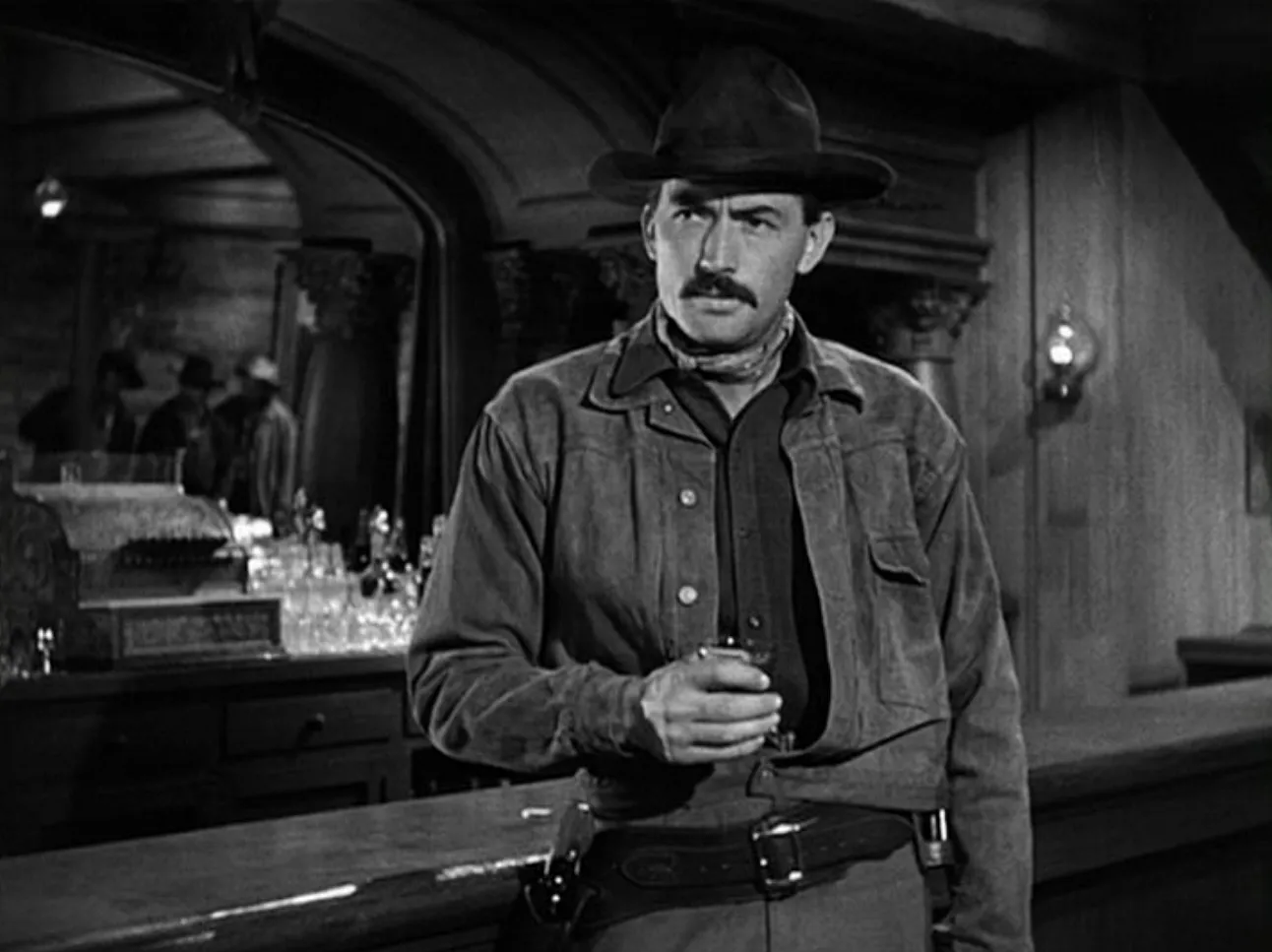
Gregory Peck in The Gunfighter (1950)
Gregory Peck is one of my favorite actors. Most know him for his immortal portrayal of Atticus Finch in To Kill a Mockingbird. But he turned in many brilliant performances over his long career, sometimes unappreciated because his acting was subtle and low key. (If you want to sample Peck’s acting chops, two of my favorite performances are in The Gunfighter and The Big Country.)
Once, Peck was standing in line with a friend, waiting for a table in a crowded Los Angeles restaurant. They’d been waiting for some time, the diners seemed to be taking their time eating, and new tables weren’t opening up. Peck’s impatient friend said, “Why don’t you tell the maitre d’ who you are?” Peck said, “No. If you have to tell them who you are, then you aren’t.”
Reminds me of the old saying: “Be who you is, ‘cause if you ain’t who you is, you is who you ain’t.”
Which brings me to you, fellow writer. There are three “selves” we spin like plates.
First is the self presented in the writing. The major aspect of this is voice, often talked about but rarely defined. (Someone wrote a book about it). Voice is at the center of the whole AI debate. If you use AI’s words, you ain’t you who is.
By the way, you may have read that Anthropic’s Claude is now adding “watermarks” to generated text (and text that has been edited with it). That invisible coding stays with the output when it’s copied and pasted into a document. This has teed off a large number of Claude users who’ve canceled their accounts. But other models will probably follow suit. The way to avoid this detection is to write your own words. Shocker!
The second self is your public profile and social media presence. Choose wisely how you go about it. I try to follow Ben Franklin’s admonition: “Speak not but what may benefit others or yourself; avoid trifling conversation” (and, I would add, ranting and raving. That never brings in new fans, but it does alienate a segment of your current and potential readership. Up to you whether you want more readers or fewer).
Also be wise about how much time you spend on social media as a marketing tool. Don’t make the mistake of thinking social media is a great way to sell books. It never has been. Recently, a trad-pubbed author dropped $10,000 on a “TikTok influencer campaign.” Result? Three (3) sales. “It just doesn’t convert,” says the author. “Views are not sales. People watch a 40-second video about your book the same way they watch a video about a raccoon eating grapes: entertained, moved even, and then they keep scrolling.”
The last self is who you are in private, with friends and family. This is the place to “let your hair down” (obviously just an analogy for some of us). You get your support here, your solace, and sometimes a needed kick in the pants. But it’s all done “behind closed doors,” which is a good place to keep it. Guard your writing time, but don’t hoard it. Be present with people, knowing that your writer mind will always have a little wander in it. Many a time Mrs. B has said something like, “Jim? Jim, are you listening to me?” And I’ve thought, That’s an odd way to start a conversation.
If I may paraphrase Polonius: “To thine own selves be true, give each due consideration, and it must follow, as the night the day, thou canst not then be a phony baloney to the reading public.”
What about you? Have you given much thought to your own three “selves”? Any other advice or warnings to offer?
<!– wp:social-links –><ul class=”wp-block-social-links”><!– wp:social-link {“url”:”https://gravatar.com/jsb54″,”service”:”gravatar”,”rel”:”me”} /–></ul><!– /wp:social-links –>
 Come close, youngsters, for I want to tell you of a magical time, not so very long ago, but before you were born, when, in our fair land, it was possible to disagree with someone without getting ridiculed, doxxed, canceled, mobbed, shot, stabbed or otherwise eliminated from life or society.