Resistance is Futile

by Clare Langley-Hawthorne


I had great difficulty rousing myself to write this blog post as we are down at my sister’s beach house on the amazing Great Ocean Road and so I am definitely in holiday mode! This is the Australian summer and we are taking our last opportunity to enjoy surf and sun before the school year starts next week. Anyway, I’ve been thinking a lot about resistance lately – those pesky barriers that seem to get in the way of actually writing. Call it procrastination. Call it fear. Whatever it is, it’s resistance. The brick wall that prevents you from getting the job of writing done.


For me resistance takes the form of a little voice inside that makes me doubt my own abilities. It goads me into avoiding the difficult task of facing an empty page and quite often, it works. To overcome this I remind myself that writing is my profession and, no matter how daunting the task sometimes seems, I just need to roll up my sleeves and get down to it. I succeed in overcoming ‘resistance’ in this way..well, most of the time…


I am just coming down off the high of finishing my WIP and so a new project beckons and with it the dreaded empty page…and so the little voice starts and I have to draw upon all my will power to combat the ‘resistance’. It’s kind of like the anti-force!


At least for the next few days I can be in holiday mode but then the real work starts. So what kind of resistance do you face when writing? Is it a little voice that undermines your confidence or an external force that tries to divert you from the writing course?


How do you overcome resistance? 

Muscling the Muse: Or Three Easy Steps for Talent on Demand

By: Kathleen Pickering http://www.kathleenpickering.com

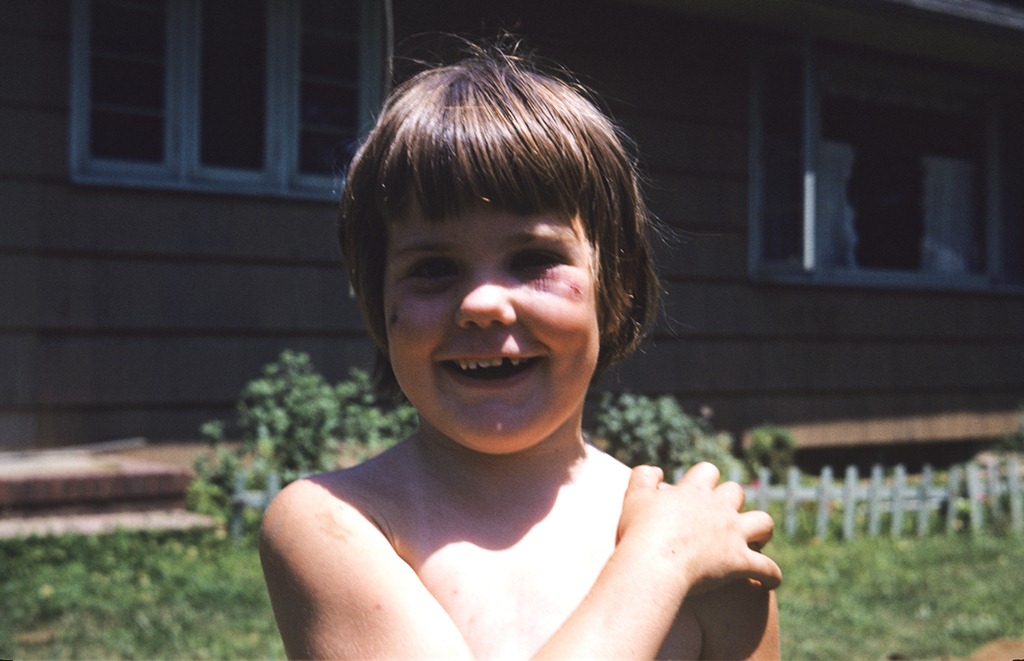
I was a sweet, but scrappy kid. Caught a couple of bruises along the way, but as you can see from the photo, whatever tangle caused the shiner, it wasn’t enough to get me down. I was quick to smile.
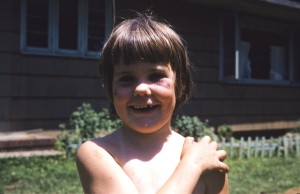
black eye

That’s how I feel about the writing process. You can’t let challenges get you down. I figure it this way: Writing is fifty percent talent, fifty percent Muse. Both need my undivided attention to stay strong. Every other obstacle will fall away with these two muscles pumped.

As stated above, talent for one’s vocation is a muscle that must be exercised. Otherwise, the gift atrophies. So, I write and write, and write some more. At different times, in different places or adhering to a schedule for a particular project. Whatever works. I do it.

There are talented individuals in  every field  who never realize their genius because they never exercise their gifts. Worse, some never know they possess unique skills at all. To that end, I highly encourage every thinking soul to explore what excites them. Always investigate topics that pique your interest. My mantra: Honor your passion. (Unless, of course, you are a terrorist or a serial killer. Then I suggest you seek help!)

My passions are writing and public speaking. These are the muscles I exercise. As we all know, the more we work our muscles, the more defined they become.

It is my sly little Muse, however, who until recently had me wrapped around her finger. For way too long I let her govern my work with her whims and fancies. Not any longer. When my editor asked for three more proposals, I realized I could not just wait for my Muse to wave her creative wand. She needed muscling.

So, you ask, how do you muscle your muse? I have three simple but important rules.  While they require determination, they are so easy that your Muse won’t even know she/he is being manipulated.

1. LOVE YOUR MUSE. You may say, of course I do! But keep in mind the self-critic can be cruel to our adventurous Muse. No matter what your talent, your individual creative view is unique to you. You have to respect that fact and let nothing damage your self-worth. It is your individuality that makes you one with the world. You might say, Not so. The world would carry on just fine without me. I say, the world might carry on if you were not to love and exercise your muse, but the world–and you–would sadly miss a profound part of creation. Otherwise, why are you here in the first place?

No one else sees the world quite as you do. It’s the Kurt Vonneguts, the Picassos, the daVincis, the Einsteins, the Maria Tallchiefs, the Luciano Pavarottis and Maria Callases, the Stephen Kings, The Kathleen Pickerings (just checking to see if you’re still reading) and YOU who make the world go ‘round.

All artists have their critics. They all have their admirers. Neither matters. You and only you matter to your Muse. If you don’t love what your Muse offers, you will not let him/her create. Your talent will atrophy and you will wonder why you have become a sarcastic and bitter being rather than a shining light.

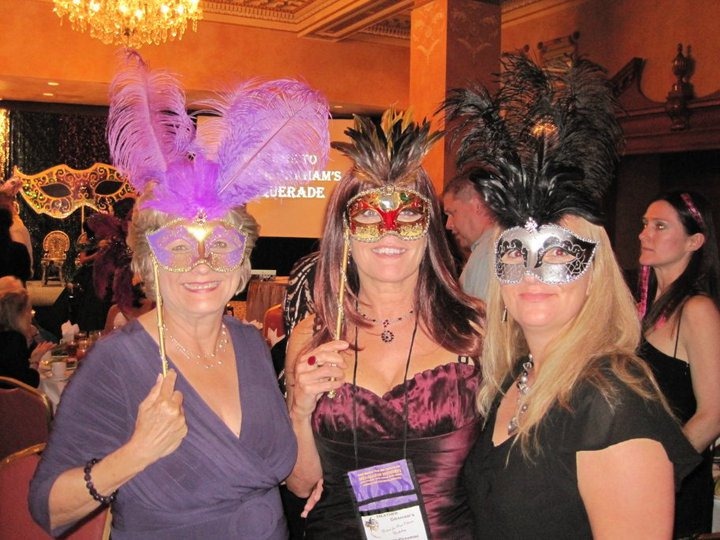
writersforneworleans-2010At Heather Graham’s Writers for New Orleans conference with authors Linda Conrad and Traci Hall.

2. FEED YOUR MUSE. Now that she/he is loving you back, you must feed your Muse. What others call writer’s block, I call a poor diet for the Imagination. The Muse needs exposure to everything delectable—and sometimes things not so tasty in life. That means your Muse accompanies you on your travels. Let her be the finger that taps the keyboard or opens the books on your research. Let your Muse listen in on conversations and initiate a few of her own. Then Listen. Watch. Smell. Touch. Devour. Your Muse will not disappoint you. With love and food, your Muse will be generous in return. You might even get a belch for a good laugh out of the deal. That works, too!

3. LET YOUR MUSE FLY. Muses are flighty creatures. They may burrow. They may forage. But, once they feel safe, they fly. Your job as an artistic soul is to give your Muse the updraft, the cliff’s end, the launch pad to soar. Your Muse may create unusable material at first, but the more he/she exercises the muscles in those wings, the more beautiful the magic dust that will alight from them. Don’t be afraid. (Fear is an awful four letter word that shall not be used.) Love your Muse enough to let him/her take a chance, test an idea. Create. A Muse’s wings may be as delicate as a dragon fly’s or as powerful as an eagle’s. Only by launching from that artistic limb of “what if” will you know which wings your Muse possesses. Think of the freedom!
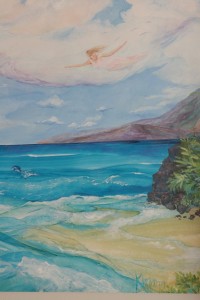
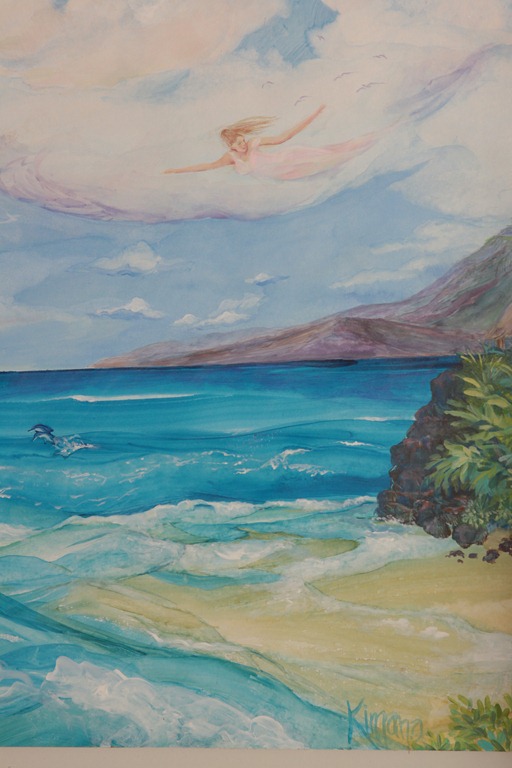
dreaming aMy artist friend, Kimana Evans, once asked me how I see my myself. I told her that in my dreams I fly. She gifted me with this wonderful water color of me . . . or shall I say, my Muse. (Can you see me flying in the clouds?) I love this artistic expression created by my friend. This painting hangs where I write. It reminds me of my passion, talents and Muse every day.

I’d say I’ve come a long way from that scrappy kid with the shiner! I may have had to muscle my way into a foothold in my creative world, but I have certainly carved out my ground. I know that by honoring my talent and adhering to the rules for my Muse, I will create the impression that I was born to make. So far, the journey has been exciting, challenging and way too much fun to be called work. I am a grateful woman.

So, tell me. What do you do to keep your talent fresh and your Muse loved, fed and flying?

Happy Writing or whatever your talent may be!

PS: By the way, Kimana would be happy to create a painting for you, as well. You can find her on Facebook: www.facebook.com/people/Kimana–Evans/ Tell her I sent you.


Revision, Revision, Revision

by Clare Langley-Hawthorne

I’m on the final round of revisions to my current manuscript and considering a new editing process. In the past I have always tended to bite off more than I can chew when revising – trying to look for plot inconsistencies, character missteps (blue eyes one chapter, brown the next), typos, repetition, dull dialogue, boring exposition and errors all at once. What I’ve found is that about midway through the process, I get completely mired in the editing process and start dismantling what is essentially the final version of the novel, as I lose confidence in both the story and myself (you know, the usual author angst!). This time, however, while I am waiting for beta reader feedback, I am looking at adopting an alternative approach and would love some advice.


My current system involves editing throughout the writing process – from editing the first draft (which pretty much equals rewriting) to doing a final line edit on the completed manuscript before I turn it in to my agent. It’s what happens in these later stages that I need to refine. What I am considering is parsing the final editing into multiple discrete re-reads looking for:

  1. Plot/timeline issues alone – checking for holes, inconsistencies, and errors.
  2. Character issues alone – checking for inconsistencies, misdescriptions etc.
  3. Stylistic issues – repetition, boring/dull descriptions etc.
  4. Final line-edit – looking for grammatical and spelling errors and typos.


Although I’ve looked at all these areas already (multiple times!) while editing previous drafts, with the final version, it’s time to have one more look as invariably I still find errors. My concern is that trying to re-read the final manuscript multiple times to look for these discrete set of issues will be time-consuming and slow (and may possibly drive me demented!). 


What I’d love is feedback/comments on what final editing process has worked for you. 

  • Do you try and do everything all at once? 
  • Do you reread with specific areas in mind? 
  • Do you get others to do a final line-edit? 
  • How do you balance the need for one last look at all the critical areas in a manuscript against being driven crazy after the 50th reread?  


An Old Peg In A New Hole

John Ramsey Miller

I’m am not old. I hear that all the time, but I am sixty-two and often I feel old. I see myself working at a slower pace than I used to, and not just with the writing, but with most things. I have never been an organized person, and once in a while I jump into the chaos of my desk, my closet, my tool shed and put things on hangars, in ordered stacks and in proper cubbies. I admire the organized Miller world, and for a few days I keep the organization organized. After a few bits of time have passed I have scattered my tools all over the property, my desk is buried, and my closet looks like I’ve taken it back to college with me. It’s just me.

Here’s the thing. I need to be organized to write. We all do. I remember the stories of Kerouac’s editor getting his handwritten-partially typed manuscripts as loose sheets and legal tablets all shoved into a grocery bag or two and I smile. None of us believe that could be true, even though I have presented my financial dealings to my accountant that way.

I have accepted some of the changes in our fluid (think mountain stream rapids) world better than others. I still do not understand how Tweeting can be any more effective than going out into the back yard and barking what I’m doing at trees. I type something and it does what? I have a Tweet account and a few followers, but I have nothing going on in my life that seems worth telling people. I’m delighted to have followers even though I have no expectation of holding their interest.

Recently I looked at my writing /dining table made from cherry and walnut harvested from our Mississippi property, milled, planed, and built by my little brother). You might remember how I described it back when I started my rewrite- with the legal tablets, two dozen sharpened pencils, index cards, long roll of paper for time-lining, pens, highlighters, a laser printer, my lucky charm (A buckeye my father gave me when I was about to start my first high-school newspaper column), a huge McCarty bowl for balls of rejected notes, and all ordered in the manner of an actual anal compulsive. Looking back on my life is more like standing in the stern of a speedboat admiring the towering rooster tail. Now weeks later, the order is a dim memory and I found myself peering into something akin to a coal mine.

I decided last week that what I needed was a computer program that would allow me to have everything organized and at the touch of (both) my trigger-fingertips. I type with two fingers, while staring at the keyboard. I didn’t fail typing class in high school, I was asked by the instructor to find another sort of machine to abuse. So I asked Joe Moore if such a program existed that would think the way I think, only organize things. I wanted it to accept my outline, transfer that outline to index cards that I could line up and sort as I wished, keep my notes, order my research, show me what I’ve written, thrown out… basically become my anal writing partner.

Joe gave me two. Scrivener and another I can’t recall. I looked at Scrivener and the other (Tweedle-dum or Flip-sticks or something) and ended downloading Scrivener, a very British program. The tutorial has “organization” spelled “organisation” and the videos are all by a gentleman who sounds like an Attenborough. According to the tutorial it not only does what I hoped it would, but will do it the way I think it should do. It has templates for non-fiction, novels, short stories, radio, film, and TVscripts, and poetry. A template for poetry? What would e e cummings or Sandburg have made of that? It is all that I (be I novelist or poet or BBC presenter) could have wished for. Did I mention it will format eBooks in all known formats and allow you to add cover art?

Now all I have to do is figure out how to use it. My wife understands it, which means I may never do.

So this oldling is still working on Word with this rewrite, but I am going to write my next book using this amazing program (and it’s only $45.00 US which is cheaper than hiring an anal compulsive assistant for just part of one day). I am not recommending it yet. The thing is, if I can figure it out, I’ll either tweet about it, or maybe I’ll sing its praises to the trees in my back yard.

Keeping the Momentum

by Clare Langley-Hawthorne

Following on from Jim’s great post yesterday, I thought I would write about ‘momentum’ in a novel. Having just finished the revised draft of my latest WIP (just sent it through cyberspace to my beta readers for input yesterday!), I have been looking closely at the issue of momentum as part of the editing process.  


By ‘momentum’ I mean the way in which the novel moves and progresses so that a reader desperately wants to keep turning the pages. It requires a balance between conflict and suspense, exposition and relationship development (and these are by no means mutually exclusive). The reason momentum has been on my mind of late is that I have recently read  three YA books that lost steam about half to three-quarters of the way through and I couldn’t understand why. They were all the kind of books that gripped me from the start and had me turning pages enthusiastically until…I wasn’t anymore. 


And it was more than just ‘mid book sag’ it was a total loss of momentum and it had me puzzled – how, when the authors clearly had great conflict and suspense and terrific pacing for the first half the book did the they manage to lose that initial head of steam. 


It started me thinking – what went wrong? 


I came to the conclusion that there were three critical issues:


1. Predictability 


About half way through these books the threads started to come together and suddenly the way forward became predictable. As a reader I started to guess how it was going to progress from hereon and thus, the conflict and suspense factor faltered and never recovered. This demonstrates that when it comes to pacing an author must keep ratcheting up the stakes and keep things unpredictable. A surprised/shocked reader is going to read on – one that has guessed the ending is not.


2. The conflict/tension between the main characters was resolved too early 


Although the books I was reading were all YA this applies equally to mysteries and thrillers (in fact any novel!). All the authors I read did a fabulous job establishing initial conflict between the characters. The characters developed were complex and believable and above all, the tension and set up was really compelling. However, about half way through the book instead of this tension escalating or changing it merely morphed into immediate attraction and/or friendship and this meant the book started to fizzle rather than sizzle. When editing my own WIP, I kept this firmly in mind, so that no matter the growing attraction between the main characters that level of tension and conflict continued to increase (from both external and internal factors) so that a reader couldn’t really be sure how it was all going to resolve. 


3. The authors wanted to resolve everything neatly and it showed  


I think this issue was more a question of mechanics and (as all three were debut novels) experience but about half way through the book I felt that the framework of the plot began to show through – devices were more evident and coincidence suddenly took the place of real suspense. It felt as though the authors, knowing the destination they were trying to reach, had put up road signs for the reader which meant the thrill of the ride was gone (to use a cliche!).


Having realized these three pitfalls, I found myself focusing on momentum as I edited my own work (trying not to fall into the same trap, which can be difficult I know). Given the book I was writing was a YA, I also closely studied books I felt really succeeded when it came to momentum (such as The Hunger Games) and tried to pinpoint what it was that kept me turning the pages. It all really came down to what Jim discussed yesterday – conflict & suspense. 


So what about you – how do you keep an eye on momentum in your own work? Where do you think authors fall down when a book loses its fizz?

The Roads Less Traveled

When I need to recharge the creative batteries I go to a part of my metropolitan area that I have never been to before and either walk or drive for several blocks, dictating notes about what and who I see. I started doing this several years ago, when my two sons were in short pants. One Christmas break I had pretty much broken the bank while assisting Santa Claus and, as will happen with children between the ages of 5 and 40, they were bored and looking for something to do. I don’t know why or how I thought of it, but I suggested that I would take them down some streets that they had been past frequently, but never been down. I also offered to take them, if possible, into buildings they had seen, but never entered. We had a lot of fun doing it. We went to recording studios and old hotels and down streets that had houses that had been built in the 1870s, where people had lived and died and procreated and slept and waken thousands of times over decades, their lives strange and unfamiliar layers that others would later walk upon. And I started imagining what had happened in each one, to this teenaged girl or that widowed husband or those families for whom the term “living in quiet desperation” had undoubtedly be coined.
My sons are older and have lives of their own but I still take those walks and make those drives when the page is blank and the well seems empty.  A few months ago I noticed a small house set back off a street, between a twelve-unit apartment building and a duplex, like a small child trying to unobtrusively hide behind two much bigger siblings. The house has apparently been there for a while — the auditor’s office lists its date of construction as “old” — and looks to surely be haunted.  It figures prominently in a project I’m working on. There are others buildings and people like that house, full of stories, just waiting to be opened and read. There are storerooms without signs that are barred with new locks during the day and where parking lots fill at odd hours of the night. And there are people who were someone’s son or daughter who sit, reliably as the USNO Master Clock, smoking cigarettes and drinking coffee on benches and in alleys, some of whom know secrets that would curl your hair, if you were but to ask.
Each person, each building, is a book, some humdrum and common, others almost — almost — beyond imagination. Do you look? Do you ask? Have you ever opened a door not your own and been surprised by what you found? Or asked a stranger a question and been shocked by the answer? All of the stories will never be told, but many are there for the asking.

2012 WITH NO END IN SIGHT

By: Kathleen Pickering  http://www.kathleenpickering.com

Now that the holidays are already behind us, let me begin by offering each and every one of us a Merry New Year filled with excitement and possibilities!

http://www.public-domain-image.com (public domain image)

I know the Mayans promised us the end of the world, but I’d like to offer another possibility. How about the end of the world as we know it? Like, no more heart-ache and wars and economic strife. No more anxiety over careers and passions and hopes and dreams. I’d like to submit that the Armageddon we can all personally claim will be the death of all things negative in our lives.

I know the planet is still going to spin, the sun will continue to shine, my granddaughter will surely be born in May and I will have to make good on the pending three book contract I have coming down the pike from Harlequin.

There will be no end of the world for me only a different way to approach my world view.

Like New Year’s resolutions, I think it would be awesome and easy to allow these four simple views to become our new reality:

1. There is enough of everything for everybody. Sharing my wealth, talent and time can do nothing but improve me. There is no need to compete with anyone for my space in the world. Abundance is universal. Not only in my career, but in reaching out to everyone in need.

2. This planet earth which so graciously nurtures us is in as much need of our care as we are in need of hers. Greeting her each day with the affection we show to our loved ones can do nothing but keep her healthy and strong to sustain us.

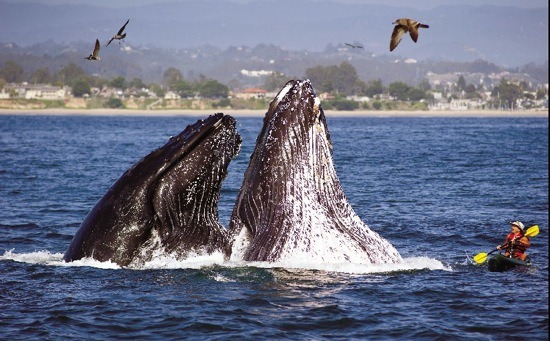
Whales

3. We already have the technology to live “Green” lives. Why don’t each and every one of us take the baby steps to becoming environmentally correct adults? Think of what living cleanly will do to our subconscious self-worth!

4. Each of us was born uniquely, yet our differences do NOT set us apart. Our uniqueness enhances our human experience. We need each other to appreciate life. Who I am is my gift to you and vice-versa. We should honor each other because when you look closely into my eyes, you will see yourself.

5. We are out of time for procrastination. This is 2012. The end of the world as we know it, so they say. I’m going to take that as fact: the end of the world as I know it. There is nothing but this moment, right now. What you and I do with each minute, hour, day will depend on how we shape the world. Me? I’m digging deep within to bring out the golden nuggets I was born to share with you.

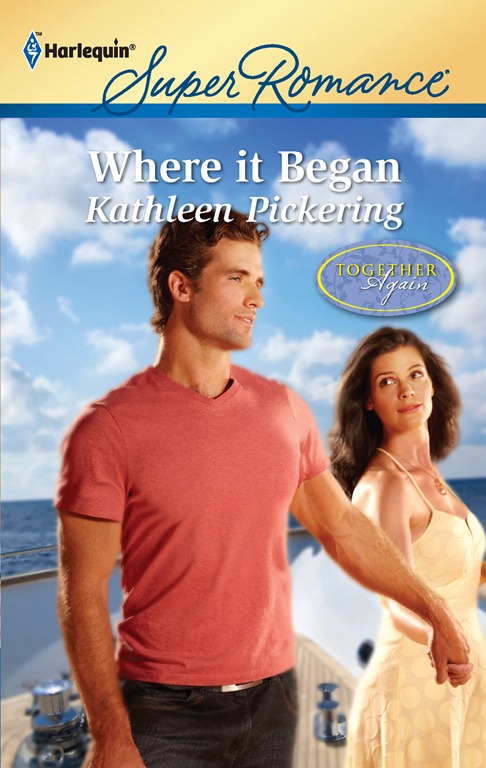
So, I have to end here. My new WIP awaits. Today I’m celebrating the release of my first Harlequin novel, WHERE IT BEGAN.

9780373717545

Click here to view on Amazon:

http://www.amazon.com/Where-Harlequin-Superromance-Kathleen-Pickering/dp/0373717547/ref=sr_1_4?ie=UTF8&qid=1317497566&sr=8-4

It’s a love story about a girl with a past she can’t remember. The mystery is . . . when she does remember, will her new world be seen with love?

I invite us all to view the world with love. Even mystery writers do that. They battle the bad and the bleak to bring about the good. Let’s let the old world die and make 2012 the year humanity remembers for the best.

So, care to share? If you could make one change for the better in your career, or life . . . what would it be? 

It’s High Time We Abandon The Printed Book Once and For all.

John Ramsey Miller

I’ve been thinking about books. Magazines. Newspapers. Sales Brochures. Mail.

I have stacks of books, magazines. I have a storage room filled with boxes of books. I have a wall-length book shelves packed with hardcovers. I don’t know that I’ll ever again open most of them. I’m not sure I’ve ever opened a lot of them. The pages of the newer hardcovers are yellowing, the older ones were printed on better paper with less acids. A Russian edition of one of my books was printer on what looks like tabloid pulp. I’m slowly turning against paper books. I’ve decided that I might be ready to face the new world where books are delivered through the air like lethal arrows were delivered to massed armies a long time ago. I’m not talking plains Indians firing a few at settlers and cavalry units, but more like Medieval armies where archers would loose thousands of arrows that would rain down like steel-tipped rain. Wow, and ouch.
I have a Kindle. I also have a Google Android “A-4 Panaramadingdong” with a 7″ screen. My wife bought a Kindle Fire that we promptly passed on to our 4-year-old screen-addicted grandson for him and his family. Christmas gift. We are giving our other grandchildren the Google color-screen thingamabobs for reading and gaming for Christmas. They are dang near cheaper than a box of Lincoln Logs. And they are not just gaming devices, but a delivery device for books.
For a moment let’s look beyond the typical “coot-ish” argument of “Owww, I must have the feel of a book, the aroma of paper and ink, the sound of pages turning. I need an actual book in my hands for the experience, blah, blah…” Hopefully the days of physical books are going away, and my suggestion is “Git ov’r it, y’old farts!” Okay, fellow old farts. I’m sure people, all now dead, felt the same way about the demise of clay tablets, cave drawings, scrolls, and smoke signals. Backordering was invented in the days when people wrote books one copy at a time.

I think I have boiled down the major reasons to turn away from the printed book for once and all time. There are just ten listed here but I have two others I’m holding back so I won’t have twelve on the list.
1) Libraries will no longer require huge buildings since the e-versioning of the books in the Library of Congress will fit into a single-wide with enough room left for a few reading TV trays. In these days of lowered city budgets, it’s great when one window unit can cool an entire library. No more cricked-up necks from browsing book spines in the library stacks. Plus librarians will be free to get real jobs or appear as contestants on Jeopardy.
2) The savings in “spine” string would stretch from the lobby of the Peabody Hotel in Memphis to the far edge of the known Universe. This saved string can be used for other things like making hammocks, for filling the insides of more yo-yo’s, and giving towns across the country the ability to create string balls the size of Sperm Whales as a method of drawing tourists.
3) We will save enough trees to build fifty-seven Noah-style animal arks a week for fifty years. Plus we will have 250 million trees left growing which give us oxygen, and give birds more choices of places to perch, and squirrel escape routes from pursuing cats.
4) Fewer paper mills will mean like 55% less air stink in the rural south.
5) Reduced weight on the Earth’s crust will mean a straighter trajectory and less wobbly course around the sun.
6) Fewer deaths of people and pets who are crushed by accidentally or purposefully overturned book shelves. Also an end of tripping over stacks of books in the dark. It is all but impossible to trip on a Kindle (depending on the thickness of the padding of the case). Also fewer hernias when moving boxes of books when changing residences.
7) There will be fewer rodents since there will be no making nests from the pages of books stored in boxes. The death of dust jackets will mean less food roach and centipede food.
8) More shelf space in stores for necessities like shampoos, laxatives, tennis balls, candies, and socks.
9) The cardboard presently being wasted on hardcovers can now be used to make disposable ping-pong paddles, the bills of baseball caps, and those “For Rent” signs that go in windows.
10) No more need for book burnings by fascists or wing-nut churches. Censorship of books can now be accomplished with a few keystrokes from a Government computer. In fact it will be far easier for officials to keep up with what everyone reads without having to look into our windows.
Feel free to tell me what you would have put on my list if it was your list.

My Favorite Books of 2011

It has become a practice at the end of a year to compile a “Best Of” list. That is tough to do, and to call it such is a bit of a conceit. Who am I to say? The following is a whittled down list of books that I read in 2011 that grabbed me and touched me. I had 27 or so to start with; when I started to pare it down, there were three that I felt had to be there for certain — THREE SECONDS, THE DEVIL ALL THE TIME, and FEAST DAY OF FOOLS; I literally picked the rest of the titles out of a hat. Here they are, in no particular order:

THE WOODCUTTER — Reginald Hill
LUCIFER’S TEARS — James Thompson
THE DEVIL ALL THE TIME — Donald Ray Pollack
THE HYPNOTIST — Lars Kepler; translated by Ann Long
THREE SECONDS — Anders Roslund & Borge Hellstrom; translated by Kari Dickson
FEAST DAY OF FOOLS — James Lee Burke
THE PACK — Jason Starr
BREAKING POINT —Dana Haynes
COLD SHOT TO THE HEART — Wallace Stroby
SOFT TARGET — Stephen Hunter

John Miller will be here next Saturday and I will be back after the first of the year, hopefully with some interesting news. Merry Christmas and Happy New Year to you all. And thank you for spending time with me this year.

Presenting the Author: 24/7

By: Kathleen Pickering  http://www.kathleenpickering.com

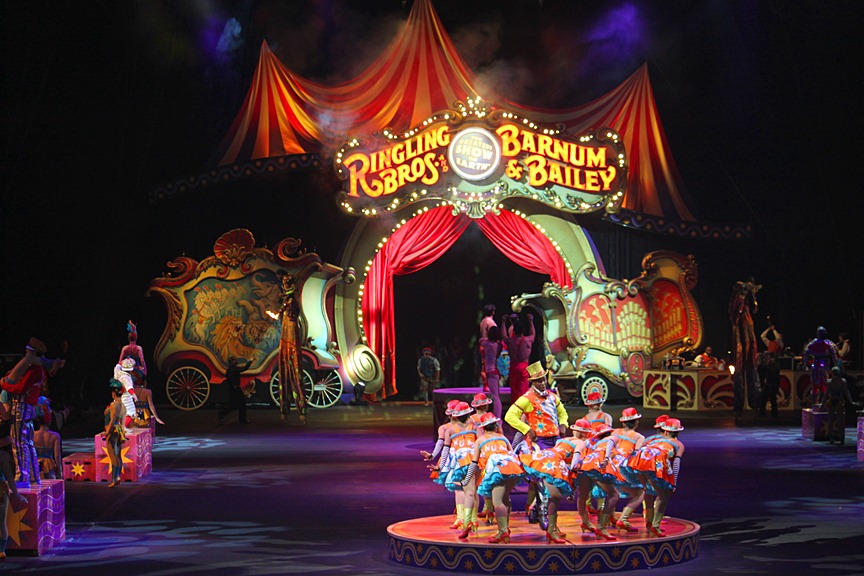
My life is a three ring circus. No wait. My husband said living with me is like a three ring circus.

circus

A far more honest assessment, for sure. One for which I take immense pride.

Why?

Because if a writer is going to be effective in her work, she must experience life. Things have to happen. Places must be seen. People must be met, interviewed, interrogated or just plain stalked! (Just kidding. Actually, no. I’m not. Ask Heather Graham or Bonnie Raitt. Another story for another  time, but at least I didn’t leave Heather horror-struck and plastered against her tour bus!)

What does this have to do with my promise from my last blog to reveal the second Tweet I am tweeting on Twitter? (What a fun sentence!)

My friend and mentor, Heather Graham, proves the “you gotta live to write” theory to me constantly. Meaning an author views the world and “is” an author 24/7. The simplest event in an author’s life is a possible morsel for a plot.

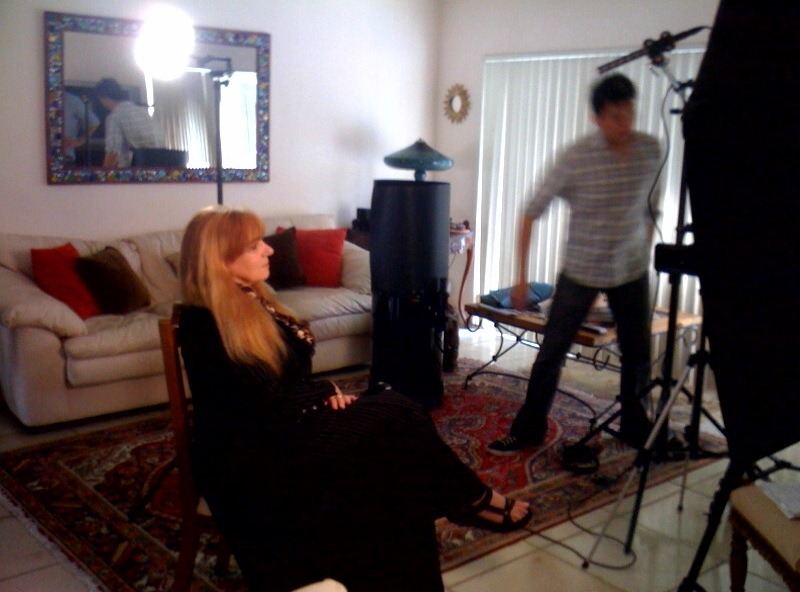
Today when I post this blog link on Twitter, my Tweet will read: Member of the Peer interviews Heather Graham at my house!

HEATHER INTERVIEW1

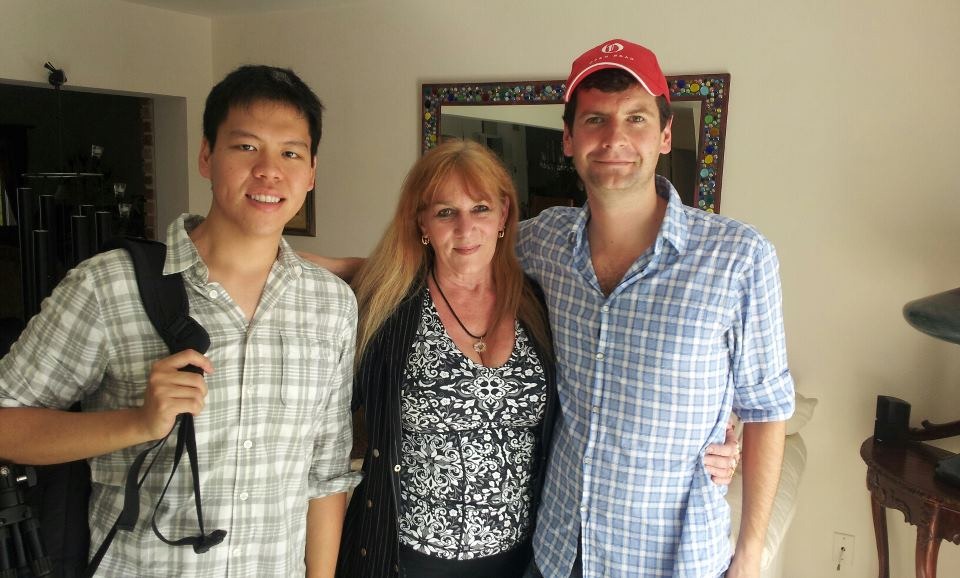
Heather is always doing exciting things to fill her “creative well” to the brim. And, sure enough, one of her adventures was an interview with British transplant Luke Parker Bowles from Open Road Media in New York. She was photographed by Tim Wu.

Heather Interview

Heather’s interview is part of a future media campaign and I was invited to join in the fun . . . which makes Heather’s “you gotta live to write” theory suddenly a part of mine.

HEATHER INTERVIEW3

A good student pays attention!

Now, you may ask what makes this event a three ring circus in my life?

Well, it’s simply that this interview happened on Monday when I had just returned the evening before from a quick two day jaunt to New York for a family gathering of 75 people for a double-engagement party for my sister’s twins. And that on the heels of a five day real estate search to help another family member invest an insanely huge amount of foreign dollars in US real estate. (Yes, I am a Realtor in my secret life.)

All of which is fueling new stories. And, there is more.

This fun filled day with Heather and friends was followed by in instant surge of 12 family members, including a first for us which was both mothers-in-law under the same roof for the Thanksgiving holiday.

mothers in law

Did the family drama that ensued give me fodder for a new book? I know I don’t even need to answer that one.

I still have a few more days before I launch my mother-in-law back to Chile. However, the circus continues. While attending to my MIL’s needs (and they are many), going to yoga classes, taking a 12 week on-line Agents for a Conscious Evolution class, brainstorming with author friends, contributing to social media AND spending quality time with my husband, I am scrambling to finish two more book proposals for my editor to cement her beautiful offer for a three book contract with Harlequin.

What can I say to that?

I am thrilled for the circus that is my life because after I finish this blog, I can finish the two “romance in real life” proposals for my editor. Why? Because I gleaned story ideas from my travels and mingling with family, friends and strangers. I am an author 24/7. I live to write and I write to live. The trick is to see every moment as a writing opportunity. Oh, and to make really good use of those few hours of sleep!

Soooooooo . . .

Ladies and gentlemen, and children of all ages! I invite you to tell me how your lives fuel your creative wells. I am already laughing at the prospect of how Basil Sands will answer this one. (I just read on Facebook that he was grilling 40—count ‘em—40 steaks in freezing weather.)

Let the show begin!