First page critique: A BOTHER OF BODIES


Here is a first-page submission titled A BOTHER OF BODIES, followed by my comments.  Then we’d like everyone to jump in.

Note: I’m posting from Tokyo using my iPad, which isn’t Blogger-friendly under the best of circumstances. So please forgive any formatting errors!

*  *  *

     I stepped on the bathroom scale, gun in hand, and waited for a number to register. The screen seemed reluctant to settle, hovering between a couple of digits, neither of which made me happy. I aimed the Glock between my feet, closed one eye and was a twitch away from firing when my cell phone buzzed. I refocused. Put the phone in my sights and squeezed the trigger. The empty chamber clicked, the phone continued its annoying buzz, and the scale finally settled on my least favourite number.
            This was going to be a bad day. Kicking the scale under the bed, I scooped the phone off the night stand and checked the screen. It was my brother, Dean—or half-brother. We’re not entirely sure which.
            “Hey…”
            “Mabel, you better come out to the barn. Fast.”
            Barn?
            “Mabel? It’s important. It’s beyond important, you’ve got to get out here.”
            I was heading to the back door as soon as he called me Mabel. He rarely calls me by name. Uses Maybe instead, as in “maybe I’ll keep it, maybe I won’t”, a popular phrase our mother, Della, used during the seven months she carried me. Dean was three at the time.
            “I’m on my way. What’s happened?” I stopped on the porch long enough to stick my feet into an old pair of Dean’s rubber boots.
            “A corpse happened.”
            That stopped me cold. “You’ve killed someone.” I knew this day would come. It’s always the quiet ones.
            Silence. Okay, it was a stupid thing to say. If anyone was going to guess who put a corpse in a barn, they’d pick me. Dean was a big believer in turning cheeks. I was big on smacking them.
            “Don’t touch him. Or her. Or anything else,” I told him. “Have you called the cops?”
            I heard him sigh. Of course he hadn’t. People whose mothers are convicted con-artists never do.
            I manoeuvred the dew-slick stairs, one hand on the railing, the other still clutching the phone. “Never mind, I’m on my way.” 
            Stuffing the phone into my bathrobe pocket, I clomped down the porch stairs, then stopped to survey the scenery. Not a barn in sight.
            Dean bought this forty acre farm three months ago while I was in Toronto doing some fieldwork for the small, semi-legitimate security system outfit that employs me. 

My comments:

I really enjoyed this page! The narrator has a fun, snappy voice, very Janet Evanovich-ish. My own series features a heroine who battles her weight, so I appreciate the shooting-the-scale opener.

My only suggestions are nits, really, easily addressed. 

I got confused and had to reread the line, “Uses Maybe instead, as in…” It’s a clever line, though. As a possible fix I would use repetition from the previous line and revise as follows:

He calls me “Maybe,” as in “Maybe I’ll keep it, maybe I won’t,” a phrase  popularized by our mother, Della, during the seven months she carried me.

The sentence, “If anyone was going to guess who put a corpse in a barn…” might be stronger if written as
If anyone was going to put a corpse in the barn, it’d be me.

The sentence “Dean bought this forty-acre farm…” should read

Dean had bought this 40-acre farm…

The phrase, “security system outfit” sounds weak in comparison to the rest of the language for some reason to me. Could something snappier be found, perhaps? Also, it sounds like an alarm company as currently written, while I have the feeling it’s something darker than that.

But that’s it! I think this is a very promising first page. It’s rare that I read a manuscript that immediately strikes me  as having a likable, appealing voice, and this one definitely does. Well done!

TKZ’ers, your thoughts?
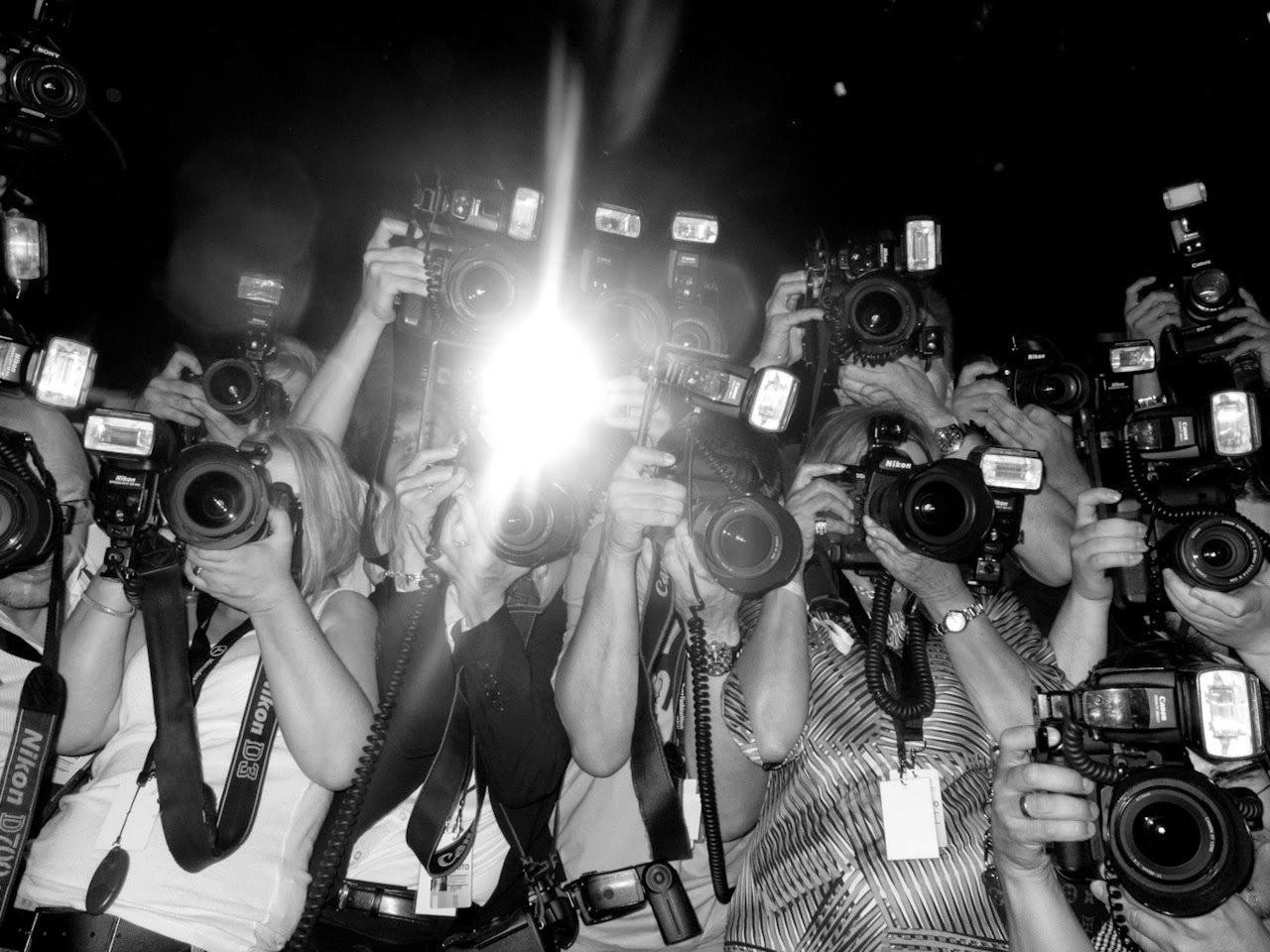

Pardon me, but aren’t you…?


I’m in Japan this week! Thanks to a twist of fate, I had 4 hours notice to pack and get on a flight. Here’s where things got strange: As soon as I stepped off the plane in Tokyo, I was approached by a group of Japanese ladies. They shook my hand and smiled at me, while repeating something which sounded like “Ba-ba.” So of course I smiled and nodded back at them, which made the ladies beam twice as enthusiastically. 


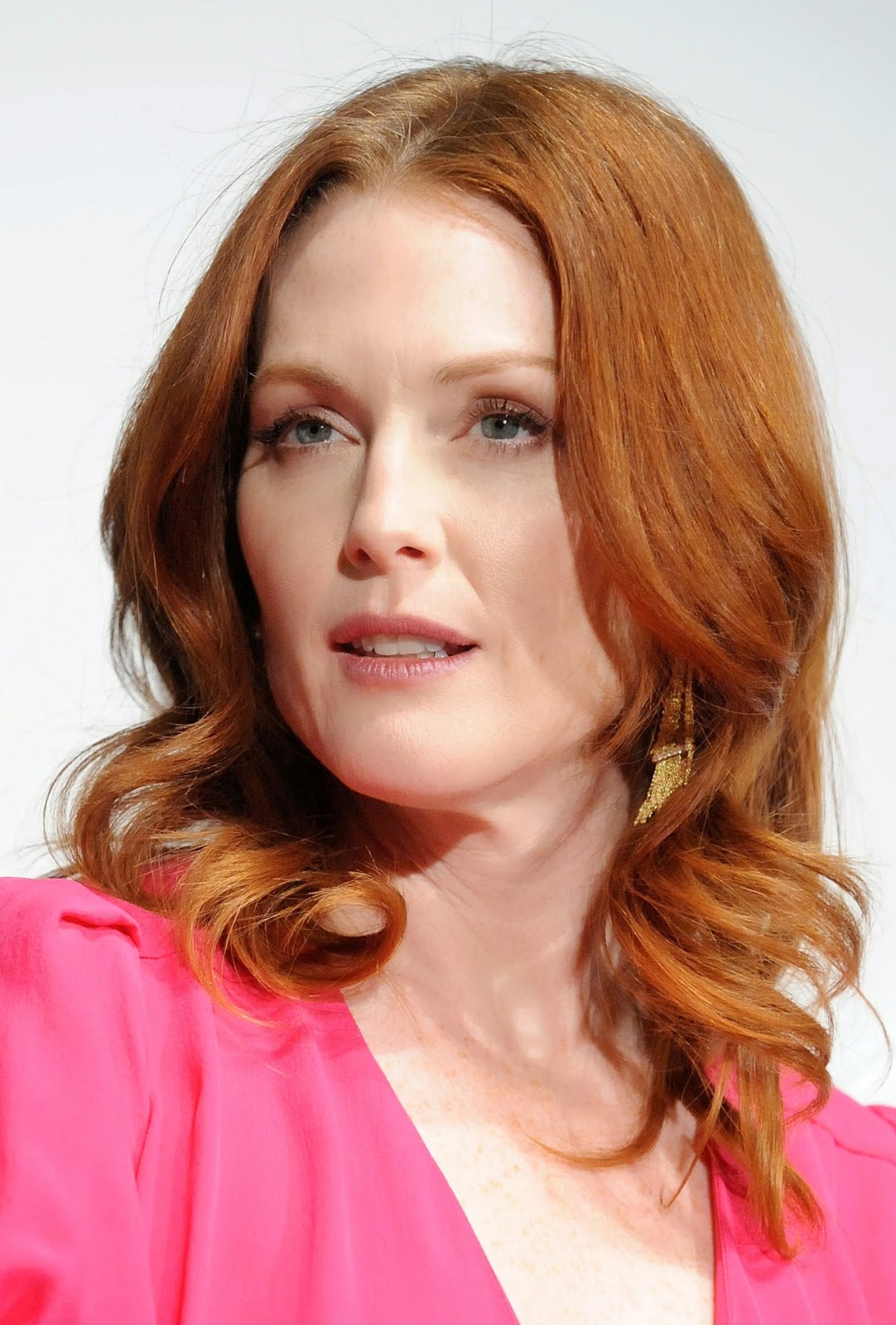
Confusion set in. It eventually became clear that the Japanese women thought I was an American celebrity–some blondish middle-aged celebrity, I guess,   whose name sounds like “Ba-ba”. Later my friends and I tried to figure out the name of my mystery-celeb doppelgänger
.  Someone suggested Julianne Moore, which was flattering, but doesn’t sound remotely like “Ba-ba.”

I just hope they didn’t think I was Barbara Eden. Even though Babs can still rock her “I Dream of Jeannie” harem outfit better than most gals her age, the septuagenarian is at least a couple of decades too old for my ego to be stoked.


Writers can have creative doppelgängers–not in how they look, but how they write. Have you ever been told, “You write just like Famous Writer Name“? If you’re not sure, try the tool I Write Like .    And tell us, who do you write like?

Here Lies Love

By Mark Alpert

Last night my wife and I went to a show called “Here Lies Love.” The musical was written by David Byrne (of Talking Heads fame) and it got a good review in the Times, but it turned out to be even better than I expected. And the reason has everything to do with the staging. If the show had been produced in a more conventional way, I probably would’ve hated it.

It’s a musical about Imelda Marcos, the former first lady of the Philippines. The story is similar to that of “Evita” – a beautiful young woman marries a dashing politician who turns into a heartless dictator. Imelda became a figure of fun in 1986 after her husband Ferdinand was deposed and her cache of 2,700 pairs of shoes was discovered, but the show treats her story seriously. The actress who plays Imelda is a wonderful singer, and she does an excellent job of showing the character’s transformation from naïve beauty queen to imperious dragon lady. Still, the treatment is kind of simplistic, cramming forty years of Philippine history into ninety minutes and a dozen songs. If I were watching it in a typical Broadway theater, I’m sure I would’ve been underwhelmed. My inner critic would’ve huffed, “I already know this story! Can’t you tell me something new?”

But I wasn’t sitting in a typical Broadway house. “Here Lies Love” is staged in a smallish room in The Public Theater that’s decked out like a disco, complete with mirror balls and artificial fog. The audience stands around an oddly shaped platform on which the actors sing and dance, and you don’t stand in one place for very long either, because after every scene the stagehands shift the platform to a new position and shepherd the crowd to another part of the room. And on every wall are video screens that display historical footage of Imelda and Ferdinand. When the actor playing Ferdinand Marcos makes his entrance, he’s accompanied by a cameraman who shoots video of Marcos mingling with the audience, shaking hands and slapping backs. At one point, Marcos put his arm around me and together we smiled for the camera, and when I saw my complicit face on the video screens I felt a weird sense of guilt. Through the magic of theater, I got a brief glimpse of what it’s like to support a dictator.

In other words, the story came alive. The historical figures became three-dimensional, full of energy and sex appeal, their skin glistening with sweat.

I want to do the same thing with the characters in my novels. I need to think of new ways to make them come alive.

First Page Critique – Deliverance

Jordan Dane
@JordanDane
 
DINNER TABLE
 
For your pleasure, I have the first page submission for a project called – Deliverance. I’ll comment on the flip side. Enjoy!
 
Shelia Martin changed her outfit twice, from a flair-legged jumpsuit to a long black dress with a thigh high slit on the left side. She reapplied coral lipstick that had faded an hour earlier. She brushed her hair back with her hands and headed downstairs to check on Roger’s favorite dish—grilled chicken with garlic and butter sauce, roasted asparagus, and sage rice, which she had timed to perfection so the moment he walked in the door, removed his jacket, washed his hands, she could serve him a steamy hot dinner.

At the bottom of the staircase she surveyed the set up in the living room, sparkling fire, cozy blanket, oversize floor pillows, flute glasses, Moet and Chandon for Roger, and sparkling cider for herself. As of last week, she hadn’t had a drink in three years.

Her feathered slippers clacked across the shellacked floor.  She entered the kitchen with its fug of sage, garlic, onions, and vanilla. The moment Shelia heard about Roger’s new advertising contract —something he’d bid on three months earlier to help pull his business out of arrears—she decided to celebrate with a special dinner.

After twenty-three years of marriage, raising four children—two in medical school, one college freshman and a high school junior—and helping her husband launch an advertising firm, romantic rendezvous were few. Her heart pounded and butterflies knotted in her stomach, as if she were entertaining this man for the first time.

Tonight, Shelia baked a pecan pie torte, simple, easy, but his preference.

She swaddled the utensils in linen napkins, carried them into the living room and placed them on the blanket adjacent to the sweltering ice bucket. She looked at her watch wondering what was keeping Roger; their daughter Rose was expected home by ten, and Shelia was counting on a night with only her husband.

Shelia slipped off her slippers and paced the floor. The neighborhood lamppost flickered, the Maltese barked, indicating the arrival of her neighbor’s husband. She looked at her watch, ten o’clock. Rose would arrive fifteen minutes later than her curfew, her method of challenging authority.

Dinner was spoiled. She scooped up the ice bucket and took it into the kitchen.  She clicked off the oven. Her stomach growled, but she had lost her appetite.

“Wasted,” she said. “Where is he?” Scraping the food into the garbage disposal, she glanced at the microwave: ten thirty.
 
My Critique:
I loved the meticulous attention to detail in this submission. Without telling the reader what is going on, this author is showing the woman’s expectation of perfection or her intent to please her husband, her way. I would definitely keep reading.
 
I love the minimal back story, without embellishment. The fact that she’s having Apple Cider, suggests she’s a recovering alcoholic, for example. Her meticulous staging of her home and the dinner suggests she’s a stay at home wife and mom who likes a tight ship. It reflects her character in what she does, rather than the author “telling” the reader this. That’s the real strength behind this piece. Rather than me focusing on craft issues, I’m able to delve into character motivation and layering of emotional content, but only to the extent of adding a different dimension that the author may not have intended. Here’s what I mean by that caveat.
 
There is definitely a mystery about her husband not showing up when he’s expected. As a reader, I’m hooked as to why. I don’t find this woman particularly sympathetic or warm, however, but that could be the author’s intention. It’s like Shelia wants to show off her efforts, more than her husband’s accomplishment. This dinner is HER accomplishment. She has expectations for the evening and he’s messed them up, rather than her being worried about why he’s late.
 
She throws out the dinner, almost as if she’s punishing him for being late (or she doesn’t realize there are starving kids in Africa), when she doesn’t know the facts. If this happened to me, I’d be trying to reach him by cell phone and worried if he’s gotten into an accident. She’s more worried about her dinner being ruined and her plans upset. It sounds as if her husband is very reliable when it comes to his arrival time, if she can time her dinner to him walking in the door. So this would mean that if he’s late, it’s a big deal, right? (Okay, in reality, who can really do this? My husband is working in the yard and I can yell out the back door that dinner is in fifteen, and he’s still late.)
 

delivrance
Roger could have a very good reason for being late for dinner.


If the author did NOT intend for this woman to read as cold, it would be an easy fix to add more tension when Shelia shifts from being irritated to worried. She could cover her worry by making him a plate (meticulously arranged) that she puts in the fridge, to mask how her nerves are fraying. (She could cut herself on the plastic wrap container. Lord knows I always do. The blood could be a foreshadowing of danger.) Roger’s never late. She loses her appetite from worry, not irritation that he’s messed her up. Ramp up the pacing, take off the earrings, wipe off the lipstick, look at the clock more.
 
But I find this writing compelling and I would definitely turn the page. Well done, mystery author! I also want to eat at Shelia’s house, except she’d probably make me dress up.
 
What about you, TKZers? Your comments?

Finding Inspiration in the Company of Others

I’m jet lagged and suffering the after effects of accepting too many cups of wine from the uber-cheery flight attendants of KLM’s transatlantic service.  We ‘re halfway through a return trip from Vienna, where the family and I spent a couple of weeks celebrating my mother-in-law’s 90th birthday. (I just hope I’m able to tromp all over cobblestone streets like Mama Cheng does when I’m 90. The woman is amazing.)

I fell madly in love with Vienna. Every corner we turned revealed some medieval-era nook that begged to be explored. There was one bad moment when my wallet got pick pocketed (shame on me for letting my tourist’s guard down), but even that misfortune turned positive. We wound up meeting a charming member of the Austrian Polizei; the officer called the credit card companies for me, offered insights about crime and police work in the city, and invited us to tour an amazing military history museum. Our encounter was (almost) worth the pain of losing my driver’s license.

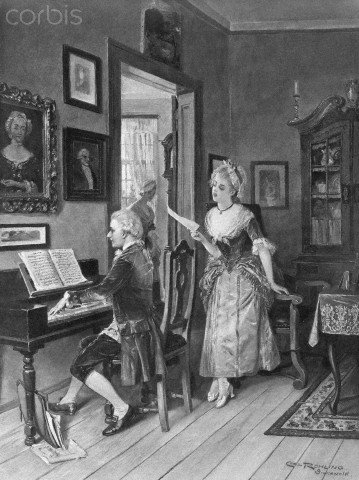
Mama Cheng is a huge Mozart fan, so of course we made a pilgrammage to the composer’s haunts. The home where he lived during his most successful years is now a museum; its walls are inscribed with his sayings. In one quote, Mozart describes being surrounded by neighbors who included a music teacher, a violinist, and a singer. To paraphrase Mozart: “Being surrounded by the music of other artists gives me many useful ideas for my own work.”

As writer-artists, I think we’ve all experienced the creative boost that comes from the company of other writers. I always return from a writer’s conference with new perspectives and a renewed enthusiasm for writing. And of course, TKZ’s mission is to provide a virtual watering hole where we share experiences with the craft, hoping to inspire and be inspired.


But Mozart’s quote got me thinking that it might be good to seek out even more intensive interaction, such as a writing retreat. I’ve never been on a retreat, but I visualize it as being peopled with the kind of folk you find at the bar at conferences. Only instead of a bar, we’ll be hanging out at a cozy lodge overlooking some sylvan scene. There has to be a fireplace, of course, and great discussions. Other than that, I’m open to suggestions. Have any of you ever been on a writing retreat? How was the experience?

Walkers!

By Mark Alpert


I know I’m coming late to this party, but I love The Walking Dead. A few weeks ago my teenage son and I started watching the show on Netflix as a sort of after-school treat. After a long hard day of Latin and algebra (for him) and manuscript revisions (for me) we sit down together on the couch to enjoy an hour of zombie mayhem. Of course, if you’re a fan of the program you know that the title characters are never called zombies; when the dead come on the scene, the living alert one another with the cry, “Walkers!” And that’s how I greet my son when he comes home from school and drops his incredibly heavy backpack on the floor. I yell, “Walkers! It’s time for Walkers!” and we race toward the living-room couch.

Why do we like it so much? Well, we’ve always had a thing for zombies. I still read to my son before he goes to bed (awww, isn’t that cute, I hear you say) but now I read World War Z instead of Doctor Seuss (yikes, what kind of father are you?) And we both loved 28 Days Later, the movie that originated the man-wakes-up-from-coma-to-find-world-overrun-by-zombies trope that was so shamelessly stolen by The Walking Dead. But there’s something special about the TV show. First, there’s the soap-opera appeal, the affection you develop for characters simply because you see them every day. Second, there’s the sheer bleakness of the characters’ situation, and the blind relentlessness of the enemy they face. It’s like watching a car crash in slow motion. You can’t turn away.

But the most interesting aspect of the show, at least from a novelist’s point of view, is its narrative format. A television series like The Walking Dead doesn’t have the conventional beginning-middle-end structure of most novels and movies. It’s episodic (naturally), and that makes the story feel more like early works of fiction such as Don Quixote, Gulliver’s Travelsand The Pilgrim’s Progress. The characters travel from one adventure to the next, and though the details are a little different each time — in one episode, Don Quixote tilts at windmills, in the next he mistakes a pair of monks for enchanters — the basic setup of each scene is the same. (Or, to use another example, Gulliver has unusual adventures in a kingdom of tiny people, then in a kingdom of giants, then in a kingdom that floats among the clouds, and so on.) The danger with this kind of format is that it can get repetitious. And in fact, that’s a problem some viewers have with The Walking Dead. Many of the episodes seem to follow a standard, timeworn formula: start with a flashback from the good ol’ pre-zombie days, followed by thirty minutes of dread and sniping among the characters, then someone does something phenomenally stupid or brave and the dead arrive en masse. And every episode ends with a cliffhanger, of course.

On the other hand, the strength of this format is that the whole is greater than the sum of its parts. As you watch episode after episode (my son and I have set a strict limit of no more than one per day) you get the feeling that you’re watching more than the struggles of a small band of survivors. You start to think, “If these people can’t make it, then no one can. If they die, the whole human race is doomed.” The perils and travails come so fast and furious that you can’t help but think of Job and how God killed his family and took away all his possessions just to make a point. The religious theme is made explicit in the first episode of Season 2 when Rick the sheriff’s deputy prays aloud in the country church (after killing the zombies who were sitting in the pews).

Although the show’s format may not resemble a novel’s, The Walking Dead offers lots of good lessons for thriller writers. In too many thrillers (including my own), the heroes are unrealistically resilient; in The Walking Dead, the constant fear and tension chew up the living characters almost as relentlessly as the zombies do. And nearly every character on the show has a mix of good and bad in his or her soul. Many of their actions are heroic and heinous at the same time. I don’t plan to write about zombies anytime soon (I’m too damn scientific — I just don’t understand how the dead can walk without a working circulatory system) but I’d like to write about the same kind of desperation, the furious battle between hope and despair. Something to think about for the next book!


Writers and their canine doppelgangers

By Kathryn Lilley

So I was walking my dog on the boardwalk in Hermosa Beach the other day, totally MMOB, when I was hailed by a couple of guys clutching beers in paper bags.


“Do you think people look like their dogs?” The slightly less enebriated-looking of the two men wanted to know.

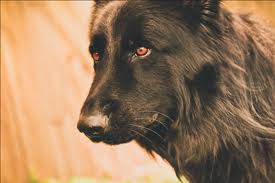
I considered the question. My dog  MacGregor is a serious-looking guy, long and lean, like a black wolf. I am none of those things, except I was wearing a black jogging suit. But with my blonde hair and general demeanor, I would say I’m more of a Golden Retriever.

“Sometimes people look like their dogs, but hopefully not in my case,” I replied carefully.

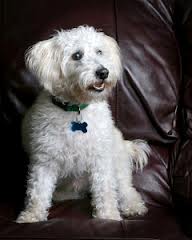
My answer seemed to satisfy my inquisitors. But it got me thinking about writers and their canine doppelgangers. So of course, I set off on a search for some matches. Here are a few I came up with.

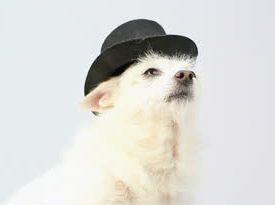
Tom Wolfe – Chihuahua-mix in a top hat
Stephen King – Dog with a Human Face
This dog, by the way, would make an excellent character in King’s next book.
 
James Ellroy – Elegant pals


John Gilstrap, TKZ Emeritus – One Tough Dog

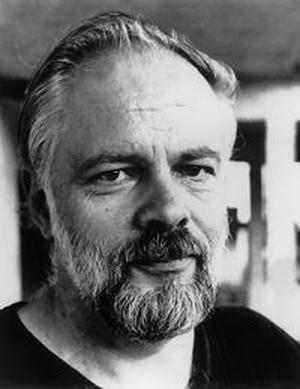
Phillip K. Dick – Beard Buddies
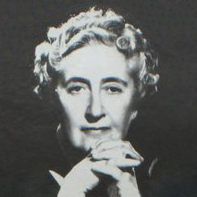
Agatha Christie – Curly tops


So, do you have a canine doppelganger? If I have to look like a critter, I’d prefer to look like my cat, Smokie. He’s my muse, is featured as a character in my books, and he’s way cooler than MacGregor.

Confessions of an Editor

By Mark Alpert

I’ve spent the past week going over my editor’s suggestions for revising my next thriller (working title: The Furies). They’re great suggestions, I’m happy to report. I feel an enormous sense of satisfaction as I go through the manuscript, repairing all the inconsistencies and gaping omissions that my editor pointed out. I’m a lucky guy to have such a careful reader. And my gratitude is enhanced by the fact that I know what it’s like to have a bad editor. Worse: I know what it’s like to be a bad editor.

For the first fifteen years of my journalism career I was a reporter for newspapers and magazines, but in 1998 I became a staff editor at Scientific American. This is a fairly typical career path because editor jobs usually pay a little better. (I’d like to emphasize the world “little.” Don’t go into journalism if you want to make a lot of money.) The new job involved some writing, but my primary responsibility was editing the magazine’s feature stories about breakthroughs in science and technology, most of which were written by the scientists who did the research. It was fun work because the topics varied so much. One month I learned all about metallic hydrogen; the next month I became an expert on the sex life of orangutans (which, by the way, is pretty damn fascinating, but that’s a subject for another blog post).

The stories were usually between 3,000 and 4,000 words, which were spread across six or eight pages in the magazine. Although most of the scientist-authors had extensive experience writing articles for research journals (such as Nature, Science, The New England Journal of Medicine, etc.), very few had written for a consumer magazine before. Therefore, the stories they submitted were full of terrible writing: lots of incomprehensible jargon, egregious overuse of the passive voice. On the other hand, the scientists were usually so delighted to be published in Scientific American — it was a big ego boost for many of them, and often a career boost as well — that they would tolerate heavy editing (and sometimes wholesale rewriting) with little complaint. And thus a monster was born.

In short, I became a tyrant. Each month I would rewrite the entire story, altering nearly every sentence. I wouldn’t have discussions with the author. I wouldn’t give the author the opportunity to make changes to his or her first draft. I would make all the changes myself and send back the rewritten manuscript with a standard note: “Please correct any factual errors I may have inadvertently introduced.” My justification for this approach was that I didn’t have the time for a lot of back-and-forth. It was quicker and easier this way. And I truly believed that I was doing my authors a favor. I was making them look good, I thought, by commandeering their stories.

I took the same attitude with the illustrations that accompanied the articles. I would draw them myself, in pencil, and fax my sketches to the artists. If their illustrations came back looking significantly different from what I’d drawn, I’d force them to do it over. I was drunk with power.

Luckily, I was saved by a book deal. After selling my first novel and getting a contract to write two more, I scaled back my duties at Scientific American. I became a contributing editor who meekly suggests story ideas instead of a staff editor who shapes and packages them. And in my new career as a novelist, I was as powerless as a cub reporter. I could no longer give orders to anyone but myself. For instance, I could suggest titles for my novels and offer my opinions on alternatives, but the final decision was up to the publisher. The same rules applied to the cover art. Most humbling of all, I had to acknowledge the fact that I made mistakes too and that my own writing could be pretty terrible sometimes.

If we lived in an Old Testament kind of world, the gods of publishing would punish me for my sins. They would make sure that the people editing my novels were just as bad as I was. My editors would force me to rip out the heart of each book, to chop up the manuscript to the point where it became unrecognizable. But apparently I’ve been granted a dispensation. My editors have always allowed me to come up with my own solutions for fixing the problems in my drafts. And the process can be intensely gratifying, like working out your problems in therapy. There are lots of Aha! moments. “Of course! The answer is so simple!”

I really don’t deserve such good treatment. If I ever become an editor again, I’ll try to be more patient and open-minded. (Who am I kidding? I’d probably go right back to being a tyrant.)


The Dragon’s Pearl Critique – YA Fantasy Submission

Jordan Dane
@JordanDane


My first page critique is a YA fantasy submission titled THE DRAGON’S PEARL. (Love the title!) My thoughts will be on the flipside. Enjoy!

Once upon a time, there was a girl named Misha who was neither kind nor beautiful, but very smart, and according to her mother, intelligence was all that mattered. For once, Misha had to agree because at this very moment, her immediate survival depended on her being very, very smart.

The gun dug against the small of her back. “Move faster,” the man holding the gun said. He wore a creepy-looking white mask—all three of her kidnappers did—and he had a real-looking black gun. He was smaller than the big man and stouter than the skinny one, with hairless arms smoother than her own. But since he held the one flashlight, Misha decided he must be the leader.

“Faster,” he said again.

She scooted down the tunnel, first in line. In case she sprung a trap, presumably. Designating a fourteen-year-old girl as a meatshield to catch all the arrows, it was the kind of thing she would consider.

“We’re almost there.” The kidnapper pushed past her, giddy like a sugar-overdosed child, darting his flashlight from wall to ceiling. “I can feel it.”

Where is there? Misha slowed her pace. She lifted both hands—handcuffed—to scratch her freckled nose. She had no idea where they were, what their purpose was. After removing her blindfold, they’d marched her down this abandoned subway tunnel for the past hour, twisting, turning, pausing, then picking a path less traveled.

The steel tracks were hard to see and easy to trip over. Her aunt had already tripped twice, with the big man there to catch her every time.

Her aunt Saria was the unfortunate tagalong to this kidnapping. She hummed tunelessly to herself, but Misha knew this was her aunt’s way of coping. Saria was afraid of everything, from plastic bags on the street that looked like dead cats to melodramatic fistfights on the movie screen. Violence terrified her.

“I’m sorry,” Misha said quietly. “If you hadn’t come to my tournament, you wouldn’t even be here.”

Saria sighed. “I wouldn’t have had to close my pawnshop for the day and lose all that profit.”

“Yes, that too.”

Saria barely winced when she smiled, her wrists raw from the nervous twisting of the plastic zip-ties. “There’s nowhere else I want to be, but by your side.”

My thoughts:
The “once upon a time” opener sounds cliché, but when it’s coupled with the twist of lulling the reader into the story as if it were a fable, only to spring into a kidnapping, the story keeps my interest. But the softer beginning diminishes the threat of the kidnappers. I’m not sure of the author’s intent. I don’t feel like Misha is in danger, especially once the aunt and the dialogue begin.

In the second paragraph, I got a little bogged down with the vague descriptions of the three men. There are not many lines there, but I don’t feel that it is important to detail the heights and weights of nameless men—especially since they are behind her. It’s like she has eyes behind her head and can see everything (while she is blindfolded, we later learn). When describing adversaries like these, it might be best to lump them together as threatening masked men and have their distinctive voices be the way she tells them apart, if that even matters so early in the story. If she’s blindfolded, she can only sense their presence by sound or smell. I would imagine that the smaller guy will play a definitive part in the story after he’s unmasked, but at this point, I don’t know that for sure. Only the author will know how important any of them will be.

I would like to see a dark world building setting play a part in this set up. That’s what makes fantasy great. This reads like an internal chapter scene and not the start of a book, perhaps because it doesn’t feel like Misha is in danger and the dialogue with the aunt. If she is to be the meat shield, I would like to feel that she appreciates the danger she is in and setting might help. She needs to be more wary and worried about what will happen to her and her aunt.

When Misha scratches her “freckled nose,” that took me out of the story. In her POV, she wouldn’t think of her nose as freckled. It would simply be her nose. That action trivializes the danger too. It’s a way for the author to get a character description in, but it also has the impact of diluting any threat.
Half way through the opener, we find out she has been blindfolded. That was not reflected in the first paragraphs. This reads as out of order to me. With her being bound and blindfolded, that would make it very awkward to walk, especially with her scooting down a tunnel. If she is blindfolded, the reader needs to see and feel this early on. She wouldn’t be leading the pack either. How would she know where to go?

I also didn’t know her aunt was even with her until well into the opener. Misha seems more worried for herself and not for her aunt, who would be in danger too. Plus their conversation does not translate the threat. It’s a bit chatty. And if violence terrified Saria, her humming a tune doesn’t seem appropriate, even if it’s a nervous tune. Plus when she’s more concerned about her profits for the day, that also diminishes the scary aspects of the scene.

The last couple of lines bounce into Saria’s POV. Misha can see her aunt wince and smile (if she is not blindfolded), but she can’t know how raw her wrists are, which tells me this is Saria’s POV. A head hopping thing.

The last thing I want to mention is the use of adverbs. Anything with an LY on the end is usually redundant and unnecessary if the rest of the action in the scene are well described. For example, “Misha said quietly” could be changed to “Misha whispered,” which would suggest she’s afraid of being overheard, but since the dialogue is a bit chatty, there is nothing she should be afraid of. If I were being kidnapped and had my aunt with me, I would be asking questions or trying to figure out where they were or how to get away.

When I first read through this, I thought it was okay. (I didn’t expect to be so picky.) I might keep reading to see where it goes, but unless you grip an editor or agent from this opener with something fresh, they will be looking for a reason to not turn the page. Focus on the danger more, make it eerie, and give a better glimpse into Misha’s personality and why she was chosen. Add elements of a mystery. That might make this opener better.

What do you think, TKZers?