
 Last week we talked about creativity, and getting ideas through the “What if?” game. I’ve always subscribed to the notion that the best way to get a great idea is to come up with lots of ideas, and then toss out the weak ones. That leaves me with several good ideas to choose from. Now the question is which one should I choose to spend the next four or five months writing? (Your mileage may vary.)
When I first got going in this game, I determined to be like a movie studio. I’d have one project that was given the “green light.” That was my work-in-progress. But I would also have a few ideas “in development.” The question then became, which one should get the green light next?
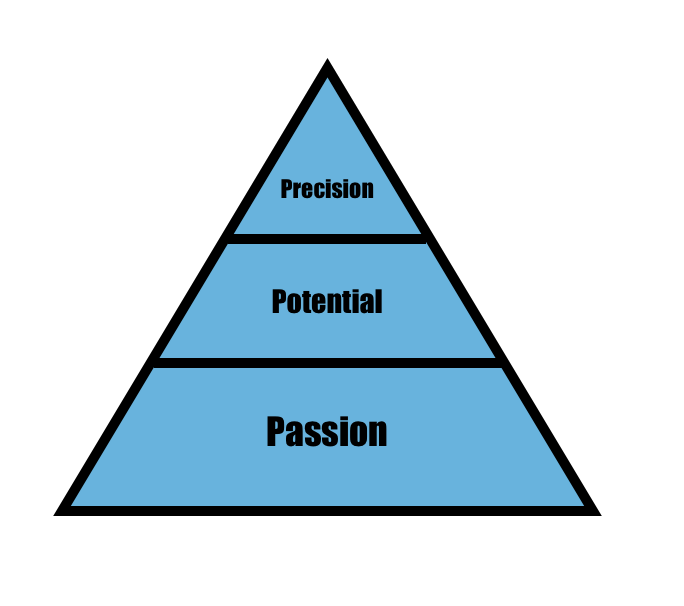
I came up with a three-part test.
Passion
The first, and most important test, is passion. If I don’t feel emotionally connected to an idea or concept, I don’t want to pursue it. Because it is passion and heart that separates our work, not only from other writers, but also the scourge of AI-slop.
I have a list of questions and assign a score, from 1-10, for each.
- How excited are you about the concept as it stands now?
- How invested are you in the main character?
- Is there a meaning involved, something worth saying?
- As a prediction, how excited do you think you’ll be about the book two months from now?
Potential
Since I write to put bread on the table, I want to consider the potential for my project in the marketplace. My questions:
- Does my plot have high enough “death stakes” (physical, professional, or psychological)?
- Is there a fresh setting, or a twist on a familiar one?
- Can I envision a knockout ending?
- Does my cast of characters turn me on? [Note: Once you start writing the book, there will be moments when the writing bogs down, when you’ll start to question your passion for the project. The fastest way to overcome this is to spend time deepening your characters, via backstory or voice journal. You’ll get excited again, and quickly, too.]
Again, score 1-10 for each.
Precision
Now, I write a logline for each project. A logline is Hollywood-speak for a sentence that captures both the essence and market potential of a project. For example:
A great white shark hunts for food in the waters of a New England town at the height of tourist season.
A teenager takes a time-traveling DeLorean into the past, where his young mother gets the hots for him, and where he must get his father to win her again or he’ll cease to exist.
Detective partners who dislike each other must bond in order to stop a serial killer who chooses victims based on the Seven Deadly Sins.
Score 1-10 for each logline on how well it captures market potential.
I add up the scores for each project, and the “winner” gets the green light.
This method gives me some objectivity, because it’s easy to just grab the next bright idea and start running with it. Again, I’m going to spend months with the project. I owe it to myself to think a little on it before I take the plunge.
One last note on the problem of AI-slop. When it comes to the writing itself, we all know it can be “handed off” to a bot. What that produces, at least as I see it, is heartless, soulless competence. It certainly does not produce the kind of writing that makes readers yearn for more books with your name on them.
Will a bot ever produce writing that does? Perhaps not! One writer puts it this way:
LLM-generated prose is, by virtue of the process that creates it, frozen verbal leftovers. An LLM is perfectly capable of imitating … compound sentences, especially the most basic, unsurprising constructions (“This is not that; it’s actually this.”). And because the vast majority of humans have no desire for anything better, LLMs appear to be good writers. But they’re not….The machines we’ve created can do only the bare minimum passably well because the same is true of us.
I choose to believe that the human element—honed by hard work, experience, honesty, and heart—will always produce a better book than a machine. [Note: Em dashes are mine!]
Now over to you. How do you choose which book to write next? If it’s the next in a series, how do you decide on plot and setting and new characters?
I’ll be curious to hear responses about how writers decide on plot, setting and new characters for a new book in a series. There are all manner of series, of course, but even if you have subplots that run through a series it can still be a challenge deciding on the direction of the next book in a series.
As to deciding the next book to write–I don’t have a set plan on how I choose. I get tons of ideas, but end up selecting whichever one won’t let me go, even if I don’t fully understand the plot right away.
For my Romeo series, I have a few recurring characters, but each book has new characters for the new plot. On occasion, I’ve brought back a character from a previous book. As for new plots, I usually riff off a news item or event and play with it awhile, see what comes up. I have a file of “Future Romeo Plots” in various stages of development.
Please keep percolating “Future Romeo Plots” to the top. 😉
👍
Your discussion at the end about bot-writers is pretty virulent now in the music world… and your points (and quotations), apply here as well.
“Bands” and “artists” who exist only in the cloud are creating distrust of “new-old stock” – uncovered in the archives of stars who have passed (Waylon Jennings most notably), and the one acknowledged AI release – a song by Randy Travis, who had a stroke in 2013 (I think it was), that left him unable to speak well let alone sing at all, with vocals “scraped” from all the recordings from his storied career, and was approved by him and his family, was met with “Meh…” and gained no traction.
He is about to follow the Waylon path. resurrecting outtakes and unreleased recordings, but the shadow of the bots (a sci-fi title if I ever heard one), already has naysayers wondering.
AI “architecture” is in the design and construction news, but might be hard to differentiate from the current Post-Post-Modernist movement that has been taking things from the past and passing them off as original, if funky/clunky, “masterpieces.” At least the early stuff predates the archibots and was cut-n-pasted by “100% real humans.” (I’ll let you know how I really feel about that at another time…)
Yeah, don’t hide it!
Shadow of the Bots. Nice.
For the current wip, I wanted to write about a photographer, and it’s not part of a series. So, it was character first, then the problem, then the setting.
Bradbury did character + obsession and then “follow the footprints in the snow.”
Most of my books were born out of news stories that fascinated/bothered me enough to ask “What if…?”
Like what if deep fake video was used as false evidence to frame an innocent woman for crimes?
What if a terrorist controlled a woman’s smartphone to manipulate her into thinking her son had been kidnapped?
What if a daughter shows up after two years away from home with a new baby she refuses to explain?
Excellent loglines, Debbie. I have a file of one and two line “high concepts” I’ve written over the years. Kind of fun just to look them over, and also know I’ll never run out of ideas to write.
I have one title I want to write, nothing else, just the title. I’m brainstorming possible plots to go with it!
Great post, Jim. It’s fascinating seeing your method for deciding what to write next.
In my case, it depends. If I’m in the middle writing a series, that likely gets precedent. If I decide I need a break and/or another idea for a novel comes along and demands to be written, I might well run with that.
My ideas typically come as high concept—a situation, conflict, and character, vague at first. If I’m in the middle of a series, plot, setting and new characters bubble up from my subconscious. Conscious Me’s job is to figure out what I can do with these elements and how they’ll fit and how much trouble I can cause for my hero, and how much fun I can have in the process.
That’s very much my approach, too, Dale. Let the Boys in the Basement do their thing, and later “Conscious Me” (love it) sits down with a coffee and goes over things.
This is where I’m at. I just completed one; now what’s next? I have a couple in the works, but are they my passion? I’m not sure. After a break, I’ll look back at them!
Yes, always good to assess after a break. Happy hunting!
“…but end up selecting whichever one won’t let me go.”
Yep, I’m with Brenda. When I start dreaming about the MC, or talking to them over coffee, I know I need to go a little further with the concept. 👍
Have a great Sunday!
Yes, especially when this happens in public!
I’m at that point right now. I tossed a few ideas out that I didn’t feel I could get excited about. I have four candidates left. I decided to write the fist to chapters of each up to the first sign post, “He’ll never get out of that alive.” Then I’ll consider if I still care about the characters, or will anyone else care. Whatever passes that test will go to friends and family to ask that age old question, Would you turn the page.
Chuck
I like that idea, Chuck. First chapters, then a “care” test. Excellent.
I generally come up with my next book while I’ writing the one that’s due to my publisher in 3 or 4 months. A character that’s in the current WIP will wave their hand and say, “It’s my turn!”
I generally only get one idea at a time. I don’t have a bunch to pick and choose from. I just finished book #20 and have the next one percolating in my head.